Growing basil from seed is pretty easy to do, especially when you know all of the secrets for success! In this post, I’m going to show you everything you need to know about how to grow basil seeds, step by step.
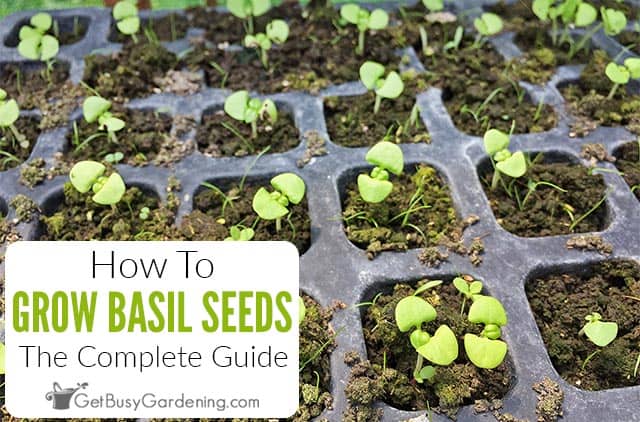

Basil is one of my favorite herbs, and I grow several varieties in my garden every year. It might seem like it would be hard to grow from seed, but it’s actually pretty darn easy!
This is a complete guide to growing basil from seed, and it covers everything from start to finish! Including the best method to use and when to start.
Plus you’ll find step-by-step planting instructions, expected germination time, seedling identification and care, transplanting to your garden, fixing common problems, faqs, and more!
Growing Basil From Seed
The best part is that, once you learn how to grow basil seeds, you’ll be able to start any variety you want! The steps outlined in this guide work for all types.
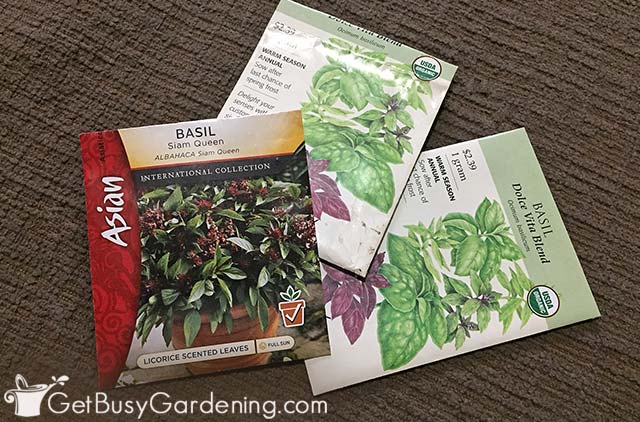
Types Of Basil Seeds To Grow
It’s easy to grow basil from seed, and there are lots of varieties to choose from. Some of my personal favorites are Genovese, lemon basil, Italian large leaf, Thai basil, and purple leaf.
The color and flavor may vary between the different varieties, but the seed planting instructions are the same for all!
What Do Basil Seeds Look Like?
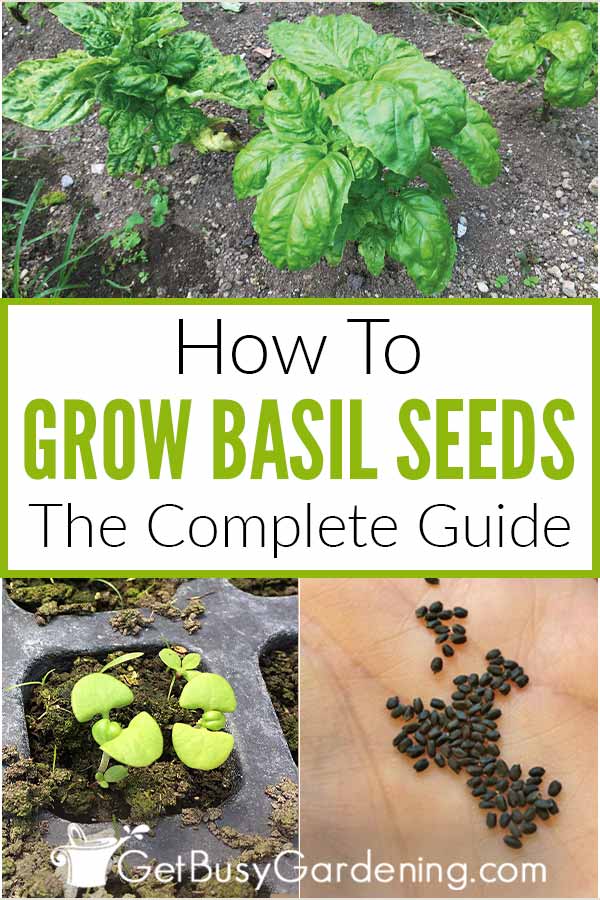
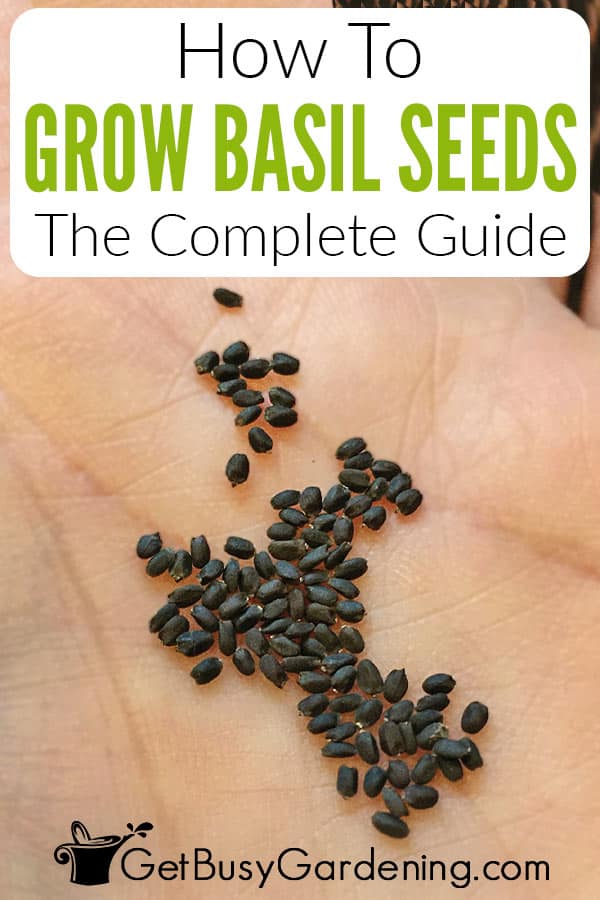
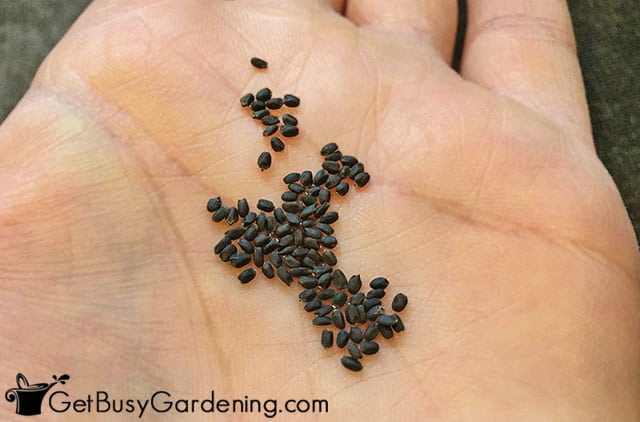
Basil seeds are pretty small, but not super tiny. They are oval shaped, hard but very lightweight, and can range in color from dark brown to black.
Recommended Basil Seed Starting Methods
People who live in a warm climate can plant basil seeds directly into their garden in early spring. But, the seeds need warm soil in order to germinate.
So, if you live in a cold climate like I do, it’s best to start them indoors, rather than direct seeding outdoors or winter sowing them.
Related Post: 3 Seed Starting Methods That Every Gardener Should Try
When To Plant Basil Seeds
You should plan to start them indoors 6-8 weeks before your average last frost date. The exact timing will depend on where you live.
Here in zone 4b, our average last frost date is May 15th. So, I start basil seeds indoors sometime in late March.
If you live in a warm climate, you can plant them outdoors in your garden 1-2 weeks after last frost, when the soil temperature is warm.
Related Post: How To Propagate Basil – A Step By Step Guide
Planting Basil Seeds
While it’s true that it’s pretty easy to grow basil from seed, there are a few steps you can take to ensure your seeds will germinate.
In this section, I’ll talk about how to prepare the seeds, and then show you how to plant them step-by-step.
Preparing For Planting
You don’t need to do anything special to prepare basil seeds for planting. But soaking them in warm water overnight will give them a good head start, and help to speed up germination.
How To Plant Basil Seeds Step-By-Step
The good news is that you don’t need any fancy equipment to grow basil from seed. If you’ve ever done any seed starting before, then you probably already have everything you need on hand.
Supplies Needed:
- Seedling flat with a lid
- Pre-moistened seed starting soil or peat pellets
- Seeds
- Water
- Heat mat (optional)
Step 1: Fill the trays with soil – Start by filling the planting cells to the top with seed starting medium. Or you can use seed pellets in your trays, if you prefer.
Step 2: Figure out how many seeds to plant – If you’re using old seeds with a low germination rate, then you should plant 2-3 seeds per hole. Otherwise, if your seeds are fresh, then you can plant one seed per cell/pellet.
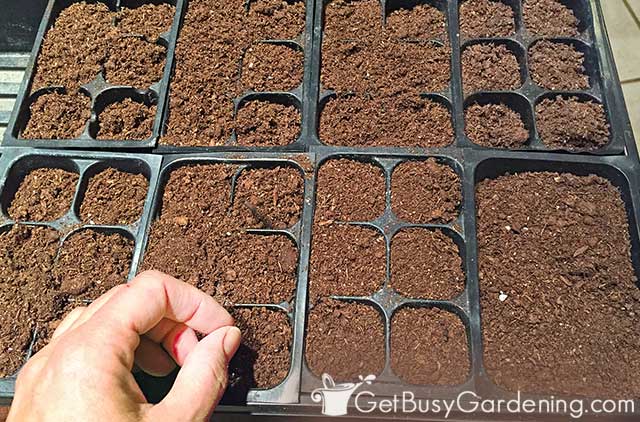
Step 3: Plant the seeds – Since they are so tiny, I find it easier to place the seeds on top of the dirt, and gently work them into the soil. But if you prefer, you can make a shallow hole, and the drop them in.
Step 4: Cover the seeds with soil – If you laid the seeds on top of the dirt, then gently press them down, or use your finger to work them into the soil. Basil seeds are tiny, and should only be planted 1/4″ deep.
Step 5: Add water to the seed trays – Since the seeds are so tiny, don’t try to water your flats by pouring it over the top.
Doing that will likely displace the seeds. Instead, pour water into the tray, and allow the soil to soak it up from the bottom. Dump out any water that hasn’t been absorbed after 20 minutes.
Step 6: Cover the trays with plastic – Cover the seedling tray with the plastic lid to keep the soil moist and warm during germination.
Related Post: How To Grow Seeds: The Ultimate Seed Starting Guide
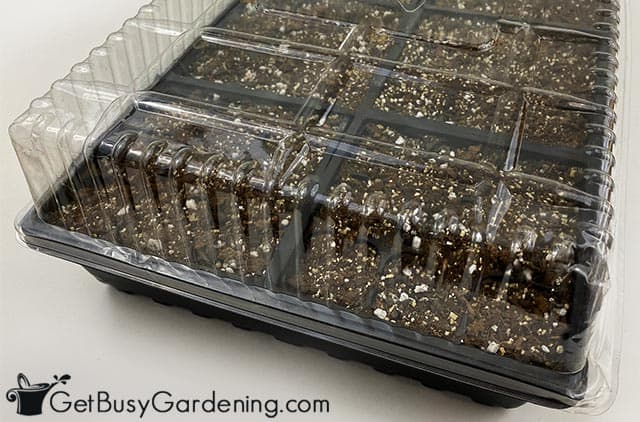
Basil Germination Time
In the right conditions, basil seeds germinate pretty quickly. On average, germination takes about 5-10 days. But sometimes they can be much slower.
If yours seem to be taking forever, then it’s probably too cold for them. They need warm soil to germinate, so be sure to use a seedling heat mat to speed things up.
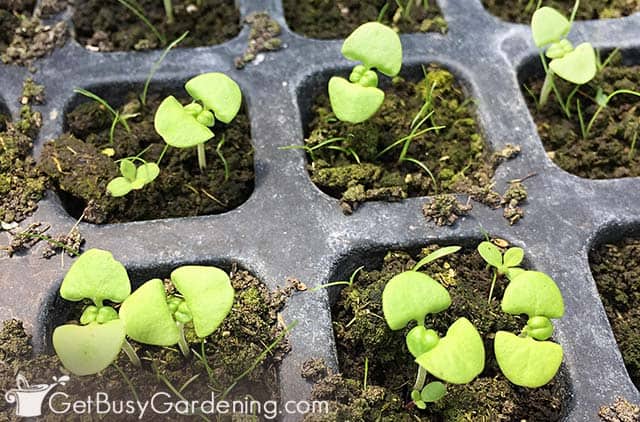
What Does Basil Look Like When It Sprouts?
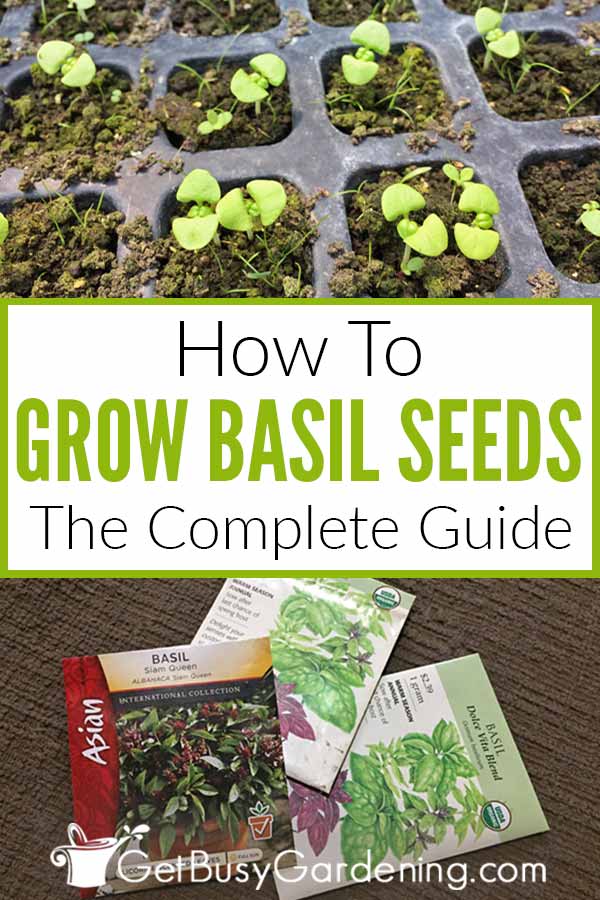
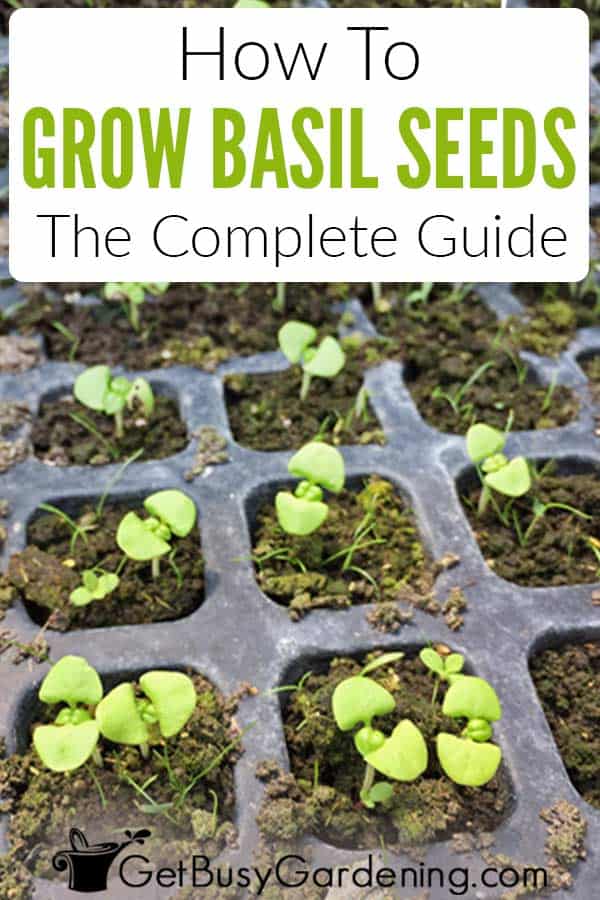
The first two leaves that grow are called the “seed leaves” (aka: cotyledons). Those look like two half circles on either side of the stem. All of the leaves that grow after the first two are called the “true leaves”.
The true leaves look like tiny baby basil leaves (they’re so cute!). They usually start to grow within a few days after the seed leaves have opened.
Basil Seedling Care Tips
When you first start to see the seedlings emerging from the soil, it’s very exciting!! But soon after you may think… uh oh, now what!?!
Yep, growing basil from seed indoors is one thing, but keeping the seedlings alive can be a whole different ballgame. Well, I’ve got you covered!
Below you’ll find detailed basil seedling care tips. You can read all about general seedling care here if you want even more details.
Light
Basil seedlings growing indoors need a lot of light to keep them from getting too tall and leggy. As soon as the first seed has sprouted, position your grow light a few inches above the tray.
If you’re a DIYer, you can make your own grow lights using an inexpensive fluorescent light fixture and plant grow light bulbs.
Keep the light 1-2 inches above the seedlings at all times. Leave it on for 14-16 hours a day, and adjust the height of the light as the seedlings get taller.
Use an inexpensive outlet timer to make it easy to give your basil seedlings the perfect amount of light.
Related Post: A Beginner’s Guide To Grow Lights For Seedlings
Water
Basil seedlings need consistently moist soil in order to grow their best. So always keep the soil damp, and never allow it to dry out completely.
They don’t like to be sitting in soggy soil though, so make sure you don’t overwater them. To protect the delicate seedlings, and help prevent mold growth, water the trays from the bottom rather than over the top.
Fertilizer
Once the true leaves start to grow, you can begin feeding basil seedlings with a weak dose of liquid fertilizer. Then slowly increase it to full strength as they get larger.
Be sure to use organic fertilizers though, because chemicals can damage the tiny seedlings. I use an organic compost solution, or brew my own with compost tea bags. Or you could use a plant start fertilizer that is specially made for seedlings.
Once they’re outside, I switch to fish emulsion, which seedlings absolutely love. But it can be a bit stinky, so that’s why I wait until they’re outside to use it.
Air Circulation
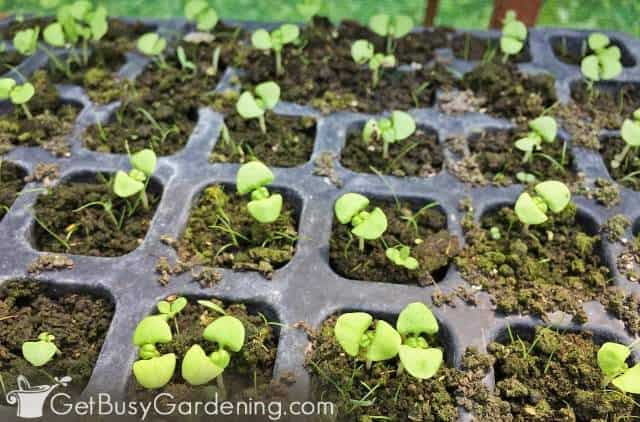
Once most of the seeds in a tray have germinated, then it’s time to give them some fresh air. This will prevent mold growth, and also help to strengthen the seedlings.
Remove the lid, and then run an oscillating fan set on low over them. Start by doing this for a little while every day, and gradually add more time until you finally plug the fan into the same timer your lights are running on.
Just be aware that once the lids are off, the soil will dry out much faster. So check the moisture level at least once per day to make sure it’s not getting too dry.
Thinning
If you planted more than one basil seed per hole, cell or pellet, then you’ll need to thin them out. Once they have grown to be a few inches tall, choose the strongest looking one, and thin the rest.
Don’t pull them out when thinning though, or it could damage the tender roots of the one you’re keeping. Instead, use a sharp pair of micro-tip snips or bonsai shears to cut them off at the base.
Repotting Basil Seedlings
Once they get going, basil seedings grow fast, and can quickly outgrow their starter trays. When this happens, it’s best to pot them up to give them plenty of room to grow.
I like to use plantable pots to make transplanting them easier (and lower the risk of transplant shock). If you don’t like using peat, and prefer a more sustainable option, coco coir and cow pots are both really great.
Of course, you could also use plastic seedling pots (which are reusable) instead of plantable ones. Whatever you prefer.
Related Post: How To Prune Basil The Right Way
Transplanting Basil Seedlings Into Your Garden
Once the weather starts warming up in the spring, we all get antsy to plant our seedlings outside! But, getting them ready for planting into the garden is a delicate process.
It’s super important to transplant them at the right time, or all of the work you put into growing basil from seed will be lost. You don’t want that, so be sure to follow these transplanting tips…
When To Transplant
Basil won’t tolerate cold weather or cold soil, so make sure you wait to transplant your seedlings into the garden until both have warmed up in the spring.
I know it’s hard to wait, but it is best to plant a little later in the spring than transplanting too early, and risk losing your seedlings to a late frost. Plus, if the soil is too cold, it will stunt basil seedling growth.
Find out how to figure out the exact timing for when to transplant seedlings into the garden here.
Hardening Off
But before you can transplant them, you must first get them used to living outside. You can’t plant basil seedlings grown indoors directly into the garden, or they will most likely die from the shock.
So make sure that you harden them off first, and do not be tempted to skip this step! Slowly transition them to life outside over a couple of weeks.
Start by placing them in a protected, shady spot for a few hours a day. Then slowly expose them to more sun, and leave them outside a little longer every day. They’ll be ready to go into the garden once they’re used to being in full sun all day.
Where To Plant
Basil grows best in a warm, sunny location. You can either plant it in the ground or in containers, it does very well either way.
They aren’t super picky about the soil, but make sure it has good drainage. Amend poor quality garden soil with compost or worm castings, or use a good container potting mix.
I like to mix an organic granular fertilizer into the soil before planting my basil seedlings, which will give them the nutrients they need to grow strong and healthy.
Spacing
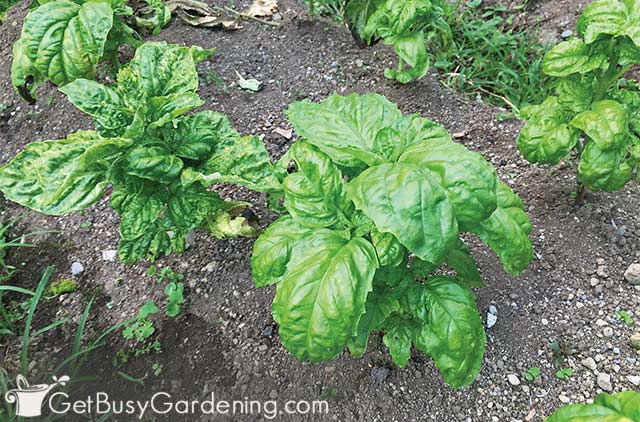
Though it can grow to be tall and bushy, it doesn’t need a ton of room. But ideally, you should space basil seedlings 6-12 inches apart.
Giving the plants plenty of room to grow will allow for ample airflow, and help to prevent diseases like powdery mildew.
How Deep To Plant
You can plant basil seedlings slightly deeper than they were in their container. Don’t plant them super deep, but deep enough to ensure their tender roots are completely covered.
How Long To Harvest Basil From Seed
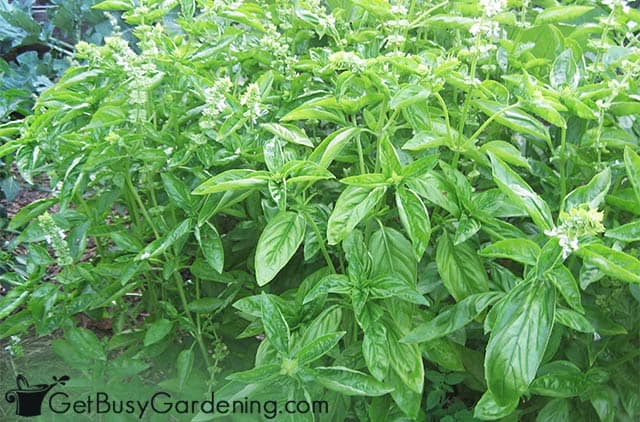
Since we eat the leaves, rather than having to wait for them to develop fruit, you can harvest at any time. The more you harvest and pinch the tops, the bushier the plants will grow.
Never remove all of the leaves from the plant though, or it may not survive. If it starts to bolt, simply pinch out the flowers, and your basil will keep producing all summer long.
Learn all about when and how to harvest basil here.
Troubleshooting Common Problems
Growing basil from seed is fun… until you start having problems, and don’t how to fix it! It can be super frustrating, that’s for sure.
So in this section, I’m going to address some of the most common problems you may have, and how to fix them. You can read more about how to fix common seedling problems here.Basil seeds not germinating – If your seeds aren’t germinating, then it’s either too cold, too wet, or the seeds weren’t viable (old seeds). Use a heat mat and fresh seeds for the best success, and make sure the soil is never soggy.
Seedlings Falling Over & Dying
When seedlings suddenly flop over at the base and die, it’s caused by a disease called seedling blight, and is usually from using dirty equipment. Unfortunately, there’s nothing you can do to save the ones that have already toppled over. Be sure to clean and disinfect the flats before using them again.
Tall, Leggy Seedlings
The seedlings will grow tall and leggy when they aren’t getting enough light. So if this is happening with yours, add a grow light.
Basil Seedlings Not Growing
If your seedlings are slow to grow, that usually means it’s too cold for them, or the soil moisture level is inconsistent. Move them to a warmer location, and make sure to keep the soil evenly moist (never saturated or dried out).
Related Post: How To Preserve & Store Basil (Leaves Or Stems)
FAQs About Growing Basil Seeds
In this section, I will answer some of the most frequently asked questions about growing basil from seed. If you can’t find the answer to your question after reading through all of this, then ask it in the comments below.
Should I soak basil seeds before planting?
You certainly can, but it is an optional step. Soaking basil seeds before planting will soften them up, and can help to speed up germination.
How deep do you plant basil seeds?
The general rule of thumb is to plant a seed twice as deep as it is wide. Since basil seeds are so small, they should only be planted 1/4″ deep.
How long does it take to grow basil from seed?
It takes 65-70 days to grow basil from seed to harvest. You may be able to start harvesting sooner than that, but make sure to wait until the plant has several mature leaves.
How many basil seeds should I plant per hole?
If you’re using brand new seeds, then you can just plant one per hole, seed cell, or pellet. If the seeds are old, or have a low viability rate, then plant 2-3 seeds per hole, and thin out the weakest once they’re 3-4″ tall.
Do basil seeds need light to germinate?
No, basil seeds do not need light in order to germinate. But you should only cover them with a thin layer of soil, and don’t bury them too deep.
How can I speed up basil seed germination?
Since basil seeds need warmth in order to sprout, adding bottom heat is the best way to speed up germination. Placing them on a heat mat will help them germinate faster. Soaking the seeds before planting can also speed things up.
Growing basil from seed is easy, and doesn’t take much time. Plus, once you know how, you’ll be able to plant any variety that you want! Simply follow the instructions in this guide, and you’ll have the best success.
Up Next: Learn how to care for basil plants in my ultimate guide.

If you want to learn how to easily grow all of your garden plants from seed, check out my Seed Starting Course. This is a comprehensive, self-paced online course that will give you step-by-step guidance and support for growing any plant you want from seed. Sign up and get started right now!
Otherwise, if you’r e just looking for a quick-start guide to growing seeds indoors, or refresher to get you going, then you should grab a copy of my Starting Seeds Indoors eBook.
More Posts About Growing Seeds
- How To Grow Parsley From Seed: Step-By-Step
- How To Grow Lavender From Seed & When To Plant
- How To Make Your Own DIY Seed Starting Mix (with recipe!)
Share your tips for how you grow basil from seed in the comments section below.

Lynn says
I started basil seeds and they started growing but are still very small sprouts 😞. I really want to keep them indoors and trying to get most light as possible in my west window is all I can do.
Problem is I can’t get them to grow any taller or any bigger. What can I do or am I doing wrong? I started the seeds with a wet paper towel in a ziplock bag and started great but now no bigger and recoverd them with bag in bigger pot.
Amy Andrychowicz says
Basil seedlings need a lot of warmth and light to grow. Make sure they’re in a warm room or put the trays on a heat mat. I would also recommend using a grow light, as a west facing window is not going to give them the light they need to grow larger, or prevent them from getting leggy. Keep the light on for 12-14 hours/day and hang it a few inches over the top of your basil seedlings.
Kate says
I can get my basil seeds to sprout easily. They grow about 1.5 inches tall and then the all start to die.
I have the sprouts in a container that is fairly moisture controlled and it’s placed on the window sill. When I’m at work ii can’t leave the blinds open so it doesn’t get good sunlight. If I’m home the blinds are open all day and it gets I direct sun for many hours.
Should I put the container outside to get the seeds better established?
What do I need to do to keep them growing so they can be used for cooking?
Amy Andrychowicz says
Basil seedlings need a lot of light in order to grow full and healthy. Without enough light, they will become weak and leggy, and likely eventually die. So, if you can’t give them enough natural light, you’ll need to get a grow light and leave it on all day. You certainly could put them outside, as long as all chance of frost is gone in your area. But be sure to harden them off to the full sun and other outdoor elements first. Also, make sure you’re using fresh soil every time, and your trays are clean and disinfected before reusing them. Otherwise your basil seedlings could be dying because of a disease caused by reusing dirty trays or soil.
Erin says
Thank you for this informative article! Once the basil seeds have germinated, do you recommend keeping the basil seedlings on the heat mat? I’ve read that basil likes fairly warm soil. Thanks!
Amy Andrychowicz says
It depends on how cool the room is. Usually, once the basil seeds have germinated, you can safely turn off the heat mat. However, if you have them in a cool room, then you can keep the heat mat on low to help the seedlings grow faster.
Erin says
The room is about 70 degrees, so it sounds like the heat mat might be overkill. 🙂 Also, I’m having some issues with mold on top of the soil. I’m being careful not to overwater, and I’ve got a fan on the seedlings. Could the heat mat be exacerbating the mold issue?
(Disclaimer: before I knew any better, I started all my seeds in potting soil. I know… ??♀️
Thanks again for your help!
Amy Andrychowicz says
Yes, absolutely the heat could be exacerbating the mold growth, it likes damp, warm soil too. 🙂 And using the regular potting soil might also be causing the mold growth. Here’s an article that can help you with the mold problem… How To Prevent Mold Growth In Your Seed Trays.
Megan says
love this very informative. I don’t have a garden so i’m growing basil seeds indoors on the kitchen windowsill – brilliant light.
They have just started to sprout. How do i make sure they keep thriving indoors?
Amy Andrychowicz says
Congrats on getting your basil seeds to grow, that’s great! The key to keeping them alive indoors is to make sure the soil is well draining, and don’t overwater them. Allow the soil to dry slightly between waterings, but never allow it to dry out completely. Also, be sure to give them as much light as possible, at least 6-8 hours of full sun. That’s hard to do indoors, especially during the winter. So you will likely need to add a grow light. Here’s more info about growing herbs indoors. Good luck!
June says
I planted some basil seeds for the first time a couple days ago and they just started to sprout! That was fast. I found your site through google. Thank you for these tips! It was so helpful (:
Amy Andrychowicz says
Great, so happy to hear your basil seeds grew so fast for you! Wonderful! You’re welcome, glad to hear you found these tips helpful! 🙂
Patrick says
I live in Phoenix area which is never really cold. I have bought Basil plants in the winter and can keep them alive in the house but the BUGs really love Basil too. For growing INSIDE is there some way to control the bugs Organically?
Outside I am currently use Neems oil and Diatomaceous earth and both seem to do a creditable job.
Hints on pests and bugs?
Amy Andrychowicz says
Soapy water is usually the best way to kill bugs on basil and other edible plants. You can also use neem oil and DE indoors, if those are what you’re already using. Here’s a good starting point to learn more about different types of plant bugs, and how to get rid of them… How To Get Rid Of Houseplant Bugs Naturally. And here’s more information about growing herbs indoors.
John says
Dear,
I wish to grow basil seeds. Could you please let me know the uses of the leaves.
Amy Andrychowicz says
There are tons of uses for them in cooking. I like to make basil pesto with mine… How To Make Pesto Using Fresh Basil
Mariam Husen says
I love lemon basil,it’s similar with lemon grass aroma .To make that plant long life ,cut the stems of flower regularly,don’t let them become seeds.
If you want to plant some new of them,you can take some of young and soft stem without any flowers , plant in a pot with good soil.
Amy Andrychowicz says
Wonderful, thanks for your tips about growing lemon basil!
EMMA Godwin says
How can I get basil seed I live in Lagos Nigeria
Amy Andrychowicz says
Check your local garden centers, or wherever you can buy seeds in your area.
Shravan Sethi says
I have basil Seeds I am eating can I plant these Seeds direct in plastic pot pls help
Amy Andrychowicz says
Sure, you can use plastic pots to grow your basil seeds. Just cover the soil with plastic until the seeds germinate. Bottom heat will help to speed up germinate.