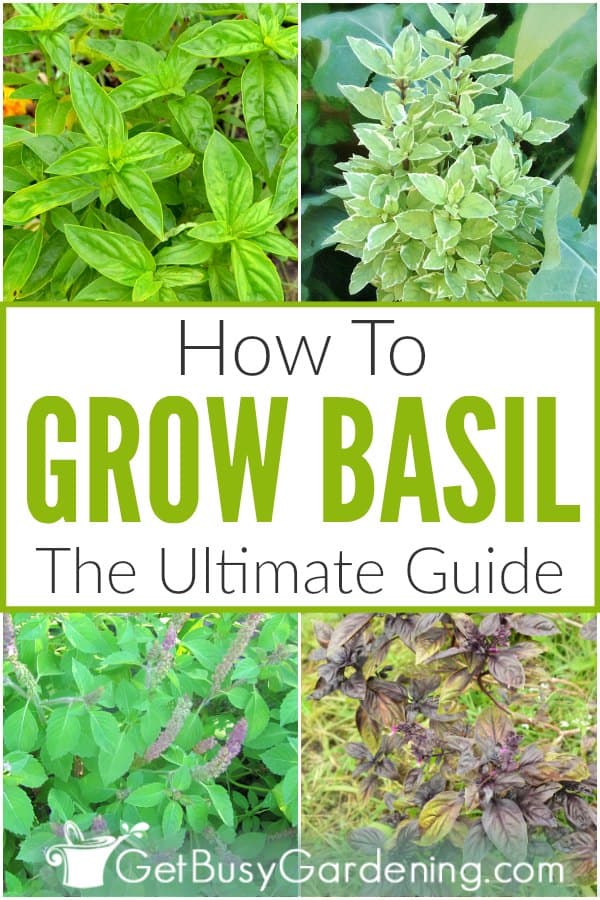
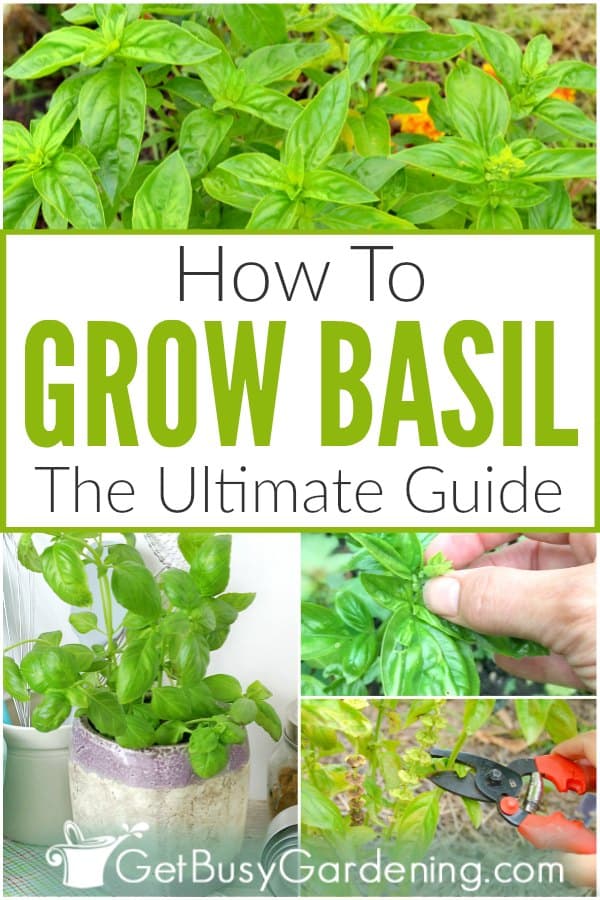
Growing basil is pretty darn simple, and oh so rewarding! In this post, you’ll learn all you need to know about basil care. Including detailed instructions for planting, sunlight, watering, fertilizer, soil, harvesting, and more!
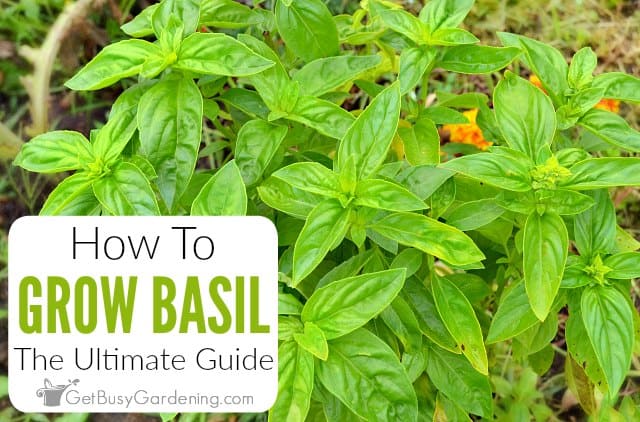

Basil is a common ingredient in many dishes, and a staple in most kitchen spice racks. But what’s better than buying it from the grocery store? Growing your own!
I’ve been growing herbs for as long as I can remember, and this is one that I always make sure I have plenty of. There is nothing better than using it fresh from the garden.
Below, you will learn everything necessary to grow basil, either outdoors or inside the house. I’ll give you specific care instructions to help you be successful.
Plus, you’ll get tons of information about hardiness, planting, harvesting, propagation, troubleshooting problems, and much more.
Basil Plant Care Overview
| Scientific name: | Ocimum basilicum |
| Classification: | Herb |
| Common names: | Basil |
| Hardiness: | Annual |
| Temperature: | 70-85°F |
| Flowers: | White or pinkish, blooms late summer or early fall |
| Light: | Full sun |
| Water: | Consistent, even waterings, do not overwater |
| Humidity: | Average |
| Fertilizer: | General purpose plant food in spring and summer |
| Soil: | Fast-draining, fertile soil |
| Common pests: | Aphids, beetles, slugs |
Information About Basil Plants
Basil (Ocimum basilicum) is a member of the mint family (Lamiaceae), but it’s not invasive like many of its relatives can be.
One main thing that all of the plants in this family do have in common is the extremely aromatic leaves. I’m sure everyone is very familiar with that little tidbit!
This lovely herb makes a wonderful addition to any garden, and when grown near tomatoes, is said to make them taste sweeter.
Hardiness
Basil is an annual plant, so it will only survive one growing season in the garden. This tropical herb is also extremely sensitive to cold temperatures, and cannot tolerate even a light frost.
For these reasons, you should either plant it as a summer annual outdoors in pots or the garden, or grow it indoors.
Types of Basil
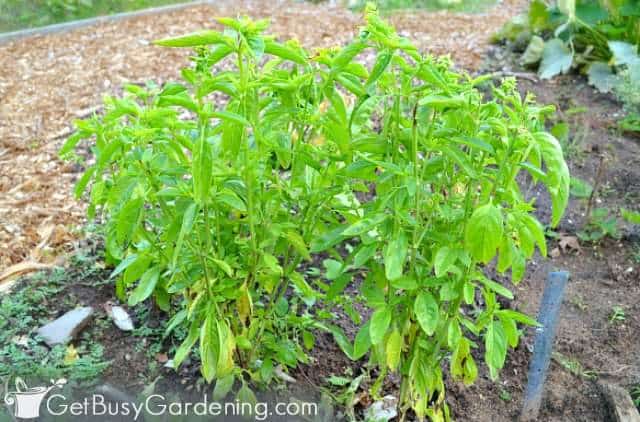
There over a hundred different types of basil to choose from. These species vary in color, appearance, and even flavor. Some varieties that you might want to try include:
- Sweet Basil – Considered the original Ocimum basilicum, this variety can grow to be 12 – 24 inches tall, and is full of that distinct flavor that we all know and love.
- Genovese – A larger, more robust version of the original sweet basil, this improved variety also has a stronger flavor, and is slower to bolt.
- Lemon Basil – This variety has elongated pale green foliage, and a distinct citrus flavor. The white stalk-like blooms that emerge in late summer will fill your garden with a sweet lemon fragrance.
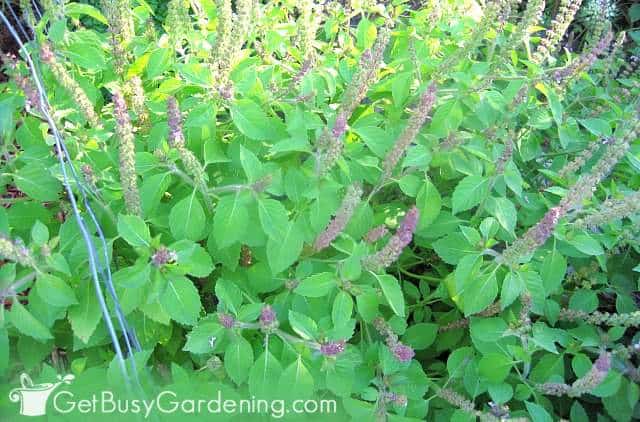
- Cinnamon Basil – Also referred to as Mexican Basil, this one is considerably larger than the other types on this list. It can grow to be 3′ tall by 3′ wide, with serrated green foliage on pale purple stems, and gets attractive flower spikes. The flavor and aroma are also unique because it contains cinnamate.
- Sweet Thai – Commonly used in Asian dishes, this is both beautiful and flavorful. Characterized by its bright green foliage, with dark purple stems and flower spikes. It has a slight licorice flavor that sets it apart from other varieties.
- Tulsi Holy – Another popular variety, this one is commonly used in Indian dishes. The highly fragrant leaves have a unique, slightly fruity smell, and mildly spicy flavor to them.
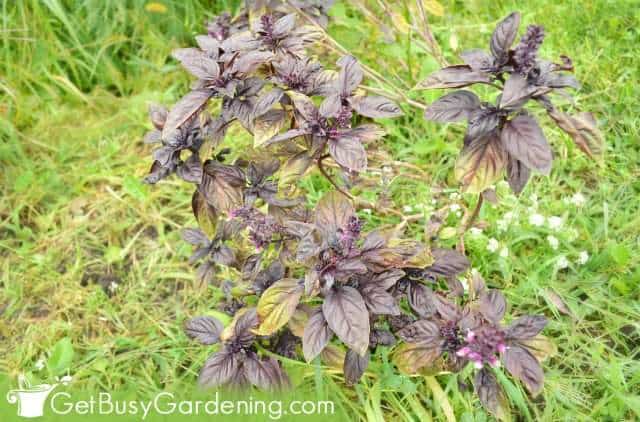
- Purple Basil – This attractive plant has lovely, dark purple foliage, and looks gorgeous in the garden or containers. For that reason, it is favored as both an herb, and as an ornamental plant.
Where To Grow Basil
One of the things I love the most about growing basil is that I can plant it just about anywhere. It does great in the garden, in outdoor containers, and even indoors.
Growing Basil Outdoors
Basil likes a lot of heat, and thrives when it receives temperatures above 65F degrees. It also requires 6-8 hours of sunlight daily, and fast draining soil.
So choose a sunny spot in your garden that has good drainage. You can amend poor quality soil with compost, coarse sand, or perlite.
They are also an excellent choice for outdoor planters and containers that can be placed on a sunny patio, balcony, or deck.
Basil Care Indoors
Unless you live in a hot climate, you should consider growing basil indoors throughout the colder months of the year.
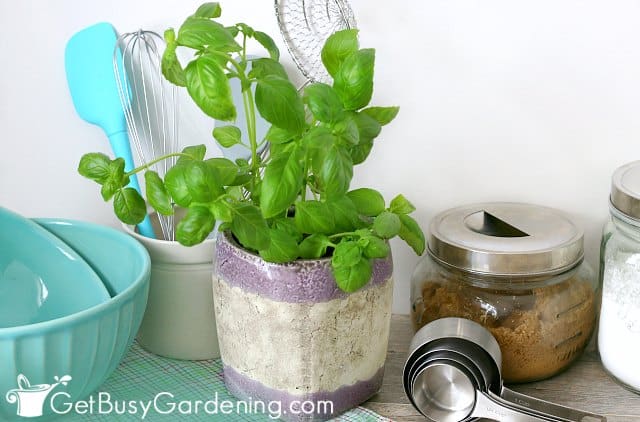
It can be an attractive addition to a kitchen window, but choose your container wisely. Select a pot with adequate drainage holes in the bottom, and fill it with quality potting soil.
They also require a lot of light indoors. So choose a sunny window, and be sure to add a grow light if they start to become leggy.
How To Grow Basil
Before I jump into the specific basil plant care instructions, it’s important to understand a few things about planting them for the best success.
When To Plant
As I mentioned above, basil plants cannot tolerate frost. So wait to plant it outside until all chance of frost has passed in late spring or early summer.
It is not beneficial to plant it early, because the cold will stunt its growth, and can cause other problems. So wait until the soil has warmed up, and nighttime temps are above 55F before planting it outside.
Tips For Planting Basil
When it comes time for planting the starts or homegrown seedlings, the steps are the same. Just be sure to give them plenty of space to help prevent disease and mildew issues.
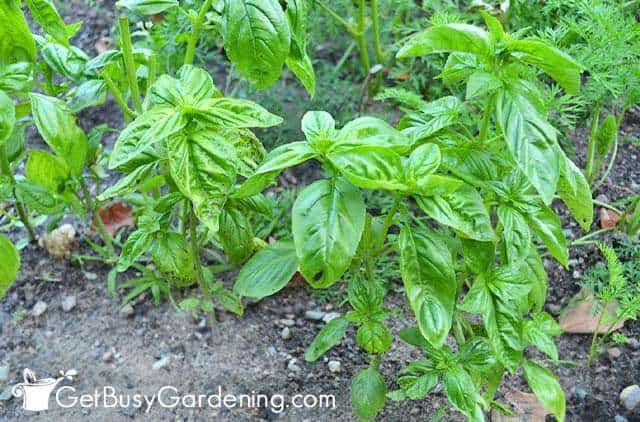
Dig a small hole in your garden that is slightly larger than the pot. Gently break up the roots, and place it into the hole. Fill in the hole, then pat the soil until the plant is sitting securely.
Related Post: How To Make Basil Pesto Using Garden Fresh Basil
Basil Plant Care & Growing Tips
It’s pretty easy to grow basil, but there are a few things you need to understand in order for them to thrive. Follow detailed basil plant care instructions below for the best results.
Soil
The best soil for growing basil is a rich, organic, well-draining mix. Before planting, your garden soil should be loose and workable.
You can amend poor quality garden soils with worm castings or compost, and mix in some coarse sand or perlite to help improve drainage.
Use a quality container mix for outdoor pots, and a general purpose potting soil for indoor plants.
Water
Proper watering is by far the most important part of basil plant care. It’s also the main thing that most people struggle to get right.
Since it’s such a rapidly growing plant, it needs frequent waterings. However, it is very sensitive to overwatering, and won’t survive very long in wet soil.
On the flip side, keeping it too dry will cause the plant to suffer, and bolt prematurely. So it’s best to keep it consistently moist, but never soggy or completely dried out.
It’s also very important to avoid watering over the top of the foliage, and focus your efforts on the root zone instead. Wet leaves are the breeding ground for fungus and diseases, which can quickly become a huge problem.
Allow the top inch of soil to dry between waterings, then give it a good, deep drink. If you struggle with watering, I recommend getting an inexpensive moisture meter to help make it easy.
Fertilizer
Basil plants aren’t heavy feeders, but they will benefit from being fertilized once and a while, as long as you give them the right kind of food.
Don’t use any type of fertilizer that is high in phosphorus, because that will encourage blooming, and you don’t want your plant to bolt prematurely.
To make it super easy, I like to add an organic granular herb fertilizer to the soil before planting. Then I will top-dress it sometime in the middle of the summer.
I also feed them with an organic liquid fertilizer once or twice throughout the season. My favorites to use are either an organic compost tea, or liquid kelp.
If you keep it indoors, don’t fertilize basil at all during the fall and winter months. You can learn more about feeding herbs here.
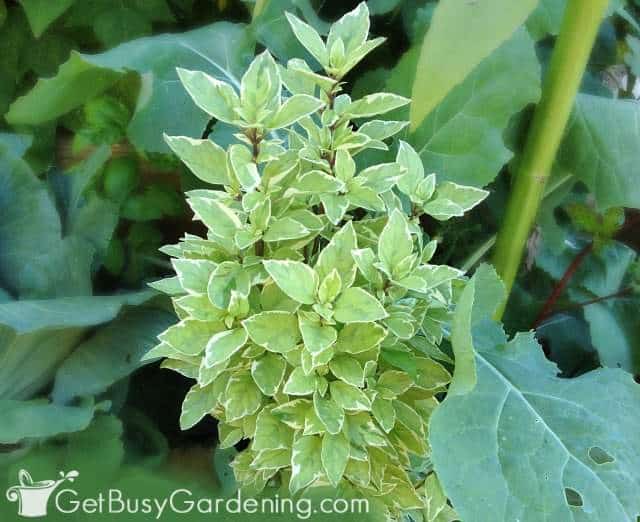
Sunlight
Outdoors, basil grows best when it receives 6 to 8 hours of sunlight. It does not need to be in direct sun, and will do just fine in a partial shade garden. But it won’t produce as well if it gets too much shade.
Indoors, it will require a lot of light to prevent it from getting leggy. Place it in a sunny window, or add a grow light if you notice it’s starting to reach for the window.
Related Post: 15 Herbs To Grow In Your Shade Garden
Flowers
Basil flowers are pretty, and the bees love them. The tiny blooms grow on tall spikes, and can be anywhere from white, pink, or dark purple in color, depending on the variety.
Some people think that the flavor diminishes once the plant starts blooming, though I have never noticed a difference in the taste myself.
However, the flowers do steal energy away from the plant, slowing the production of new leaves. So, it’s best to remove the bloom spikes as soon as they begin to form, if you plan to continue harvesting.
Related Post: How To Dry Basil (5 Best Ways)
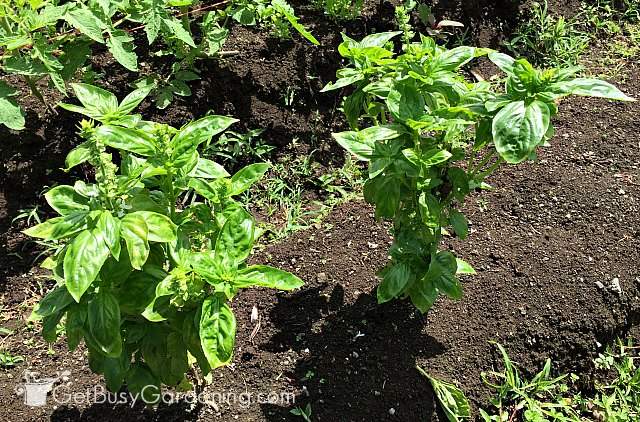
Pruning
Regardless of the variety that you choose to grow, all types of basil will benefit from being pruned regularly.
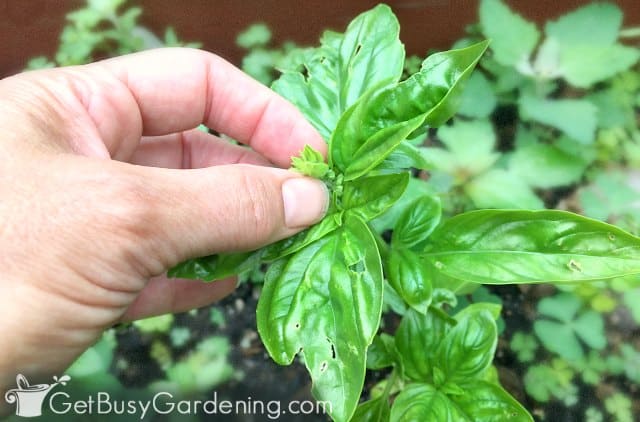
Once it’s established, remove the top half of the plant to encourage branching. This will make it much fuller, and more productive.
Regular pinching and pruning is also a great way to control the size and shape, and will result in a larger harvest.
You should also pinch off the flowers as soon as they begin to form. That will extend the length of your harvest, and help to keep the plant looking its best.
Learn exactly when and how to prune basil, with step by step instructions.
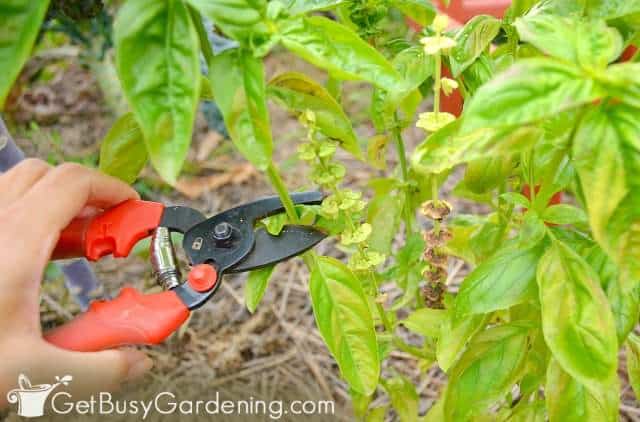
Pest Control
You’ll be happy to learn that one of the easiest things about basil plant care is that you won’t need to worry too much about bugs.
Sometimes pests like aphids can become a problem. So if you do see bugs on your plants, then try washing the leaves with organic insecticidal soap, or a diluted mild liquid soap.
Test it on a few leaves first, to make sure it won’t damage the plant, and only use them early in the morning.
Fungus & Disease Control
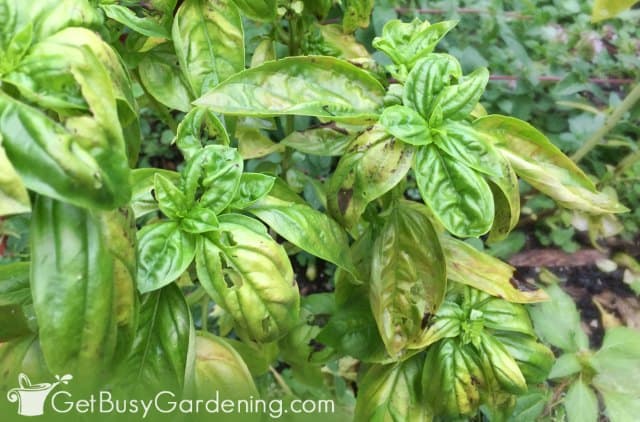
Probably the biggest problem you’ll run into when growing basil is issues with fungus and disease, such as fusarium wilt or downy mildew.
Once the symptoms appear, there is very little you can do to treat the plant. Therefore, it’s best to concentrate your efforts on prevention rather than treatment.
Fusarium wilt causes stunted growth and yellowing leaves on affected plants. The old fashioned sweet basil is the most susceptible to this. So consider planting one of its disease-resistant hybrids.
Downy mildew is another common problem, causing a white, gray, or brownish colored “powder” to grow on the leaves.
One of the best ways to to prevent disease and fungus issues is proper plant spacing. This will allow for adequate air circulation between them.
It’s also important to keep the leaves dry. So watering the plants at the base, rather than over the top, will also help with prevention.
Related Post: How To Preserve & Store Basil (Leaves Or Stems)
Tips For Harvesting Basil
As I mentioned above, basil benefits from being harvested regularly, and doing so will encourage it to produce even more delicious leaves.
Pinch or snip out the tender tips of the branches when harvesting, and repeat regularly throughout the summer for a continual harvest.
You can pick basil leaves any time you want, but wait until the plant is established, and has several leaves. You can learn all about harvesting the leaves here.
Basil Plant Propagation
Basil can be propagated by either taking stem clippings, or growing the seeds. The fastest way to get a larger plant is by taking cuttings.
Take 3-4″ long cuttings from non-flowering branches. Remove the bottom leaves, then place it into moist soil or water. If you want to give it a try, learn all about how to propagate it here.
The seeds can be a bit fussy, so get the step-by-step instructions for starting them from seed here. For best results, start them indoors 6-8 weeks before your average last frost date in early spring.
Troubleshooting Basil Care Problems
When it comes to growing basil, the hardest part is when you start having problems that you have no idea how to fix.
So in this section, I will help you troubleshoot the most common issues you’ll run into, and give you tips for fixing them.
Yellow Leaves
When the leaves turn yellow, it’s usually caused by either fusarium wilt disease, or a lack of nitrogen in the soil.
Test the soil for a nutrient deficiency, and amend it as necessary. The only thing you can do with a diseased plant is to remove and destroy it.
Brown Leaves
If the leaves are turning brown, then probably means that you’re under watering. Never allow the soil to dry completely.
If you recently moved the plant outdoors, then it could be sunburn. Move it to the shade, and take several days to slowly acclimate it back to its full sun location.
Powdery Substance On Leaves
A white, brown or grayish colored powder on the leaves is caused by downy mildew. Once infected, there’s not much you can do to save it. It’s best to remove it in order to prevent the spread to nearby plants.
Basil Not Growing
If your plant isn’t getting any bigger, then it’s likely either too wet or too cold for it.
Allow the soil to dry slightly between waterings, and make sure the air temperature is above 65F degrees. Too much shade will also slow its growth, so try giving it more sun.
Weak Or Leggy Growth
This is usually only a problem indoors. Leggy or weak growth means it’s not getting enough light. Move it to a sunny window, or place a grow light above it.
Plant Is Wilting
This is usually caused by either over or under watering. But wilting leaves can also be caused by either disease or fungus issues.
Be sure you’re watering consistently, and check the leaves for signs of infection.
Bolting / Flowering / Setting Seed
Also referred to as “going to seed”, bolting is a normal part of the lifecycle, and will happen eventually no matter what you do.
To slow it down, make sure you’re watering properly, don’t use a high-phosphorus fertilizer, and pinch out the flower spikes as soon as they begin to form.
Basil Plant Care FAQs
In this section, I’m going to answer the most frequently asked questions about growing basil. If you can’t find an answer to your question here, then ask it in the comments below.
Does basil need direct sunlight?
Though it will perform best with 6-8 hours of sunlight per day, you can also grow basil in partial shade. Just keep in mind that it may not grow as fast, or produce as much if it’s too shady.
Why do my basil plants keep dying?
The most common causes of death for basil plants are improper watering, and fungus/disease problems.
Ensure you’re giving it a consistent amount of water, never saturated or totally dry soil. Diseased plants should be pulled out and destroyed.
How long does basil live?
Since it’s an annual plant, basil will die after each growing season. Some varieties may live much longer than one year though.
Does basil come back every year?
No. Once basil dies in the fall, it will not grow back again next year. Some types do self-seed though, so yours may grow back from self-sown seeds.
Is it better to grow basil inside or outside?
It’s always better to grow basil outside in a sunny location whenever you can. However, you can also try planting it inside in a container or hanging basket during the colder months. It does fairly well indoors with the right care.
How do you harvest basil without killing the plant?
One of the best things about growing basil is that it will give you a continual harvest. Simply pluck or pinch off a few leaves or stems at a time. To avoid killing the plant, never remove all of the leaves at once.
Growing basil in your garden or containers is easy, especially when you understand the proper care instructions. Once you get the hang of it, you’ll be rewarded with tons of fresh basil whenever you need it!
More About Herb Gardening
- How To Grow Rosemary: The Ultimate Guide
- How To Grow Ginger Root Indoors Or Outside
- How To Care For Lavender Plants
- How To Grow Cilantro (Coriander) Plants
- How To Grow Dill At Home
Share you best basil plant care tips in the comments section below!

john ernest barrowclough says
I carried my Basil thru the winter inside, it is now outside and doing great but with two problems (1) no smell (2) no taste.
Amy Andrychowicz says
I would try pruning your basil plant to see if you can trigger fresh new growth.
Dass says
Awesome! So much details and information on growing the holy Basil. I tried a few times but failed.
But this time with the tips you have given I’m more confident to grow the plant successfully.
Thank you very much.
Amy Andrychowicz says
You’re welcome! So happy to hear that you found this article so helpful! 🙂