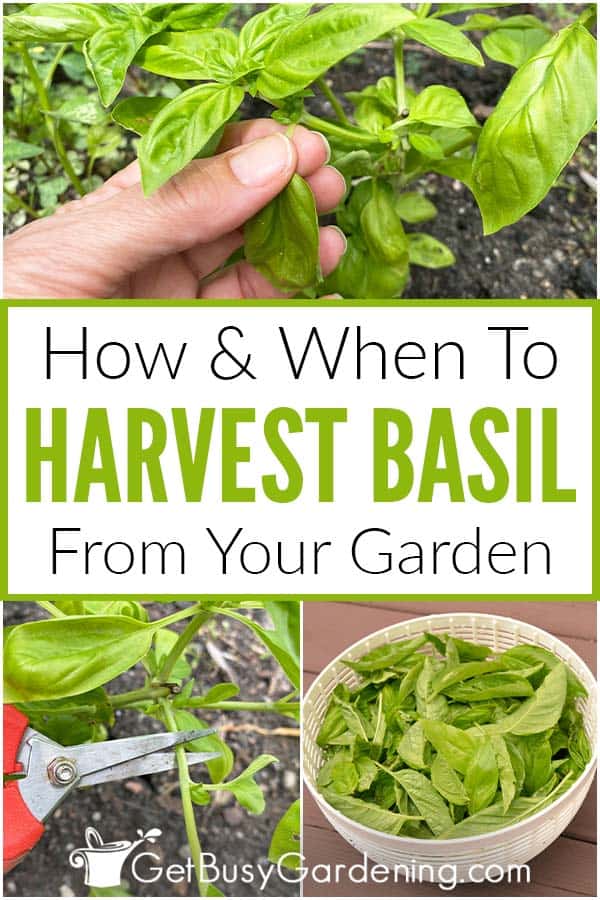
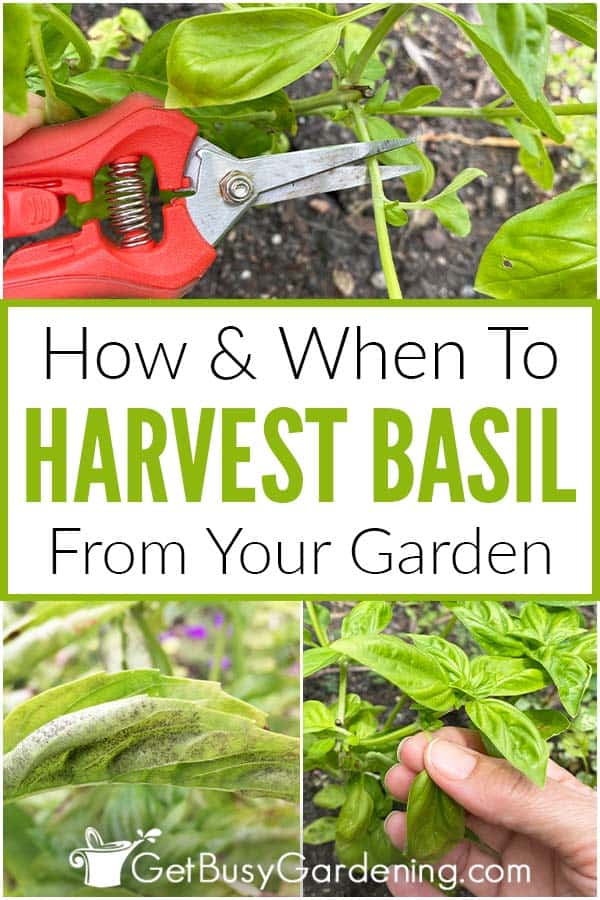
Harvesting basil is very easy, and doesn’t take much time. In this post, I’ll show you exactly how and when to pick basil leaves for the largest yield and freshest flavor. I’ll even give you tips for washing and using it after you harvest it too.
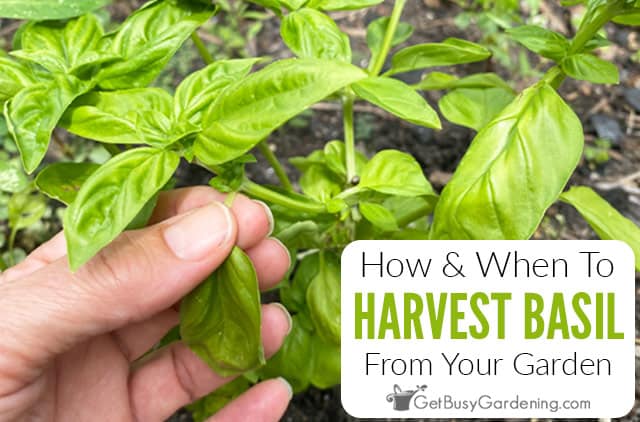

The great thing about harvesting basil is that is it quick and simple. Since it’s a cut-and-come-again herb, the more you pick it, the more you’ll get.
It only takes only a few minutes, so you can go out and pluck fresh basil from the garden any time you need to use it in the kitchen.
Keep reading to learn my best tips for when and how to harvest basil from your garden, and what to do with it afterward.
When To Harvest Basil Leaves
The best time to harvest basil is when the plant has lots of leaves, but hasn’t started to flower yet. You can still pick it after it has flowered, the flavor doesn’t change.
But the flowers steal energy from the plant, so there won’t be as many leaves if you let it bloom.
It’s best to pinch off the flowers as soon as they start forming, which will create a fuller plant (and a larger harvest!).
Also, try to do it on a cool day, when your garden is well hydrated. The leaves on a dehydrated basil plant will be thin and wilted.
What Part Of Basil Do You Harvest?
The leaves are what you’re after when harvesting basil. You can also use the tender new stems on the top of the plant. But the older part of the stem at the bottom is too woody and tough to eat.
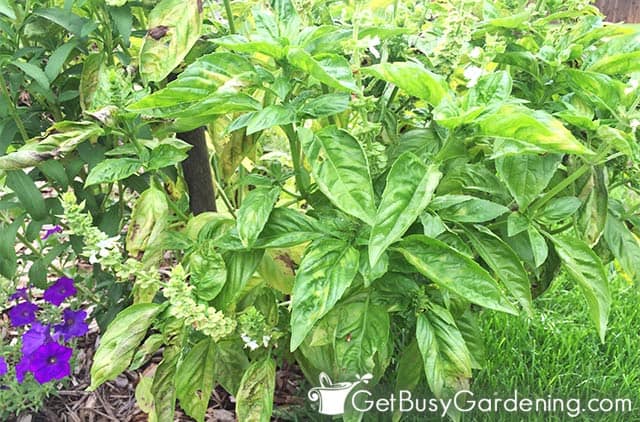
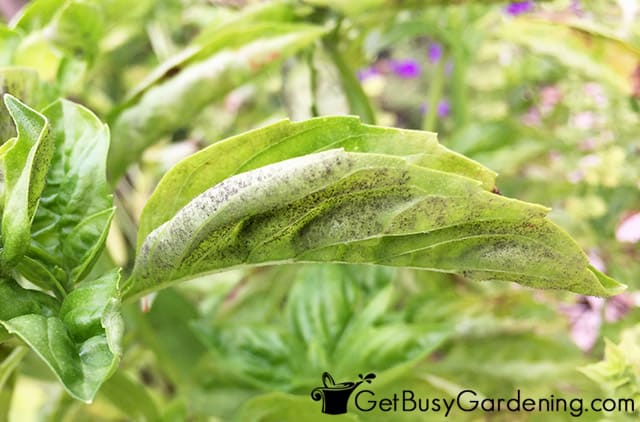
Mildew can be a big problem with basil, so make sure to select only the healthiest, freshest leaves. Check each one, and discard any that show signs of disease, and those that are turning yellow or brown.
Relate Post: How To Grow Basil: The Ultimate Guide
How To Harvest Basil
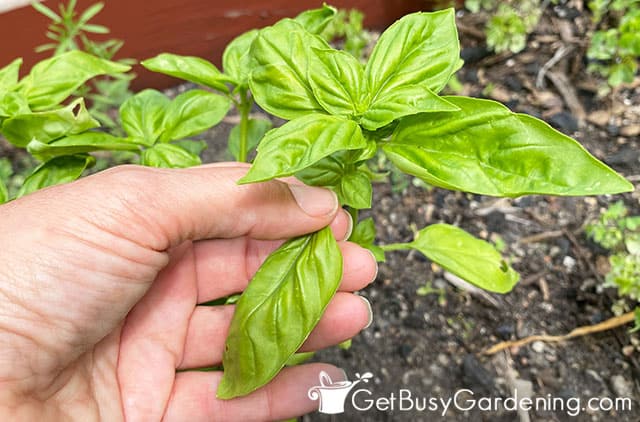
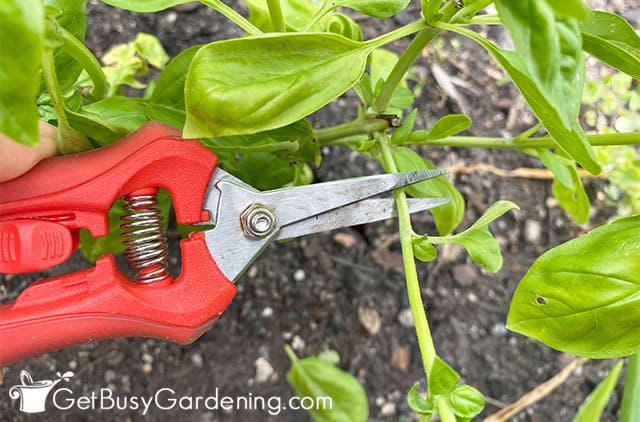
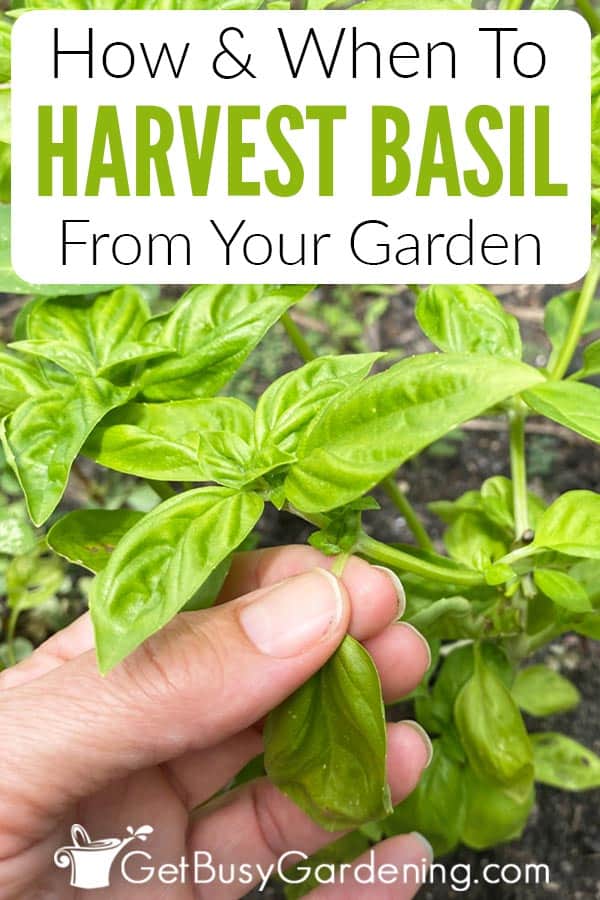
To harvest basil leaves, simply pinch off each individual one, or cut them off using a sharp pair of precision pruners.
To make it a bit easier, you can cut entire stems, and bring the whole bunch into the house.
As you pluck them, drop them into a basket or bowl. Make sure to keep them out of direct sunlight so they don’t wilt.
You can pinch or snip out the tender new tips on your basil plant to encourage branching, for an even larger harvest. This will make your plant last longer too.
Related Post: Free Garden Harvest Tracking Sheet & Guide
How Often Can You Harvest Basil?
Basil is a cut-and-come-again plant that you can harvest from again and again, all summer long. In fact, the more you pick them, the more the plant will produce.
For the biggest bounty possible, be sure to pick the leaves or pinch out the flowers and tender tips as often as you can.
Related Post: How To Dry Basil (5 Best Ways)
What To Do With Fresh Basil From The Garden
You can use freshly harvested basil right away, or you can refrigerate it for a couple of days.
My favorite ways to use basil are to make pesto, or enjoy a fresh caprese salad (with tomatoes, mozzarella cheese, and balsamic vinegar… heavenly!).
Or simply drop a few fresh leaves into your favorite pasta dish or salad. If you want to keep it and use it over winter, then try these methods for storing it.
Washing Basil Before Use
Unless the leaves are dirty, you don’t need to wash them before use. If there’s dirt on them, then you can give them a quick rinse in the sink.
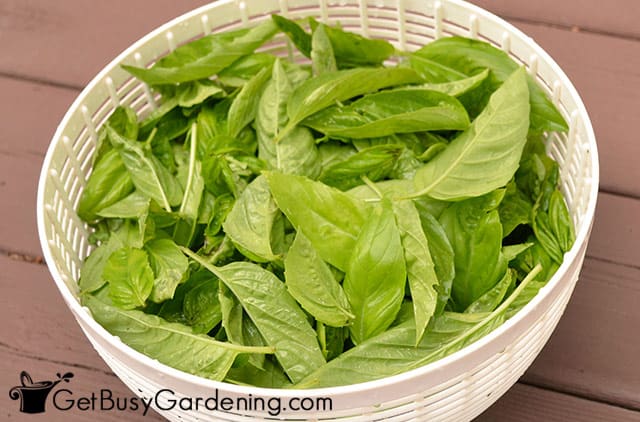
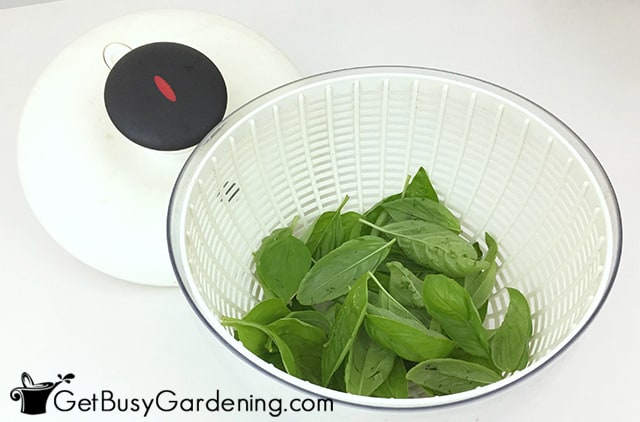
I find it easiest to drop them into a bowl of water, and gently swish them around. Then I drain them, and repeat the process until the water is clear. I use my salad spinner to spin them dry, which works great!
Make sure you dry them off right away, and don’t allow them to soak in water for any period of time, or they will turn brown very quickly.
Related Post: How To Grow Basil From Seed: Complete Guide
FAQs About Harvesting Basil
In this section, I’ll answer some of the most frequently asked questions about harvesting basil. If you can’t find an answer to your question here, then ask it in the comments below.
Does basil regrow after cutting?
Yes, basil will regrow after cutting. In fact, the more you prune it back, the bigger your harvest will be. To keep those yummy leaves coming, pick them regularly.
You can also pinch off the tips of the plant, as well as the flowers as they form, and you’ll get even more yummy leaves.
Can I harvest basil after it flowers?
Yes, however if you allow basil to bloom, your overall harvest will be smaller. It’s best to pinch off the flowers as soon as they begin to form.
This will help encourage the plant to produce more leaves, instead of using all of its energy on flowering. If it’s already blooming, don’t worry! You can still harvest from it, it doesn’t change the flavor.
Now that you know how to harvest basil, you can keep your plants bursting with new leaves all season long. Don’t forget to save a little extra for the winter months too!
Recommended Books
- Homegrown Herbs: A Complete Guide to More than 100 Herbs
- The Herb Book: The Most Complete Catalog of Herbs Ever Published
- The Complete Book of Herbs: A Practical Guide to Growing and Using Herbs
- The Cook’s Herb Garden: Grow, Harvest, Cook
More Garden Harvesting Posts
- How & When To Harvest Sage Fresh From Your Garden
- When & How To Harvest Rosemary Leaves & Sprigs
- How & When To Harvest Parsley
- How To Harvest Chives & When To Pick Them
Share your tips for harvesting basil in the comments section below.

Leave a Reply