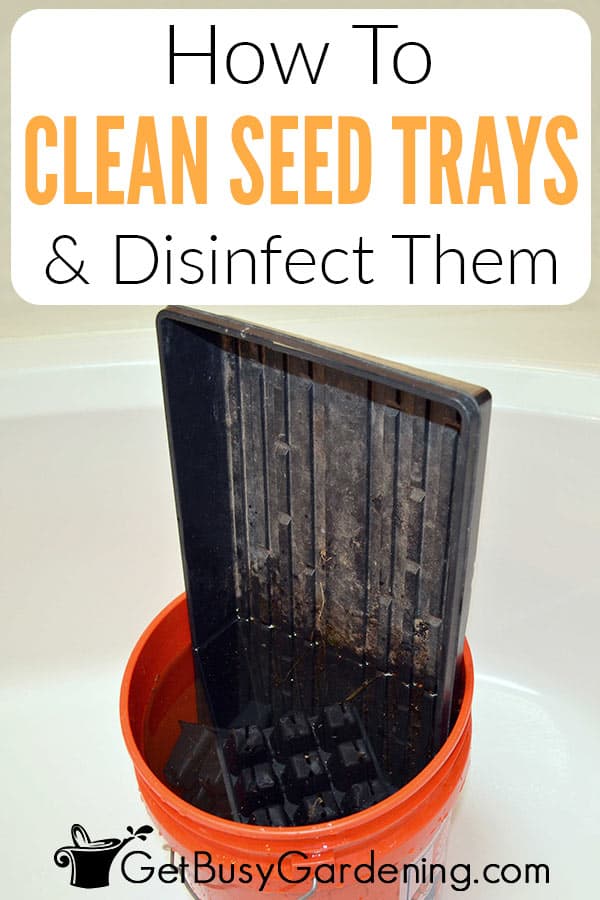
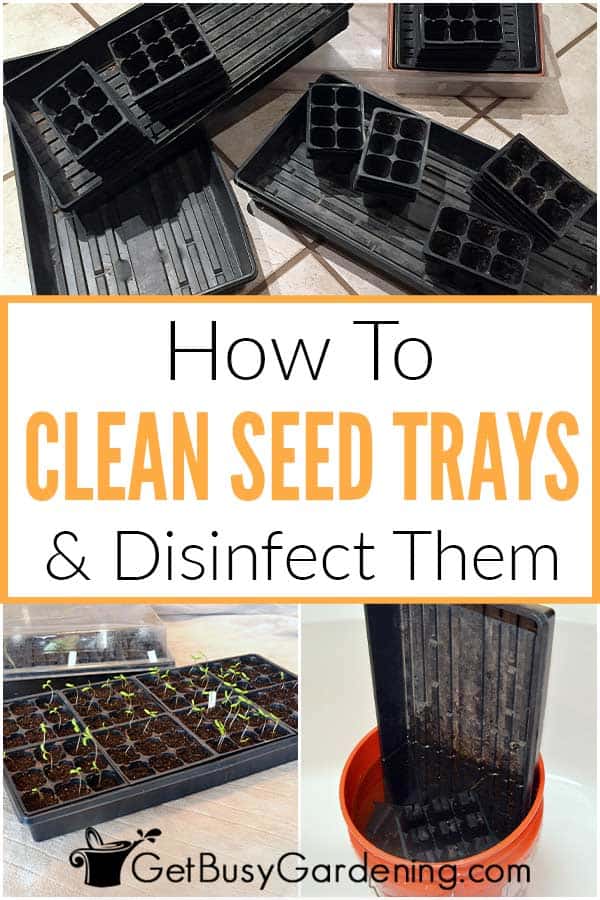
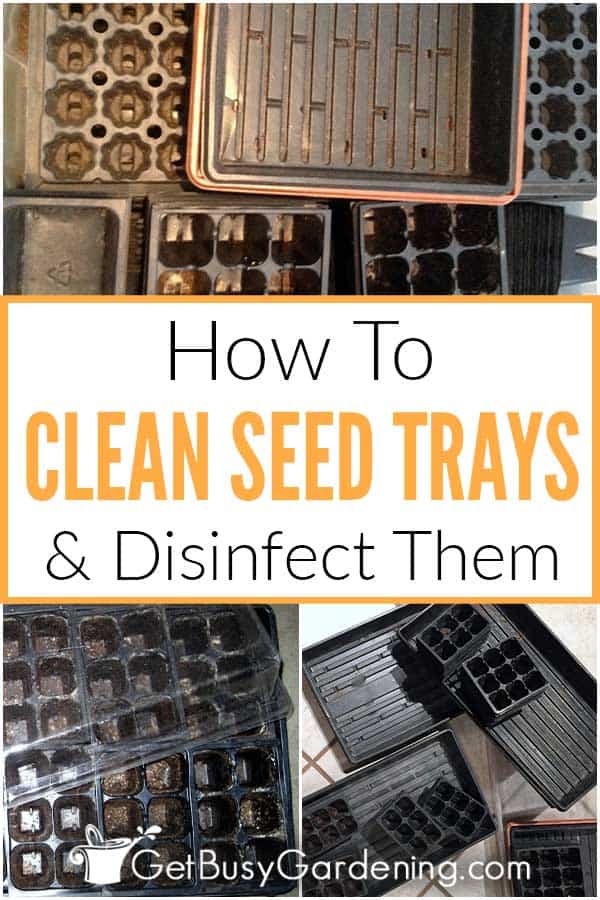
If you’re planning on reusing plastic seed trays year after year, then it’s essential that you clean and disinfect them first.
Using dirty equipment is a very dangerous practice, and a common mistake that new gardeners make. Don’t worry, sanitizing your seed trays isn’t difficult.
In this post, I’ll tell you why it’s important, when to do it, what to use to sterilize them, and give you the complete step-by-step instructions for how to do it the right way.
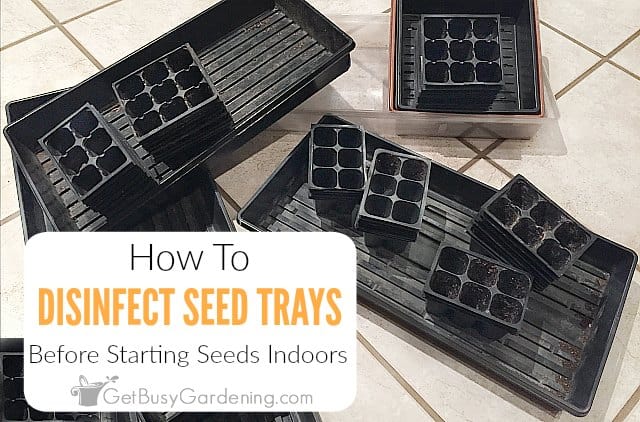

Why You Should Clean Your Seed Starting Trays
Dirty trays, cells, and pots can carry diseases, bacteria, fungus, mold spores, and pests that could damage or even kill your seedlings.
Some of these harmful organisms can lay dormant for years, and wake up as soon as you add soil, water, and heat.
The worst part is that you’ll never even know they’re there until your seedlings start having problems. So the only way to safely reuse seed trays is to thoroughly clean and sanitize them.
Related Post: How To Get Rid Of Mold Seedlings
Do You Really NEED To Sanitize Them?
Well, technically you don’t HAVE to sterilize them, and you may never have any issues using dirty seed trays. But it is a very dangerous risk to take, and a recipe for disaster.
Trust me, I learned this lesson the hard way. I never had a problem with it… until I did. One day I woke up to discover that almost all of my beautiful seedlings had dropped dead overnight. It was heartbreaking, and a huge waste of my time and money.
I had to toss everything out. It was too late to start over, so I ended up having to buy most of my seedlings that year. I hope that you will never go through this painful experience – but if you do, you certainly won’t skip sanitizing your seed trays ever again.
Related Post: How To Care For Seedlings: The Ultimate Guide
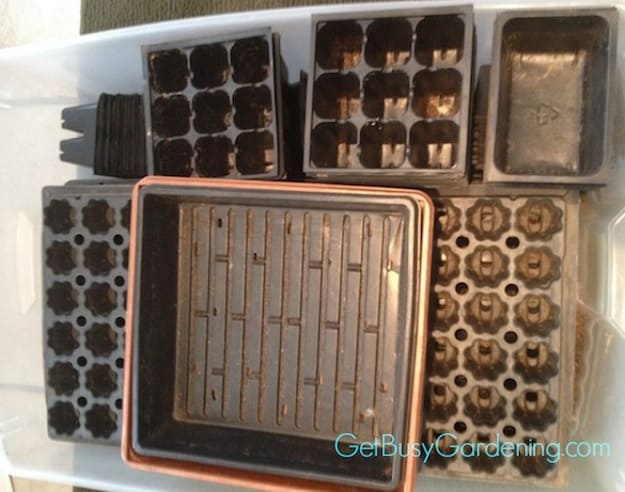
When To Wash & Sanitize Seed Starting Trays
The best time to clean and sterilize your seed trays is right before you plan to use them. Don’t waste your time doing it any sooner, because they will just get dirty again in storage.
What To Use To Sterilize Them
There are several natural and chemical cleaners you could use to sanitize your seed trays. Below are the most popular choices, and how they work:
- Soap – I highly recommend using liquid castile soap, it’s my favorite. Not only will soap wash away the dirt, it can also kill some of the harmful organisms.
- Vinegar – Good old white vinegar is great for removing any caked-on grime, calcium, and water spots. It also has some disinfectant properties, but it won’t kill everything.
- Hydrogen peroxide – H2O2 works to destroy various types of bacteria and diseases, so this will also help to sanitize your seed trays.
- Bleach – If you already have it on hand, then you can use a solution of 1 part bleach to 9 parts water to sterilize your trays.
- Rubbing alcohol – Another great disinfectant, rubbing alcohol kills many different types of fungi, mold, bacteria, diseases, and pests. However it can weaken the plastic over time.
How To Disinfect Seed Starting Trays
Below are the steps that I take to clean and sterilize my seed trays every year to prepare them for planting. I’ll also give you some other options and tips for the best success.
Supplies Needed:
- Mild liquid soap
- Large plastic bin or wash tub
- Small bristle brush
- Clean rag or towel
- White vinegar*
- Hydrogen peroxide (3%)*
- Spray bottle(s)
*Caution: Do NOT mix vinegar and hydrogen peroxide together, as it can create a toxic chemical reaction.
Instructions:
Step 1: Wash with soap and water – Wipe the loose dirt and debris out of the plant trays and inserts with a rag or a small cleaning brush. Then wash them using warm water and mild soap, and rinse them off.
Step 2: Disinfect with vinegar – Mix a solution of half white vinegar and half water, and pour it into a spray bottle. Then thoroughly spray the insides and outsides of your seed trays and inserts, and let them sit for 10-20 minutes.
Alternatively, you can fill a large plastic bin with the 50/50 solution and soak them instead of spraying them. This is what I recommend to clean off any hardened or crusty buildup. Either way, be sure to rinse everything off very well afterward.
Related Post: Peat Pellets Vs. Seed Starting Soil: Which One Should You Use?
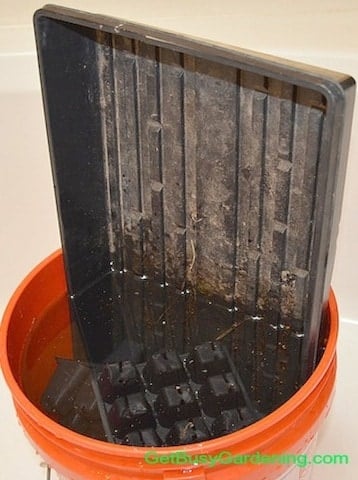
Step 3: Sanitize with hydrogen peroxide (optional) – The soap and vinegar should be enough to clean and disinfect your seed trays. But if you want to be extra safe, or you’ve struggled with disease problems in the past, then you can sanitize them with hydrogen peroxide as well.
Simply spray it on, undiluted, and let the trays sit for 10-20 minutes, or soak them in it if you prefer. Then rinse them off.
Step 4: Let them dry – You can just let them air dry, or wipe them down with a towel if you’re impatient. They don’t have to be completely dry before you use them though, so you don’t have to be too fussy about it.
Related Post: How To Make Newspaper Seed Starting Pots
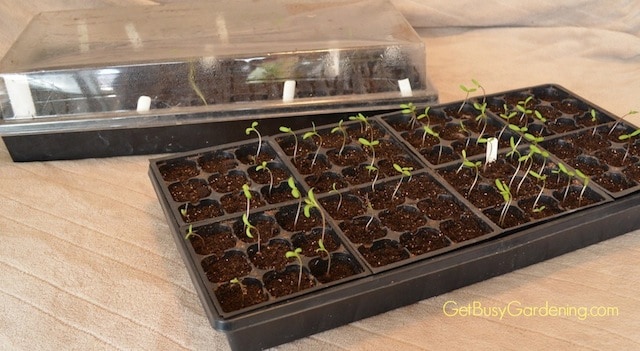
Cleaning and sterilizing your seed trays is the best way to give your seedlings a healthy start, and it will save you tons of time (and heartache) in the long run. So don’t skip it, or you’re only playing with fire.

If you’re tired of struggling, and want to learn how to grow any plant you want from seed, then enroll in my online Seed Starting Course. It’s a wonderful, fun, self-paced course that will teach you everything you need to know to easily grow your own seedlings. Enroll and get started today!
Or, if you just need a refresher, then my Starting Seeds Indoors eBook is for you! It’s a quick-start guide that will get you planting seeds in no time.
Share your tips for how you clean and disinfect your seed trays in the comments section below.

LeAnn Hanson says
Amy,
Just discovered your web site and I’m learning a lot!. I live in MN. also, about 2 hours north of you right on the boarder of zones 3 and 4. I’ve never thought about disinfecting my seed trays and pots either. If I would do this after I’m done with them in the spring and then stored them would this work?
Amy Andrychowicz says
Great, always nice to meet a fellow MN gardener! 🙂 You certainly could clean them after you’re done using them in the spring. But I highly recommend waiting to disinfect your seed trays until right before you use them. You never know what yuckies could get on them while they’re collecting dust on the shelf all summer long.
Gracie says
I planted my seeds in peat pots yesterday and put them in the covered trays that I used last year. The trays were kept in the basement and last nite I went to put a little water in the trays and when I lifted the cover there was a moldy smell. No dirt was left in trays while in basement but anything I keep down there ends up smelling moldy. This morning I washed the trays and lids with dawn dish soap. If the moldy smell has permeated the plastic will it hurt my plants?
Amy Andrychowicz says
I wouldn’t worry so much about the smell, but if you didn’t disinfect the trays before you used them to plant seeds, then I would worry that you could have issues with mold or seedling blight from the dirty trays. Since you used peat pots, you could try remove the pots and disinfecting the trays now to try to get ahead of any problems.
Karen says
I just attended a gardening course and it was suggested to have an oscillating fan on gentle during the day, just enough to move the air around. It’s supposed to make the plants more sturdy, like growing outside with some breeze. I think it might help with damping off as well.
Amy Andrychowicz says
Yes, I also recommend using an oscillating fan on seedlings, it helps prevent mold growth and strengthen the seedlings. However, it probably wouldn’t help to prevent damping off, because that is caused by seedling blight, which is a soil borne disease. So, if dirty seed trays are already infected with the disease, then using a fan isn’t going to keep the disease from spreading through the soil.
jacob richards says
Isn’t the bleach going to end up in the food? Absorbed by the plants
Amy Andrychowicz says
It’s not a huge concern since the bleach is so diluted, plus the seedlings don’t grow in the trays for very long before you pot them up or transplant them into the garden. Make sure to rinse the seed trays really well after soaking them too.
MJ says
If you air dry the trays in the sun for a couple of hours then the UV light will break apart any bleach molecules and release them as chlorine gas into the atmosphere.
That said, it’s really not a concern at all at these dilutions.
DeAnna Decker says
I use food grade hydrogen peroxide to clean mine instead of bleach. Its food safe & I don’t have to worry about bleach.
Julie says
I’m so lazy I’ve never done this but I have lost trays of seedling as it is SO disheartening when they are doing so well then suddenly half the tray is flat and sad!
I’m sure I remember my Granddad doing this now I see it, he was a great gardener. I guess a little extra time at the beginning can save a lot of time and trouble later., thanks for the great advice.
Amy Andrychowicz says
Yes, it totally sucks when that happens. 🙁
Heather says
If you do the disinfecting in your bathtub you can clean all your trays at once. And bonus, scrub down your tub after for a disinfected tub 🙂 Rinse well afterward, obviously.
Amy Andrychowicz says
Great tip Heather!
Beth says
Thanks for this tip. I was going to reuse some trays this year and never even thought of cleaning them. Any thing else I need to watch out for?
Amy Andrychowicz says
Awesome, glad I could help! Here’s a post I wrote with all kinds of tips for starting seeds indoors Tips For Starting Seeds Indoors
Amy
Amy - Get Busy Gardening says
Hi Donna!I agree that the effort of cleaning them is worth it to help ensure the survival of the seedlings. You're right, it doesn't take that much time…I guess I'm just spoiled with winter sowing. :-)Amy
Donna says
great advice and it doesn't take much time at all..I'll do anything to help ensure my seedlings have a fighting chance
Amy Andrychowicz says
Hi Tessa, Thanks for your comment! You'll have to tell me more about the chamomile tea. I'm guessing it might kill the bacteria that causes damping off? I will look that up, thanks for the tip.
Hi Alan – yes, you have been lucky! I also reused my flats for a few years without any problems…then one year lost almost all of my seedlings at once. It was devastating! Hard lesson to learn.
Alan says
Maybe I'm lucky, but I've never had a damping off problem, and I never wash my dirty pots — I definitely never use bleach solution on them (too much work). I'm certain I'd start doing this as soon as I had some losses due to damping off though.
Marcy says
I have always used new seeding trays and seed starter mix. I still would get signs of damping off. I sprinkle ground cinnamon and it takes care of it. Spraying diluted peroxide is too much work to repeatedly spray.
Tessa says
Good advice. As an added precaution I boil a little chamomile tea, dilute it and add it to my spray bottle- just in case 😉