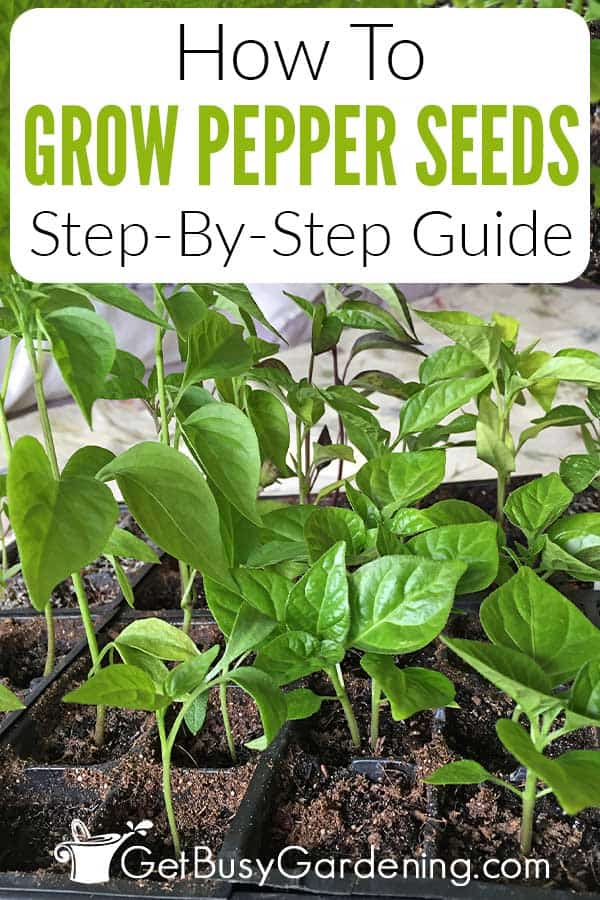
Growing peppers from seed can be a bit challenging for beginners, but it’s actually pretty easy when you know how to do it.
Once you learn a few of my special tricks, you’ll see just how simple it can be. In this guide, I’m going to show you exactly how to grow peppers from seed, step-by-step.
I’ll cover everything from the best method to use, when to start, and planting instructions, to germination time, seedling identification and care, transplanting, and more.

Growing Peppers From Seed
| Days to germination | 10-12 days |
| When to start indoors | 8-12 weeks before transplanting |
| When to sow outside | 2-3 weeks after your last spring frost date |
| Days to maturity | 60-150 days (depending on the type) |
| Sun exposure | Full sun |
| Seed planting depth | ¼ – ½” deep |
| Plant spacing | 12-18” apart |
| Soil temperature | 65-85°F |
Types To Grow
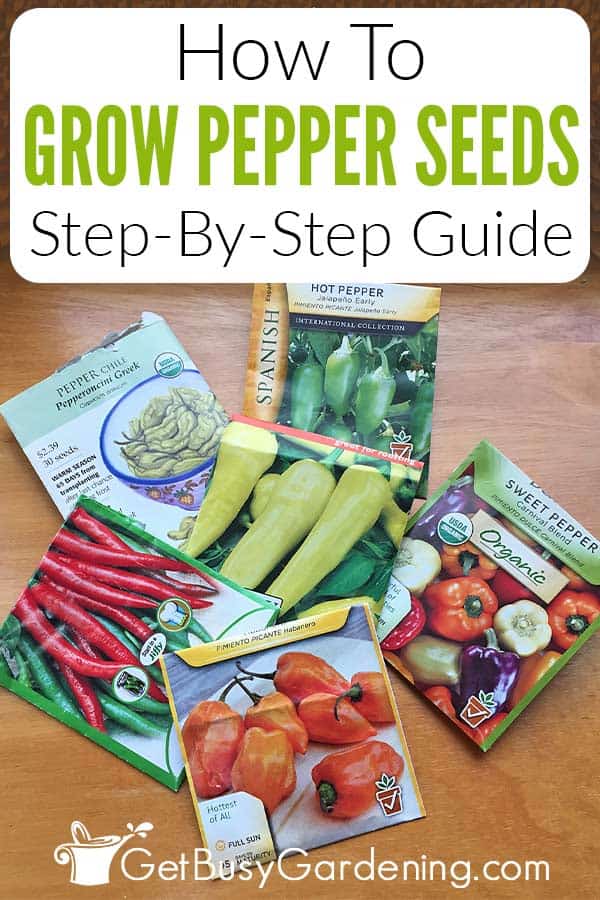
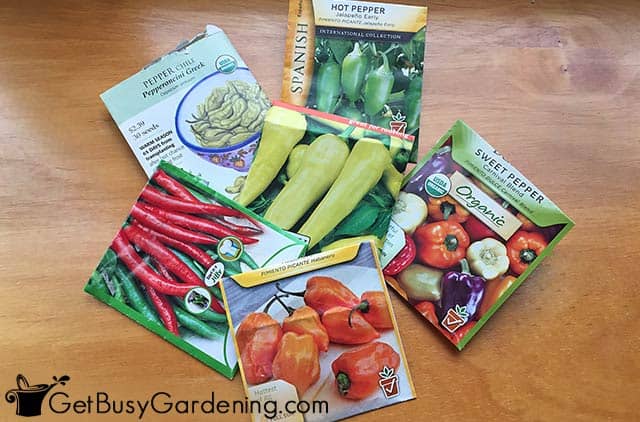
One of the things that I love the most about growing pepper seeds is the amazing number of varieties there are to choose from.
You can’t get much diversity buying starts at the garden center because they usually only carry a handful of common ones. But the variety of different types of seeds you can find is awesome.
You name it, I’ve probably grown it! Some of my favorites are cayenne (hot), jalapeno (hot), bell (mild), padron chile (mixed), and purple bell (mild).
How Long From Seed To Harvest?
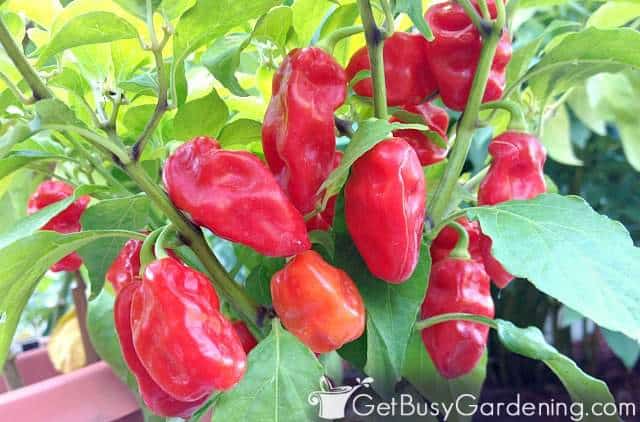
Depending on the type you have, it can take anywhere from 2-5 months (60-150 days) to grow peppers from seed to harvest.
Some varieties will mature much quicker than others. And, of course, all of them will start producing faster in ideal conditions. So give them plenty of heat and sun for the best results.
Related Post: How To Grow Your Own Peppers
Tips For Planting Pepper Seeds
There’s nothing special you have to do to prepare your pepper seeds before planting them. You don’t need to nick, soak, or stratify them. But it is important to use the right sowing method, and to start them at the correct time.
Pepper Seed Starting Methods
There are two sowing methods you could try with your pepper seeds: 1. starting them indoors, 2. direct sowing.
- Starting them indoors (best method) – Since they can be slow to germinate and require a fairly long growing season, I recommend starting your pepper seeds indoors.
- Direct sowing – If you live in a warm climate where your winters are very short, then you could sow them directly into your garden in early spring after all danger of frost is gone.
Related Post: 3 Seed Starting Methods That Every Gardener Should Try
When To Start Your Pepper Seeds
You should start your pepper seeds indoors 8-12 weeks before your average last spring frost date. They require consistent heat and moisture to germinate, and the seedlings need plenty of time and light to grow strong and healthy.
The exact date to sow them depends on where you live. I’m in MN (zone 4b), and our average last frost is around May 15th. So I start mine sometime in early to mid March.
How To Plant Pepper Seeds Step-By-Step
Below is a list of what you’ll need to start your pepper seeds indoors, as well as the step by step planting instructions.
Supplies Needed:
- Pepper seeds
- Seedling flat with a lid
- Seed starting soil or peat pellets
- Water
- Hand trowel
- Heat mat (optional)
- Latex gloves (if planting hot pepper seeds)
- Soil thermometer (optional)
- Moisture meter (optional)
Pro Tip: A quick word of caution here: if you want to plant the seeds from hot peppers, make sure to wear disposable gloves. Otherwise the capsicum oils can get on your hands, and cause discomfort (or worse, get in your eyes, OUCH!).
Related Post: How To Dry Peppers (5 Best Ways)
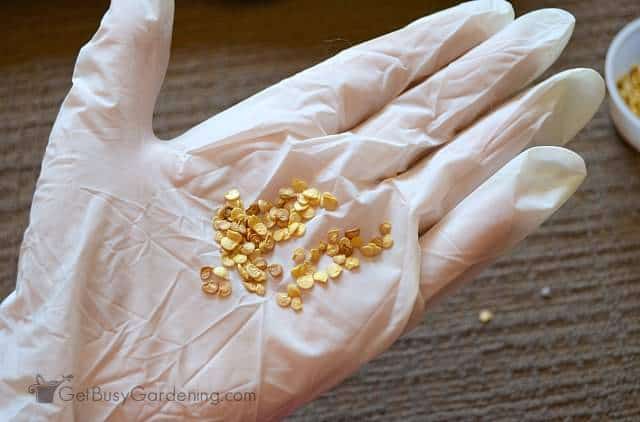
Step 1: Fill the seed trays – Fill the cells with damp seed starting soil, or pre-moisten your peat pellets and place them into the trays.
Step 2: Decide how many seeds to use – If you’re using brand new seeds, then you can just plant one per hole. Otherwise, if they are old or have a low viability rate, then plant 2-3 per cell/pellet.
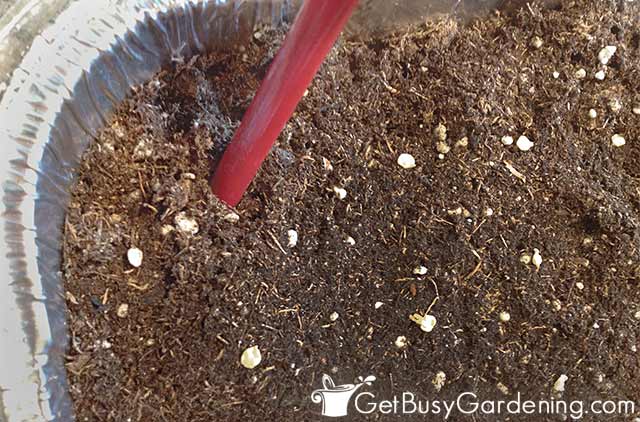
Step 3: Plant the seeds – You can either lay your pepper seeds on top of the soil, and gently push them down 1/4 – 1/2″ deep. Or you could make the holes first, then drop the seeds in.
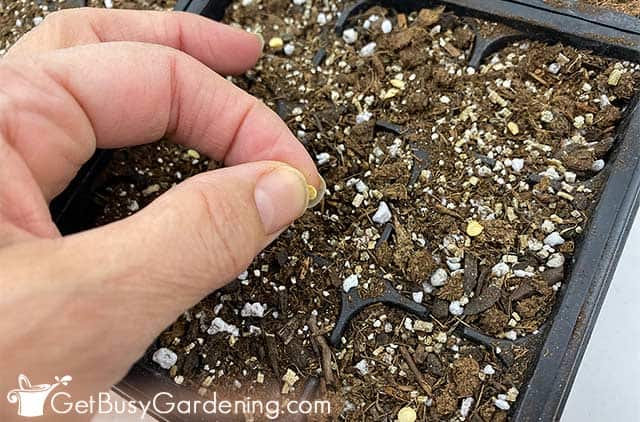
Step 4: Bury the seeds – Fill the holes back in, then gently press down to make sure the seeds come in contact with the soil. Don’t compact it though, just lightly pack it.
Step 5: Add water – If the soil is not already moist, then you should dampen it. It’s best to water the trays from the bottom rather than over the top, so you don’t accidently displace the pepper seeds.
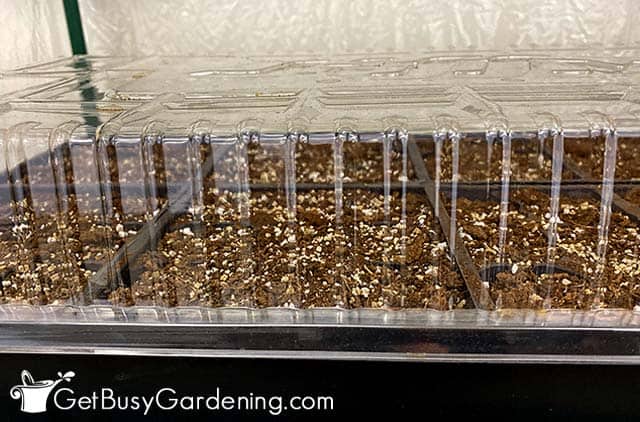
Step 6: Cover the tray – Place the clear plastic lid on top of the tray to help keep the soil warm, and ensure that it stays moist.
Step 7: Place the tray in a warm spot – If you can, put it on top of a heat mat. That will help speed up germination. Otherwise, place it in the warmest spot you can, or run a space heater nearby. If it’s too cold, it will slow down or inhibit germination.
Pepper Seed Germination Time
On average, it takes 10-12 days for pepper seeds to start growing, but some varieties are slower than others. You might see a few of them sprouting in as little as 7 days, while others can take almost a month.
To speed things up, put the tray on a heat mat or over a vent. It’s amazing how much faster they germinate when you add bottom heat.
What Do Pepper Seedlings Look Like?
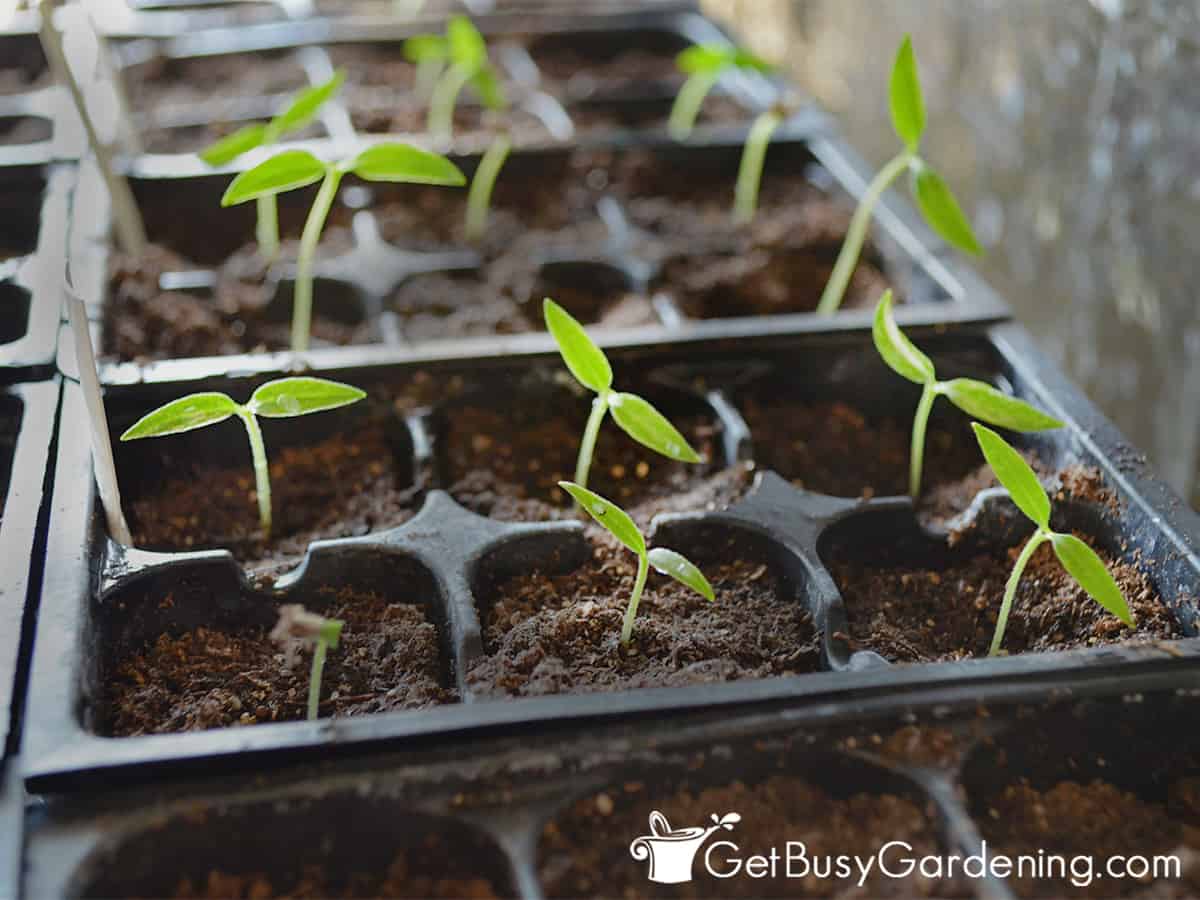
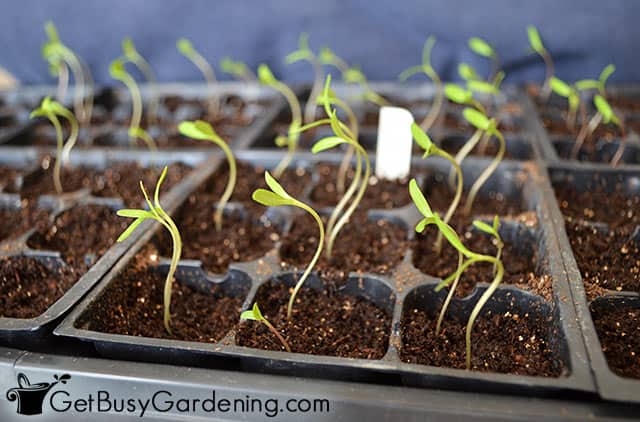
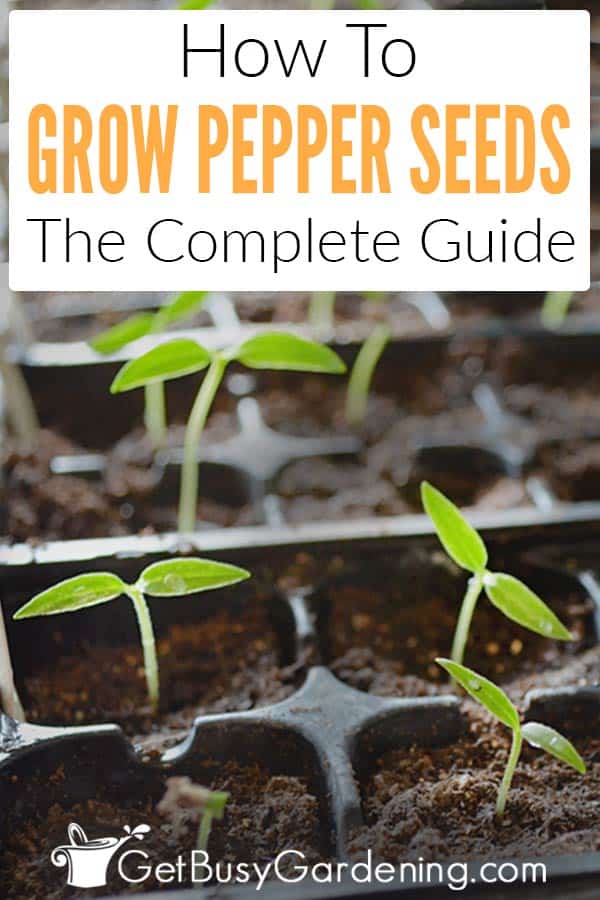
When they first sprout, pepper seedlings will have two leaves that are narrow and pointy. Those are called the “seed leaves” (or cotyledons, if you want to get super technical).
All of the others that grow after that are called “true leaves”, and they look like regular leaves only they’re much smaller. Those will usually start forming within a week or so after the first two seed leaves have opened up.
Related Post: How To Can Peppers
How To Care For Pepper Seedlings
Once your pepper seedlings start to grow, you’ll need to give them the proper care from the moment they emerge. You can learn all about general seedling care here, but below are some specific tips for peppers:
Water
Pepper seedlings need consistent moisture, but they don’t like soggy or wet soil. Allow the very top to dry out a bit between waterings, but never let it dry out completely. Use a moisture gauge to help you get it right.
If you accidentally overwater, take the lid off of the tray and run a fan over the top on low to help the soil dry out a bit.
Light
If pepper seedlings don’t get enough light, they will start to grow leggy and reach for the nearest window. So, to keep them straight and compact, it’s best to supplement with artificial light.
Hang a grow light a few inches above the tray as soon as they germinate, and use an outlet timer to keep it on for 14-16 hours per day.
Fertilizer
Once the true leaves begin to form, it’s time to start fertilizing. But don’t give them a full strength dose right away. Use a weak dose at first, and slowly increase the strength as your pepper seedlings grow larger.
I use (and highly recommend) an organic compost solution (sometimes I make my own with compost tea bags). Or you could use a plant starter fertilizer.
Air Circulation
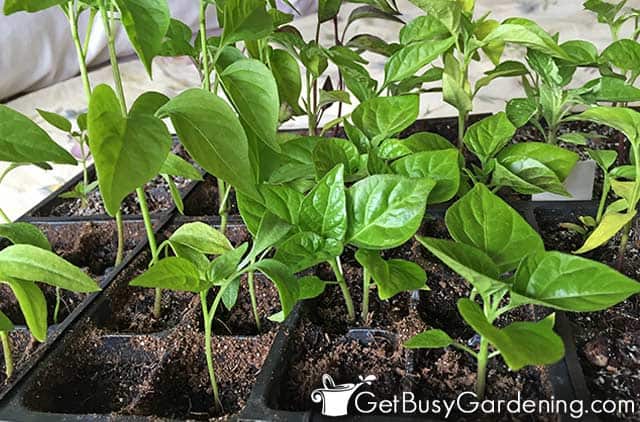
Once all (or most) of the seeds in the flat germinate and start growing, it’s time to give your pepper seedlings some airflow. Remove the lids, and run an oscillating fan over them on the lowest setting.
This will help to strengthen them, and also prevents problems with mold growth in the seed trays. Plug it into the same timer as your lights, or run it for a shorter period if you prefer.
Potting Them Up
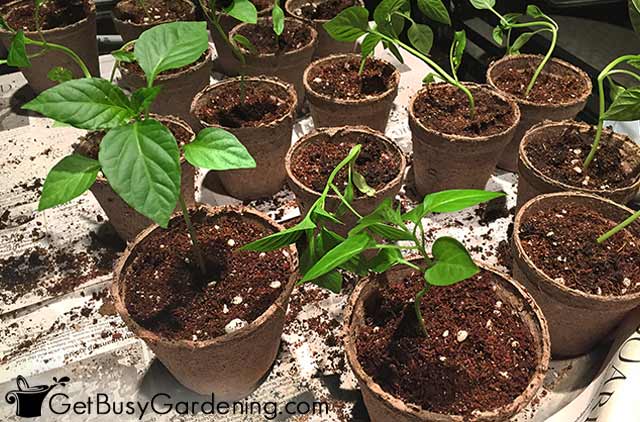
Once your pepper seedlings are twice as tall as the tray, pot them up into larger containers to give them plenty of room to grow.
I like using plantable pots to make it easy to transplant them into my garden. If you like that idea, but prefer a more sustainable alternative to peat, try coco coir or cow pots.
Otherwise, you can use small plastic nursery pots, which are reusable. Or even recycled containers like yogurt cups or small milk cartons, just be sure to poke drainage holes in the bottom.
Related Post: How To Prune Peppers For Maximum Production
Transplanting Pepper Seedlings Into Your Garden
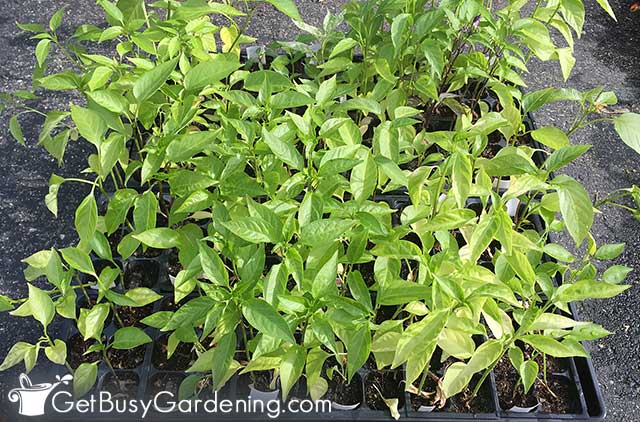
Pepper seedlings hate the cold, and transplanting them too early can stunt their growth or even kill them. So wait until all chance of frost is gone, and the ground is at least 65°F. Use a soil thermometer to check it.
But before you can even think about planting them into the garden, you must harden your seedlings off first to prepare them for life outdoors. Do not skip this step.
FAQs
By far the fastest way to germinate pepper seeds is to add bottom heat. They will sprout much, much faster if you put the tray on top of a heat mat or place them in a warm location.
No, pepper seeds do not need light to germinate. However, the seedlings will start reaching for the nearest window as soon as they sprout, so be sure to turn your grow lights on right away.
Pepper seeds won’t germinate when they’re old, if it’s cold, or the soil is either too wet or dry. Maintain even soil moisture and keep the temperature between 65-85°F. If your seeds are older than 2 years, sow 2-3 per hole and thin them later.
You can plant seeds from a pepper that you got at the grocery store or one that you grew, as long as they are mature. Small, immature seeds will not germinate.
Growing pepper seeds is easy once you get the hang of it. Following this detailed guide will give you the best results. Plus, once you learn how, you will be able to grow any variety that you want.

If you’re tired of struggling, and want to learn how to grow any plant you want from seed, then enroll in my online Seed Starting Course. It’s a wonderful, fun, self-paced course that will teach you everything you need to know to easily grow your own seedlings. Enroll and get started today!
Or, if you just need a refresher, then my Starting Seeds Indoors eBook is for you! It’s a quick-start guide that will get you planting seeds in no time.
Share your tips for growing peppers from seed in the comments section below.

Ruth says
Thank you for the write up, very helpful.
Please can you confirm if I need to water the seeds , before they turn to seedlings?
I planted the seeds and watered at the beginning, then covered.. but not sure if I need to keep adding water daily/ weekly or not at all- before they start to germinate
Thank you
Amy Andrychowicz says
Usually you only need to water pepper seeds when you plant them. As long as the soil is moist and you covered the tray with plastic, you shouldn’t have to worry about them until after they germinate. The way you can tell that they’re ok is if there’s condensation on the inside of the plastic. If it looks dry in there, then you should add more water. But only enough to dampen the soil, it should never be wet or soggy.
Oche israel ogancha says
I applied water on my soil over night and planted my pepper seeds the next day morning. Though some part of the soil was moist and some was completely dried out, so after planting i now watered them all in general. Hope no problem?. I planted the new seed where i have grown up peppers fruiting already so when it comes to applying water to the seed do i just work with the soil, when its dried inbetween before apply water or just water little amount once a day? Though its hammatan period here where the day is usually hot and normal but night times is usually cold till morning. Please i need your guied. One last thing my grown up pepper that have furit are producing more blossom flowers but are drying and falling off what could be worng? Though i water a complete bucket of wate morning and evening but after i noticed that i started applying water once in two days. Please help out. Thanks
Amy Andrychowicz says
Rather than planting your new peppers seeds next to the already mature plants, I would recommend sowing them in a new space where they will have plenty of room to grow. Otherwise I’m afraid they might be crowded out by the larger ones. The seedlings do need more water when they’re first starting out than the full-sized plants do, so sowing then in their own bed will make it easier to give them what they need to survive. As for the flowers turning brown and falling off, that usually means they aren’t being pollinated. It’s easy to do yourself by just touching the inside of each flower with your finger, one after another, making sure to touch each one a few times. For more care information, read my detailed pepper plant care guide here.
Jimmy Dossa says
Excellent information for starters. Hope I can follow your instructions carefully and succeed in growing peppers .
I live in Toronto.
Love your detailed explanations.
Amy Andrychowicz says
Thanks, glad you found this guide useful! Good luck growing your peppers. 🙂
Lou says
Thank you. My first year trying. Good info.
Miranda Lancaster-Moore says
I started Ancho and Serrano chili seeds about 3 weeks ago. The Anchos are all growing slowly but look healthy, but the Serranos are growing/sprouting but laying on the ground. The plants still look healthy but they are all laying on the ground! Is this normal or is there something I can do to fix the problem?
Amy Andrychowicz says
If your pepper seedlings still look healthy, then maybe you didn’t plant the seeds deep enough, and that is why they fell over. If that’s the case, then gently stand them back up and try either planting them deeper, or adding more soil so they stay upright. Otherwise, if they have fallen over and died at the base, then that is called “damping off”, and unfortunately there’s nothing you can do to save them. All you can do is make sure that you disinfect your trays well before using them again.
Jeff Laing says
What is the best kind of light to use? Fluorescent/ LED etc. Thanks so much and i will be using this as my guideline this year for my first attempt from seed.
Amy Andrychowicz says
Either of the types of lights you mention would work for your pepper seedlings. Here’s a post that will give you even more details… Lighting For Seedlings: When To Put Seedlings Under Light & How Much
marystella says
thanks alot for the tips since i had planted my seeds in my kitchen garden which is usually moist because of the rain, but now i will correct the mistake when i plant new seeds
Amy Andrychowicz says
You’re welcome!
Joy says
Wow thanks Amy. Your guide has really helped, especially the plant being leggy and when to transplant.
Amy Andrychowicz says
Awesome, glad you hear it! You’re welcome. 🙂
Lakshmi says
How do I naturally get rid of whiteflies that have infested the leaves of my pepper plants?
Thanks!
Amy Andrychowicz says
Oh no, sorry to hear that your pepper plant is infested with whiteflies. An all too common problem. 🙁 Here’s how to eliminate them… How To Get Rid Of Whiteflies.
Thomas Baker says
I have several different varieties of pepper plants growing. The plants are quite large, but keep dropping peppers before they’re ready. Cayenne peppers dropping while green, with no bite marks. Habanero peppers and poblano peppers dropping as well, both without bite marks. I’ve lost over 90 peppers now. And the same rates garden bed I have red bell peppers that are growing and are huge without problem. Someone please help.
Amy Andrychowicz says
This can be caused by many different problems, like improper watering, lack of the proper nutrients, extreme heat, or too much shade to name a few. I would test the soil to make sure it’s not too acidic, and contains the right ingredients, and also make sure the plants aren’t drying out too much. Here’s my full care guide for more info… How To Grow Peppers: The Ultimate Guide.