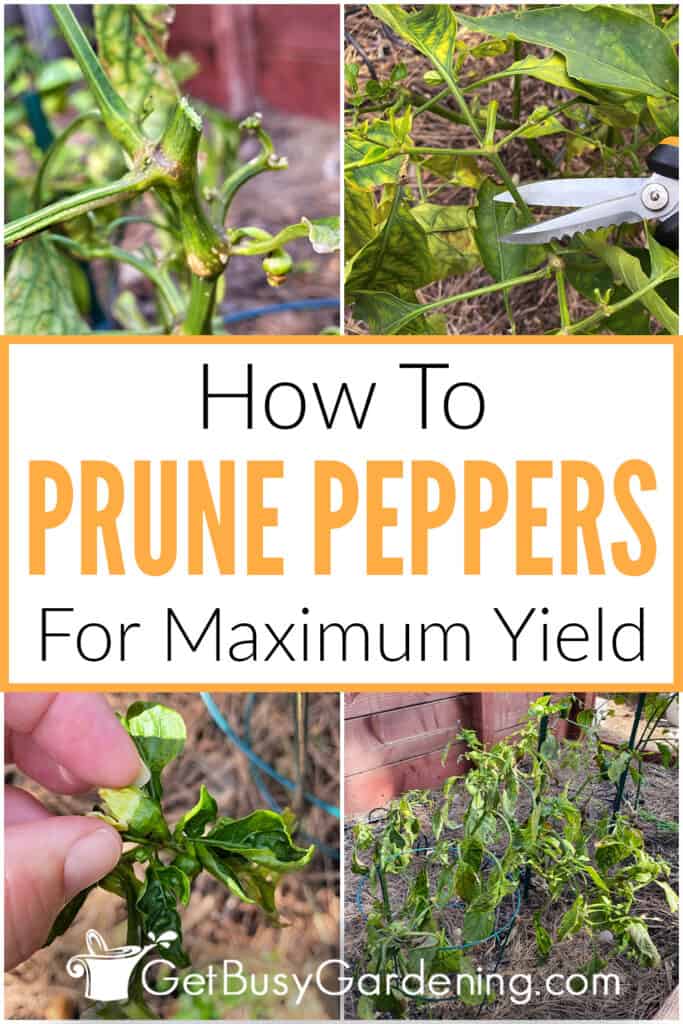
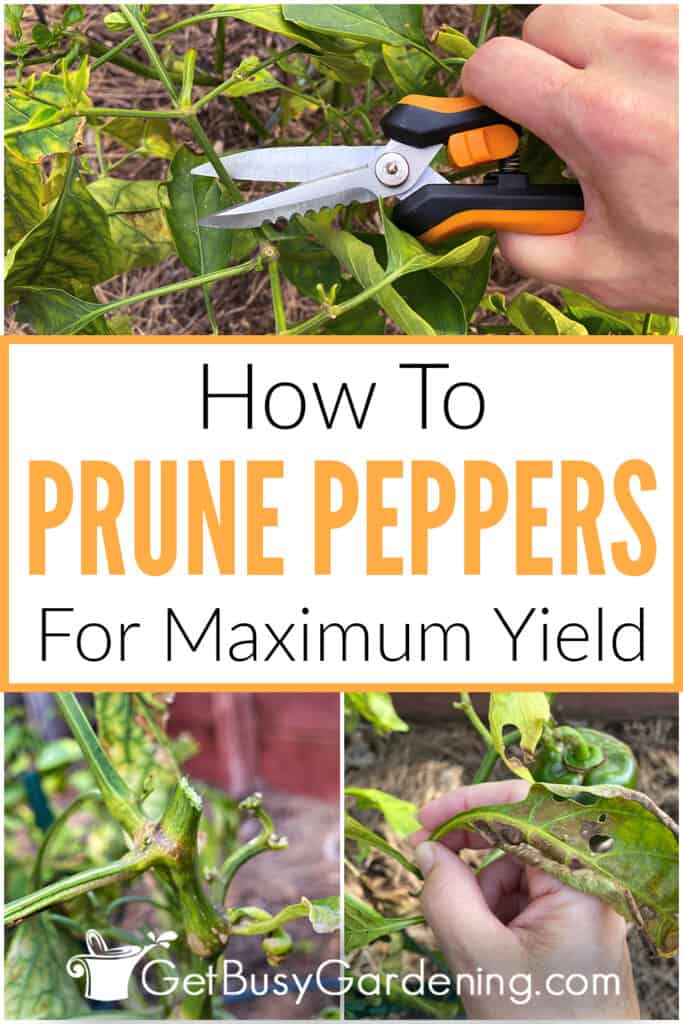
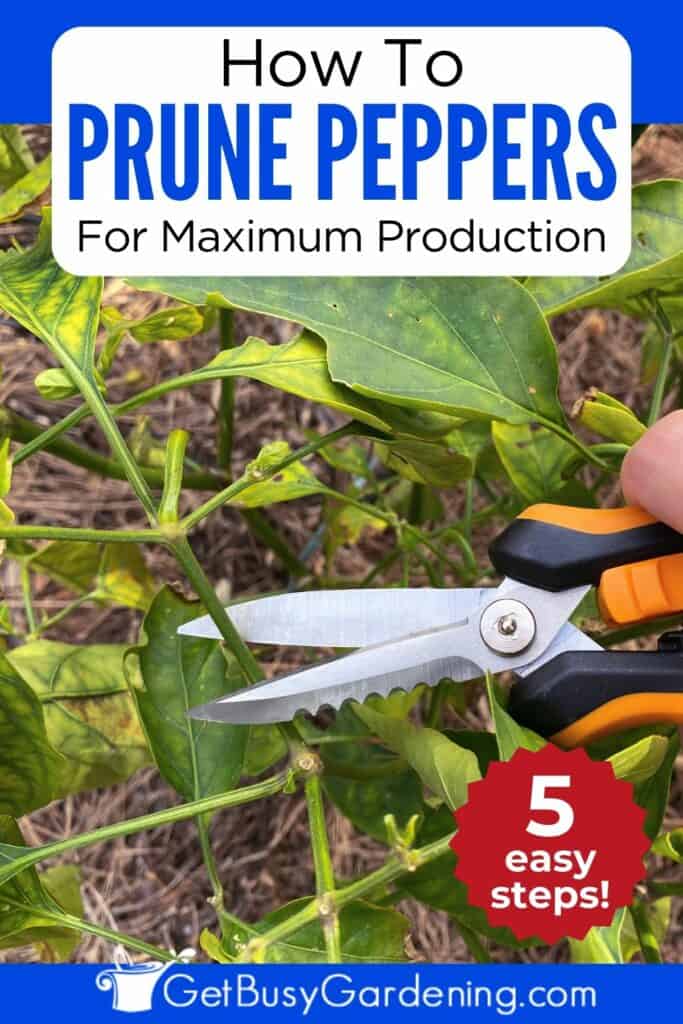
Pruning peppers is easy to do, and it has many benefits for keeping your plants healthy, and maximizing their yields.
In this post, I’m going to walk you through everything you need to know, with tips for choosing the right time to trim them, and the tools you’ll need for the job.
I’ll also give you step-by-step instructions for how to prune peppers like a pro, and share my expert tips for success.

Do Pepper Plants Need To Be Pruned?
If you’re happy with how your plant looks, and the amount of peppers that it produces, then there’s no need to prune it.
But if it’s overgrown or hasn’t been flowering or fruiting, then you should definitely trim it back. It’s especially important if you have a short growing season.
Related Post: How To Grow Your Own Peppers
Why You Should Prune Your Peppers
There are lots of great reasons why you should get into the habit of trimming your peppers regularly. Here are the main benefits:
Higher Yields
You can increase your yields by pruning, which encourages the plant to focus its energy on developing more peppers.
Simply snip out the extra leaves and suckers – the growths between the leaf and stem joints – as they form, as well as some of the flowers.
Fuller Plants
Regular pruning encourages your pepper plant to branch out, which makes it bushier. Not only does this create a nicer looking plant, it means there will be more fruiting branches.
It also maintains their size and shape, which results in full and compact plants, rather than thin and leggy ones.
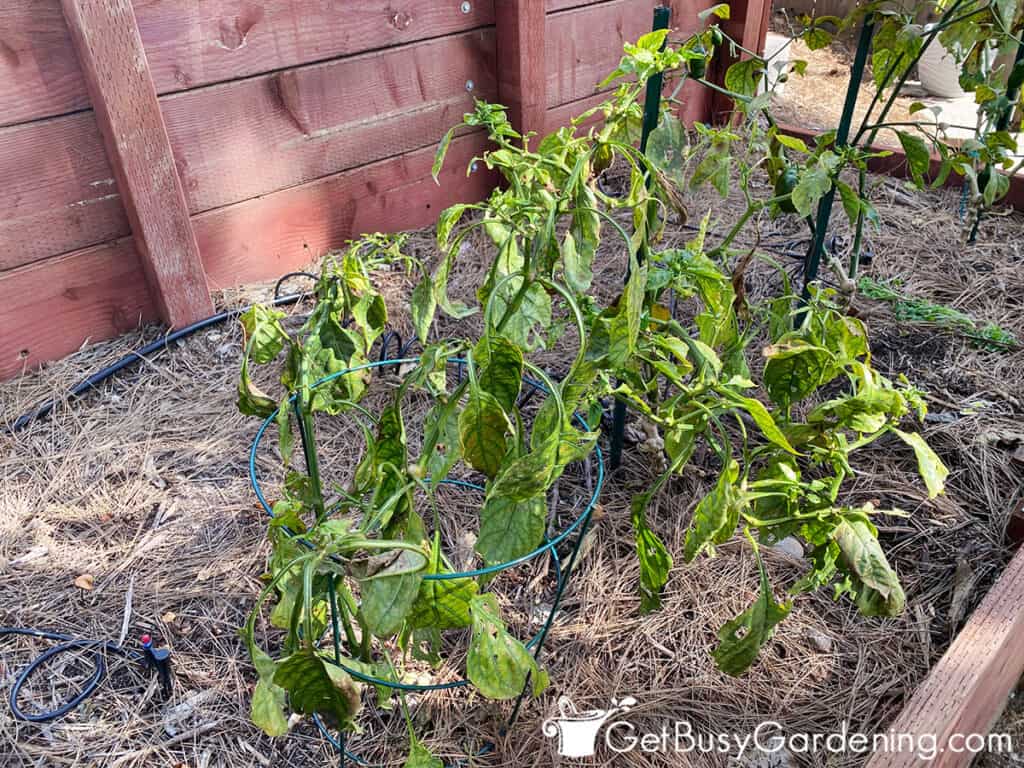
Disease Prevention
Cutting back overgrown peppers makes it easier for air to circulate around them, and for sunlight to reach the interior foliage. This helps to prevent fungal problems, which can thrive in dark, damp conditions.
Removing all of the leaves that touch the ground can reduce the risk of soil-borne diseases, and attacks by ground-dwelling pests, like slugs and snails.
Larger Fruits
If you pinch off some of the flower buds as they form, it will allow the plant to put more energy into ripening the existing fruits, rather than growing more new ones.
This means that it will produce bigger peppers which will ripen faster, and they’re usually more flavorful too.
Related Post: How To Grow Peppers From Seed
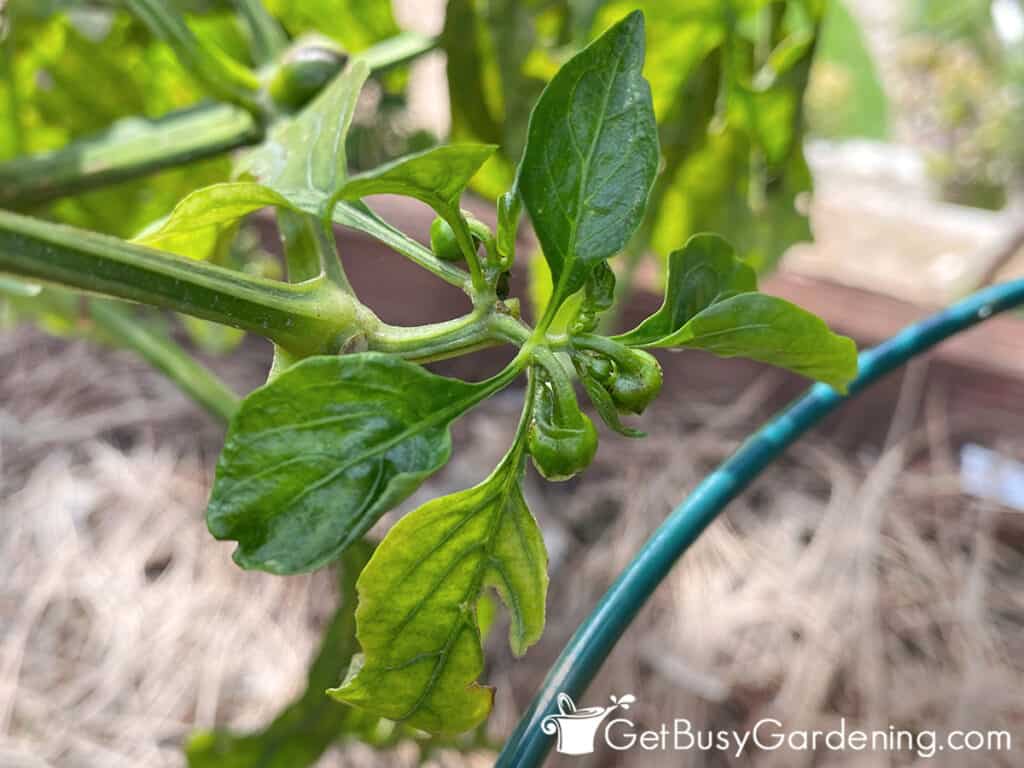
When To Prune Peppers
You can pinch and snip the flowers and suckers as they appear throughout the summer. But there are two main times when you should trim your plants:
1. Spring – Pruning peppers in the spring as the flowers begin to form will produce hardy plants with well-developed roots, and helps to prevent disease.
2. Late summer – Trimming them in the late summer, before frosty conditions arrive, encourages the fruits to ripen faster to maximize your harvest before it gets too cold.
Related Post: How To Overwinter Pepper Plants Indoors
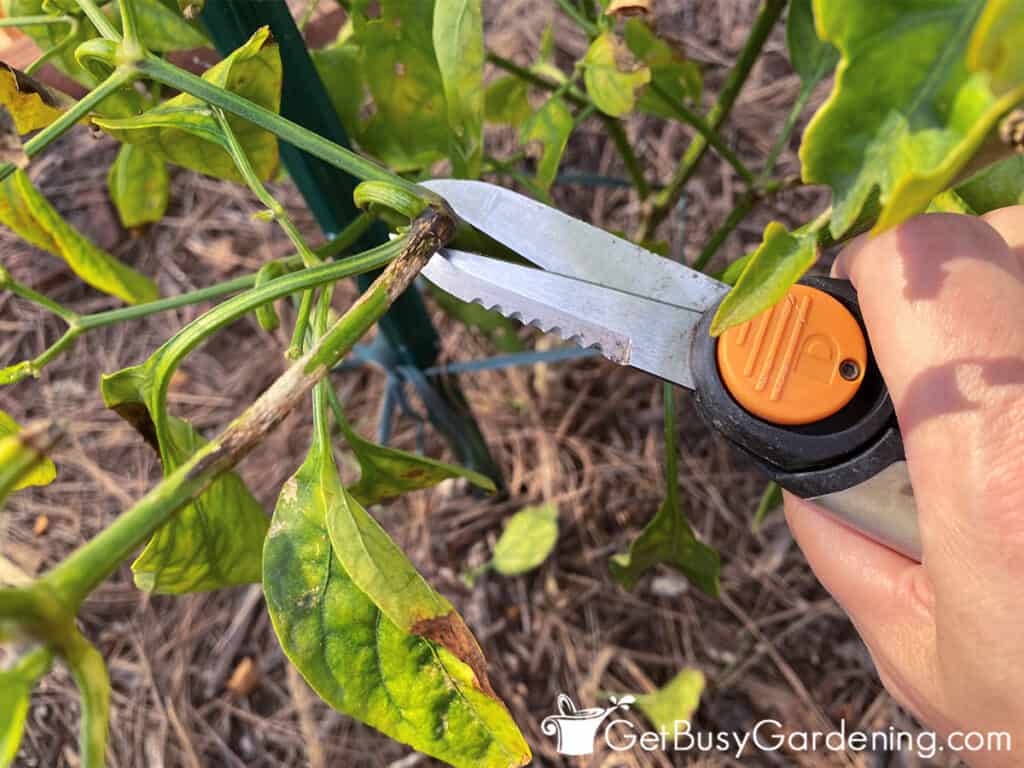
Tools For Trimming Pepper Plants
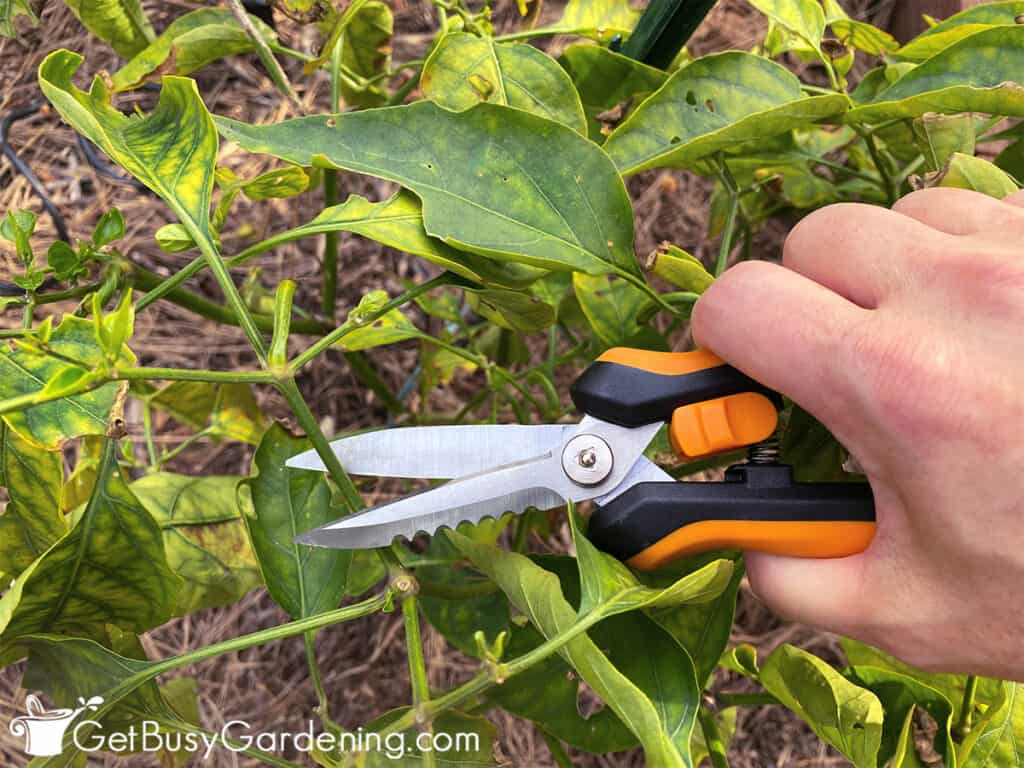
It’s easy to pinch the small suckers and flower buds off with your fingers. But if you prefer, you can use micro-tip snips of precision pruners instead.
For larger branches, stems, and leaves, I recommend using basic shears to avoid damaging the main stem.
Before you get started, it’s important to clean and sharpen your pruning tools carefully for precision cuts, and to prevent disease issues.
How To Prune Peppers
It’s important to note that you should make your cuts at a downward angle so water won’t pool in the wound. Here are the simple steps to follow:
Step 1: Remove dead foliage – Trimming out dead or yellowing leaves and branches is the best way to start. This will tidy things up and give you a good overview of the other parts of the plant that need pruning.
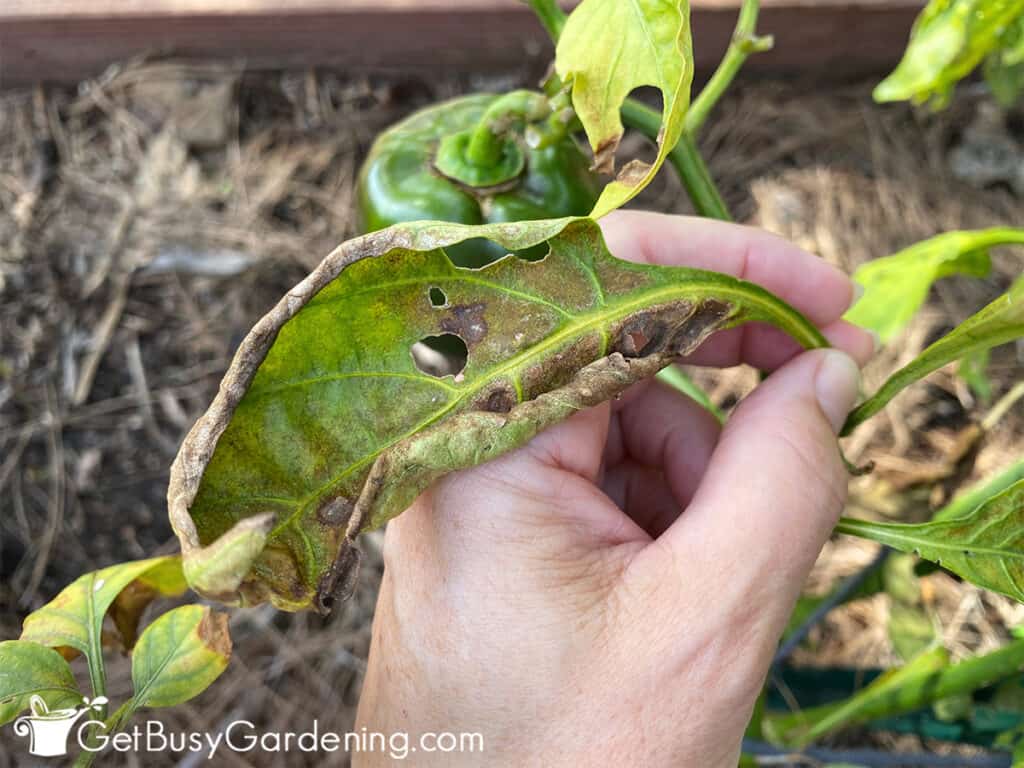
Step 2: Trim back the bottom leaves – Cut away any foliage or branches that are touching the ground. This will protect the plant from soil-borne diseases and ground-dwelling pests.
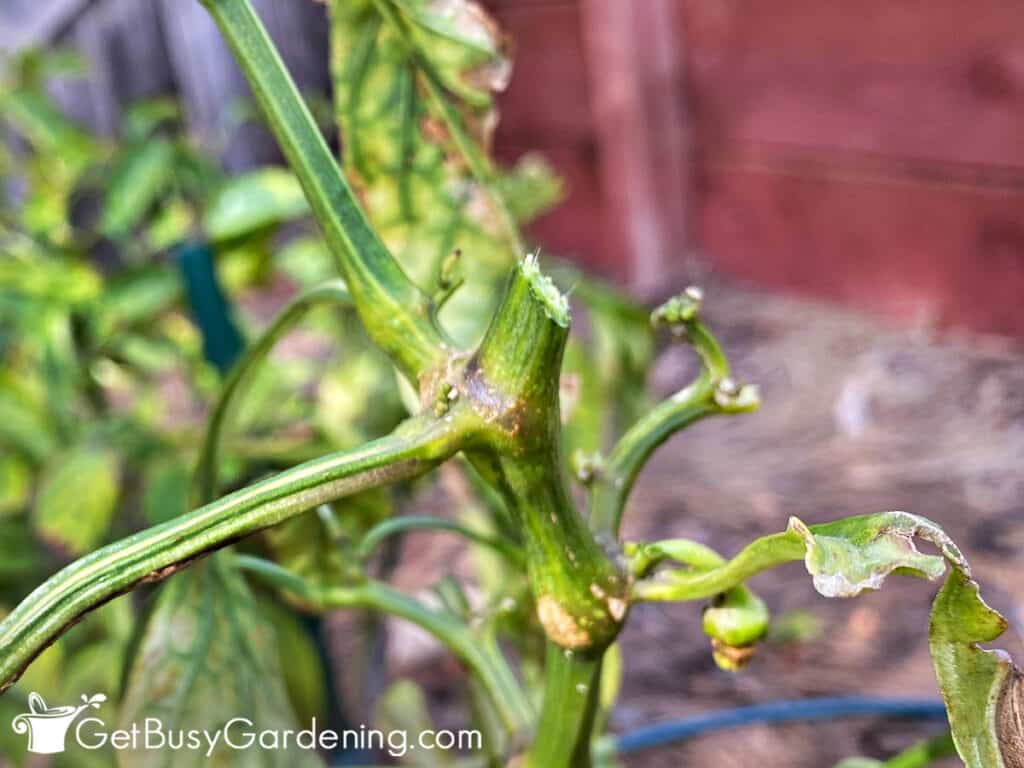
Step 3: Get rid of the suckers – Snip away any large suckers towards the bottom of the plant, and pinch out the smaller ones that are just beginning to form on top.
Step 4: Cut back overgrowth – If your pepper plant looks leggy or overgrown, prune some of the larger leaves and branches to thin it out. Be careful not to get too carried away, however. Plants need their foliage to grow, so it’s important not to remove too much.
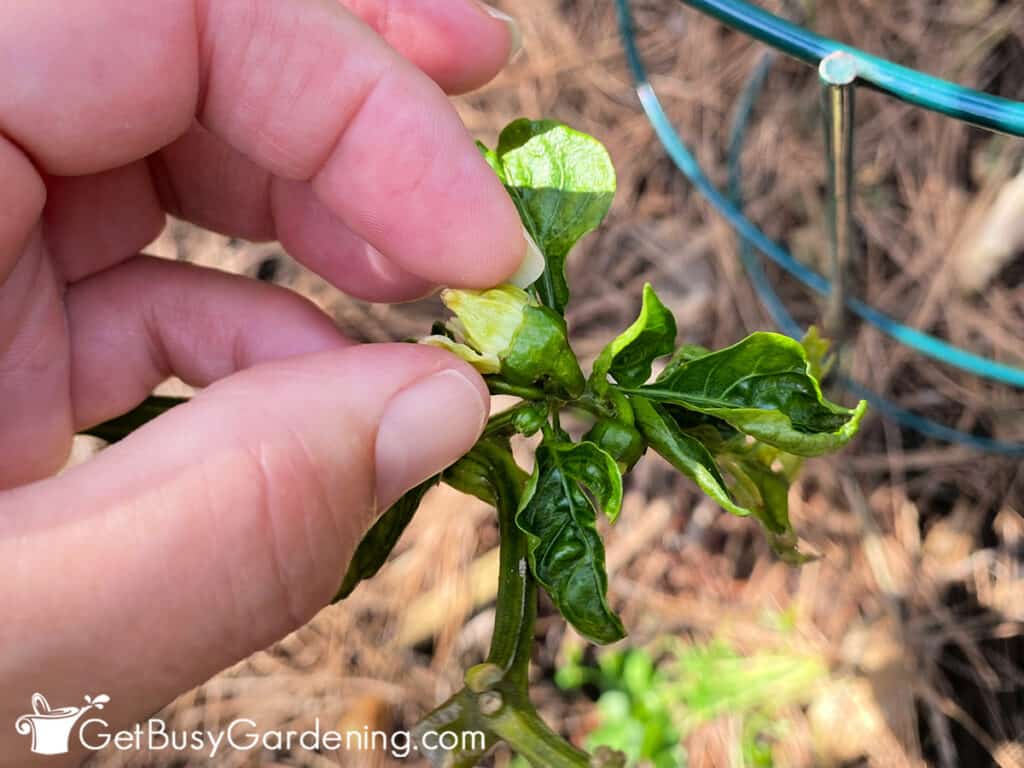
Step 5: Pluck off extra flowers (optional) – You can pinch some of the flower buds off of your plant as they develop to encourage bigger peppers. It’s also a good idea to pluck them off in late summer, around 4 to 6 weeks before frost arrives, which will redirect the energy into ripening the existing fruits faster.
Related Post: How To Dry Peppers
FAQs
To make your pepper plant bushy, simply pinch or trim the new tips on a regular basis. You can also cut back the long or overgrown branches to create a fuller, more compact plant.
There’s no need to top large pepper plant varieties, such as bell and poblano. But I recommend cutting back the stems of smaller ones, like Thai or jalapenos, when the branches are about 12 inches tall. Trim them back to the second or third set of leaves.
Pruning peppers is important to get the best yields and the largest fruits. It’s also great for maintaining the size and shape of your plant to keep it compact, bushy, and healthy.

If you want to learn all there is to know about maintaining healthy indoor plants, then you need my Houseplant Care eBook. It will show you everything you need to know about how to keep every plant in your home thriving. Download your copy now!
Pepper Recipes
- How To Pressure Can Peppers
- How To Make Homemade Red Pepper Flakes
- How To Preserve & Store Peppers Long Term
- How To Dry Cayenne Peppers
More About Pruning Plants
- How To Prune Tomato Plants
- How To Prune Rosemary Plants
- Pruning Plants: The Complete Step-By-Step Guide
Share your tips for pruning peppers in the comments section below.

bob clark says
Hi Amy I have tomato plants that are 5 feet tall, but the flowers above 4 feet turn brown and don’t produce fruit. The taller they get flowers don’t produce fruit. Can I let them grow taller and hope they will produce more fruit?
My beet plants frequently don’t grow from seeds. About 1 of 5 will grow. What can I do to promote more success?
Amy Andrychowicz says
If your tomato plants are flowering but now producing fruit, then you have a pollination issue. You can help them out by hand-pollinating the flowers and/or add more pollinator friendly flowers around your veggie garden. Here are a few posts to give you more info:
– How To Attract Bees To Your Vegetable Garden
– 21 Of The Best Plants & Flowers For Attracting Bees
As for your beets, the seeds can be challenging to germinate. Try soaking them in water for 24 hours before planting them, then make sure the soil stays evenly moist but not wet, and the soil temperature stays between 55-75°F. Too wet/dry, cold, or hot and they won’t germinate.