

Drying peppers is easy and doesn’t take much time. In this post, I’m going to show you the 5 best ways to do it, with step by step instructions for each.


If you’re like me, you always have an overabundance of fresh peppers from your garden every summer, and you may be wondering what to do with them.
Drying peppers is a wonderful way to use them up before they go bad. They’ll have a longer shelf life than with other preservation methods, and can add versatility to your dishes.
They can be ground into powders for spices, or rehydrated to use in sauces, soups, stews, and more.
In this article I will show you several ways to dry your peppers so you can enjoy them all year long.
Preparing Peppers Before Drying
Peppers don’t require any special preparation before drying them, many times you just need to give them a quick rinse.
To speed up the time and help prevent molding, especially for thicker skinned varieties, you can cut them up into slices first.
Optionally, you can blanch them, which will increase their flavor. Here’s how:
- Dip them into boiling water for approximately 4 minutes.
- Submerge them in an ice bath to stop the cooking process.
- Pat them dry.
How To Dry Peppers
There are several ways to dry peppers. This process can be very simple and cost effective to do. Below I will give you the steps for each method.
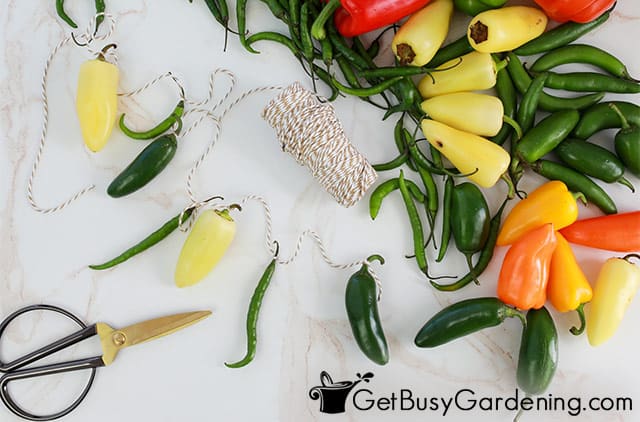
1. Hang-Drying
Hang-drying peppers is a simple option, especially if you live in an arid climate.
However, this is one of the slower ones, and can take 3 to 4 weeks or more until they are fully ready.
Here’s how to hang-dry them:
- Create a knot at the end of your string or twine so the peppers don’t fall off.
- Either use a needle to poke the string through to tops, or tie it on to the stem of each.
- Leave the other end of the string longer for hanging.
- Hang them in a sunny window where they are protected from moisture.
- Check them every few days to make sure they aren’t molding, and remove the ones that are done.
2. Using A Dehydrator
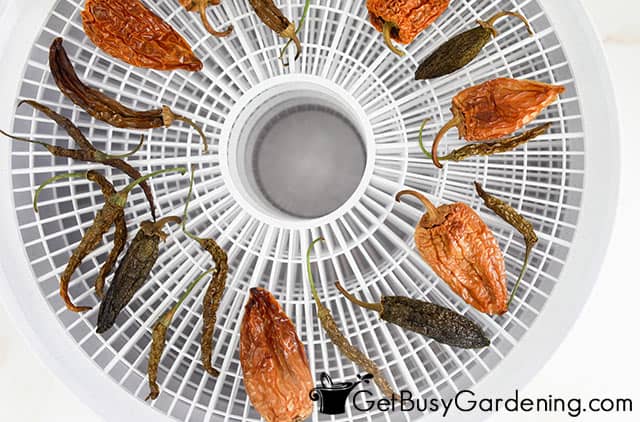
If you have a dehydrator in your home then this option is a wonderful way to save you time and energy.
It’s not the quickest, and can take anywhere from 12 hours to a few days. But you won’t have to worry about them molding, and it’s pretty hands-off.
Here’s how to dehydrate peppers:
- Lay your peppers out on the dehydrator trays in a single layer, making sure they do not touch each other.
- Set the temperature to 130-140°F, or use the “vegetables” setting if yours has that.
- After the first 12 hours, check them hourly, and remove any that are done.
3. Drying Peppers In The Oven
Using your oven is a faster option, though you do have to take care not to burn them.
It can take anywhere from 2-12 hours, depending on your oven and the size, variety, and thickness of the peppers.
Here’s how to oven-dry them:
- Preheat your oven on to 150°F.
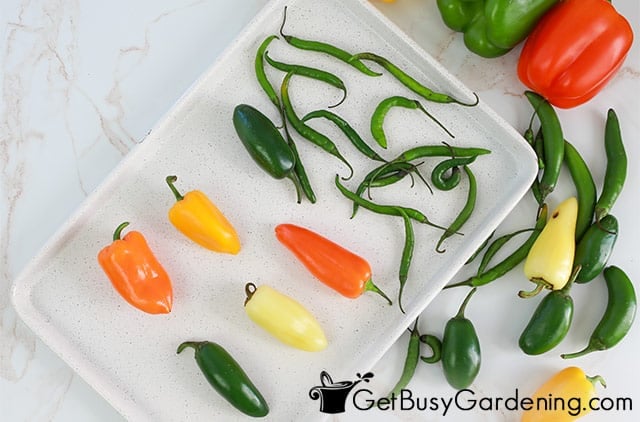
- Spread the peppers out on a baking sheet so do not touch each other.
- Place them in the oven, and keep the door cracked to allow moisture to escape.
- Rotate your peppers every 30 minutes, and remove the ones that are dry.
4. Air-Drying Peppers
Though this is a very easy option, it’s also one of the slowest, and works best with small or thin-skinned varieties like cayennes.
Here’s how to air-dry them:
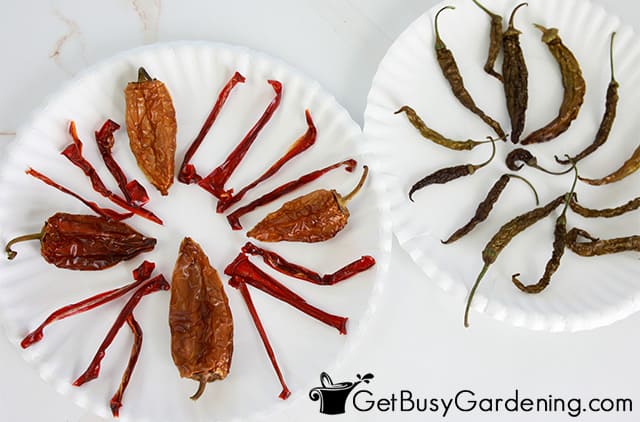
- Remove the tops of the peppers and cut them in half or quarters.
- Place them on the drying rack, paper towel, or paper plate so they are’t touching.
- Keep them in a cool location away from moisture and humidity.
- Check them every few days to ensure mold is not growing, and remove any that are done.
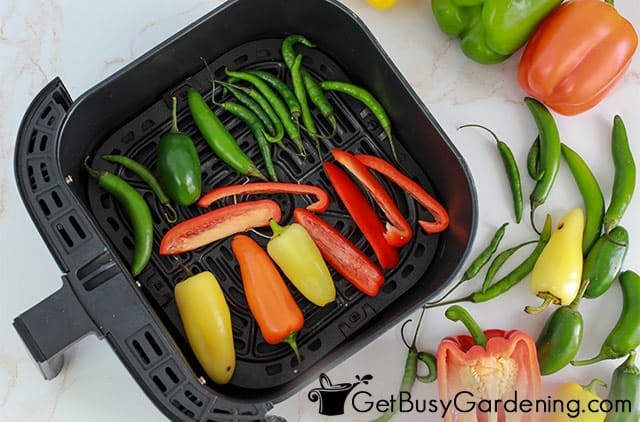
5. Using An Air Fryer
An air fryer is another simple and efficient way to dry your peppers. It functions similar to a food dehydrator when run at low temperatures.
It can take anywhere from 4-10 hours using this technique, depending on the machine model you have.
Here’s are the steps:
- Set your air fryer heat to 130°F or lowest temperature. Or use either the dehydration or reheating setting if yours has one of those.
- Place the peppers into the basket, spread out so they are’t touching each other.
- Check on them every 30 minutes, and remove the ones that are ready.
How Long Do Peppers Take To Dry?
Exactly how long peppers take to dry will depend on the type you have, and the method you use.
On average it can take anywhere from a couple hours to a few weeks.
Thick ones will take longer than those with thin skins. Also, cutting them up into slices will make it faster.
How Can You Tell When Peppers Are Dry?
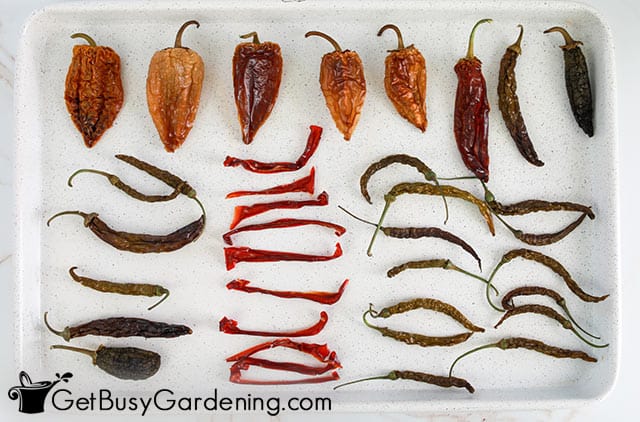
You can tell when peppers are dry by touching them. Once they are ready, they will be crispy and brittle. If they feel soft or sticky at all, then they need more time.
How To Store Dried Peppers
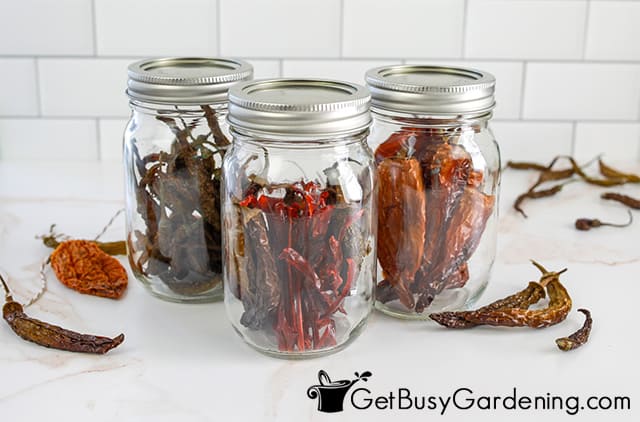
Store your dried peppers in an airtight container in a cool dark location. A great place to keep them is in a pantry, cupboard, or even in your freezer.
You can store them in any airtight container that is most convenient for you, such as a mason jar, vacuum sealed bag, or zipper baggie.
How Long Do Dried Peppers Last?
Dried peppers can last between 1-2 years, when stored correctly.
But the flavor will start to degrade over time, so it’s best to use them up and replenish your supply every year.
FAQs
In this section, I’ll answer some of the most frequently asked questions about drying peppers. If you can’t find your answer here, ask it in the comments below.
What is the best way to dry peppers?
The best way to dry peppers comes down to personal preference. The 5 best methods are air-drying, hanging, dehydrating, using the oven, or an air fryer.
What peppers are good for drying?
All types of peppers are good for drying. From sweet or mild ones like banana, bell (green, red, yellow, etc), and chillies, to hot spicy types like ghost, habanero, jalapeños, and Serrano to name a few.
How do you dry peppers quickly?
You can dry peppers quickly using your oven, that is the fastest way. This process takes between 1-2 hours depending on what variety you have. Just be very that you do not to burn them.
How do you dry peppers without mold?
To dry peppers without the risk of mold, use your oven, a dehydrator, or an air fryer, because these work the fastest.
Drying peppers using any of the techniques above will extend the shelf life of your produce. Plus they make a great addition to your recipes all year round.

If you want to learn how to grow your food vertically, then my book Vertical Vegetables is perfect. It will teach you all you need to know, plus you’ll get plans for building almost two dozen projects. Order your copy today!
Learn more about my Vertical Vegetables book here.
More About Vegetable Gardening
- How To Dehydrate Apples: 5 Simple Drying Methods
- How To Dry Oregano At Home In 4 Different Ways
- Freezing Corn On Or Off The Cob
- How To Dry Basil (5 Best Ways)
More Posts About Peppers
- How To Grow Peppers
- How To Prune Peppers For Maximum Production
- How To Can Peppers
- How To Make Red Pepper Flakes At Home
Share your tips for drying peppers in the comments section below.


David Bishton says
What are some of the ways that dried peppers,especially hot ones, can be used in cooking? Are they typically ground into flakes and used like a spice powder?
Amy Andrychowicz says
Oh yes, we grind most of our dried peppers up to fill our spice rack! We also make crushed red pepper flakes – my husband puts those on everything!
Erick Trammel says
Thank you so much for the instructions. I just recently bought some orange habanero from an international food market and needed advice on how to dry them. The fact that you get straight to the point without having a long, drawn out beginning speaks in volume. Thank you again🙏
Amy Andrychowicz says
You’re welcome, happy to help!