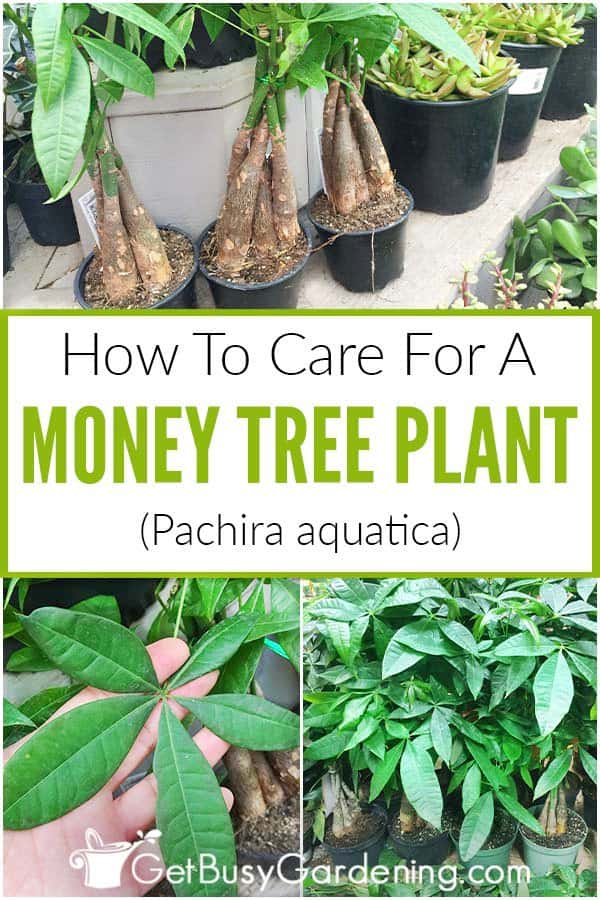
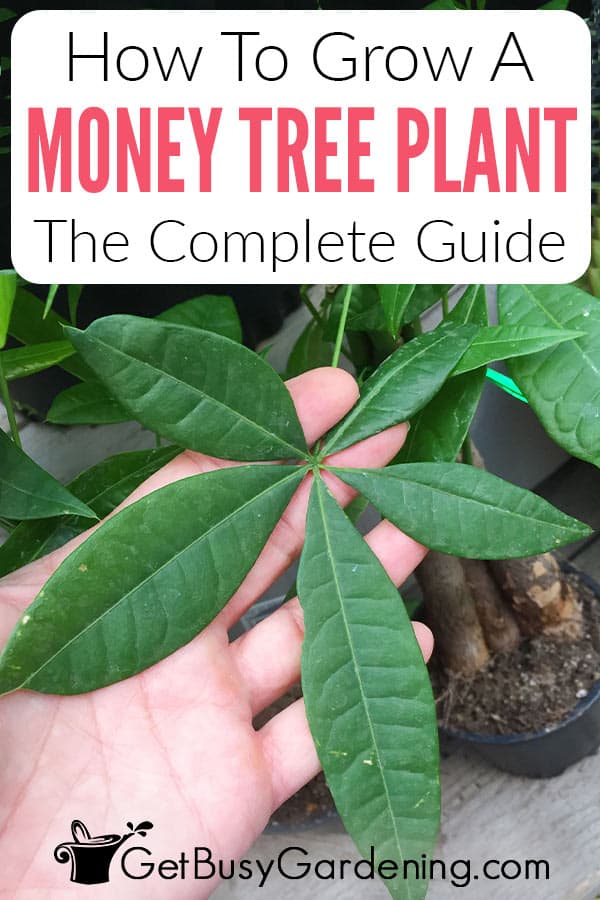
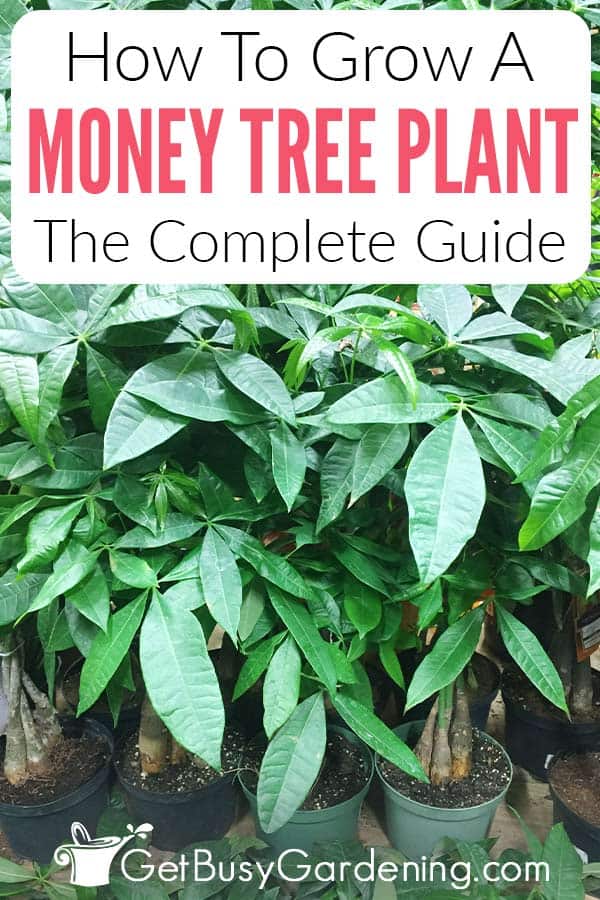
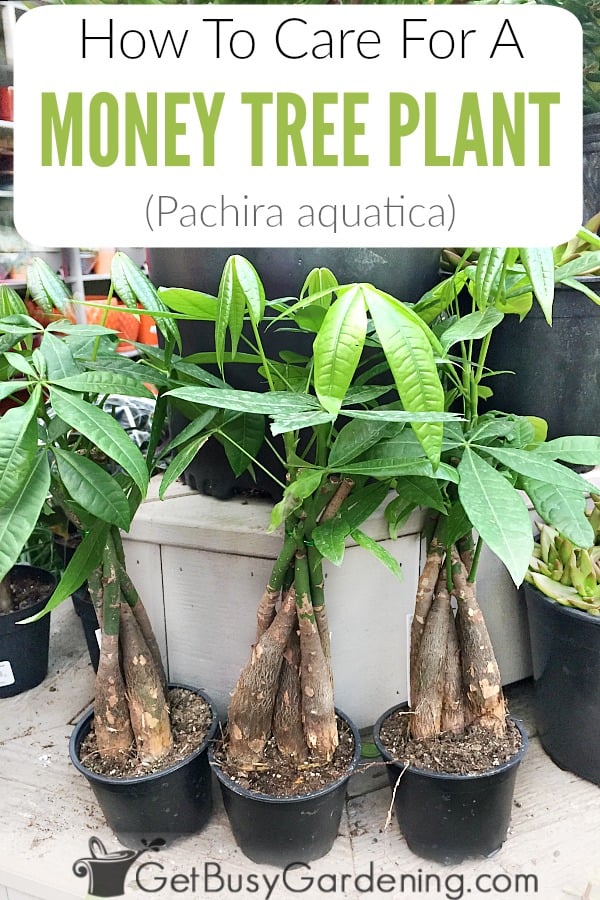
Money trees (Pachira aquatica) are surprisingly easy to care for and grow. In this article, I’ll show you all you need to know to keep yours thriving for decades.
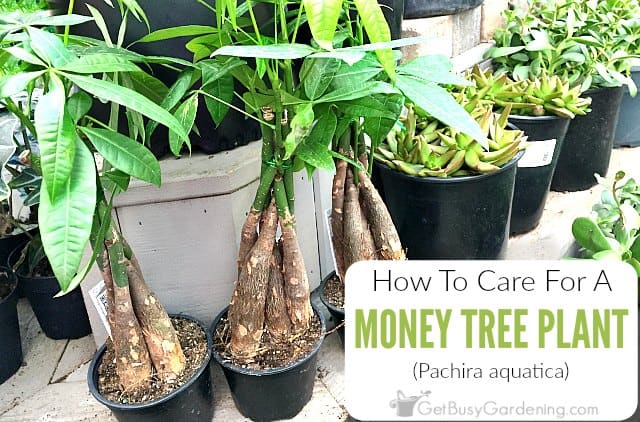

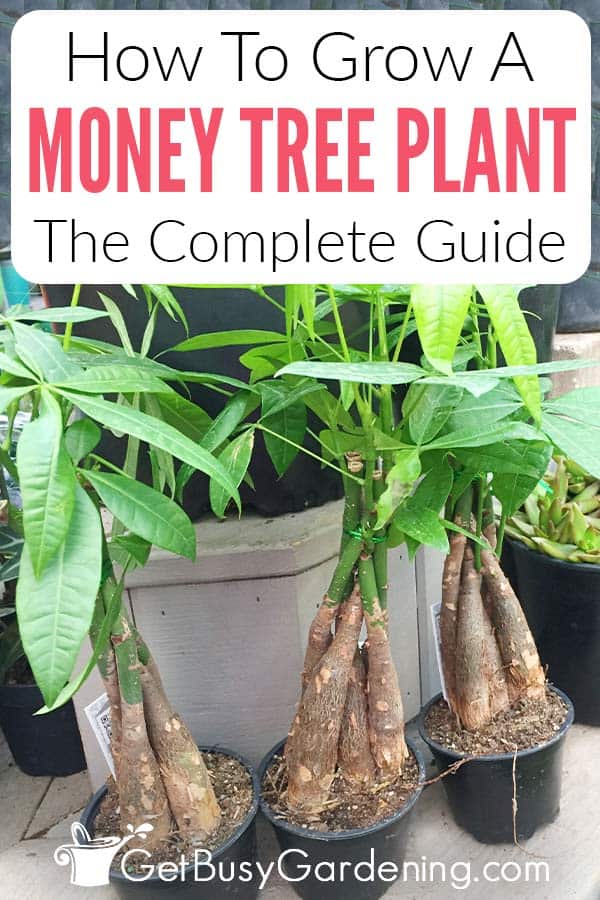
Known for their braided trunks, and delicate looking umbrella-shaped leaves, money tree plants are very popular. They look like they’d be fussy and difficult to grow, but they’re actually pretty easy.
These lovely plants flourish with the proper care, and can grow to become large trees. They’re a great choice for beginners and experts alike.
Plus, if you want to try your hand at bonsai, Pachira aquatica is the perfect specimen to start with. In this detailed growing guide, I will tell you all about how to care for a money tree plant.
Money Tree Quick Care Overview
| Scientific name: | Pachira aquatica |
| Classification: | Tropical plant |
| Common names: | Money Tree, Malabar Chestnut, Guiana Chestnut |
| Hardiness: | Zones 10+ |
| Temperature: | 60-85°F |
| Flowers: | White, blooms in later winter / early spring |
| Light: | Partial shade, bright light indoors |
| Water: | Keep soil evenly moist, do not overwater |
| Humidity: | Average to high |
| Fertilizer: | General purpose plant food spring-summer |
| Soil: | Fast-draining, fertile soil |
| Common pests: | Whiteflies, aphids, spider mites |
Information About Money Tree Plants
The money tree (Pachira aquatica) is a very popular plant that’s native to South and Central America.
Though it’s most commonly kept indoors, it’s actually a tropical tree that can grow outside year-round in the warmer climates.
In their native habitat they can get as tall as 15′, and grow very fast. But in a container or inside, they usually stay between 7-10′.
Other Types Of Money Plants
People often call this a “money plant”. But there are a few different plants that have that same common name. So before we go any further, let’s make sure that you and I are talking about the same one here.
This article is all about how to care for a money tree (Pachira aquatica). If you’re looking for information on a different plant, then check out the list below. Otherwise, keep reading!
- Chinese Money Plant (Pilea peperomioides)
- Jade Plant (Crassula)
- Pothos Plant (Epipremnum aureum), aka Devil’s Ivy
Pachira Money Tree Plant Meaning
No, money trees don’t grow actual currency (wouldn’t that be nice!), but there is meaning behind the name.
Pachira aquatica got its common nickname because they have a reputation for bringing luck and good fortune to their owners. This is one of the main reasons why I think they are the perfect office plant!
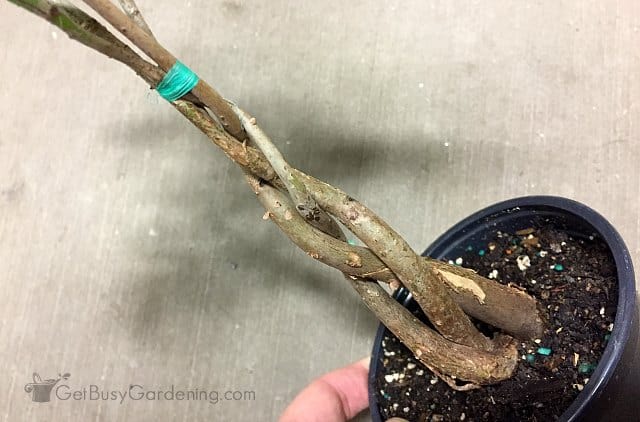
Maybe you’ve never heard the name, but you might recognize a money tree because it’s one of the most popular braided trunk plants.
Benefits Of Money Tree Plants
So what is money tree plant good for? Well, as I already mentioned, the benefits include bringing you good luck and financial prosperity.
They are also very popular in Feng Shui, because they are said to bring positive energy into the room where they’re growing. They’re commonly given as gifts for all of these reasons.
I’m not sure how they got such an amazing reputation, but I’m thinking about growing a lucky money tree plant in every room of my house!
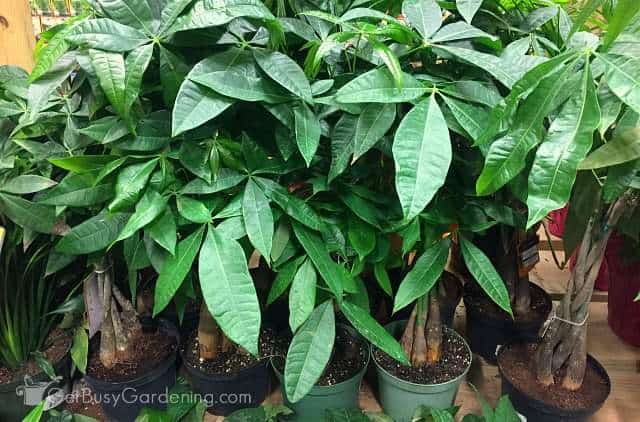
Pachira aquatica Flowers & Fruits
You might be surprised to learn that, when given the proper care, a money tree can bloom and produce edible fruits and seeds.
The highly fragrant flowers open at night, and only last through the next morning or early afternoon before they fade and drop off. They are big, cream or white in color, and can have long red/pink stamens.
If pollinated they will produce a fruit that looks like a cocoa or large nut, hence the common names Malabar or Guiana chestnut.
Both the fruits and the seeds are edible, and can be eaten raw or roasted. The seeds can also be planted to grow new money trees. It’s extremely rare for them to bloom and set fruit indoors though.
Where To Grow Money Trees
Most people grow their money tree indoors year round, but they can also do very well outside in warmer climates. They are hardy in zones 10+.
You can either plant them in the ground, or put them in a pot if you want to restrict their size. Just be sure it has drainage holes so your tree won’t drown when it rains.
Once you choose the perfect spot, it’s best to leave them there. They don’t like to be moved, so if they’re not hardy where you live, keep them inside year round rather than putting them outdoors for summer.
Pachira Money Tree Care & Growing Instructions
Though they are pretty easy to grow, they do have some fairly specific requirements that need to be met in order to thrive. Follow these money tree plant care instructions for the best results.

Watering A Money Tree Plant
One of the key factors to successful money tree care is proper watering. They like a lot of water, but won’t tolerate wet feet for very long. Too much can cause root and stem rot.
Avoid letting them dry out completely though. Instead water when the top 2-3” of soil is dry. A moisture gauge can be helpful in getting it just right.
When it’s time, give it a good drink, and let the excess drain from the holes in the bottom of the pot. Dump the drip tray right away so it’s never soaking.
Humidity Requirements
Another important part of successful money tree care is humidity, which is especially critical indoors during the winter months.
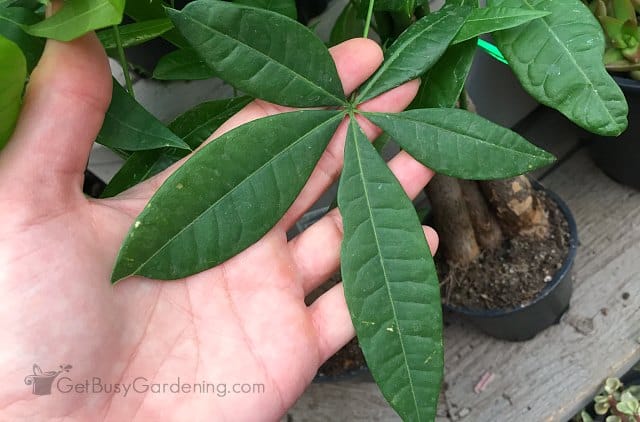
Dry air causes the leaves to curl and turn yellow or brown before dropping off. To increase it, try running a humidifier nearby, or put the plant on a pebble tray.
Misting can also work, though don’t let too much moisture sit on the leaves. To help you maintain the proper humidity level, keep an indoor air moisture monitor nearby.
Money Tree Light Requirements
One of the reasons growing money trees indoors is so easy is because they aren’t super picky about lighting.
They prefer bright, indirect sunlight. But they will adapt to lower light conditions indoors, especially during the winter. If yours is getting leggy or reaching for the window, add a grow light.
Outdoors, money trees can grow anywhere from full to partial sun. But in arid climates they will do best with more shade to prevent burning.
Temperature
Though Pachira aquatica can tolerate cooler temperatures, they grow best when it stays between 60-85°F.
They can survive brief periods below freezing, but will start to suffer when it’s that cold for more than a few hours.
Warmer temps won’t bother them, as long as you give them extra protection from the intense afternoon sun.
Repotting Your Money Tree
Since they grow so fast, you should plan to repot your money tree every few years as a part of their regular care routine. The best time to do it is spring or early summer.
When the time comes, make sure you choose the right sized container. Don’t use one that is too large, because that can cause issues with overwatering and root rot.
Money trees can be grown in very small pots, especially if you want to keep their size manageable. So choose a one that’s only slightly larger than the original.
Related Post: How To Repot Plants: A Helpful Illustrated Guide
Best Potting Soil For Money Tree Plant
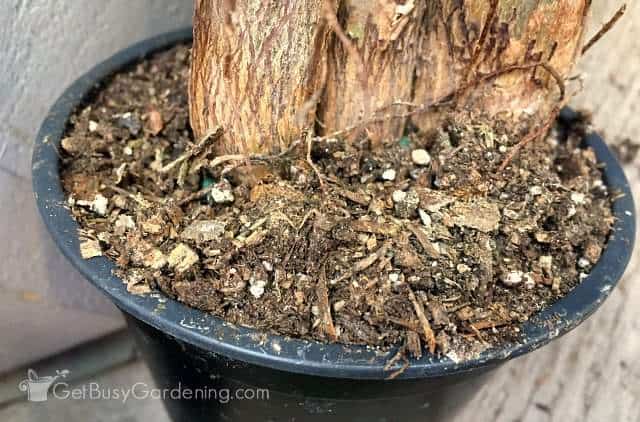
A general purpose potting soil will work fine for growing money trees. But, they will do best in a fast draining mix that also retains moisture.
Try using a sandy one, then adding peat moss or vermiculite to help it retain moisture. If you don’t want to fuss with all of that, you can’t go wrong using a bonsai mix.
But you can learn all you need to know in my complete guide to the best type of soil here, and get my recipe to make your own too.
Best Fertilizer For Money Trees
Though money trees aren’t heavy feeders, they’ll benefit from it now and then. They can be sensitive to synthetic chemicals, so I recommend using organic products only.
You can feed them using a half-dose of liquid houseplant fertilizer or compost tea every couple of weeks during the spring and summer.
If you find it easier, try bonsai pellets instead of liquids. Stop fertilizing in late summer, and don’t feed them at all during the fall and winter months.
Pest Control
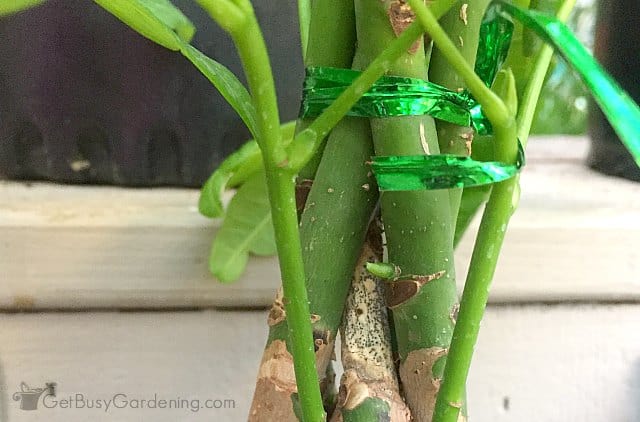
Insects aren’t normally an issue for healthy money tree plants, but whiteflies, spider mites, and aphids can sometimes invade. If you discover a bug infestation, begin treatment immediately.
Neem oil is my top choice for getting rid of bugs on the leaves. You can also try a pre-mixed insecticidal soap, or make your own with 1 tsp mild liquid soap per 1 liter of water.
Use a yellow sticky trap to capture and help control flying insects.
How To Prune A Money Tree
In general they don’t need to be trimmed, but regular pruning will keep your money tree plant smaller and more manageable. The best time is in the spring or summer.
To prune yours cut off the tips, which will encourage branching and make it fuller. Use bonsai shears or a micro-tip snip for precision cuts.
If it’s overly large, you can top the whole thing to control the size. New leaves grow back quickly, which is one reason why they are so appealing for bonsai.
You can learn exactly how to prune your money tree with my detailed guide and step by step instructions here.
Money Tree Propagation Tips
The two main ways to propagate a money tree are either by stem cuttings or planting the seeds. Taking large cuttings is the fastest way to get a sizable tree.
Simply dust them with rooting hormone and put them into a damp medium until they start to grow. Get the full steps for how to propagate your money tree here.
Troubleshooting Money Tree Care Problems
Though they are fairly easy to grow, there are some common money tree care problems that people tend to have. Here’s how to troubleshoot the symptoms, and what to do about it.
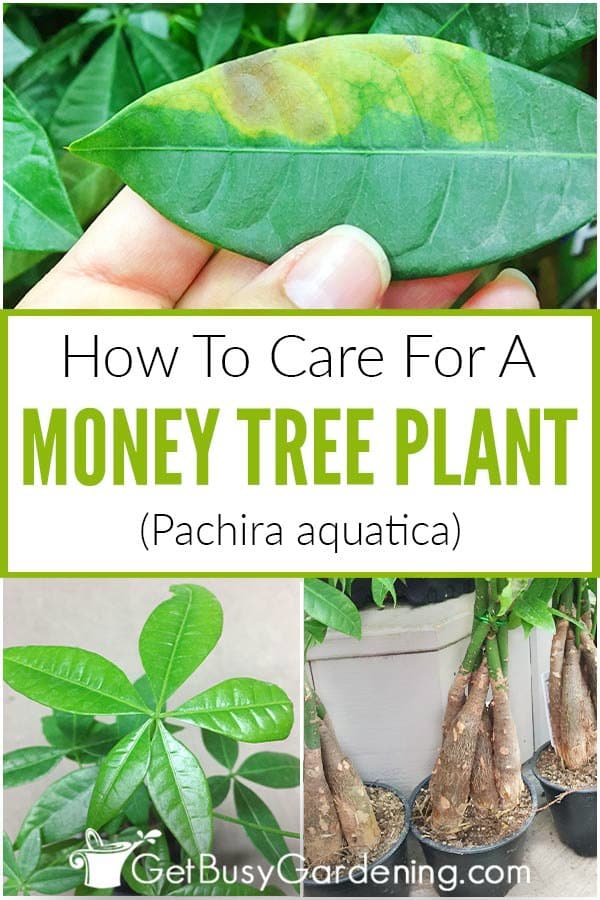
Leaves Turning Yellow
Yellowing leaves usually means you’re watering too much, though it can also be from moving it around, or when it gets too cold for them.
Allow the soil to dry more between waterings, and ensure the temperature stays between 60-85°F. If you recently put it in a new location, then leave it alone because they hate being moved.
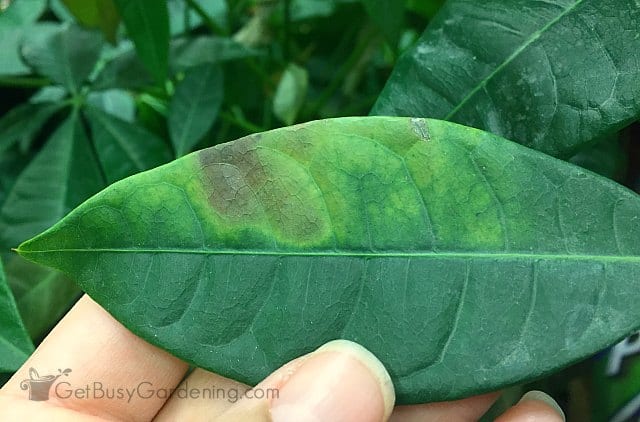
Leaves Turning Brown
Lack of humidity or water is usually what causes brown leaves. Raise the humidity level around the plant, and make sure it’s getting enough moisture.
They are also sensitive to sudden temperature changes, and can suffer when exposed to hot or cold drafts. So keep them away from heat vents and drafty areas.
Intense hot sunlight can burn them, so give them afternoon shade if you suspect that’s the problem.
Money Tree Dropping Leaves
Money trees are a bit fussy about their location, and don’t like to be moved around. If you move them too much, the leaves will start dropping.
So keep it where it is, and try not to move it. If you just brought it home, give it plenty of time to adjust.
Improper watering is also a common cause, so make sure the soil stays evenly moist, and never wet or bone dry.
Money Tree Not Growing
If your money tree is simply not growing, then it’s either too cold, improper watering, root or stem rot, or not enough light.
The first thing to do is check the soil to ensure it’s not soggy or wet, and that the stem is firm rather than soft or rotting.
If that’s not the problem, then give it plenty of warmth, and add a grow light if it’s too dark in your home.
FAQs
In this section I’ll answer some of the most frequently asked questions about money tree care. If you can’t find yours here, ask it in the comments below.
Is a money tree the same as Pachira aquatica?
Yes, a money tree is the same as Pachira aquatica. Money tree is the common name, and Pachira aquatica is the botanical or scientific name.
How fast does a money tree grow?
A money tree can grow very fast with the proper care. In the ideal environment, they can put on a few feet per year. It takes just 5-7 years for them to fully grow into a large tree.
Are money trees hard to take care of?
No, money trees are not hard to take care of, in fact they’re actually quite simple to grow. They’re very resilient and low maintenance, just requiring the basic light, water, humidity, and temperature.
Can A Money Tree Go Outside?
Yes, a money tree can go outside as long as the weather is warm enough, or you live in growing zones 10+. Otherwise, be sure you bring it back inside before the temperature gets below 50°F.
Is Pachira aquatica safe for cats and dogs?
Yes, Pachira aquatica is safe for cats and dogs – and humans too, for that matter. According to the ASPCA website, they are non-toxic to pets.
Growing money trees is fun, and their care is easier than you might think. I’m not sure if it will actually bring you all of the benefits that I mentioned above, but it can’t hurt to try.

If you want to learn all there is to know about maintaining healthy indoor plants, then you need my Houseplant Care eBook. It will show you everything you need to know about how to keep every plant in your home thriving. Download your copy now!
More About Different Houseplant Types
- How To Care For Sago Palm Trees (Cycas revoluta)
- How To Care For Rubber Plants: The Ultimate Guide
- How To Care For Umbrella Tree Plant (Schefflera arboricola)
- How To Care For Alocasia Plants
- How To Care For African Mask Plants
- How To Care For A Peace Lily Plant
- How To Care For Fiddle Leaf Fig Plant (Ficus lyrata)
Share your money tree care tips in the comments section below.

Steve says
Just brought home our first money tree. We want to put it in a corner of a sunroom where it will get about 2 hours of direct morning sunlight, from about 9 to 11 am. We live in the southeast and the sun is about 45 degrees out of the south. Other than that it is fairly bright indirect sun. Will that work?
Amy Andrychowicz says
It sounds like that would be the perfect spot for your money tree. The morning sun is much less intense, so I don’t expect it would burn your plant. But just keep an eye on the leaves that are closest to the window to make sure they aren’t showing signs of sunburn, especially in the hot summer months, since the glass can intensify the rays and make the area hotter. Good luck!
Robin Simon says
I am moving to Florida. I live in Colorado. I have to drive my plant thete. It’s very healthy now. Will this kill it?
Amy Andrychowicz says
Money trees don’t like to be moved, so it’s probably not going to be happy about it. The best thing you can do is make sure you protect it from extreme temps. When plants sit in a car, even when it’s moving, they can get sunburn if they’re too close to the window. So keep it shaded and away from heat vents. If you have to bring it outside during cold weather, then make sure you wrap it in a blanket to protect it from freezing, even if it’s just exposed for a few minutes. Once you get it to your new home, bring it inside and find a good spot for it right away. Then leave it alone until it recovers. You might see some dropping leaves, which is normal, but it should pop back from the shock in a few weeks.
Bernard Murray says
If I make a cutting and put it in water, will it begin to root enough to put it soil eventually?
Amy Andrychowicz says
While money tree stem cuttings can root in water, it’s not always the most successful method. It’s better to root them in a moist medium rather than in water. But if you have extras or want to give it a try to see if it will work for you, it’s a fun experiment.
VICKI L HOMAN says
My money tree plant is in a pot that you water from the bottom. Not sure if that is a good choice? Also, the leaves are curling up, and feel a little dry. Any advice?
Amy Andrychowicz says
Watering from the bottom can make it difficult to tell how much your money tree is getting. That’s because the bottom of the soil and roots could be wet, while the top feels dry. So, many times people end up overwatering. In your case, dried and curling leaves is usually a sign of lack of humidity/moisture. So, I would start watering from the top instead so you can monitor it more closely. Let the very top of the soil dry down to 1″, then give it a deep drink, allowing the excess to completely drain from the pot. The soil moisture gauge that I linked to above will help you determine when it needs more water. Curling/dried leaves can also be a sign of a spider mite infestation, so make sure to inspect the leaves to rule that out too.
Mary F Healy says
My money tree was given to me as a gift. It does not have a braided trunk. Is that ok. It has new growth but the lower leaves are wrinkled. Do I prune them???
Amy Andrychowicz says
Yes, money trees don’t need to be braided, it has no benefit to them. If the lower leaves otherwise look healthy, then there’s no need to prune them.
monica khosla says
My money tree keeps dropping green healthy leaves, the last one just fell and now it’s just the trunk left. Any tips on what to do will be really helpful. Thank you.
Amy Andrychowicz says
Have you moved it recently? Money trees are very fussy, and don’t like to be moved. It’s very common for the leaves to drop off when you first bring the plant home, or if you move it to a new location. Normally, they will recover after a few weeks of being left in the same place.
Rose says
Can you start a new plant replanting the leaves?
Amy Andrychowicz says
No, you can’t propagate money tree leaves like that. But you could try taking hardwood cuttings and rooting those.
Darlene says
Thanks for all the advice my daughter just bought me a money tree for my birthday and I’ve never tried growing one before so all the information I can use will be helpful again thank you
Amy Andrychowicz says
You’re very welcome! Good luck with your new money tree. 🙂
Jennifer says
I need help with my money tree. When I bought it, the truck is nice firm and plump. After a couple months, the trunk has shrink. Check the roots, no sign of root rot. I water the plant with 2 ice cubes a week.
But now the plant to showing droopy leaves. Soil is dry. Trunk is not plump as when I first bought it. What is going on?
Amy Andrychowicz says
It sounds to me like you may be under watering your money tree. If the soil is dry, the leaves are drooping, and the stem is shriveling then try giving it a bit more water. Also, if it’s been in the same pot a very long time, it might be pot-bound so the soil won’t hold water anymore. If that’s the case, then you can repot it into a slightly larger container.
Portia Johnson says
Hello, my money plant’s leaves are turning brown I get direct sunlight in the morning, and have the plant there I usually water it once a week . The sunlight is filtered through sheer curtain. I love the look of the plant please help
Amy Andrychowicz says
When money plant leaves turn brown, it’s usually caused by lack of humidity (see the “Money Tree Plant Humidity Requirements” section above for more details). But, if you have it right next to a drafty window, and you live in a place where it freezes in winter, then it could be getting too cold. Here’s more info about that…
Lucia says
My money tree has a white sticky gluey gel coming out of the spine of the back of the leaves. What is it and is it normal for the plant? I can send you a picture of the sticky white substance if you give me an email address to send it to.
Thank you.
Amy Andrychowicz says
The first thing I would do is check for bugs. A white, sticky excretion makes me think of meaylbugs, but it could be some other kind of pest infestation. Take a close look at the leaves to see if there is a cotton-like substance, dark bumps (scale), or other signs that your money tree has bugs. Otherwise, if your plant looks healthy, it could just be guttation, which is common in plants, and nothing to worry about. (fingers crossed that it’s the latter!)
Pamela Baldwin says
My money tree is growing tall and it’s starting to bend over what should I do
Amy Andrychowicz says
When money trees grow tall and skinny like that, it means they need more light. Move it to a brighter location. You can trim back the scraggly growth, then prune it regularly to help keep it compact and shapely.
Wendi says
My friend gifted me a money tree over a year ago and it is doing wonderful in my bathroom! I am in love! However we have a big move coming up which means travelling for 2 weeks across the country. I absolutely cannot leave this money tree! Is there any way possible I can bring it with me? Will it survive in a box on the floor of a truck for 2 weeks? Any tips for travelling with it would be greatly appreciated!
Amy Andrychowicz says
Glad to hear your money tree plant is doing so well, that’s great! They don’t like to be moved, so keeping it in a truck for 2 weeks is going to be tricky. It would be ideal if could give it to a friend, and then have them wrap it up and ship it to you using a 2-3 day mailing option once you’re settled into your new home (NOT during the winter in a cold climate though!). That way, it would only be in a box for a few days. However, if moving it in the truck is your only option, then I would not wrap it up for the full 2 weeks. I would put it the pot on the floor so it stays out of the sun. If you’re moving through a cold climate, then you should wrap it up with a blanket before bringing it outside, and make sure to take it inside with you at night (unwrap it once it’s inside or in the warm truck). Even a few seconds in freezing air can cause major damage, or even kill a plant. So be very careful about the temperature during the 2 week transition. Hope this helps, and good luck with your move!
Cathy says
What is the sticky stuff coming from the leaves?
Amy Andrychowicz says
It could be transpiration, or it could be caused by bugs. Take a very close look at the leaves of your money plant to see if there are any signs of any type of houseplant bug. If not, then it’s probably just transpiration – which basically means the plant is sweating. That is totally normal, and nothing to worry about. Very common during hot and humid weather. 🙂
Regina says
Hi! Just need some help with my money tree. My husband bought it for me last aug.22 he said that the leaves were in pretty good condition but when i saw it there is a white spot i don’t know what to do and how will i fix it. Hope you can help me with it.Thanks in advance!
Amy Andrychowicz says
It’s hard to know for sure without more information. White spots on money tree leaves can be caused by a few things. First, if it’s a brand new plant, the white spots could just be residue from the sprays they use at the greenhouse. That is very common on new plants. Otherwise, if the white spot is actually faded into the leaf, then it was probably caused by too much direct sun. The third thing could be bugs. If the white spots are fuzzy or tiny circles, then that means it’s got a pest infestation of some kind.
Linda N Hanson says
I’m seeing small droplets of sticky liquid on the stems of my money tree plant. This happened once before and I trimmed it back slowly to a small stalk or two. It came back quickly and looked great. Today, I again noticed the same problem on the top stems of new growth. What is this and how to treat?
Amy Andrychowicz says
If you only see droplets of liquid, and there’s no signs of bugs on the leaves of your money plant, then it’s probably just transpiration. This is very common for plants during the hot and humid summer months. Think of it like your plant is sweating. 🙂 No treatment necessary, it’s completely harmless to the plant.