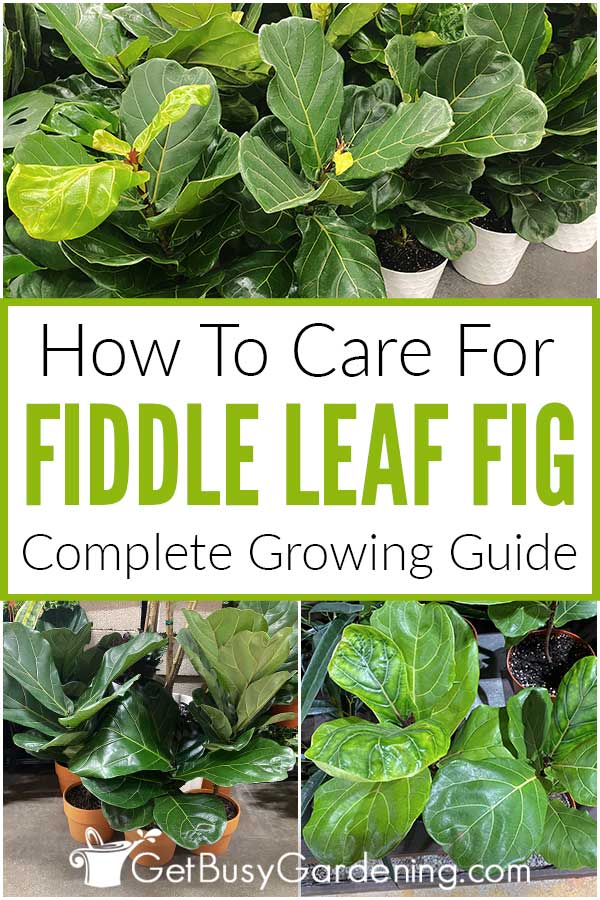
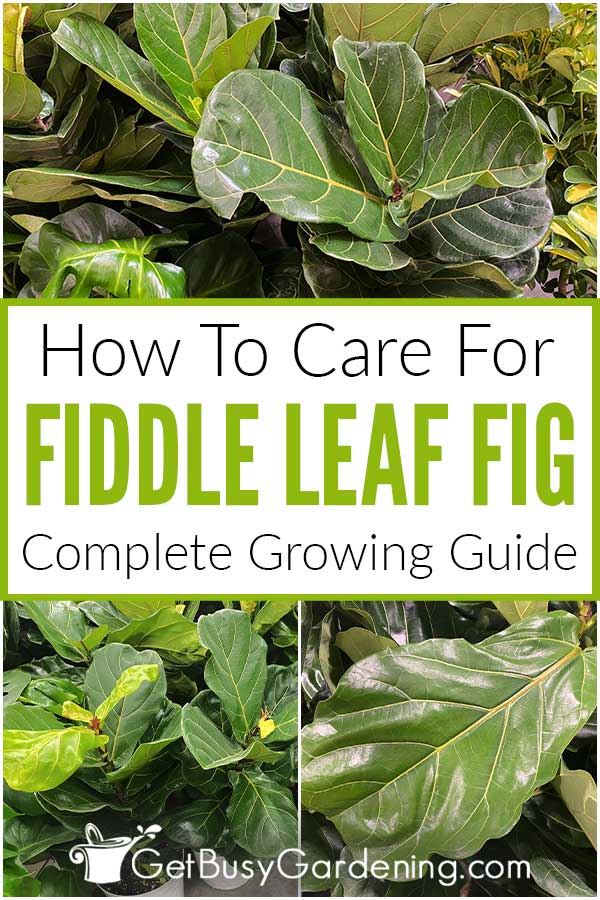
Fiddle leaf figs aren’t hard to grow, in fact their care is pretty darn easy. In this post, I’ll show you all you need to know so you can keep yours thriving for decades to come.
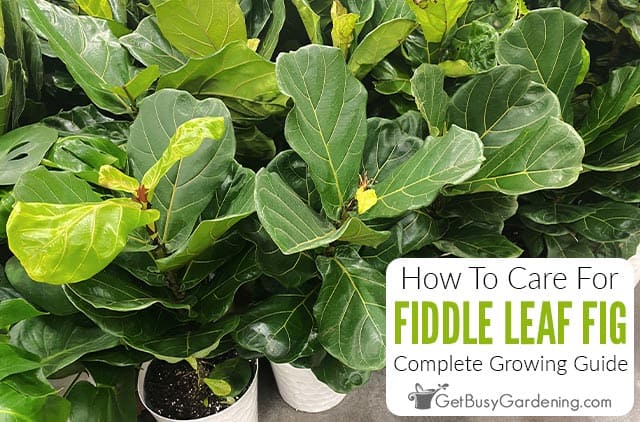

The fiddle leaf fig is a popular plant for many home gardeners because of the eye-catching large green foliage and its height.
Despite having a reputation for being difficult, even a beginner can learn how to grow them successfully with the right advice.
This fiddle leaf fig plant care guide is designed to teach you everything you need to know about how to keep them healthy.
Discover what kind of light, water, soil, and fertilizer they need to thrive, plus get added tips on pruning, propagation, troubleshooting problems, and much more.
Fiddle Leaf Fig Quick Care Overview
| Scientific name: | Ficus lyrata |
| Classification: | Tropical plant |
| Common names: | Fiddle Leaf Fig |
| Hardiness: | Zones 10+ |
| Temperature: | 65-85°F |
| Flowers: | N/A |
| Light: | Full sun to part shade, bright light indoors |
| Water: | Keep soil evenly moist, do not overwater |
| Humidity: | High |
| Fertilizer: | General purpose plant food spring-summer |
| Soil: | Fast-draining, fertile soil |
| Common pests: | Thrips, mealybugs, scale, aphids, whiteflies |
Information About Fiddle Leaf Fig
The fiddle leaf fig tree (Ficus lyrata) is native to tropical Africa, and was named for the large leaves that are shaped and sized similarly to a fiddle instrument.
These impressive specimens can reach heights, up to 50’ outdoors. They also do very well in containers, but usually only get 10-15’ tall indoors.
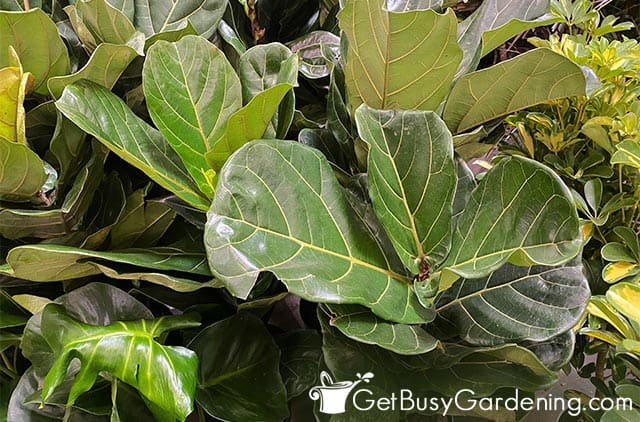
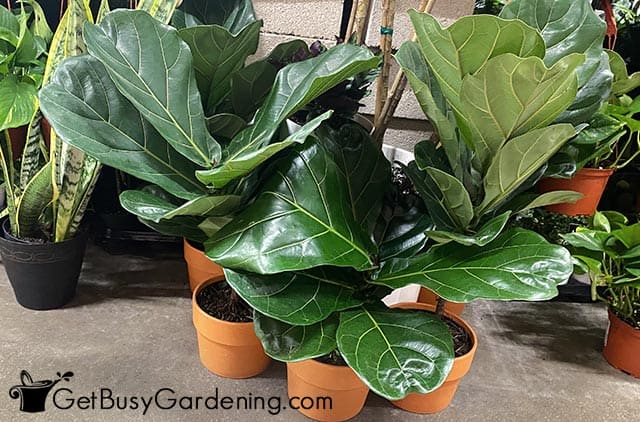
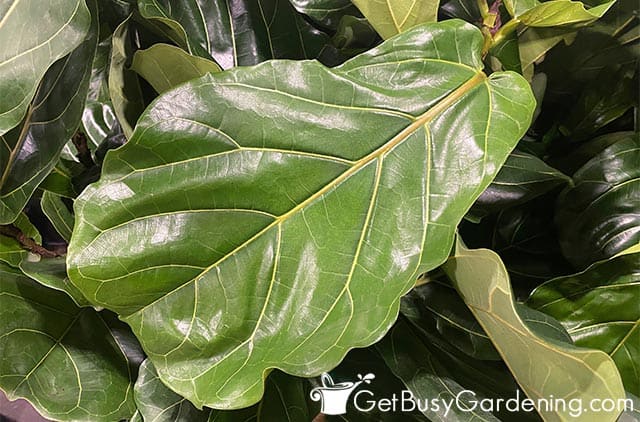
The large leaves are rounded and glossy, and grow from either single or branching stems to create a full, bushy tree over time.
Different Fiddle Leaf Fig Types
There are several different varieties of fiddle leaf fig. They all require the same care and attention, but have slightly different growth habits.
- Ficus lyrata ‘Suncoast’ – This variety is more cold tolerant, and features heart shaped leaves.
- Ficus lyrata ‘Compacta’ – This slightly smaller, slow-growing type has a maximum height of 32’.
- Ficus lyrata ‘Bambino’ – This oval-leaved variety is much more compact with a maximum of 30’ of mature height.
- Ficus lyrata variegated – This slow-growing variety features creamy yellow edges around the green leaves.
Flowers & Fruits
Though very uncommon indoors, the fiddle leaf fig can produce bright red flowers if given the proper light and humidity.
Natively those blooms are fertilized by the fig wasp to create edible, though unpleasant tasting, fruits.
Toxicity
The sap within the leaves and stems of a fiddle leaf fig can be irritating when left of the skin or ingested.
It’s best to keep it out of reach of pets and children if you’re concerned, and to use gloves when handling or pruning it.
You can find more information on toxic and non-toxic plants at the ASPCA website.
How To Grow Fiddle Leaf Fig
Before we dive into the details of fiddle leaf fig care, first we should chat about where to grow them. Choosing the right location is key to long-lasting, sustained health.
Hardiness
Fiddle leaf fig trees are not hardy plants. They can only live outdoors in zones 10+ where temperatures don’t drop below 35°F.
They’re very sensitive to temperature fluctuations, and will drop leaves or turn yellow when cold weather kicks in.
Where To Grow Ficus lyrata
The potential height of fiddle leaf figs demands a lot of space when grown outdoors. In warm enough climates they can develop into very large, leafy trees.
If you want to restrict their size, you can put them in a container outdoors instead of in the ground.
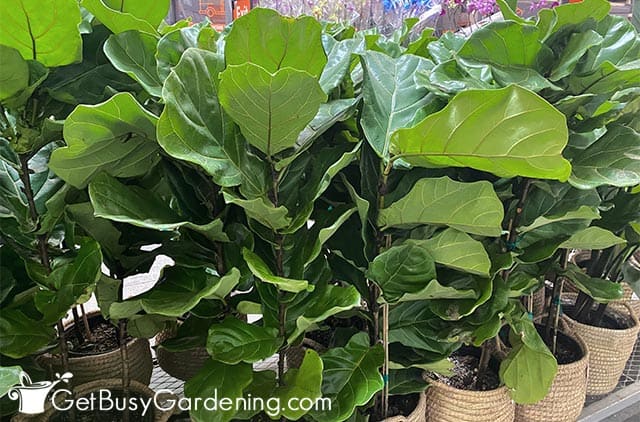
They can also thrive indoors for years in a large container with good drainage and plenty of light.
However, sudden environmental changes can shock and stress them. So it’s best to keep them inside year round rather than moving them outdoors for summer.
Fiddle Leaf Fig Care & Growing Instructions
Now that you have an idea of where to grow them, let’s chat about how to care for Ficus lyrata. These tips will help you enjoy the large foliage for many years to come.
Light
The leaf size of fiddle leaf figs demand a lot of light to maintain the color and growth. Indoors, place them directly next to a window that receives 12 hours of light a day, or add a grow light.
Outdoors, they love the sun, though direct rays in the hottest part of the afternoon can scorch the leaves.
Over time, they can be acclimated to a full sun location. But it’s best to do this slowly by increasing exposure over a few weeks to avoid sunburn.
Water
Ficus lyrata has average water needs, but large specimens can be demanding due to their size. Keep them evenly moist, but never leave them with wet feet for too long.
Avoid letting the entire pot dry out completely. Instead water when the top 2-3” of soil is dry. A moisture gauge can be helpful in getting it just right.
When it’s time, give them a deep drink until water leaks out of the bottom holes. Make sure to drain away any excess.
Humidity
These are humidity loving plants, preferring environments with levels around 65% if possible.
Indoors this will require you to supplement by adding moisture. Run a small humidifier nearby, or mist frequently. You can use an indoor meter to monitor it.
Temperature
Though fiddle leaf figs can tolerate temperatures down to 35°F, they prefer a range between 65-85°F.
Hot weather doesn’t often bother them, though they may require more frequent irrigation during prolonged heat waves.
Fertilizer
Their rapid growth means the fiddle leaf fig will be happiest with consistent feeding as part of your regular care routine.
Apply a diluted organic liquid fertilizer like compost tea, or those houseplant food once every two weeks from spring through fall.
Otherwise if you prefer, you can mix in balanced slow-release granular pellets once per month.
Soil
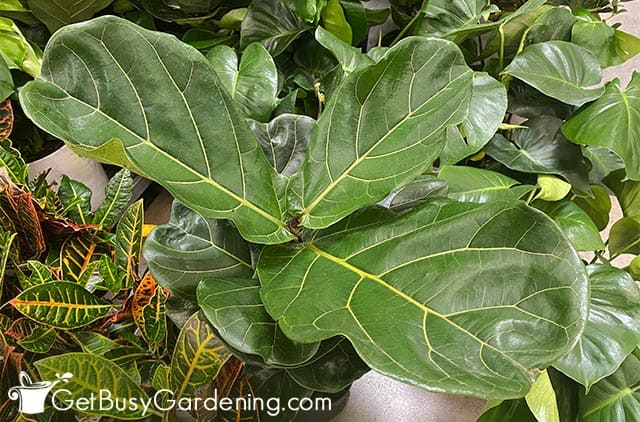
The best soil for fiddle leaf fig is a fast-draining mixture with a pH of between 6.5-7. You can check that easily with a probe meter.
A porous mix can work well. Or, you can make your own by combining 1 part regular potting soil, 1 part compost, and 2 parts pine bark.
Repotting
With the proper care, fiddle leaf fig trees can grow very rapidly and may need repotting every 1-2 years.
When roots begin to show from the drainage holes, or growth slows, it’s a sign they need to be sized up.
Move them into a container 2-4” larger than the current one in the spring. Replant at the same depth, and expect some leaf drop or drooping as they recover.
To limit growth of a pot-bound Ficus lyrata, reuse the current container by refreshing the soil and trimming away some of the roots.
Pruning
Pruning is an important part of fiddle leaf fig tree care, and helps to maintain or control the size and shape. It is also safe to remove dry or damaged leaves as needed.
You can use sharp, sterile pruners to trim away leaves and even out growth. Avoid taking more than 10% of the total foliage at a time.
You can also top the plant to rejuvenate it and encourage branching. That trimmed top can be rooted to create a new tree.
Pest Control Tips
Fiddle leaf figs can suffer from many common pests such as thrips, mealybugs, scale, aphids, and whiteflies.
It’s best to begin treating bugs right away if you see them. You can apply rubbing alcohol directly to the insects with a cotton swab to kill them on contact.
Or, use an insecticidal spray to wash the leaves. I make my own by combining 1 teaspoon of mild liquid soap with 1 liter of water. Neem oil is also great for long term control.
Fiddle Leaf Fig Propagation Tips
Though they can be grown from seed, most home gardeners propagate fiddle leaf figs by stem cuttings.
It’s a common misconception that leaves can be propagated, but it’s unfortunately untrue. They may root, but will never grow into a new tree.
Instead take woody stem cuttings with at least one leaf node. Dip them in rooting hormone and put them into either soil or water.
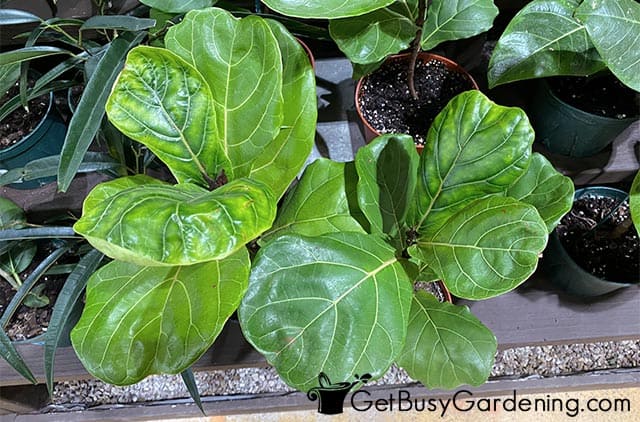
Troubleshooting Common Care Problems
Fiddle leaf figs have a reputation of being difficult to care for. If you run into any of these problems over the years, my tips can help you get them back into good shape.
Leaves Turning Brown
Browning leaves can be caused by inconsistent watering, temperature shifts, low humidity, or environmental changes.
Fiddle leaf figs are sensitive to sudden temperature swings, so keep them away from heating and cooling vents or drafty areas.
Maintain consistent soil moisture, but never let it become soggy or bone-dry. If the air in your home is dry, then supplement with a humidifier.
Yellow Leaves
Yellowing leaves are usually caused by overwatering, nutrient deficiency, or lack of light.
Never leave them sitting in soggy soil, as that can cause root rot which will yellow the leaves.
They’re also heavy feeders, especially in containers, so fertilize them monthly from spring through fall.
Providing enough light is also a common issue. If you can’t place them directly next to a window that receives sun all day, add a grow light.
Brown Spots
Brown spots are most commonly caused by low humidity, sunburn, or pests. Check for bugs and treat any that you see immediately.
If they’re exposed to direct afternoon sun outdoors, move them to a shadier spot and give them more time to acclimate to the full exposure location.
Leaves Drooping
Drooping, limp leaves are a clear sign of thirst. Check the soil and give them a deep drink, draining all excess from the pot. The leaves should pop back up when they’re hydrated again.
However drooping could also be caused by a change in environment, such as less light, lower humidity, or being moved.
Recently repotted plants can experience shock that causes temporary drooping as well. This is normal, so just give them time to recover.
FAQs About Fiddle Leaf Fig
Here I’ve answered some of the most commonly asked questions about fiddle leaf fig care. If yours isn’t listed, please add it to the comments section below.
Are fiddle leaf fig trees hard to care for?
Fiddle leaf fig trees have the reputation of being hard to care for because they are very sensitive to improper watering, temperature, and environmental changes. But once you know how to provide what they need, they can easily thrive.
How can I get my fiddle leaf fig to grow taller?
The best way to get your fiddle leaf fig to grow taller is to provide plenty of light, consistent water, and monthly feedings with an organic fertilizer.
How long do fiddle leaf figs take to grow?
Fiddle leaf figs don’t take very long to grow in the right conditions. In their ideal environment you might see 2-3’ of growth per year.
Are fiddle leaf figs good indoor plants?
Fiddle leaf figs are excellent indoor plants as long as they get plenty of light, humidity, and nutrients.
Now that you know what it takes to grow a Ficus lyrata, you can feel confident adding one of these towering plants to your collection. Follow these fiddle leaf fig plant care tips to help them thrive.

If you want to learn all there is to know about maintaining healthy indoor plants, then you need my Houseplant Care eBook. It will show you everything you need to know about how to keep every plant in your home thriving. Download your copy now!
More Houseplant Care Guides
- How To Care For Chinese Money Plant (Pilea peperomioides)
- How To Care For A Pink Princess Philodendron
- How To Care For Cat Palm (Chamaedorea cataractarum)
- How To Care For Black Pagoda Lipstick Plant
- How To Care For Foxtail Fern (Asparagus densiflorus ‘Myers’)
- How To Care For Umbrella Tree Plant (Schefflera arboricola)
- How To Care For A Money Tree Plant (Pachira aquatica)
Share your fiddle leaf fig care tips in the comments section below.

Leave a Reply