


A fishbone cactus is easy to care for, durable, and fast-growing which makes it ideal for beginners.
But before you can enjoy their unique foliage in your home or garden, you need to learn how to take care of them correctly.
This detailed care guide is designed for you to learn how to grow a fishbone cactus successfully. You’ll discover their ideal environment, the best soil and fertilizer, how to water them, the sunlight, temperature, and humidity requirements, and much more.


Fishbone Cactus Quick Care Overview
| Scientific name: | Selenicereus anthonyanus |
| Classification: | Orchid Cactus |
| Common names: | Fishbone cactus, Zig Zag cactus, Ric Rac cactus |
| Hardiness: | Zones 10-11 |
| Temperature: | 60-75°F (15.5-24°C) |
| Flowers: | Bi-colored violet and white, blooms in the summer |
| Light: | Dappled shade outdoors, bright indirect light indoors |
| Water: | Keep soil evenly moist, do not overwater |
| Humidity: | High |
| Fertilizer: | General purpose plant food, spring-summer |
| Soil: | Well-drained, fertile, aerated |
| Common pests: | Mealybugs and scale |
Information About Fishbone Cactus
The fishbone cactus (Selenicereus anthonyanus) is an epiphytic plant native to the tropical rainforests of Mexico. In nature, it anchors itself in the nooks of trees and absorbs moisture and nutrients from the air and rain.
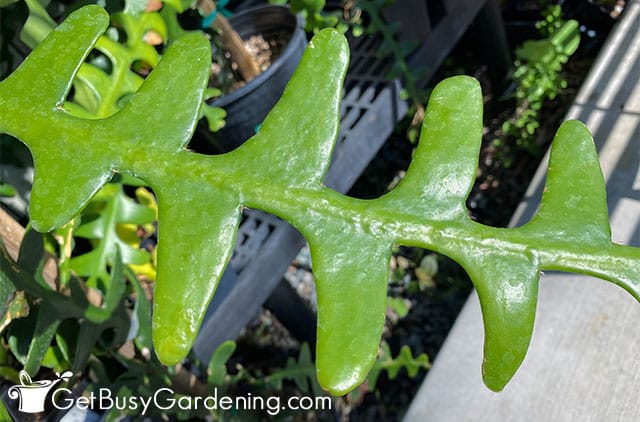
The flat leaf-like branches climb or drape and feature alternating notched lobes that resemble a fish skeleton, giving the plant its common names zig zag and fishbone cactus. The branches average about 3’ in length, 6” wide, with up to 2” smooth lobes on either side.
They are fast-growing, low-maintenance plants that can take a fair amount of neglect and still survive.
Different Types
There is only one true type of Selenicereus anthonyanus. But, the foliage shares a similar appearance with an Epiphyllum anguliger, or ric rac cactus, and they are sometimes referred to by the same common name.
While closely related, the fishbone cactus is technically a different plant, and has wider, longer lobes that are more jagged and spaced further apart, as well as different colored flowers.
Flowers
Once it matures, your plant can produce nocturnal flowers. The blossoms will open for just a single night during late spring or summer, but only if the plant gets 6 or more hours of bright light in early spring.
These fragrant orchid-style blooms are 4-5” wide on average and feature violet external petals with white internal petals.
Toxicity
Selenicereus anthonyanus is non-toxic to pets, so it’s safe to grow if you have a cat or dog. Though they can develop tiny prickly spikes or spines on the inside angle of the stems, so you still may want to keep it out of reach.
If you’d like more information please refer to the ASPCA website about toxic and non-toxic plants.
How To Grow Fishbone Cactus
Before we talk about fishbone cactus care, we first need to discuss the best place to grow them. By choosing the right location, you’ll set yours up for long-lasting health.
Hardiness
This is not a cold-hardy or heat-tolerant plant. Temperatures below 50°F (10°C) will stop growth, and anything below 30°F (-1.1°C) for long periods of time will kill it.
The plant’s temperature sensitivity means it can only survive outdoors year round in zones 10-11. Otherwise, you can grow it as a houseplant.
Where To Grow
Choose a bright window with indirect light to grow your fishbone cactus indoors. Keep it away from drafty areas or AC and heater vents, which will dry it out.
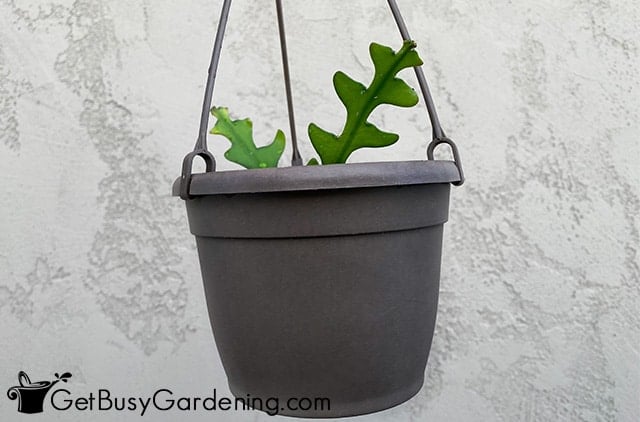
You can train the stems to climb, or let them trail or drape, which makes them a popular choice for hanging baskets. Choose a planter that has drainage holes to help prevent overwatering.
When temperatures are above 50°F (10°C), you can move it outdoors to a shady area, but bring your plant back inside before it gets too cold in the fall.
Fishbone Cactus Plant Care & Growing Instructions
Now that you have the perfect spot in mind, it’s time to talk about how to care for your fishbone cactus. The tips in this section will help you create the best environment for your plant.
Light
Indoors you need to provide bright, indirect light for your fishbone cactus – 5-6 hours a day is best. Put them in a window that gets morning or evening sun and afternoon shade.
Outdoors, choose a spot with dappled shade or where the plant is protected from direct sunlight.
To induce blooming, make sure it gets lots of bright light in the spring. Use a grow light to supplement inside if you have trouble providing enough natural light.
Water
Selenicereus anthonyanus need consistently moist soil and do not like to be bone dry for long. But be careful not to overwater or your plant could start to rot.
The soil should feel dry to the touch before you water again. Then give it a deep drink and make sure all of the excess drains completely from the pot.
If you have trouble getting it right, invest in a moisture gauge, which can help you determine the perfect time and amount of water. Aim to keep the reading between 3-5.
Humidity
Since these are epiphytes, they naturally thrive in high humidity environments. If the humidity levels are low in your home there are a few easy ways to increase it.
Try setting the pot on a pebble tray filled with water, lightly misting the leaves, or running a small humidifier nearby.
You should keep your plant away from heaters and AC vents, because the airflow can create even drier air, especially in the winter.
Temperature
The ideal temperature range for growing Selenicereus anthonyanus is between 60-75°F (15.5-24°C). They’re not very tolerant of extremes on either end.
Anything below 50°F (10°C) will slow down the growth, while 40°F (4.4°C) or colder can lead to damage, and freezing temperatures will kill the plant.
They handle the hot weather much better, but make sure your plant stays well hydrated during extended heat waves.
Fertilizer
To support the fast growth rate of your fishbone cactus, feed it in the spring and summer as a part of your regular care routine.
Give it general purpose liquid, a compost tea solution, or cactus fertilizer every 1-2 months, or apply slow-release granules once per season.
You can encourage blooming by applying a flowering fertilizer 1-2 times in early spring, but don’t use it year round because it can cause leggy stems.
Soil
Epiphytes like this one don’t technically require soil to grow. You can plant them in a soilless medium, like orchid bark or peat moss, or even mount them on wood or in a tree.
A fast-draing mix will also work, or you can use a general purpose potting soil amended with perlite or pine bark to improve drainage and reduce the chance of overwatering.
Repotting
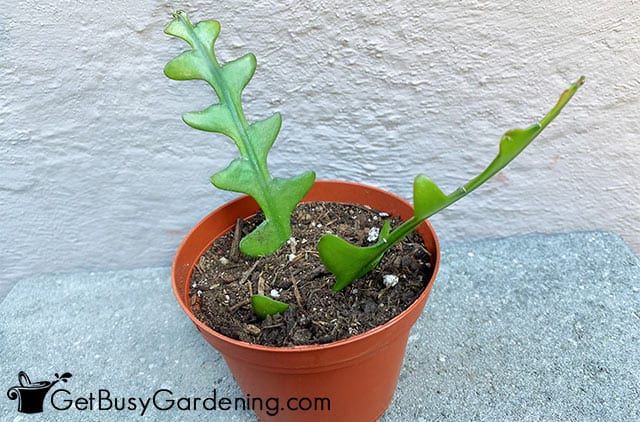
Since they are so fast-growing, you may need to repot your fishbone cactus every 1-3 years as part of their regular care.
Look for roots coming out of the drainage holes or slowed growth as signs that it’s time to size up, then do it in the spring or summer.
Choose a pot that’s 1-2” larger than the current container. Fill it with a lightly moistened, well-draining medium. Plant the rootball at the same depth it was before, then fill in with soil, and water lightly.
Pruning
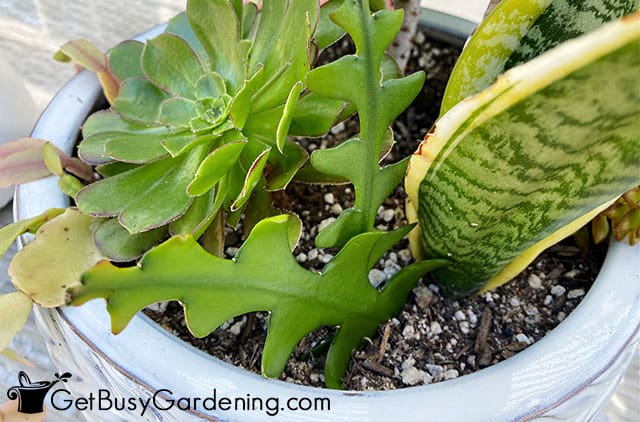
You don’t need to prune your plant, they don’t need it. However, you can give it the occasional trim to remove dead or damaged stems and to help control the shape and size.
Use sharp, sterile pruning shears to cut stems wherever they’re too long or damaged. If you don’t like the appearance of the cut end, remove the entire branch near the base of the plant instead.
Pest Control Tips
Healthy fishbone cacti rarely have problems with pests, but occasionally mealybugs or scale can become an issue.
Use a cotton swab dipped in rubbing alcohol to remove visible bugs, then treat your plant with an organic insecticidal soap. I make my own by combining 1 teaspoon of mild liquid soap with 1 liter of water.
You can also try using neem oil, which will help to get rid of any persistent pest infestations.
Propagation Tips
You can easily propagate your zig zag cactus from stem cuttings during the spring or summer.
Trim a 4-6” piece of a stem or branch and dip the cut end in rooting hormone. Plant it in a lightly moistened, well-drained medium, and place it somewhere warm with indirect light until roots form, then pot it up.
You can also propagate segments of branches that produce aerial roots without removing it from the mother plant. Pin it down onto lightly dampened soil and wait until it’s rooted, then trim it from the mother and transfer it to a new pot.
Troubleshooting Common Problems
Selenicereus anthonyanus are typically very durable and easy to care for, but no plant is problem free. If you run into one of the common issues below, use my tips to help you get back on track.
Brown Leaves/Stems
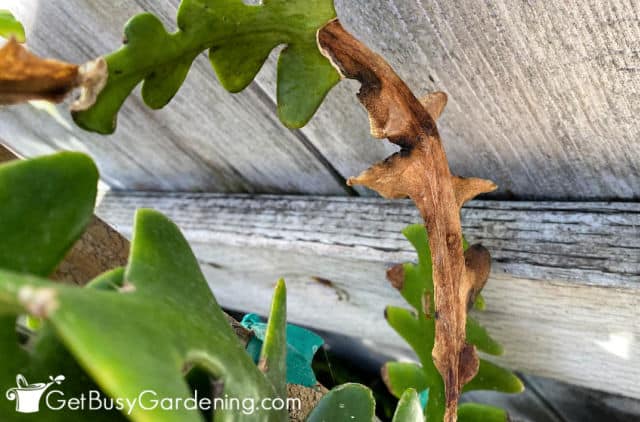
Your plant can begin to develop brown stems or lobes from improper watering, too much humidity, or an incorrect amount of light.
Excessive moisture on the foliage or overwatering can cause brown spotting or mushy leaves. Too little moisture, and the stems will turn brown and dry out. Use a humidity monitor or soil moisture gauge to help you get these both right.
Direct sunlight can cause brown scorch spots too, so provide afternoon shade or move your plant to indirect light indoors.
Yellow Leaves/Stems
Yellowing stems or lobes on your fishbone cactus are caused by lack of light, overwatering, pests, or temperature stress.
Treat any pests you see right away or allow the soil to dry a little more between drinks. Keep the plant above 60°F (15.5°C) and in bright, but indirect light. Use a grow light as needed to supplement.
Red Tips
Red tips are a natural reaction to lots of bright light or a sudden change in sun exposure, but they aren’t harmful.
If you don’t like the look of them or you’re worried your plant may be getting too much light, move it to a shadier location.
Stem Or Root Rot
Too much water or improperly drained soil are most common causes of both stem and root rot.
Use a well-aerated chunky mixture, like potting soil amended with bark and perlite, or an orchid mix to help prevent overwatering. Avoid watering to the point of making the soil soggy, and always let the excess drain from the pot.
New Growth Is Skinny
Leggy, or skinny, new growth on your fishbone cactus can be caused by lack of light. It can also be a result of using the incorrect fertilizer or overfeeding.
Make sure your plant receives at least 5 hours of bright, indirect sunlight a day, or add a grow light to help it out. Avoid using flowering fertilizers with high phosphorus levels as well, and don’t feed your plant during the winter.
FAQs
Yes, fishbone cactus plants are easy to grow because, with indirect light, average water, and typical indoor temperatures, they require very little care.
Yes, a fishbone cactus can develop tiny spikes or spines along the inside bend of the stems. They’re usually very small and barely noticeable, but can be irritating if they get into your skin.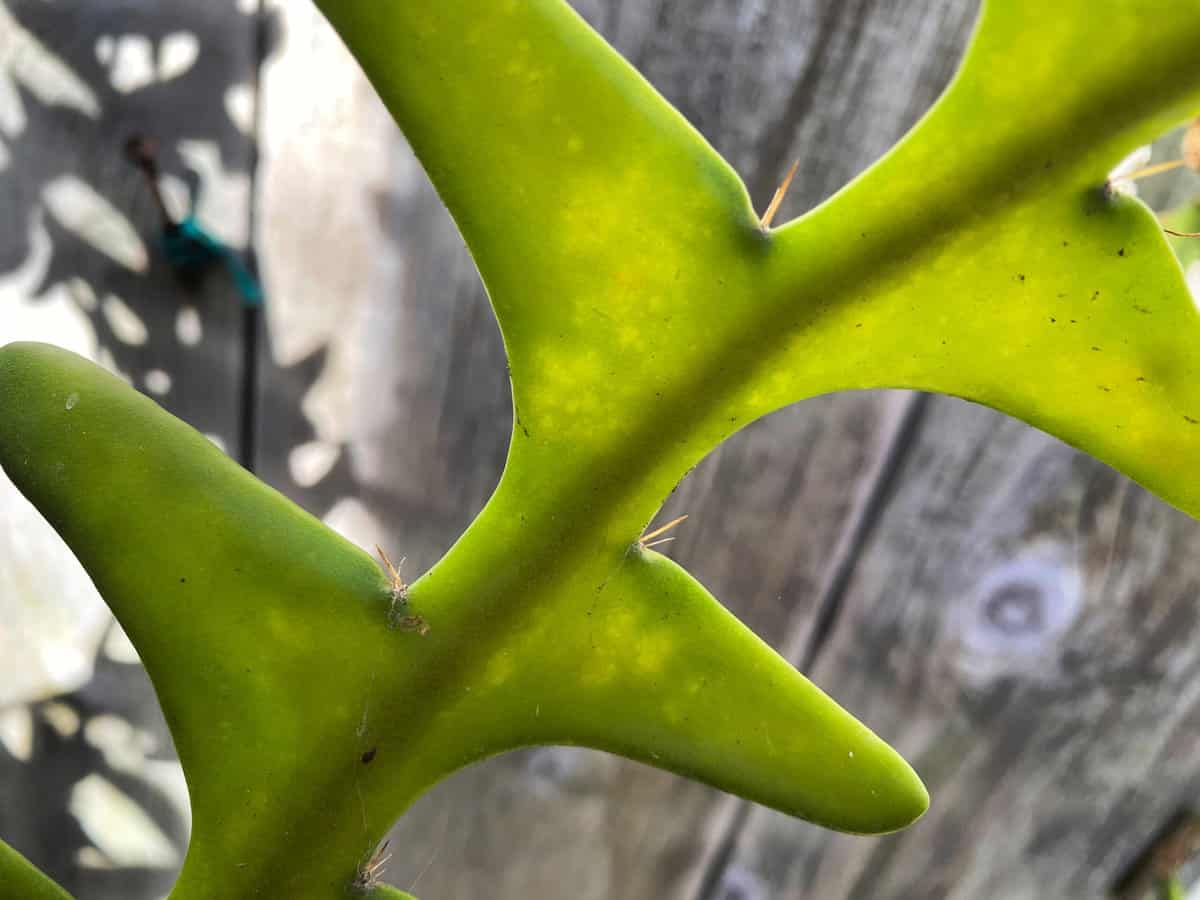
The best place to put a fishbone cactus is somewhere indoors where it will get plenty of bright, indirect light and is away from air vents and drafts. Outdoors, place your plant in partial or dappled shade where it’s protected from the harsh afternoon sun.
A fishbone cactus makes a great hanging plant because it has long, trailing branches that drape over the edges of containers. Plus the flowers are long and hang down when they bloom, making it even more lovely.
A fishbone cactus likes to grow in humid conditions where they get bright, indirect light and consistently warm temperatures.

If you want to learn all there is to know about maintaining healthy indoor plants, then you need my Houseplant Care eBook. It will show you everything you need to know about how to keep every plant in your home thriving. Download your copy now!
More Houseplant Care Guides
- How To Care For Staghorn Fern (Platycerium bifurcatum)
- How To Care For An Orchid Plant
- How To Care For Goldfish Plant (Nematanthus gregarius)
- How To Care For Black Pagoda Lipstick Plant
Share your fishbone cactus care tips in the comments section below.


Leave a Reply