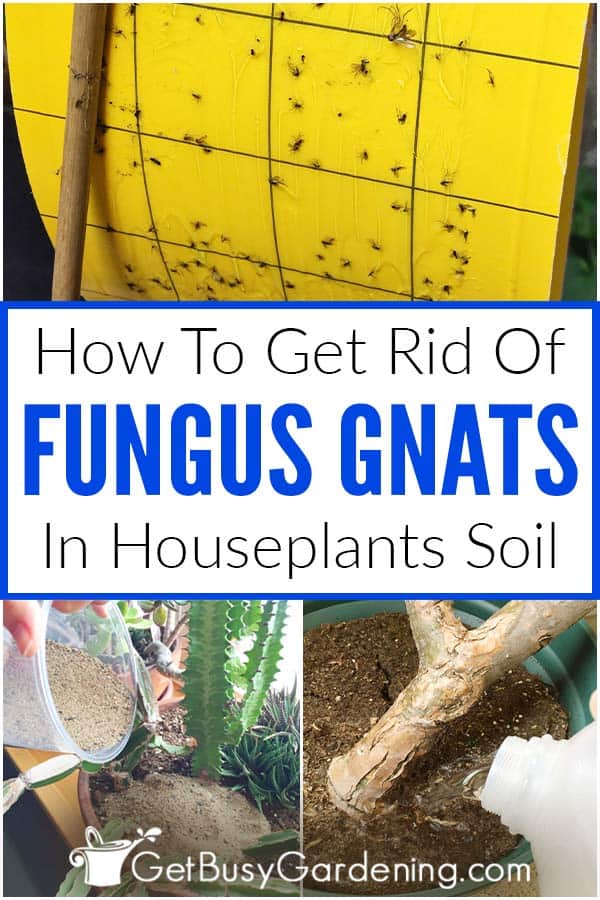
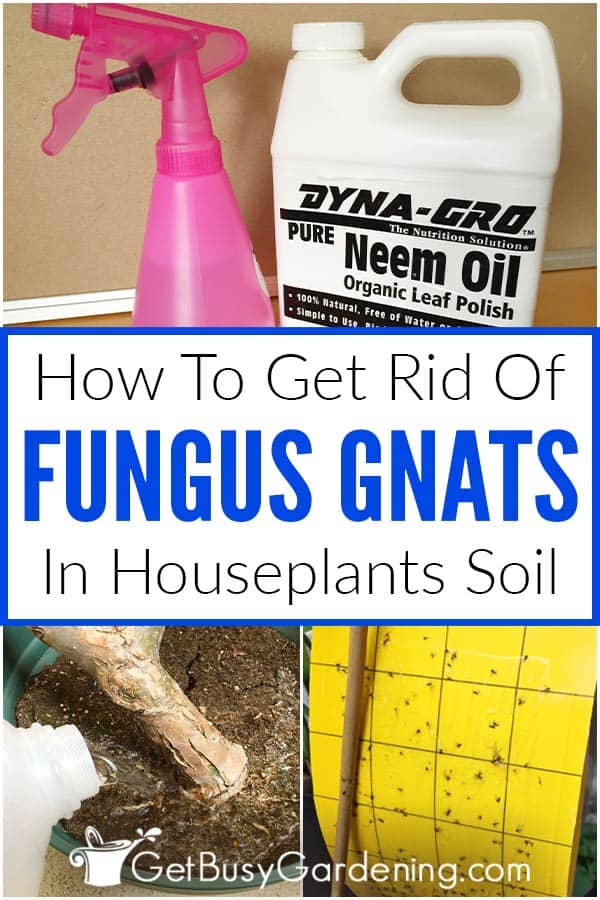
Dealing with fungus gnats in household plants can be a common nuisance, but I’m going to share some simple steps you can take to naturally eliminate fungus gnats—FOR GOOD! From adjusting watering habits to using natural remedies, getting rid of these pesky insects simply takes a bit of diligence and time.

The key to getting rid of fungus gnats is to eliminate the larvae. But it can be tricky to do this naturally. Since the adults only live for a few days, once all the larvae is dead, the infestation will go away pretty quickly.
This is easier said than done though. The adults can fly, jump, or crawl from one plant to the next, so it can be difficult to eradicate them.
So you have to be persistent in treating them, and ensure that you are diligent about keeping your houseplants healthy to prevent recurring outbreaks.
A Bit About Fungus Gnats
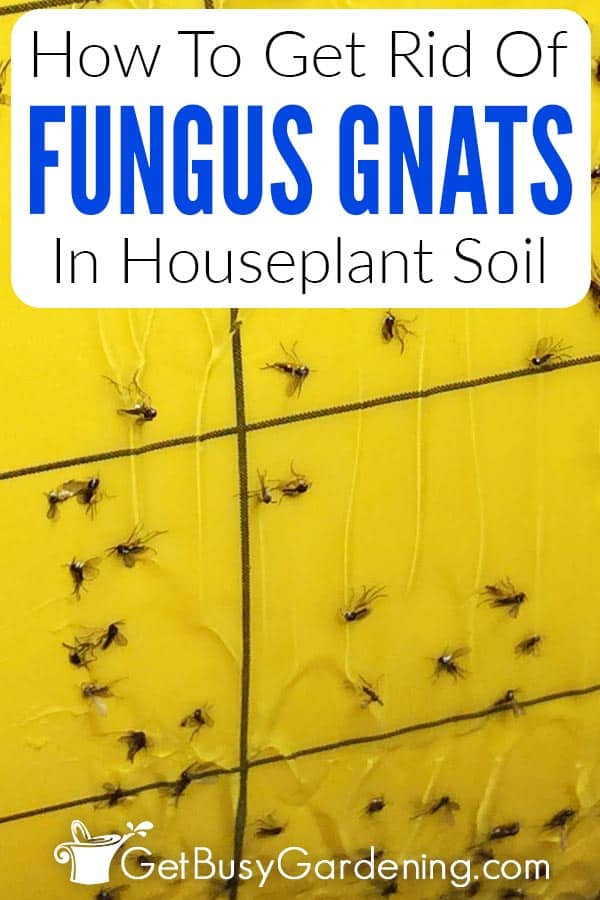
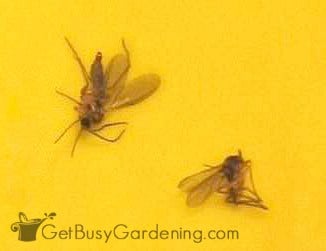
Fungus gnats are tiny black bugs that crawl on top of the soil and fly around your houseplants. They are the most common houseplant pest there is, and they can quickly infest your entire collection. Yuck!
Though the look very similar to fruit flies, they are not the same type of bug. You can read all about how to tell the difference between the two here, so you can make a positive ID.
Fungus Can Multiply Quickly!
There are 4 stages to the fungus gnat life cycle. In the right environment, they can multiply very quickly, and their full lifespan can happen in less than a month.
The adults only live for a week or so, but the females can lay hundreds of eggs during their life. So if you don’t take the right steps to eliminate them, their population can explode in a short amount of time.

9 Natural Fungus Gnat Treatments
There’s no need to resort to chemical pesticides, you can easily fight these pests using natural and organic treatment methods. For the quickest results, you should try all of these:
1. Proper Watering
The #1 reason fungus gnats get into your plants is from overwatering. The larvae thrive in wet soil, and they can’t survive when it’s dry.
So, the easiest and most effective method of eliminating them is to make sure you always water your houseplants correctly. The soil should feel dry to the touch, and never be saturated or soggy.
If you struggle with this, I highly recommend getting an inexpensive moisture gauge to make sure you get it right every time.
2. Water From The Bottom
Fungus gnat larvae live in the top 1 inch of the soil, which tends to stay pretty moist when you water plants from the top. So if you have persistent problems, then try watering from the bottom instead.
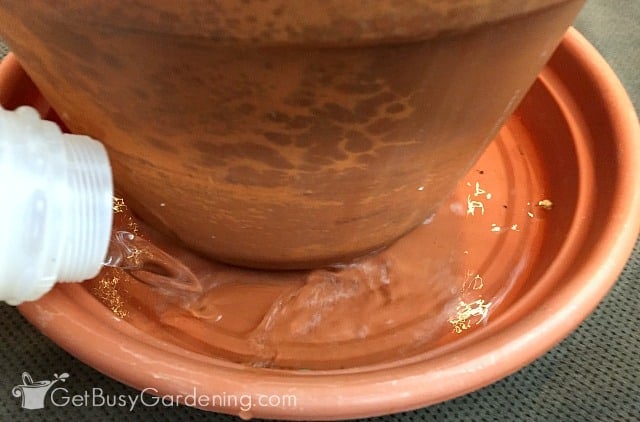
To do that, simply pour water into the drip tray or cache pot, and allow the plant to soak it up through the drainage holes in the bottom of the container.
Always dump out any remaining water after about 20-30 minutes, and never leave your plant soaking for longer than that.
3. Use Gnat Traps
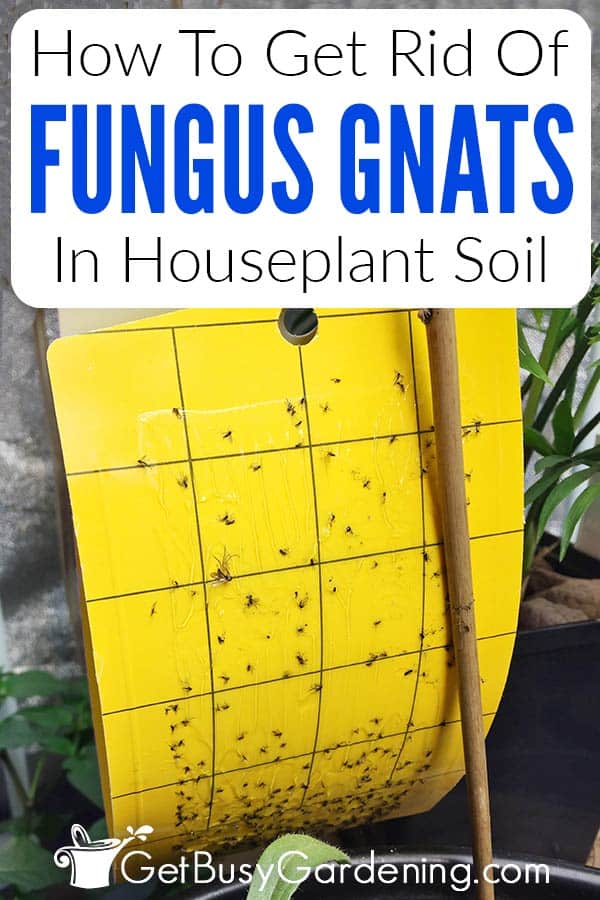
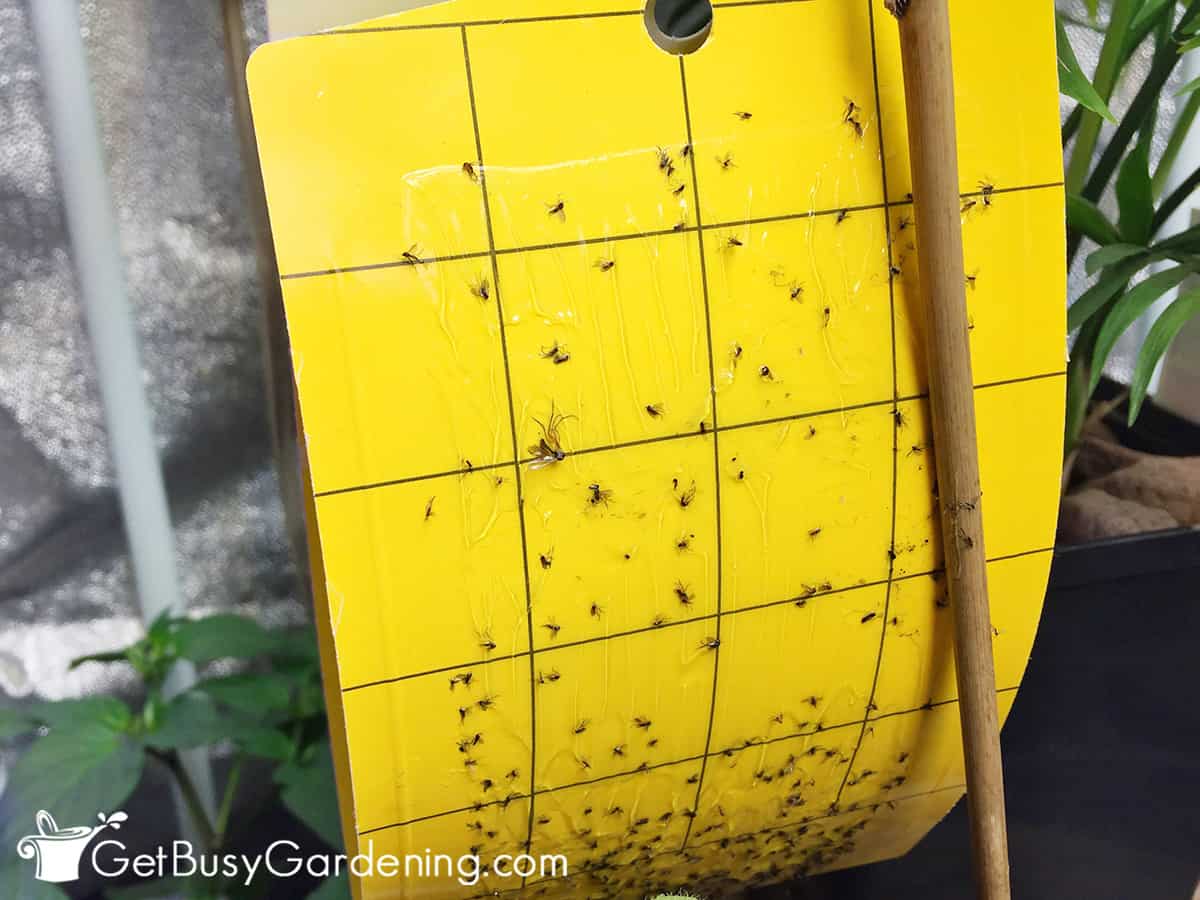
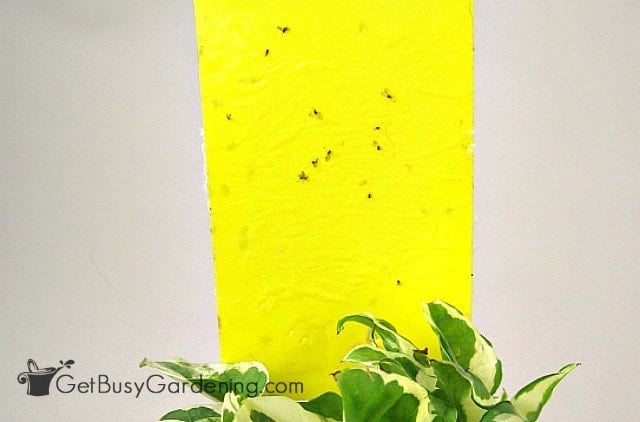
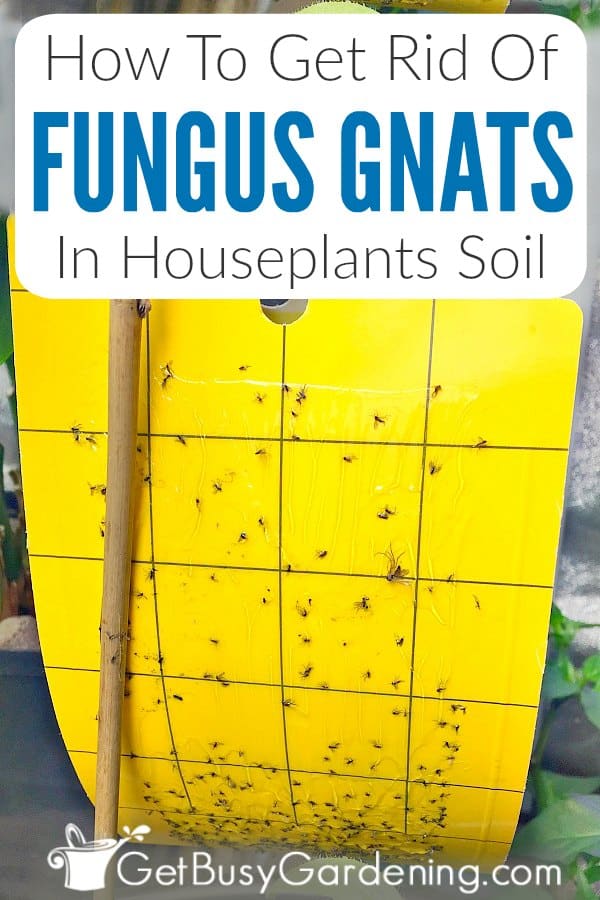
Putting a yellow sticky trap near your indoor plants is a super safe pest control method that will attract and capture the flying adults.
This only works to control the adult population, it will not take care of the problem at the source – the larvae.
But these traps will definitely prevent fungus gnats from flying around to other plants and prevent more larvae from being laid.
Try making your own DIY Fruit Fly Trap!
4. Use Organic Products
There are several organic products that you can pour over the top of the soil to help kill the gnat eggs, larvae, and pupa.
It might take a few applications to see results, and you also have to be careful not to overwater your plants in the process but they are natural. Here are a few of my favorites:
- Insecticidal soap – This will kill any bugs in the soil on contact. You could also make your own by mixing 1 teaspoon mild liquid soap with 1 liter of water.
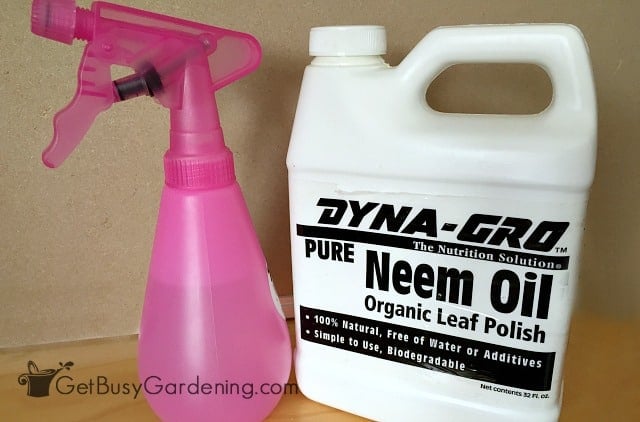
- Neem oil – This is a natural pesticide that works to kill houseplant pests over time, and it has a residual effect to help keep them away.
- Beneficial nematodes – These are microscopic organisms that will feed on the pupa and larvae, and you can simply add them to your watering can.
- Bacillus thuringiensis israelensis (BTI) – Also known as mosquito dunks or mosquito bits, BTI is a bacteria that’s only toxic to the larvae of bugs like fungus gnats. It takes some time for it to be effective but works.
Related Post: How To Use Neem Oil As Organic Pest Control
5. Remove Gnat Infested Soil Entirely
Remove the top inch of soil and replace it with fresh, sterile, and dry potting mix. This will get rid of most of the fungus gnat eggs, larvae, and pupa, and make it easier for you to gain the upper hand.
Just keep in mind that the eggs could still hatch and mature after you remove it from your houseplant, so make sure you take the infested soil outside to the trash right away.
6. Use Soil Covers
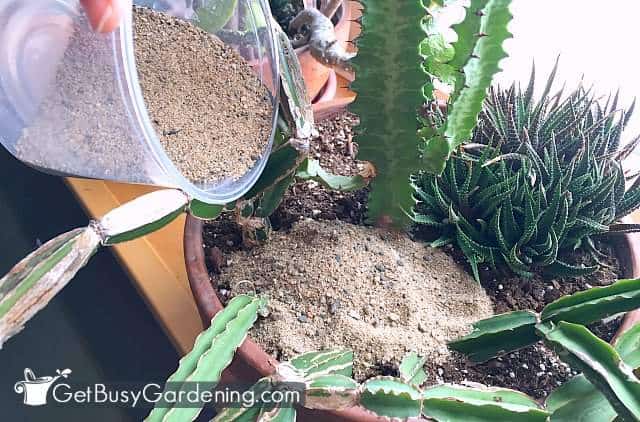
Rather than refreshing the top inch of soil, you can add a dry layer of fine sand, gravel, or crushed granite instead. This will help deter the females from laying eggs. Plus it creates a nice decorative touch.
Or you could try a barrier top dressing, which is a non-toxic product that is specifically made for eradicating fungus gnats.
7. Store Unused Soil In A Sealed Container
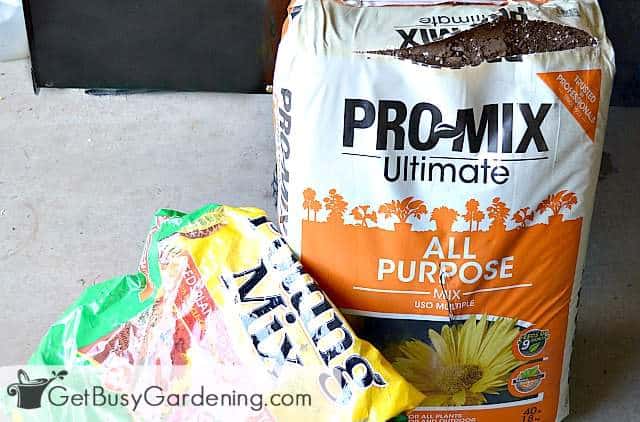
Bags of potting soil can become a breeding ground for fungus gnats. So it’s important to store any of your unused mediums in sealed containers, especially if you keep them inside the house.
Fungus gnats can’t survive without oxygen, so make sure the container is airtight. I store mine in five gallon buckets with Gamma seal lids on top.
8. Never Reuse Potting Soil
I know it’s tempting to pinch pennies by reusing soil when you repot your indoor plants or after one dies, but you’re just asking for trouble.
Used soil can harbor all sorts of pests and diseases, and can quickly cause an infestation. So it’s always best to use a fresh, sterile mix, and discard the old stuff.
Related Post: 9 Homemade Insecticides & Bug Sprays For Indoor Plants
9. Use Hydrogen Peroxide as Larvacide
Treating the soil with hydrogen peroxide is a natural and effective method. Try mixing 1 part hydrogen peroxide to 4 parts water and use it to wet the top inch. Keep in mind that this will only kill the larvae and pupa, and not the adults that are flying around your plant.
Other Natural Treatments To Try
I have also heard using baking powder, vinegar, coffee grinds, tea tree oil, lavender oil, garlic, parsley, cinnamon can be effective treatments for ridding of fungus gnats.
Where Do Fungus Gnats Come From?
Though indoor plant bugs can come from anywhere, here are the 4 most common ways that fungus gnats could have gotten into your house:
- From the soil of a new pre-infested plant.
- An infested bag of potting mix.
- Other plants that were outside during the summer.
- Through the screen of open windows or doors.
Related Post: How To Get Rid Of Houseplant Bugs Naturally
Common Questions About Fungus Gnats
While it is possible to get rid of fungus gnats, you have to be diligent with your preventative measures to keep them away permanently. The biggest problem is that they can easily come through window screens and doors. So unless you seal your home year round, it’s possible the fungus gnats will return at some point.
The short answer is no, fungus gnats will not kill your houseplants. They are usually just a nuisance and rarely destructive. Sometimes they can cause minor root damage if the infestation is heavy, but normally they only eat rotting plant material.
Everyone with indoor plants will have to fight fungus gnats at some point, it’s just a part of life. Recurring problems are difficult to prevent, and it can be very frustrating. Your best defense is to make sure you don’t overwater, properly store unused potting soil, and always maintain healthy houseplants.
If houseplant pests are driving you crazy, and you want to learn how to get rid of them once and for all, check out my Houseplant Pest Control eBook. It will help you identify common houseplant bugs, and show you exactly how to eradicate them before they kill your beloved plants. Download your copy today!
More About Houseplant Pests
- How To Debug Plants Before Bringing Them Indoors
- How To Get Rid Of Thrips On Indoor Plants
- How To Get Rid Of Spider Mites On Indoor Plants
- How To Get Rid Of Scale Insects On Houseplants
- How To Get Rid Of Whiteflies On Indoor Plants
- How To Get Rid Of Aphids On Houseplants
- How To Get Rid Of Mealybugs On Your Houseplants
Leave a comment below and share your tips for how to get rid of fungus gnats in houseplant soil.

Banjo Kops says
This is AWESOME! I never actually knew these bugs can’t do anything to you or your plant. They’re just really annoying aren’t they?
Amy Andrychowicz says
Yes, fungus gnats are mostly just annoying.
Anita says
How much neem oil/water should I use? Can i mix neem oil, Dr. Bronners soap and use it in my veggie garden?
I already placed sand on the top layer of the soil and I ordered the sticky tape. It seems like my sweet potatoes are infested with them. My indoor plants are as well.
Amy Andrychowicz says
Oh no, sorry to hear that your outdoor and indoor plants are both infested with fungus gnats. I have some pots right outside of my office window. Even though I don’t have any plants in here, I have noticed lots of fungus gnats flying around. I’m positive they are coming in through the screen of the open window. So, maybe that’s how they’re getting into your houseplants too.
Check your neem oil package for the exact mixture and instructions, but my recipe is 1 1/2 tsp pure neem oil concentrate, 1 tsp mild liquid soap, 1 liter of water. Yes, it is safe to use on your veggie plants, but I would wait a week or so before eating anything that you sprayed it directly on. Here’s a link to my post that shows you exactly how to use it, and the recipe is there too… How To Use Neem Oil On Plants
Anita Wallak says
Thank you so much for your response!
Amy Andrychowicz says
You’re welcome!
Jazmin says
HI AMY, thank you for your ideas. what else i can use beside soap at home?
Amy Andrychowicz says
You’re welcome. There’s a list of 8 different remedies to try listed under the header “How to Get Rid Of Fungus Gnats In Houseplants Soil”. Lots of ideas there to try. 🙂
Bee says
Thank you for the helpful tips!
Amy Andrychowicz says
You’re welcome!
Stephanie Hill says
Could use DAWn Dish liquid to get the same results with these gnats??
Amy Andrychowicz says
Yes, many people have told me that they’ve had success using it to get rid of fungus gnats without any problem. But sometimes harsh detergent soaps or ones that contain degreasers can harm sensitive plants. That’s why I always recommend using a mild liquid soap.
Harriet Cunningham says
Thank you, for sharing a very helpful article. Do you have a YouTube channel?
Amy Andrychowicz says
You’re welcome! Yes, I do have a YouTube channel, but I haven’t spent much time growing it yet. I’m hoping to get back at it later this year. 🙂 Here’s a link… Get Busy Gardening on YouTube.
Maggie says
Hello,
What ratio of Dr. B’s soap & water would you recommend for riding plants of these annoying critters?
thank you!
Amy Andrychowicz says
My recipe is 1 tsp mild liquid soap to 1 liter of water. For fungus gnats, you can pour the mix into the soil to kill the larvae.
Irene says
Do they bite humans or animals
Amy Andrychowicz says
No. Fungus gnats do not bite.
Chia-Hsin Su says
Hi there,
Thanks for sharing the tips.
Could you also share the ratio of mixing water and Dr. Bronner’s Liquid Soap?
Thank you
Amy Andrychowicz says
Yes, my recipe is 1 tsp Dr. Bronners liquid soap to 1 liter of water.
Toby says
I have a corn snake, and i’m pretty sure there are fungus gnats in the terrarium. I have no natural plants or anything in the terrarium, so i’m not sure what to do. Is there anything I can try?
Amy Andrychowicz says
I would try venting the terrarium more to see if letting it dry out a bit inside, and decreasing the humidity level will help get rid of the fungus gnats (as long as that is safe for your pet!). Also, remove anything in the terrarium that the gnats could use for a breeding ground. Like any wet/rotting wood, plant material, dirt…etc.
Sheila Elkington says
I have reduced my problem with fungus gnats by covering my seedlings with raised a clear cover which I coated with vegetable oil. My veg seedlings are too young to do most other methods. I find many of the flies stuck in the oil coating. Not a full solution , but it will tide me over till my plants can go out.
Amy Andrychowicz says
Oh that is a wonderful method for controlling fungus gnats in seedling soil. Yes, many times it’s just a matter of controlling them long enough until you can move the seedlings outside. Thanks for sharing!
Betty says
Is there some kind of household products we can mix and spray on the soil or plants such as dish soap.
Amy Andrychowicz says
Yes, point #4 above under the “How To Get Rid Of Fungus Gants In Houseplant Soil” section above has the details for types of soil drenches you can try.
Jenny DeFayette says
What is the ratio for the soap/ water mix? Do you spray just the dirt or entire plant? Thank you!
Amy Andrychowicz says
For fungus gnats, the ratio for the soapy water mix is 1 tsp mild liquid soap to 1 liter of water.
Kim says
So it’s Spring, any other ideas for killing any gnats in my two bags of potting soil? I didn’t store properly. So if I put it in an airtight container it’ll work? Should I wait for it to dry out? Anything I can do?
Amy Andrychowicz says
Oh bummer, sorry to hear your bags of potting soil are full of gnats. That is frustrating. Yes, you can either allow the soil to dry out completely, and/or put your potting soil into an airtight container. Either (or both) of those will work to kill the fungus gnats.
nancy pene says
We use a low 30 or 40 watt bug zapper to rid of the gnats. Only misses a few, but gets them fast. Was wondering if I can dilute and dissolve a Miracle Gro spike in my 32 oz. spray water bottle and use it on my tomatoes and herbs as seedlings. I spray the soil only because they are only 2-5 inches up. Don’t want to burn the roots?
Amy Andrychowicz says
You have a bug zapper inside your house to kill the gnats? Wow, I’ve never heard of that before. I’m not sure about your other question, I don’t use the product you mentioned. Here’s a post that is all about how to fertilize houseplants that will help you out. 🙂
Sue says
I have been for days now digging through the soil and picking out the eggs, how long can this cycle go on? I don’t see many gnats but I get at least 6-12 eggs every day. I replaced the soil a month ago and notice them again.
Amy Andrychowicz says
Humm… are you sure those are fungus gnat eggs? Their eggs are so tiny that they are barely visible to the naked eye. So, if you’re easily finding them in the soil, then it may be something else. Regardless, rather than hunting for eggs, I would follow the treatment methods above. Wet soil is the number one thing to avoid, fungus gnats can’t survive in dry soil.