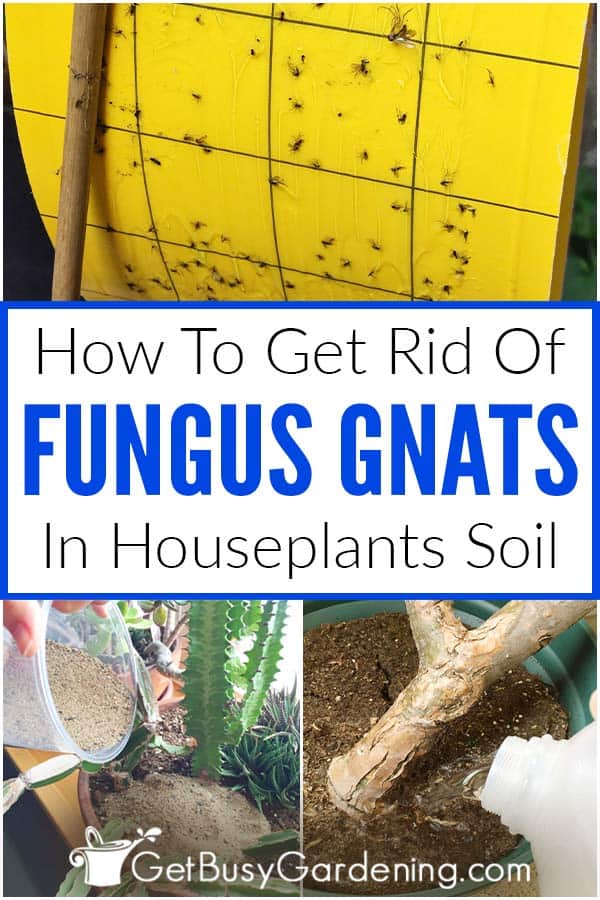
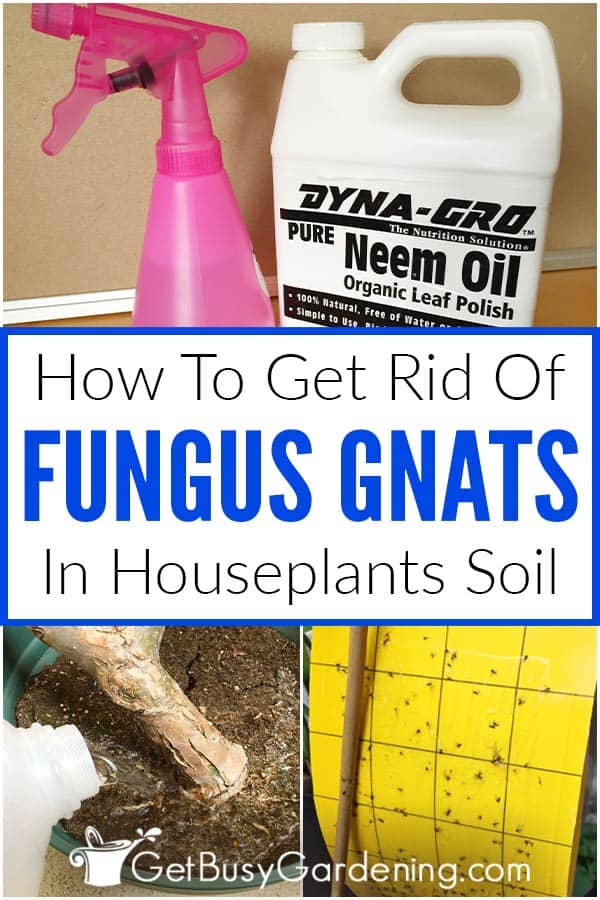
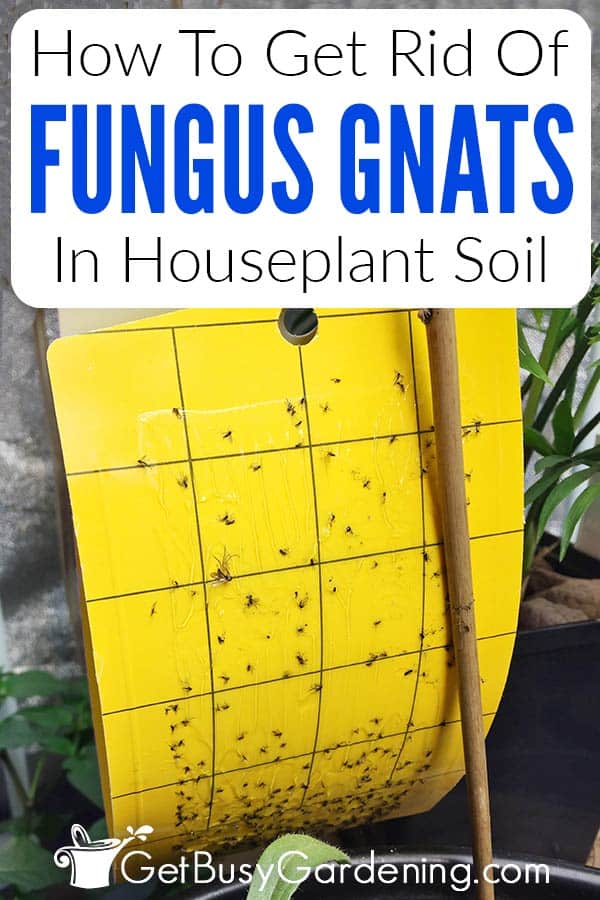
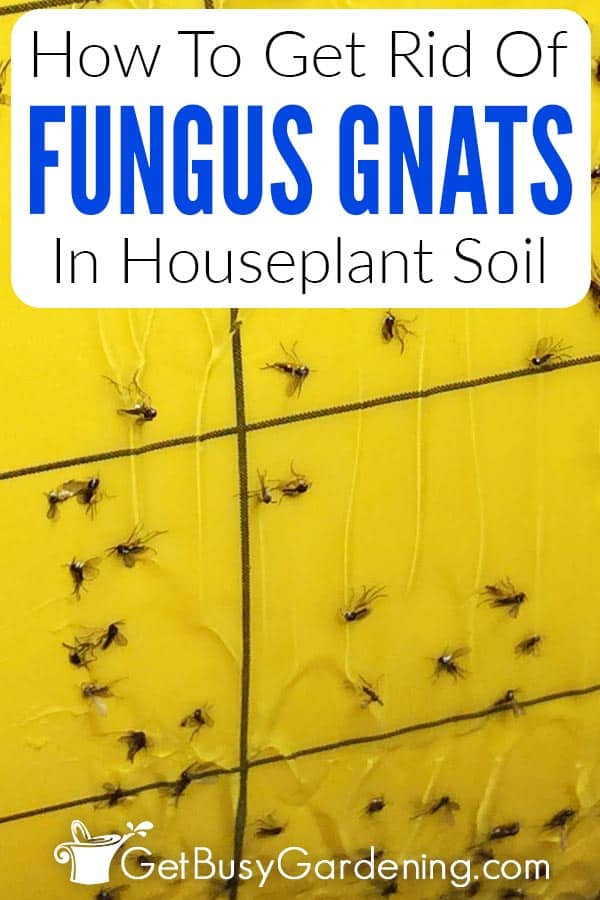
Dealing with fungus gnats in household plants can be a common nuisance, but I’m going to share some simple steps you can take to naturally eliminate fungus gnats—FOR GOOD! From adjusting watering habits to using natural remedies, getting rid of these pesky insects simply takes a bit of diligence and time.

The key to getting rid of fungus gnats is to eliminate the larvae. But it can be tricky to do this naturally. Since the adults only live for a few days, once all the larvae is dead, the infestation will go away pretty quickly.
This is easier said than done though. The adults can fly, jump, or crawl from one plant to the next, so it can be difficult to eradicate them.
So you have to be persistent in treating them, and ensure that you are diligent about keeping your houseplants healthy to prevent recurring outbreaks.
A Bit About Fungus Gnats
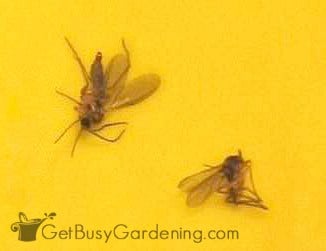
Fungus gnats are tiny black bugs that crawl on top of the soil and fly around your houseplants. They are the most common houseplant pest there is, and they can quickly infest your entire collection. Yuck!
Though the look very similar to fruit flies, they are not the same type of bug. You can read all about how to tell the difference between the two here, so you can make a positive ID.
Fungus Can Multiply Quickly!
There are 4 stages to the fungus gnat life cycle. In the right environment, they can multiply very quickly, and their full lifespan can happen in less than a month.
The adults only live for a week or so, but the females can lay hundreds of eggs during their life. So if you don’t take the right steps to eliminate them, their population can explode in a short amount of time.

9 Natural Fungus Gnat Treatments
There’s no need to resort to chemical pesticides, you can easily fight these pests using natural and organic treatment methods. For the quickest results, you should try all of these:
1. Proper Watering
The #1 reason fungus gnats get into your plants is from overwatering. The larvae thrive in wet soil, and they can’t survive when it’s dry.
So, the easiest and most effective method of eliminating them is to make sure you always water your houseplants correctly. The soil should feel dry to the touch, and never be saturated or soggy.
If you struggle with this, I highly recommend getting an inexpensive moisture gauge to make sure you get it right every time.
2. Water From The Bottom
Fungus gnat larvae live in the top 1 inch of the soil, which tends to stay pretty moist when you water plants from the top. So if you have persistent problems, then try watering from the bottom instead.
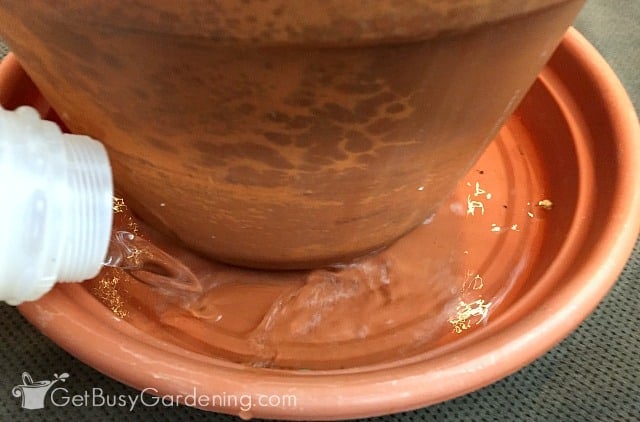
To do that, simply pour water into the drip tray or cache pot, and allow the plant to soak it up through the drainage holes in the bottom of the container.
Always dump out any remaining water after about 20-30 minutes, and never leave your plant soaking for longer than that.
3. Use Gnat Traps
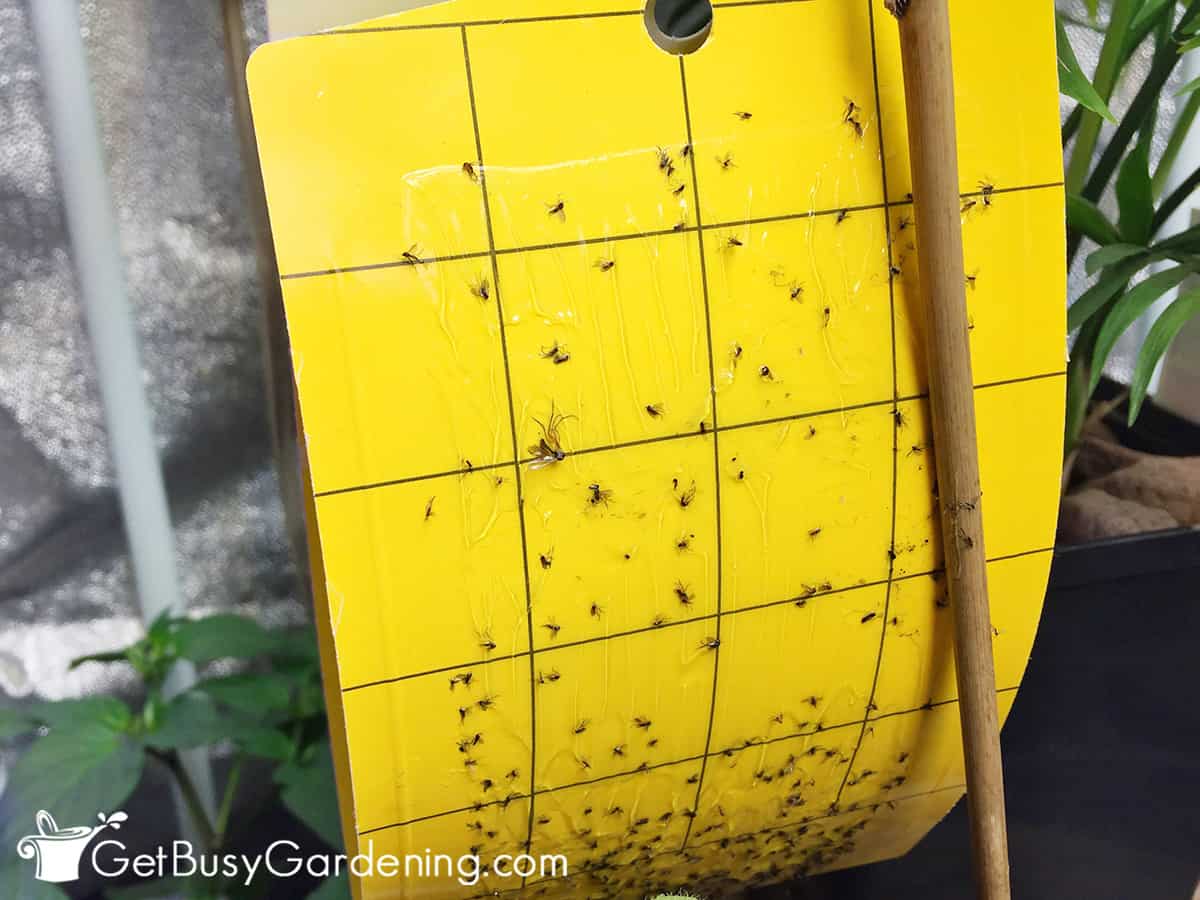
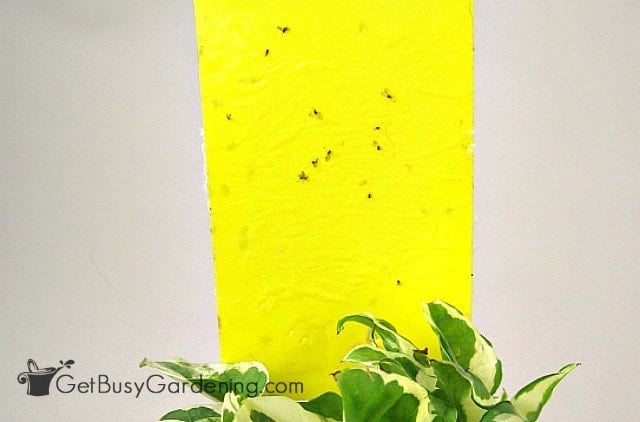
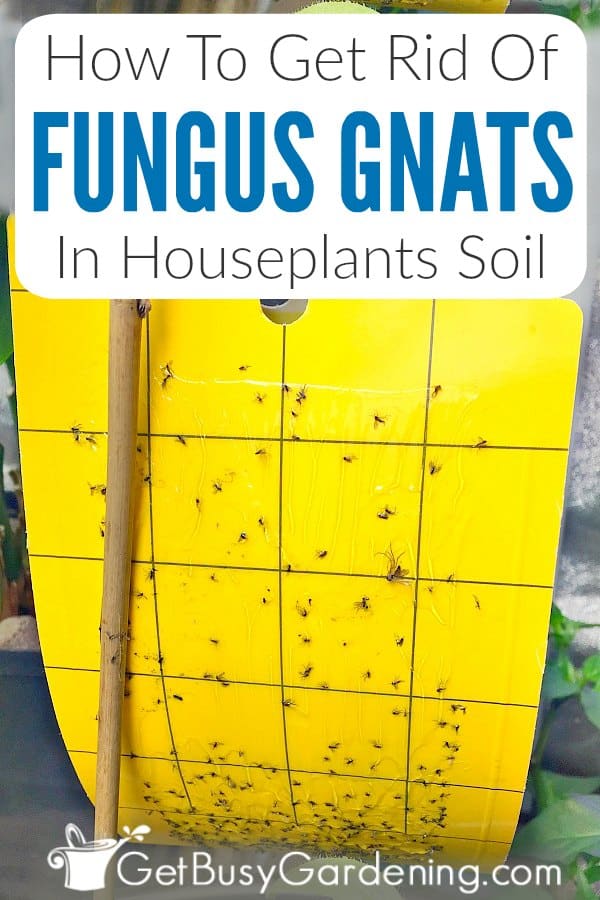
Putting a yellow sticky trap near your indoor plants is a super safe pest control method that will attract and capture the flying adults.
This only works to control the adult population, it will not take care of the problem at the source – the larvae.
But these traps will definitely prevent fungus gnats from flying around to other plants and prevent more larvae from being laid.
Try making your own DIY Fruit Fly Trap!
4. Use Organic Products
There are several organic products that you can pour over the top of the soil to help kill the gnat eggs, larvae, and pupa.
It might take a few applications to see results, and you also have to be careful not to overwater your plants in the process but they are natural. Here are a few of my favorites:
- Insecticidal soap – This will kill any bugs in the soil on contact. You could also make your own by mixing 1 teaspoon mild liquid soap with 1 liter of water.
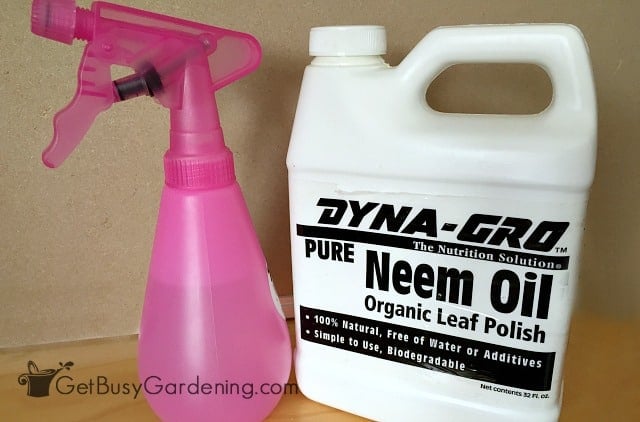
- Neem oil – This is a natural pesticide that works to kill houseplant pests over time, and it has a residual effect to help keep them away.
- Beneficial nematodes – These are microscopic organisms that will feed on the pupa and larvae, and you can simply add them to your watering can.
- Bacillus thuringiensis israelensis (BTI) – Also known as mosquito dunks or mosquito bits, BTI is a bacteria that’s only toxic to the larvae of bugs like fungus gnats. It takes some time for it to be effective but works.
Related Post: How To Use Neem Oil As Organic Pest Control
5. Remove Gnat Infested Soil Entirely
Remove the top inch of soil and replace it with fresh, sterile, and dry potting mix. This will get rid of most of the fungus gnat eggs, larvae, and pupa, and make it easier for you to gain the upper hand.
Just keep in mind that the eggs could still hatch and mature after you remove it from your houseplant, so make sure you take the infested soil outside to the trash right away.
6. Use Soil Covers
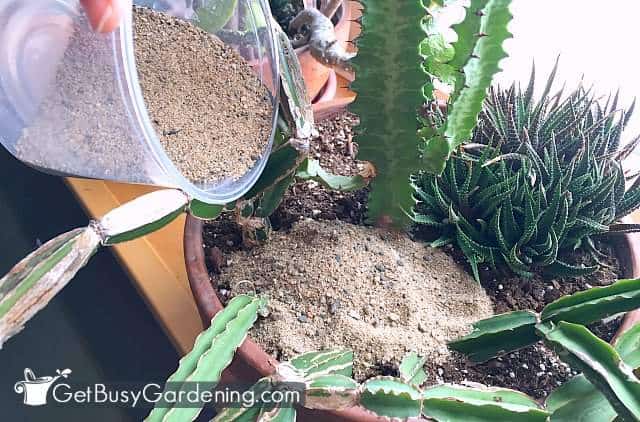
Rather than refreshing the top inch of soil, you can add a dry layer of fine sand, gravel, or crushed granite instead. This will help deter the females from laying eggs. Plus it creates a nice decorative touch.
Or you could try a barrier top dressing, which is a non-toxic product that is specifically made for eradicating fungus gnats.
7. Store Unused Soil In A Sealed Container
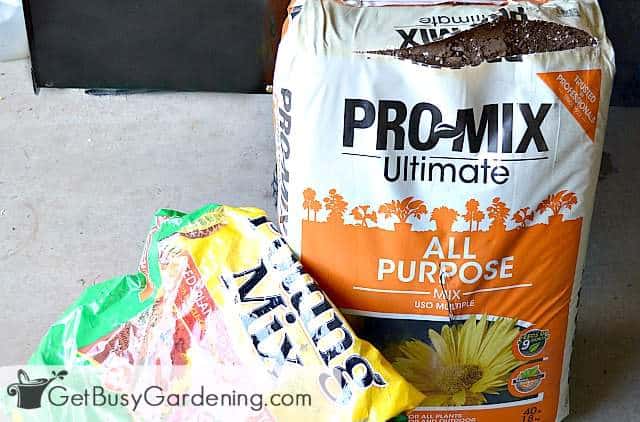
Bags of potting soil can become a breeding ground for fungus gnats. So it’s important to store any of your unused mediums in sealed containers, especially if you keep them inside the house.
Fungus gnats can’t survive without oxygen, so make sure the container is airtight. I store mine in five gallon buckets with Gamma seal lids on top.
8. Never Reuse Potting Soil
I know it’s tempting to pinch pennies by reusing soil when you repot your indoor plants or after one dies, but you’re just asking for trouble.
Used soil can harbor all sorts of pests and diseases, and can quickly cause an infestation. So it’s always best to use a fresh, sterile mix, and discard the old stuff.
Related Post: 9 Homemade Insecticides & Bug Sprays For Indoor Plants
9. Use Hydrogen Peroxide as Larvacide
Treating the soil with hydrogen peroxide is a natural and effective method. Try mixing 1 part hydrogen peroxide to 4 parts water and use it to wet the top inch. Keep in mind that this will only kill the larvae and pupa, and not the adults that are flying around your plant.
Other Natural Treatments To Try
I have also heard using baking powder, vinegar, coffee grinds, tea tree oil, lavender oil, garlic, parsley, cinnamon can be effective treatments for ridding of fungus gnats.
Where Do Fungus Gnats Come From?
Though indoor plant bugs can come from anywhere, here are the 4 most common ways that fungus gnats could have gotten into your house:
- From the soil of a new pre-infested plant.
- An infested bag of potting mix.
- Other plants that were outside during the summer.
- Through the screen of open windows or doors.
Related Post: How To Get Rid Of Houseplant Bugs Naturally
Common Questions About Fungus Gnats
While it is possible to get rid of fungus gnats, you have to be diligent with your preventative measures to keep them away permanently. The biggest problem is that they can easily come through window screens and doors. So unless you seal your home year round, it’s possible the fungus gnats will return at some point.
The short answer is no, fungus gnats will not kill your houseplants. They are usually just a nuisance and rarely destructive. Sometimes they can cause minor root damage if the infestation is heavy, but normally they only eat rotting plant material.
Everyone with indoor plants will have to fight fungus gnats at some point, it’s just a part of life. Recurring problems are difficult to prevent, and it can be very frustrating. Your best defense is to make sure you don’t overwater, properly store unused potting soil, and always maintain healthy houseplants.
If houseplant pests are driving you crazy, and you want to learn how to get rid of them once and for all, check out my Houseplant Pest Control eBook. It will help you identify common houseplant bugs, and show you exactly how to eradicate them before they kill your beloved plants. Download your copy today!
More About Houseplant Pests
- How To Debug Plants Before Bringing Them Indoors
- How To Get Rid Of Thrips On Indoor Plants
- How To Get Rid Of Spider Mites On Indoor Plants
- How To Get Rid Of Scale Insects On Houseplants
- How To Get Rid Of Whiteflies On Indoor Plants
- How To Get Rid Of Aphids On Houseplants
- How To Get Rid Of Mealybugs On Your Houseplants
Leave a comment below and share your tips for how to get rid of fungus gnats in houseplant soil.

Leia D Cumberland says
Question… I just bought a bunch of organic potting mix and all are filled with the gnats. Instead of returning it al, can I just put the bags in the freezer to kill them and the eggs or can they survive that?!?
Amy Andrychowicz says
Yes, freezing the soil will kill the fungus gnat eggs and adults. I have put infested bags of soil outside during the winter to freeze them, and it works great. Just make sure it freezes all the way though (so it’s frozen solid), then wait for it to thaw and completely warm up before using it for your plants.
Mayy says
This has been very helpful, thank you for taking the time.
So I’m pretty sure I have soil gnats, they keep coming back after castor oil, soap and water solution.
But what I can’t find a mention of, are the tiny white crowling bugs I find on the saucer of the plants infected. Are these part of their life cycle? And why are they at the bottom of my pots?
Amy Andrychowicz says
Ugh, sorry to hear about your fungus gnat problem. Those tiny white bugs could be the larvae. Do they look like minuscule worms? If so, then they are probably fungus gnat larvae. Clean the saucer and the bottom of the pot with soapy water and get rid of any soil that may be in there. Then make sure the tray dries out after watering, and that no soil is settling in there.
If however they look like white cotton or fuzzy bugs, then they may be mealybugs. You can go here to see what those look like… How To Get Rid Of Mealybugs On Your Houseplants. Good luck!
Marcia says
Thank you so much for this GREAT article! always end up with fungus gnats in my houseplants, and while my mom has recommended the insect soap, i’ve never read about the other steps you advise, which all make perfect sense!! Can’t wait to get to the store tomorrow and get supplies, cause these dang things are driving me bonkers!!
Amy Andrychowicz says
Oh no! Sorry to hear about your troubles with fungus gnats! Good luck getting rid of them.
Sara Wilson says
I repotted some plants in miracle-gro; noticed gnats all over the house. It took me a while to realize the gnats were coming from the repotted plants. From reading all this, I realize miracle-gro must be the problem. Two sets of pest srips became TOTALLY black with gnats. I just googled this website so haven’t tried any of the remedies yet.
Should’nt the miracle-gro people be answerable for this somehow?? I can’t believe what a mess this has turned into.
Amy Andrychowicz says
Yikes! Sorry to hear about your severe fungus gnat infestation. Yuck!! Yes, it is very common for bags of potting soil from the store to have fungus gnats in them. It’s not necessarily any certain brand of soil though, it could happen to any of them. Potting soil *should* be sterile when it’s bagged (which kills any bugs). But, unfortunately those bags aren’t air-tight. And, as they get moved around at the store, the bags usually end up with lots of holes in them, which is how the bugs get in. Super frustrating for sure! I always store my unused potting soil in an air-tight container or leave it outside in the winter to freeze solid and kill the bugs. But, now that the gnats are in your plants, you’ll have to follow the instructions above to get rid of them. Good luck!
Holly A Cole says
How much of the Dr Brommers liquid soap to put in how much water?
Amy Andrychowicz says
Mix 1 teaspoon of Dr. Bronner’s liquid soap with 1 liter of water.
Maggie says
I have seen gnats around bathroom sinks mention a few times, but I have not seen a remedy for that mentioned (though in reading all of these posts, I could have easily missed it!). I assume they are inside the drain/overflow drain. Any suggestions for treatment there? Thanks.
Amy Andrychowicz says
The gnats in your bathroom sink are likely drain flies, and not the same as fungus gnats. I don’t have a post that specifically talks about drain flies, and how to get rid of them. But, I would start by pouring vinegar and/or boiling water down the drain a few times to see if that takes care of them. Good luck!
@fancyflowerfarmer says
Thanks so much for this fantastic post and all the info in it! I‘be been using the yellow sticky traps and 1 part hydrogen peroxide and 3 parts water for weekly watering and it has helped tremendously. This winter I’m going to pair that with some neem oil and the sand/gnat nix and see if I can get even better results!
Amy Andrychowicz says
Wonderful, so glad to hear that these treatments have helped control your fungus gnat problem! Good luck, and I hope adding those other treatments will get rid of them for good.
Job R. says
Had some soil in a sealed container and left it in a refrigerator for a day and freezer overnight and 1 or two still survived. I think freezing may be a solution if you consider the eggs and larvae. Happy planting..
Amy Andrychowicz says
Yes, great tip! I leave my potting soil in the freezing garage over the winter, and that kills the fungus gnats. Putting the potting soil into the freezer is a great idea too. I would give it at least a few days to freeze all the way through, and kill the gnats and larvae. Then make sure to allow it to completely thaw and warm to room temperature before potting plants with it.
Toni says
I don’t have plants, so where the hell are they coming from? I’ve done the dawn in some water and have killed tons but they still keep coming.
Amy Andrychowicz says
They could be coming in through the screens. I have potted plants right outside of my office window, and notice fungus gnats flying around in here once and a while when I have the windows open. But they can come inside even if there aren’t any potted plants nearby, just from the soil outside. Just make sure they aren’t fruit flies. If they are flying around in your kitchen, then those are likely fruit flies.
Lte says
Are these remedies safe for succulents too?
Amy Andrychowicz says
Actually, it’s much easier to get rid of fungus gnats in succulents because all you have to do is let the soil dry out. Succulents grow best in dry soil. If you have gnats present, it’s a sign you’re overwatering, which is not good for your succulents. They also grow best in a sandy soil that doesn’t contain any organic matter, so you may think about repotting them into a sandier soil mix (here’s my DIY succulent soil recipe). That will get rid of the gnats for sure!
Don Freeman says
Has anyone tried diatomaceous earth?
Jen says
I am SO glad to have found this post. I am just about to repot a healthy orchid and noticed, when I opened the bag, that the Miracle-Gro Orchid Mix I bought had gnats flying around. Luckily, I opened it outside, so none of them ended up in my house (I think).
After a Google search, it appears that fungus gnats and mold have been serious and ongoing issues with Miracle Grow potting soil of all types so I hesitate to use it at all.
Is it even worth treating the soil before I repot or should I just return the bag and get something else? If so, any suggestions on a quality orchid mix? The orchid in question is store-bought Phal and I want to make sure she’s happy\healthy.
Thanks
Amy Andrychowicz says
Oh no! Sorry to hear the soil you bought at the store was infested with fungus gnats. That’s so frustrating! Yes, I would definitely return it and buy an orchid potting medium instead. Orchids are epiphytic plants, which means they don’t grow in dirt. The roots are there for attaching onto trees and other plants, and they don’t absorb nutrients from soil. So, they don’t need to be planted in potting soil like most plants do (which means no fungus gnats!!). Here’s they type of soil you can buy instead… orchid potting mix. And here’s more information about caring for orchids.
Jen says
Thank you! I did return it.
By the way, believe it or not, the fungus gnats were in he Miracle Gro ORCHID mix (small bark, if I remember correctly). The wood was full of gnats and parts were slightly moldy, to boot. I think most of the MG “mixes” snd potting soil are having this issue, according to the negative reviews.
I went to a local nursery and bought a bag from them – no issues and my repotted orchid is doing very well.
Amy Andrychowicz says
Oh boy, that’s not good. If it was infested with fungus gnats and moldy, then that orchid bark was being kept way too wet. Yuck! I’m glad you found a better quality product.
Mandy says
I just wanted to thank everyone for all the advice and tips in this thread! I built a brand new greenhouse this winter spring, built beautiful raised cedar planters, and filled it with a mixture of organic soils and compost… and was shocked when there were little gnats buzzing around the place in just a few days. I had NO clue that they could be in the soil! UGH! Already ordered the mosquito bits, fingers crossed it works. There are a variety of plants already growing, and the planters are so big many of the other options aren’t practical.
Amy Andrychowicz says
You’re welcome, glad you found it helpful! Sorry to hear you have fungus gnats in your greenhouse, that’s no fun!
DJ says
I’ve had them for the first time this winter. They were horrible. I was told the only thing that would work was triazicide. I didn’t mix it as strong as I was told to. It helped but did not get rid of them completely. I kept all the plants in a spare bathtub. I would leave a nightlight plugged in nearby at night with a mouse sticky pad right underneath it. It was gross to ser how many gnats were stuck on there every morning. I changed the pad 3 times. I still had lingering bugs so I finally repotted with fresh soil. Doing good so far although my plants look very unhealthy. I hope they pull through. They are all very sentimental plants. Thanks for your tips. I will add sand to the top of the soil.
Amy Andrychowicz says
Bummer, sorry to hear about your bad fungus gnat infestation! Good to hear you’re getting them under control. Make sure you’re not overwatering your plants. Overwatering is the main cause of fungus gnats, and can also cause your plants to suffer and eventually die. So be sure to keep an eye on that too.
lkeis says
it seems the best method would be to remove the top 1.5 inches of dirt in the plant, immediately replace it with very dry dirt and cover with plastic wrap while either throwing the removed dirt or letting it dry out to kill the larvae and other flies.
Amy Andrychowicz says
Removing the top layer of soil and replacing it with dry soil is a good idea. However, I would not cover it with plastic wrap. That will just hold moisture in, which could end up making the fungus gnat problem worse.
Michele says
Treating more harmful pests (like spider mites or any pests that live on back of plant leaves):
* common treatments seem to be insecticidal soap or dish-soap spray and neem oil
* also read about taking a cotton ball or q-tip and applying isopropyl alcohol and wiping leaves and stems. or using it as a spray
* I TRIED TEA TREE OIL – i used a Q-tip dipped in 100% tea tree oil and gently wiped the back of a few leaves on my pothos and was surprised how many black dots got picked up off each leaf (with my eye I spotted only maybe 6, seemed more like 20 were living on the plant leaf)
……worked well, no plant damage/toxicity
Has anyone else tried tea tree oil?
What about olive oil? I’ve heard it works just like neem oil but haven’t tried yet…thanks~!
Amy Andrychowicz says
I have never tried tea tree oil before, and have never heard if that would work for keeping houseplant bugs away or not. I definitely would not recommend using any type of cooking oil, because it can clog the pores on plant leaves and end up causing major long-term damage. Some types of cooking oil can even attract bugs to plants, so it’s best to stay away from using those.