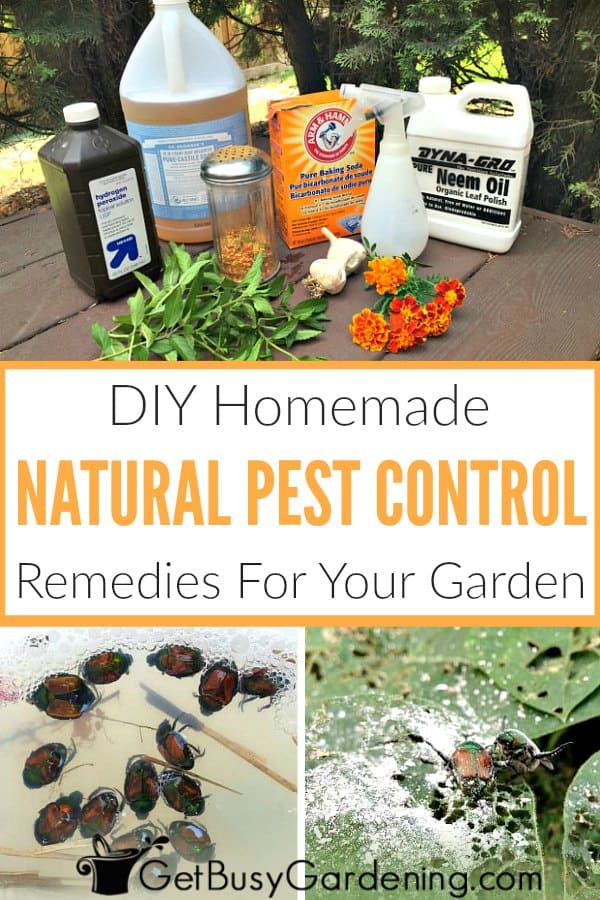
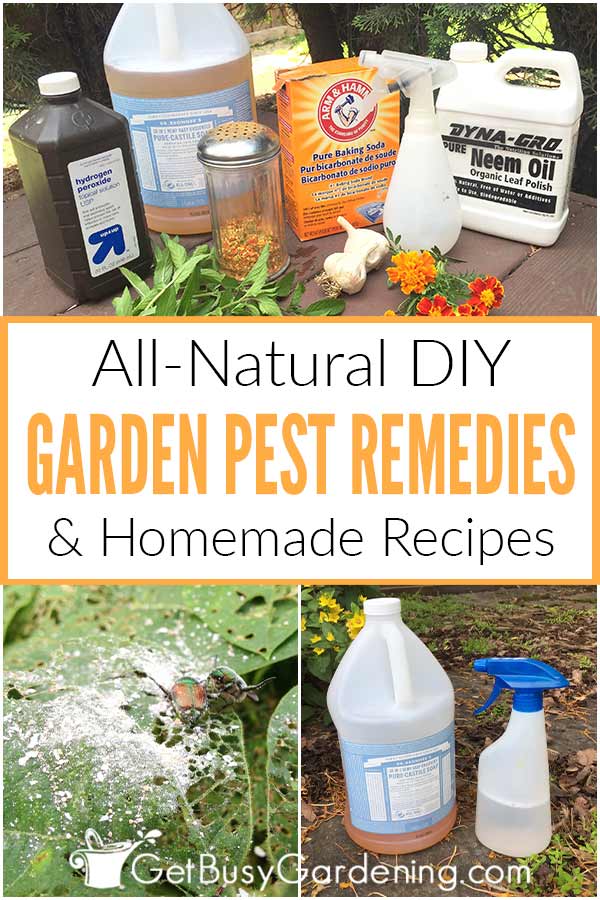
It’s safer, and much easier to use natural pest control remedies to help you fight the bugs and animals in your garden.
Dealing with plant-eating pests is one of the most challenging things about gardening, but chemicals are not the answer. In this post, I will give you tons of methods, recipes, and tips to try.

When pests invade your gardens (and do their best to destroy your beautiful flowers and vegetables), it’s tempting to reach for chemicals to save your precious plants.
But working with nature instead of against it is always going to be the easiest and best solution when it comes to controlling garden pests.
And, as it turns out, being an organic gardener really isn’t that difficult. Who knew?
The Problem With Chemical Pesticides
Let’s face it, chemical pesticides give us instant gratification when it comes to killing nasty bugs. No doubt about that. But they cause major long-term damage to the health of our gardens.
Pesticides don’t discriminate, they will kill the good garden bugs right along with the bad ones. Spraying your yard and garden with chemicals is the worst thing you could do.
Some pest insects have built up a resistance to common chemicals, and they can recover much faster than beneficial bugs. So, essentially you’re killing the good bugs, and helping out the bad ones.
This throws off the natural balance of your garden, and creates a much worse problem in the future. Sounds pretty horrible, right? It is!
That’s why it’s best to use natural pest control remedies that will target the bad insects, without harming others in the process. I don’t know about you, but that sounds WAY easier to me.
Natural Remedies For Pests In The Garden
Below is a list of natural pest control remedies that I use in my garden, and have had great success with. You’ll get the best success if you combine several of them, rather than just using one or two.
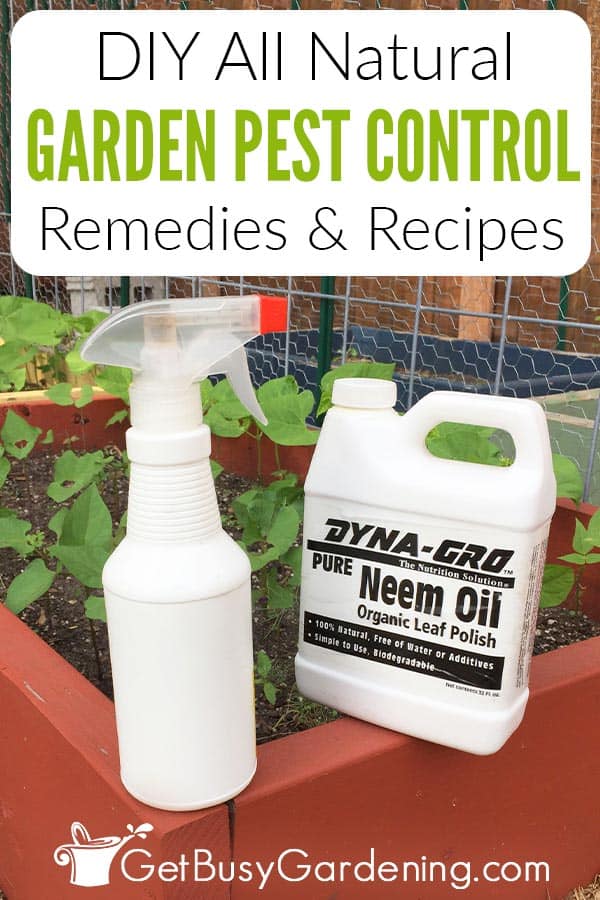
Neem Oil
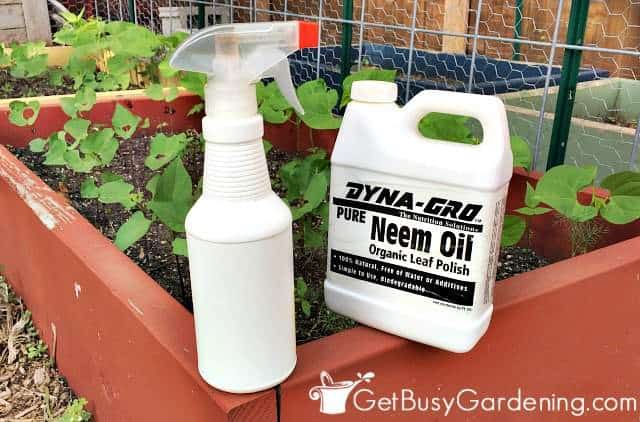
Neem oil works great to kill any insects that are eating your plants. It’s easy to use, plus it has a residual effect that deters the bad bugs from coming back.
Be careful using it in your garden though, because it can also kill good bugs like bees that come to pollinate your plants. So I only recommend using this on plants that aren’t flowering.
Physical Barriers
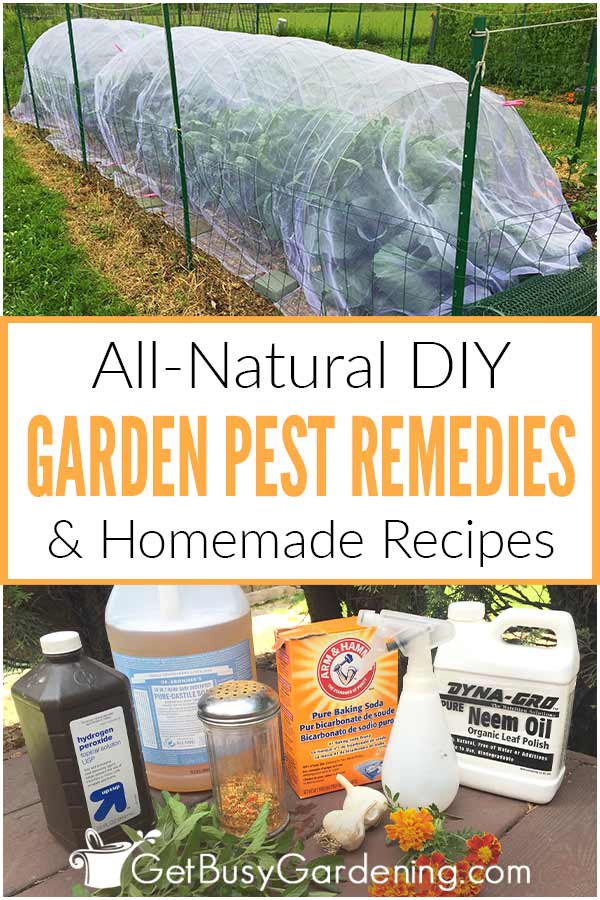
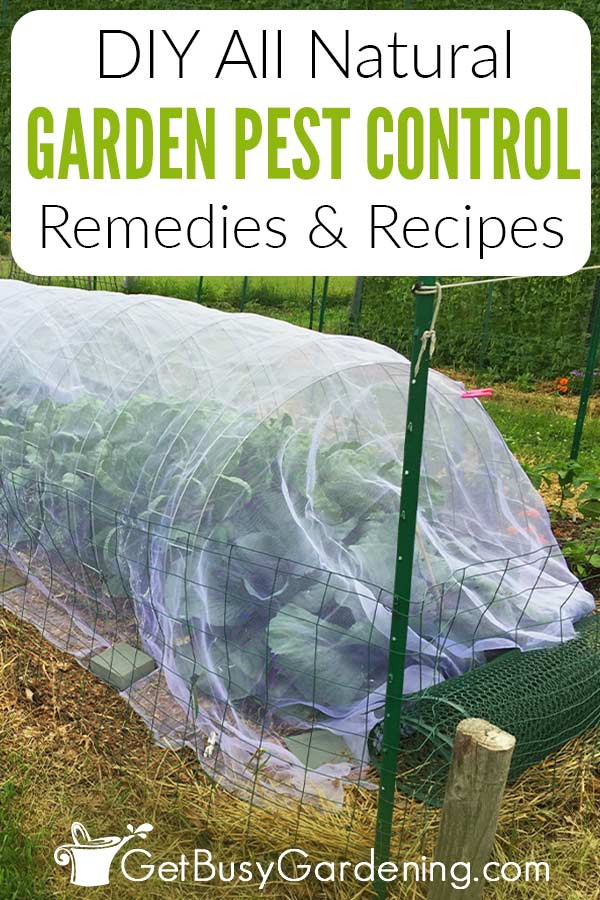
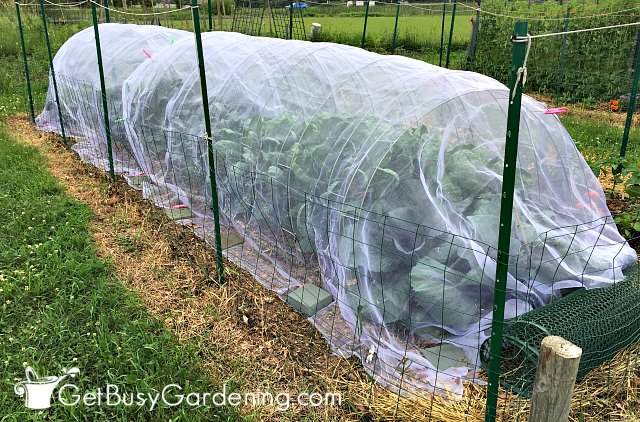
Physical barriers work great to prevent garden pests. I like to use row covers on my plants when they are young to help control squash vine borer infestations.
I have also used them to prevent cabbage worms from attacking my cole crops (kale, cauliflower, broccoli, etc).
Physical barriers also work for animal pests. I use 3′ garden fencing to keep rabbits out of my vegetable garden, and chicken wire to protect other plants around the yard as needed.
You could try deer netting or use a taller fencing if you have problems with larger animals.
Traps
There are pheromone traps on the market to capture all kinds of annoying insects. You can find traps for stink bugs and other common pest insects.
I like to use Japanese beetle traps to catch as many of those buggers as I can during the summer, it’s so satisfying.
Hand Picking
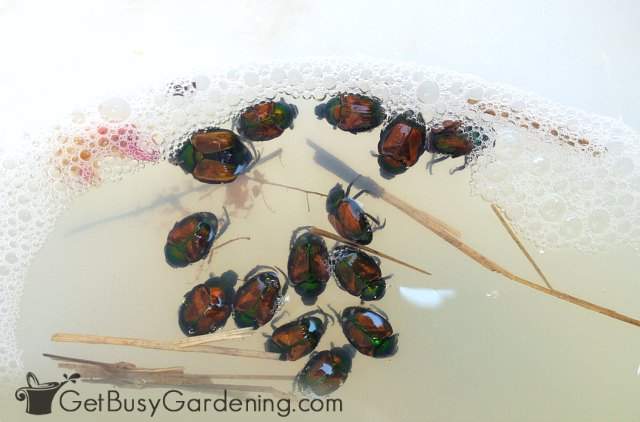
One of the best natural methods for controlling larger insects like Japanese beetles, hornworms, squash bugs, slugs, or grapevine beetles is to pick them off the plant and drop them into a bucket of soapy water.
Sounds gross I know, but wearing gloves (and enlisting the help of my hubby) makes it much easier.
Insecticidal Soap
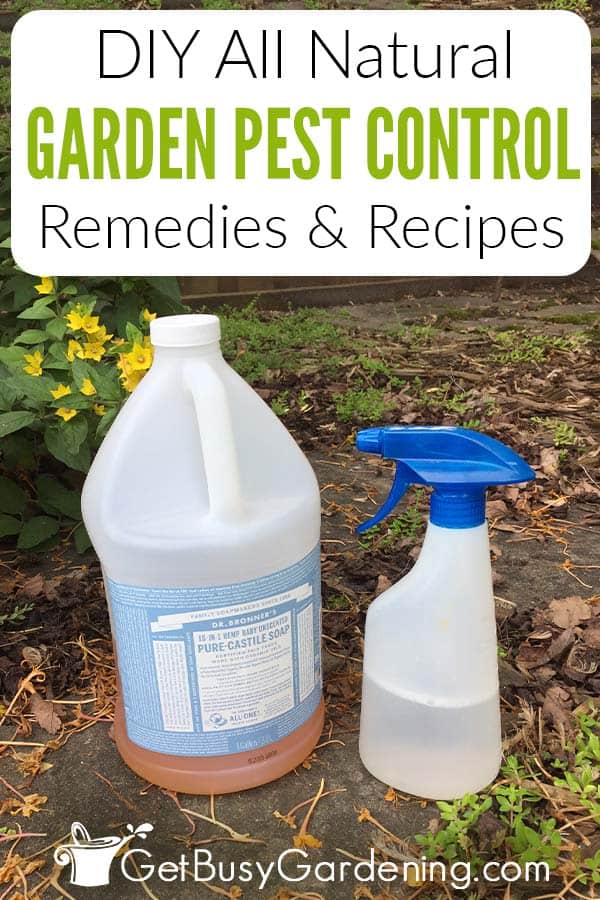
Soap will quickly kill most bugs on contact, and it’s easy to make your own homemade spray. Then you can use it to target the pest insects without harming any beneficial ones in the process.
See my recipe below to make your own, otherwise you can buy a pre-made insecticidal soap to use instead.
Repellent Plants
Some plants actually work as natural pest repellents to deter insects and animals from your garden. Think of strong-smelling aromatic plants like garlic, onions, marigolds, and herbs.
Many people use a technique called companion planting where they intermix these types of plants and flowers into their garden specifically for this purpose.
Beneficial Insects
One of the best pest control remedies you can use in your garden is to let nature do the work for you.
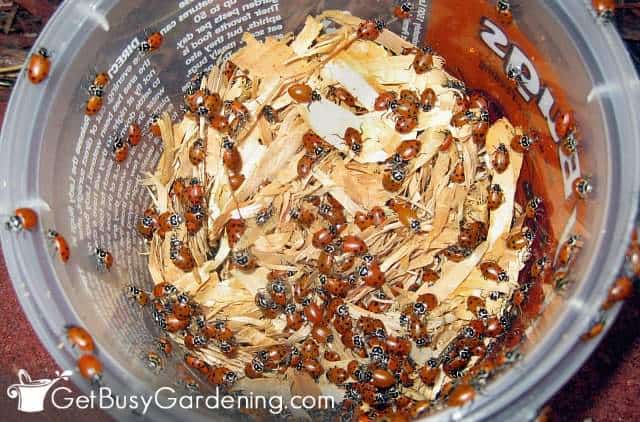
What’s better than enlisting the help of predators, like ladybugs, wasps, nematodes, and praying mantis to fight the battle for us?
Be sure to plant plenty of flowers, native plants, and herbs in your gardens to attract and support these amazing predators.
Repellent Sprays For Animals
There are also natural pest control remedies on the market for our furry friends (ehem, nemesis).
I’ve tried organic sprays made with essential oils to help deter squirrels and also for rodents in my garden.
This repellent spray works to deter lots of different kinds of animals. If deer are your biggest problem, then you could try this repellent. You should also check out my list of deer resistant plants here.
Diatomaceous Earth
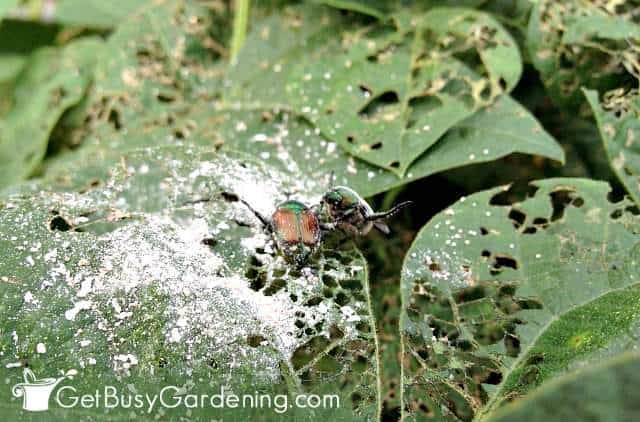
Diatomaceous earth (DE) is another great natural insect pest control product. Sprinkle it directly on beetles and other hard-shelled insects to kill them.
Be mindful when using DE in your garden, and don’t do any broad applications of it because it can kill the good bugs too.
Remedies Shared By Readers
I can’t recommend these yet because I haven’t tried them. But here are a few things I’ve heard about lately that I’m going to experiment with in my garden this year.
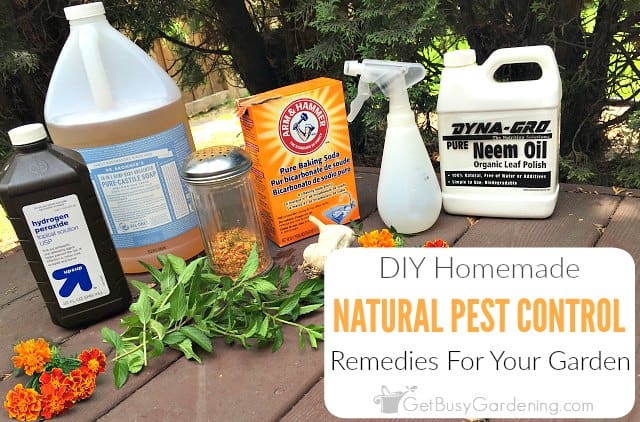
- Baking soda & flour – Using equal parts flour and baking soda can work to kill pesky caterpillars. Have you had success with this method?
- Hydrogen peroxide – One of my amazing readers suggested this – Try injecting hydrogen peroxide into the plant to kill borers.
- Hair to deter furry pests – Human and pet hair are supposed to deter rabbits and other furry animals from the garden, because they smell a predator nearby.
My DIY Natural Garden Pest Control Recipes
I have a few homemade natural pest control recipes that I use all the time, and they work great. Here are my favorites:
Note: Some types of soaps can harm plants, so be sure to use a mild one rather than a brand that contains chemicals or degreasers.
1. Neem oil insecticidal spray recipe:
- 1 1/2 teaspoon of concentrated neem oil
- 1 tsp organic liquid soap
- 1 liter water
Directions: Add all of the ingredients into a plant sprayer or a bottle and shake to mix well. Spray it on the leaves of plants and directly on the pest insects. Shake well before each use. Neem oil has a residual effect, so you don’t have to use it as often as other remedies.
2. Simple organic bug spray recipe:
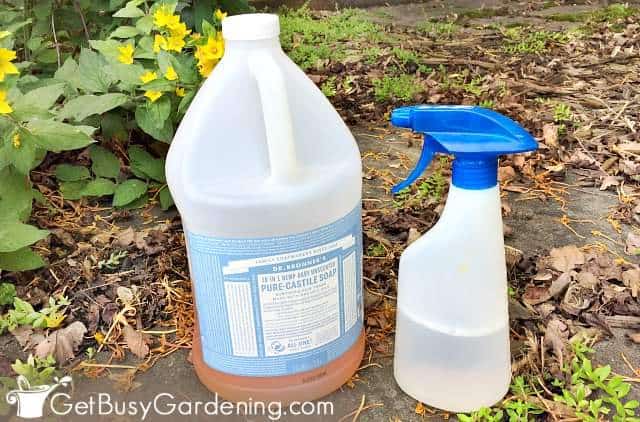
- 1 teaspoon organic liquid soap
- 1 liter of water
Directions: Mix the ingredients in a clean spray bottle, or make a double batch to use in your garden plant sprayer, then spray it directly on bugs to kill them. There is no residual effect, and it must come into contact with the insects for it to work.
Recipes From Readers
I LOVE it when readers share their natural pest control recipes with me. Here are a couple that readers have shared with me that you can try.
- Marigold, hot pepper, and garlic spray – “Chop marigold leaves and mix in a bucket with a few garlic bulbs (chopped) and some crushed chillies. Add a sprinkle of baking powder and wood ash, and a small chunk of soap. Mix it up, cover with water, add a lid, and let it steep for 4 days before using.”
- Hot pepper spray – “Mix 1 gallon of water with 3 tablespoons of hot pepper flakes, or 10 fresh peppers chopped up finely (cayenne works the best, but you can use any hot variety). Simmer ingredients in a pan for 15 minutes, and then let it sit for 24 hours before straining. Add a couple drops of dish soap to help the solution adhere to your plants.”
- Mint and garlic spray: “Take some mint leaves and garlic cloves and blend them in a food processor. Then add a bit of cayenne pepper and a drop of dishwashing liquid. Bring the whole concoction to a boil and let sit overnight. Strain it into a spray bottle.”
Precautions About Using Natural Pesticides For Plants
Even though these remedies and recipes are all-natural, you should still use them with caution in your garden. They are pesticides after all, and can kill beneficial bugs right along side the bad ones if you’re not careful.
Always make sure to focus your efforts on the specific pest you’re trying to control, and never do any type of broad application or spraying in your garden.
Keep in mind that complete elimination of all pests in your garden is not a realistic goal. The key is to find a balance so that your plants will thrive despite having a few bugs munching on them.
Mature, healthy plants can handle a minor pest problem. And, with a strong population of beneficial predators on your side, nature will eventually take its course.
If you stick to using a combination of these DIY remedies and recipes in your garden, pest control will become so much easier – especially with Mother Nature on your side!
Share your organic, natural pest control remedies and recipes in the comments section below.

Sharon says
Does anyone have any tips for grasshopper infestation? We have 4-5 hatches every year here in nw Montana. We live up against state land so no reprieve from them. I have beautiful stubs of daisies /apple trees /elderberry / hollyhocks/ mullein. Ok anything that has green leaves 😢 Can not grow anything in the marigold family due to they love them.
denise brigadoi says
how to eliminate ants in soil before planting without comprimising the soil for my vegetable
Amy Andrychowicz says
You don’t need to remove the ants in the soil before planting your vegetables, they won’t harm them. If they’re fire ants, or the population is so high that their tunnels are compromising the integrity of the soil, then I would recommend treating your bed with organic methods. Here’s a more information and tips for controlling garden ants.
Cheri Joiner says
I’m so grateful to have found your site! I have made so many mistakes in dealing with garden pests because I didn’t research enough that I caused damage to my plants. Now I’m trying to correct the damage by just watching the plants daily and trying to read what they are telling me that they need. Is there anything else that I can or should do to help them? And again thank you for all of your support.
Amy Andrychowicz says
You’re welcome. Monitoring your garden regularly for any signs of a pest infestation is the best preventative method you can use. That way you’ll be able to spot a problem early on and treat it right away, which gives you the best chance of getting rid of the bugs before they cause major issues. So it sounds like you’re on the right track.
Hope Ann Ferris says
Hi Amy,
I just discovered your blog and love it! Thank you so much for all of the wonderful information. I am making up my first batch of neem oil and soap insecticide spray. I have a quart of Dr. Bonners peppermint soap in my cupboard already. Do you know if this would be okay to use, or should I buy some of the plain unscented kind? I will be investing in neem oil and diatomaceous earth already and would love to know if I can save my pennies on not buying more soap. Thank you for your knowledge and sharing it so freely with us!
Montpelier, Vt
Amy Andrychowicz says
Glad to hear you love the website, thanks for your nice comment! 🙂 I have heard people use the peppermint soap on their plants without trouble. However, some plants are more sensitive to essential oils, so it’s best to always test any type of spray on a few leaves first before treating the whole plant. If there’s no damage on those leaves after a few days, then it’s safe to use on your specific plant.
Brenda in TX says
Thanks for the article…I just returned from sprinkling my worm eaten cabbage plants with the baking soda and flour mixture. Hope it keeps those hungry critters away! If not, I’ll try one of your other ideas.
I garden in TX now but spent 10 years in Montana and remember well the box elder bugs. I don’t remember them causing much damage to my garden…just scaring me whenever I picked corn and disturbed their hiding place. Zone 7, is much harder than zone 4 to garden in…many more bugs!
Happy gardening!!
Amy Andrychowicz says
Awesome, hope it works for you! Boxelder bugs are just a nuisance, they don’t eat plants (thank goodness!). Funny, I always envy people in warmer zones, like zone 7. But yes, I guess there would be many more bugs to battle. Each growing zone has it’s own unique challenges. 🙂
Ana Ordaz says
Hi Amy! It’s Anie. I’m so excited about your blog! It’s wonderful!!! Rodrigo and I bought Captain Jack’s deadbug. Do you know anything about this? It was recommended to us by the people at our local plant nursery. I really wish I would have seen your write up before using this though. Your recommendations seem way more natural.
???
Amy Andrychowicz says
Hi Anie! I haven’t heard of Captain Jack’s deadbug, sorry. Definitely give some of these natural pest control remedies a try and see how they work for you. Good luck! 🙂
Preet says
Hi
My mint plant is chewed by green long worms,what to do ??
I hand picked them.Always hides in soil.They come back Help
Amy Andrychowicz says
I’m not sure what kind of worms they are, but my guess is that they aren’t coming from the soil, but rather an adult version of that worm is laying eggs on the leaves, and that’s how they are getting on your plant. To successfully fight the pest, it’s important to know what you’re dealing with, so I recommend bringing one of the worms into your local garden center for identification. Hand picking is probably something that you’ll just have to keep doing on a regular basis to keep the population under control. You could also try putting row covers over the top of the plant several weeks before the time of year you know the caterpillars are the worst. Once you know the type of bug you’re dealing with, you can learn about it’s lifecycle to know for sure when to add the row covers to keep the adults from laying eggs on your plant. You could also try some of the homemade natural pest control spray recipes in this post, but do be careful using any type of pest control spray on your mint because it’s a huge magnet for pollinators when it’s blooming.
Susan says
I’ve used beer traps with good success on slugs. Take a plastic microwave dinner tray, sink it in the mulch or dirt or build a little ramp up to the lip, and fill it with the cheapest beer you can buy. You’ll have to maintain it – replace the beer after a few days or if it rains, but you will definitely see lots of dead slugs. My iris are doing so much better.
Amy Andrychowicz says
Oh yes, thanks for sharing that method of killing slugs in the garden! I tried using the beer traps for the first time last year, and I was shocked at how many I captured the first night! My little container was plump full of dead slugs the next day! Oh my gosh, yuck!! But it sure did make a difference for the health of my plants too!
Nicole says
I’m dying to know if the hydrogen peroxide to kill squash borers worked. They kill my pumpkins every year.
Rita says
to rid of earwigs
fill an empty tuna with cheap vegetable oil one half full. I was amazed at the results. This next year I’ll bury the can level with the ground put the oil in and cover with a larger can to keep out the rain, and check it every morning as earwigs are nocturnal. Hope to have better results.
Amy Andrychowicz says
Oh, that sounds like a great way to get rid of earwigs! I have use the same method, only filling the container with beer for capturing and killing slugs in my garden. It works great!
Tom says
I’ve been gardening for about ten years and I enjoy all of your organic tips. Here’s one from JB. There are few if any pests that can survive a dose of tobacco tea. All you need is one pouch of “baseball style” chewing tobacco, water, plastic spray bottle, rubber gloves and a suitable storage container. Boil your water (a quart should be sufficient). Add a large handful of tobacco, turn down heat and simmer 10-15 minutes. Turn off heat and let cool. Strain through a coffee filter and add to your storage container. Seal it, mark it and put in a safe place away from children and animals. When you have an infestation, small or large, load up your spray bottle with a 50/50 water and tobacco tea mixture and spray away. You can rinse your plants of any residue after your pests have been eliminated.
Amy Andrychowicz says
Sounds like a good one. Thanks for sharing your homemade garden bug spray recipe with us!
Stacey says
Yes and yes! I’m ashamed to say that I’ve been an avid gardener for years but didn’t embrace this thinking until the last year. Butterflies are the reason that I really want to be careful about what we use. Pinning and pinning.
Amy Andrychowicz says
Awesome! So glad to hear that you’re going to try some of these natural remedies for pests in the garden!
jean vickers says
Thank You !!!!
want to save the environment.
One person can make a differance !!
GOD BLESS
Jean Vickers RETIRED RN
Amy Andrychowicz says
Yes, it’s so true! 🙂