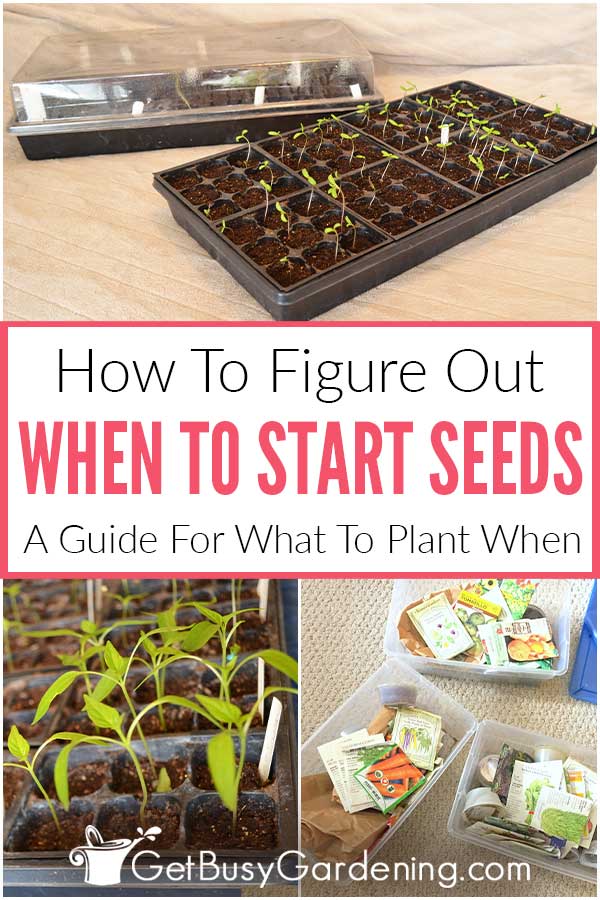
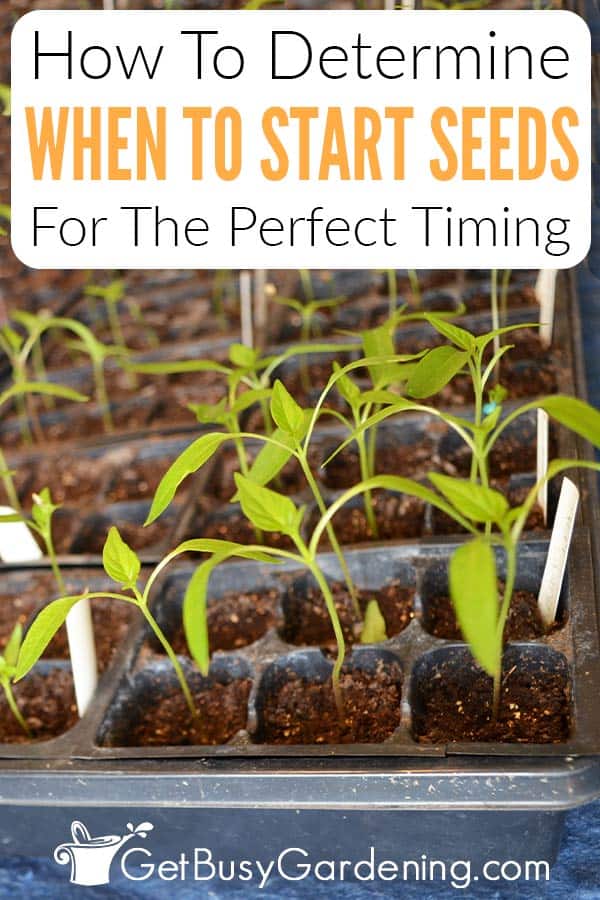
Figuring out when to start seeds indoors is difficult, especially when you’re a new gardener. In this post I will show you exactly how to figure out when to begin, and also help you create your own personalized seed planting schedule.
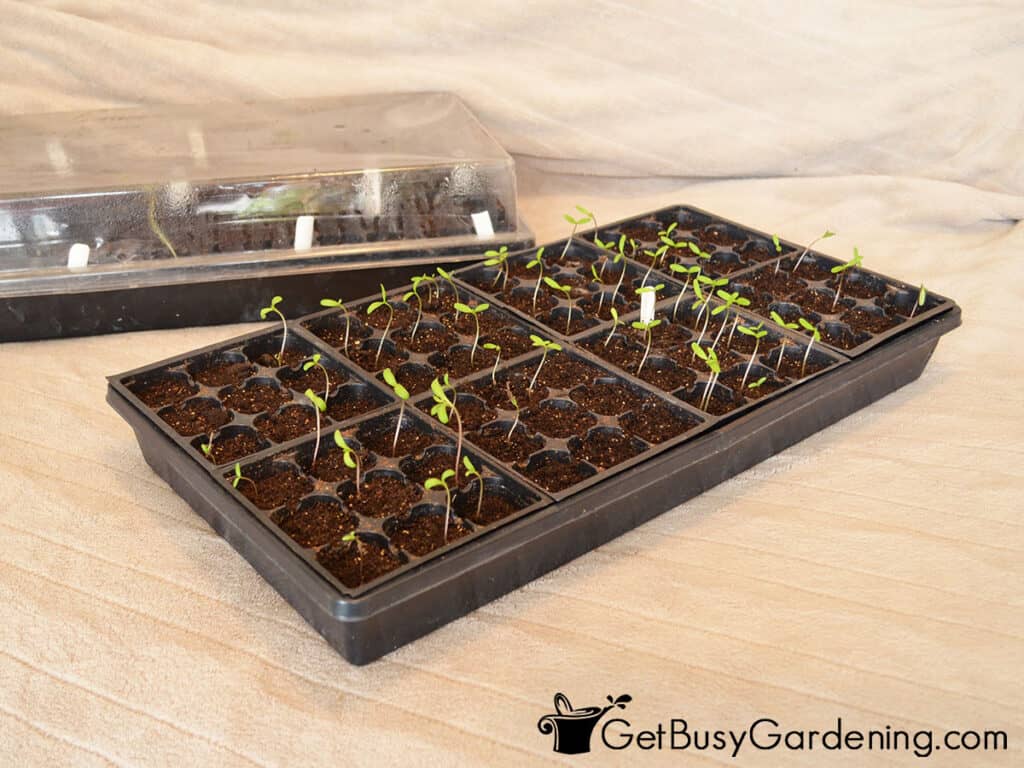

When should you start seeds indoors? This is one of the most common questions I get from new gardeners.
There are lots of different planting charts out there, and they can be helpful to use as a guide for starting seeds. But, there are so many factors involved, that it’s best to create your own personal timetable.
Don’t worry, it’s not difficult to do, and I’ll walk you through it all step by step. Once you learn exactly when to start planting seeds indoors, the timing will become second nature to you.
Why Do You Need A Seed Starting Timetable?
Timing is very important when it comes to starting your seeds indoors. That’s because if you do it too early, you could end up with weak, leggy seedlings that won’t survive. But if you start too late, they won’t be mature enough for transplanting into the garden by spring.
It takes a little practice, but in time you will be able to create your own seed planting schedule so you know exactly when to start each variety.
Figuring Out When To Start Seeds Indoors
The biggest problem with figuring out what to plant when is that every seed is different.
Some are fast growers, and it will only take a few weeks for them to get large enough to plant into the garden. But others are very slow to germinate, and it takes much longer for them to mature.
Plus, every growing zone has different planting dates. There is no such thing as a “one size fits all” seed starting chart. So we need to rely on the packets for help.
But, many companies give us very vague details (or no instructions at all), which is super annoying. Don’t worry, I’ve got you covered. Below I will give you a few simple guidelines to follow.
Finding Your Best Indoor Planting Dates
Follow these step by step instructions to figure out a basic seed starting timetable that you can use again year after year.
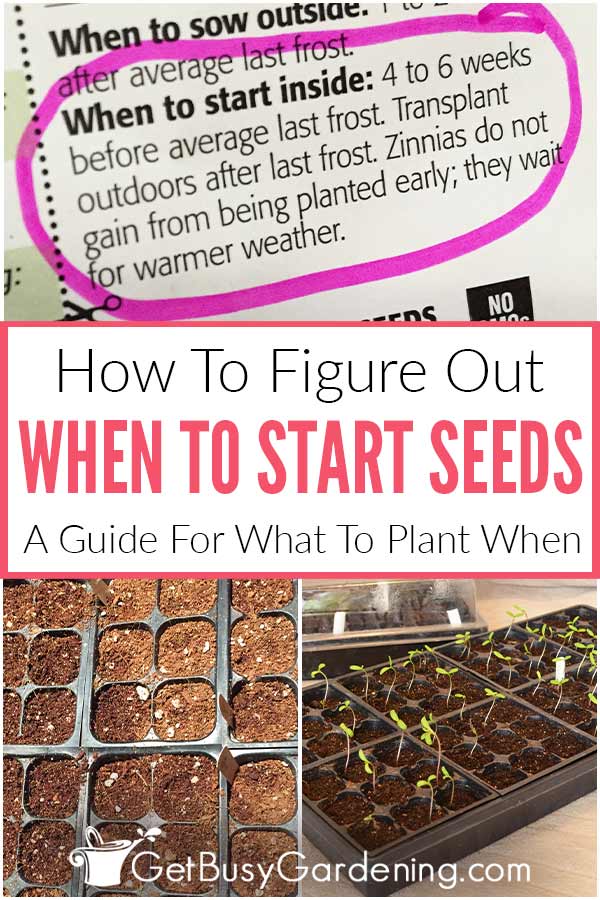
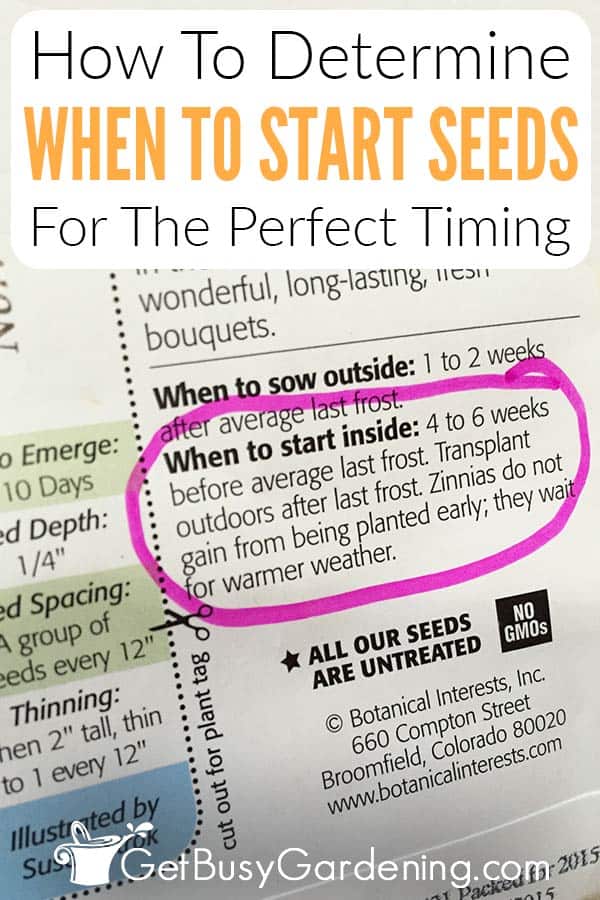
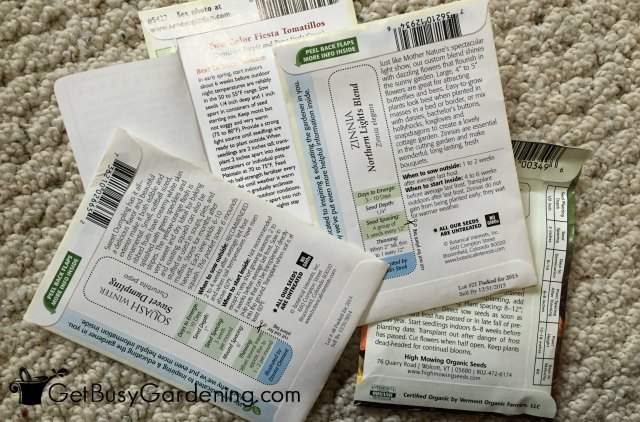
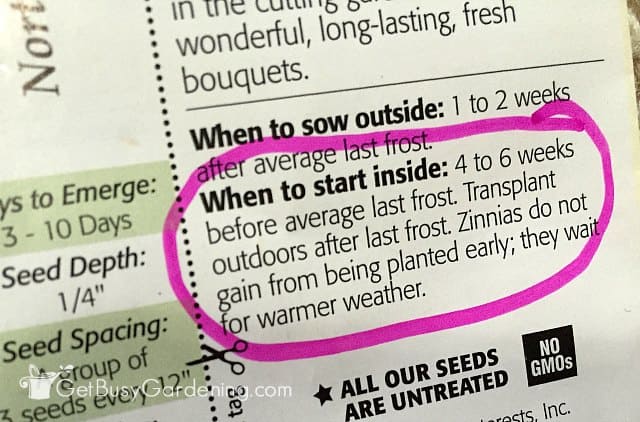
Step 1: Find the dates on the packet – First, read the instructions on each of the packets. Most will give you recommended planting dates for when to start seeds indoors. Generally, it will be something like “4 to 6 weeks before average last frost”, or “6 to 8 weeks…”, etc. If your packet doesn’t have any recommended planting dates on it, skip to the next section.
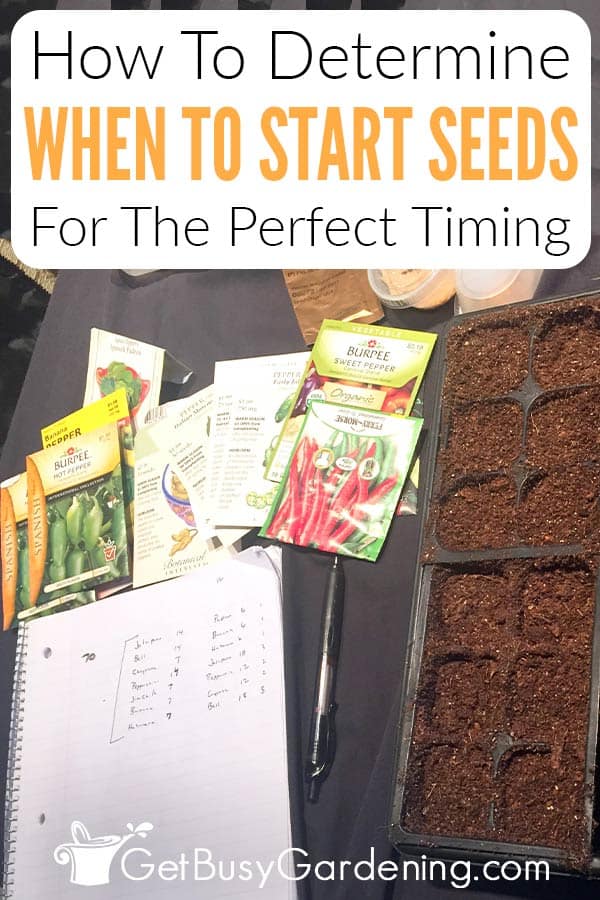
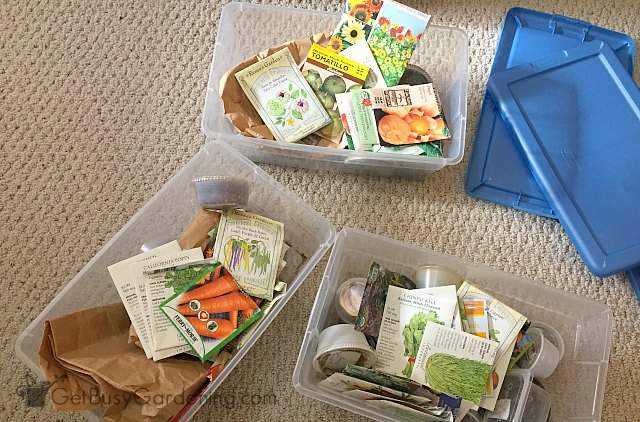
Step 2: Sort your packets by best planting dates – Take all of the ones you plan to start indoors, and sort them by the recommended planting dates shown on the packet.
Step 3: Store them by date – Once you have everything sorted into piles, store them like that. That way, you’ll always know which ones to plant at the same time.
General Guidelines For When To Plant Seeds Indoors
Unfortunately, not all companies include seed starting dates on the packets for you (maybe they like to keep us guessing?). If yours doesn’t have the recommended planting dates, here are a few basic guidelines you can follow to figure it out:
- In general, you should start seeds indoors 6 to 8 weeks before the average last frost date in your area.
- The average last spring frost date is different for each growing zone. If you don’t know what yours is, ask a local garden center, or look it up online.
For example: Our average last frost date in zone 4b (Minneapolis, MN) is May 15th. I count backwards 6 to 8 weeks, which is sometime between March 20th and April 3rd. That’s when I should start planting my seeds indoors.
Related Post: 17 Easiest Seeds To Start Indoors
How To Create Your Own Seed Planting Schedule
Once you figure out when to start each type of seed indoors, then you can work to create your own custom planting schedule to use year after year. Following these tips will give you a good start:
- Keep track of the dates you planted each type, and write down how long it took them to start germinating.
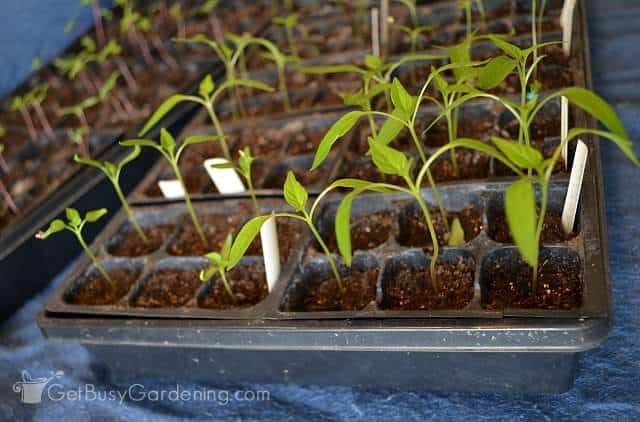
- Record how well each variety performed. Did the seedlings grow long and leggy before you could move them outside? Did they outgrow their containers too quickly? Or maybe they were too small to plant into the garden in the spring.
- Make a note of what to change next year. If they grew too large or became leggy before you were able to move them outside, start them a week or two later next year. If they were too small to transplant into the garden start them indoors a couple weeks earlier next year.
Once you get the hang of knowing when to plant seeds indoors, you will have your own customized planting schedule to go by year after year. Each year you can make the necessary adjustments to get it perfect.
You’ll begin to see patterns for certain types of vegetables and flowers, and know which ones to plant at the same time. This will make it even easier for you.
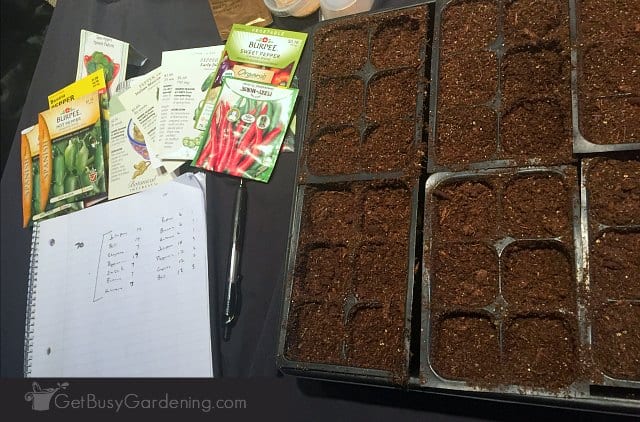
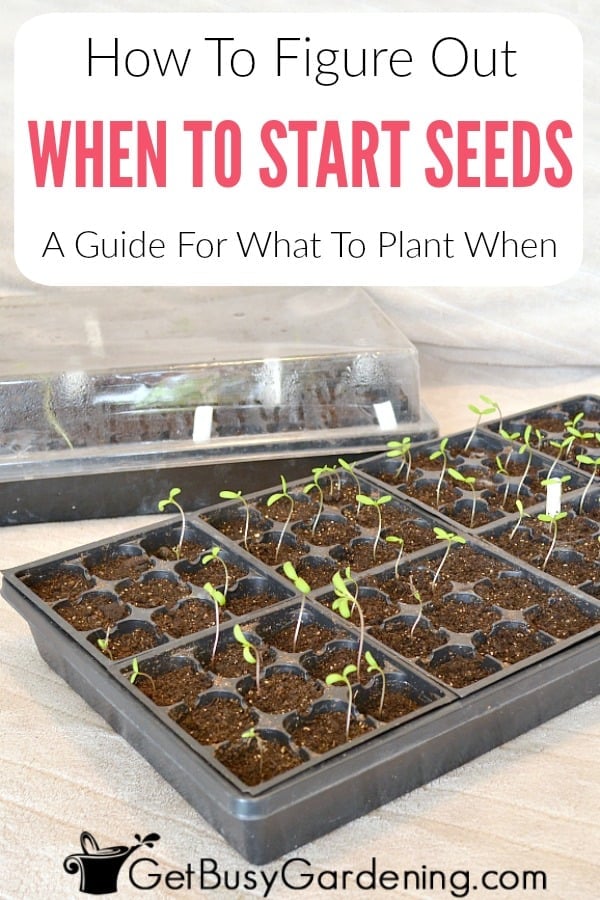
Determining exactly when to start seeds indoors is difficult for newbies. Following the steps above will help you get it right every time, and create a personalized seed planting timetable that you can use every year.
If you need more, and you want to learn all there is to know about easily growing all of your own seeds, then my online Seed Starting Course is exactly what you need! This self-paced, comprehensive online course will walk you through every detail, step-by-step. Enroll and get started today!
Otherwise, if you just want a refresher about how to begin, then my Starting Seeds Indoors eBook would be perfect. It’s a quick-start guide that will have you up and running in no time.
More Information About Growing Seeds
- Seed Starting Equipment and Supplies
- How To Test The Viability Of Seeds With An Easy Seed Germination Test
- Peat Pellets Vs. Seedling Soil: Which Should You Use And Why?
- How To Make Your Own DIY Seed Starting Mix
Share your experiences and tips for when to start seeds indoors in the comments section below.
Traci says
I Started my Veggies Indoors by seeds for the 1st time this year…a little later than I wanted to plant our Garden due to a Lot of Major Health Issues!
I used a heat mat under the flats and started with a Fluorescent Grow light that I purchased as part of a Seed Starting Kit, some of the Tomatoes got Really Leggy so I potted them up in bigger peat pot Containers and then used the Light from my Aerogarden (by not planting in the Aerogarden and putting my Flat of Starts on top where you would put the Aerogarden seed things), still adding water in the reservoir so it would burn it up if it was empty, idk first year using them too. Anyway, putting the Flat of starts under the Aerogarden lights Helped them to Look Amazing but….
I’m Confused about the start dates and hardening off prior to planting in the Garden…Say I followed the 6-8 week recommendation to start seeds indoors, does that include the week or two that they need to be hardened off prior to planting in the garden, or do I start the hardening off After the 6-8 weeks, which would mean that I should’ve started them 8-10 weeks earlier in order for them to be ready to plant in the garden…I’m Sooo Confused! (And I planted for us and our 3 Daughters Gardens, I don’t want to Screw this up if I didn’t Already!
Amy Andrychowicz says
The time for when to start your seeds indoors is 6-8 weeks from the date you can safely plant them into your garden, so it does include the time for hardening them off. Here’s some help for how to properly harden your seedlings.
Mary Alice says
If I am trying to grow seeds for an August 5th wedding, looking at packets that are 4-6, 6-8 and 8-10 weeks from last frost – do I need to take into account the days to maturity consideration that is provided on the packet? Thank you!
Amy Andrychowicz says
Yes, absolutely. The days to maturity are how long it will take before the plant starts to flower. The planting dates are how long you need to start the seeds indoors so the seedlings will be big enough to plant them into your garden after the last frost.
Mary Alice A Pike says
Thank you! Do you have any tips to extend the days to maturity? If the 4 to 6 weeks to start the seeds plus the days to maturity lands in June or July, can I do anything to push their maturity to August?
Amy Andrychowicz says
Yes, you can simply wait longer to start the seeds. Also, the maturity dates is more of an average, it doesn’t mean that they will only flower in June or July. Many types of annual flowers will bloom from mid-summer all the way through first frost in the fall, so you may be good even if they start blooming in June/July.
Rachel H says
I’m a newbie to gardening and don’t have much of a green thumb… but my mom and I are going to try to grow flowers for my wedding! I’m not too picky on what type of flowers (looking at snapdragons, cosmos, sweatpeas, daisies, zinnias, even just a wildflower blend). I’m wondering if I begin indoors at the beginning of March, if the flowers would be mature enough to cut for July 2.
Any tips would be appreciated!
Amy Andrychowicz says
It really depends on the type of flower, as well as your climate. Here’s a list of my top picks for the easiest flowers to grow from seed. But some of those will take longer to bloom than others will. It’s best to make a list of what you’d like to try, and then look up the amount of time it takes for them to mature from seed in order to narrow down your choices and know exactly when to start them indoors. Good luck!
Jaime says
Soooo, I’m in zone 8a and I have a few packets of wildflower seeds I bought to start a butterfly garden…is it too late to start them indoors (Mar 7th)??? I am the newbiest newb when it comes to gardening…I know nothing…I tried to be organized, I wrote on the packets which needed cold stratifying and which didn’t, and I thought that meant that I could start the ones that didn’t need stratifying in the beginning of spring…was I wrong? Help!!
Amy Andrychowicz says
Since you’re in zone 8a, I would recommend direct sowing your seeds at this point. Early March is too late for you to start them indoors.
Annemarie Theisen says
Good morning, I have seedlins growing is it to early to put them in my flowerbeds?
Amy Andrychowicz says
It depends on where you live. Here’s my guide for how to determine when it’s safe to plant your seedlings outside.
Oleg says
Thank you very much Amy for all of these tips you provided. However I’m still confused… ?
“In general, you should start seeds indoors 6 to 8 weeks before the average last frost date in your area.” – sounds quite vague… Do you mean 6 to 8 weeks would be enough for any vegetable to grow into mature seedlings before the last frost danger passed?
I have seeds from the last seed swapping, there is no info on them on when and how to plant….
Amy Andrychowicz says
Yes, exactly. Every type of seed is different though, so that 6-8 week range is just a general guideline. It’s best to look up the exact germination dates for each type of seed you have (you can usually find that info online). But even so, most of the time you will find a range, because the exact time that it takes for germination and seedling growth varies wildly depending on the environment, care, and even the age of the seeds. I recommend splitting the difference, and start them at the average (so in our example, start them at 7 weeks before your last frost date). Then make sure to keep good notes, so you know exactly when to start them next year. If the seedlings were too small come planting time, then start them a few weeks earlier next year. If they were too large, then start them a little later. That way you’ll have a customized schedule that you can go off of year after year, and you’ll know what works best for you, and in the conditions of your home.
Gordon says
Amy, the timing is off on the example you gave, which could make your readers wonder what they are missing:
“For example, our average last frost date here in growing zone 4b (Minneapolis, MN) is May 15th.
So, I would count backwards 6 to 8 weeks (which would be January 18th-February 1st), and that’s when I would start planting seeds indoors.”
6 to 8 weeks is about 1 1/2 to 2 months, so for a mid-May transplant, that would mean starting the seeds between mid-March and early April.
Otherwise, this is really useful advice, especially the tip about sorting the seeds by starting date.
Amy Andrychowicz says
Haha, you are totally correct! I don’t know what calendar I was looking at when I wrote this, LOL! Thanks so much for pointing out my error in the timing of my example of when to start seeds indoors. I have made the correction to be March 20th – April 3rd. Now that makes much more sense! 😉
Sherry says
Ha! I was just thinking this morning that I needed to start a few seeds in find a place in my house to put them.
Amy Andrychowicz says
Awesome, hope your seeds will grow great for you!
Shirley Wood says
I always enjoy starting my seeds. It’s so satisfying.
Amy Andrychowicz says
Yes, starting seeds really is very satisfying! 🙂 I love it too.
Cynthia says
These are very valuable tips, and I thank you very much. After spending hundreds of $$$ on annuals in previous years, I have decided to take the plunge and start from seed some of my own. I will be very busy with what I have bought, but I know I can do it if I am diligent. I am a fairly good gardener, just not that experienced with seed starting. . .I will bookmark this page. Thanks, again!
Amy Andrychowicz says
Great, glad I could help! Good luck with starting your seeds, I’m sure you’ll do great!
Nicole says
We love to save money and start our plants indoors, it also is a great science lesson for my kids! We are excited to get started planting seeds for the year!!
Amy Andrychowicz says
What a great activity for kids! Hope your seeds will grow well for you this year!
JANET VINYARD says
Very useful information – I need to get started planing my seeds soon! Thanks for sharing! Blessings, Janet
Amy Andrychowicz says
Awesome, thanks Janet! 🙂