Growing castor beans from seed can be a bit challenging at first. But once you get the hang of it, you’ll be able to easily grow them every year.
In this post, I am going to give you all the details you need, and show you exactly how to grow castor seeds step-by-step.

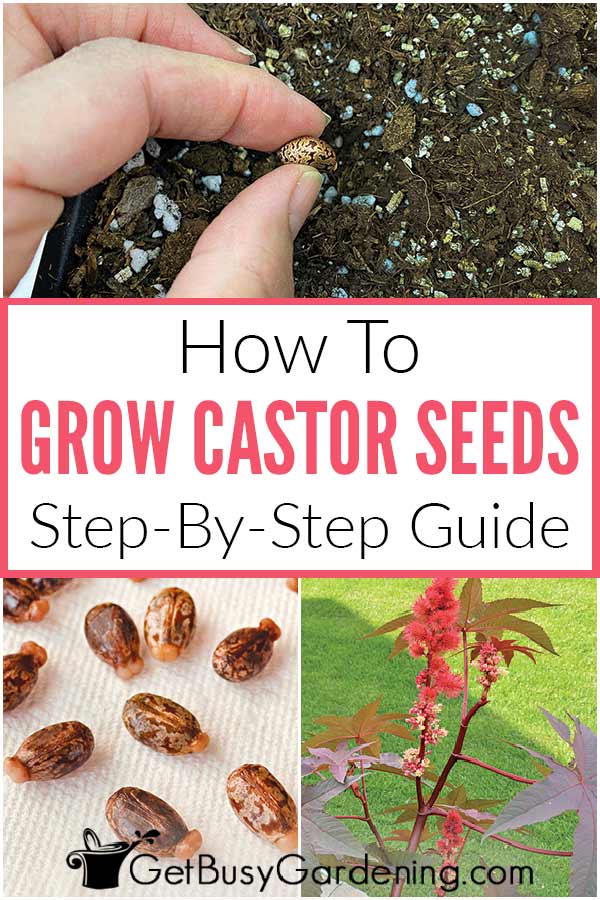
Castor bean (Ricinus communis, aka: mole plant) is a fast growing tropical plant, and it’s one of my favorite annuals. I love the red ones especially, they add a wonderful contrast of color and texture to my garden.
I get tons of compliments on them, and everyone asks what they are. I start them from seeds every year, and they grow to be monsters by the end of summer.
Below I am going to show you exactly how to grow castor beans from seed so you can enjoy them in your garden too. I’ll cover everything from start to finish.
This includes which method to use, when to start, step-by-step planting instructions, germination time, and seedling identification.
I’ll also give you tons of seedling care and transplanting tips, show you how to fix common problems, answer your faqs about germinating castor bean seeds, and more!
Toxicity Of Castor Plant Seeds
It’s true that castor plants are beautiful additions to the garden… but be careful with this one. All parts of the plant and the seeds are poisonous if ingested.
You might not want to grow it in your garden if you have pets or kiddos running around. At minimum, you should keep the seeds out of reach of children and pets at all times.
Growing Castor Bean From Seed
Below I am going to give you everything you need to know to successfully grow castor beans from seed. It doesn’t matter which type you have, the steps for planting and germination are the same for all.
Types Of Castor Seeds To Grow
There are several varieties of castor plants, and all of them are easy to grow from seed. The most common ones have green leaves, but I love the red leaf ones the best.
There are also giant varieties that can grow to be upwards of 20′ tall, with huge leaves. And others that have curled leaves that also look amazing in the garden.
What Do The Seeds Look Like?
Castor bean seeds are sometimes referred to as “dog tick seeds”. That’s because they look very similar to wood ticks when they are engorged with blood.
Gross, I know, but it’s the best way to describe them! Haha! Let me see if I can give you a less disgusting description…
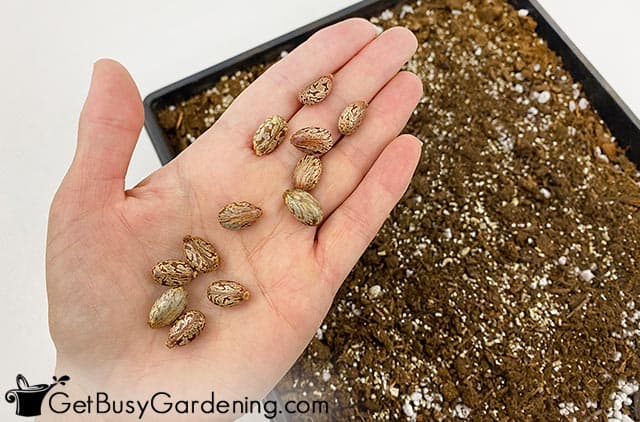
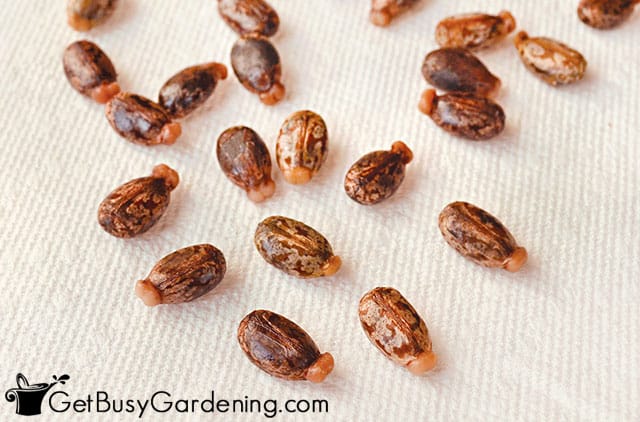
Castor seeds are large, oval shaped, and have a pretty spotted pattern on them. One end of the oval has a small nub that sticks out slightly. They are usually brown or reddish in color, but sometimes can look more gray.
Recommended Ricinus Seed Starting Methods
If you live in a warm enough climate, you can sow castor plant seeds directly into the garden. But for most of us, they need to be started indoors.
That’s because they require quite a long growing season to mature to full size. Plus, it can take a long time for the seeds to germinate.
Related Post: 3 Seed Starting Methods That Every Gardener Should Try
When To Plant Castor Bean Seeds
To give them the biggest head start, it’s best to plant them indoors 6-8 weeks before your average last frost date.
That exact date varies depending on where you live. So if you don’t know it, then be sure to look it up. In zone 4b, ours is around May 15th, so I start mine sometime in early April.
Tips For Growing Castor Bean From Seed
Since growing castor bean seeds is different than it is for other plants, there are a few things to consider before sowing them.
Soaking them first will give them a much better chance of germinating. And it’s also important to be sure you use the proper container to make things easier on yourself and the seedlings.
Soaking Castor Bean Seeds
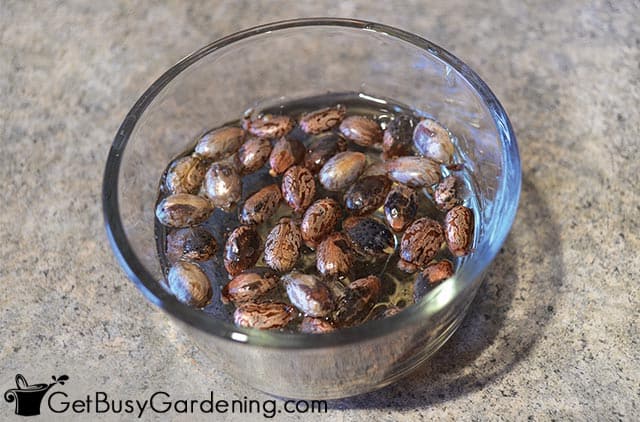
The first step for successfully germinating castor seeds is to soak them in warm water for 24 hours before sowing.
To give them even more of a boost, try soaking them in diluted organic fish emulsion, liquid kelp or compost tea. After soaking the seeds, it will look like one end has popped out – this is normal.
Choosing The Best Containers
It’s a good idea to plant castor oil plant seeds in a deep container, unless you plan to transplant them shortly after they start to grow.
Once they have germinated, the seedlings will grow very quickly. So it only takes a few days for them to outgrow seed starting trays.
You could start them directly in plantable peat pots to make transplanting them to the garden a snap.
If you prefer to use something more sustainable than peat, try coco coir or cow pots instead. Otherwise, plastic seedling pots are perfect (and reusable).
How To Plant Castor Bean Seeds Step-By-Step
You don’t need any special equipment to grow castor bean seeds, but you’ll definitely need a few things. If you do a lot of seed starting, then you’ll already have this stuff on hand…
Supplies Needed
- Plantable pots, reusable plastic pots, or a seeding tray
- Seed starting soil or large peat pellets
- Plastic wrap or a clear bin (if your container doesn’t have a lid)
- Seeds
- Water
- Heat mat (optional, but highly recommended)
Step By Step Instructions
Step 1: Add soil to the seed trays – Fill your container will a high quality seed starting medium. Or you could use pre-moistened large peat pellets instead, and place them into the tray.
Step 2: Drain the water (optional) – You can either drain the water from the seeds, or just pull each one out of the water as you work to plant them. Either way is fine, just make sure they don’t dry out. Also, take care not to damage the little nub that’s sticking out as you work.
Step 3: Plant the seeds – Make a hole in the dirt to the proper depth (they should be planted 1 – 1 1/2″ deep), and drop a seed into the hole. It doesn’t matter which side is up, the seedlings will find their way to the top.
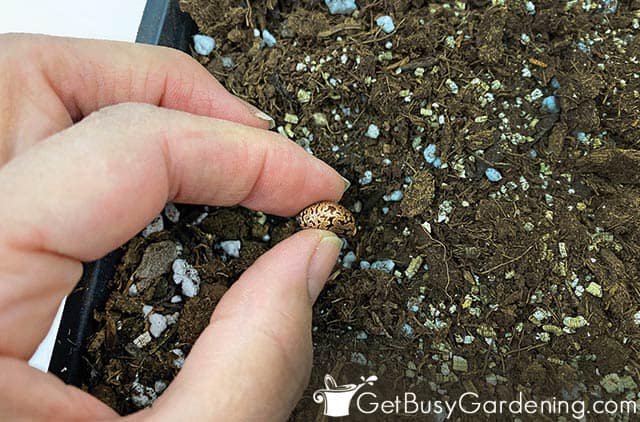
Step 4: Cover the seeds with soil – Bury each one with soil, and then gently press it down. You want to make sure the soil comes in contact with the seeds, but don’t pack it down too tightly over them.
Step 5: Cover the containers – If your container doesn’t have a clear plastic lid, then cover it with plastic wrap. Or you could put them into a large plastic bin with the lid closed to keep the soil moist during germination.
Step 6: Place them in a warm spot – Ideally, you should place them on top of a heat mat, which will speed up germination. Otherwise, put them in the warmest spot you can because they need warm soil to grow.
Step 7: Keep the soil evenly moist – As you wait for the seeds to germinate, be sure to keep an eye on the soil so it doesn’t dry out. It should stay evenly moist, but never allow it to get soggy. Soggy soil can cause the seeds to rot.
Castor Bean Germination Time
It can take a long time to germinate castor seeds, so be patient. The typical germination time is 10-21 days. I’ve had some take as long as a month before finally sprouting, so don’t panic if it takes longer.
The good news is that you can help to speed up germination! The key is keeping the soil nice and warm by adding bottom heat.
So be sure to use a seedling heat mat to help castor bean plant seeds germinate much faster, and lower the risk of rot.
What Do Castor Bean Seedlings Look Like?
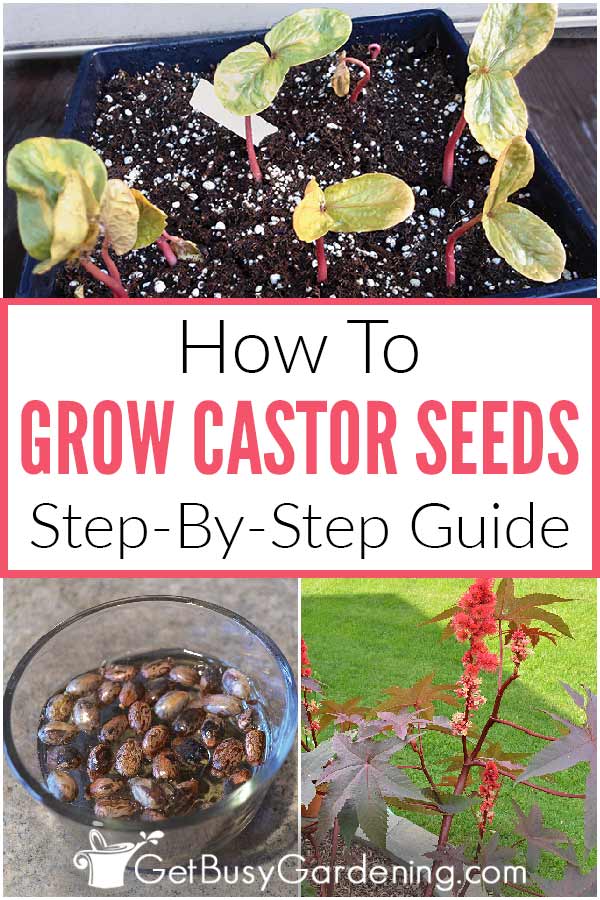
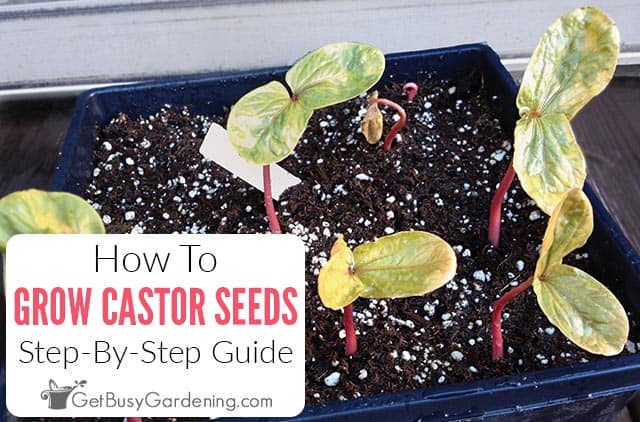
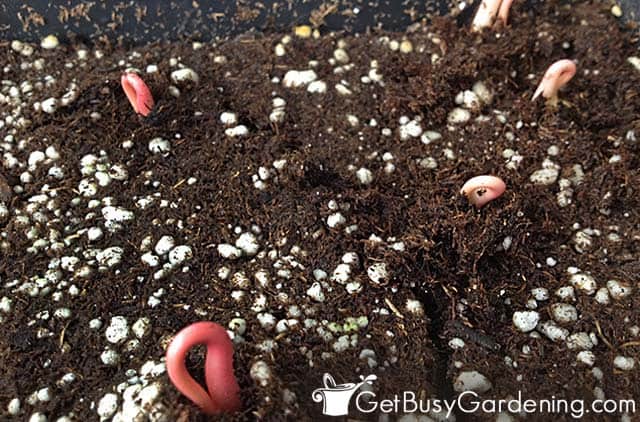
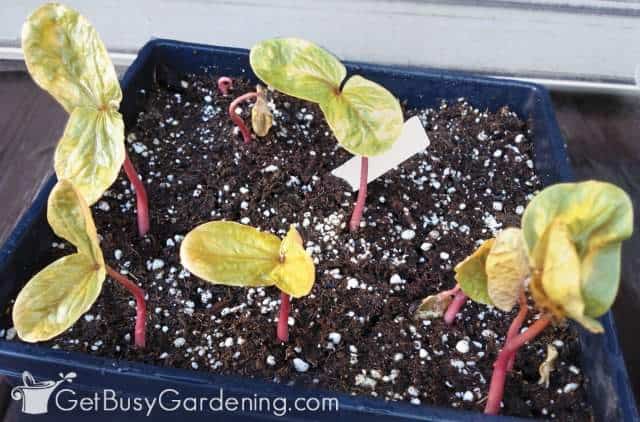
As the seedlings emerge from the soil, they look very similar to bean seedlings. The color will vary, depending on the variety you’re growing.
The photo below is red castor bean seedlings emerging from the soil, that’s why they’re pink. Once they start to emerge, they will pop up very quickly.
The first two leaves that grow, called the “seedling leaves”, will be oval shaped. The next leaves to grow after that are called the “true leaves”, and those look like tiny baby castor plant leaves.
Castor Seedling Care Tips
The seedlings can be a bit difficult to care for indoors. So, for the best success, be sure you read through the following care tips before your seeds start germinating. You can also learn more about general seedling care here.
Light
After the seeds finally germinate, the seedlings will grow very fast. So, as soon as you see them popping out of the dirt, add a grow light right away.
Since they grow so fast, a grow light is a must to prevent castor bean seedlings from getting too tall, weak and leggy.
I made my own seed starting grow lights using an inexpensive florescent light fixture and plant grow bulbs, which works great.
Make sure the light hangs an inch or two above the seedlings at all times, and keep it on for 14-16 hours per day. Use an outlet timer to make it easy to control the lights. Check a few times per day, and adjust the height of the light as the seedlings grow taller.
Related Post: A Beginner’s Guide To Grow Lights For Seedlings
Water
Consistent watering is also very important to the health of your castor seedlings. Keep the soil evenly moist, but never wet or soggy. And never allow it to dry out completely.
Give your seedlings a good drink until water starts coming out of the drainage holes, then dump the excess out of the trays. Never leave them sitting in water.
Fertilizer
Once your castor bean plant seedlings grow their first set of true leaves, it’s time to begin fertilizing them.
I prefer (and highly recommend) using an organic fertilizer like fish emulsion or a compost tea solution. (The fish emulsion can get a little stinky indoors, so you may want to use that outside only.)
You could also buy compost tea bags, and brew your own. Whatever kind you decide to use, start with a weak, half dose of liquid fertilizer, and gradually increase it to full strength over time.
Air Circulation
After your castor seedlings have popped up out of the soil, it’s a good idea to add some airflow. Remove the lids to prevent mildew growth, and run an oscillating fan over them on low to strengthen them up.
You can run the fan for a few hours a day at first, to get them used to it. Then, if you want, you could plug it into the same outlet timer as your lights to make it easy.
Thinning
If you planted more than one seed per hole, then you’ll definitely want to thin out the weakest one. Wait until the seedlings have grown to be a few inches tall, and then remove the smallest/weakest one.
Don’t pull them out though, or it could damage the tender roots of the healthy seedling. Instead, cut it off at the base using a pair of micro-tip snips or bonsai shears.
Repotting
If you planted your castor seeds in small containers or cells, then you’ll need to pot them up once they’re 3-4″ tall to give them plenty of room to grow larger.
Using plantable pots will help ease the transition into the garden, and lower the risk of transplant shock. My favorite types to use are peat pots, ones made out of coco coir, or cow pots.
Otherwise, 4″ plastic nursery pots are the perfect size, and you can reuse them year after year. For soil, either use the same seedling mix you planted the seeds in, or you can use regular potting soil.
Transplanting Castor Bean Seedlings Into Your Garden
After all the hard work and patience it takes to grow castor beans from seed, you don’t want to lose them by planting them outside too early.
So follow the tips below to give them a healthy transition, and learn exactly when to transplant castor seedlings into your garden.
When To Transplant
Castor bean plants hate the cold, so it’s best to wait to plant them, rather than risk doing it too early. If the soil or weather is too cold, the seedlings could die, or their growth could be stunted.
So wait to transplant them into the garden until after all chance of frost is gone, and the soil has warmed up in the spring.
Hardening Off
Before you can plant your castor bean seedlings in your garden, they must to be hardened off to get them ready for life outdoors. Do not skip this step!
Start this delicate transition a few weeks before you plan to transplant them into your garden. Place the seedlings outside in a shady, protected spot for a few hours a day, then bring them back indoors.
Each day, give them a little more time outside, and gradually move them into the sun. After a few weeks, they’ll be toughened up and ready to move to the garden.
Where To Plant Castor Seedlings
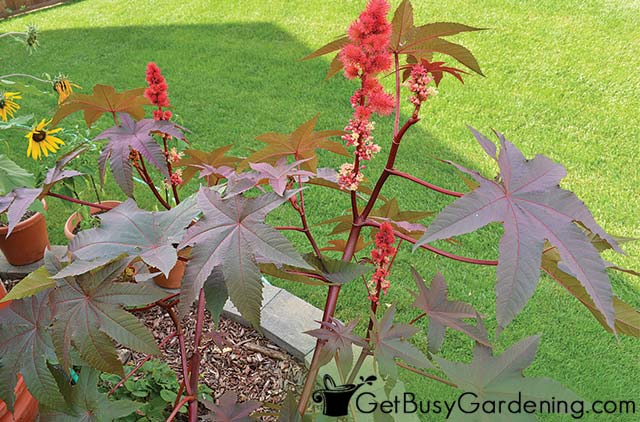
Castor bean plants need a full sun location, and lots of heat to grow their best. They will tolerate shade, but the plants will stay small.
Choose a location in your garden where they will be protected from high winds. It’s best to grow them in fertile soil that drains quickly. They like a lot of water, but they don’t like soggy soil.
You certainly could plant them in a large pot, but their growth will be stunted. So a nice, sunny garden location is best.
Related Post: How To Care For Castor Bean Plant (Ricinus communis)
Spacing
Since castor plants grow very large, they need quite a bit of space. Plant the seedlings 36-48″ apart for best results. If they are overcrowded, the plants may not grow very large.
Some varieties grow much bigger than others, so it’s best to research the type you have to give them adequate space.
Seedling Planting Depth
For the best success, plant castor seedlings into your garden at the same depth that they were growing in the container.
Planting them too shallow could expose their delicate roots. While planting too deep could cause them to rot at the base.
Troubleshooting Common Problems
There’s nothing worse than putting all the time and effort into growing castor beans from seed, only to have nothing but problems with them. Especially if you don’t know what’s wrong, or how to fix it!
So here I will list a few of the most common things that may go wrong. You can read more about fixing common seedling problems here.
Castor Seeds Not Germinating
Lack of germination can be caused by a few things: the seeds are old or immature, and therefore not viable, or they could have rotted if the soil was kept too wet. Or maybe they are just really slow, and you need to give them more time.
Leggy Seedlings
This is definitely one of the most common problems for castor seedlings! Since the seedlings grow so fast, they need lots of light, and they need it from the moment they pop out of the dirt. Otherwise, they will quickly grow tall and leggy.
Seedlings Growing Crooked
Lack of light can also cause the seedlings to grow crooked, and reach for the nearest window. So be sure to add a grow light asap (a sunny window is usually not enough).
Seedlings Not Growing
If the seeds germinated, but the seedlings aren’t growing any larger, they may have outgrown their container. If that’s the case, pot them up into a larger one. Otherwise, stunted growth may be caused by either overwatering, or it’s too cold for them (they need to be in a warm location).
FAQs About Growing Castor Seeds
Below I will answer some of the most frequently asked questions about growing castor beans from seed. If you have any questions you can’t find the answer to here, ask them in the comments below.
How many castor seeds per hole?
Since they are so large, it’s best to plant only one castor bean seed per hole. If you’re using old seeds with low viability, I would recommend sowing additional containers, rather than planting more than one per hole.
How deep do you plant castor bean seeds?
Castor seeds should be planted 1″ to 1-1/2″ inches deep.
How long does it take for castor beans to germinate?
Normally it takes 10-21 days for castor seeds to germinate. But it can take up to a month if the conditions aren’t right.
How do you speed up castor bean germination?
The fastest way to speed up germination is to add bottom heat. A heat mat will give you the best results. But at minimum, you should place them in a warm location.
Are castor bean seeds poisonous?
Yes, the are highly toxic. So be sure to keep them away from pets and children.
Growing castor bean seeds isn’t difficult once you learn how. Following the steps in this detailed guide will give you the best success! Just remember, they can be slow, so be sure to have lots of patience.
Up Next: Learn how to collect castor bean seeds from your garden so you can grow them year after year.

If you’re tired of struggling, and want to learn how to grow any plant you want from seed, then enroll in my online Seed Starting Course. It’s a wonderful, fun, self-paced course that will teach you everything you need to know to easily grow your own seedlings. Enroll and get started today!
Or, if you just need a refresher, then my Starting Seeds Indoors eBook is for you! It’s a quick-start guide that will get you planting seeds in no time.
More Info About Growing Seeds
- How To Grow Seeds: The Ultimate Seed Starting Guide
- How To Make Your Own DIY Seed Starting Mix (With Recipe!)
- Tips For Growing Seeds Indoors For Beginners
- How To Test The Viability Of Seeds With An Easy Seed Germination Test
Share your tips for how to grow castor bean plant from seed in the comments section below.

Jean Hughes says
I grow castor plants each year from saved seeds but often find they have seeded themselves in the border.
It’s January 13 th and one in a pot against the house is in full leaf and flourishing.
My original seeds came from a school in New Orleans many years ago
Amy Andrychowicz says
Wow, you must live somewhere warm if yours are thriving in January! I love the origin story of your seeds, so many people have an origin story for where they got their first castor bean seeds. It’s so cool!
Ricin Rodeo says
Update: my castor plants are surviving along with my other plants. In the photo, there is an elephant ears plant growing by it. Are members of the caladium family great to grow by castor?
Weeks ago I found a tiny black larva eating on the first leaves of my castor plant. Good to know there is something that eats those. May help control the population of castor
Amy Andrychowicz says
Nice, great to hear your castor plant is growing so well! I don’t know if there are any benefits to planting them together. I just like the look of them growing with other tropical plants! 🙂
Shannon says
if there posinise why do we plant them
Amy Andrychowicz says
I plant them because they are beautiful and unique. They also help to deter pests in the garden. 🙂
Jeri says
My friend always had these. She called them “ticks” because that is what the seeds looked like to her. big fat dog ticks. She never knew the real name for them. She taught me to just gather the seed pods and leave in bucket all winter and in spring she just soaks the whole pod and it busts open to water the seed and then she digs a trench and pours the bucket into it. Always had a great line of them. I’ve heard they will keep moles out of your yard if you plant at edges. My husband won’t let me plant because of our young grandchildren and the poisonous nature of the plants.
Amy Andrychowicz says
Yes, they do look like big fat dog ticks. A fitting but very gross name for them, LOL! Love it. Your friend’s method of planting castor seeds is great too! And yes, it’s smart of you not to plant them in your yard because of your grandchildren! These are very poisonous, and it’s better to be safe than sorry! Wait til the kids are older.
Will says
.the green castor bean got really larg huge…soon frost will stop it in it’s tracks but there are plenty of seed pods to let go brown and dry out but remember after that first frost store seed pods frost free till they dry out….The first frost will check the plant but not kill the seed pods…were talking frost not hard freeze now…Zone -6 here…
Ricin Rodeo says
Next week I’m going to plan for winter. Snow is rare and I love in zone 8, but it gets real cold here. This is an old house so I need to think big on my plans
Will says
.An update here at the end of September…The Green Zanzibar castor is now at least twenty feet tall and 15 foot wide..loaded with big seed stalks… Growing season is almost done here… Too bad I cannot up-load a photo….
Amy Andrychowicz says
WOW, that is fantastic! You can share the photo on my Facebook page if you want https://www.facebook.com/GetBusyGardening
Will says
Amy…there is no sun power left… Even in Florida castors would not grow so well as there is not enough hours of sunlight in the sky to give these beans the power to grow up big and strong… Better you have some seeds saved for next year… If you try to grow these in a contaner they do not grow so big either… best suggestion would be wait till next year and start again no reason to risk your wireing system for a plant eh… You did not mention your zone …I am zone 6 here in Michigan….hope this is of some help…will
Amy Andrychowicz says
Hi Will, don’t worry, I’m not attempting to grow them through the winter. 🙂 I live in Minnesota zone 4b. I grow castor beans as annuals only.
Will says
Will. Again… I grew castors again this year..found a trick to tall tall plants is dig a deep starter hole…I used a post hole digger to spot plant some castors… They all grew taller by three feet, compared to everyone else who I gave seedlings to… They also LOVE. Alaska fish emulsion …. Makes great castor food. ….zone 6 here…summer has peaked in this heck of the woods….
Amy Andrychowicz says
Interesting, thanks for sharing your tips!
Ricin Rodeo says
Actually, castor plants are everywhere in Florida. They are also about 15 feet tall, kind of like the mimosas of alabama, or the hogweed of michigan. But hogweed is worse based on public safety. And I love in zone 8.
Ricin Rodeo says
Great news!One of my castor beans is sprouting! There is a little red bud that is sticking out, like the one in the picture. I have a question. I will transplant this tomorrow. But since it is fall, should I keep it indoors during the winter? I don’t mind if it is a small castor plant. I just wonder how much sunlight is required.
Amy Andrychowicz says
Woohoo! Congrats. It depends on the variety you have. Some types of castor bean plants are not hardy, and will die if exposed to frost or freezing temps. If you live in a cold climate, then yes, you’ll have to grow them inside until it’s warm enough to transplant them into your garden.
They require full sun, and you’ll probably need to add a grow light so your castor seedlings don’t get leggy. Come spring, you can plant it in the garden, and it should thrive. Just be careful growing these inside if you have kids or pets, because every part of the plant is extremely poisonous.
Ricin Rodeo says
Thanks. I have a bad house, so I am not sure how a heat lamp will work with the wiring. I will consider it, especially since I have other plants growing in my garden. And btw, I have spent months studying castor beans. Though the beans are extremely deadly, I plan to take precautionary measures. I wash my hands after touching the seedlings. Oh, and you are right! They grow quick! It only took 24 hours for the seedling being a tiny red bud ti being a few inch tall plant with two starter leaves. Thanks for all the advice.
Amy Andrychowicz says
Fantastic! I’m so glad to hear that your castor seedling is thriving. Isn’t it amazing how fast they are? You can practically sit and watch them grow.
Ricin Rodeo says
I do wonder something. How long do your castor plants live, because I saw photos of a castor plant in Greece that looks a LOT more like a tree.
Amy Andrychowicz says
I live in Minnesota (zone 4b), and castor plants are not hardy here. Mine only live through the summer because they’re killed by frost in the fall. Some varieties of castor plants are perennials, and can live for years in warmer climates.
Ricin Rodeo says
Great news! I just got some new castor beans today and they are soaking.I used emulsion too. I have a mini greenhouse so the beans can germinate quicker. I hope they will germinate by the next 2 weeks. I planted 3 beans:
The first one I didn’t soak, so I can see how it will do.
The others are being soaked. One of those 2 I am planting in a pot.
I hope I am not making too many changes with each seed. I just hope they grow.
Amy Andrychowicz says
Great, hope your new castor beans will grow for you this time. 🙂
Ricin Rodeo says
I have a problem. My first castor plant I tried to grow has not sprouted for a month. I dug it up. No roots. No SEED. I think it degraded. My other I’m not sure. I am ordering new ones. I am getting fish emulsion and some kind of heat source. What do you recommend? I did soak them. But I did for 24 hours and one of the ends did not pop out. Maybe I should leave it in 48 hours?
Amy Andrychowicz says
Sounds like your castor bean seeds weren’t viable, or maybe the dirt was keep too wet, causing the seeds to rot. 24 hours should be plenty of time to soak them, I think that 48 hours might be too long. Getting some fresh seeds is a good idea, castor bean seeds don’t always last very long, so old seeds won’t grow as well as fresh, new seeds (not sure how old your original seeds were). This is the fish emulsion that I use, and all types of plants love it… Neptune’s Harvest Fish Emulsion and here is a seed starting heat mat that you could use… Seed Starting Heat Mat
Ricin Rodeo says
I guess. I will wait until the tops pop themselves. And I will also let them germinate in a warm, indoor environment.
Ricin Rodeo says
I have 2 questions. First, does it work with green castor bean plants? And second, how long does the plant take to fully grow?
I am growing them.
Amy Andrychowicz says
Yes, these instructions for growing castor beans from seed will work for all varieties. Castor bean plants are fast growers, it only takes a few months until they’re full grown, if they get the right growing conditions. The hotter and sunnier it is, the faster they will grow.
Sandy Stuart says
I planted 70 castor beans…most didn’t survive. I did everything I was supposed to do but mine AREN’T Growing…it’s almost the middle of July and they’re only 3-4 inches tall….What do you think happened?
Amy Andrychowicz says
There are a few reasons why castor seeds won’t germinate. Most likely it was either too cold for them, or the soil was too wet, and they only rotted. They need very warm soil to germinate, and will not grow if it’s too wet. It also could have been that the seeds weren’t viable. If you collected them yourself, maybe they weren’t mature yet?
As for your seedlings not growing, they either aren’t getting enough sun, or maybe they are pot-bound. If they’re still in the seedling containers, transplant them into your garden to a full sun location. Castor plants need a full sun garden location in order to grow their best. They don’t grow well in pots.
Glenn ferris says
How far apart should I plant my red castor bean seeds and the nod is still king out after 24 he’s germination in water . what side should I plant downward? Thank you
Amy Andrychowicz says
Plant your castor beans 36-48 inches apart. I plant the seeds on their side, they will figure out which way is up.
Andrew Long says
I grow castor bean pants every year – just started mine today, actually. Another side benefit you didn’t mention is that castor bean plants are a natural mole repellant. Great info here. Thanks!
Amy Andrychowicz says
Yes, castors are said to be a natural mole repellent. Thanks for mentioning it.
Lucy says
I too grow caster beans every year and don’t see any mole/vole holes where they grow. The directions here are Spot on! Thank you for a gr8 site!
Amy Andrychowicz says
Awesome, thank you!! So glad you found my instructions for growing castor seeds helpful. I noticed some vole damage around the back of my perennial garden. I think I need to plant a few castor plants back there! 🙂
Carol Graner says
I have grown castor beans for years from seed. I use them for a background for an oriental look with dark leaved canna and other annuals such as yellow zinnias.
Amy Andrychowicz says
Same here, castor plants are so gorgeous mixed in with other tropical plants! Love it.