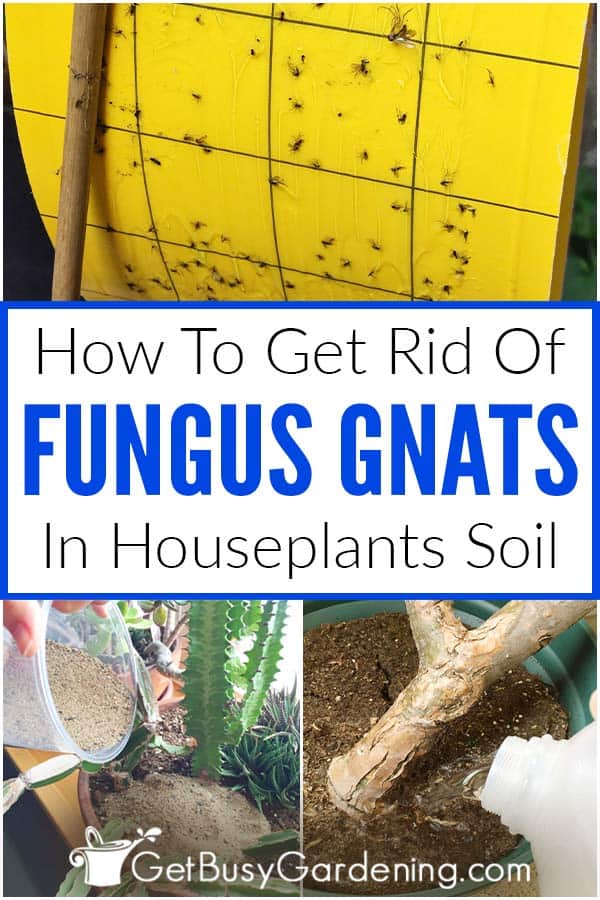
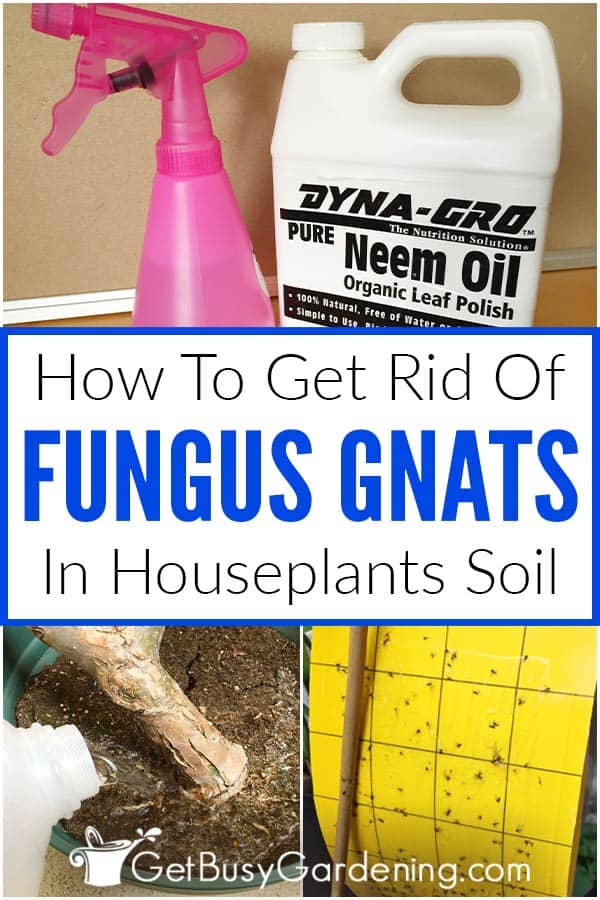
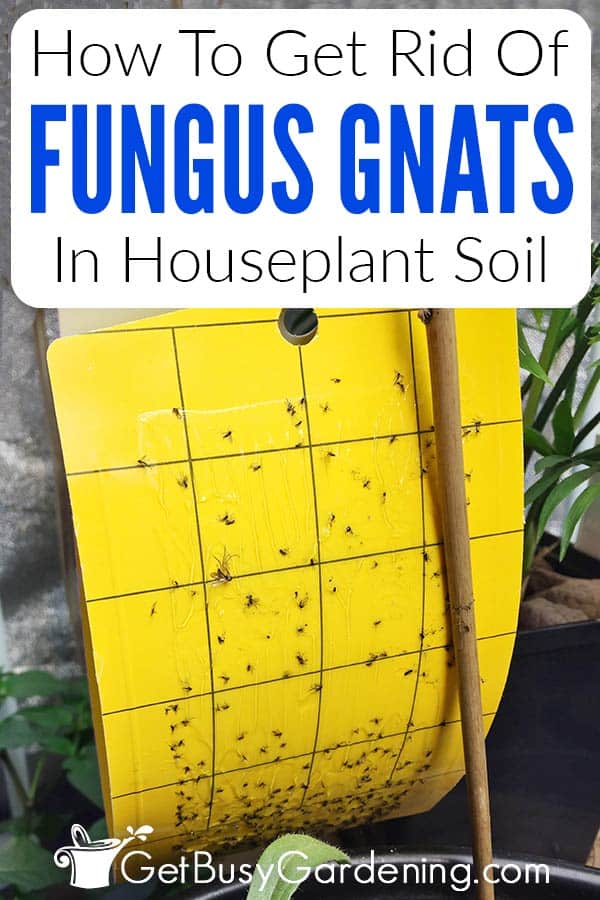
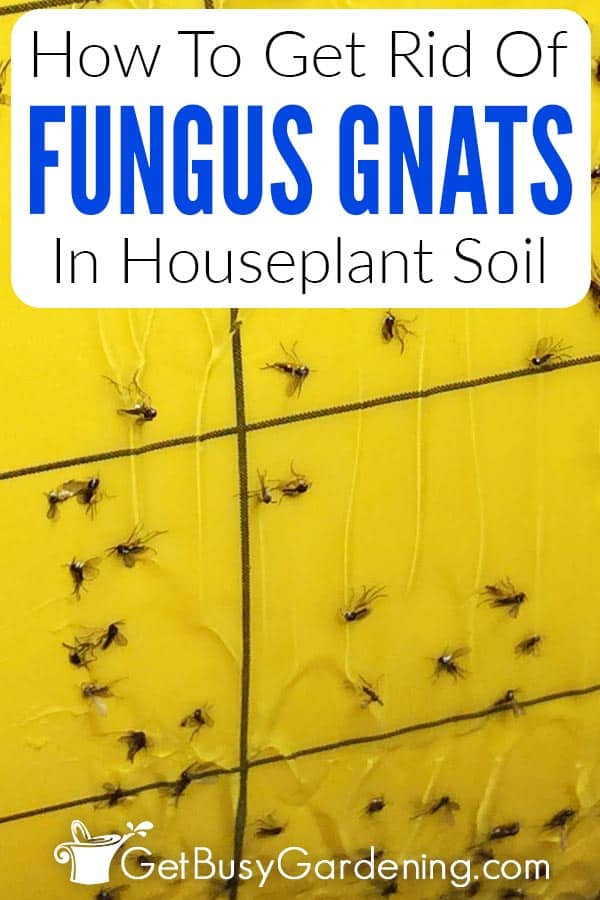
Dealing with fungus gnats in household plants can be a common nuisance, but I’m going to share some simple steps you can take to naturally eliminate fungus gnats—FOR GOOD! From adjusting watering habits to using natural remedies, getting rid of these pesky insects simply takes a bit of diligence and time.

The key to getting rid of fungus gnats is to eliminate the larvae. But it can be tricky to do this naturally. Since the adults only live for a few days, once all the larvae is dead, the infestation will go away pretty quickly.
This is easier said than done though. The adults can fly, jump, or crawl from one plant to the next, so it can be difficult to eradicate them.
So you have to be persistent in treating them, and ensure that you are diligent about keeping your houseplants healthy to prevent recurring outbreaks.
A Bit About Fungus Gnats
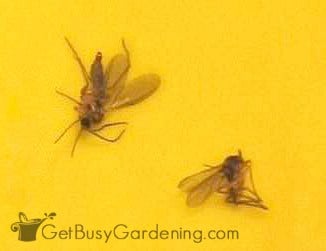
Fungus gnats are tiny black bugs that crawl on top of the soil and fly around your houseplants. They are the most common houseplant pest there is, and they can quickly infest your entire collection. Yuck!
Though the look very similar to fruit flies, they are not the same type of bug. You can read all about how to tell the difference between the two here, so you can make a positive ID.
Fungus Can Multiply Quickly!
There are 4 stages to the fungus gnat life cycle. In the right environment, they can multiply very quickly, and their full lifespan can happen in less than a month.
The adults only live for a week or so, but the females can lay hundreds of eggs during their life. So if you don’t take the right steps to eliminate them, their population can explode in a short amount of time.

9 Natural Fungus Gnat Treatments
There’s no need to resort to chemical pesticides, you can easily fight these pests using natural and organic treatment methods. For the quickest results, you should try all of these:
1. Proper Watering
The #1 reason fungus gnats get into your plants is from overwatering. The larvae thrive in wet soil, and they can’t survive when it’s dry.
So, the easiest and most effective method of eliminating them is to make sure you always water your houseplants correctly. The soil should feel dry to the touch, and never be saturated or soggy.
If you struggle with this, I highly recommend getting an inexpensive moisture gauge to make sure you get it right every time.
2. Water From The Bottom
Fungus gnat larvae live in the top 1 inch of the soil, which tends to stay pretty moist when you water plants from the top. So if you have persistent problems, then try watering from the bottom instead.
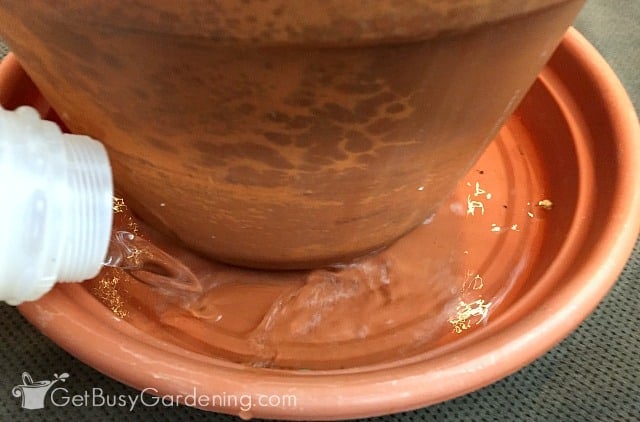
To do that, simply pour water into the drip tray or cache pot, and allow the plant to soak it up through the drainage holes in the bottom of the container.
Always dump out any remaining water after about 20-30 minutes, and never leave your plant soaking for longer than that.
3. Use Gnat Traps
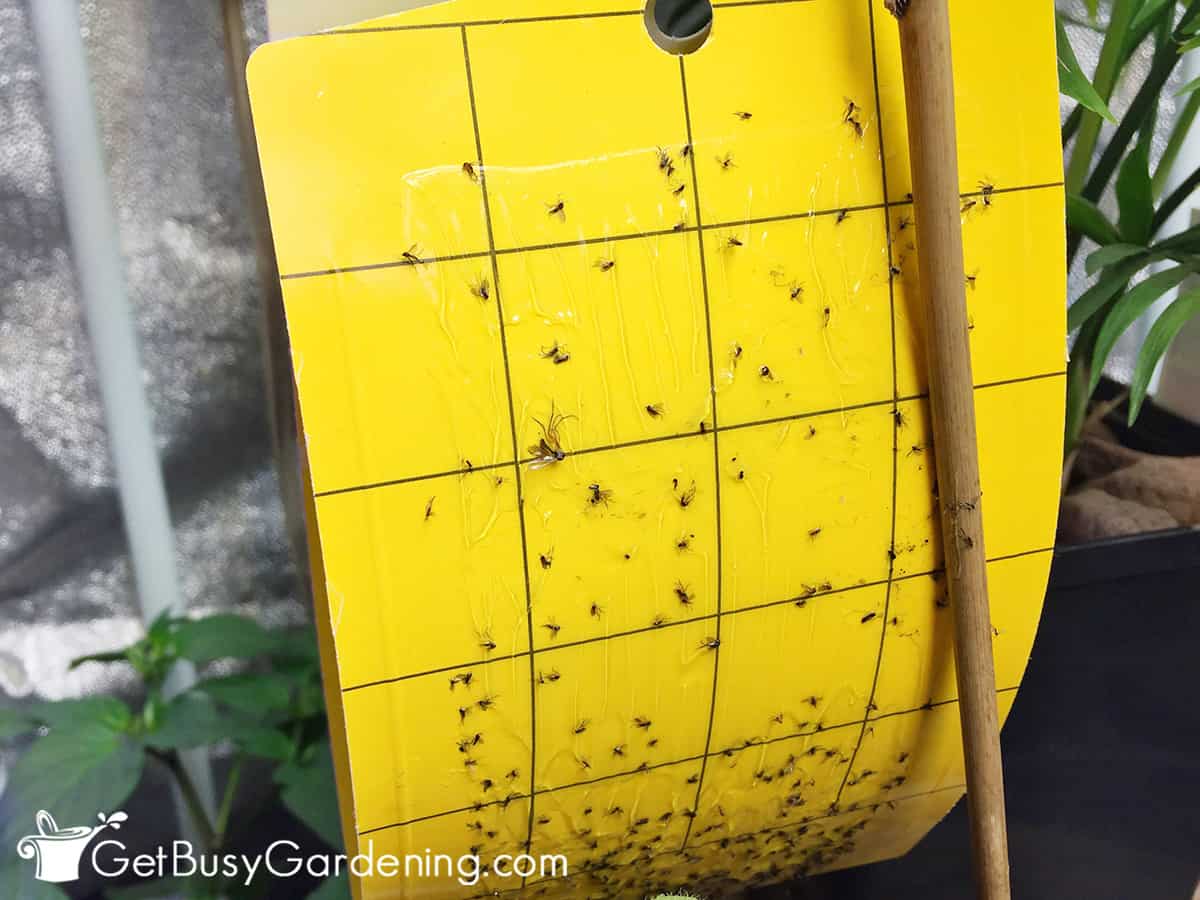
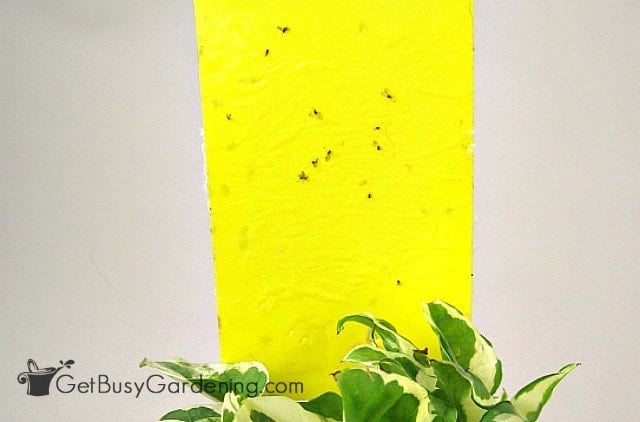
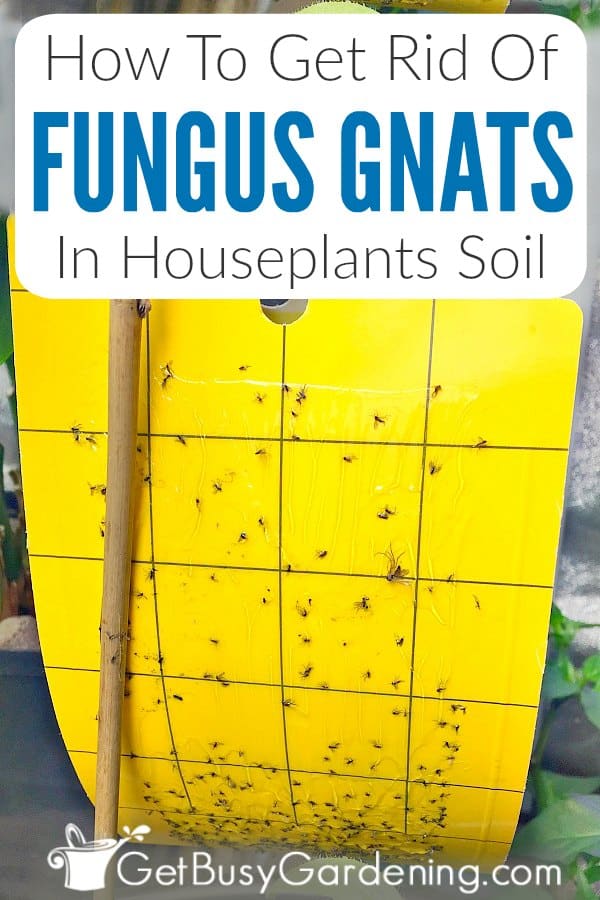
Putting a yellow sticky trap near your indoor plants is a super safe pest control method that will attract and capture the flying adults.
This only works to control the adult population, it will not take care of the problem at the source – the larvae.
But these traps will definitely prevent fungus gnats from flying around to other plants and prevent more larvae from being laid.
Try making your own DIY Fruit Fly Trap!
4. Use Organic Products
There are several organic products that you can pour over the top of the soil to help kill the gnat eggs, larvae, and pupa.
It might take a few applications to see results, and you also have to be careful not to overwater your plants in the process but they are natural. Here are a few of my favorites:
- Insecticidal soap – This will kill any bugs in the soil on contact. You could also make your own by mixing 1 teaspoon mild liquid soap with 1 liter of water.
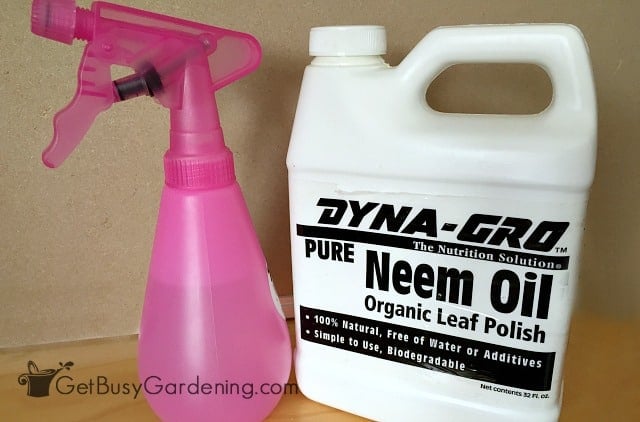
- Neem oil – This is a natural pesticide that works to kill houseplant pests over time, and it has a residual effect to help keep them away.
- Beneficial nematodes – These are microscopic organisms that will feed on the pupa and larvae, and you can simply add them to your watering can.
- Bacillus thuringiensis israelensis (BTI) – Also known as mosquito dunks or mosquito bits, BTI is a bacteria that’s only toxic to the larvae of bugs like fungus gnats. It takes some time for it to be effective but works.
Related Post: How To Use Neem Oil As Organic Pest Control
5. Remove Gnat Infested Soil Entirely
Remove the top inch of soil and replace it with fresh, sterile, and dry potting mix. This will get rid of most of the fungus gnat eggs, larvae, and pupa, and make it easier for you to gain the upper hand.
Just keep in mind that the eggs could still hatch and mature after you remove it from your houseplant, so make sure you take the infested soil outside to the trash right away.
6. Use Soil Covers
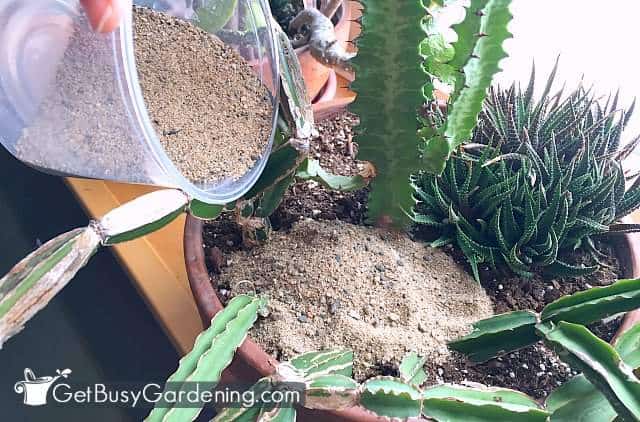
Rather than refreshing the top inch of soil, you can add a dry layer of fine sand, gravel, or crushed granite instead. This will help deter the females from laying eggs. Plus it creates a nice decorative touch.
Or you could try a barrier top dressing, which is a non-toxic product that is specifically made for eradicating fungus gnats.
7. Store Unused Soil In A Sealed Container
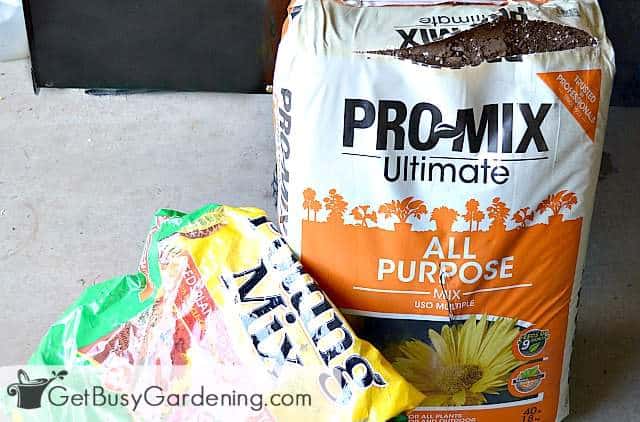
Bags of potting soil can become a breeding ground for fungus gnats. So it’s important to store any of your unused mediums in sealed containers, especially if you keep them inside the house.
Fungus gnats can’t survive without oxygen, so make sure the container is airtight. I store mine in five gallon buckets with Gamma seal lids on top.
8. Never Reuse Potting Soil
I know it’s tempting to pinch pennies by reusing soil when you repot your indoor plants or after one dies, but you’re just asking for trouble.
Used soil can harbor all sorts of pests and diseases, and can quickly cause an infestation. So it’s always best to use a fresh, sterile mix, and discard the old stuff.
Related Post: 9 Homemade Insecticides & Bug Sprays For Indoor Plants
9. Use Hydrogen Peroxide as Larvacide
Treating the soil with hydrogen peroxide is a natural and effective method. Try mixing 1 part hydrogen peroxide to 4 parts water and use it to wet the top inch. Keep in mind that this will only kill the larvae and pupa, and not the adults that are flying around your plant.
Other Natural Treatments To Try
I have also heard using baking powder, vinegar, coffee grinds, tea tree oil, lavender oil, garlic, parsley, cinnamon can be effective treatments for ridding of fungus gnats.
Where Do Fungus Gnats Come From?
Though indoor plant bugs can come from anywhere, here are the 4 most common ways that fungus gnats could have gotten into your house:
- From the soil of a new pre-infested plant.
- An infested bag of potting mix.
- Other plants that were outside during the summer.
- Through the screen of open windows or doors.
Related Post: How To Get Rid Of Houseplant Bugs Naturally
Common Questions About Fungus Gnats
While it is possible to get rid of fungus gnats, you have to be diligent with your preventative measures to keep them away permanently. The biggest problem is that they can easily come through window screens and doors. So unless you seal your home year round, it’s possible the fungus gnats will return at some point.
The short answer is no, fungus gnats will not kill your houseplants. They are usually just a nuisance and rarely destructive. Sometimes they can cause minor root damage if the infestation is heavy, but normally they only eat rotting plant material.
Everyone with indoor plants will have to fight fungus gnats at some point, it’s just a part of life. Recurring problems are difficult to prevent, and it can be very frustrating. Your best defense is to make sure you don’t overwater, properly store unused potting soil, and always maintain healthy houseplants.
If houseplant pests are driving you crazy, and you want to learn how to get rid of them once and for all, check out my Houseplant Pest Control eBook. It will help you identify common houseplant bugs, and show you exactly how to eradicate them before they kill your beloved plants. Download your copy today!
More About Houseplant Pests
- How To Debug Plants Before Bringing Them Indoors
- How To Get Rid Of Thrips On Indoor Plants
- How To Get Rid Of Spider Mites On Indoor Plants
- How To Get Rid Of Scale Insects On Houseplants
- How To Get Rid Of Whiteflies On Indoor Plants
- How To Get Rid Of Aphids On Houseplants
- How To Get Rid Of Mealybugs On Your Houseplants
Leave a comment below and share your tips for how to get rid of fungus gnats in houseplant soil.

Michele says
I found the following useful so far:
* removing about an inch of topsoil (seal and trash it)
( DO NOT ADD ANY NEW SOIL OR TOP COVER YET)
* Immediately soak top few inches of remaining soil 3% H2O2 (undiluted)
* Immediately separate plant from other plants in a room that:
* low humidity
* high air movement (fans)
* Place a mason jar filled 1/4 with a foamy mixture of warm water and 2 to 4 pumps of “SOFT SOAP – soothing aloe vera” beside plant to catch last of live adult gnats
Leave one week without further watering…….
Amy Andrychowicz says
Awesome, thanks for sharing your method of getting rid of fungus gnats! Sounds like have a good system.
Linda says
What’s the quantity of Dr. Bronner and need oil in water?
Amy Andrychowicz says
The short answer to your question is 1 1/2 teaspoon pure neem oil concentrate, 1 teaspoon Dr. Bronner’s mild liquid soap, and 1 liter of water. But, you may want to read my detailed post about how to use neem oil, which gives more details about the dosage, as well as my recipe for homemade neem oil spray here… How To Use Neem Oil Insecticide On Plants.
Aysha says
I have lots of fungus gnats around my houseplants. I just took the advice I read here and took an inch off the top and replaced it and then covered it with gravel. I used aquarium gravel. I’m new to anything plant related and I’m loving all the stuff I’m growing indoors. I also just planted some watercress, chilli and coriander seeds. Will they be able to come through the gravel?
Amy Andrychowicz says
Sorry to hear about your troubles with fungus gnats. I hope the gravel on top of the soil works for you. As for the seeds… I wouldn’t cover the soil with a thick layer of gravel, because it will probably negatively affect the growth of the seedlings. I would use a thinner layer of sand sand or some other lighter weight soil cover for them.
Bev says
This is the first time I have ever had these awful fungus knats in my plants and yes I could swear at them AND they do try to go up your nose,at night, when you sit down,,,, I will try some of the ideas everyone is sharing…..How do I keep in touch with every one and you Amy?
Amy Andrychowicz says
Bummer, sorry to hear you’re dealing with fungus gnats! Good luck, and I hope you’ll be able to get rid of them using these tips. To keep in touch, be sure to bookmark this page so you can easily find it later. You can always find me on social media too (you can find all the links in the footer of the site).
Shelley says
Hi, what amount of Dr Bronner soap to water ratio do you use?
Amy Andrychowicz says
I use 1 tsp of Dr. Bronner’s baby-mild liquid soap per 1 liter of water.
Monya Davison says
I think fungus gnats are eating and killing my indoor coleus. I have seen the gnats in the soil and when I disturb them, they fly away. The Get Busy Gardening website says that these gnats don’t kill the plants, but it looks like they’re eating the leaves and despite my spraying and watering with a weak solution of Dawn liquid soap, my coleus are dying. Help me!
Amy Andrychowicz says
Sorry to hear that your plant is infested with fungus gnats. Yes, it’s true that fungus gnats do not eat plant leaves. So, something else must be causing that damage. I would take a close look at the leaves to see if you can spot another type of pest that is eating them. If you could describe the damage you’re seeing, I could give you more details of the type of pest to look for.
Toni says
My brother-in-law suggests lighting candles for both fruit flies and fungus gnats to get rid of the live ones; to get to the source of the problem, the larvae, treat the soil. For fruit flies, I suggest washing fruits w/ a fruit wash and a brush when you bring them home, in case there an unhatched larvae on the fruit. Good luck.
I saw a lot of dead ones (fungus gnats)around the bathroom sink and had no idea that they were living and hatching in the drains. Thanks for that tip. I was about to throw out my plants.
Monya Davison says
I saw little flies around my indoor coleus plants. One plant had its roots gone, and the other plants had the fuzzy texture eaten off the tops of their leaves with the destruction varying in size from a grapefruit seed to a dime. I saw the little flies burrowing down in the soil and thought they must be fungus gnats. I have started spraying the soil with Neem Oil solution. I also am using fruit fly traps. I have not been able to completely eliminate the flies around the house and outside.
Even if I can prevent the gnats from eating anymore roots, I still need to figure out what’s eating the tops of the leaves. Do regular fruit flies eat leaves? Can I spray my coleus with the Neem Oil solution?
Amy Andrychowicz says
It sounds to me like your coleus plant is being overwatered. Fungus gnats are a sure sign over overwatering, and consistently soggy soil will also cause the roots to rot. Allow the soil to dry out more between waterings. As for the fuzzy stuff on the tops of the leaves… my guess is that is mold, but it could also be mealybugs. Fruit flies and fungus gnats don’t eat the leaves of plants.
Audrey O says
I just noticed these today after watering my newly repotted plants. Luckily, the plants were sitting in the sink, so I noticed the gnats crawling all over the sink, and immediately came to do a search. Thanks for all your help. I think I’m going to try a soil covering. Will Sphagnum moss work? Also, since I just watered it, can I remove the soil immediately, or do I need to let it dry out for a few days first?
Thanks again.
Amy Andrychowicz says
I wouldn’t recommend using sphagnum moss, that would just hold the moisture in the soil longer. I would let the soil dry out before removing any of it. If you remove it now, the gnats will just lay more eggs in the next layer of wet soil. Since you just repotted the plant, then the soil may have settled after watering it. So, if there’s room, you could add a layer of dry soil over the top. That will help dry out the top layer of soil faster. Good luck!
Bambam says
Thank You ! I almost got rid of my big beautiful Aloe plant.
Amy Andrychowicz says
Oh no! You’re welcome, glad I could help. It should be pretty easy to get rid of fungus gnats in your aloe plant because aloes prefer dry soil, and fungus gnats need moist soil to survive. If you’re keeping the soil moist enough for the fungus gnats to live, then your aloe plant will definitely suffer, and may eventually rot. Allow the soil to dry out completely between waterings, which will be better for the plant, and the fungus gnats should disappear.
Claire says
Hi. I’m really curious as to how you keep fungus/mold from growing on your unused soil if kept in an airtight bucket? There is usually dampness to the soil when you purchase it and use it. If transferring to a bucket without holes, how does it not get fuzzy mold or issues? Please and thank you!
Amy Andrychowicz says
I had that happen to a bucket of soil only once before, but it’s not very common. If the soil is already contaminated with fungus or mold, then yes, it can grow in there. You could allow the soil to dry out a bit before sealing the bucket, and that may help.
Tracy says
I have these in my Turtle tank and cannot kill them! I have tried everything! Any suggestions?
Amy Andrychowicz says
Humm, that’s a tough one since the turtle tank stays moist all the time. I would empty it out and clean it really good for starters, and toss out any material that could be used as a breeding ground for the fungus gnats. Do you have plants and soil in the tank at all?
Pepe says
They actually kill plants. Especially small ones with weak roots. I lost like 5 of my plants.
Amy Andrychowicz says
It’s more likely that your plants died from being overwatered rather than the fungus gnats killing them.
Z says
Thank you! They are very annoying, but my plants are outside on my patio, it’s a “container garden”. I let the plants dry out, I removed 1 in of soil it seems they’re deeper than that, also tried castile soap, water,and a bit of cayenne pepper but the gnats still didn’t leave lol smh. I’ll try watering from the bottom, do you know if neem oil does anything for them?
Also, thank you for this post it helps to be able to chat with people that have the same problem to come up with solutions.
Amy Andrychowicz says
You’re welcome, glad I could help! Yes, neem oil works to kill fungus gnats.
Z says
Hello I’m new to this gardening thing I have veggie and fruit plants and these gnats won’t leave my tomatoes or strawberries alone, I don’t know if its killing my plants because they are still producing but some of the leaves are dying off. I’ve been adding castile soap with a dash of cayenne powder and water it seem like it was working but now there are so many I feel I should throw my plants out and start over, I don’t know what else to do. please help if you can.
Amy Andrychowicz says
Don’t worry, the fungus gnats won’t kill your plants, they are only a nuisance. However, soggy soil is a breeding ground for fungus gnats, and I’m worried that you’re overwatering your plants (which will kill them over time). So, allow the soil to dry out more between waterings, you never want it to stay wet. You can also water the plants from the bottom, which will help to keep the top layer of soil dry. Hopefully you’ll be moving those plants outside to the garden soon, and then you won’t have to worry about those annoying gnats anymore.
Johnny West says
A long time ago, I read that you could get rid of ALL pests in soil by baking the soil in an oven for 2 hours at 350 degrees. It takes time but if you are a picky gardener, it truly works, especially helpful with seedlings because it gets rid of all the fungus types that kill seedlings (damp-off, etc.) and all the insects that may be lurking. I do this with any soil, especially if I re-use soil (which saves me money in the long run). Nothing living can withstand 350 degrees for 2 hours. It isn’t a bad smell and you have to do it with whatever quantities you can fit in the oven in a pan at a time. I’m going to use the sand method as well as the peroxide spray, have been using some dish soap spray with some luck.
Amy Andrychowicz says
Thanks for sharing your tip about baking the soil. I’ve never tried that myself, so I can’t speak to it.
Tara says
My review consists of my on-going battle with fungus gnats. I had no clue one could get infestation in one’s home when it is zero degrees outside, crazy! I also had no idea that potting soil comes w/larvae within it. I’m a month into treatment and still they exist. Should i go over what I’ve done so others will know there is a treatment BUT will take months to eradicate these little devils? Sand on the soil, what a joke, what you need is a larvicide that contains Bacillus thuningiensis, subsp. israelensis or Bti in it. Safe for plants, humans and pets, but kills fungus gnat larvae. The goal is to go after the larvae, as they lay over 300 eggs in top 2 inches of the soil per landing, YUK! You also need yellow sticky traps to catch adults. This process will work, but please know not overnight. My plants are huge tropical plants or I would’ve just thrown them out and started over. The yellow sticky traps catch adults that land on them and they die. This will also tell you how the treatment is working. As the eggs die off, the theory is, the adults will wane and get caught on tape and die. This week will be my 4th treatment (drench) overall and third with BTi. First soil drench was w/hydrogen peroxide. Anyway, once this drench is complete and soil on top dried, i’ll be removing the top 2 inches of soil where dead larvae are. However, what scares me is I need to back fill these plants with new potting soil! Dare I? The entire infestation could start completely over again? Help! I NEED POTTING SOIL NOT CONTAMINATED W/FUNGUS GNAT LARVAE! Thoughts??? maybe I’ll nuke the soil before using it or maybe the zero temps killed the eggs as left over soil has been stored in garage???
Amy Andrychowicz says
Thanks for sharing your thoughts and experience. The sub zero temps definitely would kill any soil gnat larvae in the soil. I also recommend storing your unused soil in a sealed container.
Tara says
And the battle continues! Will try storing potting soil in air tight container as well, thank you for suggestion. I am still using BTi but have added neem oil fungicide spray to the regime. I am spraying the top soil w/Neem oil after BTi drench plus even more yellow sticky traps. Somethings bound to change eventually, fingers crossed 😉
Amy Andrychowicz says
Have you considered giving GnatNix a try? It’s a soil cover that is specifically made for getting rid of fungus gnats, and might be just what you need to finally win the battle.
Tara says
No, not yet, but will try. I saw reviews that said GnatNix is quite messy, but at this point I’m willing to put up with whatever mess there is to end this. Thank you for your support and ideas, much appreciate them, sort of helps talk me off the ‘ledge’ so-to-speak, LOL.
Amy Andrychowicz says
You’re welcome, good luck!
Lissa says
Let me just say, I know a LOT (like a warehouse of useless information re: fruit flies and gnats), and I’m the all organic, I have pets and a special needs child, so I’m wicked uptight about what I put on my plates, indoor and out. More importantly, I HATE bugs. So when these black annoying flies popped up, I went bananas. They seem to propagate faster than rabbits, and while I might have clutter, I DO NOT have BUGS. Except. Now, I do. First, I took out the top two inches of soil (wearing fabulously pretty RUBBER gloves – fabric ones tend to keep the dreadful yet hardy hangers-on little larvae bastards), replaced with Clay based all natural kitty litter. Good news! The kitties hate this litter, so they’re finally leaving my plants alone! Clay isn’t terribly inviting to these gnats; so step one, kinda complete. Secondly, water with peroxide. I do love me some peroxide! Added two – three drops of Dawn liquid – straight up blue kind. Broke up cinnamon sticks, (again, keeps kitties at bay) and, eh, why not. Someone said it would help. We shall see. Next up: coffee grounds. Sprinkle liberally over the top of each plants soil.
Ignore Hubby who thought I was nuts keeping my potting soil outside in the freezing New England temps. Hit up a pal for his kitty litter boxes (we don’t use the same kind) – works a treat! Airtight, water proof, I even painted mine pretty colors. These guys do not hibernate. They die. Taking all 200-300 of their babies, per fly with them.
Okay, stay with me here: for watering concerns, I took the Keurig little coffee pod things, moved a used pod around in there, allowing the big sharp needle to poke more than one whole in the bottom of plastic pod-thing. Left the filter liner in pod. Buried it under the litter, with a marker, (two in bigger plants, or however many you think you might need) and water ONLY there. Water goes below Breeding Ground.
I won’t say I’m Bug Free….but no war was won in one battle!
Amy Andrychowicz says
Thanks for sharing all of the things you’ve tried, and your experience with fighting fungus gnats! I love your mini DIY plant watering devices that you made out of the Keurig pods – what a great idea! I’m not sure if coffee grounds does anything to get rid of fungus gnats, and I wouldn’t recommend using them on indoor plants. They can mold and cause other problems on indoor plants. Have you tried using neem oil yet? Tara mentioned in that post that the neem oil worked like a charm for her, and she’s fungus gnat free now!
Maria Mane says
I always go for a natural solution to everything that happens in my garden. I want everything I grow to be as organic and natural as possible. I use vanilla extract to chase them away. I know, it’s weird. I also thought that when I read it on ohealthyeah.com/fungus-gnats , but it works! They also have some nice homemade natural repellants that can work good if you want to give it a try. Has anyone else used vanilla extract before?
Amy Andrychowicz says
Thanks for sharing the tip about vanilla extract deterring fungus gnats! I’ve never heard of that, but what a great solution. It would smell lovely! I’ll definitely have to give it a try if I ever have a fungus gnat problem again. 🙂