


Overwintering begonias is easy, and a great way to save your favorite varieties every year.
In this post, I’ll talk about three different ways to do it. Then I’ll show you how to dig and store the tubers, leave them in the ground, or keep them in their pots.
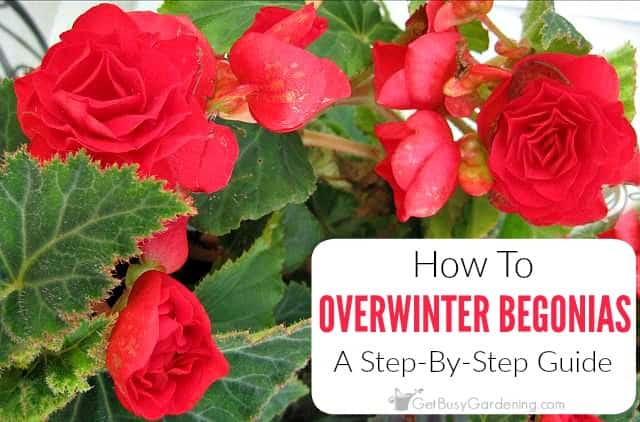

Though they are most commonly sold as annuals, you can keep begonias over winter and enjoy them year after year.
This is great news, because they’re so pretty, and I hate to watch them die in the fall. Plus it saves you money, since you won’t have to buy new ones every spring.
It’s easy to overwinter begonias, and there are a few ways to do it. In this detailed guide, I will share everything you need to know in order to be successful.
I’ll explain three different methods you can try, and show you exactly how to save begonias over winter.
Including leaving them in the ground, digging up and storing the tubers, or keeping them as indoor plants.
Will Begonias Survive The Winter?
Yes, with the proper care, begonias will survive the winter. Though they are most commonly used as annuals, they’re actually tender perennials that can live for many years.
In the right climate, they can even stay in the ground through winter. But if yours in not hardy to the area that you live in, then you’ll have to bring them indoors in the fall.
Related Post: How To Overwinter Plants: The Complete Guide
Methods Of Overwintering Begonias
The method you choose for overwintering begonias will depend on a few things. Where you planted them, where you live, and what type you have. Here are your three options…
- Leaving begonias in the ground over winter
- Overwintering begonias in pots
- Digging up and storing begonias for winter
How To Overwinter Begonias
Before I go into the details of the different methods you can use for overwintering begonias, it’s important to understand that there are two distinct types.
One type has tubers (also called bulbs), and the other does not (referred to as “fibrous”). So, before you can decide how to keep them over winter, check the tag to see if yours is tuberous or fibrous.
1. Leaving Begonias In The Ground
As long as the type of begonia you have is hardy in your climate, then you can overwinter them right in the ground. If they have tubers, then they’ll survive as long it stays above 50°F.
During the winter, the foliage on tuberous varieties may die back if the bulb goes dormant. In that case, cut it down to the ground.
2. Overwintering Begonias In Pots
If your begonias are in a container, you can overwinter them right in the pot. Just make sure to bring them indoors before the temperature drops below 60°F.
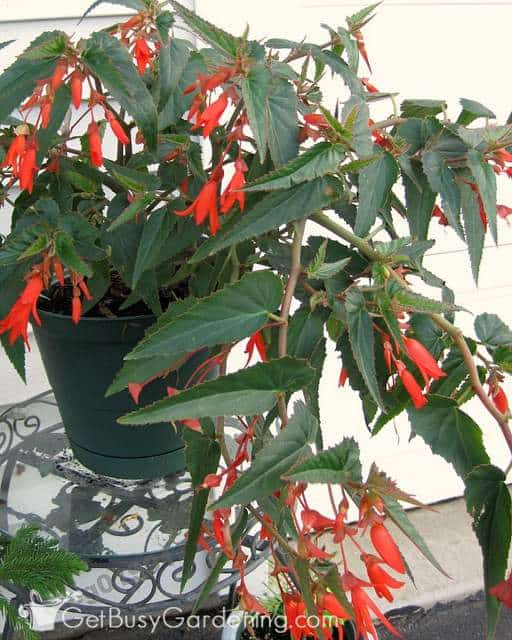
Fibrous varieties like rex, angel wing, and wax, can be kept alive as a houseplant through the winter. But it’s much easier to allow the ones that have bulbs, like rieger, to naturally go dormant.
3. Digging & Storing Begonias For Winter
If your tuberous begonias are planted in your garden, you can dig them up and store them over winter. But for that to be successful, you must lift them before the first frost.
Leaving them in the ground too long will result in frost damage, which means they probably won’t survive in storage.
Preparing Begonias For Winter Storage
In this section I am going to give you all the details about how to dig up begonia tubers, and what you need to do in order to successfully store them for winter.
If you discover that yours doesn’t have tubers, you can skip the next few sections, and learn about how to keep them as a houseplant below instead.
When To Lift Begonia Tubers
Since they are not frost hardy, you’ll need to dig up your begonia tubers before it gets too cold outside. Ideally, you should lift them before it gets below 50°F.
Don’t worry if the foliage is still alive, that’s normal. It will naturally die back as the bulbs start to go dormant.
How To Dig Up Begonias
I find it easiest to dig up my begonias using a garden fork, but a spade shovel would also work.
It’s important to dig at least one foot away from the main stem, or you could wind up cutting or damaging the tubers.
Once you pop them out of the ground, gently shake or brush off the excess dirt. Don’t rinse it off though, it’s better to leave a little extra soil on them than risk having the bulbs be too wet.
Curing Begonia Tubers Before Overwintering
For best results, you should cure (dry) begonia tubers before overwintering them. That way, there’s less risk of them rotting or molding.
First check to make sure none of them were damaged when you dug them up, and also look for signs of rot. Rotting or damaged bulbs should be discarded, as they won’t survive the winter.
Allow them to cure for a week or so before storing. To do that, simply spread them out on a shelf or the ground in an above freezing and dry location.
How To Store Begonia Tubers Over Winter
Storing begonias in the right place over winter is important for the best success. If yours are in pots, then you can skip the section about packing them up, because you can just store them right in the container.
Packing Begonia Tubers For Storage
Once they have had time to cure, I store my begonia tubers in a cardboard box filled with a dry packing material.
You could use a paper bag to store them instead, or something similar. But don’t use anything made out of plastic because it holds too much moisture.
I usually use peat moss, pet bedding, or coco coir as my packing medium. But, you could use saw dust, wood chips, or a mix of perlite and vermiculite.
Place each tuber into the box so they aren’t touching each other, then fill the empty spaces with your packing material. As long as they aren’t touching, you can layer several bulbs into each box.
Where To Store Begonias In Winter
Whether you packed your begonia tubers in a box, or kept them in their pots, where you store them for winter is the same.
Keep them in a cool, dry, dark location, where the temperature stays between 50-60°F.
Some examples of good places to store them are an unfinished basement, a heated garage, or even a root cellar if you have one. Learn all about storing bulbs for winter here.
Begonia Winter Care Tips
The specific details of caring for begonias in the winter depends on whether yours is tuberous or fibrous. Below are some quick tips for both. You can learn all about how to grow begonias here.
Winter Care Of Tuberous Begonias
If you’re overwintering tuberous begonias in pots, then water sparingly (or not at all) until spring. Take great care not overwater them, or the bulbs will rot.
They may continue to send out new growth during the winter, but this will be spindly and weak. If that happens, cut off the weak sprouts as they appear, and stop watering it all together.
For those packed in boxes, just peek at them every now and then to make sure none of them are rotting or molding. If you find any that are, toss them out before it can spread to the others.
Fibrous Begonia Winter Care
Caring for fibrous begonias over winter is very similar to your other houseplants. Put them in a place where they get bright, indirect sunlight.
Keep the soil consistently moist, but take care not to overwater them or the roots will rot. Make sure they stay away from any heat sources, as they prefer indoor temps between 65-75 °F.
Related Post: How To Propagate Begonias In Water Or Soil
Moving Begonias Back Outside In The Spring
After overwintering begonias indoors, you might be very antsy to move them back outside in the spring. But, in order for all of your efforts to pay off, you must move them back out at the right time.
When Move Begonias Back Outside
Once all chance of frost has passed in the spring, it’s safe to move your begonias back outside. If you kept them alive all winter, then you’ll need to slowly acclimate them back to living outdoors.
Start by placing them in a full shade spot where they’re protected from strong wind and weather. Then slowly move them to their permanent location outside over the course of a couple of weeks.
When To Plant Begonia Tubers
On the other hand, if you overwintered begonia tubers, then you should wait to replant them in your garden until the soil has warmed to 60°F. Use a handy soil thermometer to check it.
You can start them indoors 6-8 weeks before you want to plant them outside. Soaking them in warm water or a compost tea solution can help to break their dormancy faster.
For potted bulbs, move the container to a bright location 6-8 weeks before you want to move it outside, and begin watering it.
Allow any excess water to drain from the pot, and add bottom heat to help wake it up faster.
FAQs About Overwintering Begonias
In this section, I’ll answer some of the most frequently asked questions about overwintering begonias. If you can’t find the answer to yours here, ask it in the comments below.
Can begonias grow indoors over winter?
Yes, begonias can grow indoors over winter. Non-tuberous (aka: fibrous) varieties can easily be kept as houseplants.
However, the ones that have bulbs will naturally go dormant during the winter. So all of the leaves and flowers will drop off.
Can you leave begonias in the garden over winter?
You can leave begonias in the garden over winter if the type you have is hardy in your zone, or it never gets below 50°F outside. Otherwise they must be brought indoors.
How long can you store begonia tubers?
You can store begonia tubers for several months. However, don’t try to keep them in storage for too long, or they will eventually dry out and die. It’s best to plant them every year, even if you don’t get to it until later in the summer.
Can I leave begonias in pots over winter?
Yes, you can overwinter begonias in pots. Fibrous types can be kept as a houseplant, while tuberous varieties should be stored dormant in a cool, dark location.
What is the best way to overwinter begonias?
The best way to overwinter begonias depends on the type you have. If you have a tuberous variety, then it’s best to allow them to go dormant and store the bulbs, all other types make excellent houseplants during the winter.
Can you keep annual begonias over winter?
Yes you can keep annual begonias over winter. They are sold as annuals but are actually tender perennials that will live for many years if you bring them indoors during the winter.
Overwintering begonias is easy, and it’s a great way to save your favorite varieties every year. And now that you know how to store tuberous begonias, you can start a collection!

If you want to learn all there is to know about maintaining healthy indoor plants, then you need my Houseplant Care eBook. It will show you everything you need to know about how to keep every plant in your home thriving. Download your copy now!
More Posts About Overwintering Plants
- How To Overwinter Coleus Plants Indoors
- How To Overwinter Brugmansia Plants Indoors
- How To Overwinter Sweet Potato Vines Indoors
- Overwintering Dahlias: How To Dig & Store The Tubers
- How To Overwinter Caladium Bulbs
Share your tips for overwintering begonias, or for how to store begonia tubers in the comments below.

James says
I live in 9b zone in Florida, is it okay to place tubers in hydrator pan in fridge over winter? Obviously, in Florida we never stay at the 40• temperature more than a few sparse days a year. Also there are no garages or cool places like a cellar, either.
Amy Andrychowicz says
You could keep your begonia tubers in your refrigerator over winter, but definitely be careful because it can get too cold for them. The ideal storage temperature is between 40-50°F, and the tubers should never freeze. I would definitely you wrap them up good, and then monitor the temps in your hydrator pan very closely.
Theresa says
When I store my tuberous begonias overwinter in a box, do I cut off all the leaves and stem? If I store some in their pots, do I leave the stem and leaves on? Thank you.
Amy Andrychowicz says
Yes, you can cut off all of the leaves and stems on your tuberous begonias you plan to store in a box. As for the potted ones, they will eventually drop all of the foliage on their own, especially if you stop watering and put them in the dark. So you can either remove it now or wait until it dies back on its own.
Laurie says
Thank you. I wondered about the leaves also.
Julie Ann Shafley says
How can I tell if my begonia is fibrous or tuberous?
Amy Andrychowicz says
The best way to know for sure if your begonia is fibrous or tuberous is to check to see have tubers (aka: bulbs) or just roots. You can usually just brush away the soil or gently dig down an inch or so to find them. Otherwise, you can slide the rootball out of the pot to check for tubers, they’re usually pretty obvious.
Mary Hagen says
I have 2 large planters of fibrous begonias that will not fit in my house over the winter. Can I put them in a unheated garage? If so do I cut them back? How often should they be watered? Thank you
Amy Andrychowicz says
As long as the temperature stays above 50°F your fibrous begonias should be ok, but ideally it should stay between 65-75°F. They will also need bright light to survive the winter, so you’ll either need a window to put them in or a grow light. You can prune them back for size, but don’t cut them all the way down to the soil.
Christina McGowan says
I just got a tuberous begonia in a pot, so I’ll try to save it and overwinter it. When spring time comes, do I leave it in the pot or do I have to transplant it to another pot?
Amy Andrychowicz says
You can just leave your overwintered tuberous begonia right in the pot, as long as it’s not root-bound. I leave mine in the same pot for years, until they outgrow it, and then I repot them into a larger one.