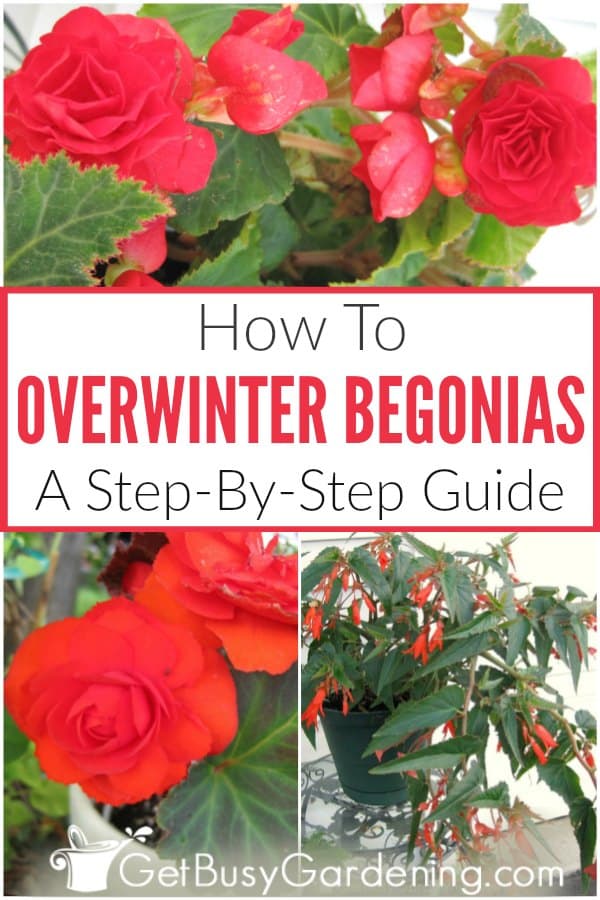
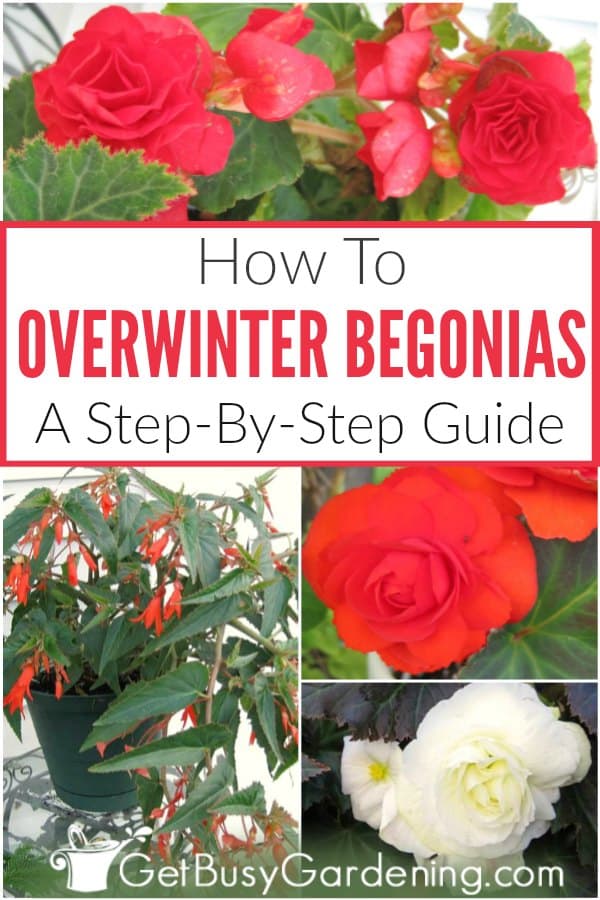
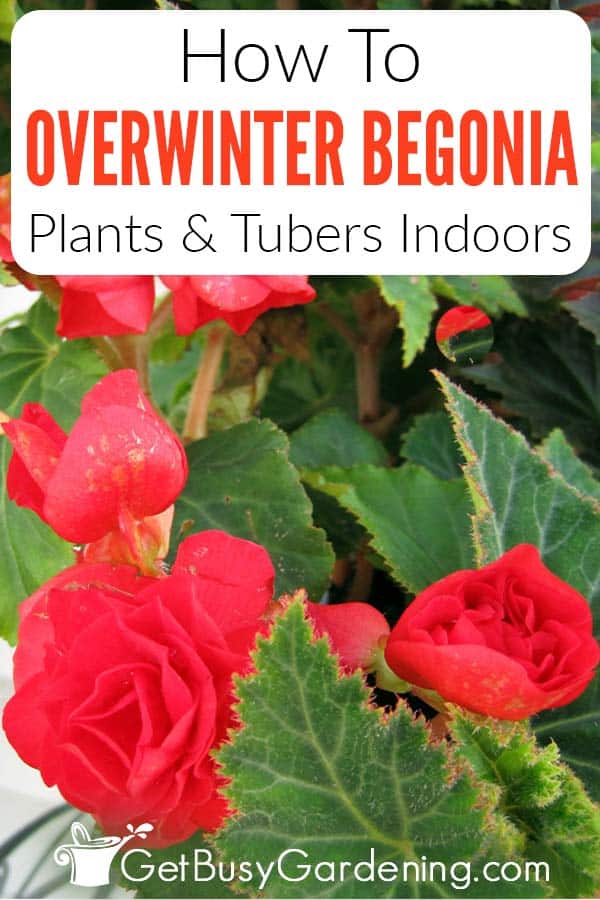

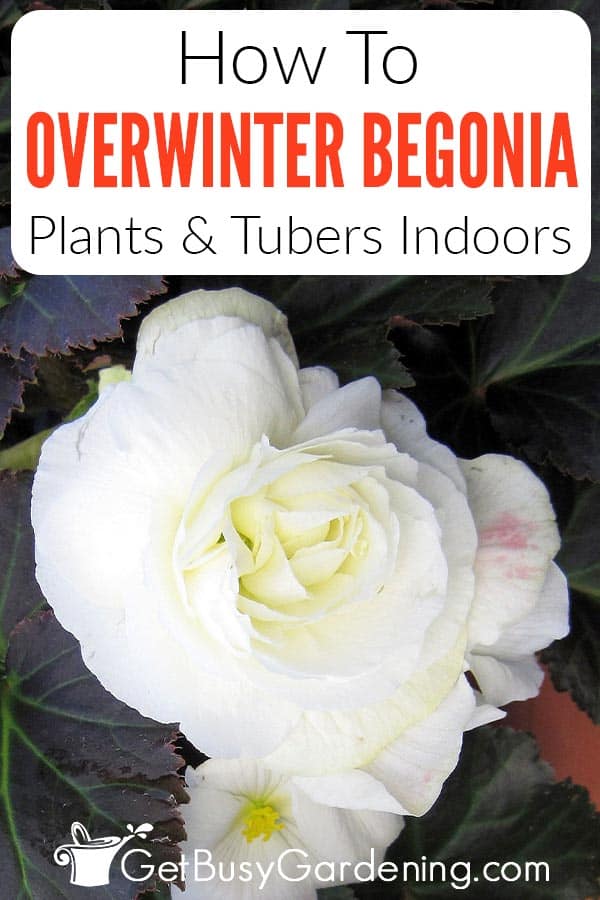
Overwintering begonias is easy, and a great way to save your favorite varieties every year.
In this post, I’ll talk about three different ways to do it. Then I’ll show you how to dig and store the tubers, leave them in the ground, or keep them in their pots.

Though they are most commonly sold as annuals, you can keep begonias over winter and enjoy them year after year.
This is great news, because they’re so pretty, and I hate to watch them die in the fall. Plus it saves you money, since you won’t have to buy new ones every spring.
It’s easy to overwinter begonias, and there are a few ways to do it. In this detailed guide, I will share everything you need to know in order to be successful.
I’ll explain three different methods you can try, and show you exactly how to save begonias over winter.
Including leaving them in the ground, digging up and storing the tubers, or keeping them as indoor plants.
Will Begonias Survive The Winter?
Yes, with the proper care, begonias will survive the winter. Though they are most commonly used as annuals, they’re actually tender perennials that can live for many years.
In the right climate, they can even stay in the ground through winter. But if yours in not hardy to the area that you live in, then you’ll have to bring them indoors in the fall.
Related Post: How To Overwinter Plants: The Complete Guide
Methods Of Overwintering Begonias
The method you choose for overwintering begonias will depend on a few things. Where you planted them, where you live, and what type you have. Here are your three options…
- Leaving begonias in the ground over winter
- Overwintering begonias in pots
- Digging up and storing begonias for winter
How To Overwinter Begonias
Before I go into the details of the different methods you can use for overwintering begonias, it’s important to understand that there are two distinct types.
One type has tubers (also called bulbs), and the other does not (referred to as “fibrous”). So, before you can decide how to keep them over winter, check the tag to see if yours is tuberous or fibrous.
1. Leaving Begonias In The Ground
As long as the type of begonia you have is hardy in your climate, then you can overwinter them right in the ground. If they have tubers, then they’ll survive as long it stays above 50°F.
During the winter, the foliage on tuberous varieties may die back if the bulb goes dormant. In that case, cut it down to the ground.
2. Overwintering Begonias In Pots
If your begonias are in a container, you can overwinter them right in the pot. Just make sure to bring them indoors before the temperature drops below 60°F.
Fibrous varieties like rex, angel wing, and wax, can be kept alive as a houseplant through the winter. But it’s much easier to allow the ones that have bulbs, like rieger, to naturally go dormant.
3. Digging & Storing Begonias For Winter
If your tuberous begonias are planted in your garden, you can dig them up and store them over winter. But for that to be successful, you must lift them before the first frost.
Leaving them in the ground too long will result in frost damage, which means they probably won’t survive in storage.
Preparing Begonias For Winter Storage
In this section I am going to give you all the details about how to dig up begonia tubers, and what you need to do in order to successfully store them for winter.
If you discover that yours doesn’t have tubers, you can skip the next few sections, and learn about how to keep them as a houseplant below instead.
When To Lift Begonia Tubers
Since they are not frost hardy, you’ll need to dig up your begonia tubers before it gets too cold outside. Ideally, you should lift them before it gets below 50°F.
Don’t worry if the foliage is still alive, that’s normal. It will naturally die back as the bulbs start to go dormant.
How To Dig Up Begonias
I find it easiest to dig up my begonias using a garden fork, but a spade shovel would also work.
It’s important to dig at least one foot away from the main stem, or you could wind up cutting or damaging the tubers.
Once you pop them out of the ground, gently shake or brush off the excess dirt. Don’t rinse it off though, it’s better to leave a little extra soil on them than risk having the bulbs be too wet.
Curing Begonia Tubers Before Overwintering
For best results, you should cure (dry) begonia tubers before overwintering them. That way, there’s less risk of them rotting or molding.
First check to make sure none of them were damaged when you dug them up, and also look for signs of rot. Rotting or damaged bulbs should be discarded, as they won’t survive the winter.
Allow them to cure for a week or so before storing. To do that, simply spread them out on a shelf or the ground in an above freezing and dry location.
How To Store Begonia Tubers Over Winter
Storing begonias in the right place over winter is important for the best success. If yours are in pots, then you can skip the section about packing them up, because you can just store them right in the container.
Packing Begonia Tubers For Storage
Once they have had time to cure, I store my begonia tubers in a cardboard box filled with a dry packing material.
You could use a paper bag to store them instead, or something similar. But don’t use anything made out of plastic because it holds too much moisture.
I usually use peat moss, pet bedding, or coco coir as my packing medium. But, you could use saw dust, wood chips, or a mix of perlite and vermiculite.
Place each tuber into the box so they aren’t touching each other, then fill the empty spaces with your packing material. As long as they aren’t touching, you can layer several bulbs into each box.
Where To Store Begonias In Winter
Whether you packed your begonia tubers in a box, or kept them in their pots, where you store them for winter is the same.
Keep them in a cool, dry, dark location, where the temperature stays between 50-60°F.
Some examples of good places to store them are an unfinished basement, a heated garage, or even a root cellar if you have one. Learn all about storing bulbs for winter here.
Begonia Winter Care Tips
The specific details of caring for begonias in the winter depends on whether yours is tuberous or fibrous. Below are some quick tips for both. You can learn all about how to grow begonias here.
Winter Care Of Tuberous Begonias
If you’re overwintering tuberous begonias in pots, then water sparingly (or not at all) until spring. Take great care not overwater them, or the bulbs will rot.
They may continue to send out new growth during the winter, but this will be spindly and weak. If that happens, cut off the weak sprouts as they appear, and stop watering it all together.
For those packed in boxes, just peek at them every now and then to make sure none of them are rotting or molding. If you find any that are, toss them out before it can spread to the others.
Fibrous Begonia Winter Care
Caring for fibrous begonias over winter is very similar to your other houseplants. Put them in a place where they get bright, indirect sunlight.
Keep the soil consistently moist, but take care not to overwater them or the roots will rot. Make sure they stay away from any heat sources, as they prefer indoor temps between 65-75 °F.
Related Post: How To Propagate Begonias In Water Or Soil
Moving Begonias Back Outside In The Spring
After overwintering begonias indoors, you might be very antsy to move them back outside in the spring. But, in order for all of your efforts to pay off, you must move them back out at the right time.
When Move Begonias Back Outside
Once all chance of frost has passed in the spring, it’s safe to move your begonias back outside. If you kept them alive all winter, then you’ll need to slowly acclimate them back to living outdoors.
Start by placing them in a full shade spot where they’re protected from strong wind and weather. Then slowly move them to their permanent location outside over the course of a couple of weeks.
When To Plant Begonia Tubers
On the other hand, if you overwintered begonia tubers, then you should wait to replant them in your garden until the soil has warmed to 60°F. Use a handy soil thermometer to check it.
You can start them indoors 6-8 weeks before you want to plant them outside. Soaking them in warm water or a compost tea solution can help to break their dormancy faster.
For potted bulbs, move the container to a bright location 6-8 weeks before you want to move it outside, and begin watering it.
Allow any excess water to drain from the pot, and add bottom heat to help wake it up faster.
FAQs About Overwintering Begonias
In this section, I’ll answer some of the most frequently asked questions about overwintering begonias. If you can’t find the answer to yours here, ask it in the comments below.
Can begonias grow indoors over winter?
Yes, begonias can grow indoors over winter. Non-tuberous (aka: fibrous) varieties can easily be kept as houseplants.
However, the ones that have bulbs will naturally go dormant during the winter. So all of the leaves and flowers will drop off.
Can you leave begonias in the garden over winter?
You can leave begonias in the garden over winter if the type you have is hardy in your zone, or it never gets below 50°F outside. Otherwise they must be brought indoors.
How long can you store begonia tubers?
You can store begonia tubers for several months. However, don’t try to keep them in storage for too long, or they will eventually dry out and die. It’s best to plant them every year, even if you don’t get to it until later in the summer.
Can I leave begonias in pots over winter?
Yes, you can overwinter begonias in pots. Fibrous types can be kept as a houseplant, while tuberous varieties should be stored dormant in a cool, dark location.
What is the best way to overwinter begonias?
The best way to overwinter begonias depends on the type you have. If you have a tuberous variety, then it’s best to allow them to go dormant and store the bulbs, all other types make excellent houseplants during the winter.
Can you keep annual begonias over winter?
Yes you can keep annual begonias over winter. They are sold as annuals but are actually tender perennials that will live for many years if you bring them indoors during the winter.
Overwintering begonias is easy, and it’s a great way to save your favorite varieties every year. And now that you know how to store tuberous begonias, you can start a collection!

If you want to learn all there is to know about maintaining healthy indoor plants, then you need my Houseplant Care eBook. It will show you everything you need to know about how to keep every plant in your home thriving. Download your copy now!
More Posts About Overwintering Plants
- How To Overwinter Coleus Plants Indoors
- How To Overwinter Brugmansia Plants Indoors
- How To Overwinter Sweet Potato Vines Indoors
- Overwintering Dahlias: How To Dig & Store The Tubers
- How To Overwinter Caladium Bulbs
Share your tips for overwintering begonias, or for how to store begonia tubers in the comments below.

Bonnie Sisley says
I have kept a fibrous begonia over the winter. It is now more than ;ft high, like a small bush. The leaves and flowers are
near the end of the stalk and no new leaves on the lower stalk. Will this change after fertilizer and moving outside in late May? I am concerned that nit will die if I cut it back. I a, thinking of planting in a shady area to see how it does. Any comments, please.
Amy Andrychowicz says
The best way to get your leggy begonia full again is to prune it. If you’re too nervous to do it, then I recommend waiting until you move it back outside, and then cut back a few branches only. Once those branches start to get new leaves, then you can cut back a few more, and so on. Definitely wait to plant it into your garden until it has fully recovered from being indoors, and it starts putting on vigorous new growth.
Lindy says
When bringing begonias out of winter storage in pots, several of the bulb crowns seem to be above the soil level. Is it imperative to repot or just put new soil on top of the crowns or is crown visibility ok – or what is your suggestion please. Thank you so much.
Amy Andrychowicz says
If there is room in the pot, you can just cover your begonia bulbs with fresh soil. Otherwise you could repot them if you’d like, spring is the best time for that. 🙂
Cherry says
Thank you for the info. I live in Vermont and unfortunately it has frosted several times. I’m taking her in today but probably lost her. 🥺
Amy Andrychowicz says
If your begonia has tubers, then they should survive just fine dormant over winter, even after a few frosts. Some fibrous types are also hardy enough to survive frost, so you never know. 🙂
Pamela says
I am in the UK and have beautiful, huge trailing and double begonias. It is autumn now and around 8 degrees some nights, alough18 degrees in the daytime. My begonias are in the Greenhouse should I stop watering them yet to allow them to go dormant?
Amy Andrychowicz says
If they are tuberous begonias, then yes, you can let them go dormant for the winter. Otherwise, fibrous varieties (the ones that don’t have tubers) don’t go dormant, but they can easily be kept as houseplants… How To Grow & Care For Begonia Plants.
Nancy says
I’m in central Maine for the summer/fall months. I just (October) brought my large beautiful flowering tuberous begonias in before 1st frost. I drive to my SC home for the winter/spring and wonder if I my plant can be taken with me, kept as a house plant till February then put out on the deck to increase growth and brought back to Maine. So I guess my question is I’m a snow bird how do I keep my plant all year long? Will it go dormant when I bring it south?
Amy Andrychowicz says
It depends on the type of begonia you have. If it’s a tuberous variety, then it will probably go dormant for the winter. Fibrous types can be kept as houseplants, and will grow and flower year-round in the right conditions. I’ve personally never tried moving one across country, but you could certainly try. Just make sure you never leave it sitting in a hot or freezing cold car, and it should be good. It might droop or lose some flowers/leaves as it readjusts to its new home, but should pop back after a few days. Good luck!
Sybil Noble says
Hi Amy-
I am in zone 8a. I have 2 pink double begonia still in their original shipping plastic bag with that I am storing over winter (arrived late). They each have a sprout. Should I plant now or cut the sprout and store overwinter?
Amy Andrychowicz says
I would plant them now. Begonia tubers don’t store well, and tend to dry out pretty quickly if kept dormant for more than one year.
Pj Olander says
I’m in Minnesota. My tuberous begonia was brought inside before frost and has been ignored in a cool basement. It is starting to bloom. Should I begin feeding and watering? Will probably be able to put it back outside in early May.
Amy Andrychowicz says
Did your tuberous begonia go dormant already, and now it’s starting to regrow? If that’s the case, then I would move it to a sunny room and start watering it lightly to help it wake up. Don’t fertilize it until spring though, or it could cause legginess and weak growth. Otherwise, they do require a period of dormancy, so if it hasn’t gone dormant yet, I would continue to ignore it until all of the leaves and stems have dropped off, then leave it be until about a month before you can move it outside.
Mary Donahue says
Hi Amy!
I am in MN, northern suburbs. I am going to bring in my begonia tonight before the possibility of frost! It a big beautiful plant! It’s been on the deck all summer, East facing.
I hope there is enough sun for it in the house, facing East, by deck doors, and a few small windows.
Any suggestions? Thanks!
Mary in Andover
PS We love having our tomato plant, herbs and lettuce in our self irrigating deck planters!
Amy Andrychowicz says
Give your begonia plenty of bright, indirect light indoors through the winter. If it starts to get leggy, then add a grow light. Here’s a post with all the info about growing them both indoors and outside… How To Grow & Care For Begonia Plants
Ted Radke says
Are you supposed to remove the blooms before storing for the winter in the garage? So the tubers can store more energy for spring start up? Thank you, I have had mine for 5-6 years and this year it went crazy with blooms!!! I think it had more flowers than leaves!!! LOVE IT!!!
Amy Andrychowicz says
Awesome that your begonia was such a prolific bloomer this year, how wonderful! There’s no need to remove the flowers before brining them into your garage. As the tubers go dormant, they will naturally drop all of the stems, leaves, and flowers.
Kelly says
I have large containers of Whopper begonias that I would like to overwinter. At this point in the season, they still have blooms but have started losing leaves and are looking a bit leggy. Should I cut them back before bringing them in and, if so, how much?
Amy Andrychowicz says
No, I would not prune them back in the fall because the encourages new growth, and you don’t want that over the winter. I’m not familiar with that specific variety, but if it’s tuberous, then all of the leaves will drop off, and you can store the dormant tubers.
Chandler says
Thank you for a great post! I live in Zone 7 in NC and am planning to overwinter my potted begonias. The foilage is already looking tired, do I need to wait for it to die completely before removing it?
Amy Andrychowicz says
If your begonia is a tuberous type, then it will eventually go dormant and die back completely. You can store the tuber over winter right in the pot, or dig it up and store it in a box – whatever is most convenient for you.
Nancy B says
I live in Oregon’s Willamette Valley just where the Coast Range meets the valley floor. We have a microclimate that is warmer than surrounding areas, but we have freezing nighttime temps in the winter, and have snow a few times a year.
I used to dig my tuberous begonias up from their pots when they went dormant, but I’ve found they are more likely to survive in their 2-gallon and larger pots. (I plant new tubers about an inch deep.) The tubers grow like mad over the winter; 2” tubers from last year grew twice as big. One four year-old tuber has grown to a diameter of six inches. I did repot it in new soil, but the plant didn’t produce 6” flowers like it did last year. The pots remain under mature Douglas firs all winter, so they are moist, but not wet. The fallen needles are a great way to acidify the soil. The tubers sprout a little later than dry-stored ones, so blossoms don’t get going until early July, but there are tons of blooms until mid-October.
Nancy Nowak says
How might I propagate a couple of my tuberous begonias. Last year the voles ate a lot of my tubers,. This year I only had a few left and I planted them into pots and counter sunk them into the ground. I think they will be ok. Can I propagate them now ( August 9 in lower Michigan ) or is it too late? Can I store the pots in the garage over winter? It is heated in winter to about 50 degrees. I store my fig tree and geraniums in the garage over winter and that works great! Thank you! I hope I can still propagate two of my really pretty tuberous begonias.
Amy Andrychowicz says
Yes, you can overwinter your tuberous begonias in your heated garage, as long as it doesn’t get any colder than 50F. Unfortunately it is too late to propagate them, the best time would be either spring or early summer.
karen clay says
My begonias are in a big planter outside. Do I let the foliage fall off and then repot to a smaller pot and bring them in? Or could I mulch over them real well (I’m in Seattle)? They’re located out of the weather.
Amy Andrychowicz says
If you can’t bring the whole pot in, then you can lift the begonia tubers, and store them as described in the “Tips For Overwintering Begonias” section above. Unfortunately, I don’t think begonias would survive the winter outside in Seattle. They are only hardy in zones 10 or above.
Christine says
Hi, thanks so much for this great article! I’m about to order some begonia tubers and I’m a bit nervous but excited because I love them. I live in zone 8, do you think they’ll be ok in my garage overwinter? It gets to maybe the 20s in there, maybe occasionally lower.
Amy Andrychowicz says
How fun, I love buying new plants!! I would not recommend overwintering your tuberous begonias in your garage if it gets that cold. You never want to allow begonias to get below freezing. If the tubers freeze, it will kill them.
Carol Giacomin says
Is this just for tuberous begonias? I have a Rex begonia and a beautiful big leaf begonia that I would like to try to overwinter. Thank you for your help.
Amy Andrychowicz says
The instructions in this post are just for keeping tuberous begonias, yes. You can overwinter non-tuberous begonias as houseplants. Here’s a post about caring for begonias indoors.