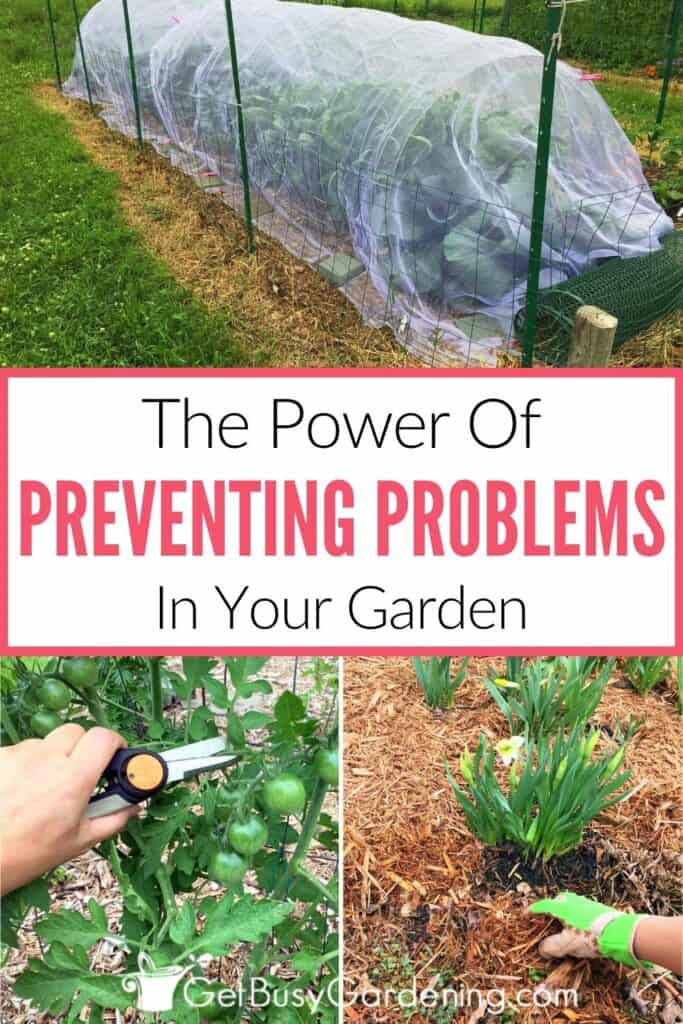
Here’s something I learned the hard way after years of frustrating trial and error:
It’s much easier to prevent problems before they start than it is to fight them after they pop up in your garden.
Because once bugs, weeds, and diseases do show up in your garden, it’s very difficult to get rid of them.
And once your plants start to struggle, it may already be too late to save them.
So if you feel like you can never get ahead and you’re constantly dealing with one issue after another, this post is for you!
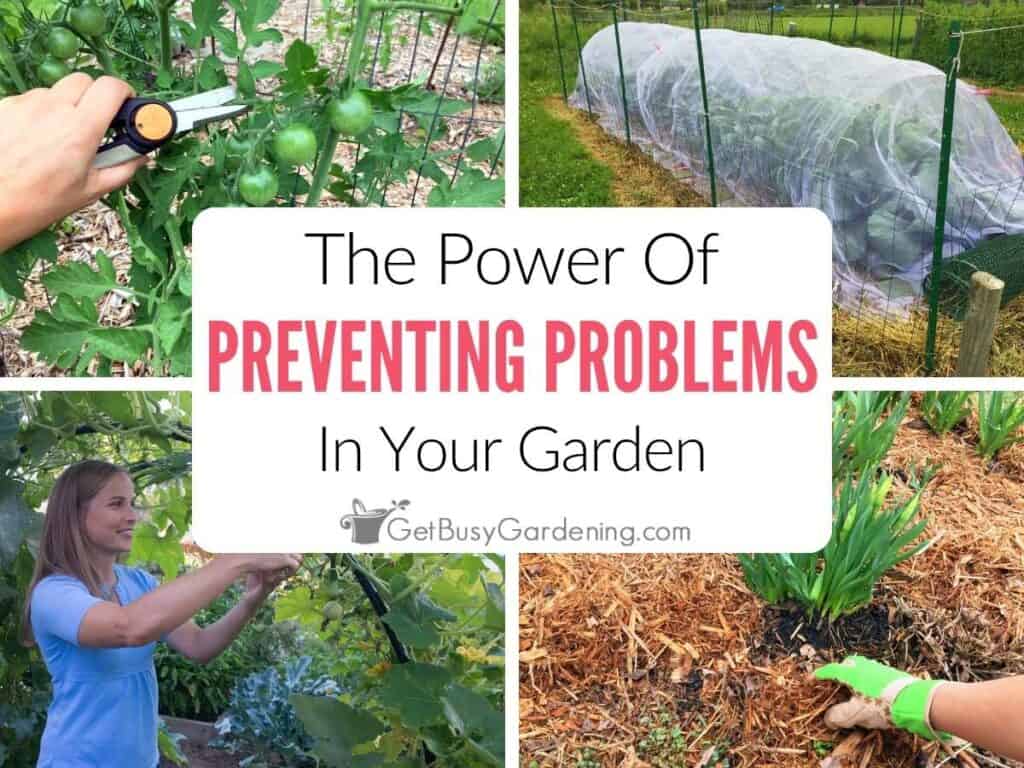

What Is a Prevention-First Approach?
Prevention means being proactive instead of reactive in the way you care for your garden.
So, rather than waiting until your plants are struggling or the bugs, weeds, and diseases start taking over, you focus on stopping them before they get started.
And before you run to grab the pesticides, let me be very clear here. I’m NOT talking about spraying your plants or treating your garden just in case a bug or disease might show up.
My prevention-first approach is about being strategic and intentional with the things you’re already doing in your garden to avoid problems before they start.
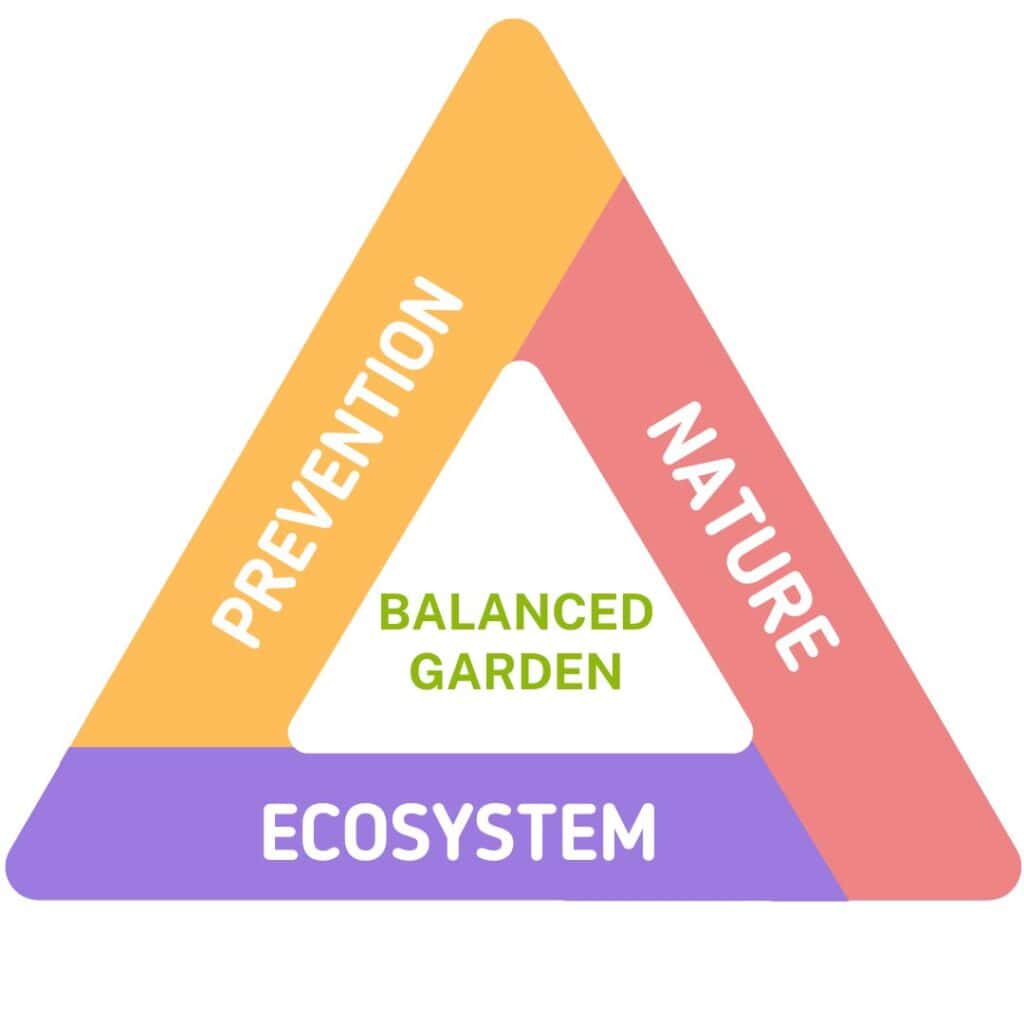
Prevention is at the center of everything I teach and do in my own garden, and that’s why it’s one of my 3 Pillars of a Healthy Garden.
Stop Waiting for Problems to Show Up
One of the 5 biggest mistakes I see gardeners make is what I call “reactionary gardening”.
That’s when you wait until something goes wrong, and then work hard to fix it. Then another issue pops up, so you fix that too—and so on, and so on.
Dealing with problems as they show up is how most of us are taught to garden. But it’s really the opposite of what you should be doing.
Instead, you should be thinking about prevention in everything you do, from planning and planting to watering, fertilizing, pruning, and pest control.
Why Prevention Is So Important For Your Garden
Because here’s the thing that most people don’t realize: weeds, bugs, and diseases are all very opportunistic.
That means they’ll happily take advantage of weak plants and unhealthy growing conditions.
Stressed, weak, and unhealthy plants are pest and disease magnets. And when those plants leave bare spots or open space in your garden, weeds are quick to move in.
So when your plants are struggling just to survive, it’s basically like you’re laying out the welcome mat for pests, diseases, and weeds to move in and take over.
Remember, once bugs, weeds, and diseases get established, they can be very difficult to get rid of.
But when your plants are healthy and your garden is well-balanced, it helps prevent those problems from taking hold, so they’re much less likely to spread or get out of control.
Strong, Resilient Plants Can Resist Problems
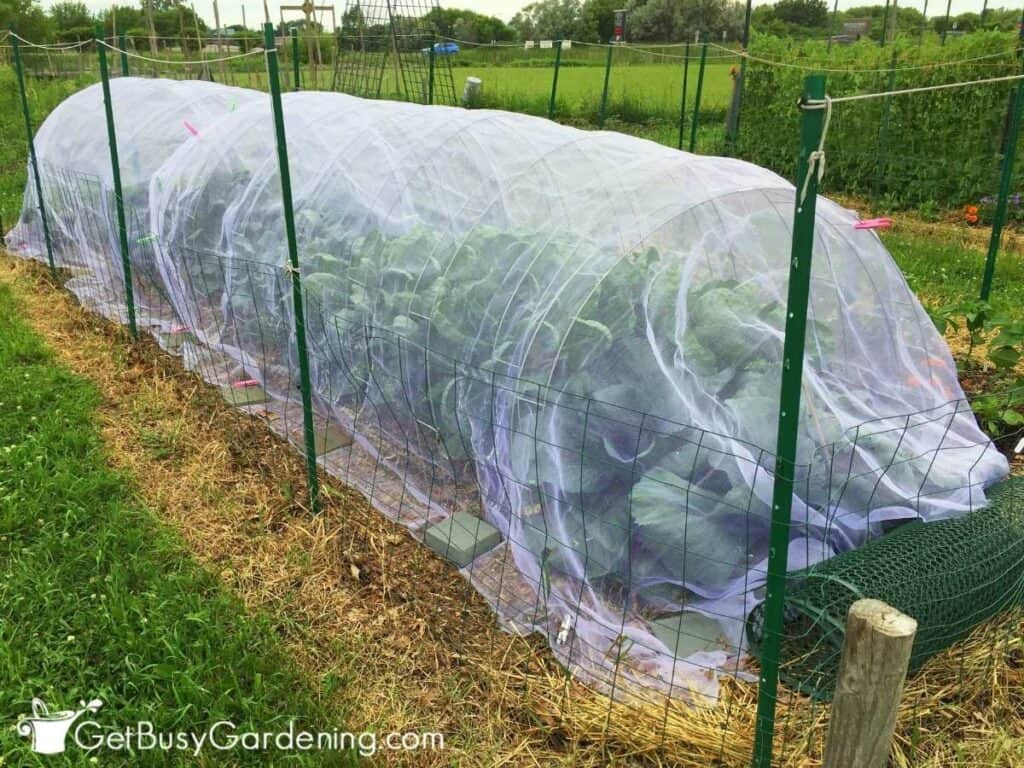
When you practice preventative methods that keep your plants strong and healthy, you give pests and diseases less of an opportunity to invade your garden.
Because when your plants have what they need to thrive, they can naturally resist many problems on their own.
And they can also handle everyday stressors, like dry weather, temperature shifts, or minor pest damage, so much better.
Of course, your plants will never be completely problem-free – weeds, bugs, and other critters are a normal part of gardening.
But your main goal should be to focus on preventing problems instead of reacting to them. And when you do that, you’ll spend less time fixing things and more time actually enjoying your garden.
Start Preventing Problems Before They Happen
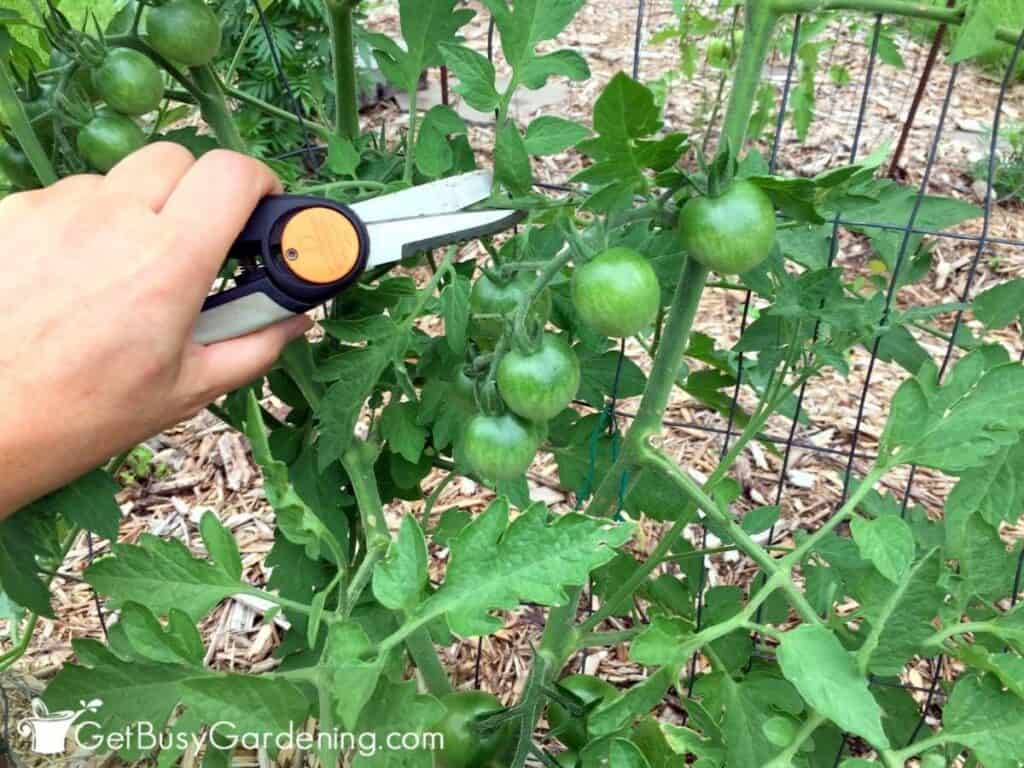
When you build prevention into your regular gardening routine, you’ll grow strong, resilient plants and make it much harder for bugs, weeds, and diseases to take over.
Prevention is one of the most important ways to keep your plants healthy and thriving without spending all your time reacting to problems as they pop up.
And because it needs to be built into every part of how you plan, plant, and care for your garden, prevention runs through every stage of the Garden Growth Course.
Inside the course, you’ll learn how to use a prevention-first approach as part of my simple, repeatable system for growing a healthy, thriving garden that practically takes care of itself.
Related Posts
- Pillar 1: Your Garden Is A Mini Ecosystem
- Pillar 3: Work With Nature Instead of Fighting Against It
- The Smarter Way To Garden
What are you already doing to prevent problems in your garden? Tell me in the comments below.

Leave a Reply