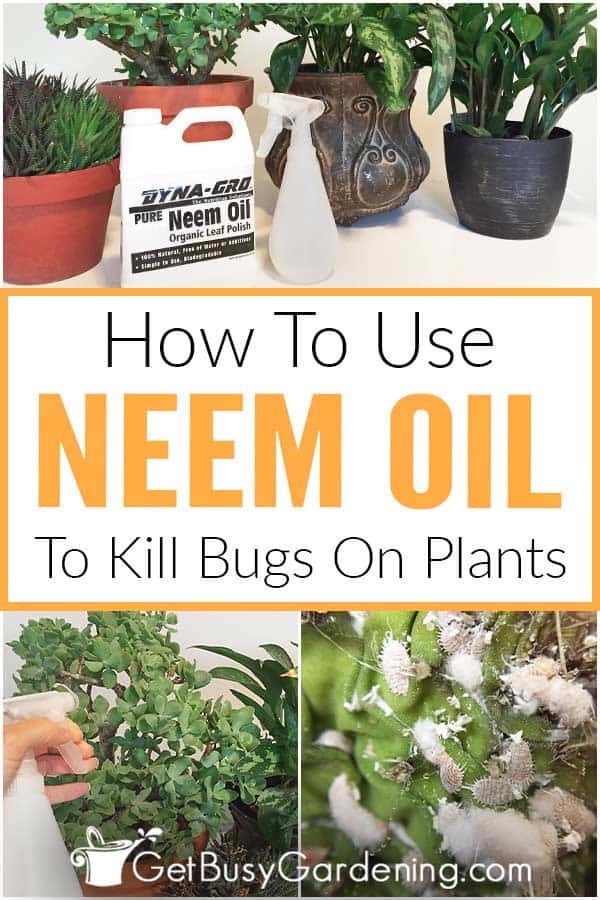
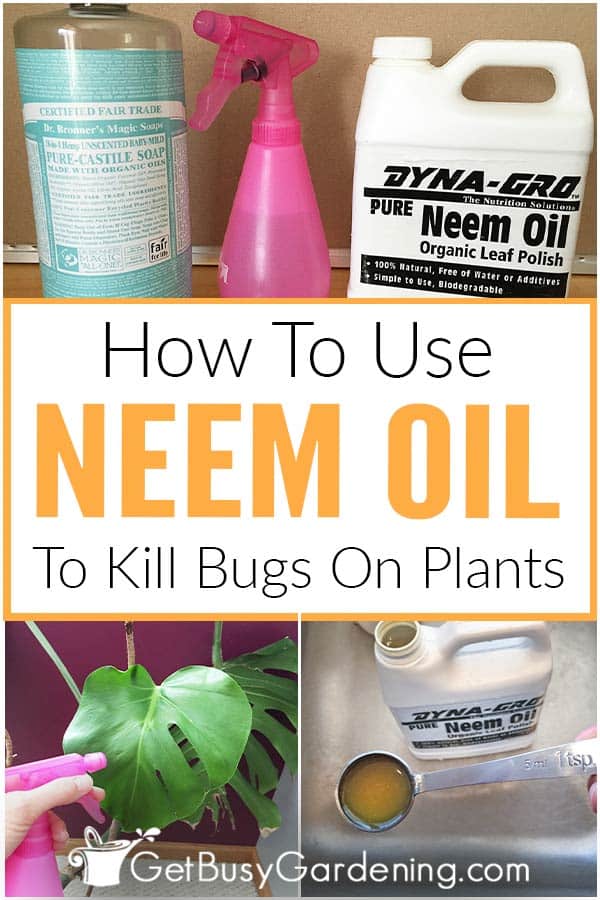
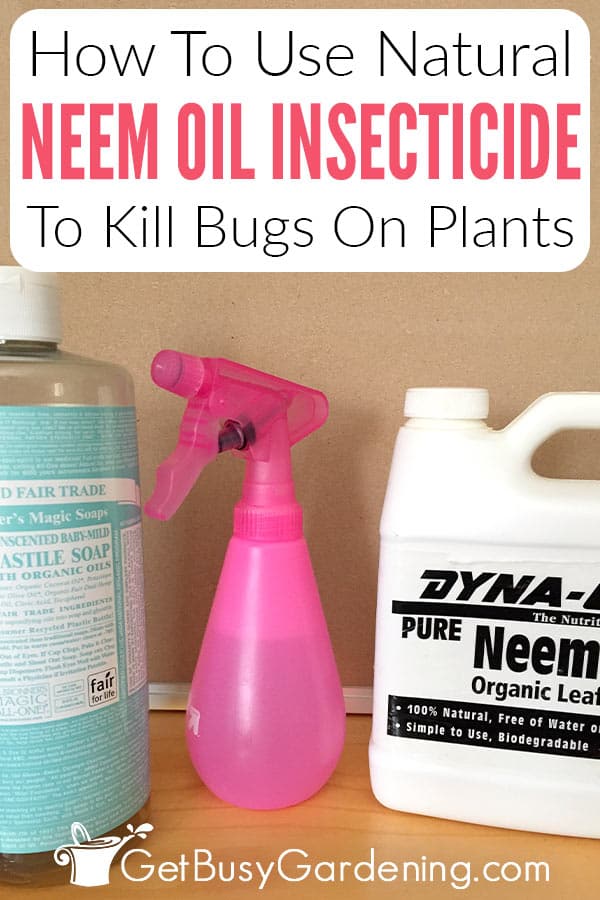
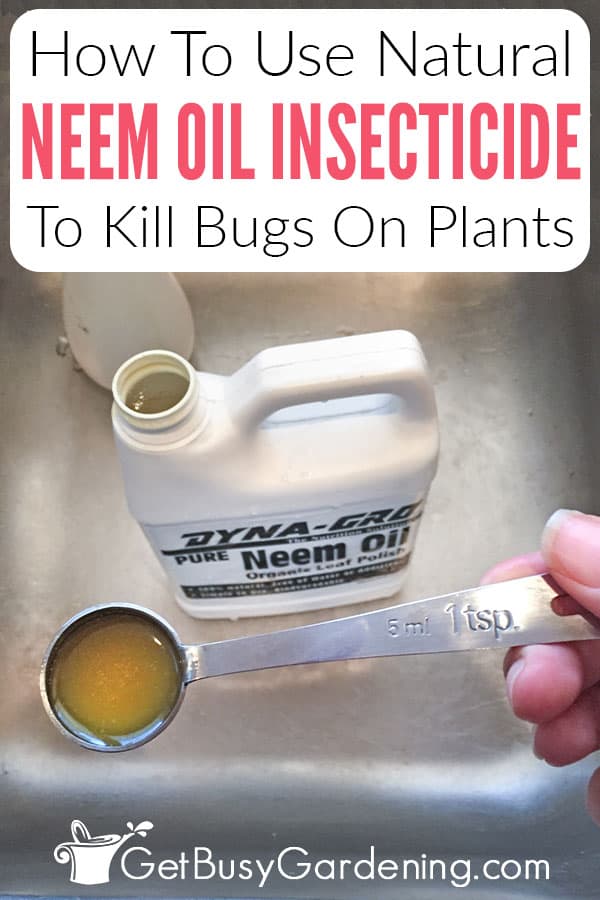
Neem oil is an effective, all-natural insecticide, and it’s great for controlling and repelling bugs that eat your plants. You can use it both indoors on your houseplants or outside in the garden.
Not only does it work to prevent pest infestations, you can also use it to control disease and fungus outbreaks. I’ve been using it for decades, so I know first had just how much of a game changer it is. Trust me, it will be your new best friend!
In this post I will tell you all you need to know, and show you how to use neem oil on your plants. You’ll learn exactly what it is, which pests and diseases it works on, when, how much, and how often to apply it, and I’ll even show you how to make your own spray using my easy recipe.
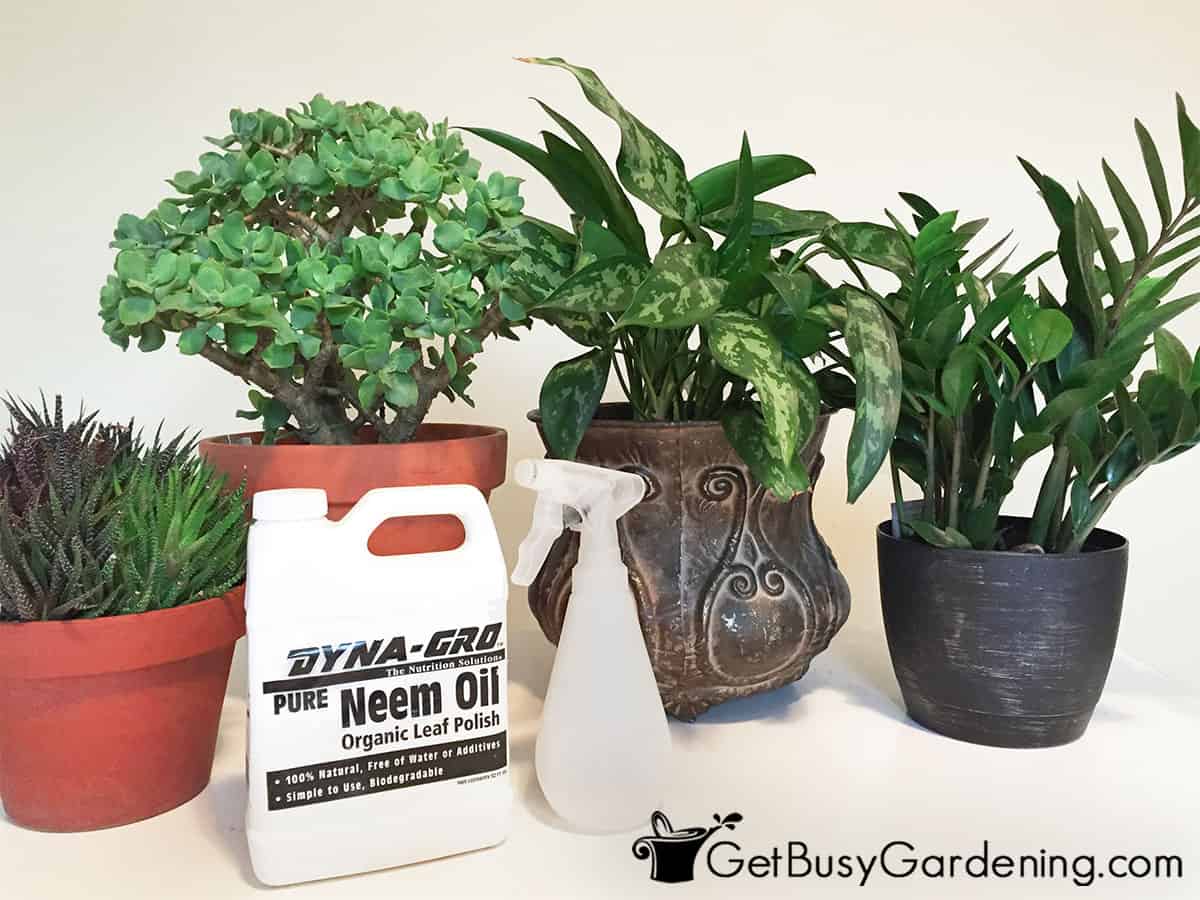

The oil is extracted from the tree seeds, and is either sold in its pure form, or mixed with other ingredients to make pesticide and fungicide sprays.
It is not a poison, and it’s non-toxic to humans, cats, and dogs, so it’s safe to use both indoors and outdoors. That’s why it’s also commonly used in beauty and health care products.
How Does Neem Oil Work?
Basically, the way it works as a pesticide is that it messes with the brains and hormones of the bugs that eat it. It causes them to stop feeding and mating, and they will eventually die off. It also works to smother them on contact, which kills them faster.
In addition to killing insect pests, neem oil repels them, and it has a slight residual effect to keep them away longer than other organic methods.
The best part is that it only kills the ones that eat plants, so it won’t harm beneficial insects (as long as you don’t spray it directly on them).
Neem oil won’t kill all of the bugs on contact, so it might take a few days, weeks, or even months for them to disappear from the plant completely.
Other Neem Oil Uses For Plants
Beside using it to control pests, neem oil also works as a fungicide, so it can help prevent and fight plant diseases. It doesn’t cure them, but it stops them from getting worse.
The way it works is it prevents the spores from spreading. So it won’t always completely eliminate the fungus or disease, but it can reduce the spread so your plant will be able to keep growing. Here are some common ones it works on:
- Powdery mildew
- Blackspot
- Rust
- Leaf spot
- Blight
- …and more
Related Post: How To Debug Plants Before Bringing Them Indoors
What Kind Of Bugs Does Neem Oil Kill?
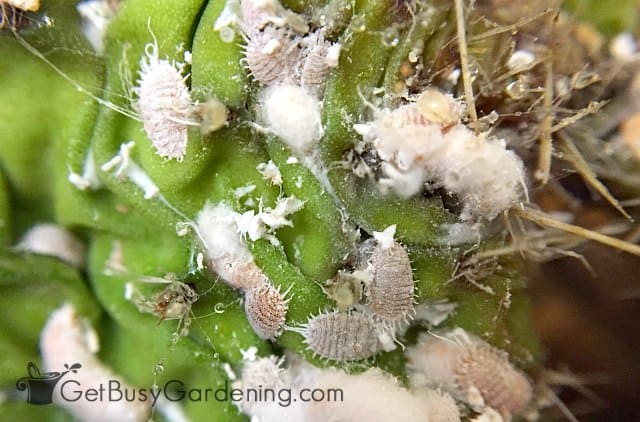
Neem oil works to kill all types of houseplant bugs, and it has helped me get rid of every single one I’ve ever dealt with. It also works to control destructive plant-eating garden pests outside. Here are a few examples:
Precautions
While it’s not harmful to furry pets or humans, there are a couple of precautions you should take before using neem oil on your plants:
- Some plants are sensitive – Though it’s not very common, some plants are sensitive to any type of sprays, even neem oil. So always test it on one or two leaves and let it sit for 24 hours to make sure it doesn’t damage them.
- Use caution around beneficial bugs – Please remember that all forms of pesticides, including natural ones, should be used with care. Always follow the instructions on the label, and never spray it directly on or nearby any beneficial insects.
- Don’t use it around fish – It can be toxic to fish and amphibians, so don’t use it around a pond, fish tank, or other areas where these creatures live.
- Be careful what you buy – Some brands sell neem oil products with lots of other chemicals mixed in. So always be sure to read the label, because some of the additives can be much more toxic, and are not made for organic gardening.
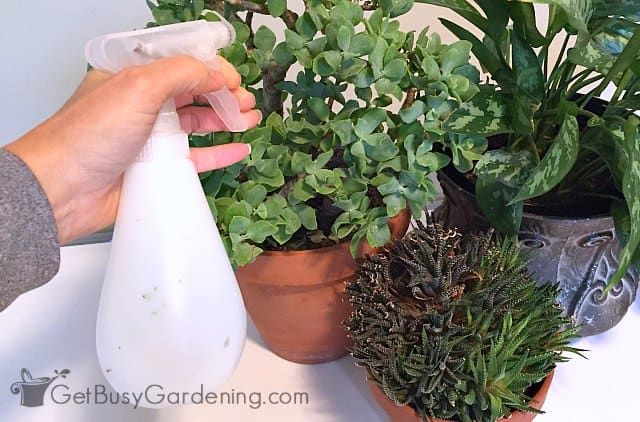
How To Make Neem Oil Spray For Plants
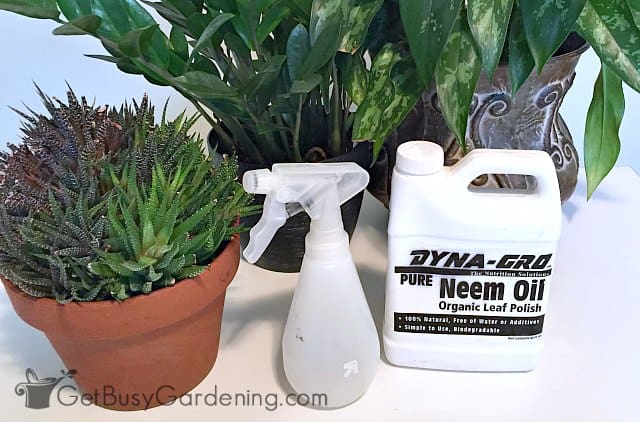
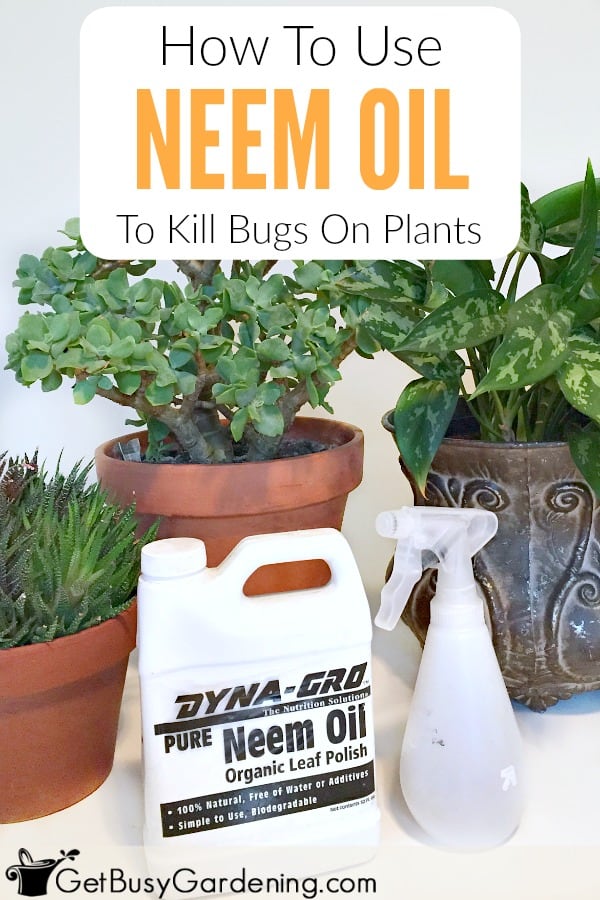
You can buy neem oil based pesticides in pre-made sprays, or you can make your own using a pure organic concentrate for plants.
I prefer to make my own because I can control the ingredients, so I know there’s no chemicals or harsh ingredients mixed in. Here’s my recipe and instructions:
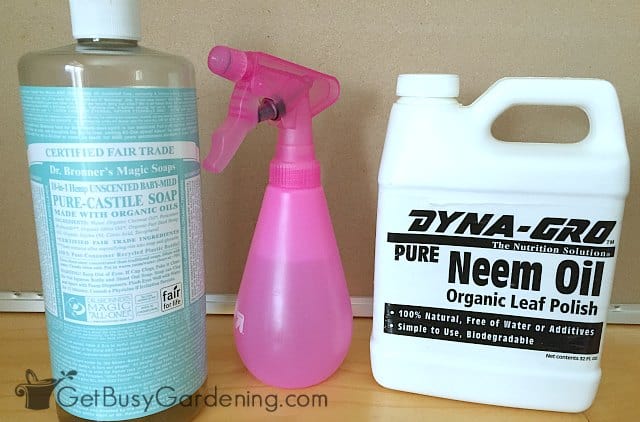
My Neem Oil Spray Recipe
- 1 ½ teaspoons pure organic neem oil concentrate
- 1 teaspoon mild liquid soap*
- 1 liter tepid water
Mixing Instructions
If you bought a different brand of pure neem oil concentrate than what I’ve listed above, read the label to make sure there aren’t any special directions for mixing it.
To make my recipe, mix all of the ingredients into a spray bottle and shake well. You can use it on your plants right away, or it will last for a few weeks in the bottle. Be sure to shake it well each time you use it.
*The soap helps the oil mix with water, since they don’t mix well on their own, so don’t skip it. It also has the added benefit of killing bugs on contact, so you should start seeing an improvement right away.
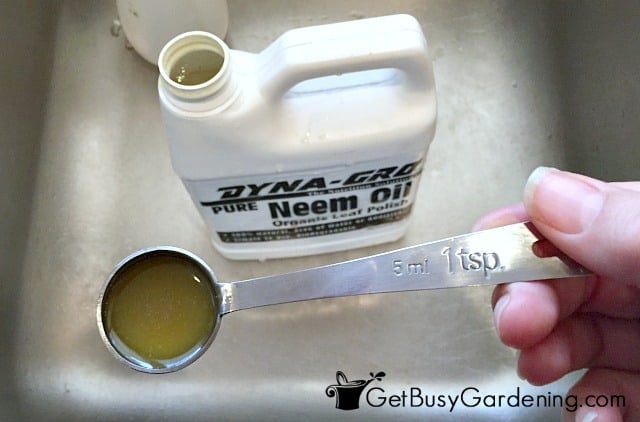
How To Use Neem Oil On Plants
It’s easy to use neem oil on your indoor or outdoor plants, but it’s important to know the right time to apply it, as well as how to do it for the best results.
Below I will discuss exactly when and how to spray it, and give you step by step instructions.

When To Spray Neem Oil
It doesn’t matter when you use it indoors on your houseplants, you can apply it any time of the year, day or night.
But outdoors, it’s best to use it either in the early morning or late evening so you don’t have to worry so much about harming beneficial bugs.
Also, don’t apply it in the full sun, because neem oil can make the leaves more sensitive to sunburn.
So if you can’t spray it in the morning or move your plant to the shade, then do it on a cloudy day. Once it’s dry it will no longer pose a threat.
How To Apply Neem Oil
Applying neem oil to your plants is pretty straight forward, but you should follow these steps so that you do it the right way:
- Test it on a leaf or two to make sure there’s no damage before using it on the whole plant.
- Spray the entire plant with, getting both the top and bottom of the leaves.
- Keep the plant out of direct sunlight until the leaves are dry.
- Continue to use neem oil every week until you no longer see any signs of the bugs or disease.
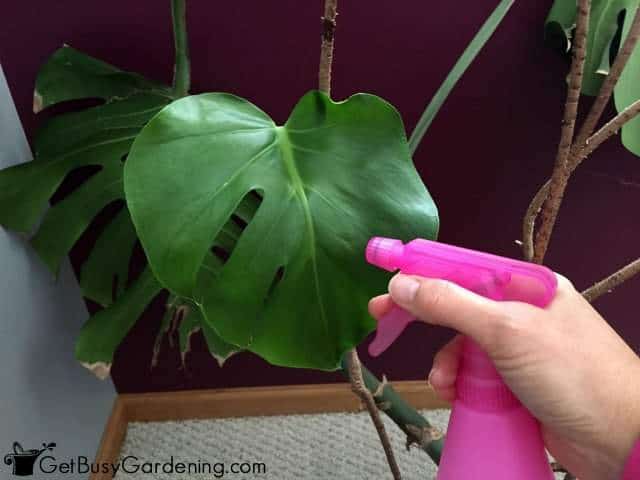
Additional Tips For Applying Neem Oil
I wanted to mention a few other key tips about applying neem oil on your plants so that you will have the best possible success using it. Here are some additional pointers:
- For best results, be sure to douse your plant until it’s dripping wet, and get into every nook and cranny that you can.
- I recommend moving houseplants to a shower or sink, or outside if it’s warm enough, to avoid making a mess indoors.
- It’s not likely that you’ll get rid of an insect pest infestation with one application, so you have to be persistent.
- You can also use neem oil as a drench to kill annoying bugs in the soil as well, just take care not to overwater your plant in the process.
Related Post: Fungus Gnats vs Fruit Flies: What’s The Difference?
How Often To Apply Neem Oil
You should spray your plant with neem oil weekly until you no longer see any bugs. If you have one that’s plagued by recurring infestations, then use it monthly as a preventive treatment.
For fungus and disease control, it’s best to start applying it to your most susceptible plants at the beginning of the season, or as soon as you see symptoms. Then spray it weekly to stop the spread.
Remember that neem oil has a slight residual effect, so you don’t have to treat your plant every day like you would with other natural insect pest control methods.
FAQs
To me neem oil smells nutty. While it has a strong and distinct odor, it’s not unpleasant. But some people don’t like it, and they think it smells bad. So it may be different depending on the specific brand you buy. The aroma is short-lived and goes away once it dries.
How long does neem oil take to work?
It takes a few days for neem oil to start working once the bugs eat it. But it also smothers some of them on contact, so you should begin to see an improvement right away.
If you have never used neem oil to kill bugs on your plants, I highly recommend trying it. It’s by far one of the best natural pest control methods I’ve ever used.
If you’re struggling to keep bugs off your indoor plants, then my Houseplant Pest Control eBook is for you. It will show you how to identify which one is infesting your plant, and show you exactly how to get rid of it FOR GOOD! Download your copy today!
More About Houseplant Pests
Have you ever tried using neem oil on plants? Share your experiences in the comments below.

Kelly says
Hello. I have a terrible fungus gnat infestation that I’ve been struggling with over and over again for over a year- I believe I finally figured out that the culprit was the bagged potting soil I was purchasing from a large chain retailer. My question is – when using Nemo oil as a soil drench, can I use water to mix with the oil that has been seeped in mosquito bits? Is it safe and will it add to the effectiveness of treatment?
Thanks!
Amy Andrychowicz says
I’m not exactly sure what “mosquito bits” are, but if you’re talking about a product that kills their larvae, then those products are usually made from synthetic chemicals. But you would have to read the label on the specific product you’re looking at to know for sure. Here’s an article that has tons of natural/organic methods you can try for getting rid of them… How To Get Rid Of Fungus Gnats In Houseplants Soil.
Eastlee says
My plants keep getting mites ive spray them.then they return ive bombed there tents out.its is heartbreaking.im going to spray them agsin.hopefully a few times of spraying then they should depair.wat am i doing wrong why they are getting mites they look so healthy and growing good.
Amy Andrychowicz says
Oh no, so sorry to hear about your recurring infestations! For persistent bugs like that, I recommend using neem oil on a regular basis. It works great as a leaf shine, and will prevent the pests from returning. Spray your plant every few weeks, and keep it up until all signs of the bugs are gone. It certainly won’t hurt to keep doing it after that too. But most times, once all of the bugs and eggs are dead, you should no longer have problems. Here’s a post that will give you more details about how to get rid of mites on plants.
Chelsa says
Should I leave the plants inside while they are being treated with neem oil?
Amy Andrychowicz says
There’s no need to leave your plants inside while treating them with neem oil.
Tammy says
Hi Amy,
I would like to use neem oil as a soil drench/systemic insecticide. I’m currently dealing with a mild infestation of thrips on my houseplant collection and have been spraying my plants weekly with homemade insecticidal soap for the past few week. It’s a lot of back breaking work spraying them all as I have quite a few plants lol. I’m hoping that if I use it as a soil drench, in addition to control fungus gnats, the pests including thrips (they are the worst pests) won’t return again and if they do, they will die off on their own. How frequent do I need to drench the soil? Can I use it each time I water my plants? How frequent should that be done to be effective for such purpose? Thanks in advance for your time.
Amy Andrychowicz says
You can use neem oil as a soil drench every time you water. Only water your plants as often as they need it, or you could end up killing them by overwatering. To get the benefits of neem oil faster, I recommend spraying it on the leaves. That will work much faster than waiting for it to be absorbed by the plant. I know it’s hard work to spray all of your plants, but you’ll definitely see results faster. Here’s are a few other posts that you might find helpful to eliminate the bugs you mentioned…
How To Get Rid Of Thrips On Houseplants
How To Get Rid Of Fungus Gnats In Houseplants Soil
Jordyn says
I did a soil drench for a few of my plants to help with my thrips problem and it seemed like it killed a few leaves. About 1/3rd of each plant, leaves near the base of the stems. I have mostly pothos and philodendrons so I know to wait to water them til they’re looking a little droopy, the pot is light, the moisture meter reads dry…. So it definitely wasn’t overwatering. I was super sad since the thrips hadn’t actually killed off any leaves at that point yet. Then I did the neem drench and within two days they each had a handful of yellow leaves. 😭
Amy Andrychowicz says
Bummer to hear your plants have lost a few leaves. It’s actually pretty normal for those types of plants to lose the bottom leaves as they age, so it may just be that. Also, the bug damage may have finally kill a few leaves, so maybe that’s what happened. Regardless, I would stop using the neem oil soil drench, and instead test it on your plants. Spray it on a few leaves, then wait several days to make sure there’s no damage before treating the whole plant. As I’ve mentioned before, you’ll see much faster results by treating the leaves rather than using neem oil as a soil drench. But again, make sure you always test it on the leaves first. Some plants are more sensitive to sprays than others.
Demelza Barker says
Thanks, this is really helpful. Can I use neem oil on herbs that I may end up eating?
Amy Andrychowicz says
You’re welcome. I personally only use neem oil on my houseplants and other ornamentals, and not on my herbs and vegetables. Mostly because the thought of eating herbs or veggies that are infested with bugs is not appealing to me, LOL! However, before you decide, you should definitely read the label on the specific product you have, it should tell you whether it’s safe to use on your herbs.
Linda says
I have a big balcony with many big and medium size plants. It is not possible to spray the plants in a sink, using Chemical insecticides kills the pest but also demanded the black lacquered wood decking. Will neem oil residues damage the lacquer?
Amy Andrychowicz says
The neem oil could leave a residue, but I’m not sure if it would damage your decking or not. I recommend either testing it on an inconspicuous area, or washing it off the wood after spraying your plants.
Brenda says
Do you need to make a fresh batch of neem spray each time or can I premix and keep stored to use as needed? Does it lose its efficiency after awhile if premixed? Thanks
Amy Andrychowicz says
I keep my neem spray premixed in a spray bottle, and haven’t had any problems with it losing it’s potency.
Nicole says
Hi, I am new to plants and having a problem with fungus gnats. I understand not to overwater and to let the soil dry out, but the issue I’m having is that I have to water them sometime, so as soon as I water them about a week or so later the little bugs are right back at it again. In the soil I see little white silver tiny bugs that I think might be baby fungus gnats, those die off completely when I let the soil dry out, but are right back in droves as soon as I water. Also the gnats are flying around the plant, but I’m letting the soil dry out and spraying the top and bottom drainage holes with diluted bleach. I guess I just don’t understand how I’m supposed to be doing this. How do people have indoor plants and not have bugs flying around all the time? Can you please advise me? I would love to have my house filled with plants, but desperately need some guidance. Thank you!!
Amy Andrychowicz says
You can use neem oil as a soil drench each time you water, and that will help. It can be difficult to get rid of them, especially when you have a lot of plants, but it is possible! Read this on how to get rid of fungus gnats to learn all about it.
Nicole says
Hi Amy, thanks for your reply. I would like to understand – is it just what houseplant people do then… constantly have sticky traps and insecticides (or neem oil) on their plants 247? Does this just go hand in hand with having houseplants or is it realistic to expect that once they go away, that’s it and I can go back to just having plants? I really want to understand, and appreciate your help!
Amy Andrychowicz says
No, you should not need to constantly have to treat for bugs or use neem oil when you have houseplants, that’s not normal. No doubt that it can be very difficult to eradicate them, especially when you have a large collection of indoor plants. Trust me, I fought them for years before I finally won the battle, and I still have them come in from time to time. They come in through the window screens during the summer, or in the plants that I bring back inside in the fall. If you have a constant problem with them, then they are coming from somewhere, and reinfesting your plants. Perhaps one of your plants isn’t drying out as much as the others? Or they are coming from somewhere else. One year, I had a bag of potting soil in my basement, and the fungus gnats were out of control. It took me a while to figure out they were coming from the bag of soil (it was FULL of them!), and reinfesting all of my plants every time I watered. I immediately threw the bag out into the snow and freezing cold (ha, take that bugs!), and that took care of my problem. No doubt it is totally frustrating, but once you figure out the source, it will make getting rid of them so much easier. This article might help you figure it out… Where Do Houseplant Pests Come From? Good luck, and hang in there!
Rosario T Silva says
Is it ok to spray the neem oil mixture to the soil as i can see a very small insect in the soil? will it harm the plants?
Amy Andrychowicz says
Yes, neem oil is safe to use as a soil drench without harming your plants. Here’s an article about how to get rid of those bugs in the soil that you may also find useful.
April says
Hi, I was wondering how long it may take for your plant to go back to normal after these treatments? My dracaena is very droopy and yellowing leaves due to mealy bugs. Hoping your solution works!
Amy Andrychowicz says
It can take several months of consistent neem oil treatments to eradicate a heavy bug infestation on plants. However, mealybugs don’t usually cause the leaves to droop or turn yellow. So, I recommend checking the soil moisture to make sure you’re not over or under watering you plant. Improper watering is usually what causes yellow/droopy leaves. Here’s more info that might be useful… How To Properly Water Indoor Plants
Susan Zale says
Thank you for this post. I was wondering do you wipe the oil off the leaves of plants after a few days? Does it clog the leaves at all? I have an Elephant Ear plant I sprayed but not sure how to deal with the oil left on the leaves. Thank you for any help you can provide, Susan
Amy Andrychowicz says
You’re welcome. 🙂 No, you don’t need to wipe the neem oil off the leaves after spraying. There shouldn’t be any residue left over. If you notice an oily residue, then you’re using too much. Read the “Neem Oil Insecticide Dosage” and “How To Make Neem Oil Spray For Plants” sections above for detailed instructions of how much and how often to apply it.
Sally Walsh says
Hello
I have a couple indoor plants that are healthy, do I still need to use neem oil to my healthy plants?
Thank you.
Sally
Amy Andrychowicz says
There’s no reason to use neem oil on your plants if they are healthy and bug free.
Madhu Anand says
I have recently created an indoor green arcade. It’s in my foyer. So far it all looks nice and healthy, but I am afraid if things happen untoward. What should I be looking for, Amy? Also, I used the Miracle Gro indoor pitting soil. I do find it a lot porous. Am I on the right track? I can say I don’t have a green thumb but definitely have done a great job in bring plants from stores and moving them into my own pots with additional soils! Lol! Any advise will be great here!
Amy Andrychowicz says
There’s a wealth on information on the site about houseplants and dealing with pest infestations that will help you out! Start here… Houseplants.
Rise Ljungkull says
How do you make a soil drench to deal with fungus gnats?
Amy Andrychowicz says
You can use my recipe in the post above. See the section titled “My Neem Oil Insecticide Recipe”. Here’s more information about getting rid of fungus gnats.
Jen "Black Thumbs" Senari says
HI Amy,
I’m getting some much needed information here. Thank you for sharing so much. I’m also a Minneapolis resident & I truly love it here. I only wish I could grow houseplants to have some fresh greenery during our long winters. I found my way here searching for Neem Oil information. Your response here to Rise about the “Neem soil drench” is questionable. Your directions & recipe for, “My Neem Oil Insecticide Recipe.” appears to be for the spray bottle method. Is this the same recipe for the, “Neem Soil Drench” as well? If it is how do we use it? Is this something clear & obvious that I’m over thinking(LOL)? Should I simply drench the soil with it? I have a “BLACK” thumb and already kill nearly every houseplant I bring home, so I’m trying to STRICLY follow your advice to avoid anymore plant death. My common sense doesn’t kick in all the way on this topic 😀 Could you please be a tad more specific to help out those of us lacking a greenthumb? I greatly appreciate it.
Thanks so much,
Jen S.
Amy Andrychowicz says
Sorry to cause confusion about the neem oil soil drench -vs- spray recipe! Yes, it is indeed the same recipe. And you are correct, instead of spraying it on the leaves, you would use it to drench the soil. Simply pour it into the soil until it starts coming out of the drainage holes. However, do not use this method if the soil is already saturated, or you could end up overwatering your plant. Wait until the soil is slightly dry (but not completely bone dry) before pouring the neem oil mixture into it. Hopefully that will clear things up for you! 🙂
dione says
hi amy!
do you know if there is a difference between neem oil for cosmetics and for plants? the one i bought (pure neem oil) happened to be branded from a small cosmetics company. in the reviews people mentioned getting it for their tomato plants (which is what i need it for). i didn’t think of a difference until you mentioned it above.
i also used my regular dish soap in the mixture so might have to downgrade to my hand soap next time. 🙂
Amy Andrychowicz says
I don’t know exactly what the difference are, but I would not use neem oil that is made for cosmetics on my plants. My guess is that they add a lot of the other chemicals to it, and those may cause harm to your plants. You want to stick to using only pure neem oil, with nothing added to it. Plus, it would probably be way more expensive to buy in cosmetic form rather than for pesticide use. However, if the stuff you found is truly pure, with nothing else added, and the price is right, then it should work just fine.
Sean says
I have an infestation I just bought the soap you suggested but not the neem oil. Will this kill them still?
Amy Andrychowicz says
Yes, the soap will kill pests on contact. The only negative is that it doesn’t have a residual effect like neem oil does, so you’ll have to be very diligent with your treatments to get rid of them completely.