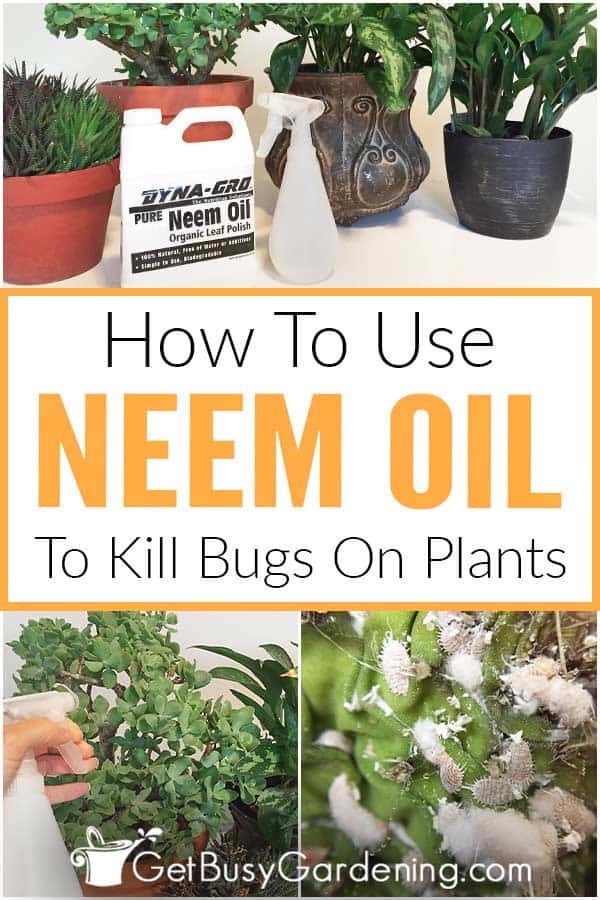
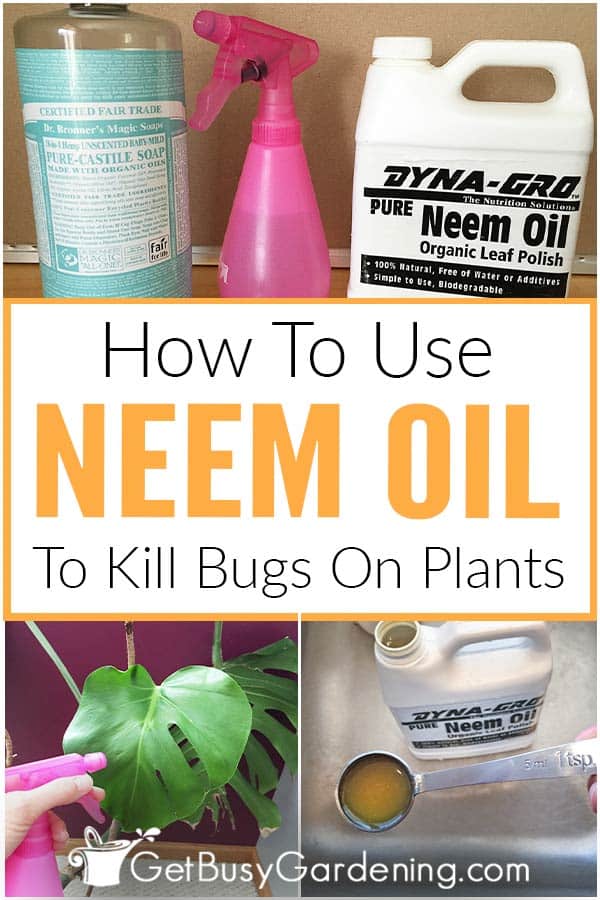
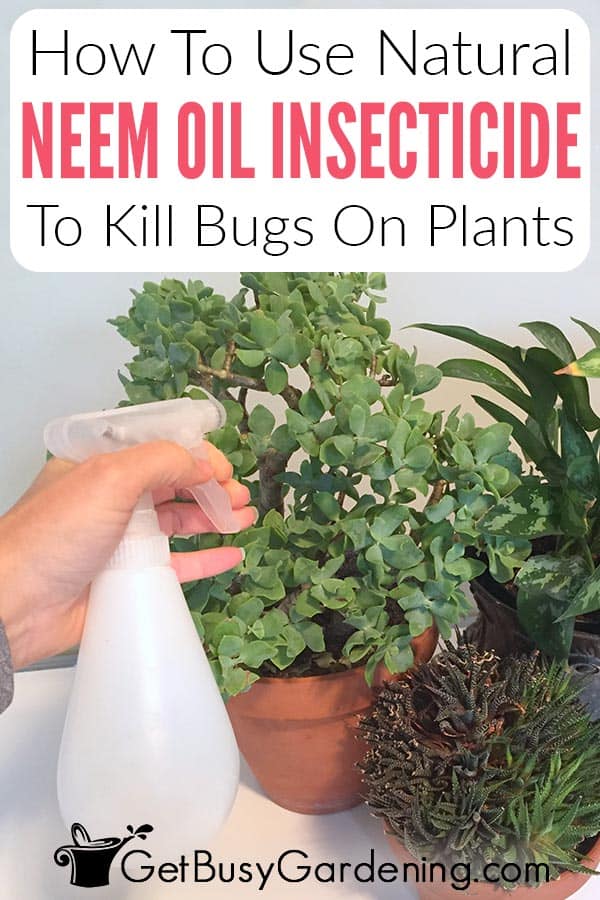
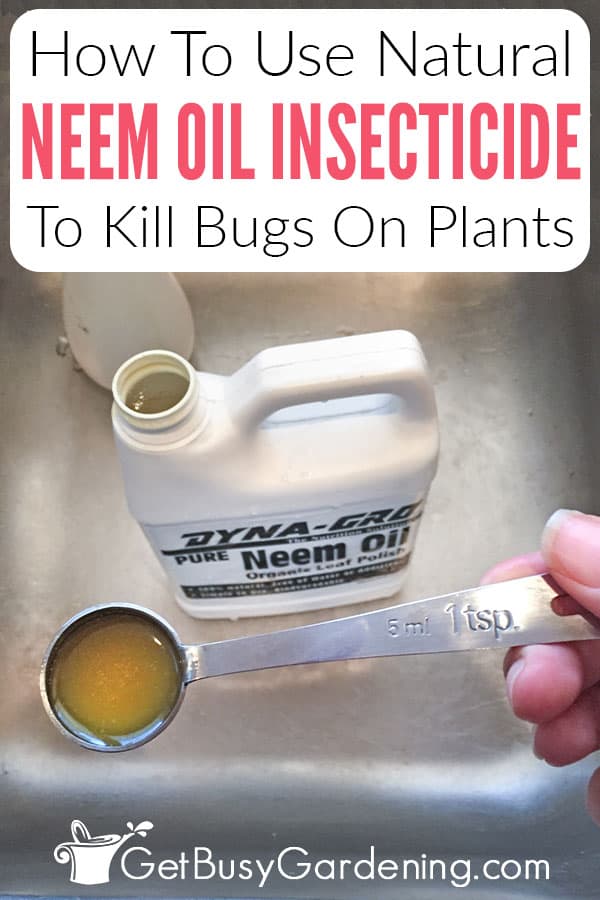
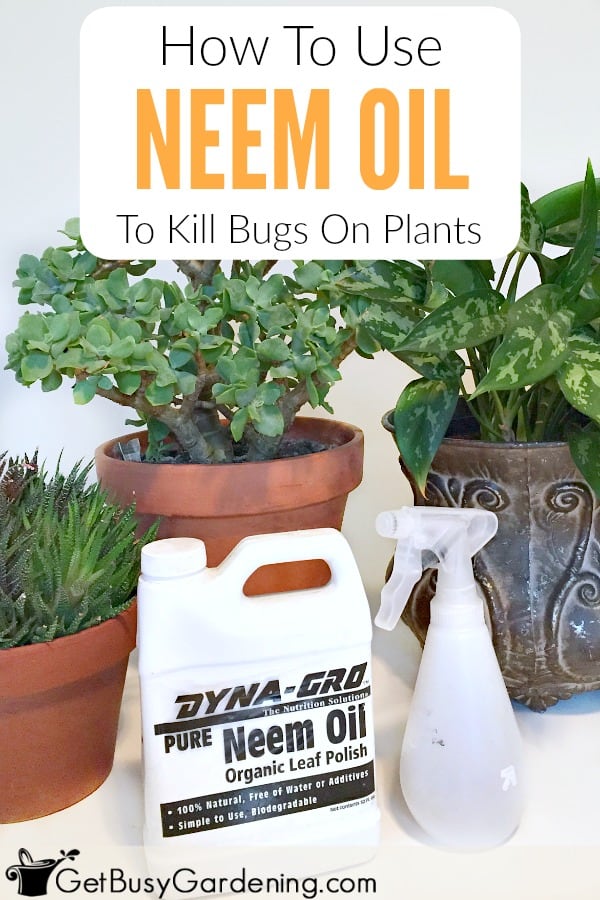
Neem oil is an effective, all-natural insecticide, and it’s great for controlling and repelling bugs that eat your plants. You can use it both indoors on your houseplants or outside in the garden.
Not only does it work to prevent pest infestations, you can also use it to control disease and fungus outbreaks. I’ve been using it for decades, so I know first had just how much of a game changer it is. Trust me, it will be your new best friend!
In this post I will tell you all you need to know, and show you how to use neem oil on your plants. You’ll learn exactly what it is, which pests and diseases it works on, when, how much, and how often to apply it, and I’ll even show you how to make your own spray using my easy recipe.
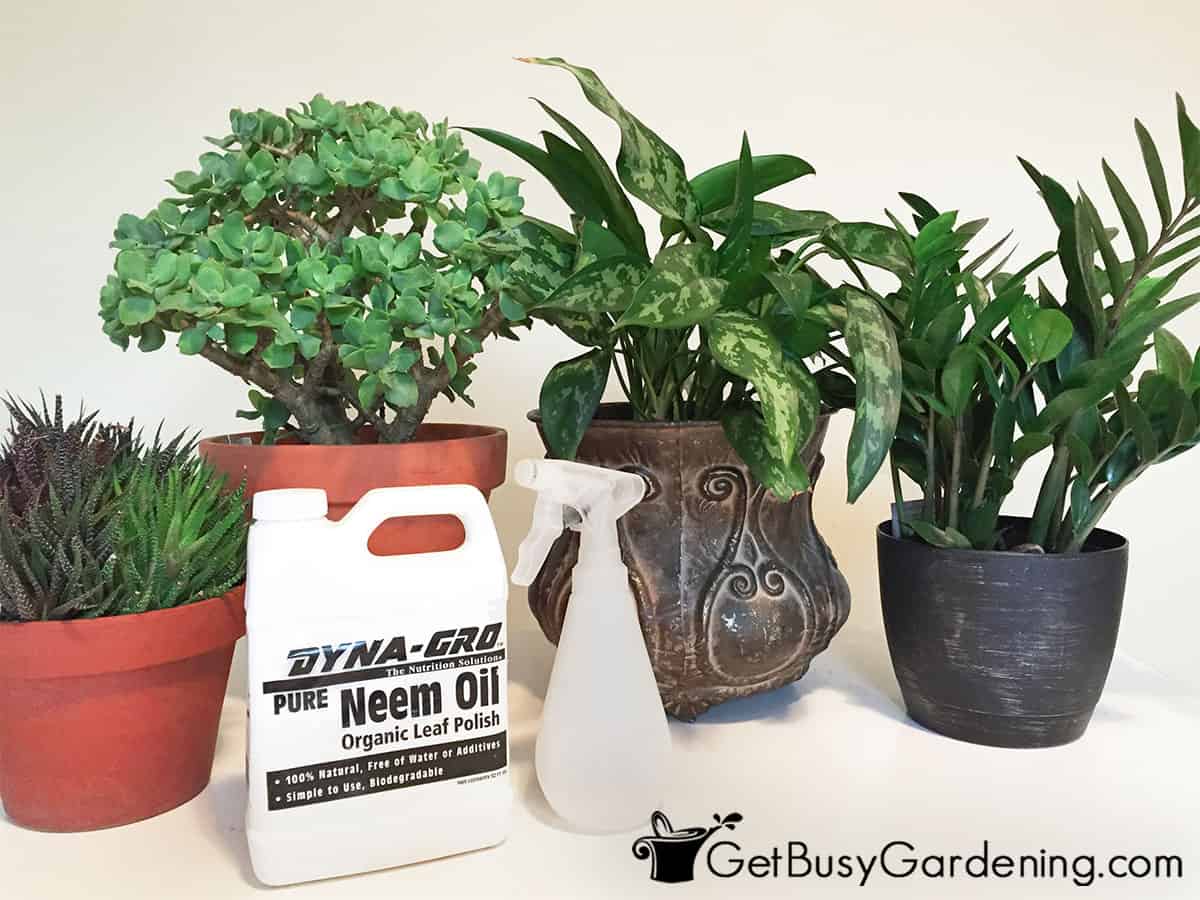

The oil is extracted from the tree seeds, and is either sold in its pure form, or mixed with other ingredients to make pesticide and fungicide sprays.
It is not a poison, and it’s non-toxic to humans, cats, and dogs, so it’s safe to use both indoors and outdoors. That’s why it’s also commonly used in beauty and health care products.
How Does Neem Oil Work?
Basically, the way it works as a pesticide is that it messes with the brains and hormones of the bugs that eat it. It causes them to stop feeding and mating, and they will eventually die off. It also works to smother them on contact, which kills them faster.
In addition to killing insect pests, neem oil repels them, and it has a slight residual effect to keep them away longer than other organic methods.
The best part is that it only kills the ones that eat plants, so it won’t harm beneficial insects (as long as you don’t spray it directly on them).
Neem oil won’t kill all of the bugs on contact, so it might take a few days, weeks, or even months for them to disappear from the plant completely.
Other Neem Oil Uses For Plants
Beside using it to control pests, neem oil also works as a fungicide, so it can help prevent and fight plant diseases. It doesn’t cure them, but it stops them from getting worse.
The way it works is it prevents the spores from spreading. So it won’t always completely eliminate the fungus or disease, but it can reduce the spread so your plant will be able to keep growing. Here are some common ones it works on:
- Powdery mildew
- Blackspot
- Rust
- Leaf spot
- Blight
- …and more
Related Post: How To Debug Plants Before Bringing Them Indoors
What Kind Of Bugs Does Neem Oil Kill?
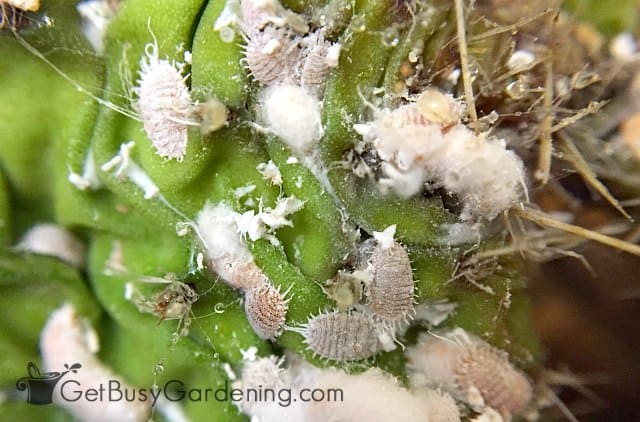
Neem oil works to kill all types of houseplant bugs, and it has helped me get rid of every single one I’ve ever dealt with. It also works to control destructive plant-eating garden pests outside. Here are a few examples:
Precautions
While it’s not harmful to furry pets or humans, there are a couple of precautions you should take before using neem oil on your plants:
- Some plants are sensitive – Though it’s not very common, some plants are sensitive to any type of sprays, even neem oil. So always test it on one or two leaves and let it sit for 24 hours to make sure it doesn’t damage them.
- Use caution around beneficial bugs – Please remember that all forms of pesticides, including natural ones, should be used with care. Always follow the instructions on the label, and never spray it directly on or nearby any beneficial insects.
- Don’t use it around fish – It can be toxic to fish and amphibians, so don’t use it around a pond, fish tank, or other areas where these creatures live.
- Be careful what you buy – Some brands sell neem oil products with lots of other chemicals mixed in. So always be sure to read the label, because some of the additives can be much more toxic, and are not made for organic gardening.
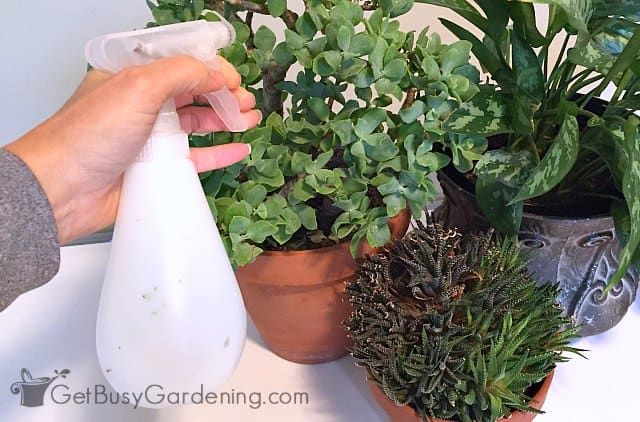
How To Make Neem Oil Spray For Plants
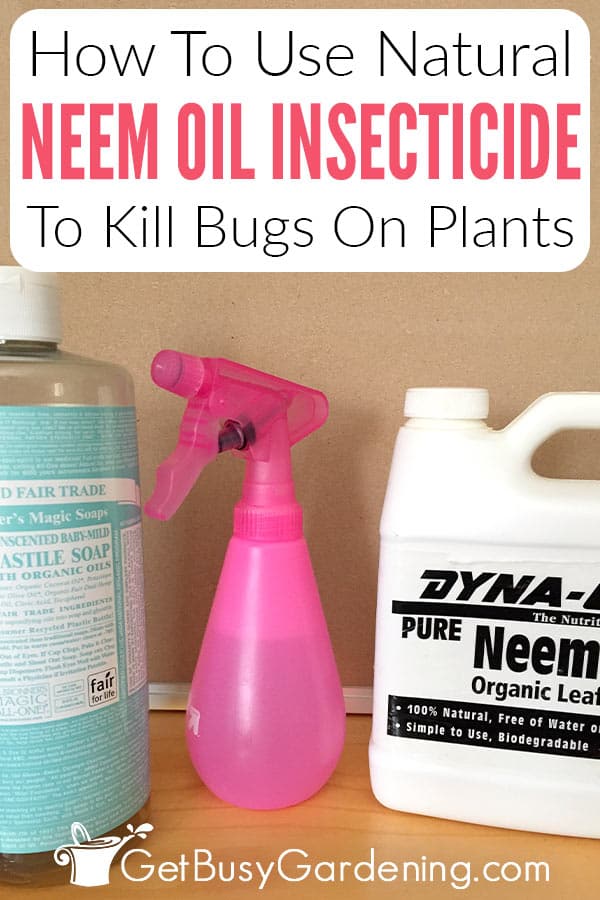
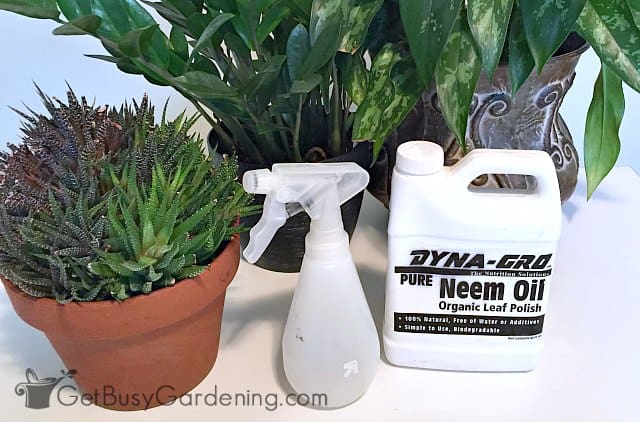
You can buy neem oil based pesticides in pre-made sprays, or you can make your own using a pure organic concentrate for plants.
I prefer to make my own because I can control the ingredients, so I know there’s no chemicals or harsh ingredients mixed in. Here’s my recipe and instructions:
My Neem Oil Spray Recipe
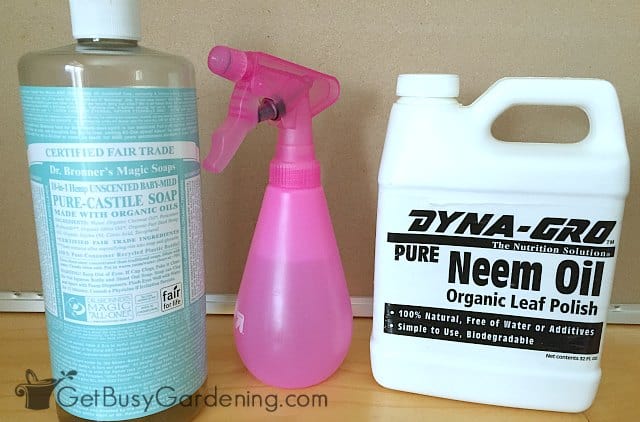
- 1 ½ teaspoons pure organic neem oil concentrate
- 1 teaspoon mild liquid soap*
- 1 liter tepid water
Mixing Instructions
If you bought a different brand of pure neem oil concentrate than what I’ve listed above, read the label to make sure there aren’t any special directions for mixing it.
To make my recipe, mix all of the ingredients into a spray bottle and shake well. You can use it on your plants right away, or it will last for a few weeks in the bottle. Be sure to shake it well each time you use it.
*The soap helps the oil mix with water, since they don’t mix well on their own, so don’t skip it. It also has the added benefit of killing bugs on contact, so you should start seeing an improvement right away.
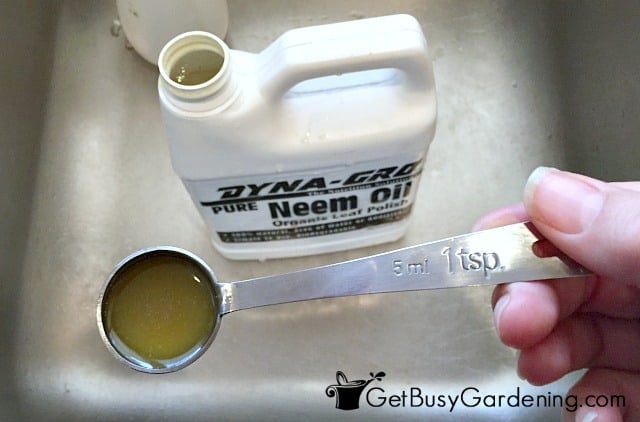
How To Use Neem Oil On Plants
It’s easy to use neem oil on your indoor or outdoor plants, but it’s important to know the right time to apply it, as well as how to do it for the best results.
Below I will discuss exactly when and how to spray it, and give you step by step instructions.

When To Spray Neem Oil
It doesn’t matter when you use it indoors on your houseplants, you can apply it any time of the year, day or night.
But outdoors, it’s best to use it either in the early morning or late evening so you don’t have to worry so much about harming beneficial bugs.
Also, don’t apply it in the full sun, because neem oil can make the leaves more sensitive to sunburn.
So if you can’t spray it in the morning or move your plant to the shade, then do it on a cloudy day. Once it’s dry it will no longer pose a threat.
How To Apply Neem Oil
Applying neem oil to your plants is pretty straight forward, but you should follow these steps so that you do it the right way:
- Test it on a leaf or two to make sure there’s no damage before using it on the whole plant.
- Spray the entire plant with, getting both the top and bottom of the leaves.
- Keep the plant out of direct sunlight until the leaves are dry.
- Continue to use neem oil every week until you no longer see any signs of the bugs or disease.
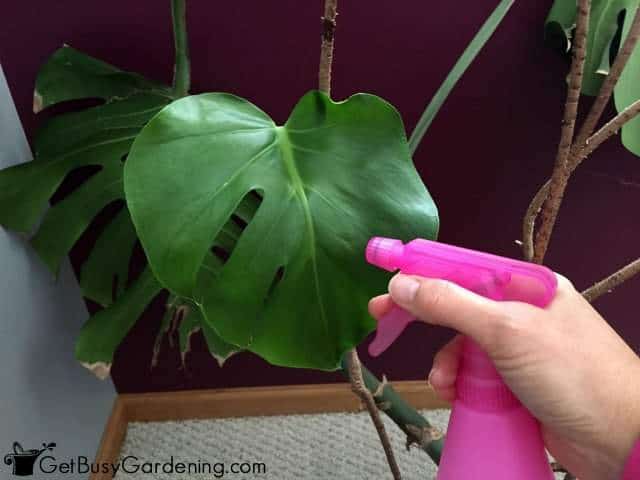
Additional Tips For Applying Neem Oil
I wanted to mention a few other key tips about applying neem oil on your plants so that you will have the best possible success using it. Here are some additional pointers:
- For best results, be sure to douse your plant until it’s dripping wet, and get into every nook and cranny that you can.
- I recommend moving houseplants to a shower or sink, or outside if it’s warm enough, to avoid making a mess indoors.
- It’s not likely that you’ll get rid of an insect pest infestation with one application, so you have to be persistent.
- You can also use neem oil as a drench to kill annoying bugs in the soil as well, just take care not to overwater your plant in the process.
Related Post: Fungus Gnats vs Fruit Flies: What’s The Difference?
How Often To Apply Neem Oil
You should spray your plant with neem oil weekly until you no longer see any bugs. If you have one that’s plagued by recurring infestations, then use it monthly as a preventive treatment.
For fungus and disease control, it’s best to start applying it to your most susceptible plants at the beginning of the season, or as soon as you see symptoms. Then spray it weekly to stop the spread.
Remember that neem oil has a slight residual effect, so you don’t have to treat your plant every day like you would with other natural insect pest control methods.
FAQs
To me neem oil smells nutty. While it has a strong and distinct odor, it’s not unpleasant. But some people don’t like it, and they think it smells bad. So it may be different depending on the specific brand you buy. The aroma is short-lived and goes away once it dries.
How long does neem oil take to work?
It takes a few days for neem oil to start working once the bugs eat it. But it also smothers some of them on contact, so you should begin to see an improvement right away.
If you have never used neem oil to kill bugs on your plants, I highly recommend trying it. It’s by far one of the best natural pest control methods I’ve ever used.
If you’re struggling to keep bugs off your indoor plants, then my Houseplant Pest Control eBook is for you. It will show you how to identify which one is infesting your plant, and show you exactly how to get rid of it FOR GOOD! Download your copy today!
More About Houseplant Pests
Have you ever tried using neem oil on plants? Share your experiences in the comments below.

Dondi Black says
I’m treating herbs that are growing indoors in a hydroponic system. Any concern with the Neem oil affecting the taste of the herbs?
Amy Andrychowicz says
If you plan to use neem oil on herbs, then I would definitely wait until your pest infestation is gone before eating them. I’m guessing if you ate your herbs shortly after spraying them with neem, they would not taste good.
Tom says
If I sprayed neem oil on my tomatoes are they safe to eat?
Amy Andrychowicz says
If you sprayed neem oil on the leaves only, then the fruit is safe to eat. If you recently sprayed it directly on the vegetable itself, then I would either wash it with soap and water, or wait a few days before eating it.
Damini says
Can I use any other liquid soap since I don’t have one you mentioned?
Amy Andrychowicz says
Yes, as long as it’s a mild liquid soap. Do not use anything that has a degreaser or detergent in it, or any other similar chemicals. Those harsh soaps could harm your plants.
Tania says
How often do you spray neem oil mix on an infested plant? Daily ? Weekly?
Amy Andrychowicz says
You don’t need to spray neem oil on the plants every day, because it has a residual effect. But you can do it weekly for a heavily infested plant, until you start to notice less bugs. Then, I usually spray mine every two weeks until all signs of the bugs are completely gone. Good luck!
Sue says
Is it 1 and a half teaspoons of neem oil or one x half teaspoon?
Amy Andrychowicz says
It’s one and a half teaspoons of neem oil. 🙂
Martin says
I used neem oil and soap mix on a chili plant and the leaves all went black. It has new green leaves growing but still has aphids. Should I use it again at a low dose? I think I might have made it too strong or sprayed it in the morning and the sun did the damage, not sure.
Amy Andrychowicz says
Oh no, sorry to hear about the damage to your chili plant. Definitely make sure you’re not mixing the neem oil spray too strong. It’s also important to always use mild liquid soap, rather than one that contains degreasers or detergents, as those can damage plant leaves. As for the timing on the spray, it sounds to me like you might be right about the sun causing the damage. It’s best to spray plants in the very early morning so the leaves dry before the sun reaches its strongest, or it could cause sunburn. Also, always test any type of plant spray on a few leaves to make sure there’s no damage before treating the whole plant. Good luck!
Elyse says
Hi there, could I add some hydrogen peroxide to your NEEM OIL INSECTICIDE RECIPE?
Amy Andrychowicz says
I have never tried adding hydrogen peroxide to it, but I don’t see any reason why you couldn’t. You certainly don’t need to though.
Sandra Miceli says
I have read all the interesting questions and answers to learn as much as I can. Usually I only spray insecticidal soap and besides it getting expensive for so many houseplants plus I spray them twice over 2 days to make sure I get all the bugs I still get new bugs over the winter and with hardwood floors, it gets very messy to spray again so I’m going to give the neem oil and the soup you use a try. One important question nobody asked, I have cats and a dog. Is neem oil safe in case they lick the plants?
Amy Andrychowicz says
First off, I would recommend that you ask your veterinarian about the safety of using neem oil around pets before spraying your plants. I am not an animal expert, and don’t want to give you the wrong advice. A quick phone call should do the trick. 🙂 I would also recommend wiping up the overspray after using it in your plants to prevent your pets from licking it up (for the record, my cats don’t like the smell, and have never tried licking it up, but all pets are different).
Silvia Martinez says
Hi Amy,
I am a bug freak!! I run even if I see a fly! I love plants and have a few outside for the summer. I have a beautiful Spider plant, which I want to bring inside soon, however I am afraid that I will bring any type of insects or bugs along with it. By reading your blog I see that neem oil will help. What treatment and for how long would you recommend? How long will it take to be “safe” to move inside after treatment?
Amy Andrychowicz says
LOL, I am the same way! I flinch whenever I hear buzzing. You certainly could use neem oil to kill any bugs that are on your plant, but I have a much faster method for you… How To Debug Plants Before Bringing Them Indoors. If it makes you feel better, then you can try that, and also spray your plant neem oil before you bring them indoors. But, soaking them as explained in that article will kill any spiders or other bugs that are living in the plant.
Sonia LaMountain says
I bring all my house plants outside every summer. Will it do any good to use the Neem oil before I bring them out? I always spray them before bringing them in.
Amy Andrychowicz says
No, I wouldn’t recommend spraying your plants with neem oil before putting them outside. There are predatory insects outside that usually help to keep any houseplant pests under control. So, it’s best to just leave them be for the summer, and let nature take its course. I recommend debugging them before bringing them back indoors. Then just use neem oil on your plants that are inside when necessary.
Kent Walton says
Can neem oil be used on eggplant to control flea beetles. Will it harm the eggplant leaves?
Amy Andrychowicz says
Yes, neem oil will help to control flea beetles. It shouldn’t harm the eggplant leaves. But if I were you I would test it on one leaf first to make sure. Leave it on for a day or two before spraying the whole plant.
T.llama says
I have a very persistent scale infestation on several of my succulents. I’ve tried chemical pesticides, neem oil and dr.brommer’s soap spray with and without rubbing alcohol in the mix, rubbing alcohol itself, capsicum garlic onion turmeric spray… i even tried asking them nicely to leave. Nothing has worked. I toss out infested leaves. I sanitize all of my equipment pots everything, I’ve sterilized the soil i use. What do i do now about these pests?
Amy Andrychowicz says
Oh no, sorry to hear about your scale problem!! Scale is one of the most difficult pests to get rid of. They can hide in places that you wouldn’t expect, and re-infest the plant even after you’ve cleaned and debugged it. They can hide in places like under the rim of a pot or plant tray, on the bottom of it, or even in crevices in the area around the plant. So, you can spend all that time debugging the plant, only to put it back in the same spot or miss some on the pot or plant tray, and your plant ends up becoming infested again a few weeks later. It also takes a lot of persistence to get rid of houseplant scale for good. So, my recommendation is to continue treating the plant for several months, even after you see no signs of scale. Also, isolate the plant, clean the pot, plant tray and the area around the plant well with rubbing alcohol or soapy water. You might even try moving the plant to a different area. Remember that the eggs are nymphs are tiny and very difficult to see.
Denice Rayburn says
Can I use this on the fungus gnat infestation I have in my herb garden? I’m growing sweet, cinnamon, lemon, lime and thai basil as well as peppermint, spearmint, oregano, thyme and cilantro. I’ve got a horrible infestation and while I’ve done the hydrogen peroxide drench, I’m wondering since this has a residual effect, can it be used on the herbs or will that make them unfit for eating?!?!?
Amy Andrychowicz says
You can try using neem oil as a soil drench. But neem oil does take time to work, and usually takes several treatments to get rid of the pest insects. Fungus gnats are a sign that you’re overwatering, so the first thing I would do is allow the soil to dry out more between waterings. Here’s an article about how to get rid of fungus gnats. However, when you say they’re in your “herb garden”, do you mean a garden that’s outdoors? If so, I wouldn’t worry so much about the gnats, they won’t harm the plants. But, like I said, they are a sign that you’re overwatering, which will eventually be what kills your plants.
kelly says
Hello, i made a homemade solution of neem-oil fungicide (1tsp neem-seed oil, 1 tsp sunlight soap, 1 litre of water) to kill some spider mites infested in a few orchid plants (which are still blooming) and the blooms are now shriveling up and falling off of the plant. Have i killed my orchids? i sprayed the roots and the leaves outside and I’m concerned this was not the right thing to do… if so, how can i clean the roots properly to ensure survival. Also i used neem-seed oil i purchased from a homeopathic shop. Does this make a difference? Any advice on how to save my babies would be greatly appreciated!
Amy Andrychowicz says
Sorry to hear that your orchid is suffering from spider mites. I always recommend testing any type of insecticide spray on a leaf before spraying the whole plant because some types of soaps can be harmful to plants. I’m not familiar with the type of neem oil you purchased, but I would check the label to make sure it’s pure neem oil and doesn’t have any other additives. If the stuff you bought was made for cosmetic use, it could have some other types of oils or things added to it that may have harmed your plant. I would leave the plant alone and treat it as you normally would until it recovers. You could try rinsing the leaves and flushing the roots, which may help to rinse off the soap. If the spider mites come back while the plant is still recovering, you can mist it with water and gently wipe the spider mites off the plant until it’s healthy enough to try a different type of spray. Good luck, hope it recovers!
Kelsey says
Hi Amy!
Is it possible to use neem oil to PREVENT bug infestations? I found a mealy bug on my zebra plant and now am so paranoid that pests will infest my other house plants even though there isn’t any signs. I have searched the internet and there is nothing about preventing pests, only about controlling them once the plant is infected!
Amy Andrychowicz says
Yes! Neem oil has a residual effect that will prevent bugs from infesting your plants. So you can spray it on plants to prevent an infestation.
Anna says
Hi Amy, thanks for your great post! I’ve read online that homemade neem oil solution should be used immediately (within 8 hours). Have you found that applying neem oil solution that’s been sitting in the spray bottle for a few days or weeks is still effective? Or do you think a fresh batch of solution should be made for the testing phase and another batch a week later if the test leaf is undamaged? Thank you for the guidance!
Amy Andrychowicz says
I leave my homemade neem oil solution in the spray bottle, and haven’t had any issues.
Barbara says
Your tip about not using grease cutting dish soap is excellent. I’m now wondering if any Dr Bronners Soap will work? Can’t imagine the baby soap is magical compared to all the other varieties. I have outdoor scale and black sooty mold on my gardenia. I’ve read I need fish oil for the outdoor scale. Another question, my neem oil is about a year old and was not refrigerated. I’m not sure if it’s lost its effectiveness (hate to waste my time for nothing)! My neighbors have constant, severe mite infestations on their shrubs and it’s a constant battle. ?
Thank you!
Amy Andrychowicz says
The reason I recommend using Dr Bronner’s baby mild liquid soap over the others is because the scented ones have essential oils in them. Some plants can be very sensitive to oils, and certain types of oils may end up damaging the plant leaves. You might be able to use them with no problems, but I have never tested them, so I can’t recommend them. 🙂 I’ve never heard of using fish oil for scale. Neem oil works great on scale, so you can just stick to using that since you already have it. I’m not sure about the age of your neem oil, it might depend on the type you have I suppose. I’ve had mine for a few years and don’t refrigerate it, and it still works just fine. Mine is a concentrate though, so if yours has other additives, then it may be different. Check for an expiration date on the label.