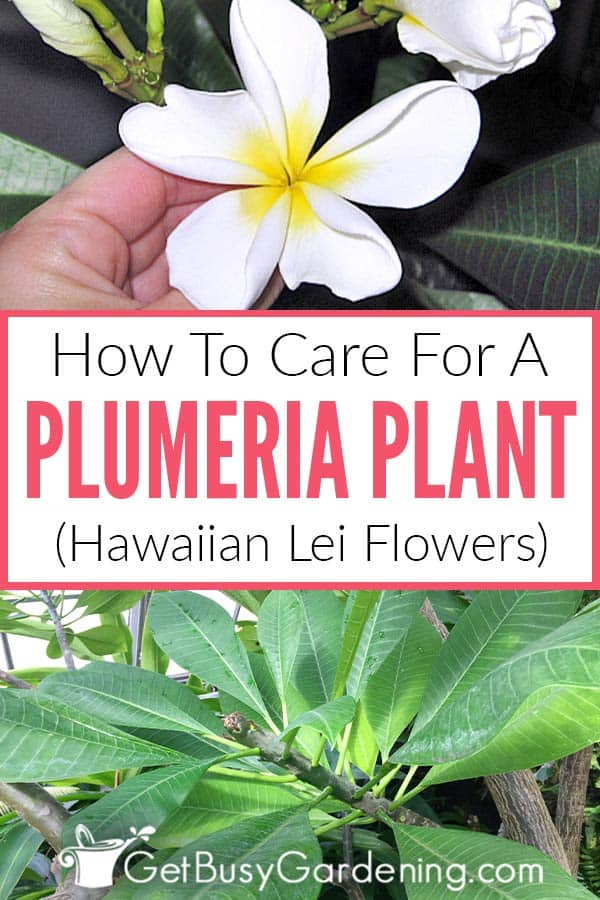
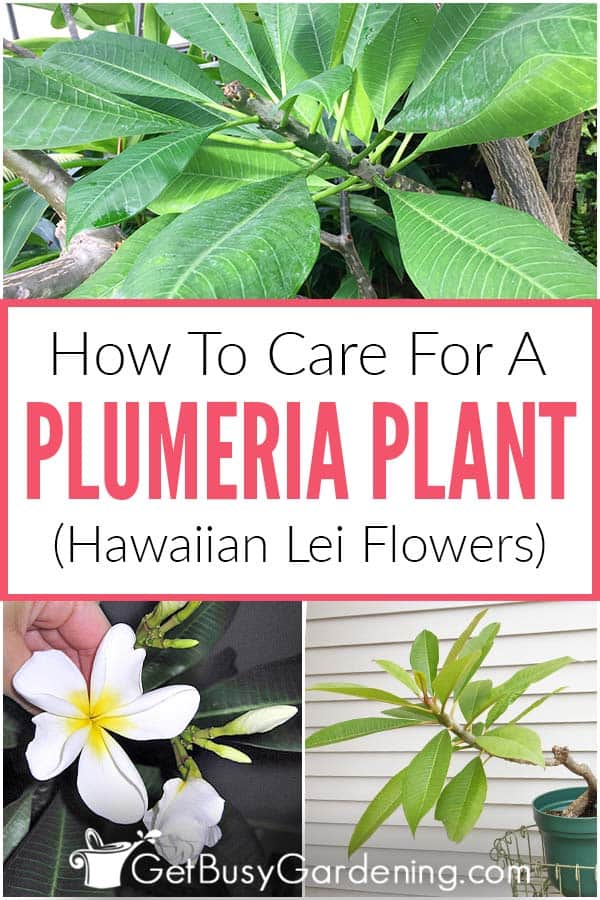
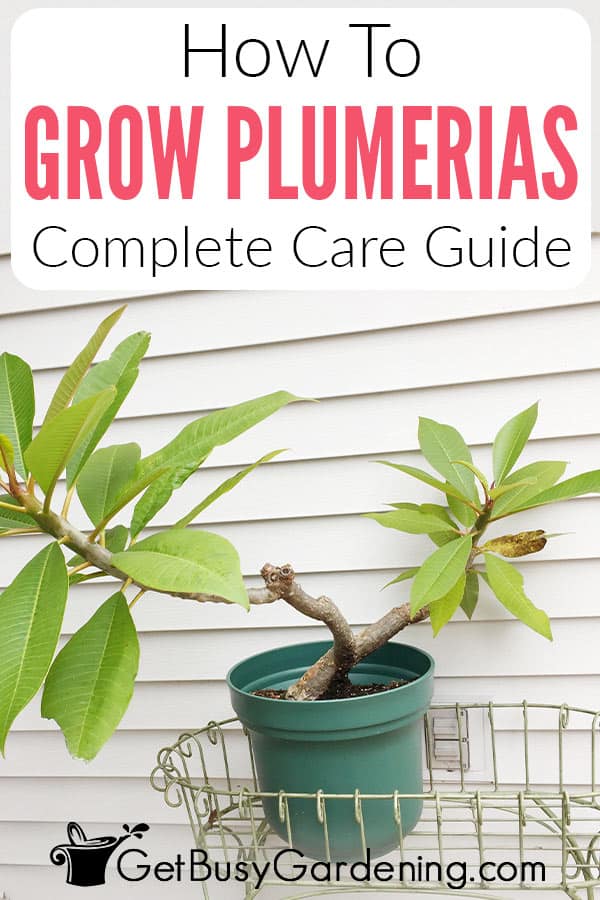
Plumerias are so exotic and beautiful that it seems like they would be difficult to care for. But they’re actually quite easy to grow once you learn how.
In this post, I’ll tell you all you need to know about how to grow plumerias, including water, soil, fertilizer, and light, as well as tips one propagating, pruning, flowering, and more.
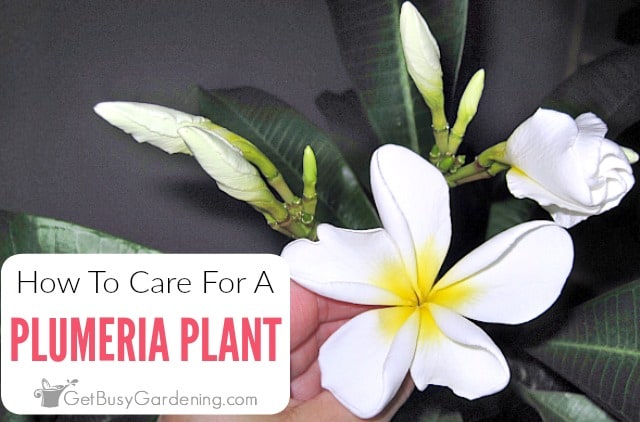

When I think back to my trips to Hawaii, one thing that I remember the most was all of the gorgeous plumerias growing and blooming everywhere.
So of course, I absolutely had to bring one home with me when I went back to Minnesota.
My new baby Hawaiian lai plant was only about a foot tall when I got it, and it bloomed shortly after I brought it home.
I instantly feel in love, and was pleasantly surprised by how low maintenance it was. If you want to try one for yourself, then you’re in the right place.
Below I’ll tell you everything you need to know about their care, and show you how to grow plumeria no matter where you live.
Plumeria Quick Care Overview
| Scientific name: | Plumeria |
| Classification: | Tropical plant |
| Common names: | Frangipani, Hawaiian Lei Plant, Kalachuchi, Champa Flower |
| Hardiness: | Zones 10+ |
| Temperature: | 60-75°F |
| Flowers: | Colors and bloom times vary by species |
| Light: | Full to partial shade, bright light indoors |
| Water: | Allow soil to dry slightly, do not overwater |
| Humidity: | Moderate to low |
| Fertilizer: | Flowering plant food in spring and summer |
| Soil: | Fast-draining, fertile soil |
| Common pests: | Spider mites, whiteflies |
Information About Plumerias
Plumerias are popular tropical plants that can grow into huge trees in their native environment.
You might know them better as a Hawaiian Lei Plant (plumerias are the type of flowers traditionally used to make leis), or maybe by their less common name, Frangipani.
But don’t let their common name fool you, they aren’t actually native to Hawaii. They’re originally from the tropical regions in Central and South America, as well as parts of the Caribbean.
Different Types Of Plumeria
There are several different varieties of plumerias, some can become large trees, while others are smaller shrubs. But they all require the same care and attention. Here are a few of the most common.
- Plumeria pudica – Also known as Bridal Bouquet because of the white flowers, this is one of the hardier varieties that can survive down to zone 9. It can reach 15-20′ tall.
- Plumeria rubra – This is one of the more common types, and there are several hybrids. Depending on the cultivar, they can grow anywhere from 6-30′. The flowers come in just about any color too, and some can bloom year round.
- Plumeria obtusa – There are a few cultivars of this one too, many of which are shorter dwarf varieties. Colors and bloom times also vary between them.
- Plumeria alba – Sometimes commonly called a Nosegay Tree, this species is another one that can grow 6-30′ in height.
Flowers
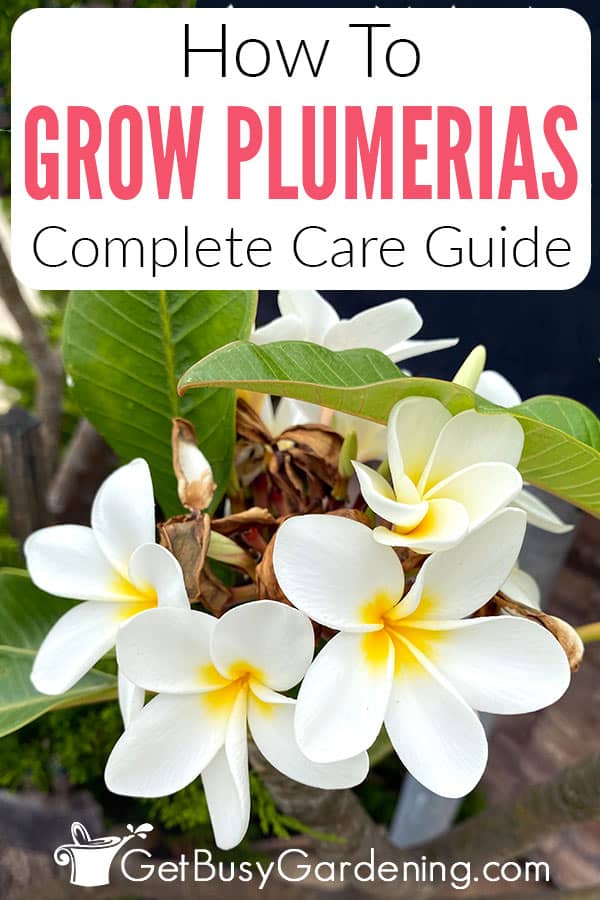
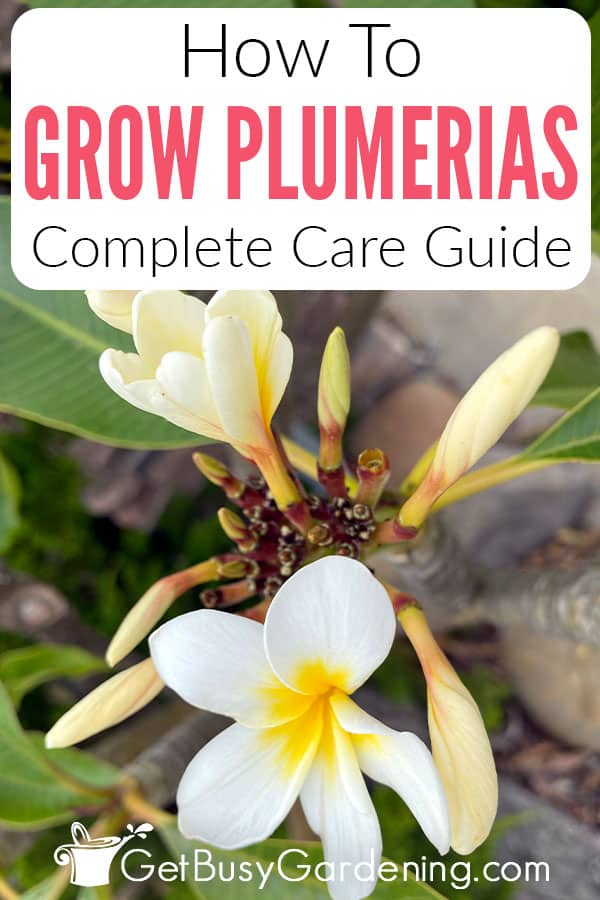
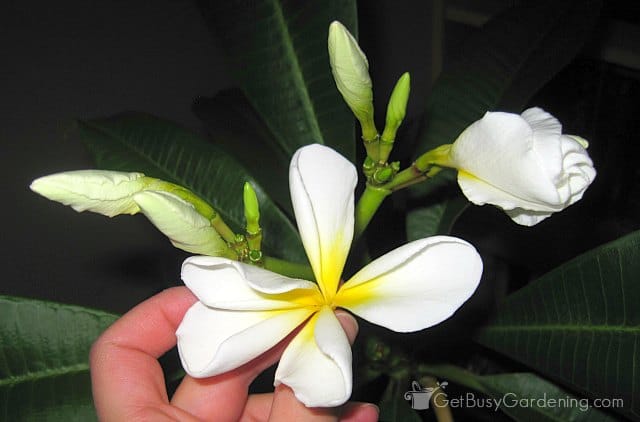
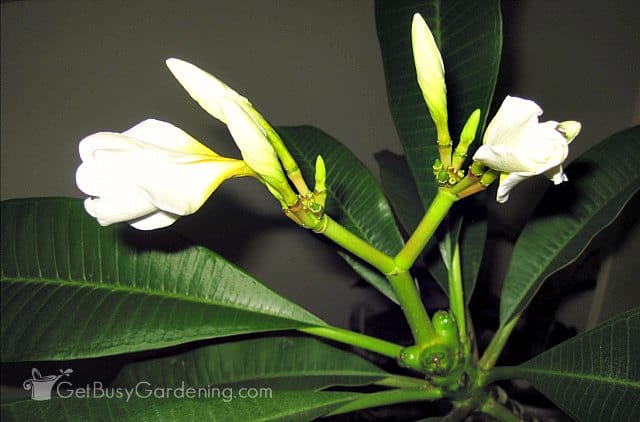
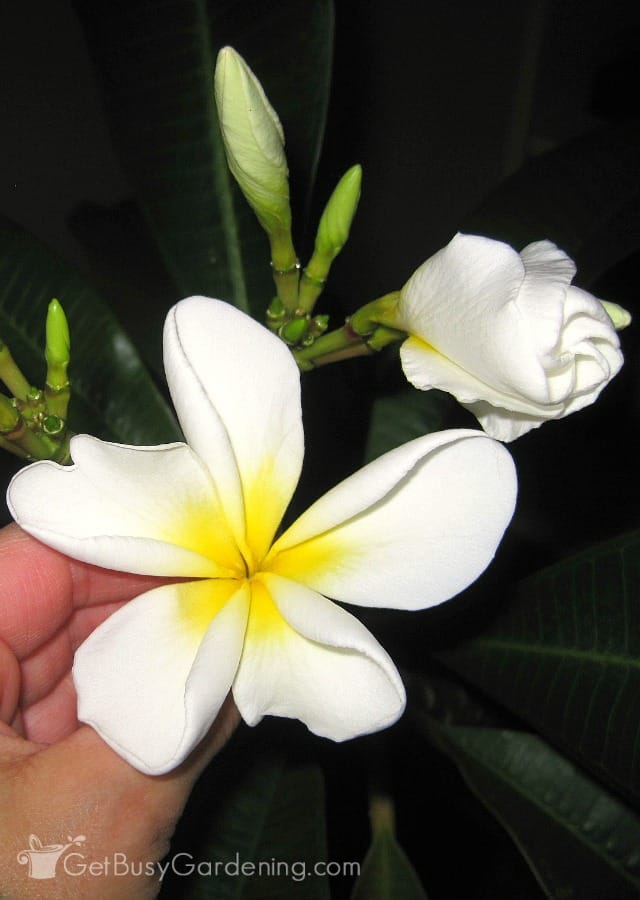
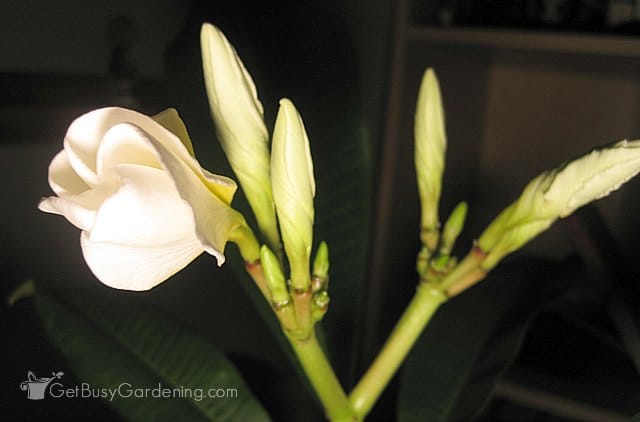
As I’m sure you probably already know, plumeria is prized for their gorgeous, and highly fragrant flowers.
Depending on the species, they can be just about any color, and some individual blossoms even contain more than one.
The time of year totally depends on the variety. Some only flower in late winter through spring or summer, while others will bloom profusely all year long.
Toxicity
The sap can cause irritation for those with sensitive skin, and is also toxic to cats, dogs, and people if ingested.
Though they’re only mildly poisonous, it’s best to keep them out of reach of your kids and pets if this is a concern for you. The ASPCA website is a great source for more information.
How To Grow Plumeria
Before we jump into the details of plumeria plant care, first we should chat about where to grow them. Choosing the right location is key to long-lasting, sustained health.
Hardiness
Most frangipani plants can only live outdoors in zones 10 or higher, though there are few that can survive down to zone 9.
They’re very sensitive to the cold, and will drop their leaves or turn yellow or brown in the fall, even in warmer areas.
Where To Grow Plumeria Plants
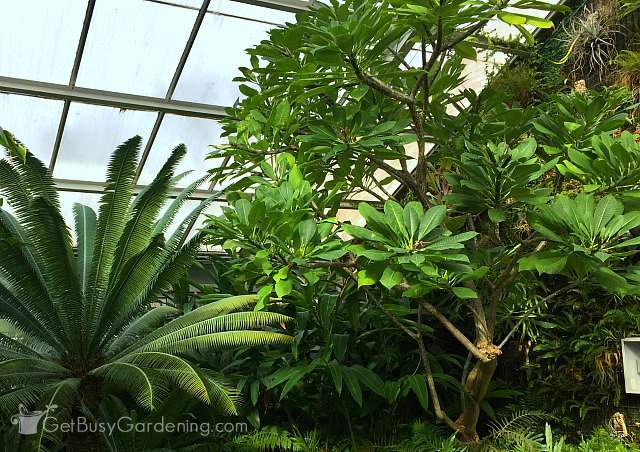
In warm enough climates, plumerias can grow into very large trees, so they will need a lot of space in your yard.
If you want to restrict their size, you can put them in a container instead of in the ground, they do very in pots.
They can also thrive indoors in a spot with plenty of light. Although it’s very uncommon for them to bloom inside the house.
For that reason, I find it’s much easier to put them outside in the summer to maintain their health and growth, and also encourage flowering.
Plumeria Plant Care & Growing Instructions
With the proper care, plumerias can live for many years. Now that you know where to plant them, let’s chat about their needs. Follow these tips to keep your plumeria growing and blooming year after year.
Watering Requirements
Plumerias like a lot of water, but won’t tolerate being overwatered. When they’re too wet, the trunk will rot, and it will eventually kill the plant.
It’s kind of a funny combination, give it a lot of water… but don’t overwater? I know, but don’t worry it’s actually pretty easy. A moisture gauge will help you get it right.
During the summer months, give it a really good, deep drink. Allow the excess to drain completely, and wait until it’s mostly dry before adding more.
Since they go dormant during the winter, it’s best to water them very sparingly, if at all, during those months.
Humidity
You might be surprised to learn that plumeria plants prefer moderate to low humidity levels.
If it’s extremely dry in your home, you can place a humidifier next to it to help add extra moisture to the air.
However, be careful misting or spraying them with water, you don’t want to overdo it. If droplets are constantly sitting on the branches or leaves, it could cause them to rot.
Light Requirements
Plumerias need full sun in order to grow their best and also to bloom, otherwise they will become sparse and leggy.
If yours is outside, put it in a full sun location. Otherwise if it’s indoors year round, then you’ll likely need to get a grow light.
When you move it outside for the summer, don’t give it full exposure right away, or it could burn. Instead, put it in the shade for a few days, and gradually introduce it to a full sun location.
Temperature
Plumerias are not cold hardy plants. Their ideal temperature range is between 60-75°F.
If it gets much colder, they’ll start dropping their leaves, and below freezing temps will quickly kill them. Even a light frost can damage the tender branch tips.
Hotter weather doesn’t often bother them, though the high heat in arid climates will dry them out too quickly.
Best Soil
The best soil for successful plumeria plant care is a fast draining mix that’s slightly acidic, ranging between 6-7 on a pH meter.
You don’t necessarily need to buy any special type, and you can even make your own if you want.
I grow mine in a homemade mixture of 2 parts general purpose soil with 1 part each of either perlite or pumice, and sand.
Find out more about how to choose the best soil for your plumeria, including my recipe to make your own in my detailed guide.
Fertilizer
As I already mentioned, plumerias are very heavy feeders, and fertilizing is an important part of their care.
They need a type that is high in phosphorus in order to bloom. Apply an organic liquid flower food every 1-3 weeks in the spring and summer. You can also apply granules monthly to provide even more nutrients.
Fertilize them from spring through summer, and stop in early fall. Then don’t feed them at all during the winter.
Repotting
With the proper care, frangipani trees can grow very rapidly, and may need repotting every 1-2 years.
When roots begin to come out of the drainage holes, or growth slows, it’s a sign they need to be sized up.
In the spring, move them into a container 2-4” larger than the current one. Replant it at the same depth, and expect some leaf drop or drooping as they recover.
If you want to limit their size, simply refresh the top few inches of soil and trim away some of the roots.
Tips For Controlling Plumeria Pests
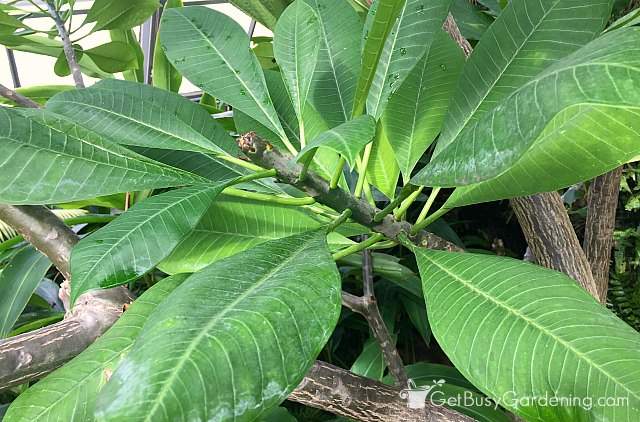
Though pests aren’t usually an issue outdoors, plumerias can have problems with spider mites and whiteflies indoors.
If yours gets attacked by bugs, begin treating it right away. I recommend using neem oil, which is a natural pesticide that works great.
Organic insecticidal soap is also a good option. I sometimes make my own by mixing 1 tsp mild liquid soap per 1 liter of water.
Pruning
Plumeria plants benefit from regular pruning as a part of their care routine. They can handle being trimmed back pretty severely, but never cut them all the way down to the ground.
The best time to do it is in the spring, or right after they’re done blooming.
Use sterile and sharp pruning shears so you get a nice clean cut. For thicker branches, you may need to use a lopper. Also, wear eye protection and gloves to protect against the sap.
Always make your cuts at a downward angle, so water can’t settle into the wound and cause the branch to rot.
Plumeria Propagation Tips
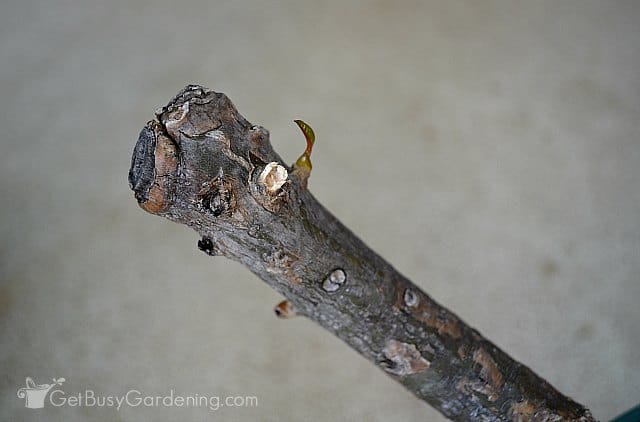
Though they can be grown from seed, most home gardeners propagate their plumeria by taking cuttings.
It’s pretty easy to do. Simply take a section from a healthy branch, remove the flowers and leaves, and allow it to cure for several days.
Dip the cut end in rooting hormone, then place it into a slightly moist medium. Keep it in a warm spot until you see new growth on top. Get my step-by-step tutorial for how to propagate the cuttings here.
Plumeria Winter Care & Dormancy
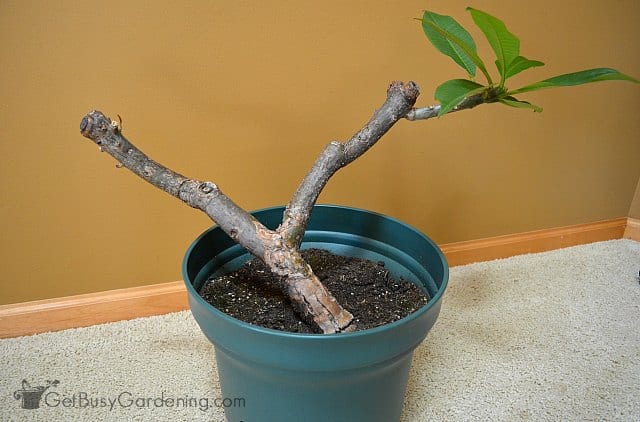
Once the temperature starts to cool in the fall, and there’s less sunlight, your plumeria will start to go dormant naturally. This is the time to stop fertilizing, and slow down on watering.
The leaves will turn yellow and then brown before finally dropping off. This is totally normal, so don’t panic. It might not drop all of the leaves though, and that’s ok too.
If you live in a cold climate, this makes is much easier to overwinter them indoors. So there’s no need for artificial lights or a sunny window.
Troubleshooting Common Plumeria Care Problems
Though plumeria are fairly simple to care for, they are notorious for having a few problems. Below I’ll help you troubleshoot and fix the most common issues.
Tip Rot
In my experience, tip rot is a pretty common problem. It happens when water settles in a crack or wound on the end of a branch, which is usually caused by improper pruning or frost damage.
If left untreated, the rot will spread, and could eventually kill the plant. You can save it by cutting off all of the rotted pieces of the affected branch.
Stem Rot
If the stem is mushy and rotting at the base, then you have a more serious problem. Stem rot is caused by overwatering.
If left untreated, your plant will die for sure. If the rot isn’t too severe, you can save it by taking cuttings of the healthy stems or branches and rooting them.
Plumeria Won’t Bloom
This is probably the #1 question I get asked about growing plumerias, and there is one simple answer… fertilizer.
They need fertilizer in order to bloom, and lots of it. The good news is that it’s such an easy fix. Once you get the hang of it, they will flower profusely for you.
Leaves Falling Off / Dropping
Leaf drop can be caused by a lack of water or cold temperatures. It’s natural for them to go dormant during the winter when it gets below 50°F, and this is nothing to worry about.
However, if it happens during the summer, then check to make sure they’re getting enough water. They should never dry out completely. Also inspect the branches and trunk for signs of rot.
Leaves Turning Yellow
Yellow leaves are also a sign that they’re starting to go dormant, however it could be from overwatering, pests, or disease.
Check the soil to make sure it’s not wet or soggy, inspect the leaves for bugs, and verify that the stems are firm and not rotting.
FAQs
In this section I’ve answered some of the most frequently asked questions about plumeria care. If yours isn’t listed, please ask in the comments below.
Are plumeria hard to care for?
No, plumeria are not hard to care for. They’re actually quite easy to grow, as long as you understand their requirements.
How long does it take for a plumeria to be full grown?
How long it takes for a plumeria to be full grown totally depends on the variety. Some grow must faster than others, though on average they can put on 12-36″ per year with the proper care.
Is plumeria an indoor or outdoor plant?
Plumeria can be either an indoor or outdoor plant, depending on where you live. They’re only hardy in the warmest regions, so people in cold climates must bring them indoors during winter.
Is plumeria a succulent?
No, technically plumeria is not a succulent, they are tropical plants. Though they do have some similar care requirements and properties.
Is frangipani the same as plumeria?
Yes, frangipani is the same plant as plumeria. Frangipani is the common name for them. Plumeria is technically the scientific name, though many people also call them that since it’s easier to pronounce.
Plumerias are wonderful plants that are surprisingly easy to care for. Once you know the tricks for growing them, you’ll be able to keep yours thriving for decades to come.

If you want to learn all there is to know about maintaining healthy indoor plants, then you need my Houseplant Care eBook. It will show you everything you need to know about how to keep every plant in your home thriving. Download your copy now!
More Houseplant Care Guides
- How To Grow Begonia Plants
- Wandering Jew Plant Care & Growing Guide
- African Milk Tree: How To Grow & Care For A Euphorbia trigona Plant
Share your plumeria plant care and growing tips in the comments section below.

Lois Morton says
I was gifted a plant from my nephew it’s just sticks right now in a 5 gallon pot I will keep it in the pot as winter months are hard I understand what area should I put the pot in shade or sun?
Amy Andrychowicz says
Full sun is the best location for your plumeria plant. If it gets too much shade, it won’t flower.
Janyce Imoto says
My yard guy accidentally chopped my plumeria with a weed wacker. I had newly put a potted plumeria in the ground in April. She was growing new leaves beautifully. The whack came about 10-12 inches from the ground. The top is around 12 inches. What do I need to do to make sure she survives? I live in Hawaii.
Amy Andrychowicz says
Oh no! I would make a fresh, clean cut to remove the smashed/jagged edge left by the weed wacker. Make the cut at a downward angle so water can’t pool in the wound. It should callous over and then new leaves should start forming just below the cut, and your plumeria should branch out from there.
Barbara Marie Freeman- says
I have 4 plumerias each appx 6 feet tall. They just go straight up with no branches. How do I get them to branch out?
Amy Andrychowicz says
To get your plumerias to branch out, you need to prune them. Wait until spring once they start to put on new growth, and then make your cuts at a downward angle so water can’t pool in the wound.
Lissa says
Does anyone know if they are deer resistant?
I am ready to move into the ground but gotta be careful of deer path in my yard.
Amy Andrychowicz says
I do not believe plumerias are deer resistant. I personally haven’t had deer touch mine, but I’ve heard other people say that deer have eaten leaves and stems off theirs, so I would definitely protect your tree to be safe.
Charlene says
How long should l expect blooms from a cutting?
Amy Andrychowicz says
Plumeria cuttings can bloom the first year, as long as they have the right care. Here’s my complete guide with all the details of how to care for them.
Lori Donovan says
Hi Amy, I planted a healthy 8 inch cutting 3 inches deep in a 6 inch pot having dipped the end in rooting hormone. I watered it thoroughly and haven’t watered it since. It had some green on the top and that has remained the same. It is now almost three weeks later and nothing has changed. So I pulled it out of the soil, which was dry, and zero root growth. It is firm and not squishy at all, so it doesn’t appear to be rotted. What should I do next? Make a new fresh cut off the bottom and let it harden I we and plant again?
Amy Andrychowicz says
Definitely give it more time. They can root in as short as 2-3 weeks, but that’s with ideal conditions. Keep it in a bright, warm, and humid location out of the direct sun. The soil should be on the dry side, but not completely bone dry. For more details, here’s my complete guide for how to propagate plumeria cuttings.
Rosemary Harris says
I have a plumeria that is planted in a pot, brought in for the winter, and now moved back outside. The leaves were knocked off in a hard rain recently, so, there are 3 bare stalks growing from one stalk (not very attractive). Now, leaves are growing from the 3 stalks. Would you cut the main stalk down close to the container or leave it alone?
Amy Andrychowicz says
I would leave it alone, unless the tips are also damaged. If the stem is not damaged, eventually your plumeria will grow new leaves.
Nancy says
I have a few potted plumeria that I keep dormant/in house in the winter. I’d like to take a cutting from one of them. Do I do it before bringing it out of dormancy?
Amy Andrychowicz says
You can take cuttings anytime in the early spring through summer. Here’s my complete guide for propagating plumerias for more information.
Jeanette Madianos says
I have a plumeria plant (frangipani Maybe} which I keep in a sunny window indoors because I live in Pennsylvania with a cold climate in the winter.Only 1 stalk has been flowering daily for almost a year and I am delighted. Because its leaves are browning and dropping I fed it a potassium rich fertilizer last week. Now it has some insect infestation whic h I treated wiht insecticidal soap spray. Where do I go from here?
Amy Andrychowicz says
Yes you’re right, the common name for plumerias is frangipani – I believe it’s Hawaiian. They naturally go dormant in the fall/winter, so that’s probably what’s happening to yours. If so, it’s best to just let it happen, rather than trying to keep it growing, or you may end up killing it. Here’s an article about how to overwinter them that will help.
Steven Kelley says
GROWING FRANGIPANI in Arizona. We were gifted a couple of plants a few years ago. Now through cultivation and propagation, we have two groves. We kept Grove 1 (G1) under a camouflage netting during the extreme heat days when the sun was so intense. The cuttings taken in January 2022 are now in the ground as G2.
Amy Andrychowicz says
Wow, now that is impressive!