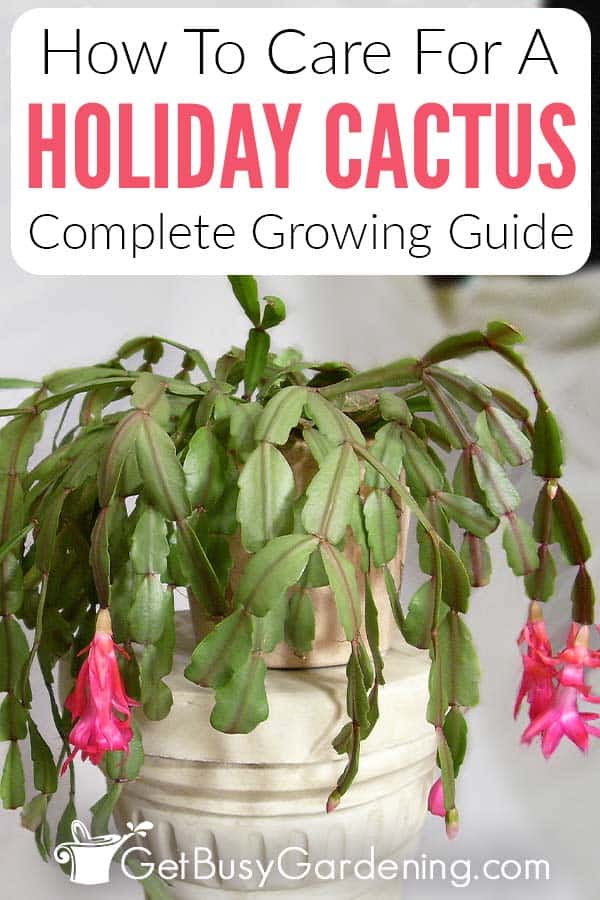
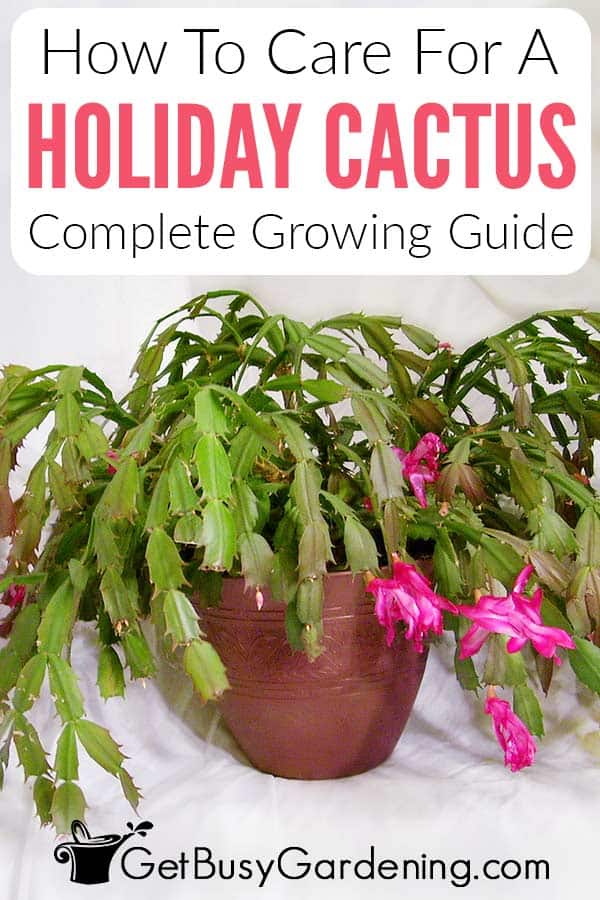
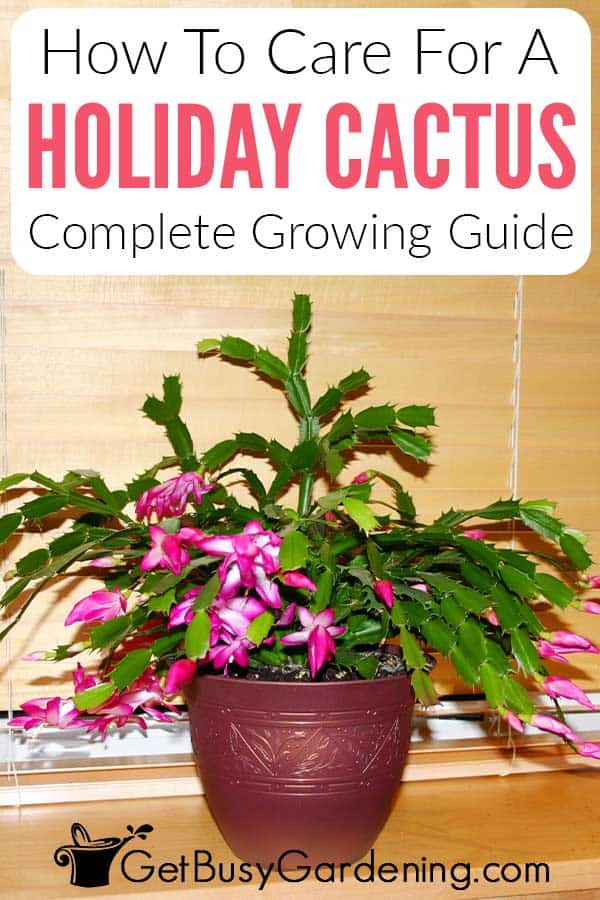
Holiday cactus are gorgeous and easy to care for. In this post, I’ll tell you all you need to know about them, and give you tons of growing tips for keeping them healthy and blooming year after year.
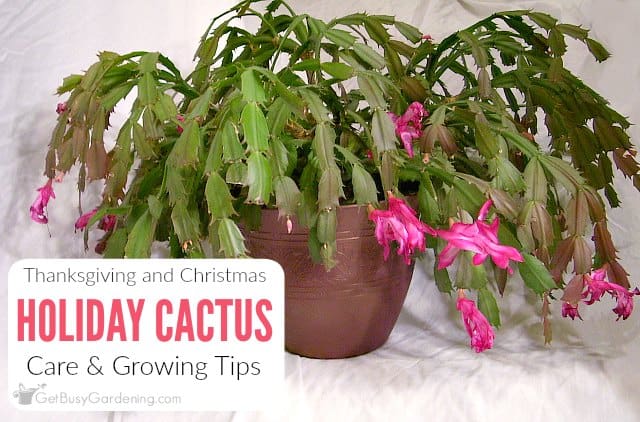

Once the summer is over, most of my houseplants are getting ready for their long winters rest period. But, this is when my holiday cacti are just beginning to come alive.
I love that they flower at an opposite time than most others. They add so much cheer and color into my house during the darkest, coldest months of the year. That’s why they made my list of the best indoor flowering plants!
There are three main types that come in many different colors, but they all require similar care. The good news is that they’re all easy to grow, and can live for decades.
In this article, I’ve put together a detailed list of tips on how to care for your holiday cactus plant during the season, and keep it healthy all year round.
What Is A Holiday Cactus?
Holiday cacti are members of the family Cactaceae and belong to the genus Schlumbergera. Most species originated in Brazil.
In their native habitat they’re epiphytic. That means they grow above ground, attaching to whatever surface is suitable with a strong root system.
Despite the name, they aren’t technically a cactus. Treat them more like succulents, and you’ll have the best success.
Different Holiday Cactus Types
As I mentioned above, holiday cacti come in many colors, but there are three main types: Christmas, Thanksgiving, and Easter. Below I’ll give you quick tips, but you can learn all about how to tell them apart here.
1. Christmas Cactus (Schlumbergera buckleyi)
This variety has the most common name, but it is more difficult to find than the others, so it’s often misidentified.
- Bloom time – Late December, right around Christmas time.
- Leaves – Has smooth, rounded, scalloped leaves.
Learn all about how to grow Christmas cacti here.
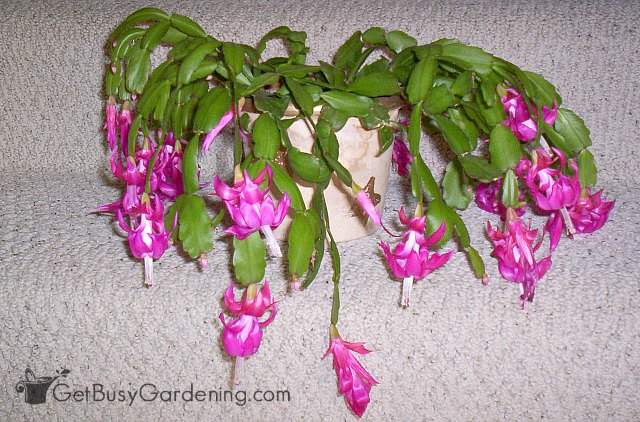
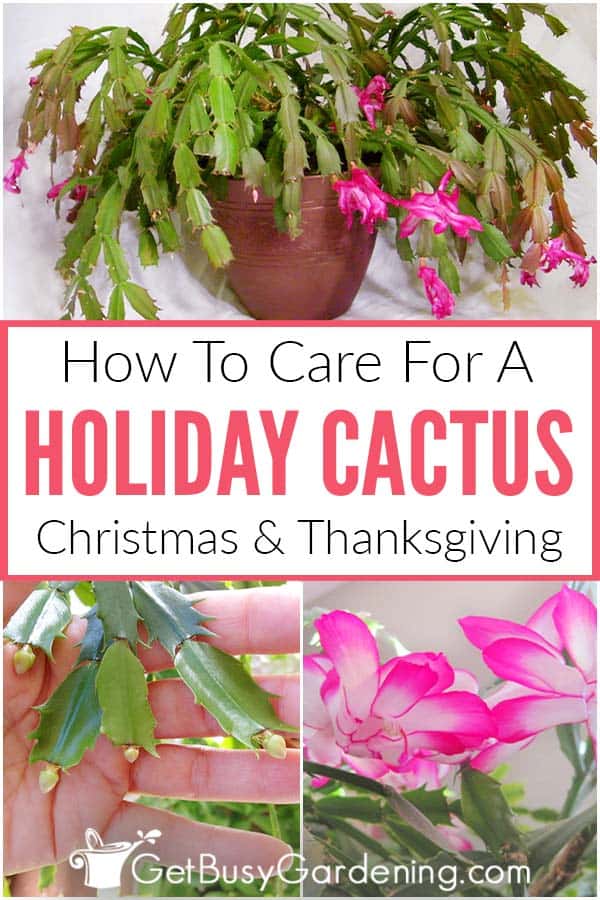
2. Thanksgiving Cactus (Schlumbergera truncata)
Though the name isn’t as well known, this is by far the most popular type, and the one you’re likely to come across in your local garden store or supermarket.
- Bloom time – Mid-November, peaking around Thanksgiving in the US.
- Leaves – Has pointy leaves.
Learn all about caring for a Thanksgiving cactus here.
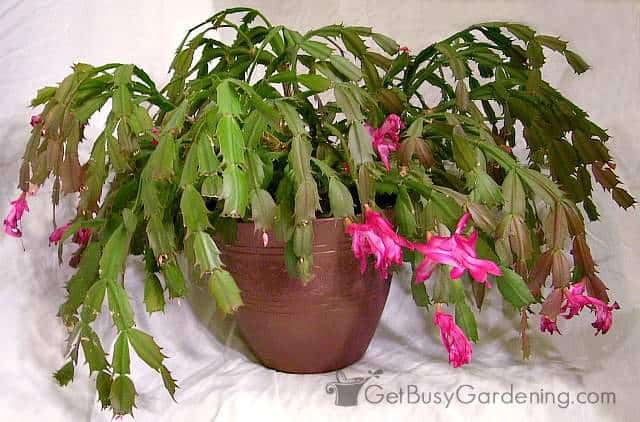
3. Easter Cactus (Schlumbergera gaertneri)
This type of holiday cactus is much easier to distinguish from the others, as it looks very different and flowers earlier in the year.
- Bloom time – Early spring, right around Easter time.
- Leaves – Has larger rounded leaves that are only slightly scalloped.
Learn how to care for an Easter cactus plant here.
Flowering & Bloom Time
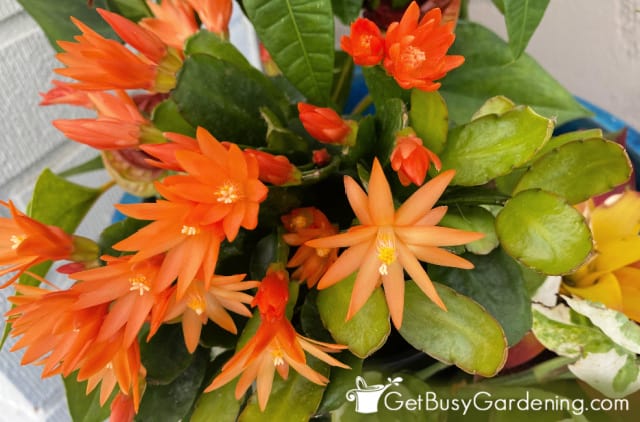
Each of these plants normally start flowering around the holiday they are named for, but sometimes they’ll bloom earlier or later. This is common, but don’t worry, it won’t hurt your plant.
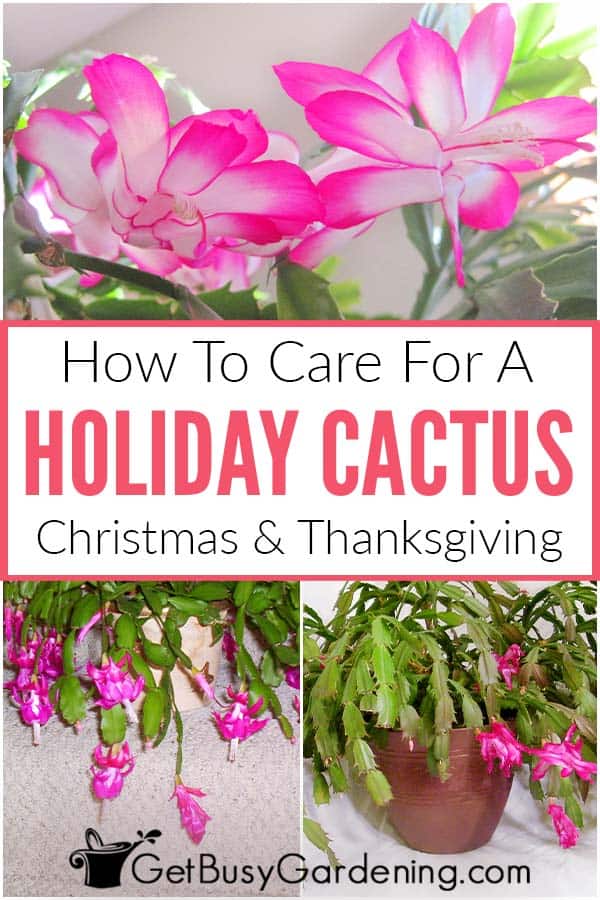
The shapes and colors of the flowers vary depending on the variety, and this is one way to tell them apart.
Holiday Cactus Care & Growing Instructions
No matter what type of holiday cactus you have, the growing requirements are almost identical for all. Follow these detailed care tips to keep yours thriving so it will flower every year.
Light
Holiday cacti require a lot of light to flower, but never direct sun. They will thrive near a bright window with south, east, or western exposure. You can use a grow light if your home doesn’t get enough natural sun.
Be sure to keep them out of the full sunlight at all times, or the intense rays and heat could damage the leaves and hinder blooming.
Water
It’s very important not to over or under water your holiday cactus. Improper watering can cause root rot, leaf loss, and bud drop.
The soil should always feel slightly dry before watering again. When in doubt stick a finger one inch deep – if it feels wet, wait a little while longer.
If you struggle with watering correctly, I recommend buying a soil moisture gauge to make it easy.
Related Post: How To Water A Succulent Plant
Humidity
Since they are epiphytes, they draw moisture from the air more than from the soil. So humidity is an important part of successful holiday cactus care. You can increase it by misting them or adding a humidifier near the plant.
But remember that they are succulents, so don’t overdo it. Standing water on the leaves can cause them to rot, especially indoors. It’s not usually a concern outside, though they can rot in extremely humid and wet climates.
Temperature
They do best with mild temperatures. Too much heat will dry them out, or cause them to drop the flower buds. While too much cold could cause them to lose their leaves, freeze, or rot.
Temperature changes are also very important for proper flowering. To trigger blooming, they need it to stay around 60-70 degrees Fahrenheit during the day, with cooler nighttime temperatures of 50-65°F.
Related Post: How To Get Your Thanksgiving Cactus To Bloom Again
Fertilizer
You can fertilize your holiday cactus every month during the spring and summer with a water-soluble plant food.
A general purpose indoor liquid fertilizer works great. Alternatively you could use compost tea, or one specifically made for flowering plants.
Stop fertilizing them in late summer, and do not feed them at all in the fall and winter. Then start again in the spring.
Soil
Schlumbergera plants aren’t picky about the type of soil. But it’s very important to use a mix that is fast draining so it doesn’t hold too much moisture.
I like to amend a general purpose soil with equal parts perlite and coarse sand or pine bark. If you prefer, you could use a succulent mix instead.
But, since they are epiphytes, they don’t require soil at all. You could mount them on a board or log using sphagnum moss instead of putting them into a pot.
Repotting
All types of holiday cacti like to be pot-bound, and will produce more flowers that way. So wait until they have completely outgrown their current container before repotting.
If yours needs to be repotted, it’s best to do it in early spring. You can use a general purpose soil, or a well-draining mix.
It’s essential to put them into a container that has drainage holes to prevent overwatering. Choose a pot that is one size larger than the current one. If it’s too big, it could hinder flowering.
Pruning
It’s not necessary, but pruning will encourage branching for a fuller, bigger plant. The best time to prune them is in the spring, after they’re done flowering.
Use sterile and sharp snips to trim off full branches or individual pads. You could also pinch them out by gently twisting them off at the leaf joint.
Pest Control Tips
Though it’s not very common, holiday cactus can sometimes be attacked by mealybugs or scale. In all of the years I’ve grown them, I’ve never had any issues with pests.
But, if you notice any of these bugs on your plant, treat them immediately so they don’t spread, and keep an eye out for more.
Use a cotton swab soaked in rubbing alcohol to remove and kill them. An organic insecticidal soap spray or neem oil will also work great. I like to make my own using 1 tsp mild liquid soap to 1 liter of water.
How To Rebloom A Holiday Cactus
If you want your holiday cactus to flower again year after year, it will require some extra care from you. Here are a few steps you can take to help ensure they will bloom beautifully…
- In the fall, keep them in an area where they get 8-10 hours of bright, indirect light during the day, and complete darkness for at least 10-12 hours at night.
- Ideally, the temperature should remain between 50-70°F. But it’s more important that the evenings are cooler than it is during the day, so aim for at least 10°F lower at night.
- Reduce watering during this time, and allow the soil to dry out slightly (but never let it dry out completely).
- When flower buds begin to form, go back to watering as you normally would.
- If your holiday cactus is growing outside, be sure to protect it from frost, or the flower buds could get zapped.
Related Post: How To Get Your Christmas Cactus To Bloom Again
Holiday Cactus Propagation Tips
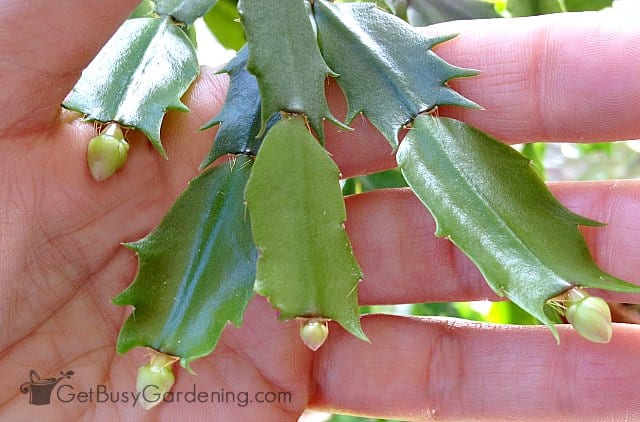
You can propagate new holiday cacti from your plant by taking either leaf or stem cuttings in the spring or early summer.
Dip the cut ends into rooting hormone, then place them into a small pot with slightly moist soil, making sure that the leaves are pointing up. Water sparingly until the new start is rooted.
Related Post: Propagating Christmas Cactus From Cuttings Or By Division
Troubleshooting Common Holiday Cacti Problems
In this section, I’ve listed a few common holiday cactus care problems that may arise, along with some simple solutions.
Limp Or Wilted Leaves
If the leaves are limp or wilted, it is most likely caused by improper watering – either too much or too little.
Allow the soil to dry out between waterings, it should never be wet or completely bone dry. A soil moisture meter is a great tool to help you get it right.
Flowers Or Buds Dropping
Dropping flowers or buds can be caused by improper watering, too high or low of temperatures, or lack of light.
During bud formation, the soil should remain evenly moist. Ensure the temps stay below 70°F during the day, and between 50-60°F at night.
Also, protect it from the direct, hot sun, and give it 8-10 hours of bright light during the day, with complete darkness for at least 10 hours at night.
Holiday Cactus Not Blooming
When Schlumbergera don’t bloom, the main causes are usually that it’s too hot, or they’re getting too much light.
But if you recently repotted or propagated yours, then that could be the problem. It can take year or two for them to get back on a normal flowering schedule.
Leaves & Branches Dropping
Dropping leaves or branches can be caused by several things. Too much direct sunlight, overheating, freezing, sudden environmental changes, root rot, or not enough humidity.
Where To Buy Holiday Cacti
You can find holiday cacti for sale almost anywhere. Because they are so popular, they can sometimes be spotted at big box stores, as well as nurseries and garden centers.
The best time to find them is around their respective holiday. Many times you can buy them at a discounted rate when they are done flowering.
Of course, you can also find them online at any time during the year. Just beware they are often mislabeled.
FAQs About Growing Holiday Cactus
Below I’ll answer some of the most frequently asked questions about holiday cactus care. If you can’t find the answer to yours here, ask in the comments section below.
How long will my holiday cactus stay in bloom?
Exactly how long your holiday cactus will stay in bloom depends largely on the temperature and sunlight it receives.
If kept it in a hot and sunny spot, the flowers may only last for a few weeks. However, with less light and cooler temperatures, those same plants can continue blooming for 4-6 weeks or more.
How do I get my holiday cactus to bloom?
In order to get your holiday cactus to bloom, you’ll need to give it a period of cool temps and complete darkness.
For best results, it should be between 60-70°F during the day, and 10°F cooler at night. Give them 8-10 hours of indirect light during the day, and complete darkness for at least 10 hours at night.
What are the different types of holiday cactus?
There are three different types of holiday cactus: Thanksgiving, Christmas, and Easter. Each one is named after the time of year when the flowers bloom.
Does holiday cactus need full sun?
No, holiday cactus does not need full sun, it needs filtered or indirect sunlight. Too much direct sunlight can burn the leaves and prevent it from blooming.
How often do you water a holiday cactus?
Holiday cactus plants don’t need to be watered very often. Check on them every 7-10 days, and only water when the soil feels dry. They need slightly more moisture while they’re blooming than they do the rest of the year.
When you follow these holiday cactus care and growing tips, your plant will be healthy and happy, and should flower every year just in time for all of those special occasions!

If you want to learn all there is to know about maintaining healthy indoor plants, then you need my Houseplant Care eBook. It will show you everything you need to know about how to keep every plant in your home thriving. Download your copy now!
More Holiday Plant Care Guides
- How To Care For An Amaryllis Plant
- The Ultimate Cyclamen Plant Care Guide
- How To Care For Poinsettia Plants
More Epiphyte Plant Care Guides
- How To Care For An Orchid Cactus Plant (Epiphyllum)
- How To Care For Staghorn Fern (Platycerium bifurcatum)
- Rabbit’s Foot Fern: How To Grow & Care For “Davallia fejeensis”
- How To Care For Fishbone Cactus (Selenicereus anthonyanus)
- How To Care For Ric Rac Cactus (Epiphyllum anguliger)
Share your holiday cactus care tips in the comments section below!

Sharon TenEyck says
My husband gifted me a small holiday cactus this past Thanksgiving. I need to repot it. Must I use soil (as it is in right now) or can I use orchid mix and and an orchid pot? It seems to me this would allow air to the roots and good drainage.
Amy Andrychowicz says
It’s true that holiday cactus plants are epiphytes, and grow on trees or rocks in their natural habitat. However, they don’t grow on the bark like orchids. They thrive on moss-covered branches or in crevices filled with decaying leaves or other materials. So, if you want to try planting yours in an epiphyte mix, then I recommend using a mossy medium, rather than one made of wood chips. Also, they will need a LOT of humidity if you plan to grow them this way, so I only recommend trying it if you live in a humid climate. Otherwise, you will likely have difficulty keeping them happy during the long, dry winter months in a cold climate.
Mary C Nativio says
Took a cutting from my xmas cactus & put the cutting in water placed it on SE window sill & it bloomed. I didn’t see anywhere that they won’t live in water because of root rot. I’m confused why did it bloom?
Amy Andrychowicz says
Most likely your Christmas cactus cutting already had a flower bud on it, and that’s why it was able to bloom when you put it in water. Though they can root in water, I don’t recommend leaving the cutting in water for the long term or it will eventually rot. It’s best to pot it up once it has roots. Enjoy!
Judy Dean says
when the cactus quits blooming and go dormant how offen do yo water the plant?
Amy Andrychowicz says
Once your holiday cactus is done blooming, reduce the amount of water, and keep the soil on the dry side thorough dormancy.
Tammy says
Mine is one happy plant! It blooms several times a year in all seasons! It has for years!
Amy Andrychowicz says
Awesome, sounds you like have their care down pat! 🙂
JoeyMacDougall says
I have some yellow, white and purple cactus however the leaves are pale and almost see thru. I’m trying lower light but they look the same. I live in zone 9/10 in Florida. I have my red and shrimp color high plants almost can’t put my arms around. I need help with my pale babies, any suggestions?
Amy Andrychowicz says
It sounds like your holiday cactus is getting too much sun. I recommend moving it to a spot where it doesn’t get any direct sunlight, especially if you have it growing outside. It can take some time for it to recover after moving it out of the sun. If the leaves have gotten sunburned, they will never go back to normal. They’ll likely eventually drop from the plant, but the new growth should be nice and green.
Marlena says
My thanksgiving cactus has been flowering for years but this year the leaves are shriveling up and dying. What can I do yo save it?
Amy Andrychowicz says
Shriveling leaves on your holiday cactus usually means the plant has been overwatered, but it can be caused by underwatering too. Check the soil to make sure it’s not wet. If it’s moist, then be sure to allow it to dry out completely before watering it again, and be sure the pot has plenty of drainage to prevent root rot. Also check the base of the stem to make sure it’s not rotting or mushy. Another thing that can cause holiday cactus plants to drop their leaves is when the air temperature is either too hot or too cold, or a if they experience a sudden change in temperature. So make sure the plant isn’t being exposed to cold drafts from a door or window, or that it’s getting too hot sitting near a fireplace or heat vent.