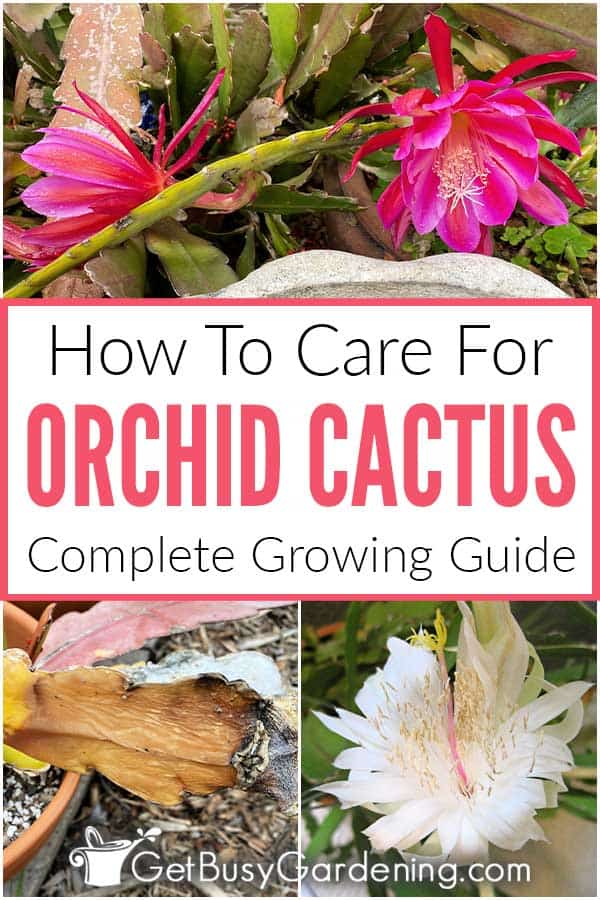
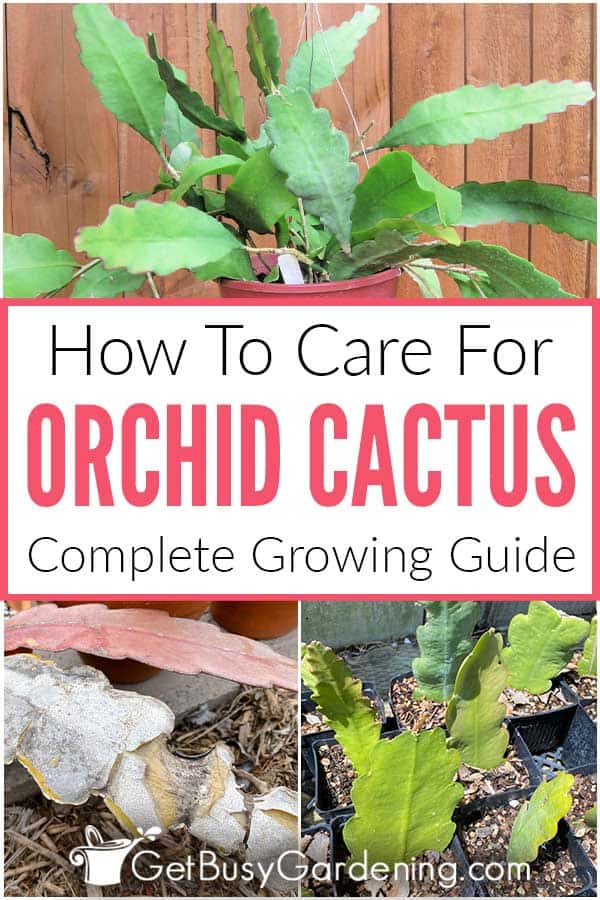
Orchid cactus plants are fun to grow, and easier to care for than you might think. In this post, I’ll show you all you need to know in order to keep them thriving and blooming for years to come.
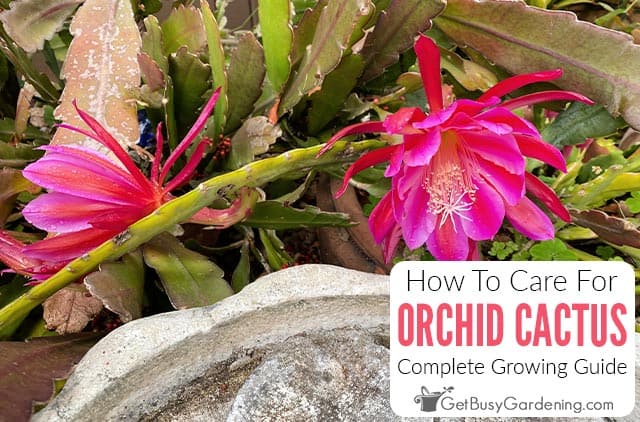

The unique draping growth and large showy flowers make an orchid cactus a beautiful addition to any houseplant collection.
Even a beginner can learn how to grow an orchid cactus and keep it thriving with the right advice on caring for them.
This detailed orchid cactus plant care guide is designed to do just that.
You’ll learn what water, light, temperature, and soil they need, plus get tips on reblooming, pruning, propagation, and much more.
Orchid Cactus Quick Care Overview
| Scientific name: | Epiphyllum |
| Classification: | Succulent plant |
| Common names: | Orchid cactus, Epiphyllum cactus, Epi cactus |
| Hardiness: | Zones 10+ |
| Temperature: | 65-75°F |
| Flowers: | Colors and timing vary by variety |
| Light: | Full sun to partial shade |
| Water: | Consistently moist, do not overwater |
| Humidity: | High |
| Fertilizer: | Flowering plant food in spring and summer |
| Soil: | Fast-draining, sandy soil |
| Common pests: | Mealybugs, whiteflies, spider mites, and scale |
Information About Orchid Cactus
The orchid cactus is a tropical succulent from the Epiphyllum family. For that reason, it is sometimes referred to as an Epiphyllum (or “epi”) cactus.
They’re native to the rainforests of Central and South America, often found growing on trees or rocks.
They don’t require soil to live, and instead take in nutrients and moisture from the air and debris around them.
The most common types of orchid cacti feature draping, smooth, flat leaves that grow from a woody middle stem.
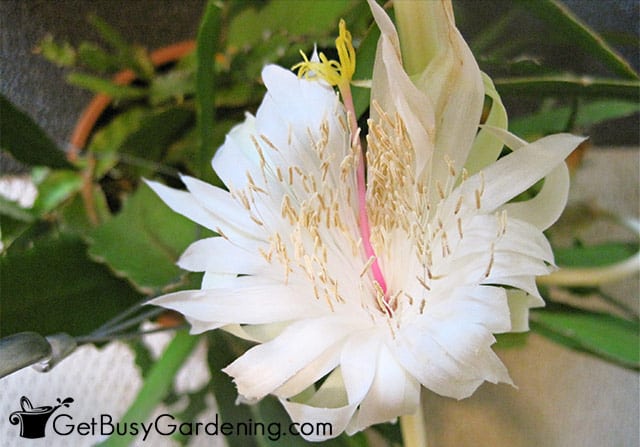
They’re known for the large, cup-like flowers that bloom at the end of branches, some of which are highly fragrant.
Orchid Cactus Varieties
There are over a dozen types of orchid cactus, and each feature slightly different shapes and colors of their flowers and foliage.
Thankfully, they share the same care requirements. Here are some of the more common and popular ones to explore.
- Dutchman’s pipe cactus (Epiphyllum oxypetalum) – Smooth, scalloped leaves develop large, fragrant white starburst flowers from the edges.
- Queen of the Night (Hylocereus undatus) – Narrow long leaves with pronounced scalloped edges produce scaly spikes that feature night-blooming white, cup-shaped flowers.
- Fishbone cactus (Selenicereus anothonyanus) – Long draping leaves with widespread teeth, similar in appearance to a fish skeleton, produce bicolored white and pink blooms with thin petals.
- Hooker’s orchid cactus (Epiphyllum hookeri) – Long, oval leaves with smooth edges sprout flower spikes with fragrant, night-blooming white blossoms.
- Ric rac cactus (Epiphyllum anguliger) – Thin leaves with pronounced triangular scalloped edges get white blooms that have wide triangular petals.
- Crenate orchid cactus (Epiphyllum crenatum) – Spikes emerge from the edges of the scalloped leaves, and produce rounded white flowers with long, teardrop petals.
Orchid Cactus Flowers
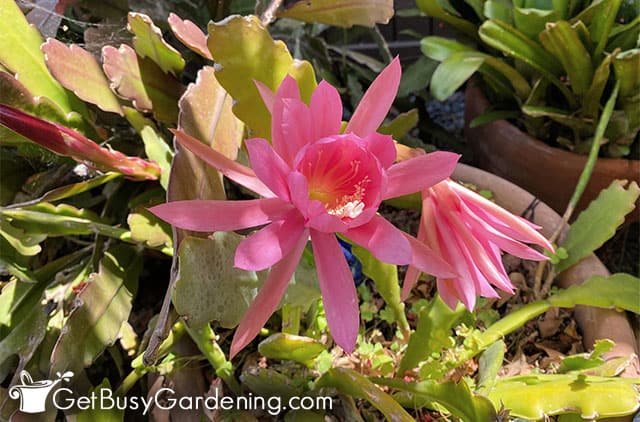
The shape and color of the flowers can vary widely between varieties, from white, to apricot, pink, or coral. Some are very fragrant, while others are not as strong.
The bloom times also vary by species, and can range anywhere from spring through fall. Though the flowers are large and spectacular, they don’t last very long.
They usually start to fade in as little as a few hours, which can make them difficult to enjoy, especially the night-blooming ones.
How To Care For An Orchid Cactus
Before we talk about orchid cactus care, first we should chat about where to grow them. Choosing an ideal location is key for long-lasting health.
Hardiness
Most orchid cactus plants are not hardy. They typically grow best in zones 10+, with a minimum temperature of 35°F, though some can tolerate lows of 25°F.
In regions that experience colder weather, they’re grown as annuals, or overwintered indoors until spring returns.
Where To Grow Epiphyllum Orchid Cacti
An orchid cactus will thrive in most indoor environments if given plenty of bright light. Put them in a full sun to partial shade location outdoors.
They grow well in containers, and are popular in hanging baskets where the foliage can drape over the edges.
It’s also possible to grow them outside for part of the year, and move them indoors during freezing weather.
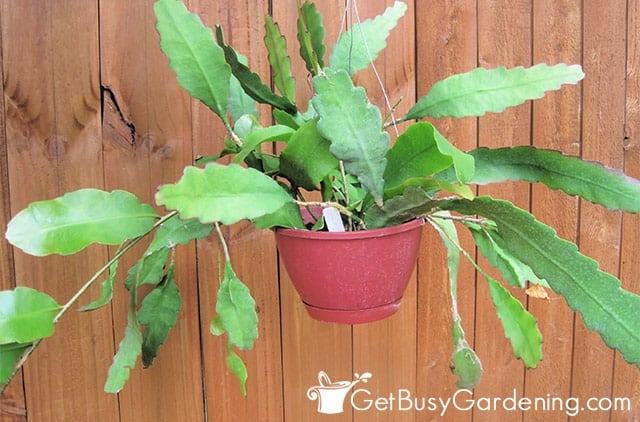
Orchid Cactus Care & Growing Instructions
Now that you know where to grow them, let’s talk about orchid cactus plant care. Creating their ideal environment is a great way to enjoy their foliage and flowers for many years.
Light
Orchid cacti can tolerate a range of light settings, from full sun to partial shade, depending on your climate.
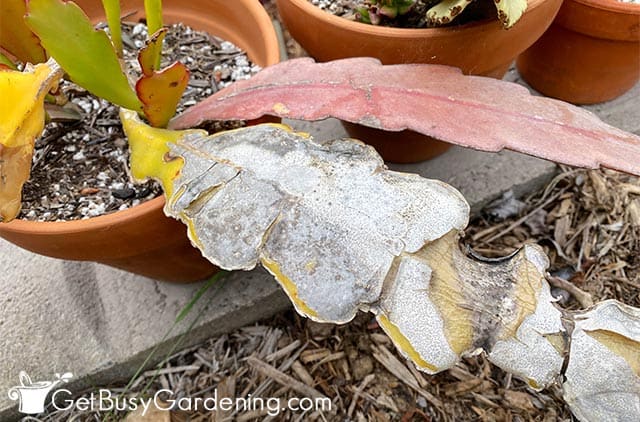
Full sun will encourage more blooms, but harsh afternoon rays in hot regions can burn the leaves. Provide partial or dappled shade during those hours to help protect them.
Indoors, they’ll do best with plenty of bright, indirect light, especially if you can place them where they’ll receive morning sun. If your house is dark, use a grow light.
Water
Proper watering is a key part of caring for orchid cactus plants to sustain healthy growth and encourage flowering.
They like to dry slightly between deep drinks, and won’t tolerate wet feet for long. It’s helpful to use a moisture meter to get it just right.
Overwatering can lead to rot, while too little will cause limp, shriveled leaves and stunted growth. Allow the top few inches of soil to dry between watering.
Also, it’s best to use tepid distilled or rainwater. Cold water can shock the roots, especially during flowering, and the salts and minerals from the tap can cause discoloration and burning in the leaves.
Humidity
The native tropical environment for Epiphyllum orchid cacti has high humidity. Recreating that at home is an easy way to keep them happy.
Outdoors it’s usually not an issue. But indoors, drier air means you’ll need to provide the added moisture.
Set the container on a pebble tray, or run a small humidifier nearby. You can also lightly mist them a few times a week.
Temperature
For most of the year, a temperature range of 65-75°F is ideal. They’ll do well indoors, or outdoors if provided shade during the hottest part of the day.
Extreme heat or cold can stop growth and damage the leaves, and freezing temps will eventually kill them.
In the winter they’ll need 8-10 weeks of 45-55°F at night, and daytime ranges of 55-65°F to help trigger reblooming.
Fertilizer
Regular feedings are an important part of orchid cactus care, and will help encourage blooming.
Apply an organic, all-purpose houseplant fertilizer or compost tea, or one designed for flowering plants, from spring through fall.
Liquid options can be applied two times a month, while slow-release granules can be added monthly, even during flowering. Stop all feeding during their rest period in the winter.
Stay away from synthetic chemical products though, because they can easily burn the roots or build up over time and cause damage.
Soil
Since they are epiphytic, orchid cacti don’t require soil. They can be mounted to a board or log with sphagnum moss, or even on branches of a tree in regions that don’t drop below freezing.
Using those methods will require more frequent watering and misting however.
But they also grow well in a light, loamy, coarse soil mixture that has good drainage. Aim for a pH of 6.5-7.5, which you can check with a probe tool.
To mix your own, amend standard potting soil with peat moss or pine bark, and coarse sand or perlite.
Repotting
Orchid cactus plants prefer to be root-bound in order to produce the best blooms. You should only repot when absolutely necessary.
Because they have shallow roots, this will be every 2-3 years at most. When it’s time, move them up one pot size after all blooming has finished for the year.
Pruning
Pruning isn’t a required part of regular orchid cactus care. You only need to trim them to control the size or remove damaged leaves.
Wait until after the flowering has finished, then use sharp, clean pruners to cut back the leaf at its base. Save any healthy cuttings for propagation.
Pest Control Tips
The most common pests for an orchid cactus are mealybugs, whiteflies, spider mites, and scale.
If you find any bugs, wash the leaves with an insecticidal soap, ensuring you get into the narrower areas near the base where they can hide.
I make my own insecticidal spray by mixing 1 teaspoon of mild liquid soap with 1 liter of water.
Applying rubbing alcohol with a cotton swab can also help immediately manage pests, as can trimming away heavily infested branches. Neem oil is also a great option for long-term control.
Dormancy & Reblooming
For 8-10 weeks in the winter, an orchid cactus needs to enter a rest, or dormant, period in order to trigger flowering the next summer.
There are a few key steps to creating a good resting environment. Keep temperatures no higher than 65°F during the day, and between 45-55°F at night.
Stop fertilizing, and water only when two-thirds of the medium has dried out. Give the plant long nights with at least 12 hours of complete darkness.
After this period, return it to bright, indirect light in the spring, resume watering, and begin feeding with a high-phosphorus fertilizer to jumpstart budding.
Orchid Cactus Propagation Tips
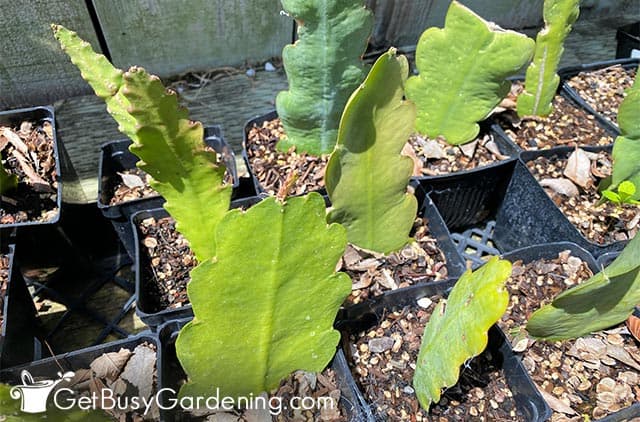
An orchid cactus can be propagated from seeds, but it’s more commonly done by taking leaf cuttings.
After flowering in the spring, take a 4” segment from a healthy branch, and allow it to callous for a few days.
Dip it in rooting hormone, place it in lightly moistened, well draining soil, and water sparingly. Keep it barely damp for 4-5 weeks, or until you see new growth form.
Troubleshooting Common Orchid Cactus Problems
An orchid cactus is usually easy to care for, but you may run into one of these common issues over the years. Use these tips to help get them back in good health.
Orchid Cactus Not Blooming
There are many reasons why an orchid cactus will skip blooming. The primary one is that it didn’t go through a proper 8-10 week dormancy period in the winter.
During that time, any light at night, high temperatures, or too much fertilizer and water will stop it from flowering.
But it could also be due to immaturity or recent repotting. Young plants can take up to three years to bloom, and they need to be somewhat root-bound.
Flower Buds Dropping Off
There are a few things that can cause an orchid cactus to drop the flower buds before they open. Mainly improper watering (either too much or not enough) or sudden environmental changes (moving it around, or a shift in temperature or light).
Make sure the soil isn’t wet, but it should never be bone-dry either. They also like a lot of humidity, so increase that if you can. And never move it around when it’s setting buds.
Aerial Roots
Aerial roots are natural for epiphytes like the orchid cactus, and usually nothing to worry about.
Since they take in moisture and nutrients from the air, the roots develop to absorb humidity. They’re also used by the plant to attach to its surroundings.
But it could mean they’re not absorbing enough water from the soil. So use a moisture meter to make sure they’re not too dry, and check the base of the stems for rot.
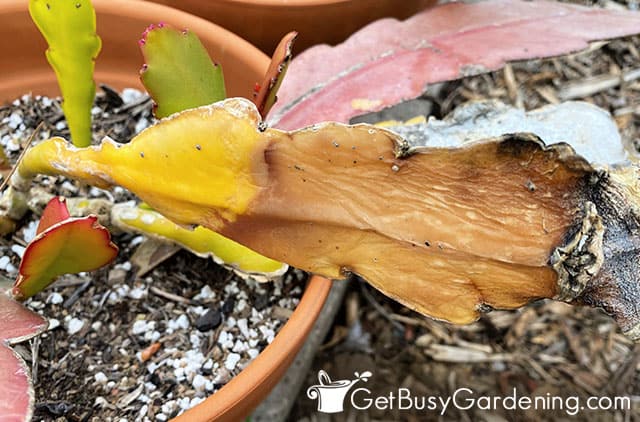
Yellow Leaves
Yellowing leaves are usually caused by overwatering, rot, or too much light exposure.
Check them for signs of rot, and ensure the soil is not too wet. Let it dry several inches deep before giving it another drink, and always allow any excess to drain away.
If yours is receiving afternoon sun, it could be sunburn. In that case, provide shade during the hottest part of the day.
Brown Leaves
Brown leaves on an orchid cactus are a symptom of severe dehydration, root rot, deep shade, or disease.
Overwatering or allowing moisture to sit on the leaves can lead to root rot, stem rot, or fungal diseases.
Trim away affected foliage, ensure proper watering, and treat with an organic fungicide if you suspect disease.
FAQs About Orchid Cactus Care
Here I’ve answered some of the most commonly asked questions about orchid cactus care. If yours isn’t on the list, please add it to the comments section below.
Are orchid cactus plants easy to care for?
Orchid cactus plants can be easy to care for if you create their ideal environment. Plenty of indirect light, humidity, and consistent moisture will help them thrive.
Can you grow orchid cactus indoors?
Yes, you can grow an orchid cactus indoors with the proper care. They will benefit from the consistent indoor temperatures, if provided with plenty of light and humidity.
How much sun does an orchid cactus need?
An orchid cactus needs plenty of bright indirect sun, similar to the filtered light they’d receive in native forest environments. Direct exposure in the morning or evening is fine, but avoid hot afternoon sun that can burn or shrivel the leaves.
What kind of soil does an orchid cactus need?
An orchid cactus doesn’t need soil to grow, it can also be mounted to a log or board. If you prefer to use soil, make sure it’s a coarse, well-draining, and lightweight mixture.
How often do you water an orchid cactus?
Rather than watering an orchid cactus on a set schedule, you should only do it when the medium feels dried out. Let the top few inches of soil dry between deep drinks.
Now that you know exactly what it takes to keep them thriving, you can grow an orchid cactus even if you’re a beginner. With the right care, you can enjoy the large, fragrant blooms in your home or garden.

If you want to learn all there is to know about maintaining healthy indoor plants, then you need my Houseplant Care eBook. It will show you everything you need to know about how to keep every plant in your home thriving. Download your copy now!
More Houseplant Care Guides
- How To Care For An Easter Cactus Plant (Schlumbergera gaertneri)
- How To Care For A Christmas Cactus Plant (Schlumbergera buckleyi)
- How To Care For A Thanksgiving Cactus Plant (Schlumbergera truncata)
- How To Care For String Of Bananas Plant (Curio radicans)
- How To Care For Mother Of Thousands Plant (Kalanchoe daigremontiana)
Share your orchid cactus care tips in the comments section below.

Linda Harris says
I love this plant! I have one that I’ve had since 1989. It was pretty small when I purchased it. Fast forward to 2024, it is HUGE. I’ve repotted it only a couple times. It lives outside from May-Oct in Zone 6 (CT) and then it lived in the Basement (about 45 degrees and pretty dark) the rest of the time. This Fall, we actually brought it upstairs to live in a morning sun area of the Living room. Hoping it does well. It’s days of living outside in the Spring-Fall are over. It probably weighs 80 Pounds, and it getting hard for my husband to put it outdoors. I’ve never babied this plant or anything….and it has done really well. Wish I could have added a photo of it to this article. Thanks for the info on how to grow…..as I wanted to see any special care for it living indoors going forward. I forgot to mention, it gets a double type red flower, and usually in the month of June.
Shairley McCartney says
I have one leaf that has a few hard groth on it. What might that be and what can I do?
Amy Andrychowicz says
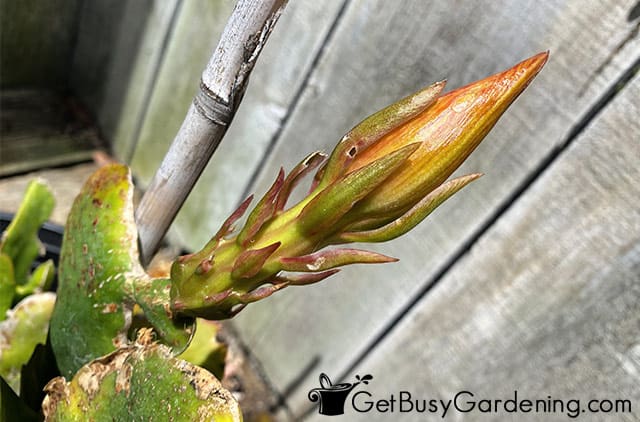
It sounds to me like it could be a flower bud emerging from your orchid cactus leaf. Just leave it be and enjoy!
Vanessa says
My orchid cactus has long fine green tendrils growing at the end of the leaves. There are a lot of them. They kinda look like the flower stem on your picture in this post. They don’t have any bulges or buds. They’ve been there for over a year. It hasn’t flowered at all since I’ve got it about 2 years ago. The leaves are green and look healthy. It’s still in its nursing pot though. I will follow your post and transplant it soon.
Amy Andrychowicz says
I’ve had that happen before on one variety, and they’re long, skinny leaves rather than flowers. It’s probably just the variety you have, but make sure it’s getting enough light. It could be getting leggy if you have it indoors. Also, in order to get them to bloom, they need a period of cool temps and darkness with no fertilizer in the winter. They like to be pot-bound so that’s probably not the issues.
Pat says
If I mount an orchid cactus on a log and leave it hanging outside avoiding afternoon sun how often do I water it and can I mount it with fishing line string? Wire?
Amy Andrychowicz says
If you live in a humid climate, then you won’t have to water your mounted orchid cactus very often, if at all. If it’s dry where you live, then you can spray it with the hose once a week or so. You don’t want it to dry to the point where the leaves start to shrivel, so that can be your gauge for how often it will need watering. I recommend using fishing line or wire to mount it, because string will eventually break down. It would be similar to mounting a staghorn fern.