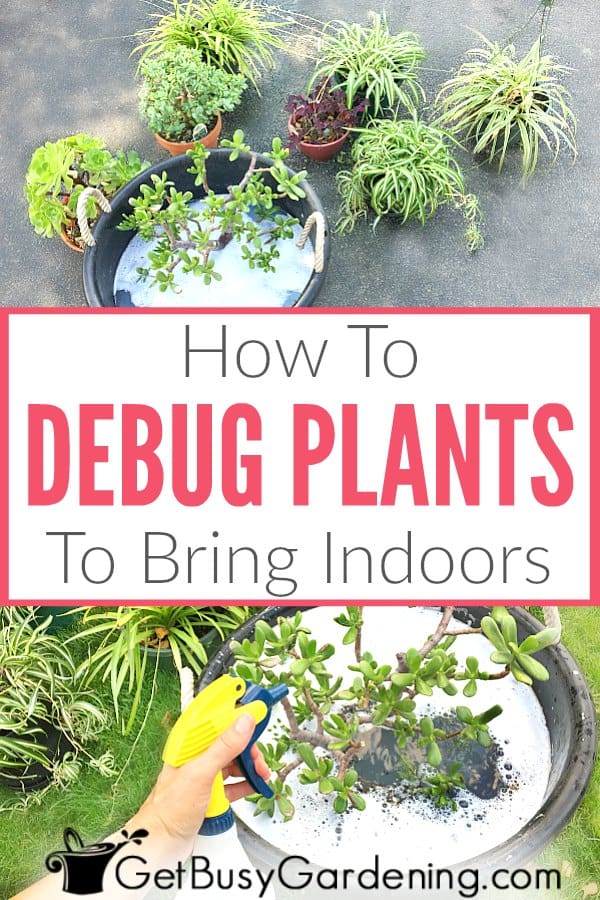
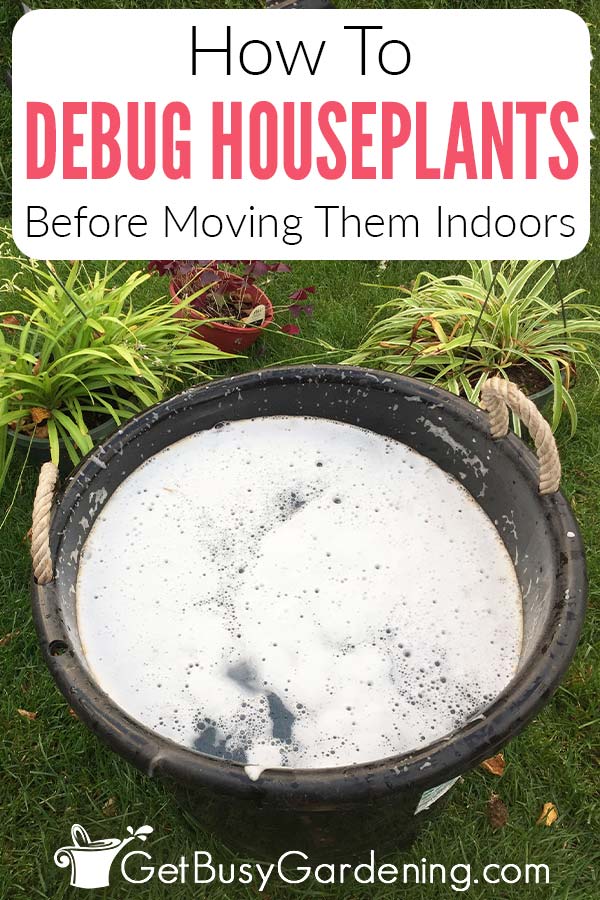
Winter is around the corner which means, it’s time to start moving some plants back indoors! The key to a smooth transition lies in knowing the right time to bring them inside and how to do it without inviting bugs. Let’s break it down step-by-step!
Aphids, mealybugs, and other types of houseplant pests aren’t normally a problem outside. But they can quickly turn into a major infestation during the winter if they come inside on your houseplants.
When To Bring Plants Inside For The Winter
Knowing WHEN to start this process is key. You should start moving your plants inside during late summer or early fall, before nighttime temperatures consistently drop below 60°F (15.5°C). Exposing tender houseplants to temperatures below 50°F (10°C) can cause damage.
A good rule of thumb is to bring them in at least two weeks before your area’s average first frost date. For example, in zone 4, that’s September 20th, around the end of summer.
Waiting too long could shock your plants which can cause their leaves to drop, go dormant, or even die if frost hits unexpectedly.
Amy’s Tip #1! 👩🏼🌾
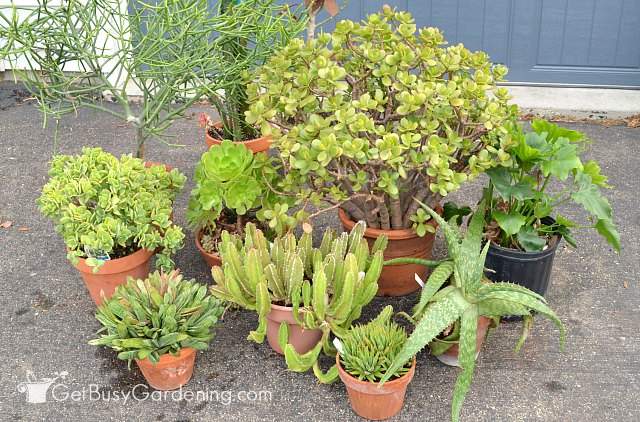
Moving all your houseplants inside at once can be overwhelming, both for you and the plants. Instead, bring them in gradually over a few weeks. This way, you can manage the workload, and the plants can adjust more easily.
9 Steps To Debugging Your Plants
Debugging plants might sound complicated, but it’s actually straightforward. Here’s how to do it step-by-step:
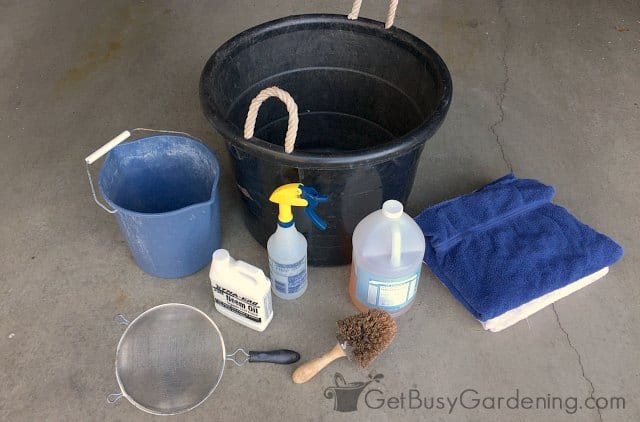
Supplies You’ll Need:
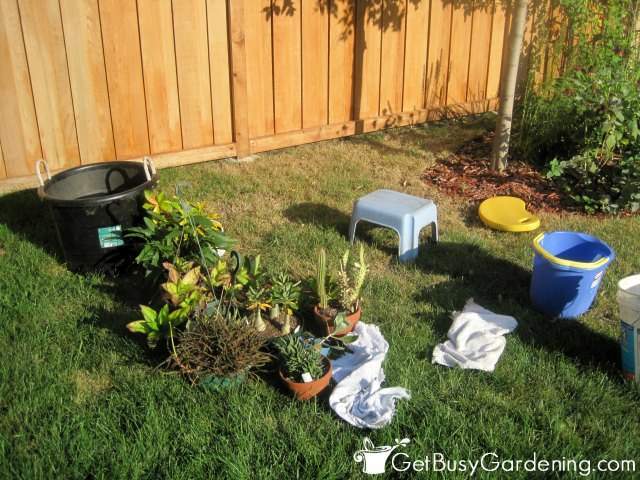
Steps:
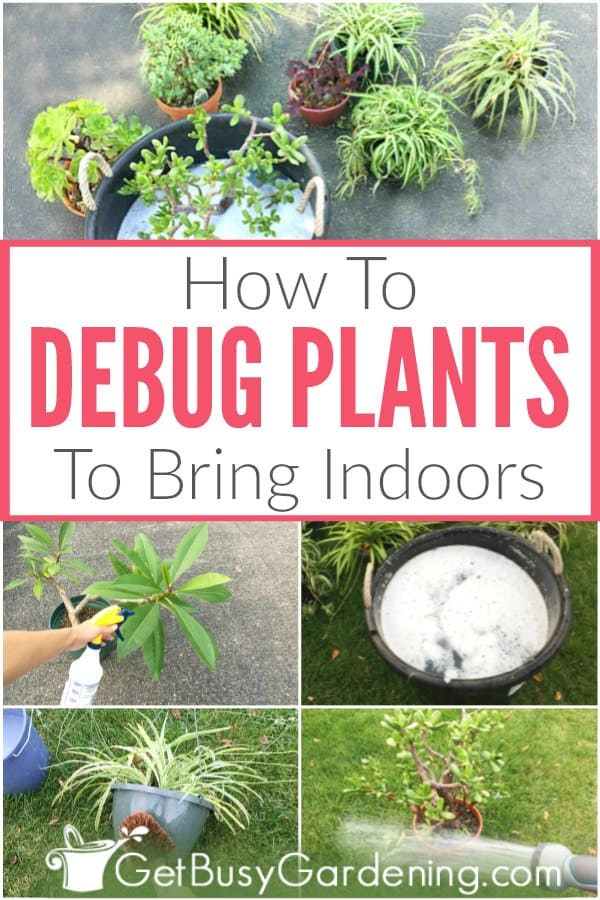
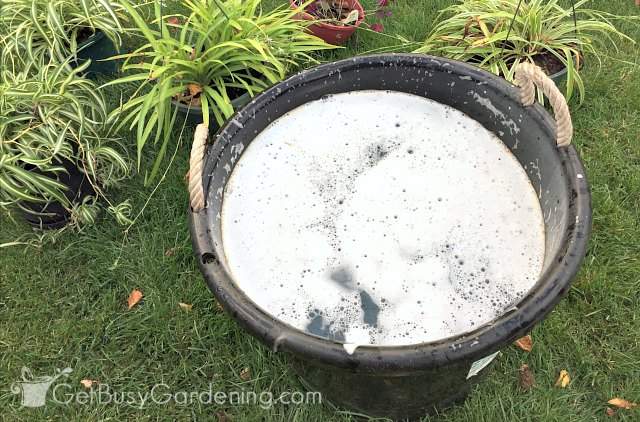
- Fill the Tub with Soapy Water: Fill your large utility tub with tepid water, and your wash bucket with warm water. Add a few squirts of a mild liquid soap to each as you’re filling them. (Avoid soaps with degreasers or detergents, as they can harm plants.)
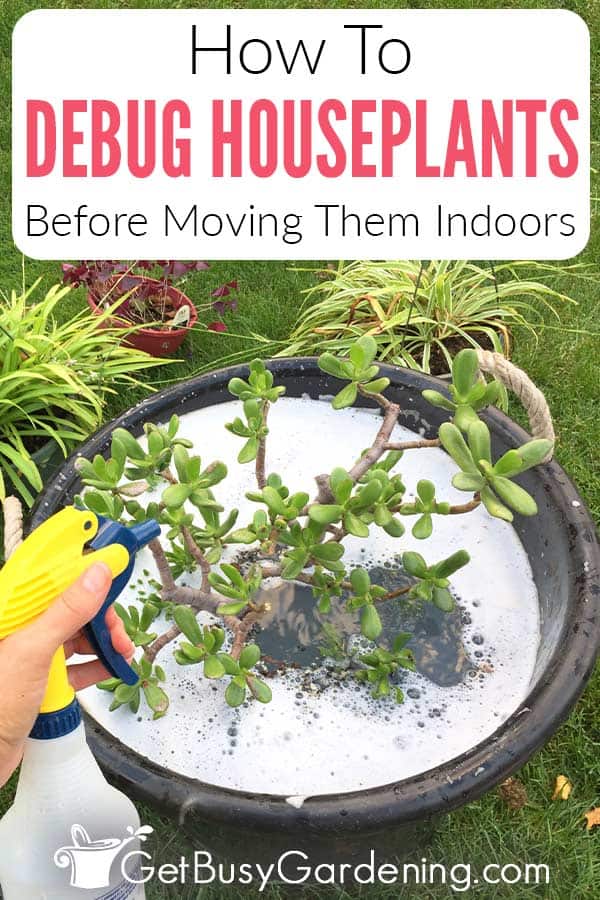
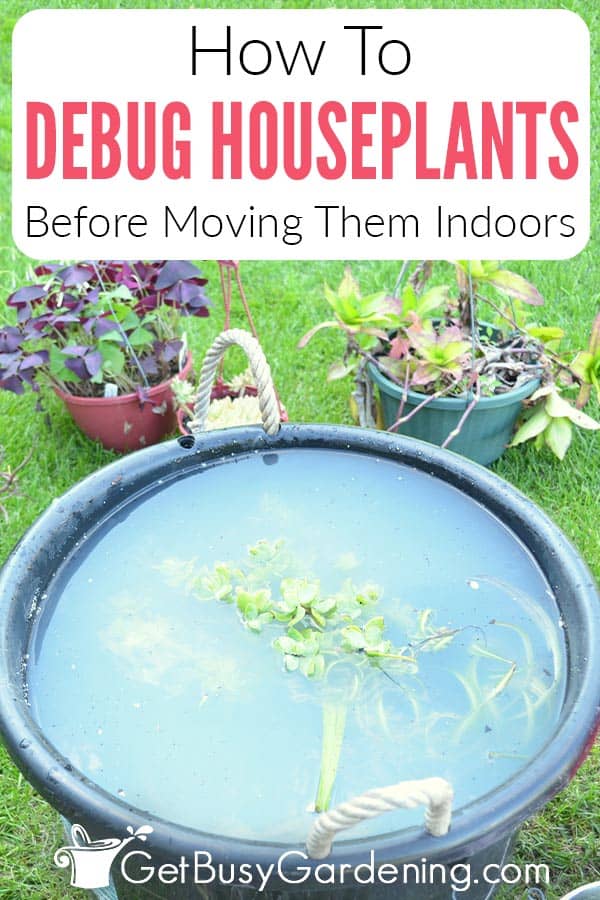
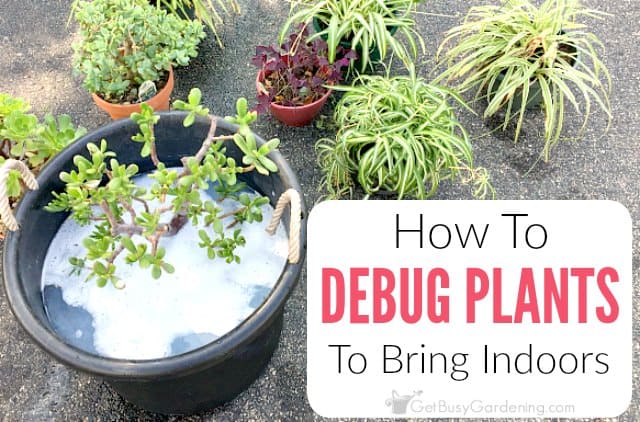
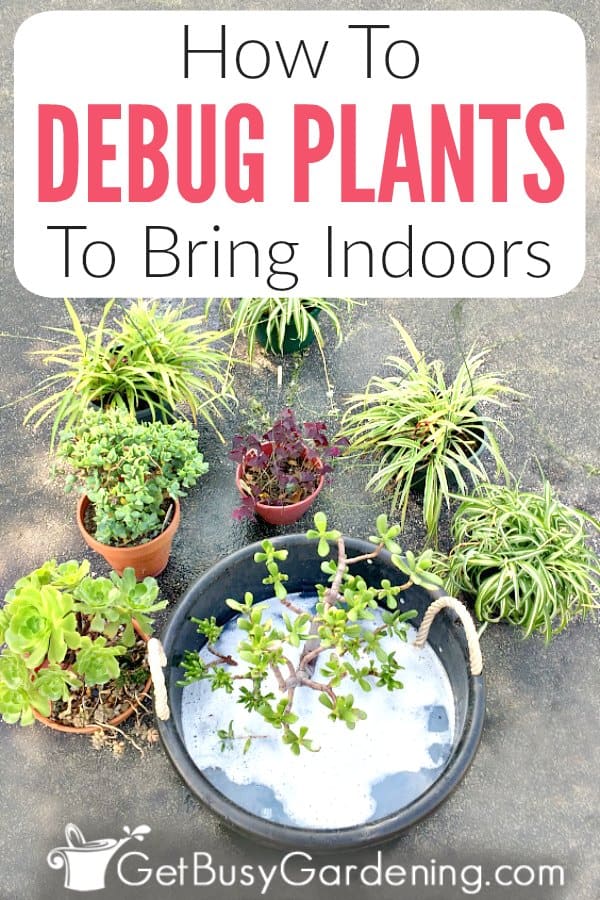
- Soak the Plants: Submerge each plant—pot and all—in the soapy water for 15-20 minutes. The soap kills bugs on the plant and in the soil. Weigh down any floating pots with bricks or rocks.
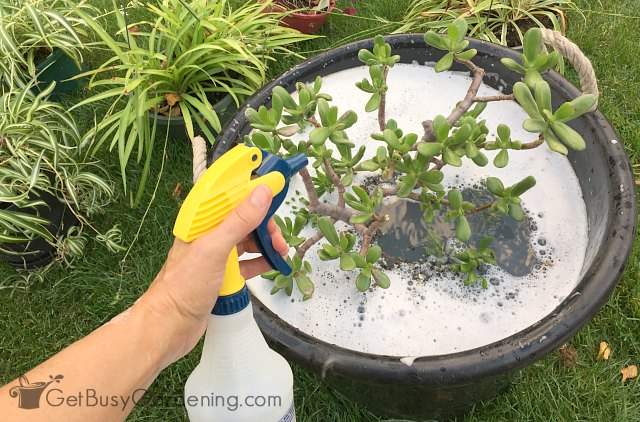
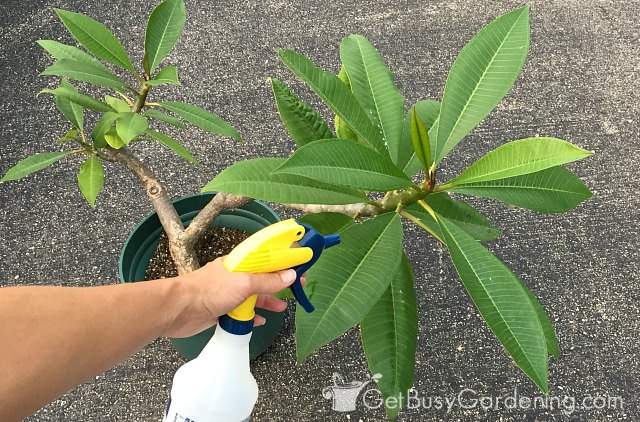
- Clean Any Exposed Leaves: Clean the leaves that aren’t submerged – If any of the leaves aren’t completely covered by the water, use an organic insecticidal soap to clean them. Or you can use my recipe, which is 1 teaspoon of mild liquid soap per 1 liter of water in a spray bottle.
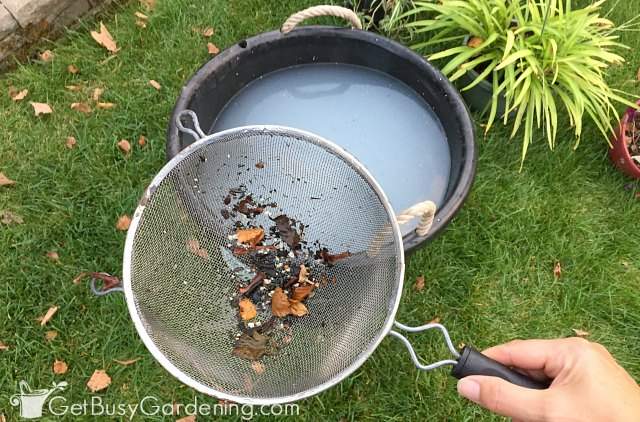
- Remove Debris: Skim any dead leaves, bugs, or debris from the water using a kitchen strainer before pulling out the plants.
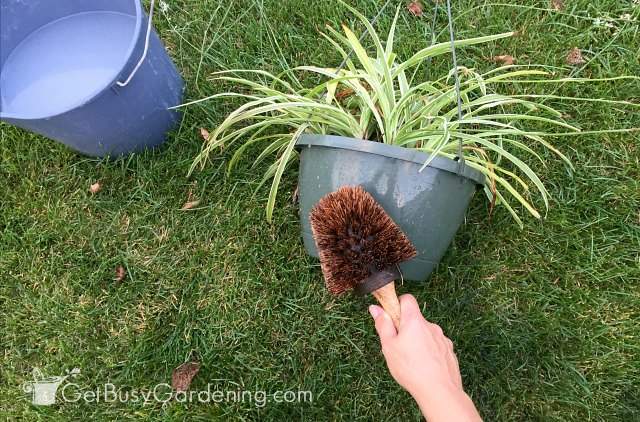
- Scrub the Pots: After soaking, scrub each pot clean with a brush.
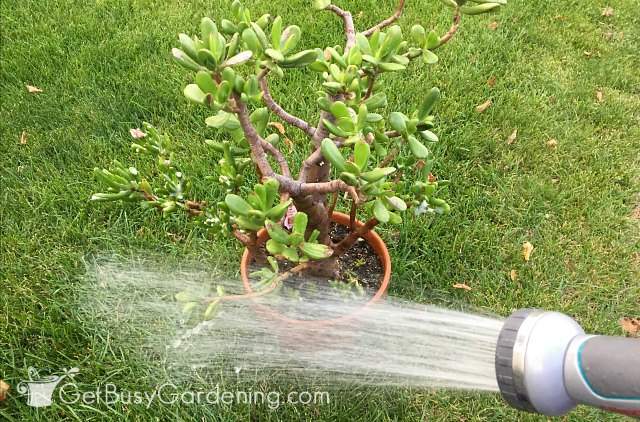
- Rinse Thoroughly: Use a hose to rinse the plants and pots to remove any remaining soap and debris.
- Drain the Water: Allow the excess water to drain completely from the pots before bringing the plants indoors.
- Repeat as Needed: Continue the process until all your plants are debugged. Top off the water in the tub as needed and remove debris between batches.
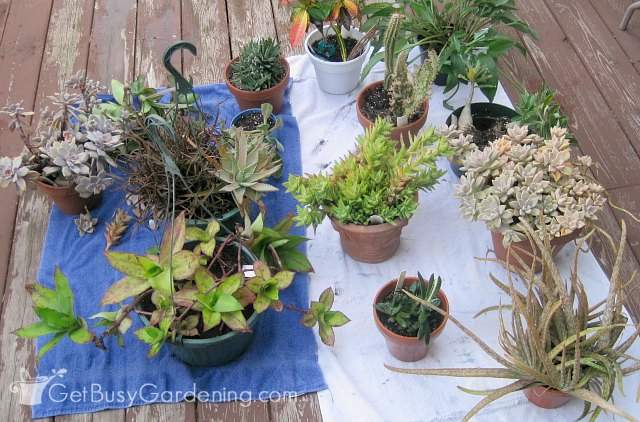
- Move Plants Indoors: Once drained, bring your clean plants back inside and let the soil dry out before watering again.
Debugging Large Plants To Bring Indoors
Soaking houseplants in soapy water is great for small to medium sized potted plants, but I have several that are too large for this method. So, instead I use a modified version…
I wash the plant leaves and the stem of the entire plant with soapy water (using the same mild liquid soap I use for soaking plants), and then rinse it off thoroughly using the garden hose.
Once the leaves are clean, I spray the whole plant with neem oil and let it dry before I move it back inside.
NOTE: some houseplants are more sensitive than others, so be sure to test any type of spray on a few leaves before spraying the whole plant.
Amy’s Tip #2! 👩🏼🌾
If any of your plants are root-bound, repot them after debugging, before bringing them indoors. This keeps the mess outside and gives the plants room to grow.
3 To-Do’s AFTER Bringing Outdoor Plants Inside
- Increase Humidity: Many houseplants thrive in higher humidity. Use a portable humidifier indoors to maintain a humidity level around 50%, mimicking the plant’s outdoor environment.
- Inspect Regularly: Keep an eye out for pests after moving your plants inside. Early detection makes it easier to manage any outbreaks.
- Quarantine New Plants: If you’re bringing in new plants from outside or from a store, keep them isolated from your other houseplants for a few weeks to prevent spreading any hidden pests.
Benefits of Soaking Your Plants in Soapy Water
- Soaking gives your plants a thorough watering, so you don’t need to worry about it right away after bringing them inside.
- The process removes dead leaves and debris, leaving your plants looking fresh and clean.
- Your pots and plants will be sparkling clean, adding to the satisfaction of having healthy indoor plants.
Related Post: Fall Houseplant Care Guide
Amy’s Tip #3! 👩🏼🌾
For large plants that are difficult to submerge, use a modified approach: Once clean, spray the entire plant with neem oil to deter pests (test a small area first to check for sensitivity). Wash the leaves and stems with soapy water, then rinse thoroughly with a garden hose.
Debugging FAQs
What do I spray on plants before bringing them indoors?
You can spray your plants with a neem oil solution, or use an organic insecticidal soap to clean the leaves. I highly recommend testing any type of spray on a few leaves before treating the whole plant to make sure it won’t cause any damage.
Will your debugging method kill bugs and eggs in houseplant soil?
Yes, using my method to soak your plants in soapy water should kill any bugs or eggs that are living in the soil too. Sometimes there can be air pockets in the soil where they can survive though. So if you’re concerned, then soak them a little longer. Also, gently tap the pot after it has finished bubbling to try to release any trapped air.
How do you debug plants that are in pots without drainage holes?
To debug plants that are in pots without drainage holes you can wash the leaves with soapy water or insecticidal soap and rinse them off well after. Then spray the leaves with neem oil.
My method of soaking houseplants in soapy water works great for most types of plants, and will help to make sure you bring your outdoor plants inside without bugs. Trust me, starting the long winter off with clean and insect-free houseplants will make your life SO MUCH easier.

If you’re looking for more help for how to keep bugs off plants, my Houseplant Pest Control eBook is an essential guide to help you debug your houseplants for good. Download your copy today!
More Posts About Houseplant Pest Control
- Where Do Houseplant Pests Come From?
- How To Use Neem Oil Insecticide On Plants
- How To Get Rid Of Bugs On Your Houseplants
- Fungus Gnats vs Fruit Flies: What’s The Difference?
- How To Keep Cats Out Of Houseplants
How do you debug plants before bringing them in for the winter? Share your tips in the comments section below.


Debra Frazier says
If I’m taking geraniums out of the ground for indoors can I just soak the plant and roots before planting in pots and new soil?
Amy Andrychowicz says
Yes, soaking the bare root plant will work to get rid of the bugs too. You’ll just have to weigh it down somehow so it doesn’t float.
Jenna says
How do I debug my plants that are in pots without drainage holes?
Amy Andrychowicz says
The only safe way to safely debug plants w/o drainage holes is to wash the leaves, as I describe under the section in the article titled “Debugging Houseplants That Are Too Large To Soak”.
Therese says
Can I use the soak method on herbs or would they be too delicate? I have basil, thyme, lemon balm, oregano, parsley and shiso (perilla). I started them kind of late this summer and want to keep growing them indoors.
Amy Andrychowicz says
I have never tried debugging herbs like this before, so I can’t speak from experience. However, I don’t see why it wouldn’t work. Just be sure to use a mild liquid soap (one free of detergents and other chemicals). If you’re worried, try spraying the soapy water mix (1 teaspoon of the same mild liquid soap to 1 liter of water) on a few leaves on each of them first, and let them sit for a few days to test for damage. If there’s no damage, then it’s safe to soak them as I described in the article.
Rita says
Can I use a mild dog shampoo for debugging plants?
Amy Andrychowicz says
I can’t say for sure if that type of soap will be safe for your plants, since I’m not familiar with the product. I recommend testing it on the leaves as I describe in the comment above.
Kate says
My repeat blooming amaryllis (one, then 3 more immediately after) has fungus gnats and centipedes or millipedes just under a cm long. They really bother me but I know I’ve overwatered a bit because the last time it bloomed it seemed to wilt and fade too fast from too little water/too small pot.
I want to repot or at least flush the soil but it’s still blooming. Should I wait until it’s done blooming? It’s very healthy. I took off the top inch of soil to get rid of the decayed matter but the roots looks lovely.
Amy Andrychowicz says
Yes, definitely wait until your plant is done blooming before you repot it. But really, the best time to repot them is after their dormancy period in early winter. So if you can wait, then they will bloom better next year. Otherwise, if you must repot them right after they’re done blooming, then they might not flower next year (or they may be smaller). Here’s a post about their detailed care, if you want to read more… How To Care For An Amaryllis Plant.
Megan says
When you rinse the pot and plant with water do you also water the soil to rinse the soap out of the dirt or do you let the soap stay to kill if the pests?
Amy Andrychowicz says
After soaking the pots, then rinsing the leaves and the pot, some water will flush through the soil. But there’s no need to take any extra steps to flush or rinse it out, you can let the soap stay in the soil.
Sydney R. says
I will be moving from Florida to Chicago within the next month, and would like to start this process of cleaning my plants and bringing them indoors to prepare them to be inside. I will also be moving my plants from ceramic planters to plastic (less weight in the trailer while moving) Would you suggest I do all the soaking and cleaning in their ceramic planters and move them to the plastic after? Or vice versa? Thank you!!
Amy Andrychowicz says
Definitely soak your plants before you repot them. Otherwise, the fresh soil could float to the top and make a mess. Also, since you’re moving to a cold climate during the winter, be very careful about leaving your plants in an unheated trailer. If it gets below freezing in there, it could kill them. Transport them in a heated area if you can, and bring them indoors at night. And make sure you cover them very well before bringing them outside. Being exposed to freezing temperatures, even for only a few seconds, can severely damage or even kill your plants. Not trying to scare you, but wanted to make sure you are extra careful moving them during the winter. 🙂
Sandy says
Will this cleaning method work for succulent planter with animal urine smell?
I already brought it indoors but since it’s stinking i was considering dousing it in mild soapy spray.
Thanks for your reply
Amy Andrychowicz says
Sorry, but I have no idea. I have never had that problem with my plants. But it certainly wouldn’t hurt try soaking them to see if that takes care of the smell.
Linda DiPierro says
Will this method of soaking plants in soapy water also work for ants in the soil?
Amy Andrychowicz says
Getting rid of ants in potted plants can be tricky. Definitely soak the pots for at least 10 minutes past the time the air bubbles stop coming up to the top. I would also move the pot around in the water to make sure all the air bubbles are gone. If the ants persists after soaking, then I would start watering with a soapy water solution until they are gone.
Sabrina says
Hi, Great tip. Will definitely follow it for this winter.
What if the house plant is on a very large pot, how would you approach the “de bugging”?
Spray neen oil only on leaves and branches that are exposed?
Amy Andrychowicz says
Yes, check out the section in the post above called “Debugging Houseplants That Are Too Large To Soak” to get specific directions.
Karl Broom says
We have a Meyer Improved Lemon that has been on the deck since the spring and is producing 6 or 8 lemons — none of which appear ripe and ready to use. But we would like to use them when they get ripe. Will the be safe to eat if we debug the soil with Dr. Bonner’s pure Castile soap?
That product and your procedures have worked nicely on our plants that need to come in before the first frost.
Thank you,
Karl
Amy Andrychowicz says
Yes, since Dr. Bronner’s is an organic product, it is safe to use on food-producing plants. Glad to hear that my method of debugging plants has worked so well for you! I absolutely love it, and haven’t had any indoor pest infestations since I started doing this myself. 🙂
Mary Shepherd says
Can I soak my peace lilly plant? i have been seeing lantern flies on the porch where the plants are kept.
Amy Andrychowicz says
Yes, as long as the pot has holes in the bottom, you can soak the plant.
Erin says
All my dirt floats out of my plants when I submerge them. Am I doing something wrong?
Amy Andrychowicz says
This usually only happens for plants that were recently repotted. In that case, the soil is too loose, so this method isn’t ideal. I recommend only soaking plants that are established in their pots. That way, the soil won’t float out.
KIMBERLY MORRIS says
Hi! This is the exact response I’ve been waiting to see as I’ve just repotted about 20 plants and set them on my deck to water them all at once and ended up leaving them all there for a few days. They are all indoor houseplants that of course can tolerate the outdoors. Is there any sense in doing any type of soaking since they’re freshly potted or do you think I’ll be okay with just bringing them straight inside. Like I said, they’ve only been out there for a few days with the warm temps we’ve had here in Virginia. Should I give them a good spray anyways?
Amy Andrychowicz says
Great, glad you found your answer! I wouldn’t soak your newly repotted plants, since the loose soil will likely just float to the top and make a mess. You can either spray them off with the hose, or, if you’re worried about bringing bugs inside, then follow the instructions under the “Debugging Houseplants That Are Too Large To Soak” section above to get rid of them.
Evelyn says
What about plants that don’t like to have there leaves wet like violets how do you kill bugs in there pots?
Amy Andrychowicz says
You can use a neem oil mixture or insecticidal soap as a soil drench to kill the bugs in that case.
Susie says
After I soaked my plants in the soap and water, I took them out and let the excess drain into my garden. After that I rinsed the plants off with the hose. I watered the soil with the hose until the water was draining out again. I’m thinking I might have rinsed them too much. Should I be leaving the soapy water in the soil other than the suds on top?
Amy Andrychowicz says
You don’t need to flush the soil after soaking your plants. I just give them a quick rinse – enough to remove the suds from the plant and pot.
petra sipe says
Thank you so much for showing this to us!!!!!! I’ve always brought in my house plants each year without any thought of bugs. Until last year! What a mess. We had flying bugs ll winter. I’ll never bring them in again without doing your procedure. The only question I have is, I have several cactus. Is it alright to soak them also? Thank you in advance.
Amy Andrychowicz says
You’re welcome, glad you found it helpful! Yes, I used to bring bugs in to the house too, like spiders. EEK! I have had success with soaking the couple of cactus plants I have. But, I definitely recommend making sure the soil is completely bone dry before soaking them. Then let it totally dry out before watering them again after soaking.
Gloria says
How can I get a spider out of my planet without getting to close to the spider? I’m extremely scared of spiders.
Amy Andrychowicz says
Soaking it in soapy water as I describe in the post will get rid of the spiders that are in your plants.