Fall houseplant care can be very challenging. Believe it or not, your indoor plants experience the changing of seasons, and some can handle it better than others.
Use this detailed checklist to help make this tough transition easier on your houseplants in the fall.
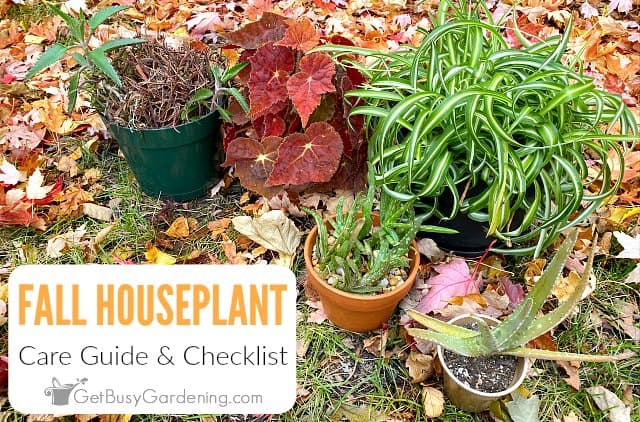

Fall is a difficult time for growing houseplants, and many of them can struggle with this shift. Just because they are indoors, doesn’t mean they won’t notice the change of season.
As the days get shorter, and the furnace goes on, our indoor plants begin to change their growing habits. Less light and cooler temperatures in autumn trigger them to start going dormant.
So, to keep them thriving, it’s important for us to help them through this difficult transition by adjusting our care routine.
Don’t worry, I’ve got you covered. My fall houseplant care checklist has everything you need to get them through this tough time of the year.
Fall Houseplant Care Checklist & Tips
Since they are starting to go into their winter dormancy, houseplants have different needs in autumn. Use this checklist to adjust your care routine for your indoor plants in the fall.
1. Slow down on watering
Help ease the transition by slowing down on the amount of water you give your houseplants in the fall. This will be a nice trigger for them that it’s time to begin their rest period.
Most houseplants don’t need as much water in the winter as they do in the summer.
Consequently, there’s a much higher risk of overwatering them during the coldest months of the year when they are in dormancy.
So be very careful that you don’t overdo it during the fall. Let the soil to dry out a bit more than you normally do.
If you have a hard time with this, then get yourself a soil moisture gauge to make it easy to know exactly when they need water. Read more about how to water indoor plants here.
2. Provide more light for them
The days are getting shorter, which means less sunlight for our indoor plants in the fall. So it’s a good idea to move them to a location where they will get more light.
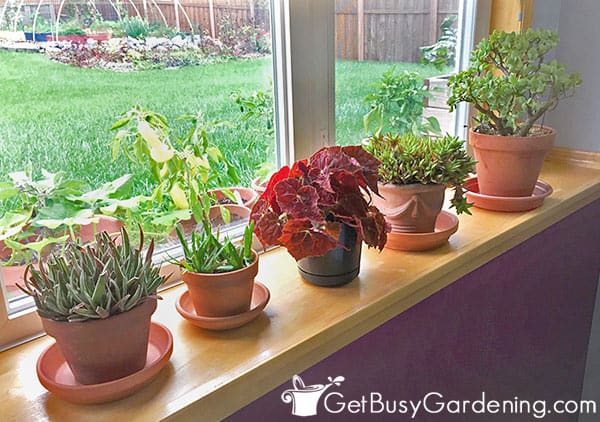
I place most of mine in or near my sunny south-facing windows. This will help to give them more natural light. If you don’t have any south facing windows, then you can add a grow light.
3. Wean them off fertilizer
Since they are getting ready to go into dormancy, you should not fertilize houseplants in the fall. But don’t just stop abruptly. Instead, it’s a good idea to slowly wean them off.
Some are more sensitive to this than others. Slowly weakening the dose of fertilizer you give them will help reduce the shock of seasonal change.
So, once the temperatures start to cool down in late summer, cut the amount of fertilizer you give them in half. Then, slowly weaken the dose, so you finally stop fertilizing your houseplants in the fall.
Related Post: The Best Indoor Houseplant Supplies, Tools & Equipment
4. Bring them back inside
It’s best to bring houseplants back inside in early autumn, before it starts getting cold.
Leaving them outside in the cold for too long could make the transition much harder for them. Plus, you risk frost damage or accidental freezing, and nobody wants that!
So, plan to bring them back inside before the temperature gets below 60F outside. That way, you will avoid extreme temperature shifts that can harm your houseplants in the fall.
Also, be sure to debug them first to help avoid any major pest infestations. Learn how to debug houseplants before bringing them indoors in the fall.
Related Post: How To Overwinter Plants: The Complete Guide
5. Monitor for bugs
Fall is the prime breeding time for indoor plant bugs. Even if you never put your houseplants outside, they can still become infested. Ugh!
So be sure to inspect the leaves and soil for any signs of bugs as a part of your regular fall houseplant care routine (I like to do this every time I water).
If you find any, it’s important to start treatment immediately, before the problem spreads.
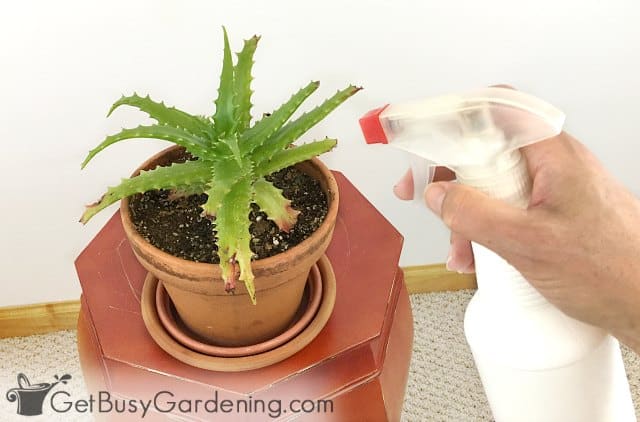
You can buy a ready-made organic insecticidal soap to wash the leaves and spray the bugs. Or you can make your own (my recipe is 1 tsp mild liquid soap to 1 liter of water).
I also recommend investing in some neem oil, or a horticultural oil. They work great to both kill the bugs, and help to keep them from coming back. Read more about how to get rid of houseplant bugs here.
6. Place them away from drafty areas
When you’re choosing where to place your indoor plants in the fall, make sure you consider the temperature. The ideal temperature for maintaining healthy houseplants is between 60-75F.
If the room you plan to keep them in is cooler, then you can add a space heater to help them stay warm.
Indoor plants hate drafts, either hot or cold. So make sure you place them far away from heat vents, fireplaces, and radiators.
It’s also important to protect them from cold drafty windows, and keep them far away from any external doors. Freezing air can cause major damage to houseplants in an instant.
7. Repot only if necessary
Fall is not the ideal time to repot. Repotting stimulates new growth, and you don’t want to do that right before their rest period. So don’t make this a part of your yearly fall houseplant care schedule.
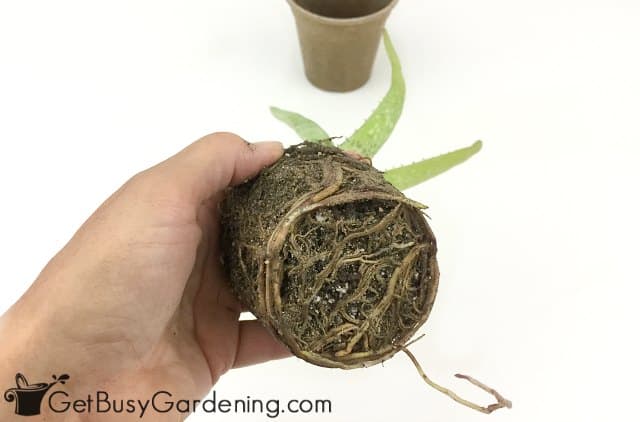
But, if the soil is constantly drying out, and your houseplant is suffering, this is a sign that it is root-bound. And this is the only reason to repot indoor plants in the fall.
Moving them into a larger container will give them a much better chance of surviving the long winter months.
It will also help to ease the burden of keeping them watered. Learn how to how to repot plants here.
8. Give them more humidity
As you probably know, turning on the furnace in the fall means dryer air in our homes – which is not good for our houseplants.
Since most of them come from tropical climates, they can start to suffer in the dry air.
Brown leaf tips and margins are a sure sign that the air is too dry for them. An easy way to fix that is to start running a cool-mist humidifier near your indoor plants in the fall.
I place my most finicky houseplants into my mini indoor greenhouse in the fall. That makes it super easy to increase the humidity level for them.
It’s also a good idea to get a humidity monitor, so you can easily see how dry the air is.
9. Prune off the dead stuff
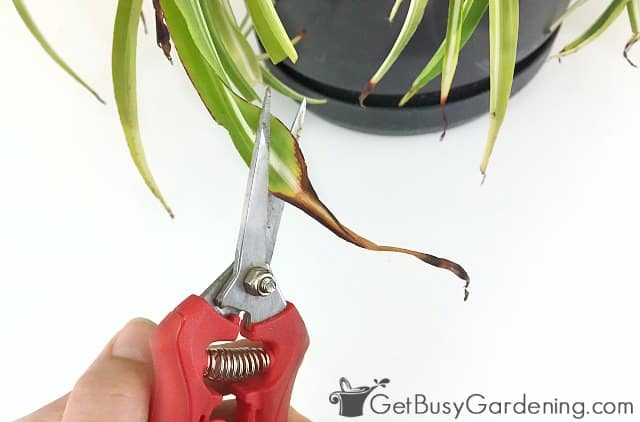
Fall isn’t an ideal time for pruning houseplants either, since it triggers new growth. However, this is a good time to clean up any dead leaves or flower spikes.
It’s normal for the leaves or leaf tips to start turning brown on some indoor plants in the fall. So don’t panic. Simply trim them off to keep your houseplants looking their best.
Just be sure to use a sharp pair of micro-snips, or bonsai shears so you don’t damage any of the leaves.
Also, take the time to wash your tools with soap and water before pruning to avoid pest or disease issues.
FAQs About Fall Houseplant Care
In this section, I will answer some of the most commonly asked questions about fall indoor plant care. If you have any questions that didn’t get answered here, then please ask in the comments below. I’ll be happy to get them answered ASAP.
Can you fertilize houseplants in the fall?
It’s best to stop fertilizing houseplants in the fall, so they can go into their winter rest. I recommend slowly weaning them off, rather than stopping abruptly. See #3: “Wean them off fertilizer” above for more details.
When should I stop watering indoor plants in fall?
You shouldn’t stop watering indoor plants in the fall. Instead, allow the soil to dry out a bit more than normal between waterings. See #1: “Slow down on watering” above for more info.
Proper fall houseplant care is very important to keep them growing their best. So make sure you use this checklist to modify your routine, and help them get through this tough seasonal transition.

If you want to learn all there is to know about maintaining healthy indoor plants, then you need my Houseplant Care eBook. It will show you everything you need to know about how to keep every plant in your home thriving. Download your copy now!
More Houseplant Care Posts
- Spring Houseplant Care Guide
- How To Keep Indoor Plants Alive In Winter
- How To Melt Snow For Watering Houseplants
- How To Rebloom Your Amaryllis Plants
Share your fall houseplant care tips in the comments section below.

Leave a Reply