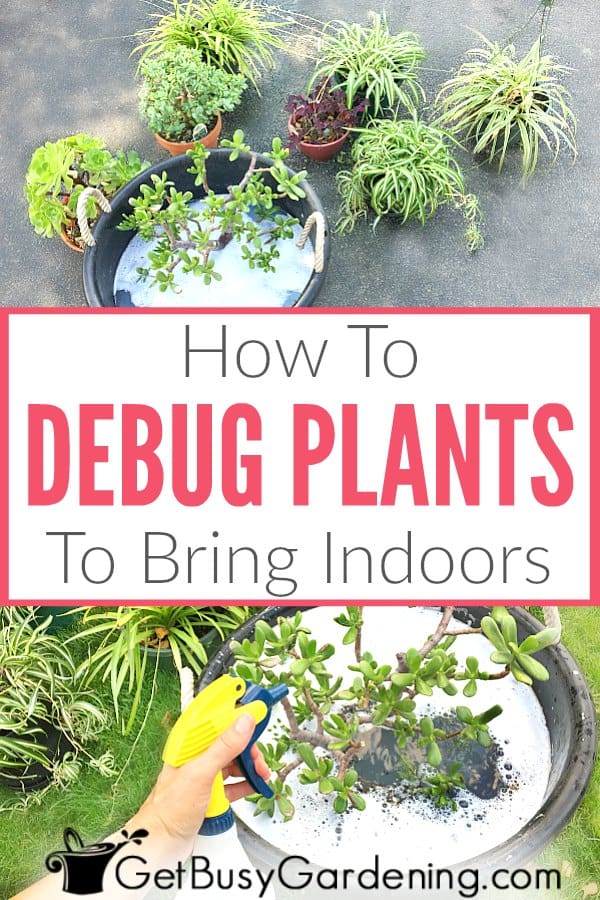
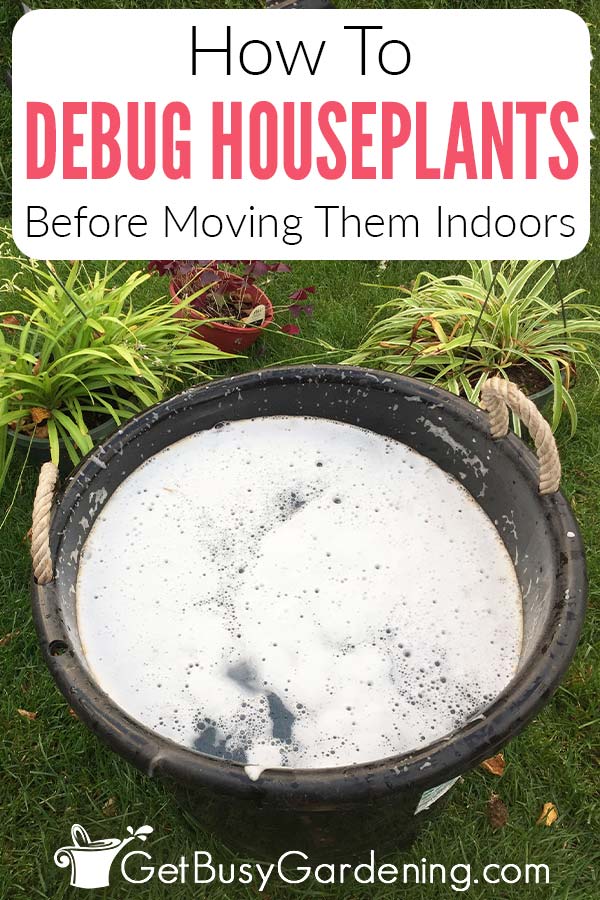
Winter is around the corner which means, it’s time to start moving some plants back indoors! The key to a smooth transition lies in knowing the right time to bring them inside and how to do it without inviting bugs. Let’s break it down step-by-step!
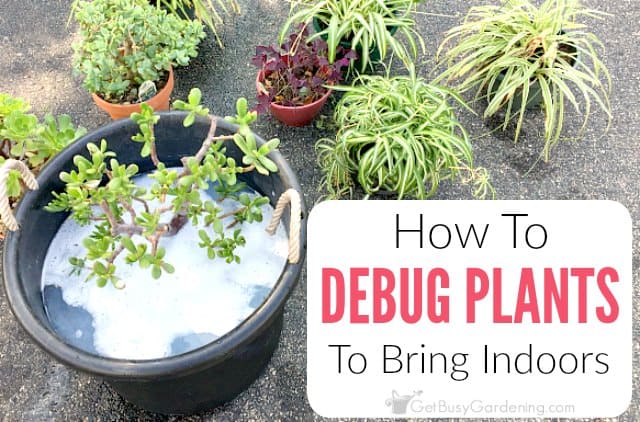
Aphids, mealybugs, and other types of houseplant pests aren’t normally a problem outside. But they can quickly turn into a major infestation during the winter if they come inside on your houseplants.
When To Bring Plants Inside For The Winter
Knowing WHEN to start this process is key. You should start moving your plants inside during late summer or early fall, before nighttime temperatures consistently drop below 60°F (15.5°C). Exposing tender houseplants to temperatures below 50°F (10°C) can cause damage.
A good rule of thumb is to bring them in at least two weeks before your area’s average first frost date. For example, in zone 4, that’s September 20th, around the end of summer.
Waiting too long could shock your plants which can cause their leaves to drop, go dormant, or even die if frost hits unexpectedly.
Amy’s Tip #1! 👩🏼🌾
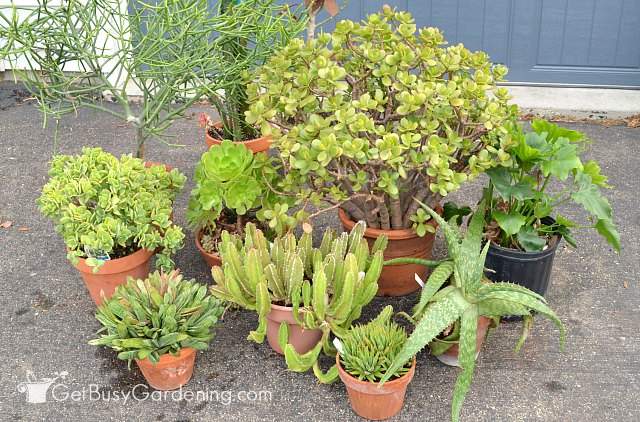
Moving all your houseplants inside at once can be overwhelming, both for you and the plants. Instead, bring them in gradually over a few weeks. This way, you can manage the workload, and the plants can adjust more easily.
9 Steps To Debugging Your Plants
Debugging plants might sound complicated, but it’s actually straightforward. Here’s how to do it step-by-step:
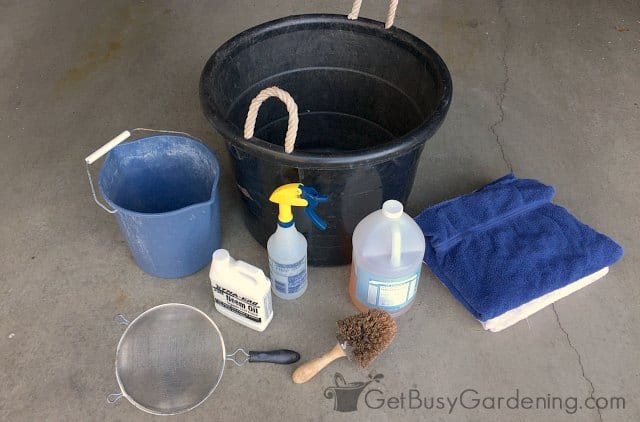
Supplies You’ll Need:
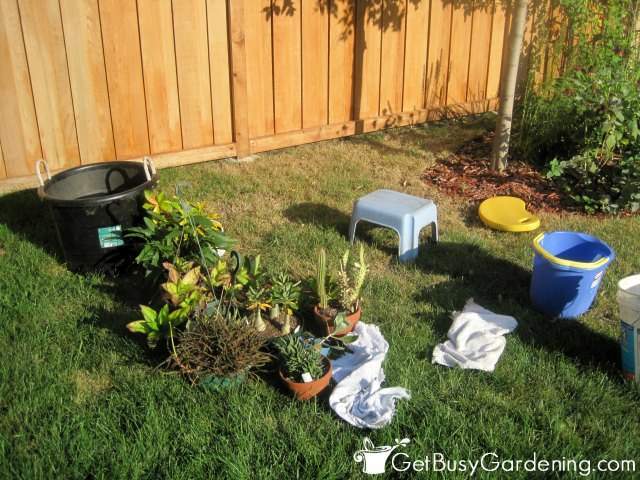
Steps:
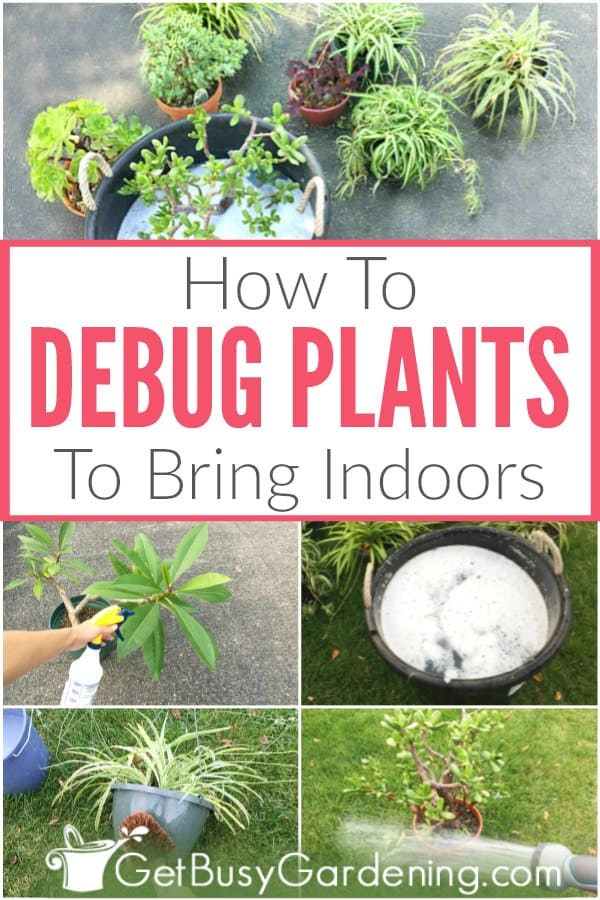
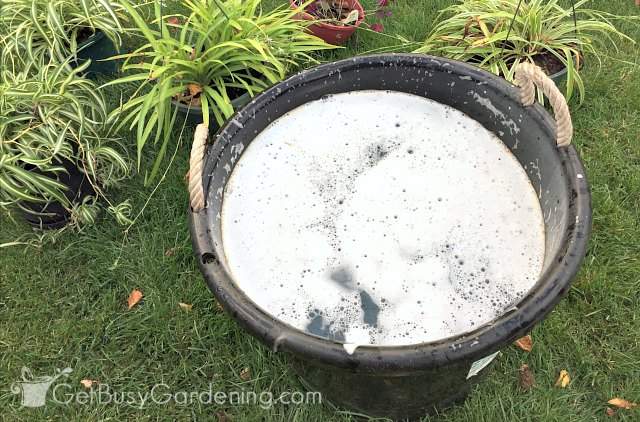
- Fill the Tub with Soapy Water: Fill your large utility tub with tepid water, and your wash bucket with warm water. Add a few squirts of a mild liquid soap to each as you’re filling them. (Avoid soaps with degreasers or detergents, as they can harm plants.)
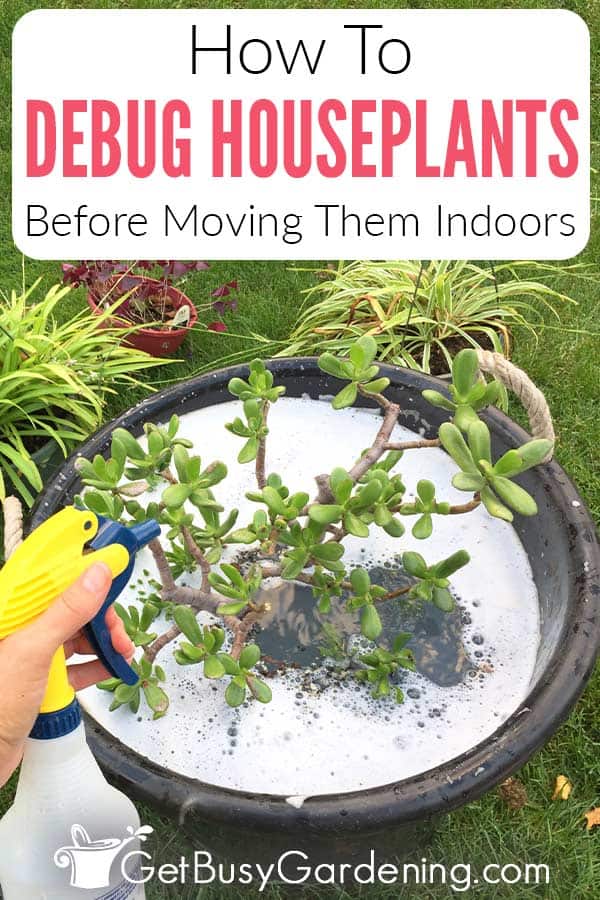
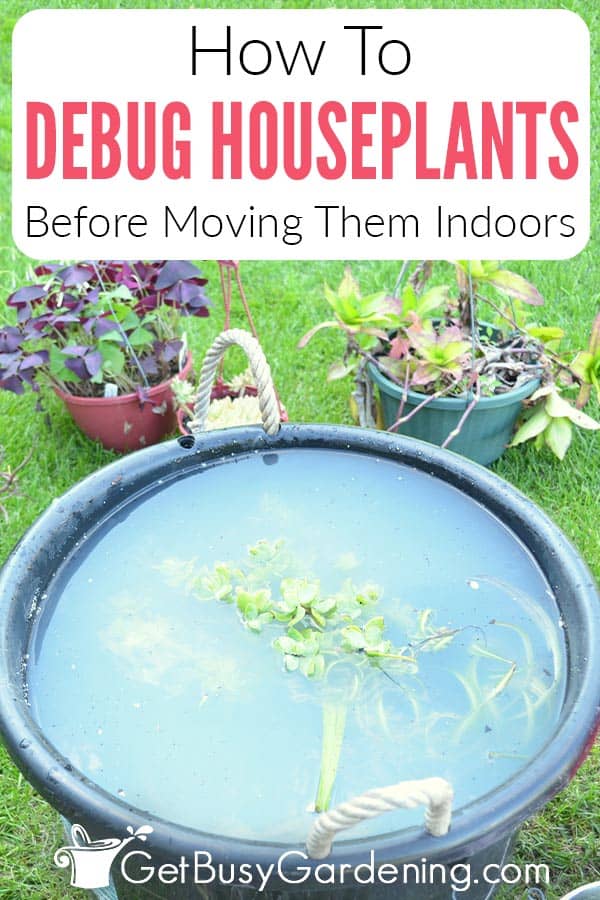
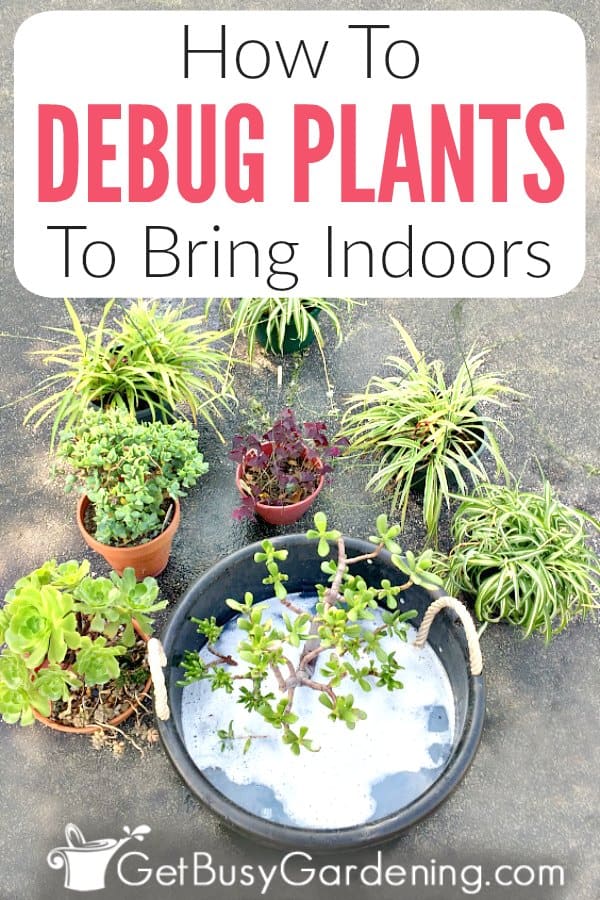
- Soak the Plants: Submerge each plant—pot and all—in the soapy water for 15-20 minutes. The soap kills bugs on the plant and in the soil. Weigh down any floating pots with bricks or rocks.
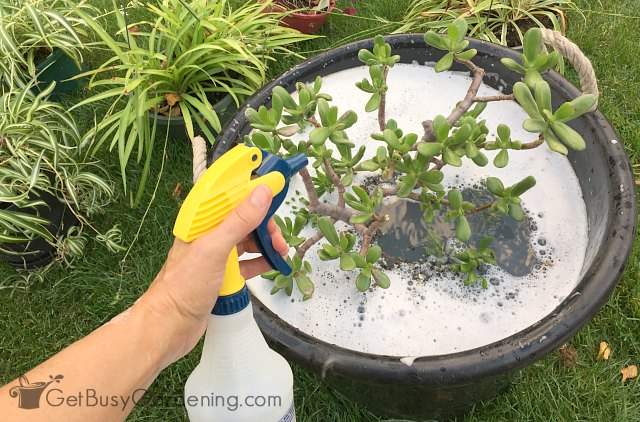
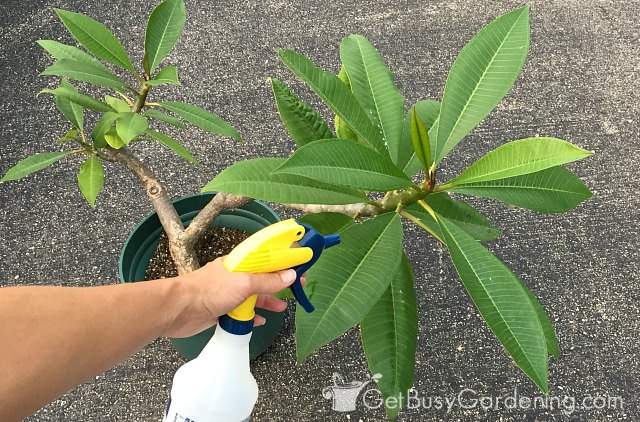
- Clean Any Exposed Leaves: Clean the leaves that aren’t submerged – If any of the leaves aren’t completely covered by the water, use an organic insecticidal soap to clean them. Or you can use my recipe, which is 1 teaspoon of mild liquid soap per 1 liter of water in a spray bottle.
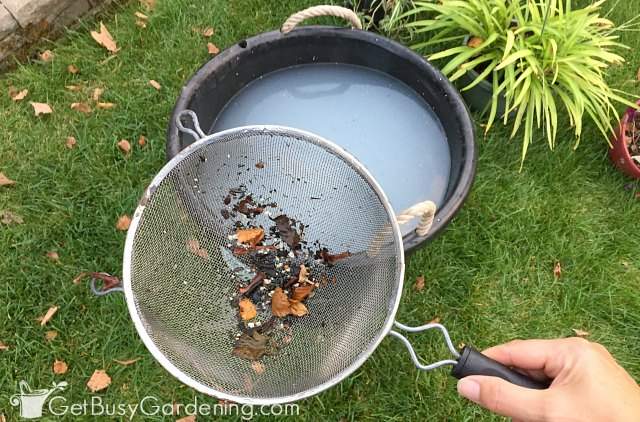
- Remove Debris: Skim any dead leaves, bugs, or debris from the water using a kitchen strainer before pulling out the plants.
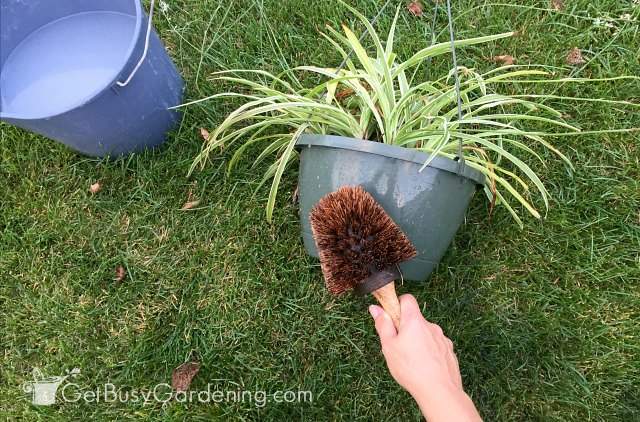
- Scrub the Pots: After soaking, scrub each pot clean with a brush.
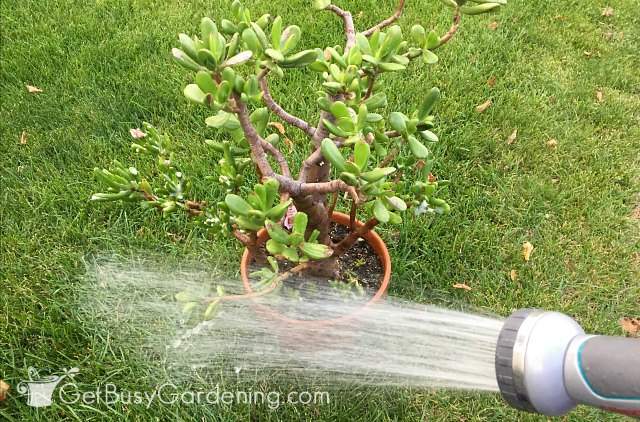
- Rinse Thoroughly: Use a hose to rinse the plants and pots to remove any remaining soap and debris.
- Drain the Water: Allow the excess water to drain completely from the pots before bringing the plants indoors.
- Repeat as Needed: Continue the process until all your plants are debugged. Top off the water in the tub as needed and remove debris between batches.
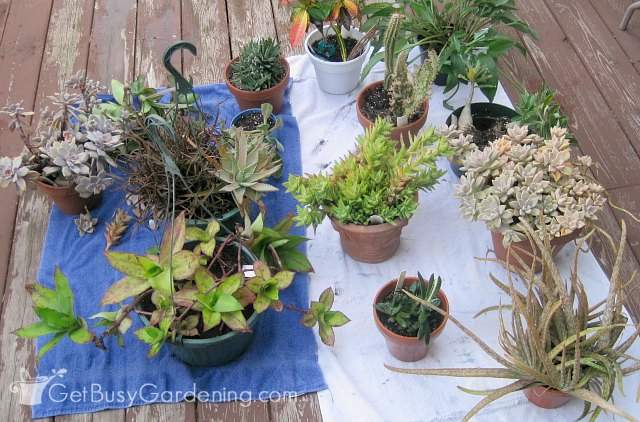
- Move Plants Indoors: Once drained, bring your clean plants back inside and let the soil dry out before watering again.
Debugging Large Plants To Bring Indoors
Soaking houseplants in soapy water is great for small to medium sized potted plants, but I have several that are too large for this method. So, instead I use a modified version…
I wash the plant leaves and the stem of the entire plant with soapy water (using the same mild liquid soap I use for soaking plants), and then rinse it off thoroughly using the garden hose.
Once the leaves are clean, I spray the whole plant with neem oil and let it dry before I move it back inside.
NOTE: some houseplants are more sensitive than others, so be sure to test any type of spray on a few leaves before spraying the whole plant.
Amy’s Tip #2! 👩🏼🌾
If any of your plants are root-bound, repot them after debugging, before bringing them indoors. This keeps the mess outside and gives the plants room to grow.
3 To-Do’s AFTER Bringing Outdoor Plants Inside
- Increase Humidity: Many houseplants thrive in higher humidity. Use a portable humidifier indoors to maintain a humidity level around 50%, mimicking the plant’s outdoor environment.
- Inspect Regularly: Keep an eye out for pests after moving your plants inside. Early detection makes it easier to manage any outbreaks.
- Quarantine New Plants: If you’re bringing in new plants from outside or from a store, keep them isolated from your other houseplants for a few weeks to prevent spreading any hidden pests.
Benefits of Soaking Your Plants in Soapy Water
- Soaking gives your plants a thorough watering, so you don’t need to worry about it right away after bringing them inside.
- The process removes dead leaves and debris, leaving your plants looking fresh and clean.
- Your pots and plants will be sparkling clean, adding to the satisfaction of having healthy indoor plants.
Related Post: Fall Houseplant Care Guide
Amy’s Tip #3! 👩🏼🌾
For large plants that are difficult to submerge, use a modified approach: Once clean, spray the entire plant with neem oil to deter pests (test a small area first to check for sensitivity). Wash the leaves and stems with soapy water, then rinse thoroughly with a garden hose.
Debugging FAQs
What do I spray on plants before bringing them indoors?
You can spray your plants with a neem oil solution, or use an organic insecticidal soap to clean the leaves. I highly recommend testing any type of spray on a few leaves before treating the whole plant to make sure it won’t cause any damage.
Will your debugging method kill bugs and eggs in houseplant soil?
Yes, using my method to soak your plants in soapy water should kill any bugs or eggs that are living in the soil too. Sometimes there can be air pockets in the soil where they can survive though. So if you’re concerned, then soak them a little longer. Also, gently tap the pot after it has finished bubbling to try to release any trapped air.
How do you debug plants that are in pots without drainage holes?
To debug plants that are in pots without drainage holes you can wash the leaves with soapy water or insecticidal soap and rinse them off well after. Then spray the leaves with neem oil.
My method of soaking houseplants in soapy water works great for most types of plants, and will help to make sure you bring your outdoor plants inside without bugs. Trust me, starting the long winter off with clean and insect-free houseplants will make your life SO MUCH easier.

If you’re looking for more help for how to keep bugs off plants, my Houseplant Pest Control eBook is an essential guide to help you debug your houseplants for good. Download your copy today!
More Posts About Houseplant Pest Control
- Where Do Houseplant Pests Come From?
- How To Use Neem Oil Insecticide On Plants
- How To Get Rid Of Bugs On Your Houseplants
- Fungus Gnats vs Fruit Flies: What’s The Difference?
- How To Keep Cats Out Of Houseplants
How do you debug plants before bringing them in for the winter? Share your tips in the comments section below.


Jerry mullins justice says
I have an arrow head that is at least 10 years old .It is too big too soak in anything. I put it outside for the summer and back in come the fall. I know it gets bugs in it like earwicks and spiders. What can I mix up to put on it, It takes 2 people to move this thing
Amy Andrychowicz says
Follow the instructions above in the section titled “Debugging Houseplants That Are Too Large To Soak”.
Jennifer Biggs says
I don’t know what you mean by ‘soaking the plant’? I have a hanging basket (Tradescantia zebrina), that I want to bring in but I don’t want the bugs. Would Mrs. Meyer’s dish soap work? I appreciate any help.
Amy Andrychowicz says
There are lots of photos and also a video on the article that show you how to soak the plants. I have never used the brand of soap you’re asking about, so I can’t say for sure. I recommend testing it on a few leaves before submerging the whole plant. Let it sit for up to a week, and if there’s no damage, then it’s safe to use it for debugging your plant.
Sasha Blair says
Hello!
I have quite the succulent collection and all my plants have been outside since spring. I have a wide variety including string of pearls, Echeveria’s with the more sensitive powdery petals, etc. Would these safe to emerge in and insecticidal soap bath? I don’t necessarily see pass but I know earlier in the summer I had seen some plus ants and spiders in a few. So I would like to do this process. I just fear damaging my more delicate varieties. I wasn’t able to find a good organic soap but I did order an organic insecticidal soap and plan to dilute that for their bath. Would this be safe and is there a ratio you’d suggest?
Thank you so much in advance!
Amy Andrychowicz says
If you’re concerned that the soapy water bath will damage your plants, then you should test the soap out on a few leaves first to make sure there’s no damage. Just spray it on a few leaves, and let them sit for up to a week. If there’s no damage, then it’s safe to submerge the plants. I would not recommend using pre-made insecticidal soap in the water though. That is already diluted, so it may not be very effective to debug your plants once you dilute it even more in the tub of water.
Tamara Flanagan says
Can I do these steps to bring a potted hibiscus plant indoors for the winter?
Amy Andrychowicz says
Yes. This method of debugging works great for hibiscus plants, I’ve brought them inside in the past too.
Annette Brown says
Do I leave the the plant inside the pot when I soak in liquid detergent
Amy Andrychowicz says
Yes, you should soak the whole plant, pot and all.
Jennifer Patterson says
I have a question about the mild soap, could I use Dawn? Or could I use insecticidal soap in the tub? I hate to go out and buy “another” product if I don’t need to, and I have both of these on hand already.
Amy Andrychowicz says
I have never used that brand of soap on my plants before, so I can’t speak from experience. However, that type of soap usually contains degreasers and/or detergents, which can harm (or even kill) sensitive plants. So, if you want to try it, I highly recommend testing it on a few leaves of each of your plants to make sure there’s no damage before soaking them. I wouldn’t use insecticidal soap in the water because it’s already diluted, so it probably wouldn’t be strong enough to kill the bugs once you dilute it even more.
Karen Nein says
Great information, but i am quite sure my plumeria has ants in the soil. It is too large to soak (i can barely lift it as it is) and i can’t see that simply cleaning the leaves and stems will do the trick. Would filling the pot with Castile soapy water help? If so, would i do that several times, wait 15 minutes and then use clean water to wash things out? (I finally got flowers and additional stems this year and don’t want to lose it).
Thank you in advance for your recommendations.
Amy Andrychowicz says
Yes, you can water your plant with the soapy water mix to help get rid of the ants in the soil. You could also try flushing the soil (douse it until water comes out of the drainage holes, and let it run for a few minutes), which may be enough to encourage them to move out. (Be sure to allow the soil to dry completely afterward though). If they are sweet ants, then I would also put a trap on top of the soil to attract and kill them. Here’s a post you might find helpful… Facts About Ants In A Garden & Organic Control Tips.
Brenda Petersen says
I brought a plant inside last year to find there were over 100 1″ centipedes in the soil. Will soaking the pot in the soapy water kill these too? Or should I completely change the soil as well as soaking the plant?
Amy Andrychowicz says
EEK!!! That would be horrifying! Yes, soaking the pot in soapy water should kill any bugs that are living in the soil too. If I were you, I’d soak them for at least 30 minutes, just to make sure all the bugs drown. Sometimes there can be air pockets in there though, so you could also continue to water the soil with the soapy water mix I discuss above after you bring your plants indoors, for an added layer of protection. Good luck!
Amelia says
Very good information.
The only addition I suggest is adding 1/2 , 1 inch of sand atop soil to prevent fungus gnats inside. I’ve been doing this for a few years now and it’s been amazingly affective
Amy Andrychowicz says
Yes, that works great for keeping those annoying little bugs out of the soil after soaking the pots. Thanks for adding your tip!
Marlene. Brown says
I have two boston ferns to bring in. They are quite large. How do I debug
Amy Andrychowicz says
I recommend following the instructions above listed under the section titled “Debugging Houseplants That Are Too Large To Soak”.
Brenda Hill says
I have huge wandering jews that need to come in but I don’t know how to debug them because of their size. They quadrupled this summer!
Amy Andrychowicz says
Follow the instructions under the section titled “Debugging Houseplants That Are Too Large To Soak” above. That is how I debug my larger plants. 🙂
Annette L Reil says
hi Amy,
Love the article on debugging. For the mild soap would Murph oil soap work, it states it is pure vegetable oil soap and phosphate free.
thanks
Amy Andrychowicz says
As long as it doesn’t contain any harsh chemicals, that type of soap should work great for debugging your plants. However, I have never tried it myself. So, I always recommend testing it on a few leaves and leaving it sit for a few days before submerging the whole plant. Let me know how it works!
Joanne says
I use Dawn dish soap. Is it OK for debugging plants I want to bring inside for the winter.
Amy Andrychowicz says
I have never tried using that type of soap. Some people have reported that it works fine for debugging plants. However, it is a much harsher soap than what I recommend (and it’s not organic). So, whenever someone asks about using something I haven’t tried, I always recommend testing it on a few leaves, and then leaving it sit for a few days to make sure there’s no damage before submerging the whole plant. Some plants are much more sensitive to chemicals (like degreasers and detergents) than others.
Patricia says
Hi! I have the castile soap you recommend – but it’s peppermint… can I use that, or do I need the unscented? Thanks!
P.S. This is a VERY helpful article!
Amy Andrychowicz says
I have only used the unscented castile soap to debug my plants, the one without any added essential oils. Some plants are more sensitive than others, so the peppermint may work just fine. I recommend testing it on a few leaves first, just to make sure it won’t damage your plant.
Astrid says
Thanks for sharing these great tips.
Question. I am terrified of bringing spiders into the house, via eggs that may be in the soil.
I once had a canna and a few month later dozens of good sized spiders were crawling up my basement walls!!
What will kill spider eggs?
Thanks
Amy Andrychowicz says
Soaking your potted plants in soapy water, as I describe in this article, is a great method to kill spiders and their eggs. You could also remove the top 1″ of soil, and replace it with fresh and dry potting soil before brining them back indoors. Another thing you could try is pouring soapy water into the soil to kill any spider eggs that may be in there.
Astrid says
Awesome! Thanks so much, will try that 🙂
Michelle says
Great info! What is the recommendation for plants in pots that do not have drainage holes? I know for a fact there have been caterpillar eggs and ants in my plants,? Which I do not want to meet this Winter!!!
Amy Andrychowicz says
If your pots don’t have drainage holes, then you definitely don’t want to soak them in water. Instead, follow the instructions under the header “Debugging Houseplants That Are Too Large To Soak” above. Although, that won’t get rid of the bugs in the soil. So, if I were you, I would repot them into fresh soil using a container that has drainage holes before bringing them back inside. Honestly, using pots that don’t have drainage holes is just asking for trouble in the long run.
Karim says
This is such great information! I was wondering though, won’t most of the soil come out of the pots when soaked? Do you add more potting soil after soaking? Thanks!
Amy Andrychowicz says
That is a very common question, LOL! No, for the most part, the soil won’t float out of the pot when you soak it in water. The only exception to that is if you recently repotted the plant. In that case, some of the loose soil could float to the top. But this doesn’t happen for established plants. And yes, if any soil comes out of the pot after soaking, you could just add some fresh stuff to fill it in. No problem. 🙂