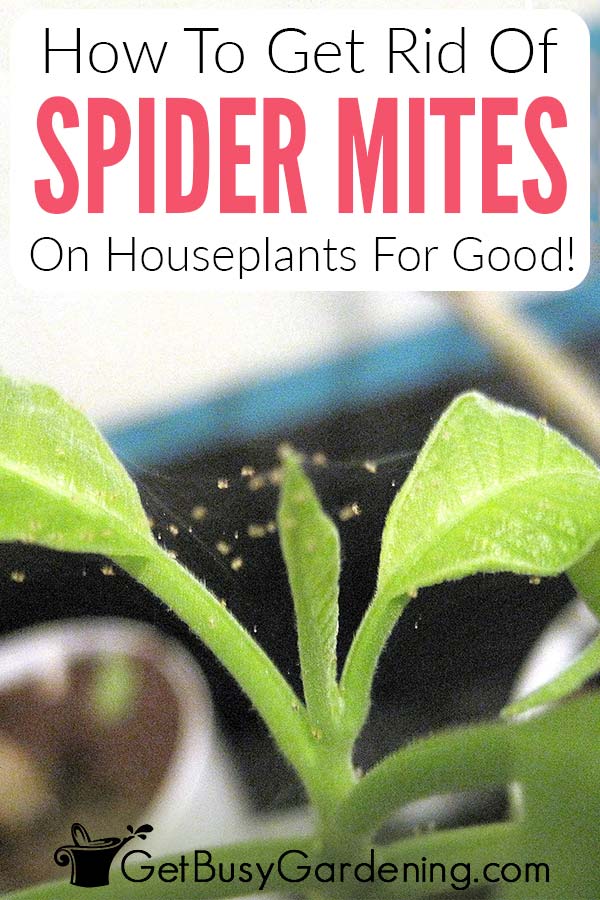
There is nothing more frustrating than finding a spider mite infestation on one of your beloved indoor plants. They are one of the most destructive pests, so it’s very important to get rid of them as quickly as possible.
The good news is that they’re pretty easy to control using natural treatment methods, and you’ll be able to eradicate them quickly.
In this detailed guide, I’ll show you all you need to know about getting rid of spider mites on your plants for good, and how to prevent them from ever coming back.

What Are Spider Mites?
Spider mites are tiny bugs that attack many different types of plants, and they can be a major problem indoors. Though they are arachnids, just like ticks and spiders, they only feed on plant cells.
Since they’re so small, you probably won’t notice them until their population explodes. By then, there can be hundreds of spider mites in a single colony, and they cause significant damage in a very short time.
These annoying pests thrive in warm, dry conditions. So our homes are the perfect breeding grounds, especially during the winter.
How To Identify Them
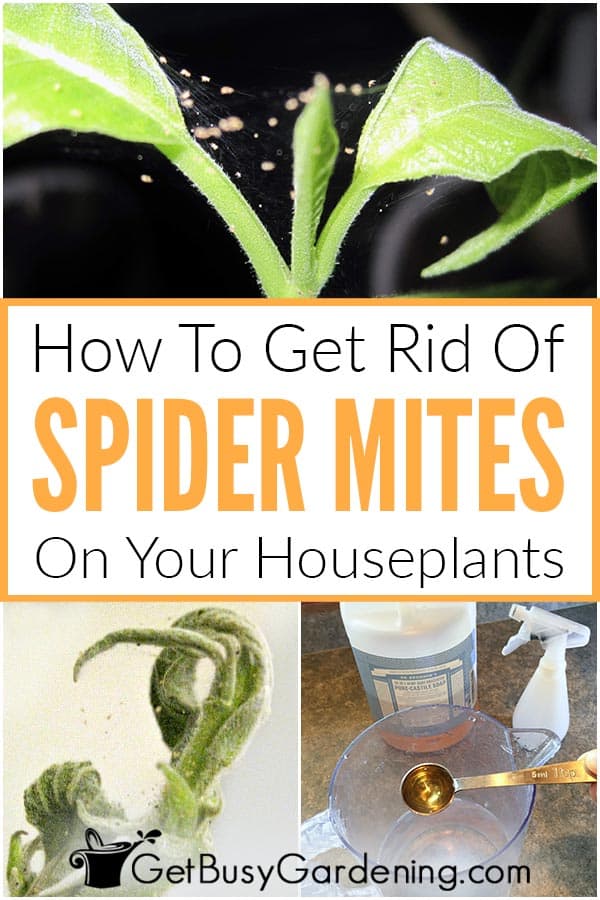
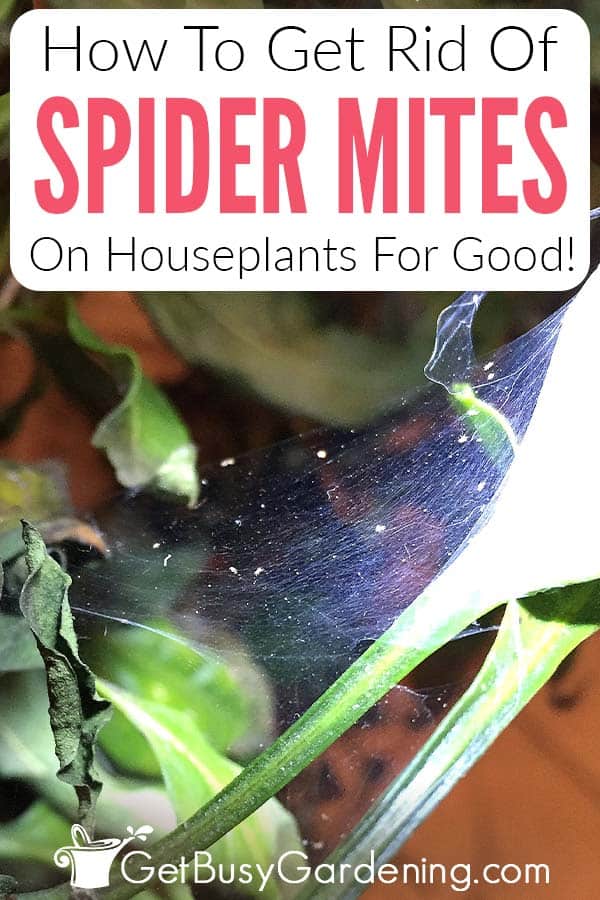
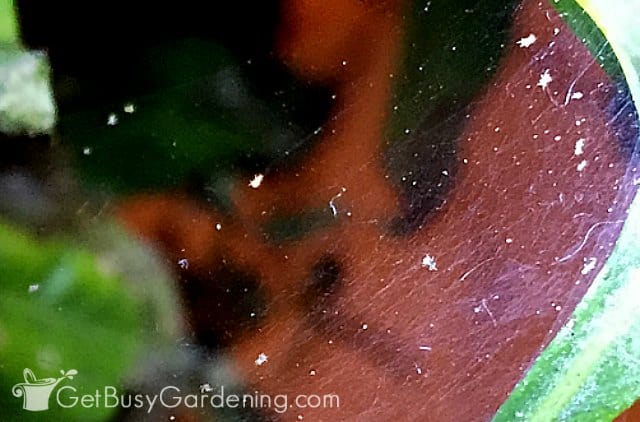
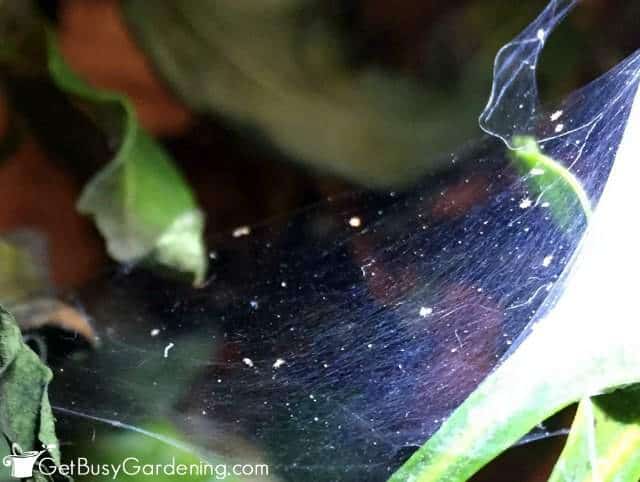
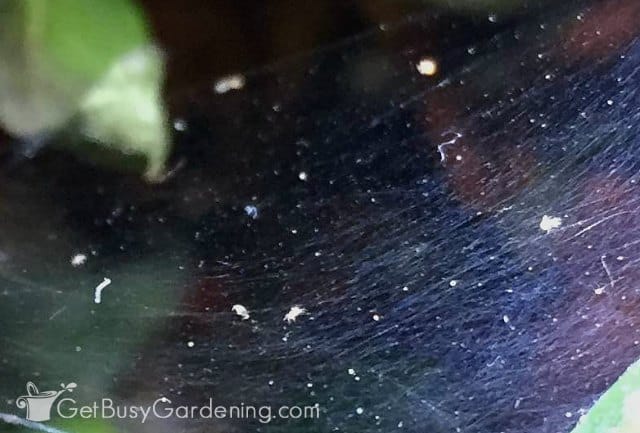
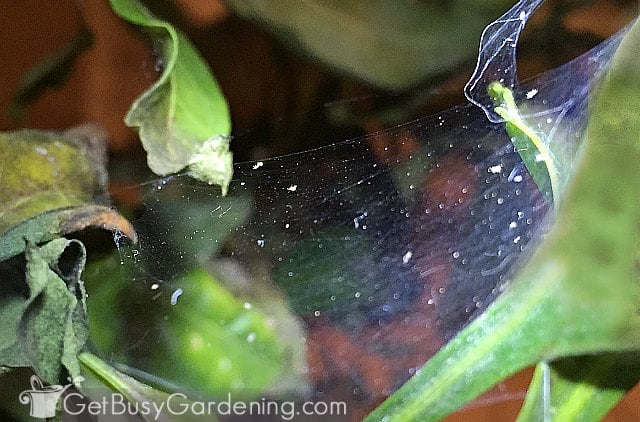
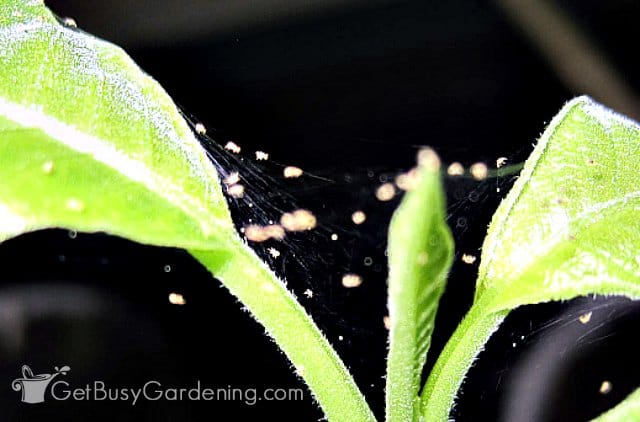
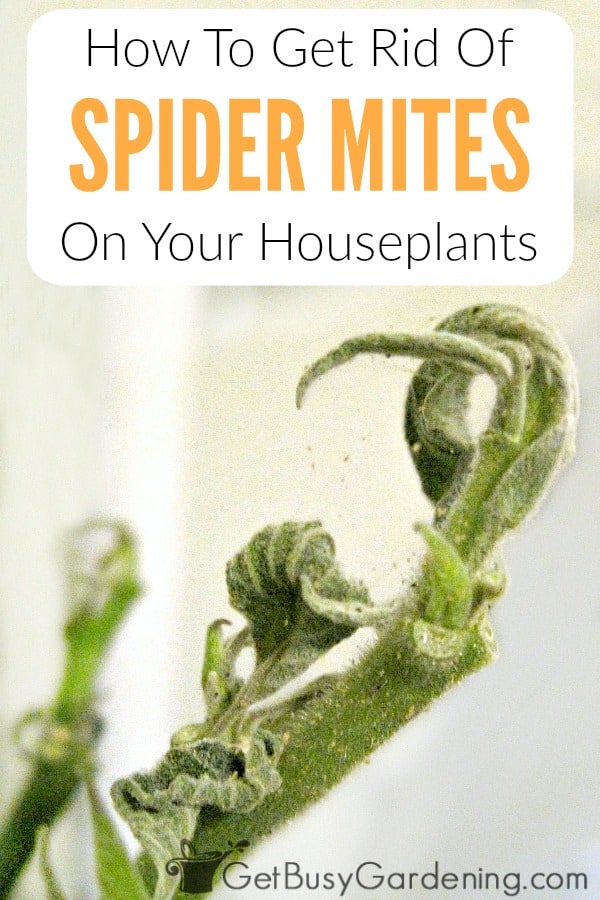
Spider mites are easy to identify, and finding their webbing on a plant is a dead giveaway. Take a closer look at the webs and you’ll see these tiny creatures crawling around on them, yuck!
Oftentimes these mites look like tiny white spiders, but they can also be tan, red, or black.
They are sneaky little suckers, and tend to start their webs on the underside of leaves. So that’s why you probably won’t notice them right away.
Rather than seeing bugs, you’ll probably spot the webs on your houseplant first. Or the leaves may just look dull and dusty, or appear dried out as if you forgot to water.
Related Post: How To Identify Common Types Of Houseplant Bugs
Their Life Cycle
At a high level, there are 4 stages to the spider mite life cycle: egg, larva, nymph, and adult. They mature very quickly, and can become full grown about a week after they hatch.
It only takes a few more weeks for an adult female to lay hundreds of eggs, and for them to start hatching.
So spider mites can multiply exponentially over a very short period of time. And, in the right conditions, their population can double every couple of weeks. Eek!
Where Do Spider Mites Come From?
The tricky part about spider mites is that they can come from anywhere, and you’ll probably never know exactly how they got on your indoor plants. But, here are a few common sources:
- Unknowingly buying an infested plant
- Repotting plants with unsterile potting soil
- Moving your houseplants outside for the summer
- Bringing flowers and vegetables inside from your garden
- Through open doors or window screens
Related Post: Where Do Houseplant Pests Come From?
Spider Mite Damage On Houseplants
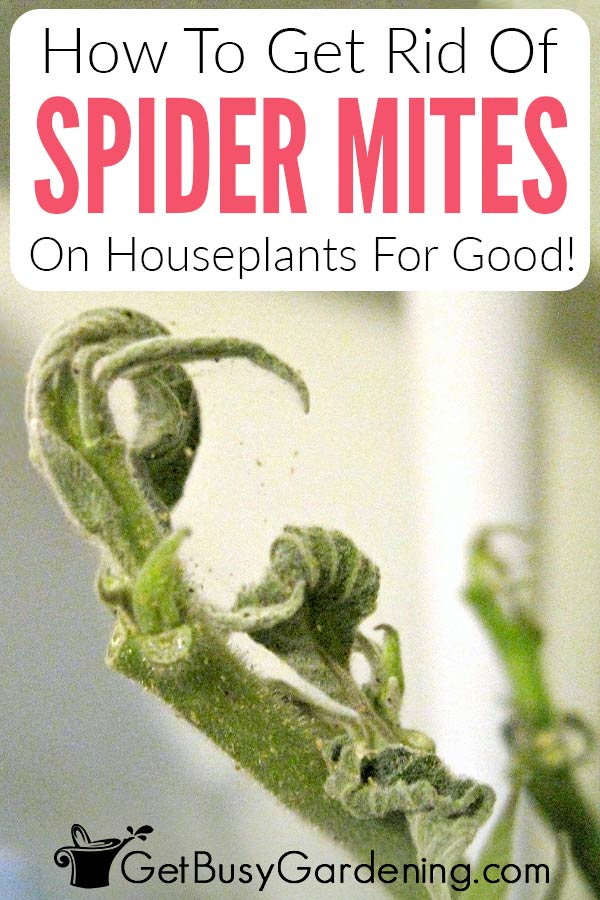
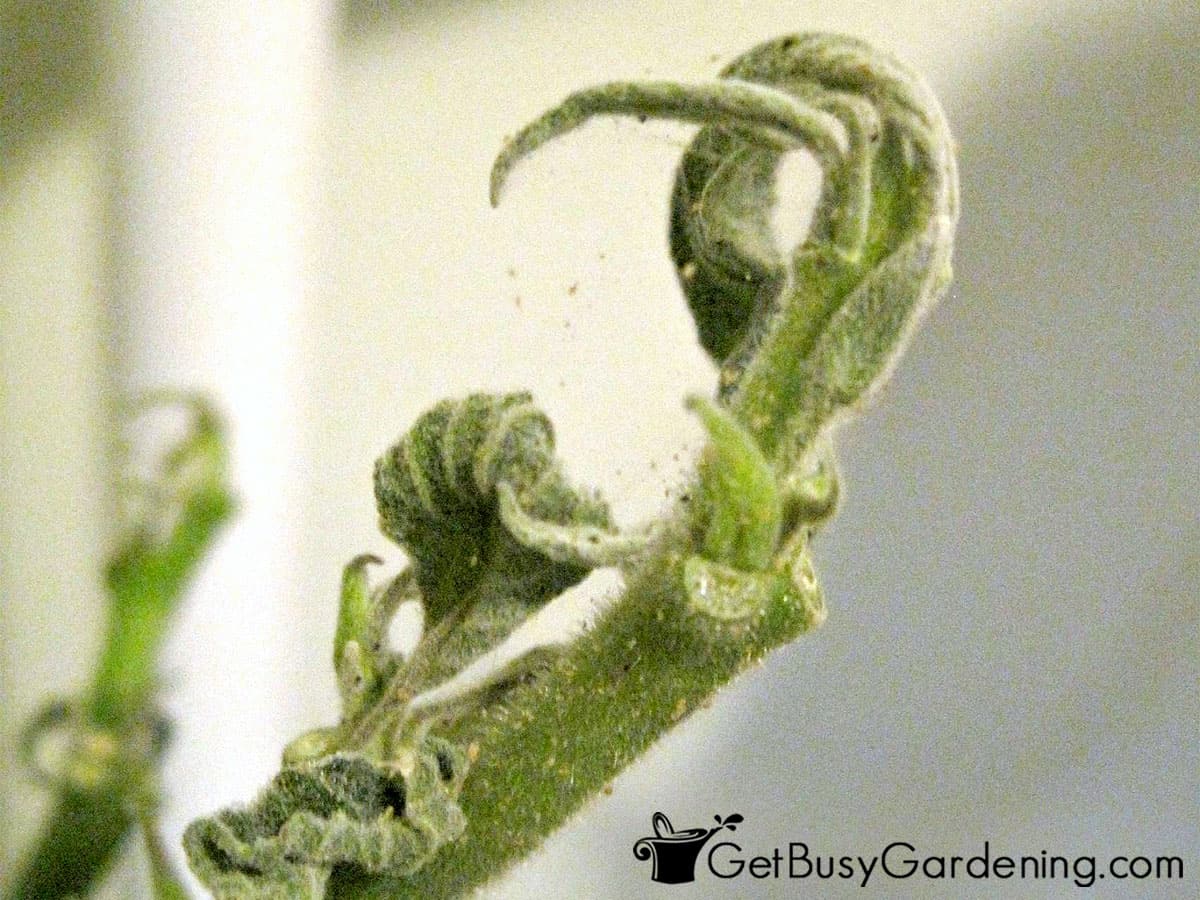
Spider mites cause damage to plants by sucking the sap out of the leaves, making them look discolored, speckled, curled, or dried up. The infested leaves will shrivel, die, and eventually drop off.
They are one of the most destructive pests, and they can heavily damage or even kill a houseplant in a very short period of time.
So it’s very important to take immediate action to get rid of spider mites as soon as you discover them.
How To Get Rid Of Spider Mites On Houseplants
Once you discover an infestation, it’s crucial to act fast to get rid of it before it spreads to the rest of your plants.
The first thing you should do is contain the problem immediately. So quarantine the infested houseplant and inspect all of the surrounding ones for spider mites. Then you should clean the plant.
To do that, I bring mine to the sink or bathtub and wash the leaves with either insecticidal soap or a mild liquid one mixed with water. Be sure to wash the undersides of the leaves too, and rinse the plant well afterward.
Spider Mite Treatment Methods
I highly recommend using only natural and organic treatment methods to get rid of the spider mites on your plants, like the ones I have listed below. Otherwise these pests can develop a resistance to chemical pesticides in a short time.
Also keep in mind that sprays, even organic ones, can damage sensitive leaves. So you should always test them on a few leaves before treating the whole plant.
Related Post: Natural Pest Control For Houseplants
Insecticide Soap
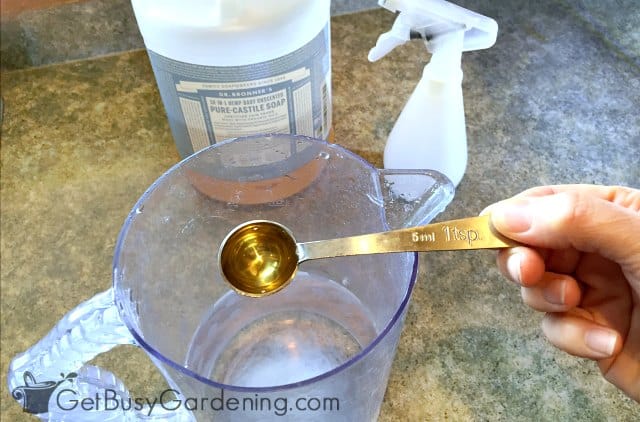
You can buy an organic insecticidal soap, or mix up a batch of my homemade spider mite spray. Here’s my recipe:
- 1 teaspoon of mild liquid soap
- 1 liter tepid water
Mix the ingredients in a spray bottle and then use it to wash the leaves. Either of these options work very well to kill the bugs on contact, but they don’t have any type of residual effect.
Neem Oil
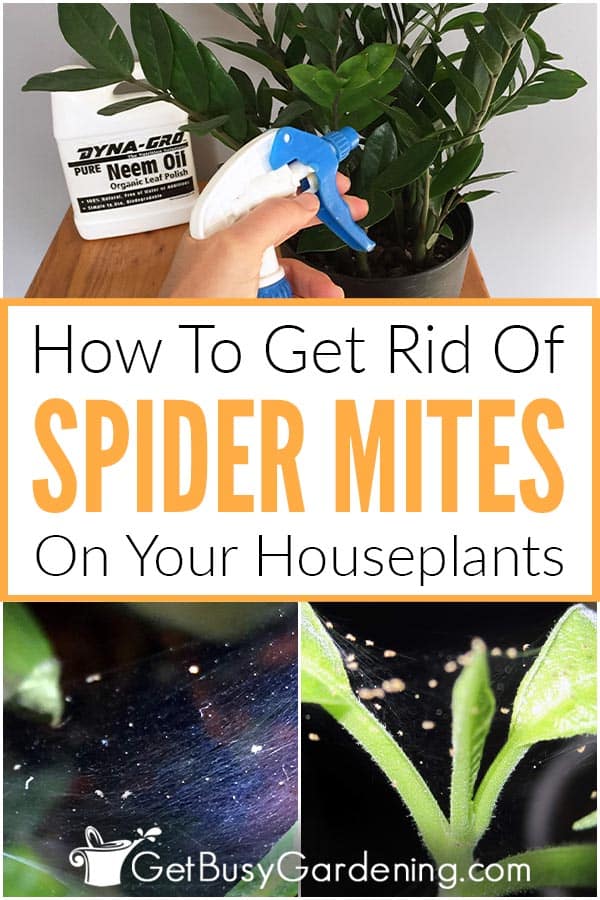
Neem oil is a natural pesticide, and it’s very effective to control spider mite infestations long term. It has a residual effect, so it also works to prevent them from coming back.
I like to buy it in a concentrate and make my own spray so I have complete control of the ingredients. Here’s my simple recipe:
- 1 ½ teaspoons of pure neem oil concentrate
- 1 teaspoon of mild liquid soap
- 1 liter of tepid water
While neem oil does kill spider mites, it can take some time to completely get rid of all of the future generations. So you have to be persistent, and treat your plant every few weeks until all signs of the bugs are gone.
Related Post: How To Use Neem Oil On Plants
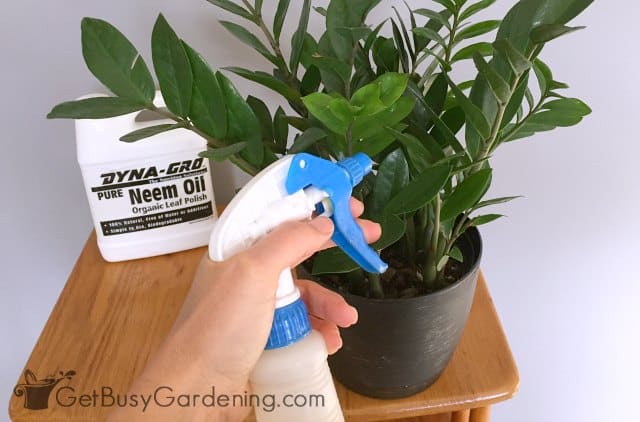
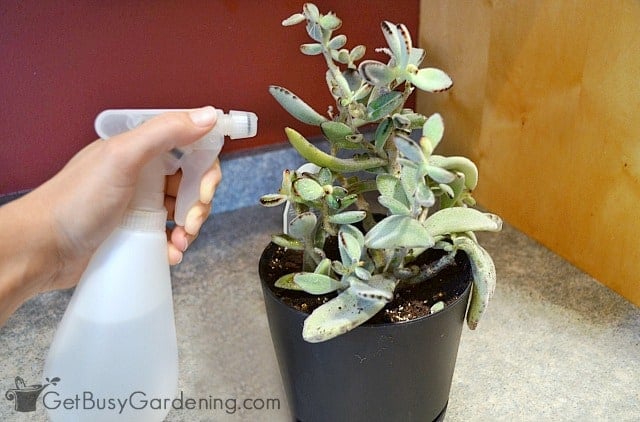
Misting & Humidity
Since spider mites thrive in dry conditions, keeping the air around your indoor plants humid is one of the best prevention methods. There are a few easy ways to do this:
- Mist the leaves regularly
- Keep a container of water next to the plant
- Place the pot on a pebble tray filled with water
- Run a humidifier in the room or near your houseplants
- Place your plants next to the kitchen sink or in a sunny bathroom
If it’s really dry in your house, then I recommend getting an inexpensive indoor humidity monitor so you can monitor it.
Pruning
In addition to washing and spraying your houseplant, you can trim off infested leaves and throw them into the garbage to get rid of even more of the spider mites and eggs.
Never cut all of the leaves off though, just remove the most heavily damaged ones. Then bring the trash outside to get the bugs out of your house.
How To Prevent Spider Mites From Ever Coming Back
Though spider mites can be very persistent, especially on the houseplants they love the best, it’s pretty easy to prevent them from coming back. Here are some tips:
- Keep your plants healthy – When they’re healthy, they aren’t as susceptible to major infestations as sick ones are. Learn how to properly care for your indoor plants here.
- Maintain adequate soil moisture – Well-hydrated plants are less likely to become infested. Here’s my guide for how to water houseplants the right way.
- Increase the humidity – Spider mites thrive best in a dry environment. So mist them or run a humidifier nearby.
- Clean the leaves – You can use neem oil as a leaf polish, or wash the leaves with insecticidal soap to prevent an outbreak.
- Debug them before bringing them inside – If you move any of them outdoors for the summer, be sure to debug all of your plants before bringing them back indoors.
- Check your houseplants – Regularly inspect the leaves for any signs of pests so you can catch them before they get out of control. I do this every time I water.
Though dealing with recurring infestations can be extremely frustrating, it’s not difficult to eliminate spider mites from your indoor plants. The keys are to treat them immediately, be persistent in your fight, and strive to maintain healthy houseplants.
If you’re sick of battling bugs, then my Houseplant Pest Control eBook is for you. This eBook is jam-packed with information about how to get rid of bugs on indoor plants using organic methods. It shows you how to identify common pests so you can quickly and easily get rid of them, and prevent recurring infestations. Download your copy today!
More About Houseplant Pest Control
- How To Get Rid Of Houseplant Bugs Naturally
- How To Get Rid Of Gnats In Houseplant Soil
- How To Get Rid Of Thrips On Indoor Plants
- How To Get Rid Of Scale Insects On Houseplants
- How To Get Rid Of Whiteflies On Indoor Plants
- How To Get Rid Of Aphids On Houseplants
- How To Get Rid Of Mealybugs On Your Houseplants
Share your tips for getting rid of spider mites on houseplants in the comments below.

Henrietta says
Hi! My herbs are outside but I just saw a white spider that was about the size of a lentil (nothing else I know for comparison to 😉 )
It had a web built over my sweet basil. All summer I’ve had critters eating my herbs and have been doing the soap to no avail. Help!
Amy Andrychowicz says
Spider mites are teeny tiny, like a spec of dust. You have to look very close to see them moving around on the webbing, and there would be several, not just one. So it sounds to me like the spider on your plant is a different type, and not one that eats plants. The first thing you should do is try to find what’s eating your plants. If you can’t see any bugs easily, then it’s probably something like slugs or some other bug that is good at hiding. Check under the leaves for caterpillars or other smaller bugs like aphids. Otherwise, slugs and snails come out at night, so check after dark to see if you can spot them. Soapy water only works to kill bugs on contact, it doesn’t have a residual effect. So unless you’re able to spray it right on the insect, then it won’t have any affect on them. Here’s another article that might help… How To Control Garden Pests Naturally. Good luck.
Casey says
My huge alocasia definitely has spider mites. I’ve been spraying it and using a humidifier, and will be getting some insecticidal soap soon. When you say separate the plant from others, do you just mean not touching? This plant has been about 5 feet away from my others since I got it, and I’m just wondering how often spider mites will migrate, and how far? It was touching my tv stand which has other plants on the other side of the tv..
Amy Andrychowicz says
Yes, definitely not touching. Five feet should be a good distance, but I would still keep a close eye on the other plants that are in the room to make sure the spider mites don’t find their way onto them too.
Sam says
Hello,
I have a cat palm that I bought around a month or so ago and it has been having continuous spider mite problems, I didn’t know what they were at first but when I discovered them I sprayed soapy water on the leaves a few times but they keep coming back. A bunch of the leaves are going brown and I suspect it’s from the mites sucking the sap out of them, I’m worried the whole plant is going to die if I don’t do something about it. Is misting it good, or is a wet pebble tray better? Or both? Also, if I’m spraying the leaves down with stuff to try and get rid of the mites, is it fine that a lot of water goes down and saturates the soil in the process? I don’t want to accidentally overwater it at the same time as having mite problems. Any other tips for how to deal with this would be very helpful, thanks in advance.
Amy Andrychowicz says
Oh no, sorry to hear your plant is infested with spider mites! Misting is definitely one way to control them, since they like the air dry. But consistent use of insecticidal soap is better, since it will kill the mites and eggs too. I also recommend neem oil for stubborn or recurring problems. And yes, when you wash the leaves, do take care not to overwater in the process. This won’t be a concern for simple misting, but can be a problem if you hose them off outside or in the shower.
Yamile Rose says
My plant is almost 4 feet tall and in a very wide pot/ very heavy, so I can’t rinse it in the sink or tub but I removed multiple fuzzy web looking things today. A lot of the leaves are drooping and the healthy ones don’t look as shiny as they used to although I’m watering it plenty. I sprayed it with the mixture of water and soap but dont really have a way of rinsing off all the leaves, any suggestions? Should I just wait a few days and see how they respond? I also just learned today that I should be misting this plant, should I start that tomorrow and hope that somewhat rinses off the homemade insecticide soap? (sorry for rambling I’m very new at taking care of plants and very worried that I’ve let mites take this one over!)
Amy Andrychowicz says
With spider mites, persistence is the key. You have to keep treating them, they won’t go away after just one or two times. Misting the plant will help, as the mites thrive in dry air. I also like to use a damp cloth to wash/wipe the leaves on my plants, and that helps to get rid of them faster too. You could also try neem oil if you haven’t tried that yet, it works great.
Mel says
Hey! whats your take on rubbing alcohol for spot treatment on a few leaves? or is it best to rinse the whole plant regardless? found a small web without any white specs on my fishbone cactus, then noticed my cat palm had webs and white spots everywhere, ive seen white dots and a small teeny web on a few other plants but its so hard to tell if its dust or dander or dog fur! I did the soap and water mixture and bathed my big tropical plants, I hope I caught it in time! How long until should I soak the plants a second time or howlong until I know if I caught them?
Amy Andrychowicz says
For spider mites, it’s best to wash all of the leaves rather than try to spot treat them. They’re so teeny tiny there’s no way you’ll be able to see them all. After washing them, check the plants daily for any signs of mites or new webbing. If you don’t see anything show up after a month, then you either just had a regular spider web, or you got them all. 🙂
Korina Trout says
Hey, I just found spider mites on my mint plant. I couldn’t see them on any of my other houseplants in the vicinity. Do I need to treat the room? Is Neem seed oil something I could diffuse maybe??? I also have birds so I want to get rid of these bugs before they become a huge issue, as they can be dangerous to my feathered babies. I have already removed them from the room. Would you suggest any further action on top of the treatments advised?
Amy Andrychowicz says
No, you don’t need to treat the room for spider mites. Just isolate the infested plant and keep a close eye on the others to make sure the mites didn’t migrate. I have never heard of diffusing neem oil, but I don’t think that would do anything to get rid of them anyway. The bugs have to eat the neem oil in order for it to kill them, so it’s best to spray it directly on the leaves. Sounds like you’re doing the right things. Just keep treating the plant until there are no more signs of the mites. They won’t go away on the first try or two, you have to be diligent. 🙂
Nikita jayakar says
Hi Amy, I’m not sure if these bugs in my herb pot are spider mites or something else. I see webs and also the bugs are tiny white or brownish ones.. ive tried cinnamon powder, neem+ detergent + water solution. It doesn’t seem to work, they don’t die, keep crawling away. I’m not sure what to use next. Please help.
Amy Andrychowicz says
Spider mites are minute, and barely visible to the naked eye. If the bugs on your herbs are crawling off the plant, then they are likely just regular spiders. Spider mites travel on the webbing, and you likely will never see them leave the plant. Also, keep in mind that you have to be persistent with any treatment method you use. You can’t get rid of spider mites with only one or two treatments. It will likely take several to get rid of them completely.
Suzanne Orfield says
Hi Amy, my plants are Wandering jews. Something is eating holes in the leaves and I have webs. We live in Iowa so they have been in about a month from my back porch. I actually don’t think they are mites. I am thinking small spiders. And I can’t spot them, because my plants are very large and beautiful. I want to give some away, and I don’t want them to have peasts. What do you think?
Amy Andrychowicz says
Yes, spider mites do not eat holes in the leaves, and if you look closely, you can see them moving around on the webbing. So, if you just see spider webs but no mites, then it’s probably just a regular spider living in there. As for the holes, it’s hard to say for sure, but that could be a slug/snail or some kind of caterpillar. Inspect the undersides of the leaves around the holes to see if you can find any tiny worms or other bug. Otherwise, snails/slugs come out to feed at night, so you could inspect them after dark or early in the morning with a flashlight to see if you can find them. Good luck!
Angel says
Will the mixture hurt my plants if it turns out to not be spider mites?? I have baby sunflowers sprouting and I can’t tell if it’s root hairs or webs!
Amy Andrychowicz says
If you’re unsure whether it’s spider mites or not, then I would just try wiping them off with a damp cloth first. Otherwise, definitely test any type of spray before treating the whole plant, because some are more sensitive than others. To test it, just spray the mixture on a leaf, and wait a few days to make sure there’s no damage.
Darlene Borcherding says
We have recently brought our huge Boston ferns back inside for the winter. Are they likely to get red spider mites from our forced air heat registers? One of them is about 4 ft. away from one. We’ll place bowls of water near them, of course. Should we spray them with neem oil altho we don’t see any bugs yet? Thank you so much!
Amy Andrychowicz says
If they have had problems with spider mites in the past, then I would spray them regularly as a preventive treatment. Otherwise, I would just keep a close eye on them to watch for bugs, and treat them if any show up.
Brandi Washington says
Great article. Thank you so much for this. Would it be a good idea to leave a jar of water near the plant for the entire winter?
Amy Andrychowicz says
You sure could give it a try, it will help to add a bit more humidity in the air to keep the spider mites at bay. But if that’s not enough, then misting or running a humidifier might work better for you.
shara kim says
Thank you so much for this page, i found my Areca palm infested with webs sooooo gross. I was so worried I bathed my palm twice with the soap and water mixture. Literally wiped every leaf twice over.
I ordered neem oil which is harder to find than thought. SO just to be clear soapy water spray is good for right now while the mites may still be around, so continue that for how long? and then add neem oil solution once every few weeks? Sorry if this was already asked. Thank you in advanced.
Amy Andrychowicz says
You’re welcome. Sorry to hear your plant is infested with spider mites! That is never fun. You can stop using the insecticidal spray once you start using neem oil. Yes, then spray the neem oil every few weeks. Here’s an article that talks about exactly how to use it… How To Use Neem Oil Insecticide On Houseplants. Good luck!
Vallye Chandler says
I have spider mites on my tomato plants. After I wash the plants well with the soap and water is it safe to use the need oil on the tomato plants, or just continue with the soap and water?
Amy Andrychowicz says
Bummer to hear your plant has spider mites! You can safely use neem oil on the leaves of your tomato plants, no problem. Just be sure to test it on a few leaves first to make sure it doesn’t cause damage. And don’t spray while it’s sunny outside, either do it in the early morning or evening, or on a cloudy day.
Anam tahir says
Hi there. I’ve just discovered spider mites on my monstera and hoping to use your soap method. How often should i spray the plant? Will the soap leave a residue I need to wipe off?
Amy Andrychowicz says
Oh no, sorry to hear your plant has spider mites! Wash the leaves with the mild liquid soap as I mentioned above first, then rinse them well. That will get rid of most of the adults and eggs. Then you can spray the plant once every few days until all signs of the mites are gone. Good luck!
Nanci says
I have spider mites on my meyer lemon tree. Is neem oil safe ?
Amy Andrychowicz says
Yes, neem oil is safe to use on your meyer lemon to help get rid fo the spider mites. But just be sure to test it on a few leaves before treating the whole plant to make sure it doesn’t damage them.
Lita Collazzo says
my potted basil plants were beautiful and then suddenly they were drained shriveling and drooping. I noticed this faint web with tiny little white.specs So I am guessing it is spider mites. I am wondering if after I wash the basil plants with the gentle soap solution and treated with oil, will the basil still be edible?
Amy Andrychowicz says
Yes, it sounds like spider mites to me. For herb plants, I would recommend misting them with water, and washing the leaves with the water/soap mix using an organic liquid soap. Personally, I wouldn’t use neem oil on edible leaves.
Alana Kuhnert says
So I just discovered spider mites on a plant. I sprayed them off with sink hose and then just did the soap and water spray. I ordered neem oil and will be here in a couple days. How often should I spray the soap mixture and the neem oil ? And then for preventative purpose…how often would I spray the neem oil ? Thank you
Amy Andrychowicz says
Oh, bummer to hear your plant has spider mites! Neem oil has a residual effect, so you only need to spray the plant every few weeks. Here’s more info about how to use it… How To Use Neem Oil On Plants.