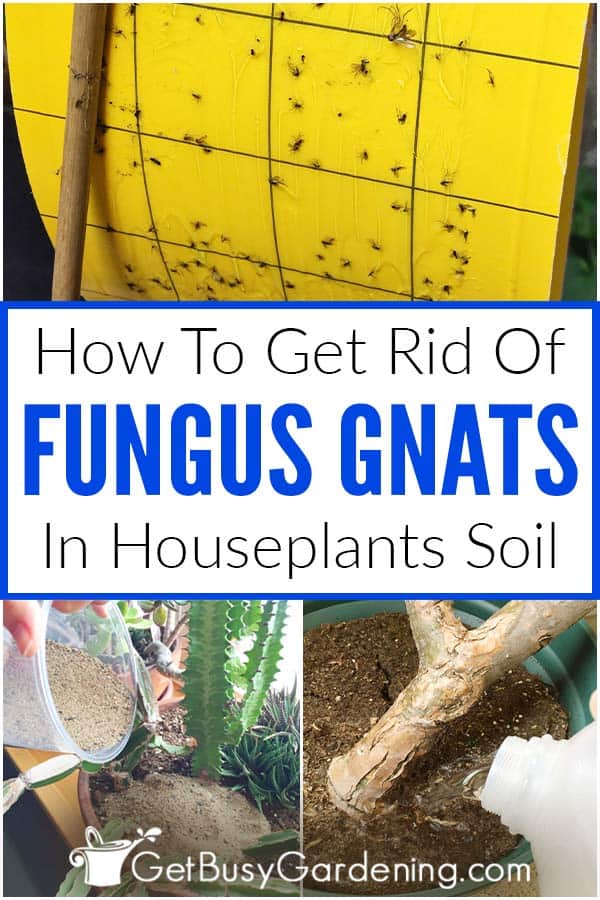
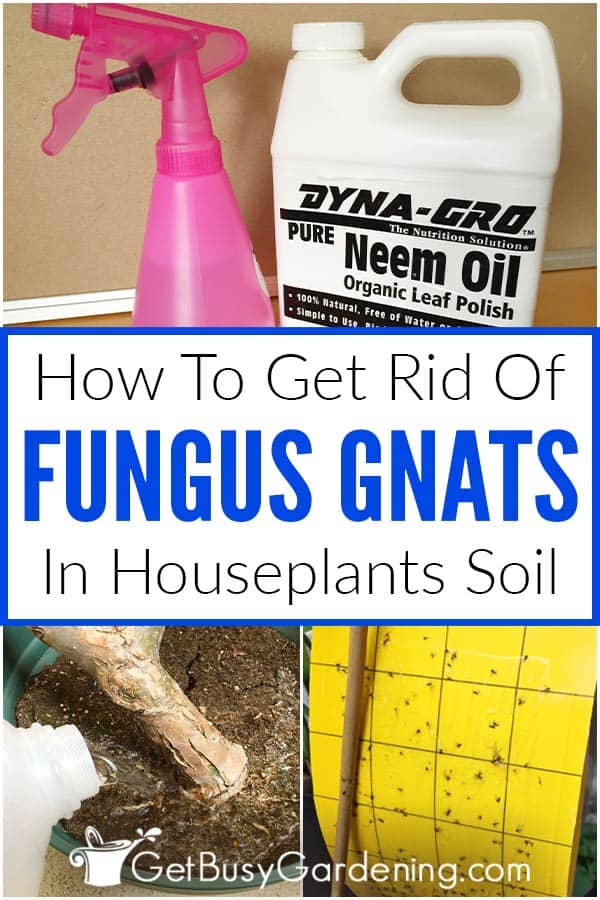
Dealing with fungus gnats in household plants can be a common nuisance, but I’m going to share some simple steps you can take to naturally eliminate fungus gnats—FOR GOOD! From adjusting watering habits to using natural remedies, getting rid of these pesky insects simply takes a bit of diligence and time.

The key to getting rid of fungus gnats is to eliminate the larvae. But it can be tricky to do this naturally. Since the adults only live for a few days, once all the larvae is dead, the infestation will go away pretty quickly.
This is easier said than done though. The adults can fly, jump, or crawl from one plant to the next, so it can be difficult to eradicate them.
So you have to be persistent in treating them, and ensure that you are diligent about keeping your houseplants healthy to prevent recurring outbreaks.
A Bit About Fungus Gnats
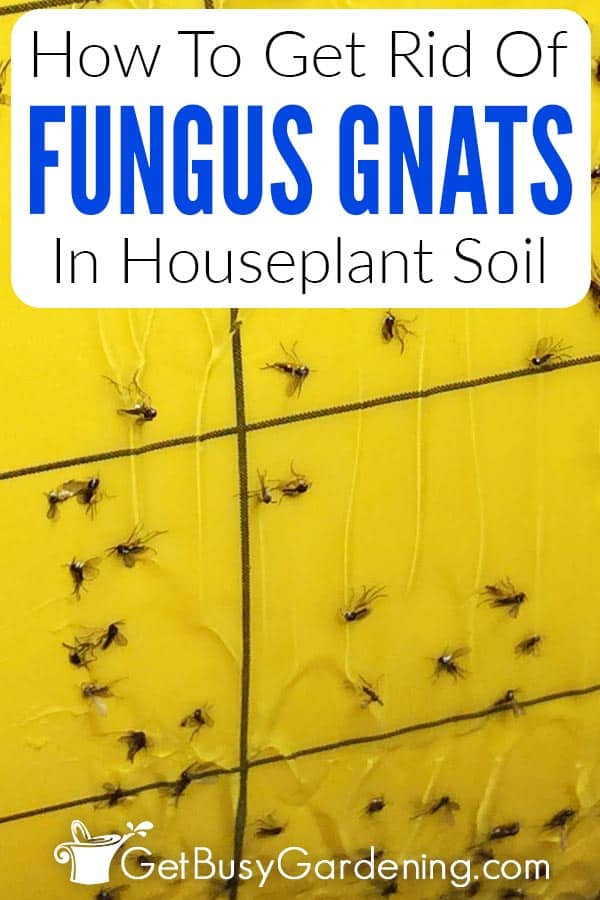
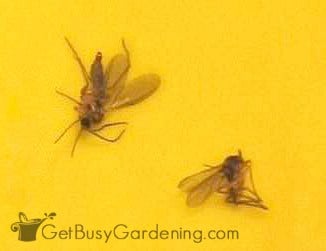
Fungus gnats are tiny black bugs that crawl on top of the soil and fly around your houseplants. They are the most common houseplant pest there is, and they can quickly infest your entire collection. Yuck!
Though the look very similar to fruit flies, they are not the same type of bug. You can read all about how to tell the difference between the two here, so you can make a positive ID.
Fungus Can Multiply Quickly!
There are 4 stages to the fungus gnat life cycle. In the right environment, they can multiply very quickly, and their full lifespan can happen in less than a month.
The adults only live for a week or so, but the females can lay hundreds of eggs during their life. So if you don’t take the right steps to eliminate them, their population can explode in a short amount of time.

9 Natural Fungus Gnat Treatments
There’s no need to resort to chemical pesticides, you can easily fight these pests using natural and organic treatment methods. For the quickest results, you should try all of these:
1. Proper Watering
The #1 reason fungus gnats get into your plants is from overwatering. The larvae thrive in wet soil, and they can’t survive when it’s dry.
So, the easiest and most effective method of eliminating them is to make sure you always water your houseplants correctly. The soil should feel dry to the touch, and never be saturated or soggy.
If you struggle with this, I highly recommend getting an inexpensive moisture gauge to make sure you get it right every time.
2. Water From The Bottom
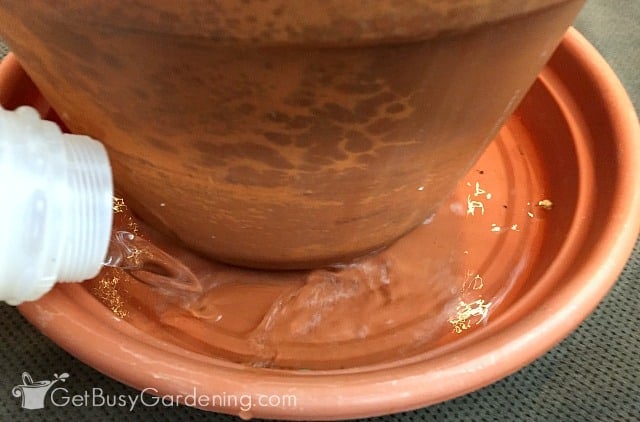
Fungus gnat larvae live in the top 1 inch of the soil, which tends to stay pretty moist when you water plants from the top. So if you have persistent problems, then try watering from the bottom instead.
To do that, simply pour water into the drip tray or cache pot, and allow the plant to soak it up through the drainage holes in the bottom of the container.
Always dump out any remaining water after about 20-30 minutes, and never leave your plant soaking for longer than that.
3. Use Gnat Traps
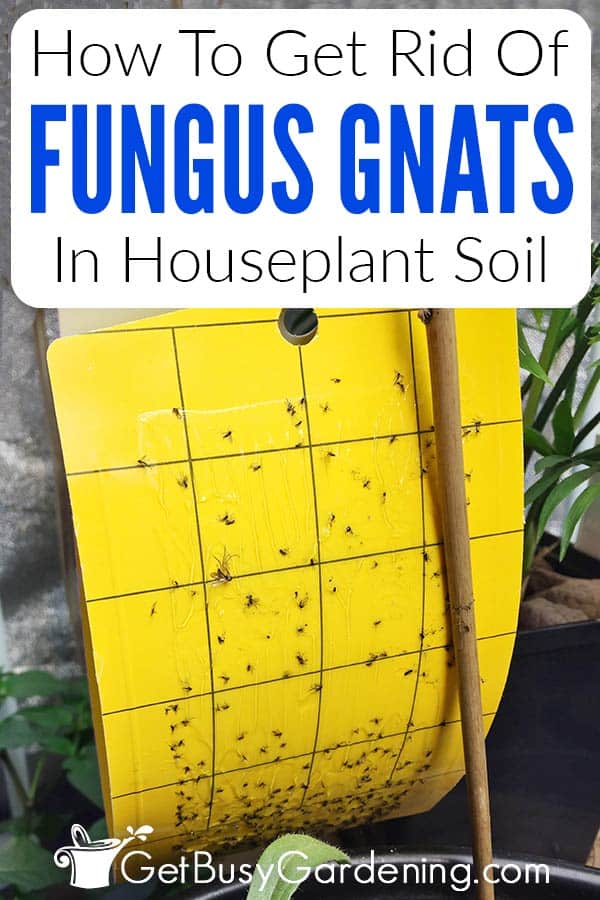
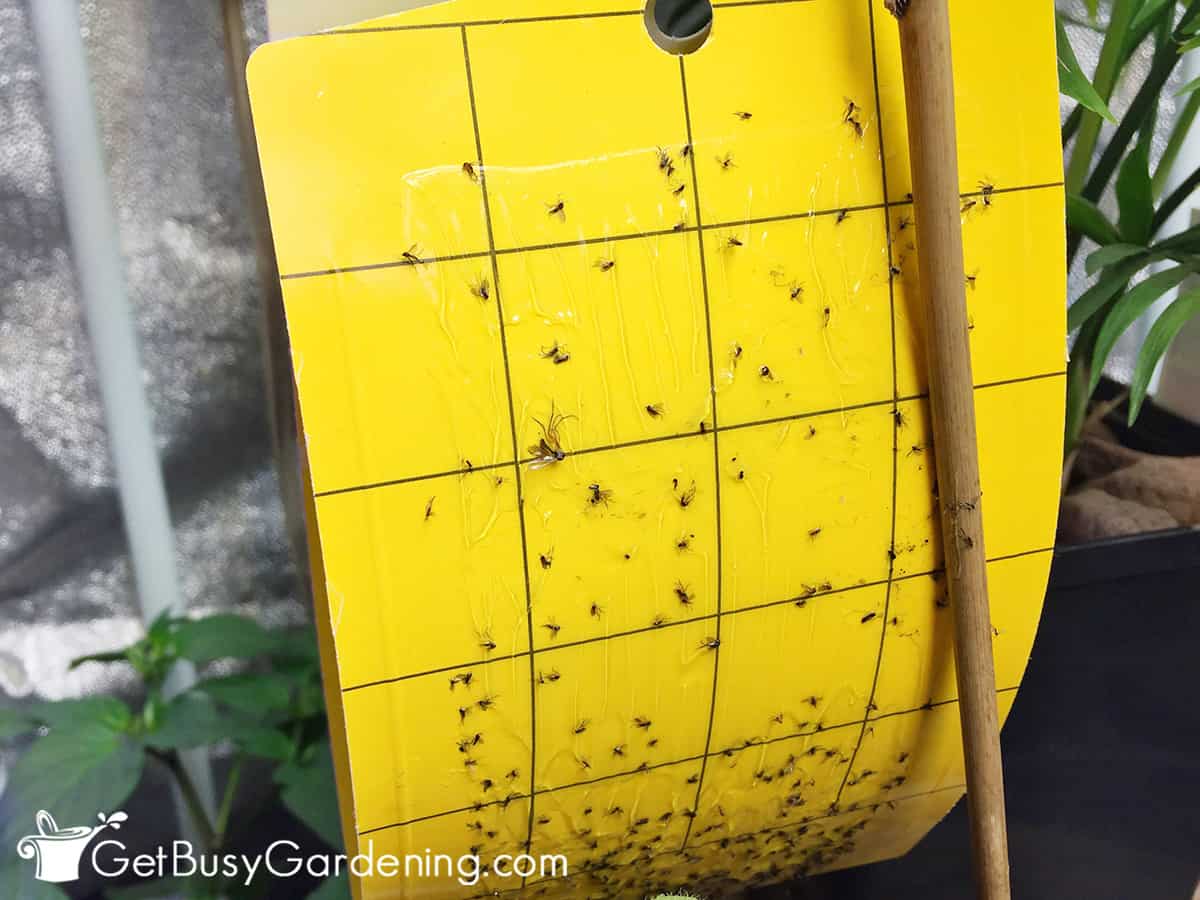
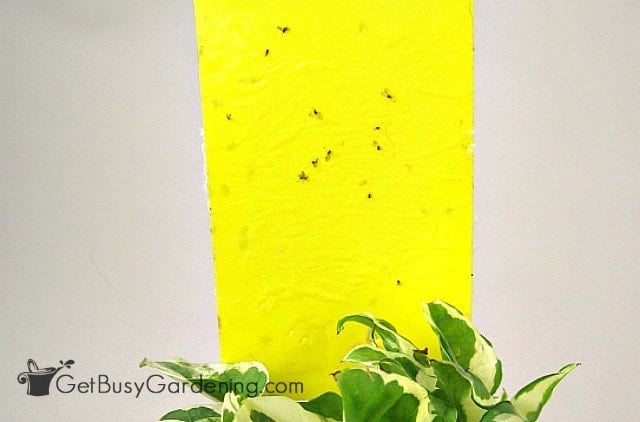
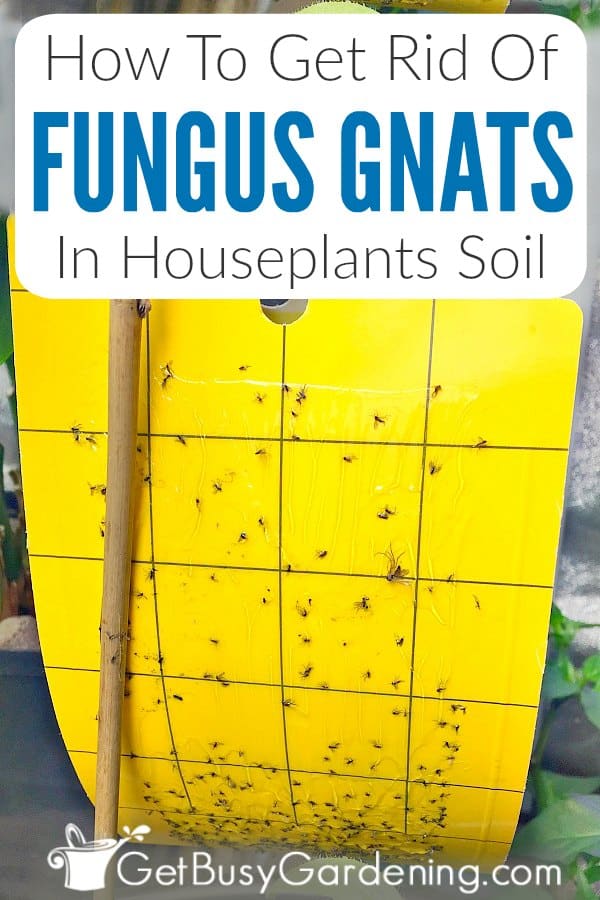
Putting a yellow sticky trap near your indoor plants is a super safe pest control method that will attract and capture the flying adults.
This only works to control the adult population, it will not take care of the problem at the source – the larvae.
But these traps will definitely prevent fungus gnats from flying around to other plants and prevent more larvae from being laid.
Try making your own DIY Fruit Fly Trap!
4. Use Organic Products
There are several organic products that you can pour over the top of the soil to help kill the gnat eggs, larvae, and pupa.
It might take a few applications to see results, and you also have to be careful not to overwater your plants in the process but they are natural. Here are a few of my favorites:
- Insecticidal soap – This will kill any bugs in the soil on contact. You could also make your own by mixing 1 teaspoon mild liquid soap with 1 liter of water.
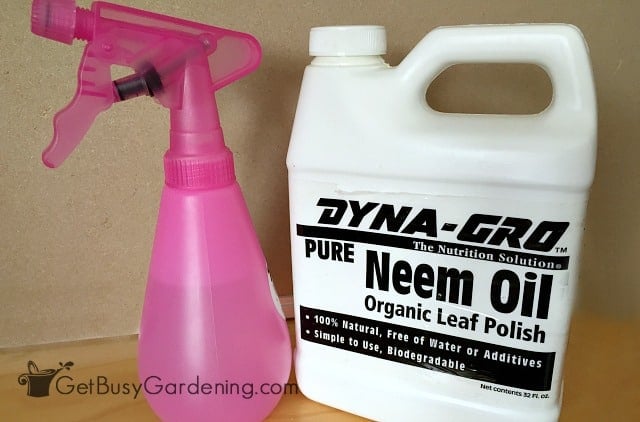
- Neem oil – This is a natural pesticide that works to kill houseplant pests over time, and it has a residual effect to help keep them away.
- Beneficial nematodes – These are microscopic organisms that will feed on the pupa and larvae, and you can simply add them to your watering can.
- Bacillus thuringiensis israelensis (BTI) – Also known as mosquito dunks or mosquito bits, BTI is a bacteria that’s only toxic to the larvae of bugs like fungus gnats. It takes some time for it to be effective but works.
Related Post: How To Use Neem Oil As Organic Pest Control
5. Remove Gnat Infested Soil Entirely
Remove the top inch of soil and replace it with fresh, sterile, and dry potting mix. This will get rid of most of the fungus gnat eggs, larvae, and pupa, and make it easier for you to gain the upper hand.
Just keep in mind that the eggs could still hatch and mature after you remove it from your houseplant, so make sure you take the infested soil outside to the trash right away.
6. Use Soil Covers
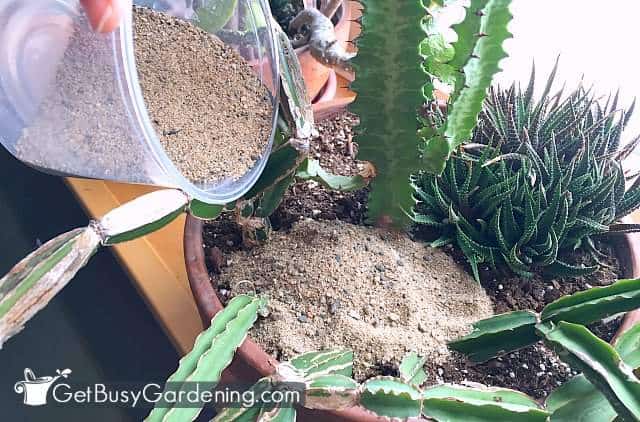
Rather than refreshing the top inch of soil, you can add a dry layer of fine sand, gravel, or crushed granite instead. This will help deter the females from laying eggs. Plus it creates a nice decorative touch.
Or you could try a barrier top dressing, which is a non-toxic product that is specifically made for eradicating fungus gnats.
7. Store Unused Soil In A Sealed Container
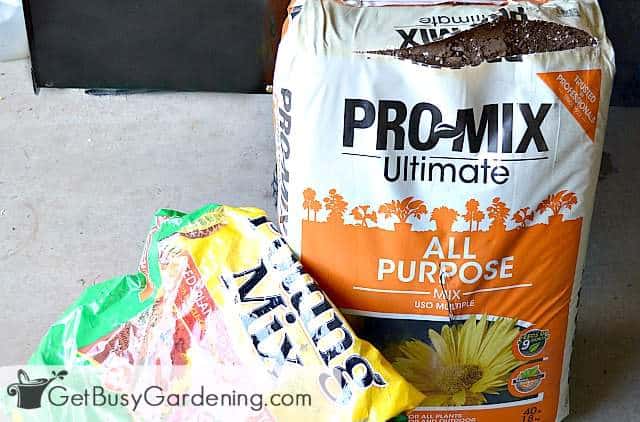
Bags of potting soil can become a breeding ground for fungus gnats. So it’s important to store any of your unused mediums in sealed containers, especially if you keep them inside the house.
Fungus gnats can’t survive without oxygen, so make sure the container is airtight. I store mine in five gallon buckets with Gamma seal lids on top.
8. Never Reuse Potting Soil
I know it’s tempting to pinch pennies by reusing soil when you repot your indoor plants or after one dies, but you’re just asking for trouble.
Used soil can harbor all sorts of pests and diseases, and can quickly cause an infestation. So it’s always best to use a fresh, sterile mix, and discard the old stuff.
Related Post: 9 Homemade Insecticides & Bug Sprays For Indoor Plants
9. Use Hydrogen Peroxide as Larvacide
Treating the soil with hydrogen peroxide is a natural and effective method. Try mixing 1 part hydrogen peroxide to 4 parts water and use it to wet the top inch. Keep in mind that this will only kill the larvae and pupa, and not the adults that are flying around your plant.
Other Natural Treatments To Try
I have also heard using baking powder, vinegar, coffee grinds, tea tree oil, lavender oil, garlic, parsley, cinnamon can be effective treatments for ridding of fungus gnats.
Where Do Fungus Gnats Come From?
Though indoor plant bugs can come from anywhere, here are the 4 most common ways that fungus gnats could have gotten into your house:
- From the soil of a new pre-infested plant.
- An infested bag of potting mix.
- Other plants that were outside during the summer.
- Through the screen of open windows or doors.
Related Post: How To Get Rid Of Houseplant Bugs Naturally
Common Questions About Fungus Gnats
While it is possible to get rid of fungus gnats, you have to be diligent with your preventative measures to keep them away permanently. The biggest problem is that they can easily come through window screens and doors. So unless you seal your home year round, it’s possible the fungus gnats will return at some point.
The short answer is no, fungus gnats will not kill your houseplants. They are usually just a nuisance and rarely destructive. Sometimes they can cause minor root damage if the infestation is heavy, but normally they only eat rotting plant material.
Everyone with indoor plants will have to fight fungus gnats at some point, it’s just a part of life. Recurring problems are difficult to prevent, and it can be very frustrating. Your best defense is to make sure you don’t overwater, properly store unused potting soil, and always maintain healthy houseplants.
If houseplant pests are driving you crazy, and you want to learn how to get rid of them once and for all, check out my Houseplant Pest Control eBook. It will help you identify common houseplant bugs, and show you exactly how to eradicate them before they kill your beloved plants. Download your copy today!
More About Houseplant Pests
- How To Debug Plants Before Bringing Them Indoors
- How To Get Rid Of Thrips On Indoor Plants
- How To Get Rid Of Spider Mites On Indoor Plants
- How To Get Rid Of Scale Insects On Houseplants
- How To Get Rid Of Whiteflies On Indoor Plants
- How To Get Rid Of Aphids On Houseplants
- How To Get Rid Of Mealybugs On Your Houseplants
Leave a comment below and share your tips for how to get rid of fungus gnats in houseplant soil.

Brianna says
Awesome list! Never knew I had so many options. The gnats almost drove me crazy before I managed to get them out of my orchids.
Amy Andrychowicz says
Thank you! Yes, they are super annoying!
Tara says
So glad to hear you were able to eradicate fungus gnats. I’m still trying to get rid of mine, and I have to admit, it is a battle unlike anything else I’ve ever experienced in all my years of having house plants. I am well into 2nd month of treatments and they have lessened but not completely eliminated. Good Luck!
Madonna says
I wish I had this info sooner. Our office always received a multitude of chrysanthemums at Christmas. Within a few days we could hardly have a conversation without swatting away an insect. On Friday our plant lady would put a plastic bag over them and a secure with a rubber band after treating the soil. By Monday they would be dead and the bag could be removed.
Amy Andrychowicz says
That’s a great tip, thanks!
Carol Keith says
I had read that a mix of hydrogen peroxide and water will kill those larvae,but don’t see that here.I saw it on a backyard horticulturist site.He said to mix the 2,and pour this combo on plants,with no ill effects to plants,but can’t find his blog to see the measurements.My infestation has even crept into my laptop,somehow.Everytime I turn it on,they appear in high numbers.I am desperate,now that I know they are fungus gnats,and have tried sticky strips,and cider vinegar.Anyone who can help would be appreciated.I have one combo plant that is almost 25yrs.old,and don’t want to loose it.Also have found hundreds down my bath sink drain,and no exterminator will help.
Amy Andrychowicz says
Yes, watering the plants with soapy water will definitely kill them. I did mention it in the 4th bullet point, but breezed over it. 🙂 I use 1 tsp of Dr. Bronner’s Baby-mild Liquid Soap per 1 liter of water. Make sure you’re not overwatering your houseplants because the gnats thrive in wet soil. Also make sure you don’t have any open bags of potting soil sitting around the house. That happened to me one year, had an open bag of potting soil I totally forgot about and it took me a few days to figure out where all the soil gnats were coming from. Ugh! Tossed it outside in the freezing cold and that took care of the gnats! 🙂 Oh, and the gnats are attracted to heat, so that’s probably why they swarm your laptop.
Carol Keith says
Thanks for the reply,Amy,but they aeem to be coming from my laptop.Is that possible?I have let the plant dry out,but need to water now.Have you heard any good post on the peroxide/water mix?I am having trouble getting the soap you mentioned.I don’t have any potting soil in the house,but did use some from a large bag that my relative gave me.When the problem arose I put it outside and it has frozen also.I don’t see them near that plant,in the same room as the laptop,and never did,but I did use some of that soil to top off that plant.Pls let me know what you think about the peroxide mix and any alternative soap,plus any thoughts on eliminating them from my laptop,(they come from the back of the pc,which is across the room from the plant…you would think I would see them in transit.
Amy Andrychowicz says
Oh man Carol, I’m not sure what to tell you. I’m pretty sure they are not soil gnats, because soil gnats need moisture to live. So, unless you have water in your laptop, then those bugs are something else. I would call a computer expert and see if they know what it could be, and what you could do to get rid of them. 🙁
Amy Andrychowicz says
Oh, and as far as a peroxide mix goes… I’ve never tried that before. But, you don’t have to use the same soap as I do, you can use any type of liquid soap as long as it doesn’t contain detergents or degreasing chemicals.
Carol Keith says
Thanks Amy.I have talked with other pc ppl and some say anything is possible,so did an exterminator.I will try the soap fix since I can’t find that original site.I appreciate the advice.Oh,yes they are soil or fungus gnats,I have examined them pretty closely and have many corpses to examine,uuggghhh.
CSavell says
Peroxide mix does work! Just put 1 Tablespoon of 3% in 1 cup of water. Fully soak the soil with the mixture and it will disrupt their life cycle. You still need to eliminate the live bugs. Repeat after a few days. Do this to your plant soil obviously NOT your laptop 😛
Olivia says
This peroxide mixture will not harm my plants? I have many angel wing begonia and other various plants that I do not want to kill, but I have to get rid of these gnats!!
Nadine says
I just spoke with an IT friend of mine and he has seen this before. He told me that if food gets into the laptop somehow, (eating while using the laptop), or if pet fur gets into the fan, bugs will be attracted to it. It might just need a good cleaning.
Julie says
Please, please mention that soil/fungus gnats BITE! I have plants in every room and I wake up with new.bites every morning ?. So far, I have only used sticky trap strips that I found cheaply at Walmart. I know they work and am now just waiting (insert villainous laughter here).
Amy Andrychowicz says
No, fungus gnats do not bite.
Heather says
They will most definitely find your laptop. I forget where but I read that they are attracted to the light. My guess is it is actually the heat. They also like the CO2 that we exhale. We would be swatting them away at the dinner table. Freaking GROSS!! I have also tried the peroxide, A.C. vinegar and yellow traps. Dish soap in a bowl too. Nothing. I am going to try the baking method and pray that works. They are finally to a manageable level but they are still around. Came in with a bag of organic potting soil and I didn’t realize until after I’d repotted nearly ALL of my house plants! As for the drains, I had that issue too. If you get them in the house and they make it to the bathroom, curves in the drain make them super happy. Pour straight peroxide in the drains… ALL of them from wherever you have an opening. Including the little safety hole in your sink for the water not to go above a certain point. Wait a while. Boil water. Pour it down all the drains. Do this once every two weeks for two months. (just to be safe). The Larva cycle is about two weeks so this is why you wait the two weeks. So you can cut off the cycles. They can easily create multiple generations at once so by doing 4 rounds two weeks apart, you should have effectively killed any and all stages by the 4th round. I don’t know how old your comment was but I hope this helps at least one person!!! 🙂
Cate says
A sensible answer at last !
Dr. Green Thumb says
Ahh, those infamous Fungus Gnats. I had to deal with them (and sometimes still do) a few years back. The 0.5 – 1″ layer of sand fully covering the soil works well from keeping the adults from laying eggs. Sand dries(lets water pass through) quickly, and adult Fungus Gnats are looking for something moist to lay their eggs on.
Now about the hydrogen peroxide and water mix. It most definitely works, and very well in fact. I’ve noticed, and I’m sure others have&will also, that it does have a dual-purpose. You’ll see the soil fizzing (like when applied to a topical cut on your skin) and it actually ‘fluffs up’ the soil. Which really helps when your soil dries and has compacted exposing an open edge along the inner-side of a pot.
Although now, keep in mind that the fizzing isn’t only killing the larvae/eggs and fungus, but also some of the organic material that may be feeding your plant(s). So what I’ve been doing after an initial soil treatment, I would/will still just spray the top layer of the soil with almost pure hydrogen peroxide. Because after a while, the preventative sand will eventually merge in with the existing soil.
Amy Andrychowicz says
Awesome, thanks for sharing your experience and your tips for controlling fungus gnats!
janell farrell says
I have a money tree house plant that came with white decorative rock sealing the top of the planter. I water it once a week with 4 oz of water poured over the rock. I’ve had it about a month and just in the last few days have seen gnats crawling over the rock. Help please
Amy Andrychowicz says
The decorative rock really won’t help to keep the fungus gnats away. The reason sand works is because it dries faster, and creates over the soil so that the adult gnats can’t get to it and lay their eggs. They can easily find their way between the larger pieces of decorative rock.
Hourik Kazarian says
Mosquito Bits from amazon are supposed to kill the larvae. I use it and I’m usually gnat free. Also, diatomaceous earth on the top of the soil. Yellow stickie tape and the previous two products have eradicated my gnat problem.
Renate says
You could also add some Neem Oil to the soapy water mixture. Spray directly on the leaves (to kill the Kant’s that are on the plants) and from reading this article, spraying on the soil (to kill the eggs). I’ve had success with this mixture on other plant bugs (aphids, Neely Bugs). Gonna try it on my fungus gnat problems (as I just found from reading this article fungus gnats were my pesky little problem.
Sheri says
I’ve tried the peroxide. It’s one part to four parts water.
Donna W. says
I usually squirt a bit of liquid dish soap (Palmolive works well) in a paper cup and add water close to the top of the cup and let it foam up. Place the cup near the plants that have the problem. The next day, I will have many of the little pests in the cup. That way, you can flush them down the toilet and throw the cup away. You might have to do it a few times, but it will alleviate the problem.
Amy Andrychowicz says
Interesting. So, they are attracted to the water in the cup? I’ll have to try that. Thanks for sharing your method for controlling soil gnats!
maureen says
Cinnamon is used for ants i had a problem awhile back, wanted something that wouldn’t be toxic to my grandchildren and pets an exterminator recommend cinnamon it worked like a charm
Amy Andrychowicz says
Awesome, thanks for sharing your experience!
Tania says
Cinnamon is really good for orchids! Tried sprinkling it on my other plants to get rid of gnats but didn’t really work. I’m gonna try the soapy water this time. Darn gnats, they’re driving us nuts!!
Amy Andrychowicz says
Orchids don’t need moist soil, they get their moisture from the air through their leaves, not through the roots. So make sure you’re letting the potting medium dry out. That way, the gnats have nowhere to live.
Moni says
I’m just starting the whole plant thing so I’m about as experienced as a second grader. I have a mint plant that is having a rough time. The gnats seem to like the mint more than the yarrow and the lemon balm. Unfortunately, I’m pretty strapped as far as money goes so my main option is allowing the soil to dry out. However, since the mint is already struggling, I’m fearful that I might be killing it if I let it dry too much. Any additional suggestions?? It is December, so I’m hoping the mint is only hibernating.
Amy Andrychowicz says
I’ve also hear that cinnamon sprinkled over the top of the soil can help to control soil gnats, but I haven’t tried that myself. Have you tried a bit of soapy water?
Alexis Cano says
It’s been my experience that was mint plants it will usually grow like a weed. So if you back off on the watering for a week I think you’ll be just fine. I’ve been growing a chocolate mint plant that has pretty much taken over my backyard. Like a weed and I bought it from Walmart or Garden Ridge or something. And I live next to a bayou ditch. And the mint plant is a natural deterrent for insect pests. If I were you I would just try the sand any old sandal work. Good luck
Sharon says
Sorry… Dish soap. Oops.
Sharon says
Ps. I also use apple cider vinegar mixed with a floral dish in a cup topped with tin foil with holes from a tooth pick. They help with regular gnats and fruit flies.
Sharon says
Thanks for all of the tips! I was so worried about my favorite purple passion who is a nice size and started from one baby cutting. Great site. Keep up the good work!?
Amy Andrychowicz says
You’re welcome!
Barbara says
i had fungus gnats once too. I think they came from a bag of soul I got. Luckily it was at the beginning of my plant obsession and didn’t have too many plants. The sticky traps worked and not watering as often seemed to get rid of them.
Amy Andrychowicz says
I had them come in from a bag of potting soil once too, was not happy to discover that! Glad to hear you got rid of your gnats quickly!
Joan says
Hi, I have two mini small rose bushes and used Rose bush soil and now I have flies or gnats flying in the soil. Does cactus soil comes without bugs because the soil I was using had these flies in it. What’s the best soil and can I use cactus soil.
Joan
Amy Andrychowicz says
I don’t think you should use cactus soil for rose bushes, it would dry out too quickly for them. Here is a quality, organic potting soil I recommend… organic potting soil. But keep in mind that potting soil bags are not air-tight, so any type of moist soil you buy at the store could have fungus gnats in it.
Gardening Products Review says
Hi Amy,
I have to agree that GnatNix is fabulous. Stopped fungus gnats cold for me. I even used it when starting seeds indoors (had to wait until the seedlings were big enough first). It’s made out of expanded, recycled glass so although it looks like pumice, it’s not mined and I guess you could call it “sustainable.” I like that it’s chemical-free. And it looks good. Just my two cents…
Monica
Amy Andrychowicz says
Wonderful, thanks for the feedback Monica! I love that it’s non-toxic too, and it looks nice.
Amy
Michael says
i worry about using gnat nix on food products
eating glass is unappealing
Katie cat says
If you wash the plant really good that will remove the gnatnix from the plant. I hope that helps you out.
Michael says
Can you get gnats in hydroponics?
Amy Andrychowicz says
Soil gnats love moisture, so if there’s anywhere that they can land and possibly breed in the medium you use for hydroponics… then yes, it is possible.
Sarah Dorison says
I use GnatNix!
Candy says
Where did you purchase gnatnix??
Amy Andrychowicz says
You can get it on Amazon… Here (Gnatnix)
Donna says
Spray bottle full of rubbing alcohol. Spray the dirt. Works well on powdery mildew as well.
Amy Andrychowicz says
Great, thanks for the tip Donna! I will try it.Amy
Wendy says
Have tried the rubbing alcohol, it does not work.
Julie says
I've never heard of this Amy. Interestingly I might have them. I've been noticing little bugs all winter which is odd they look like fruit flies so I've been assuming that's what they are. I do have a stevia plant and cat grass…
Amy Andrychowicz says
Wow, glad that I could help you out! 🙂 Yes, they are definitely fungus gnats. Fruit flies don't hang around the soil of plants, they only care about fruit or stuff that's fermenting. They are annoying, aren't they.Amy
Anonymous says
I read that you can use ground cinnamon sprikled on top of the soil but I cant remember what it is for. I tried it for those annoying gnats and it seemed to work. I had to do all of my plants and I don't have as many as the people above. So it may have been a fluke. Have you heard of using cinnamon before? Do you know what it would have been recommended for exactly? Thanks for your great tips for controlling fungus gnats!
Amy Andrychowicz says
Yes, I have heard the same thing too. I've heard that ground cinnamon works for soil gnats, and also for fungus problems. I haven't tried it myself, mostly because cinnamon is so expensive… I have a lot of plants! 🙂 I'm glad to hear that you've had success with it. I'm curious to know how long it will last, keep me posted.Amy
Viper says
You need to use a lot of cinnamon so that fact alone makes its not a great method. Also too much will affect the plants negatively..been there, done that–a big expensive nasty fail
B.Taylor says
The cinnamon is more commonly used for outdoor plants and ants. Ants hate the cinnamon. I’ve even used cinnamon indoors when ants would invade the kitchen! But good to know the gnats aren’t going to eat on my mayberries or lemonbalm! noticed a few this morning and will be getting some sand asap!
Yiayia says
I was told to put out vinegar to attract and drown the adults. Alone it did not work but when I set the little container on a bright yellow plastic plate, the gnats came to it and I began to see the black specks in the vinegar.
Viper says
Next time drop a teaspoon of sugar in it as well as 2 or 3 drops of liquid soap…also, they prefer apple cider vinegar…I’ve caught thousands with this method
Amy Andrychowicz says
I think you might be talking about fruit flies instead of fungus gnats. Fruit flies are the ones that are attracted to apple cider vinegar. Fungus gnats like moist potting soil.
Mary Ann says
I Put apple cider vinegar and a couple of drops of dish soap in a small bowl and I’ve been attracting alot of them they were attracted to it
Mark Valentino says
Thing is you want to repel them not attract them, There are so many methods to not getting these bugs in ur soil, so much info online… I bake and sterilise soil, Grow lavender, basil, peppermint, in-between ur plants, use yellow sticky strips as a backup, will use sand and bark to cover the soil with Damascus earth,, had infestation in my fruits and veggies before in my house, never again though…This was from a bag of contaminated soil, got into the lot of them….Happy growing, ur welcome
Carol Windhorst says
I couldn’t catch them with anything, till I sat a cup of coffee with cream, and I started catching them like crazy. Apparently they like coffee, don’t forget the creamer. LOL
Amy Andrychowicz says
Haha, that’s hilarious! I’ve never seen fungus gnats in my coffee… but I don’t use creamer. LOL!
Christy says
YEs they love coffee I have to cover mine to keep them from getting in. Could I spray my soil with a mild dish detergent?
Amy Andrychowicz says
Wow, it must be the type of coffee I drink that they don’t like or something, LOL! You certainly could try spraying the soil with soapy water, but fungus gnats live in the top 1″ of the dirt. So spraying only the top of the soil may get the soap deep enough to kill them. Some people have reported having success using soapy water as a soil drench, so that my work better for you rather than spraying. Just be sure you don’t overwater the plant in the process. Also, be careful with dish soaps. They tend to contain harsh detergents and degreasers that can harm sensitive plants.
Paula says
The whole reason I googled help on the topic was due to the buggers getting in my coffee at work (I use Lucerne Vanilla creamer btw and they LOVE it). I was gifted a deer ear plant, took it home, replanted it and thought, while I was at it, I would put all my plants in bigger planters not knowing my old soil was infested. Now I have gnats at home and at work oh yay!!! Thank you for the advice though, going to go buy some sand and new soil
Monya says
I bought fruit fly traps that don’t work as well as just leaving a cup of coffee (no cream or sugar) on the counter, and I had to start keeping a cover over my coffee pot because the fruit flies (gnats ?) would get in the coffee in the pot !!
Tiffany says
Haha! Yes! This happened to me this morning….and every morning! I’m over it!
Jill Carroll says
Yes! They were flying in my coffee WITH cream also!
Anonymous says
I have had fungus gnats in the past. Every time I got rid of them they would come back. So I read on someones blog that if you put half an inch of sand on the top of your soil the gnats wont be able to reach the dirt. I did this to all 40 of my plants and within 3 days my problem was cured. It's been over a year and they haven't been able to make a come back.
Precious says
Hey. What type of sand?
Amy Andrychowicz says
You could use a coarse sand, or a decorative sand.
Yuccaplant88 says
How do you water them when sand is on top? Do you water them from bottom?
Amy Andrychowicz says
I just water right over the sand, but you could water from the bottom.
Jenna says
Do you put the sand right over top soil with the gnats in there?
Amy Andrychowicz says
I recommend removing the top inch of soil, which is where the fungus gnats larvae lives. Then either replacing that with sand, or adding some fresh clean and dry soil first, with sand over the top of that.
H Munster says
Great article. I hate fungus gnats!
Pretty much all store bought soil is precontaminated with fungus gnats. For some plants they are more than a nuisance and can kill or retard growth. If possible, the best cure is prevention, i have found zapping potting soil in the microwave until it is steaming a bit is effective at sterilization. this help kill mold and fungus as well. Allow your plants to dry out before watering. Avoid over watering and use sand as a top layer as the article states. Neem oil helps, but these critters are tough to kill once they take hold.
Amy Andrychowicz says
Yes, I agree that fungus gnats are very common in store bought soil. I’ve seen them flying around bags of soil at the store many times. Those bags are certainly not air tight, and often have holes in them. Thanks for your added tips for getting rid of fungus gnats!
Ken Rogers says
My father in law once told me that they used to sell bags of compost in sealed bags with no holes, but it would create the ideal environment for fungas gnats and other pests to grow. So thats why they started eating locusts in Africa and started putting holes in compost bags,
Amy Andrychowicz says
Yes, I’m sure it causes problems with mold, however fungus gnats can’t live without oxygen. I store my unused potting soil in a sealed plastic bucket, and that keeps those little buggers out. 🙂
Claudia Fentresss says
These little bugs that I found today that are killing my veg. on closed in patio are so small I don’t know how many it would take to make a grain of salt. I bought plants at WalMart. You can hardly see them, just a little speck moving around potted soil. Are they fungus gnats. And can I use vinegar and water mix on soil.
Amy Andrychowicz says
Yes, those sound like fungus gnats to me. The bugs aren’t what’s killing your plants though, it’s the fact that they are being overwatered. Wet soil is a breeding ground for fungus gnats, and a sign that the plants are being overwatered. Letting the soil dry out a bit between waterings will help slow the gnats down. I would not recommend using vinegar in the soil though, that could kill the plants. Follow the tips above and you should be able to get rid of the gnats.
frank davidson says
this will take care of the roots always put a layer of plain old sand in the pot first about half inch deep now put your plant in then add sand to top half inch deep they will not go through the sand it cuts them
California says
I brought my plants in from the warm sun this past Fall and soon the gnats wee all over the area, I looked on line to rid them, could not find anything acceptable when it dawned on me that I use Bayer 3in1 on my roses and flowers, I put just a smidgen in water, mixed it and within 2 days things are not filled with gnats. Now I can remove the top inch of the soil and take them back outside, the weather is not freezing, the temps are in the 50’s and 60’s and good to go
Amy Andrychowicz says
Happy to hear that you were able to get rid of the gnats in your indoor plants. Just keep in mind that the product you mention is not organic. Also, sometimes these types of houseplant pests can build up a resistance to chemical pesticides. So for those reasons, it may not be a good solution for long-term control. Glad to hear you’re able to put your plants back outside, that’s very nice!