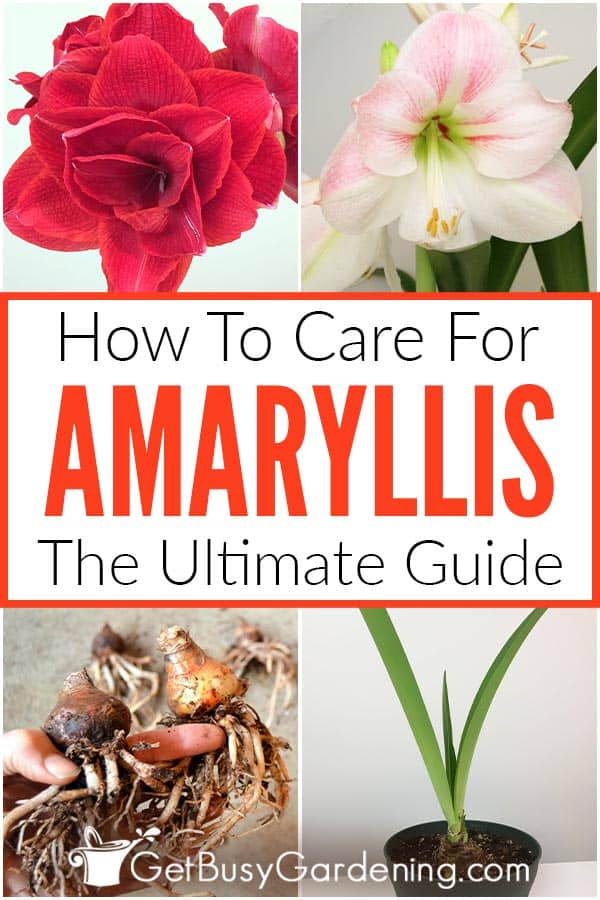
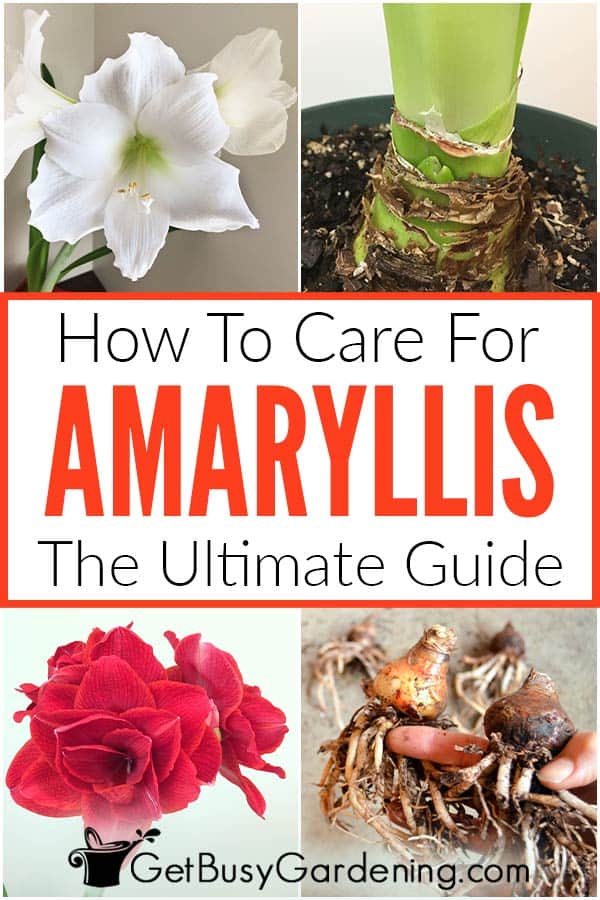
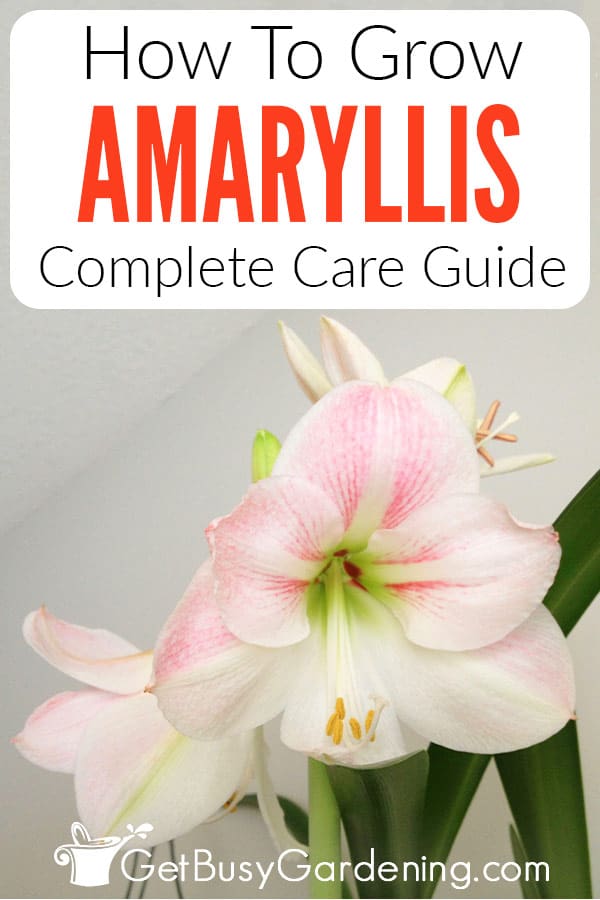
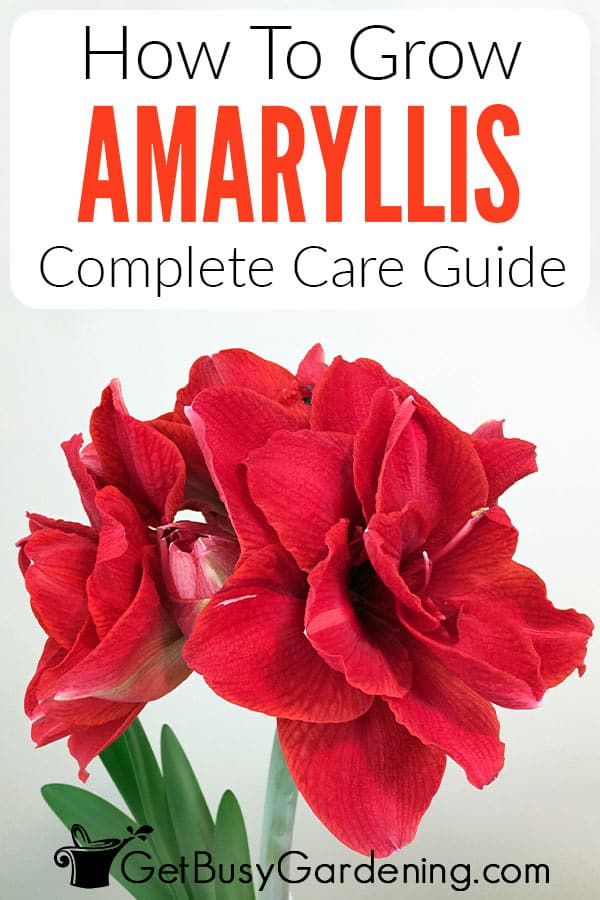
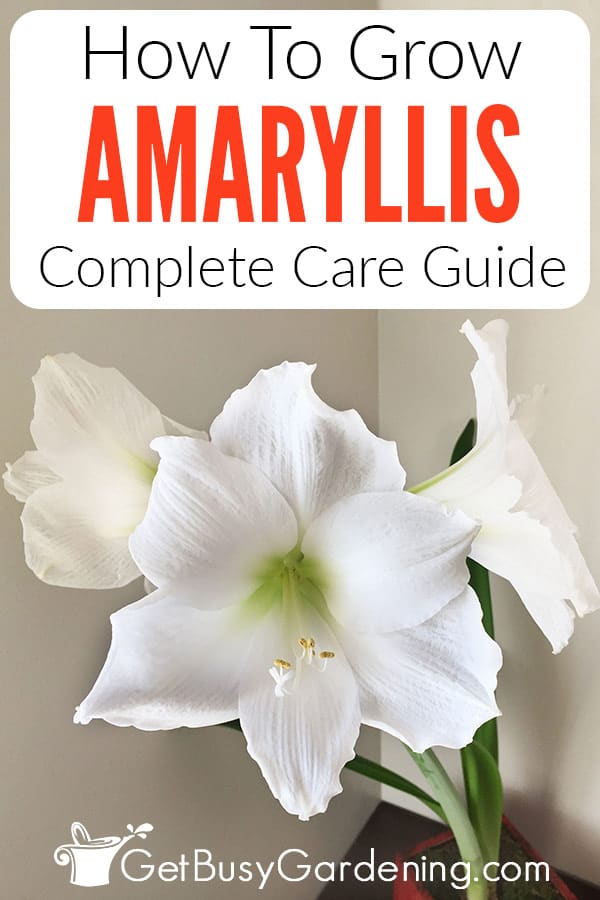
Amaryllis are gorgeous and very easy to grow and care for, and you can enjoy them for many years to come.
In this comprehensive guide, I will show you everything you need to know about how to take care of an amaryllis.
You’ll learn what kind of light, water, soil, and fertilizer they need, plus get tips on pruning, propagation, troubleshooting common problems, and much more.
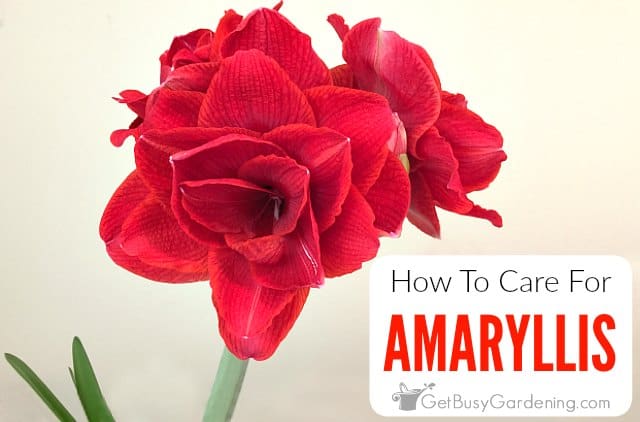

I don’t know about you, but I am a bit obsessed with amaryllis (I currently have 10 different ones growing in my spare bedroom!). I mean who doesn’t love those huge, gorgeous flowers?
The best part is that they bloom during the long winter months, which is something I look forward to every year.
Because of that, and their ease of care, amaryllis are popular gift plants around Christmas time and the holidays.
Below I’ll show you everything you need to know to keep yours thriving in your home or outdoors.
Amaryllis Quick Care Overview
| Scientific name: | Hippeastrum |
| Classification: | Tropical plant |
| Common names: | Amaryllis |
| Hardiness: | Zones 6-10, depending on the type |
| Temperature: | 65-80°F |
| Flowers: | Red, white, or pink blooms winter-summer |
| Light: | Full sun to partial shade, bright light indoors |
| Water: | Allow soil to dry between waterings, do not overwater |
| Humidity: | Medium-normal |
| Fertilizer: | Flowering plant food spring-summer |
| Soil: | Fast-draining, fertile soil |
| Common pests: | Mealybugs, fungus gnats |
Information About Amaryllis
Amaryllis, or Hippeastrum, are native to South Africa where, interestingly enough, they usually bloom in early spring. Depending on the type, they can reach 12-24″ tall.
Since it’s so easy to control the bloom time and grow them indoors, they became a popular Christmas flower.
They’re sometimes called a lily because of how they look, but are actually from the Amaryllidaceae family, and not even related to lilies.
Different Types Of Amaryllis
There are hundreds of different types of amaryllis on the market these days, so you’ll have plenty to choose from.
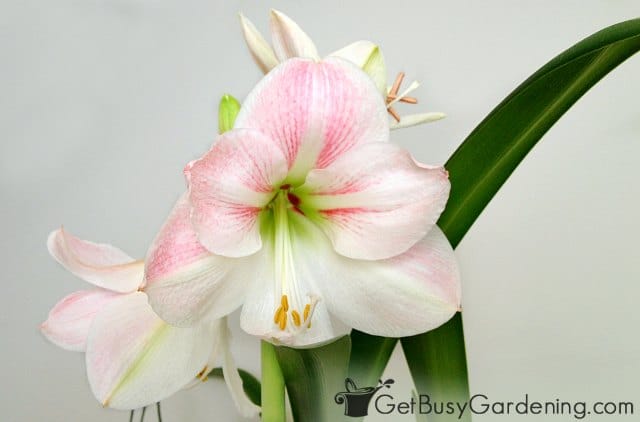
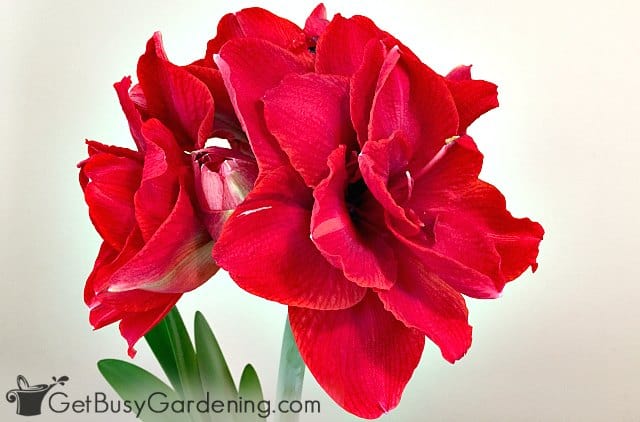
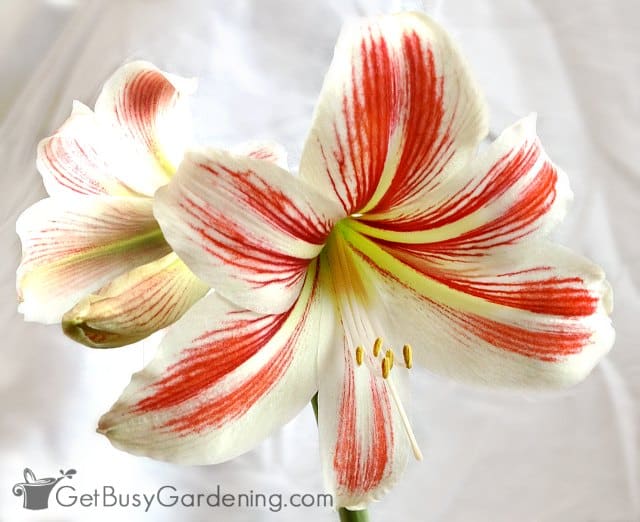
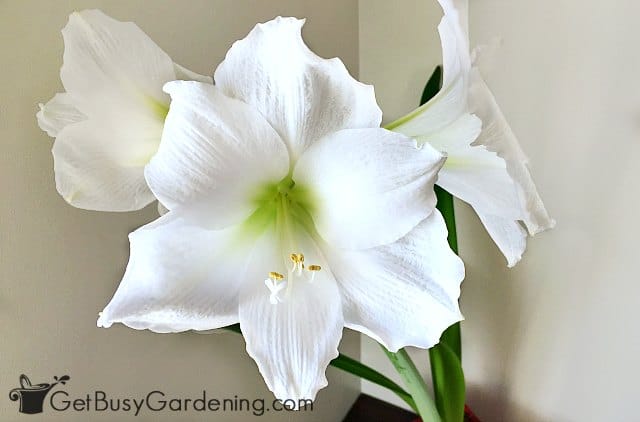
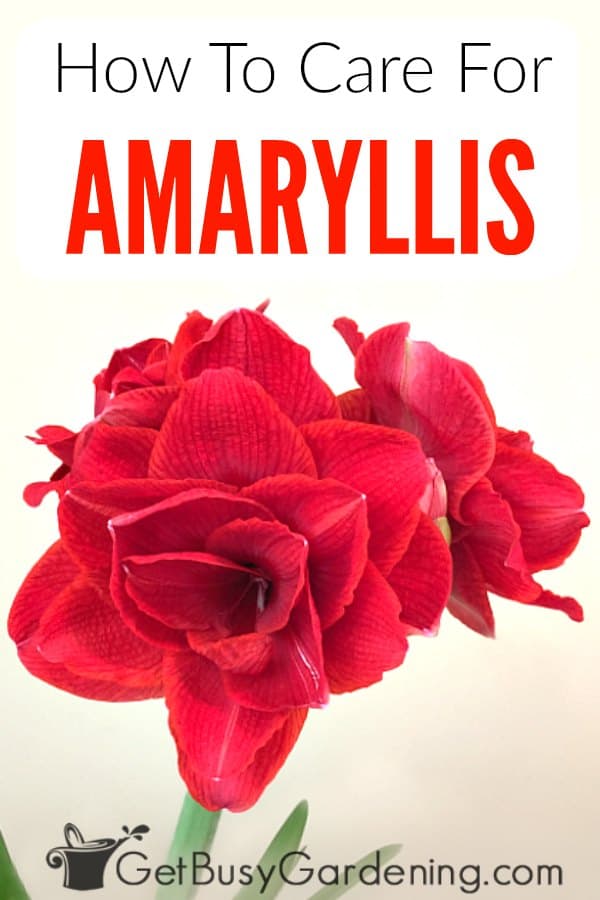
Though red and white are the most common colors, they can be any shade of red, pink, or white. Some are even striped or multi-colored.
The size and shape of the flowers can be different depending on the variety too. Some are rounded, while others are star-shaped, and they can have either single or double petals.
A few of my favorites are ‘Apple Blossom’, ‘Clown’, ‘Splash’, ‘Red Lion’, and ‘Christmas Gift’.
Flowers
The prized amaryllis flowers grow on top of thick stems, and there can be 2-6 blossoms per stalk. Each bulb can produce 1-3 stalks per season.
The natural bloom time varies by variety, and it can be anywhere from late winter through summer. Though most people force your amaryllis to bloom during the early winter months.
The flowers get larger and more spectacular with age. They usually only flower once per year, though some can give you a surprise second bloom in the perfect conditions.
Toxicity
Unfortunately all parts of the amaryllis plant are toxic, so you should be careful where you grow them if you have pets.
The ASPCA.org website has them listed as being poisonous to both cats and dogs. So keep them out of reach of your pets (and the kiddos too) at all times if you’re concerned.
How To Care For An Amaryllis
The first step in successful amaryllis plant care is choosing the right location to grow them. Before you can do that, it’s important to understand what they need.
Hardiness
Even though it’s most common to find amaryllis for sale during the fall and winter, they are actually tender perennials that can’t handle the cold.
They will survive in zones 10 and above for sure. But there are a few hardy garden varieties that can survive down to zones 6 or 7.
If you live in a colder area, then you must bring them indoors during the winter. Otherwise, make sure you know the hardiness of the variety you have before planting it in your garden.
Where To Grow Amaryllis
If you live in a warm enough climate, you can grow them in your garden year round (lucky you!). Otherwise, you must keep them indoors through the winter.
Most people put them outside during the summer, and then bring them back inside in the fall.
Wherever you choose to grow them, they need fast-draining soil and a spot where they get lots of bright sunlight.
Related Post: How To Grow Amaryllis In Water
Amaryllis Plant Care & Growing Instructions
Now that you know where to grow them, let’s dive into the details of how to care for your amaryllis. These tips will ensure you’ll be able to keep yours thriving.
Watering
One of the most common problems people have with caring for an amaryllis is overwatering.
When they are kept consistently wet it will cause the bulb to rot, which will ultimately kill the plant.
They like to dry out between soakings, so pour water over the top until it starts coming out of the drainage holes. Then be sure to dump out all of the excess so they are never soaking in it.
If you struggle with giving them the right amount, I recommend getting an inexpensive moisture gauge to help you out.
Sunlight
It’s very important that your amaryllis gets enough sunlight, otherwise they can grow tall and leggy. They need full exposure, but will tolerate partial shade outdoors.
The ideal spot indoors is in a sunny, south-facing window. If you can’t give yours enough natural sunlight, then get a grow light and set it on an outlet timer for 6-10 hours a day.
For leggy flowers, use a stem stake to support them so they don’t fall over. You can also rotate the pot every few days to help keep them growing straight.
Fertilizer
Regular feedings are must as a regular part your amaryllis care routine. They need lots of nutrients in order to grow and bloom their best.
A general-purpose houseplant fertilizer will work great, or you can use one that is specifically made for flowering plants.
They also really love compost tea (which you can get in a concentrate, or buy tea bags to brew your own) and fish emulsion.
Begin fertilizing when it’s done blooming, and continue feeding through the summer. Stop in the fall, and don’t fertilize at all during dormancy or flowering.
Soil
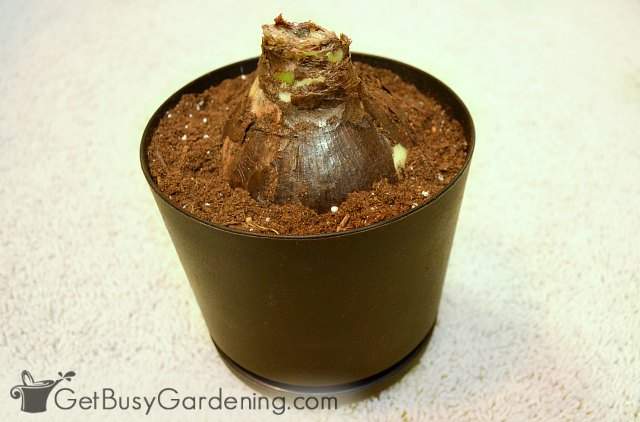
They aren’t super fussy about the type of soil, as long as it has good drainage. A general purpose mix will work just fine for growing amaryllis.
However, if you tend to overwater, then I recommend adding in perlite or pumice and coarse sand into your medium to help add extra drainage.
Temperature
The ideal temperature for growing amaryllis is between 65-80°F. But that range should vary depending on the time of the year.
When they’re blooming, it’s best to keep them cooler, between 55-65°F to make the flowers last longer. In the summer it should be between 70-80°F to help them grow faster.
During dormancy, the temperature should stay between 45-55°F to let it rest, and keep it from prematurely sprouting.
Repotting
Contrary to what you may have heard, you don’t need to repot amaryllis every year as part of their regular care. They actually prefer to be pot-bound.
The bulbs only need to repotted every few years at most, or if they have outgrown their container.
When it’s time to size them up, the best time to do it is the spring or after they’re done blooming. Choose a pot that’s 1-2″ larger and has drainage holes in the bottom.
Related Post: How To Grow Waxed Amaryllis Bulbs
Pest Control
Healthy amaryllis plants rarely have problems with pests, but mealybugs and fungus gnats can sometimes become a problem.
Fungus gnats are a sign that you are overwatering. To get rid of them, allow the soil to dry out more.
You can also use soapy water (I mix 1 tsp mild liquid soap to 1 liter of water) or insecticidal soap as a soil drench.
Neem oil works great to naturally kill bugs on the leaves and stems, and has a residual effect to keep them away.
Pruning
The good news is that you don’t have to worry too much about pruning as part of your regular amaryllis care routine.
You can deadhead the flowers as they fade, and cut the stem back all the way to the top of the bulb once all of them have died. Be sure to use a sharp and sterile pruners or precision shears.
It’s ok to trim any damaged leaves to keep the plant looking nice, but never completely remove any of the green or yellowing leaves.
They need to stay on as long as possible so the bulb can regenerate energy to bloom again next year. Wait until they shrivel and turn brown to cut them off.
Dormancy
In their natural habitat, amaryllis bulbs go dormant during the cooler winter months. If you want them to flower reliably every year, it’s best to mimic this habit, rather than keep them growing year round.
They normally go dormant when the temps cool down in the fall or early winter. When this happens, the leaves will start to turn yellow, then eventually shrivel and die back completely.
The beauty of them is that it’s very easy for force dormancy and control the timing of the blooms, which is what most people like to do.
Related Post: How To Store Amaryllis Bulbs For The Winter
Amaryllis Propagation Tips
Dividing amaryllis bulbs is the easiest and most common method of propagation, but they can also be grown from seeds.
Mature bulbs will form offshoots around the base, which can be removed and planted into their own containers.
Seeds will take much longer to produce a sizable plant, and it will be a few years before they are large enough to flower.

Troubleshooting Common Amaryllis Problems
Once you get the hang of it, you’ll find that taking care of an amaryllis is pretty easy. But it can be very frustrating when yours starts having issues, and you don’t know why. My tips below will help you figure it out.
Amaryllis Not Flowering
There are a few reasons why an amaryllis will not flower. Most likely it’s because the bulb hasn’t built up sufficient energy.
This can happen when the leaves are cut off too early, from a lack or light or fertilizer, or the bulb is simply not mature enough.
Make sure they get plenty of full sun, fertilize them regularly from spring through summer, and never cut off the green leaves (unless of course you’re trying to force dormancy).
Related Post: Dormant Amaryllis Care, Timing, Preparation, and How To Revive It
Droopy Leaves
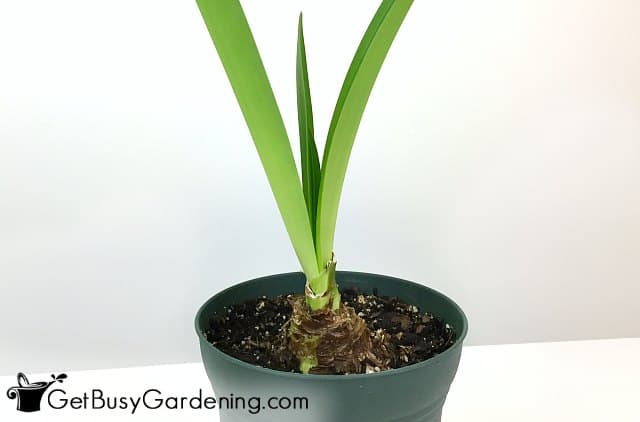
Droopy amaryllis leaves could be caused by over or under watering, or not enough light.
Inspect the bulb to make sure it’s not rotting, then check the moisture level of the soil. If watering isn’t the issue, then give your plant more light.
Flowers Falling Over
Since the blossoms are so large, sometimes they can fall over once they open. The main problem is usually lack of light, which causes the stem to grow long, tall, and thin.
Move them to a sunnier location or add a grow light, and use a stem stake to support them. Or you can cut the flowers, and put the stems into a vase of water instead.
Leaves Turning Yellow
It’s normal for the leaves to turn yellow as the plant starts to go into dormancy (usually in the fall).
However, if your amaryllis gets yellow leaves during its active growing season, then it could be caused by overwatering or bulb rot.
Amaryllis Plant Care FAQs
Below I will answer some of the most common questions I get about amaryllis care. If you can’t find yours here, then please ask it in the comments section below.
How many years will an amaryllis bulb bloom?
An amaryllis bulb will bloom for many years, even several decades with the proper care. The flowers get bigger and more spectacular with age.
Does amaryllis come back every year?
An amaryllis will come back every year as long as you either grow it indoors over the winter, or plant a variety that’s hardy in your climate. Some are hardy down to zones 6-7, but most will only survive in z10+.
How many times a year do amaryllis bloom?
Amaryllis typically bloom only once per year, but many types can flower twice per year with the right care and perfect growing environment.
How long do amaryllis blooms last?
Individual amaryllis flowers will generally last for 2-3 weeks. The spikes will grow 3-6 flowers, and they will open at different times, making them last for 6-8 weeks or more. Depending on the type and age of the bulb, yours may grow more than one spike, making the bloom time last even longer.
Does amaryllis have a scent?
Yes, there are many types of fragrant amaryllis flowers, and some of the scents are stronger than others. It’s not overpowering, and you usually need to get close to notice the sweet scent.
Amaryllis care may sound like it’s overwhelming at first. But once you get the hang of it, you’ll see how easy it is. Just think, now that you know how, you’ll be able to enjoy these gorgeous flowers year after year!

If you want to learn all there is to know about maintaining healthy indoor plants, then you need my Houseplant Care eBook. It will show you everything you need to know about how to keep every plant in your home thriving. Download your copy now!
More Holiday Plant Care Guides
- How To Care For Holiday Cactus
- How To Care For Poinsettia Plants
- How To Care For A Christmas Cactus
- How To Care For A Thanksgiving Cactus Plant (Schlumbergera truncata)
- How To Take Care Of A Cyclamen Plant
- How To Care For An Easter Cactus Plant (Schlumbergera gaertneri)
Share your amaryllis care tips in the comments section below.

Lori Klees says
Hello,
Thx so much for all of your information, it is really helpful. I am a long-standing overwatered, but the houseplants that I have had for years understand that when I water them it’s like a deluge, followed by a period of neglect lasting until the soil is akin to the Sahara. I think the only thing that keeps them alive at all, is that I have a good drainage system in each, so they don’t just sit in water to rot.
Which leads us to my question (finally!). I found a beautiful little decorative box garden with a beautiful, BEAUTIFUL amaryllis, two other little winter blooming bulbs that look like bottle brushes and a nice little ivy to round things out in terms of different heights. The amaryllis already had well established stems and blooms that were sure to open, the only reason I would choose it, And bloom it has,, with 3 spectacular white flowers with at least another 2 to follow and a completely different stalk with flowers to come. When I purchased it, the soil was just slightly dry, so I watered it when I got it home. Well it was growing so fast that it looked like a movie that shows things at an increased speed, and it was in a place where I was able to see it almost constantly, so I did what I always do, and watered it again, and then again when the first set blooms had completely and I noticed a leaf/stalk that looks like it will flower as well. So by this time the soil is quite wet, and thinking that amaryllis can be grown in water, I didn’t realize that being in soil was a whole different beast! The problem is the container that is holding them has zero drainage, so I’m in quite a pickle indeed! The beautiful flowers are already looking like they are just going to call it quits they are so waterlogged, and the other potential blooms are certainly in question of showing up at all, so any kind of help would be much appreciated! I would try to pry the plastic that the whole thing is nesting in, but I worry that it might might give way from the weight and buckle in the middle, but at the rate I’m going, it might not be such a terrible thing. I could give all the bulbs a good drying off, but now that they are in an active flowering state, would it kill them all?
Please Amy, say you have a solution for us; myself and the plants, that is…🥺
Amy Andrychowicz says
Oh no, sorry to hear that your amaryllis has been overwatered. If you can’t easily slide it out of the pot, then would definitely try drilling or poking holes in the bottom of the container. You could also try laying it on its side and see if much of the standing water will drain off that way. If you can’t put holes in the current container, then you should definitely move it to one that has holes. Doing that now may sacrifice the blooms, but if they are left to sit in wet soil, the bulbs will likely rot. Good luck!
Sherril Mitchell says
Is there any way I can print a copy of these instructions for myself to keep? It’s a lot to write down.
Amy Andrychowicz says
Unfortunately I don’t have a way to print my guides yet. Hopefully I’ll be able to do that sometime in the future.
Daisy M. Sebring says
I just wanted to know If ;my Amaryllis will have the same color as last year. It was so Beautiful, creamy,with some pale yellow and some pink. I really want to see that same Beautiful color again and when I propagate it will the color stay somewhat the same..
Amy Andrychowicz says
Yes, the color should stay the same year after year. I’ve never heard of amaryllis flowers changing colors. And if you propagate it by division, then they should stay true too.
Trisha Bruce says
My leaves turned yellow after I repotted my bulb. When I got it, it was in stones. So I put it in potting soil. It also has small bugs in it. Should I take it out of the soil and let it go dormant? Idk what I did wrong.
Amy Andrychowicz says
Unfortunately, when an amaryllis bulb is forced to grow in water, it has a difficult time adjusting to being in potting soil again. First, check the bulb to make sure it’s not rotting. It should be firm, and there shouldn’t be any soft or mushy spots on it. If it’s healthy, then I would just leave it in the soil, and keep it on the dry side. It may take several weeks or even months before leaves will start growing again, so be patient. Whatever you do, do not overwater it. The soil should never be soggy or even very wet. On the other hand, if the bulb is mushy, soft, or rotting, then it’s best to discard it. Good luck!
Tom says
My wife an I love giving amaryllis for Christmas as gifts too, and go with the red. It’s embarrassing, but we have killed ours in the past. Oops. You get so busy that you forget about everything you’re supposed to do. It would be great to have blooms more than one season. And I think they are okay for cats? We are adopting another rescue cat this week so we are trying to be careful about what plants we get.
Amy Andrychowicz says
I totally hear you about trying to remember all the things you’re supposed to do, it can be overwhelming sometimes!! It’s nice to get an amaryllis to rebloom, but it’s also fun to buy new ones too!! ? Unfortunately, amaryllis plants are NOT cat friendly. They are a type of lily, and all types of lilies are highly toxic to cats. So, definitely keep this one out of reach of your babies. I keep mine growing in my sunny bathroom where no cats are allowed. Better safe than sorry, especially when it comes to kittens! Check out my list of pet friendly houseplants for some safer options.
Louise says
I’m growing amaryllis too. So far, all I have are the leaves. No stalk/flowers. Can it take a long time for the flower to appear?
Amy Andrychowicz says
Yes, it can take a few weeks for amaryllis bulbs to bloom. Sometimes the flower will grow first, and sometimes the leaves will, so that’s no reason for concern. However, if your bulb has already flowered, and you’re trying to get it to bloom again, then it might not work if you didn’t take the proper steps. In order for the bulb to flower again, it needs a period of dormancy. Here are step-by-step instructions for how to rebloom your amaryllis. Don’t worry, it’s easy. You just need to know the steps. ?
Bonnie Magno says
First time amaryllis owner (gift) – my flower stalk grew 3′ tall. Is that usual?
Amy Andrychowicz says
The flower stalks can grow much taller on some varieties that others, which can be normal. But my guess is that it grew that tall because it wasn’t getting enough light – which is very common in your average home. Amaryllis flowers will get tall and the stalk will be thinner when they reach for the light. It’s not usually a huge problem, and they tend to still bloom just fine. But when they get tall like that, they can flop over because the stem can’t support the heavy flower. Next year, make sure to put it in a sunny window or add a grow light.
Marion Holmgaard says
I took My plant out of soil about 3 weeks ago after growing in the garden all summer The leaves have died off but I cut the root off to about 1 and 1 1/2 inches I hope I didn’t damage it.
Amy Andrychowicz says
Sounds like your amaryllis has gone dormant, and that’s totally normal. Cutting off the leaves and roots won’t hurt it.
Ellen says
Hello, I just repotted an amaryllis that I had given a 8 eeek break. It started growing really well within days and shot up a nuch of leaves. But now the leaves are turnimg yellow amd drooping. I think I over watered it. My question is, should I take it out of the soil and put it in dry soil and see if it does ok? Or should I do something else?
Thanks!
Amy Andrychowicz says
Oh no, sorry to hear your amaryllis has yellow leaves! Check the soil to see how wet it is first. If it feels really wet, then you’ll definitely want to let it dry out before watering it again. You can slide the rootball out of the pot so it will dry out faster. I don’t recommend repotting it though, because that is very stressful for a plant, and can end up killing an already ailing plant. Just let the dry out, and monitor it. Hopefully it will recover, but only time will tell. Good luck!
Kirk Seib says
Hi Amy,my name is Kirk and I have two amaryllis which I’ve had good luck with for a few years, problem is I tried a different soil, and when I moved them outside in late May a racoon ripped them out, destroying the leaves so he could dig through the soil. I replanted with my normal soil, problem is I didn’t get new leaves until early September, not sure if they have enough energy to flower, or if I should even let them go dormant? Thanks Kirk
Amy Andrychowicz says
Since your amaryllis plants didn’t have leaves for most of the summer, then you’re correct, they might not have enough energy to flower this winter. It certainly won’t hurt to let them go dormant though. You never know, they might end up blooming for you. But, if you prefer, you could also just keep them growing through the winter, that won’t hurt them either. 🙂
Kirk Seib says
Kirk says, Hi Amy thanks for the quick reply, wanted to know your thoughts on peeling the dried out skin off the bulbs, I did this down to the green of the bulb, not sure if I should have? Thanks Kirk
Amy Andrychowicz says
You don’t need to peel off that much (or really any) of the dried skin on your amaryllis bulbs. I just like to remove the thickest, messy looking top layers to keep them looking cleaner, and make sure they have room to grow. Peeling them back as far as you did shouldn’t hurt them. But next time, maybe just remove the top most layers.
Pat says
A blossomed plant is now growing green leaves , several leaves have bumps on them. Do you know what this could be.?
Amy Andrychowicz says
Uh oh, sounds like it could be houseplant scale. Here’s more info… How To Get Rid Of Scale Insects On Houseplants
Chrissy says
This was my first time getting anything to bloom in my life. I have two amaryllis plants. The first one bloomed fine, although it leaned a lot. After it had bloomed the leaves started falling over. Long story short I ended up cutting the leaves off thinking that it was okay. After research I found that I shouldn’t of done that. What do you recommend I should next?
Amy Andrychowicz says
Woohoo, congrats getting your amaryllis to rebloom! That is so exciting! The flower is leaning because it’s probably not getting enough light. They grow very tall and reach for the window if they don’t get enough light. Yes, you should have left the leaves on so it can build up energy for blooming next year. I would leave it alone for now. Then, once the flower fades and dies back, cut off the stem at the base. Then follow the instructions above to care for your amaryllis as a normal houseplant, and I expect it will start growing new leaves soon after the flower dies. Good luck!
Pam bolton says
I have an a amaryllis bulb that had no roots when I planted it . The bulb is large and very firm. It’s been planted in multi purpose compost for 3 weeks but no sign of any growth.
Could you give me any advice as to what I can do to wake my bulb up .
Thank you
Amy Andrychowicz says
It can take 4-6 weeks for dormant amaryllis bulbs to wake up and start growing again, so give it more time. Follow the instructions in this post for reblooming amaryllis. Step 9: “Break their dormancy” will be a good place for you to start.
Lorraine says
Two of my amaryllis had bloom stalks but only one of the blossoms opened and the other buds dried up. Never had this happen before. What would be the cause of this?
Amy Andrychowicz says
Oh no, sorry to hear your amaryllis flower bud dried up before opening! The probable causes are either the bulb didn’t have enough energy to bloom fully, or perhaps the wasn’t getting enough light or water for the bloom to fully open. Lack of water and light could have confused the bulb, and maybe it started going dormant again.
Jeff Dickerson says
I remember when I was a child, my father would dig up the amaryllis bulbs, once all the leaves had died, shake all the soils off the bulbs and then store them is a mesh bag in a dark shed we had. He would hand them in a place rats and mice could not get to them and then really rework the soil. Not sure what type of amendments he used, but he made sure the soil was a “good home” for the big;bs, the. He would replant 3/4 or so of the bulbs and give away the other plants as gifts, potted in the “good home” soil he had prepared. He told me he was doing this to multiply his flower, which every year did seam to produce more and more flowers. Is digging up, separating and storing in a protected, dry, place a good reccomendation for multiplying the flowers or not?
Amy Andrychowicz says
What a wonderful memory, sounds like your father loved amaryllis plants! Yes, the bulbs can be divided to make more plants. Just make sure the babies have roots of their own before splitting them from the mother plant. Depending on the size of the new amaryllis bulbs, it may take several years before they will flower.
Marlaleta Micheaux says
I enjoyed all the information to take care of the amaryllis. My problem is that only one long stem is growing. it is a nice green but it is so tall. Why isn’t the rest growing?
Amy Andrychowicz says
It sounds to me like your amaryllis is starting to bloom! It’s very common for the flower stems to grow before any leaves. The leaves will eventually start growing too. Enjoy!