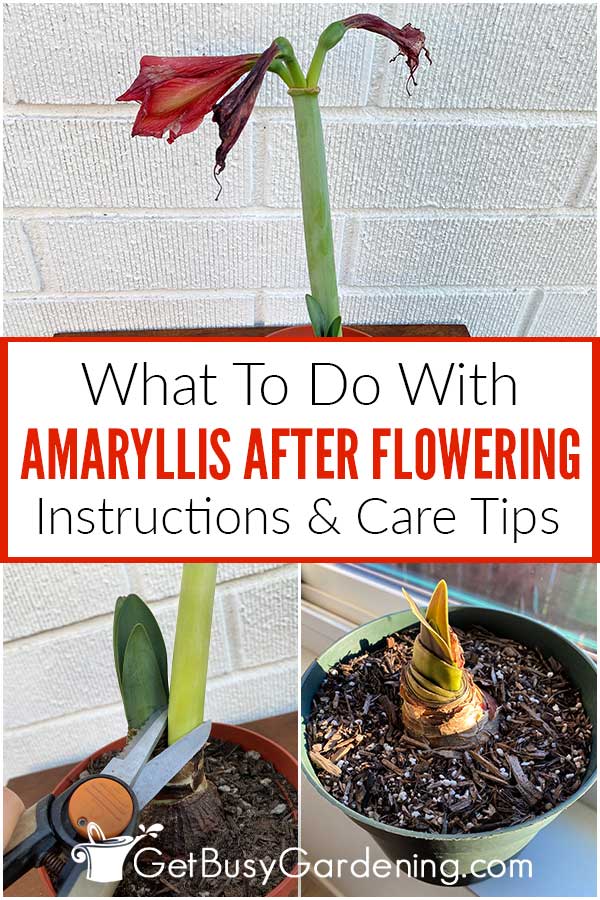
Knowing how to treat an amaryllis after flowering is important, and will allow you to enjoy them for many years to come.
In this post, I’ll tell you all you need to know to keep amaryllis once they’re done blooming, and give you tons of aftercare tips.

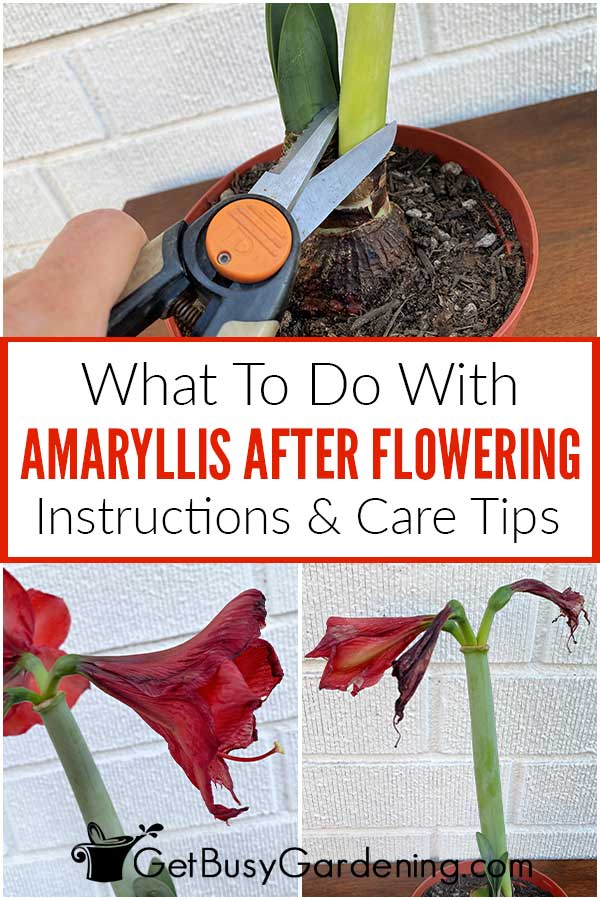
The big winter blooms of an amaryllis makes it a popular holiday gift, but what do you do after the flowers fade?
The tips in this guide will help you learn exactly what to do with an amaryllis after blooming (hint: you don’t have to throw it away!).
Everything about their aftercare is included right here, from deadheading the flowers, to how to properly feed and water them, and more.
Can You Keep An Amaryllis After Flowering?
Yes you can keep an amaryllis after flowering. Instead of tossing them out, you can save the bulb after the blooms have faded, even ones covered in wax.
In fact, by taking the proper steps to care for it after it’s done blooming, you can enjoy the flowers again year after year.
What Do You Do With Amaryllis Bulbs After They Bloom?
What you do with an amaryllis bulb after the flowers have faded depends on how you received or purchased it.
If it’s in soil you can keep it that way. Otherwise, if it’s encased in wax, simply remove the coating and pot it up.
After that, you can tend to the bulb and foliage of both kinds in the same way using my tips below.
How To Keep Amaryllis Bulbs After Flowering
You can learn all the details of amaryllis care here, but you’ll find specific steps below that will help you tend to an amaryllis in the period after blooming.
1. Allow The Blooms To Fade
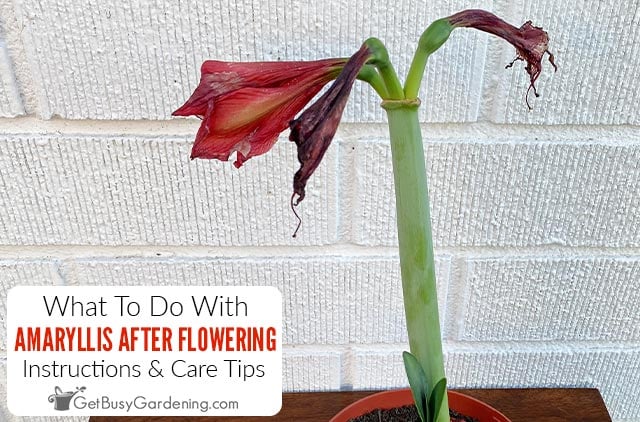
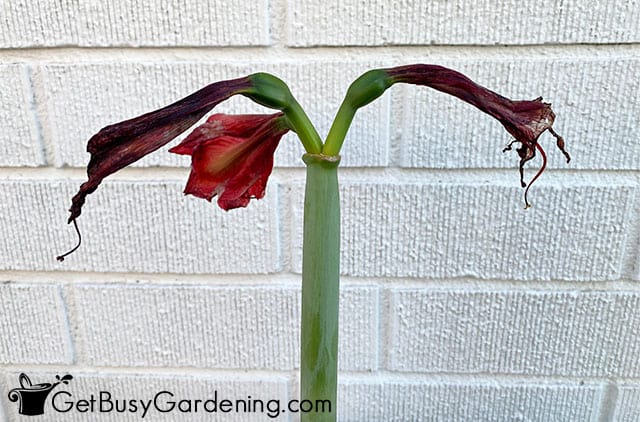
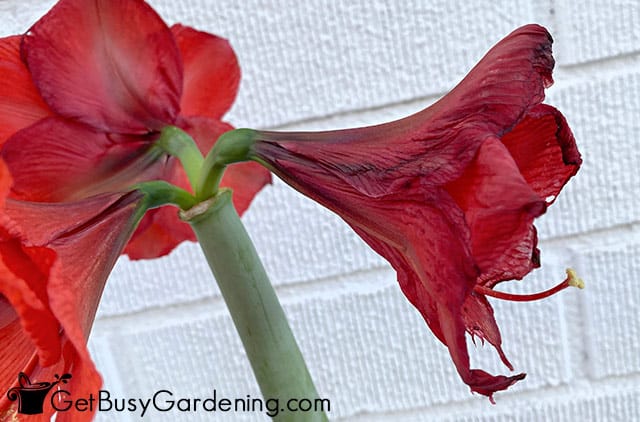
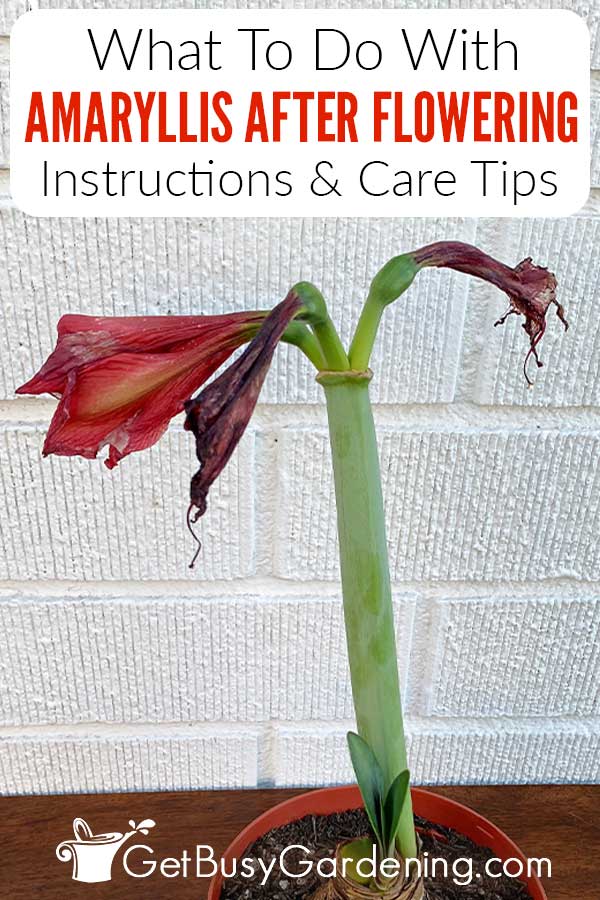
As your amaryllis approaches the end of its flowering period, the blooms will naturally begin to fade.
You’ll see discolored, drooping, limp petals, and eventually the flower stalk will start to turn yellow and shrivel. This is totally normal, and nothing to worry about.
2. Cut Off The Dead Flowers
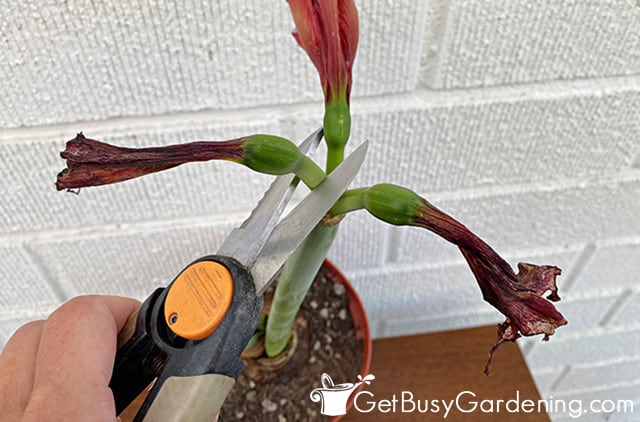
As each one dies, deadhead the individual flowers by snipping them off using sharp, sterile precision pruners, but keep the stem intact.
Removing the dead blossoms will encourage more to open, and also allow the bulb to save the energy it would have spent on seed formation.
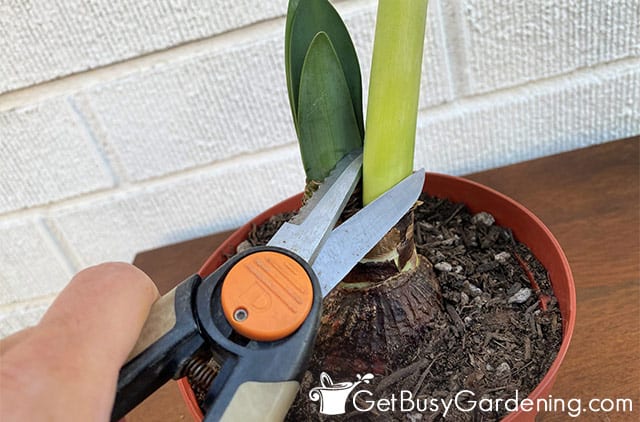
As long as it’s green, the main stem will continue to absorb light and provide nutrients to the bulb. Once it turns yellow, cut it down to ½ to 1 inch above the top of the bulb.
3. Keep The Leaves On
It’s also important to keep the leaves on the plant. Those are necessary for the bulb to restore enough energy to survive another year.
So be careful not to damage or remove any of the leaves as you cut back the dead flower spike.
4. Give It Lots Of Light
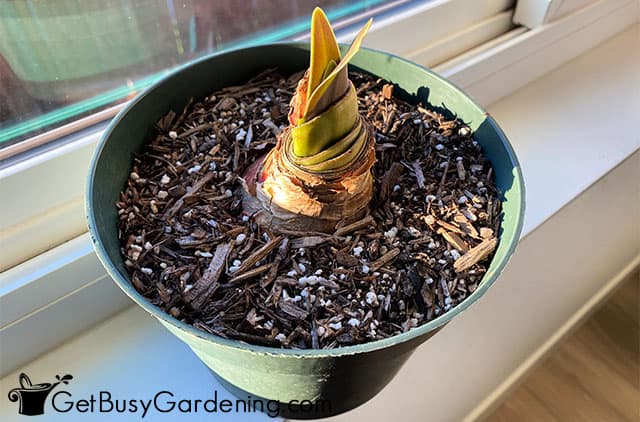
Once it’s done blooming, move your flowerless amaryllis to a sunny window that will provide 6 or more hours of light per day. The brighter it is, the better.
Add a grow light to supplement if you have trouble finding the right spot, or if you home is too dark.
5. Water Consistently
Extended periods of drought will cause dormancy, so be sure to water it consistently.
Be careful though, the bulbs are prone to overwatering, which can easily cause rot. So wait until the soil feels dry 1-2” deep before giving it another drink.
A moisture gauge can be a very handy tool that will help you keep them at the perfect level.
6. Feed It
In late winter or early spring, start applying a liquid high-phosphorus fertilizer every 2 weeks. You can also use slow-release granules once a month.
Regular feeding is essential to help the amaryllis restore the nutrients after blooming. If you want it to flower again next year, follow the proper reblooming steps here.
FAQs
Here I’ve answered some of the most commonly asked questions about caring for an amaryllis after blooming. If yours isn’t on the list, please add it to the comments section below.
Should I cut my amaryllis back after it blooms?
Yes you should cut back your amaryllis back after it blooms, but only the flowers. Deadhead them once they have faded completely, and wait until the stem turns yellow and dies before removing it.
Should I cut off dead amaryllis flowers?
Yes, you should cut off dead amaryllis flowers to prevent them from setting seed. This will help the bulb retain the energy it would have expelled during that process.
Should I cut the leaves off my amaryllis when it’s done blooming?
No, do not cut the leaves off of your amaryllis when it’s done blooming. It’s very important to keep the foliage intact so the bulb can absorb energy, and replenish the nutrients it lost during flowering.
Now that you know the specific steps to take after your amaryllis has finished blooming, you’ll be able to keep it instead of throwing it away.

If you want to learn all there is to know about maintaining healthy indoor plants, then you need my Houseplant Care eBook. It will show you everything you need to know about how to keep every plant in your home thriving. Download your copy now!
More About Amaryllis Plants
- How To Store Amaryllis Bulbs For The Winter
- How To Grow Amaryllis In Water
- Dormant Amaryllis Care, Timing, Preparation, & How To Revive It
More About Houseplant Care
- What To Do With Cyclamen After Flowering
- What To Do With Christmas Cactus After Blooming
- What To Do With Thanksgiving Cactus After Blooming
- How To Get Your Christmas Cactus To Bloom Again
- How To Get Your Thanksgiving Cactus To Bloom Again
- Growing Plants Indoors – The Ultimate Guide
- Bromeliad Flowers: When, How Often & How Long Do They Bloom
Share your tips for what to do with amaryllis after it blooms in the comments section below.

Lee Berger says
No where in here does it say to just put it in the ground. Which is really easy.
Amy Andrychowicz says
Planting them in the ground is definitely an option. But, since amaryllis plants are super popular as Christmas gifts, they typically finish blooming in them middle of winter for most gardeners – so that’s why I didn’t mention it in this article. But thanks for point it out! 🙂
Nor says
I’ve been reblooming my amaryllis for 4 years. This time when I set it out in my garden it has grown a stalk with a huge bud ready to open. What a pleasant surprise!
Tony says
After blooming, I took the bulbs out of their wax and repotted them. Both have grown green leaves…one has four leaves with two being almost 18 inches. Should I cut the long leaves? No signs of bud growth?
Amy Andrychowicz says
Don’t cut off the leaves, the bulbs needs them to produce energy to bloom again. If they’re getting long and leggy, then give them more light. Here’s my step by step guide for how to get them amaryllis to rebloom.
Melinda says
My amaryllis flowers have died off , I now have 4 long green leaves. A couple of them are going yellow at their tips. Should I cut these leaves down or just leave them?
Amy Andrychowicz says
You should keep the leaves on your amaryllis. Take a look at points 3-6 in the article for more info on exactly what to do. You can also check out these posts for more tips and information..
– How To Care For An Amaryllis Plant
– How to Rebloom Your Amaryllis Step By Step
Alan Cable says
I’ve grown amaryllis since sometime in the 1980s. I usually had one or two bulbs and occasionally they would rebloom. At one point, I had about 40 bulbs, mostly appleblossom (white with pink stripes), red, orange-red and white. 40 +/- is way too many. I am down to about 15 bulbs…almost manageable.
After risk of frost is past, I dig a 6″ deep hole in the garden/flower bed/wherever that is in full sun. I knock the bulbs out of their pot and simply put then shoulder to shoulder in the hole and cover them up with soil. Next, I cover the soil with several inches of wood chips, leaves, sawdust. Whatever is most available. I rarely ever fertilize as I do not fertilize the garden or flower beds. It really does not seem to be necessary.
I dig the bulbs after the second or third light frost, shake the dirt off the roots and lay them on newsprint in the garage until the leaves turn yellow. Next, clip off the leaves, clean up the bulbs and discard any that are damaged or soft. I store them in corrugated board boxes in the garage (and basement when the garage approaches 40F. (I live in NE Wisconsin). Start repotting in January.
About 60% – 80% rebloom each year. About 50% have two or (seldom) three stalks.
Anybody can use this method with their bulbs.
Amy Andrychowicz says
Awesome, thanks for sharing your process to get your amaryllis to flower every year. I’m glad to hear that you’ve found a system that works for you. 🙂
Shirley says
My first time growing an amaryllis. The bulb produced a stalk that bloomed. Then two more stalks came up & they bloomed, too. There are no leaves. Will the leaves pop up after the blooms are deadheaded?
Amy Andrychowicz says
Give it more time, sometimes they bloom before the leaves start forming.
Paulette Yager says
I have a late amaryllis bloomer that grew 3 huge leaves (still there) and thought the bulb l repotted from last year was sterile. Then in mid February I saw what I thought was another leaf emerging, but it was a stem and by the end of the month I had 3 huge flowers and 2 buds.
The five flowers were gorgeous and the leaves remained so the pat was quite top heavy and just supported it so wouldn’t tip. Now 2 blooms are starting to shrivel up and I understand what l need to do with the spent flowers and eventually the stem, but what do l need to do about the leaves? My thought is to repot to a larger pot and keep outdoors when the weather allows. But last year the leaves didn’t dry up and I think I just cut them down to about 2 inches above the bulb probably in mid September and waited a bit for stubs to dry up a little, then removed the bulb with the few roots in tact and eventually dried the bulb out and then put in brown paper bag in the bottom back of the refrigerator for about 6 or 8 weeks and repotted in a smaller pot again. I thought the bulb might
have become sterile as l put many apples in the crisper for storage. So my question is should I cut the leaves back sooner? I typically cut perennial flower bulb leaves back as they start to dry up in late summer as l live in a Zone 5. This amaryllis bulb was the first time in three years I had a successful bulb regrow. Thank you.
Amy Andrychowicz says
Yay, how exciting that your bulb finally flowered! Yes, afterward you should keep the leaves growing and put it outside for the summer, that way it can build up enough energy to flower next year. The bulbs need a period of dormancy, but you don’t need to put them in the fridge, just a dark closet or basement. Here are a few articles that will help answer all of your questions…
– How to Rebloom Your Amaryllis Step By Step
– Dormant Amaryllis Care, Timing, Preparation, & How To Revive It