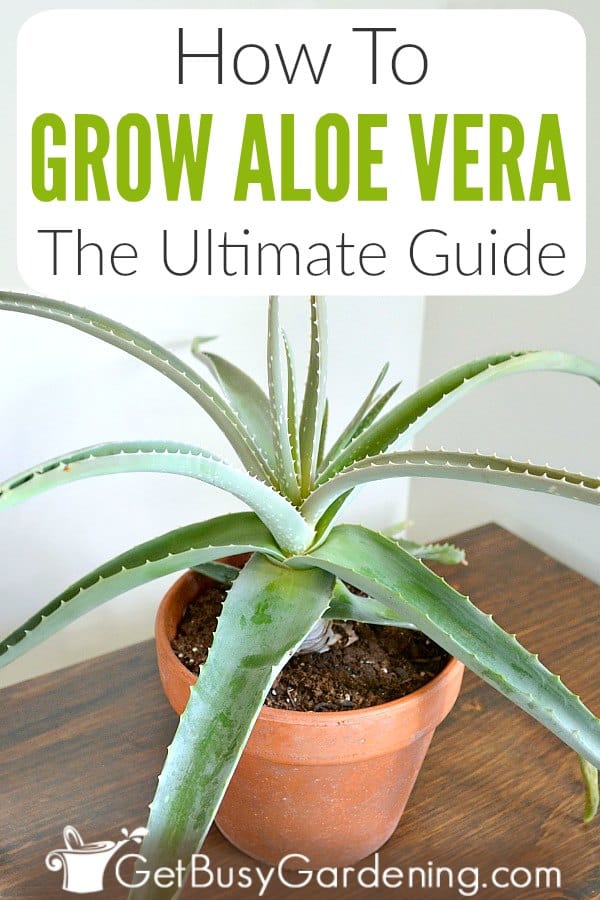
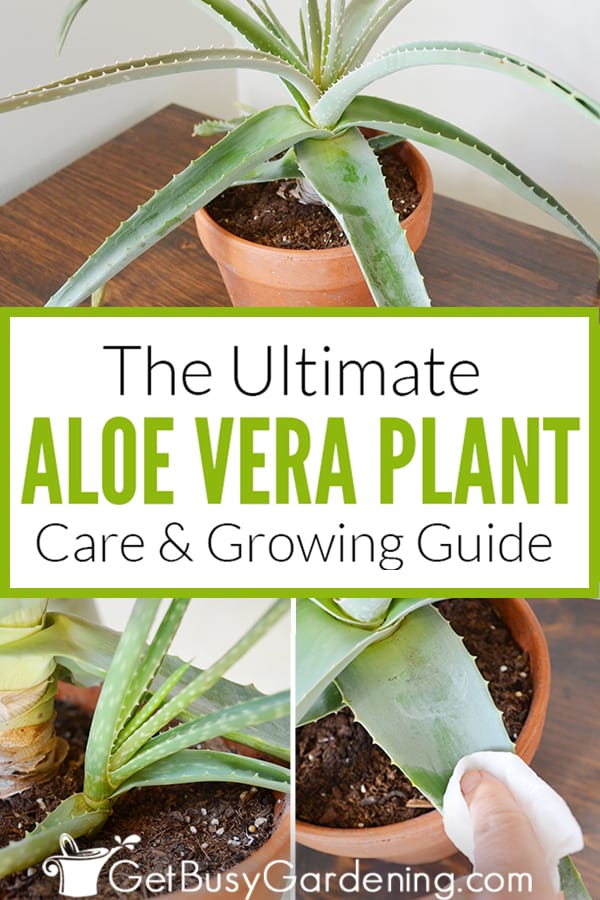
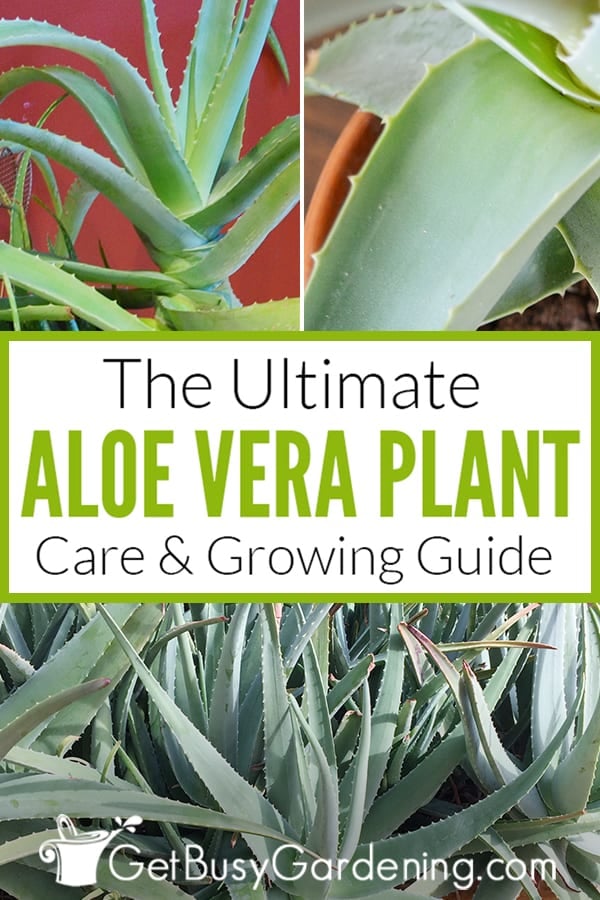
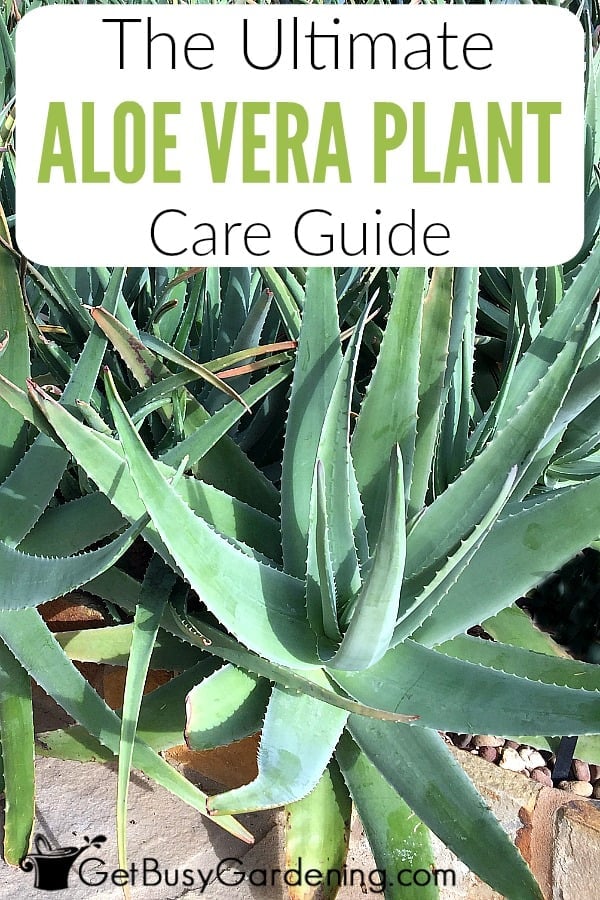
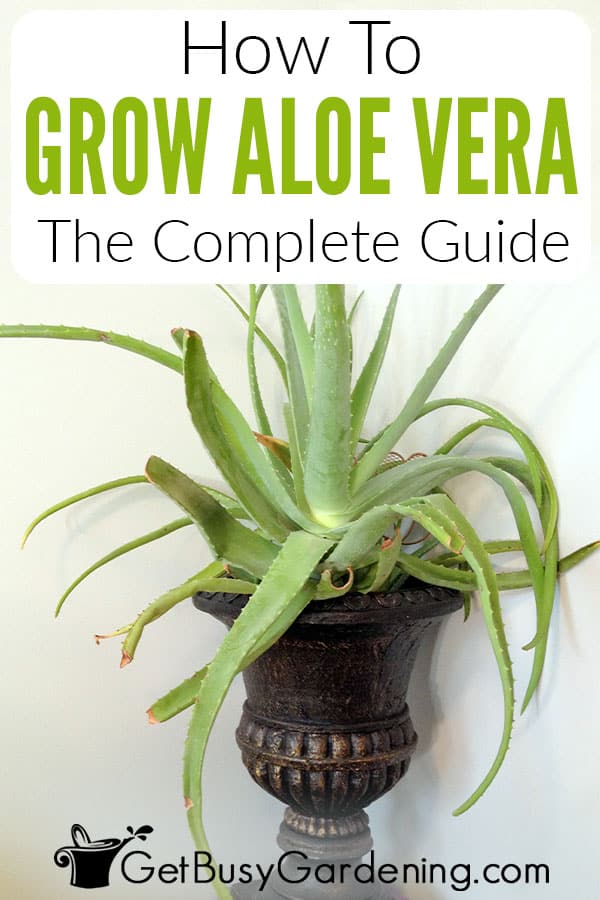
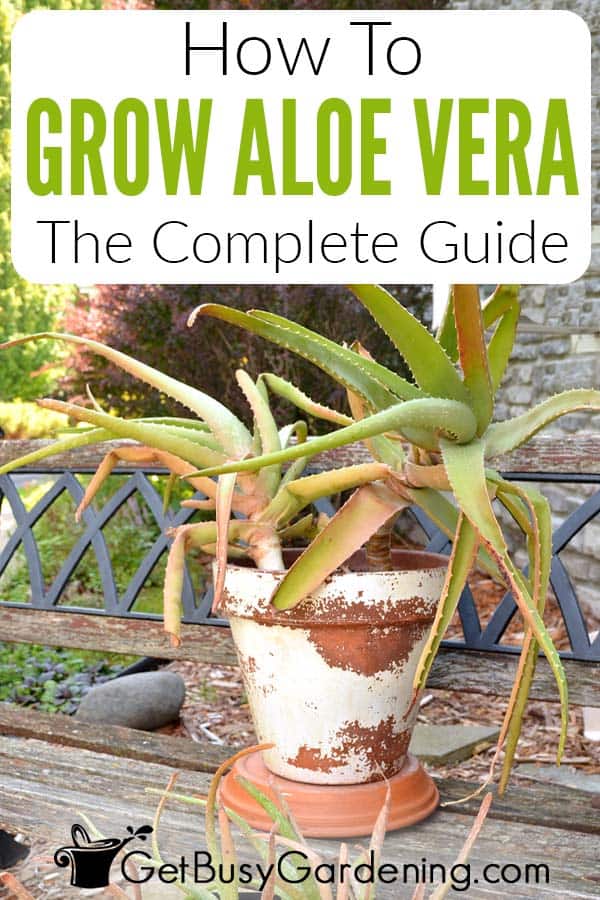
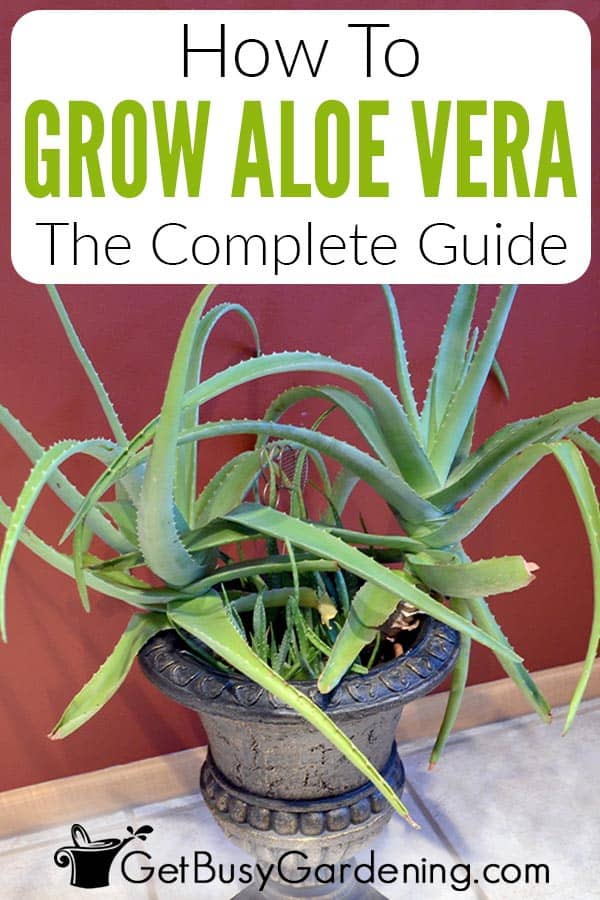
Aloe vera plants are easier to care for than most people think, and they can grow very well both indoors and outside.
The key is to neglect your plant. Yes, that’s right, just ignore it. Well, you can’t ignore it forever, but the biggest mistake people make is giving it too much attention. This usually results in what I call “killing it with kindness”.
In this detailed guide, I will show you all you need to know: from water, light, and soil, to pest control, fertilizer, and much more.

Quick Aloe Vera Care Overview
| Scientific name: | Aloe vera |
| Classification: | Succulent plant |
| Common names: | Medicinal Aloe |
| Hardiness: | Zones 9-11 |
| Temperature: | 60-85°F |
| Flowers: | Yellow, can bloom year round |
| Light: | Full sun to partial shade |
| Water: | Allow soil to dry out, do not overwater |
| Humidity: | Little to none |
| Fertilizer: | General purpose plant food in spring and summer |
| Soil: | Fast-draining, sandy or gritty soil |
| Common pests: | Mealybugs, scale |
Information About Aloe Vera Plants
Aloe vera, or medicinal aloe, is best known for the healing qualities of the gel. It is very common, and just one of hundreds of different species in the Aloe genus of plants.
This popular succulent is a perennial that’s native to the Arabian Peninsula, but these days it is grown all over the world. If you live in a warm enough climate you can plant it in your garden, otherwise it makes a great houseplant.
Whether you want to grow it for the medicinal benefits, or you simply love the look of the spiky leaves, it’s definitely one that you’ll be able to enjoy for many years to come. My aloe vera plant is over 20 years old, and it’s still growing strong.
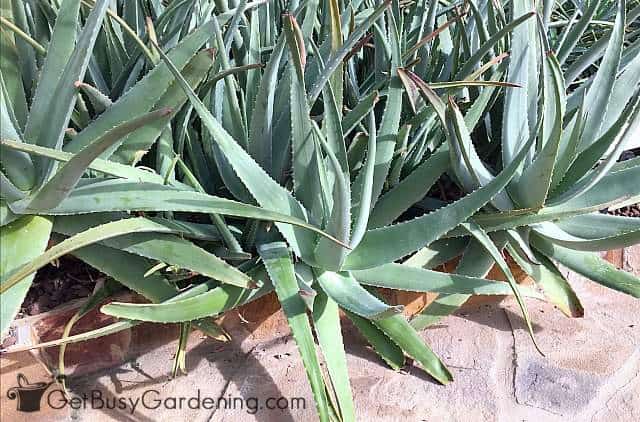
Aloe Vera Plant Benefits
Most people are already very familiar with the medicinal and healing qualities of aloe vera plants. The gel is used in everything from skin and hair care items, to drinks, supplements, and food products.
You can harvest the leaves and gel from your plant and apply it to relieve minor burns and cuts. Or use it to make your own soaps, lotions, and other skin care products if you want.
Another great benefit that many people don’t know about is that growing aloe vera indoors helps to purify the air in your home.
Related Post: How To Store Aloe Vera (Leaves Or Gel)
Where To Grow Aloe Vera
Whether you grow your aloe vera indoors or outside depends on where you live. But either way, choosing the right location is important for them to thrive.
Hardiness
Aloe vera plants are hardy down to zone 9a, and grow best in arid climates. Though they can handle short bursts of freezing temps, they will eventually die if it stays cold for too long.
If you live in a cooler region, or someplace tropical where it rains a lot, then you must move yours indoors during the winter or wet months.
Location
The best location to grow an aloe vera plant is somewhere sunny and dry. Outdoors, plant it in a spot where the soil is very sandy and well-draining. Indoors place your potted plant in a bright, south-facing window.
Though you could keep it inside year-round, you can put it outside during the hot and sunny months. Just make sure the pot has drainage holes, and bring it back indoors before it drops below 60°F in the fall.
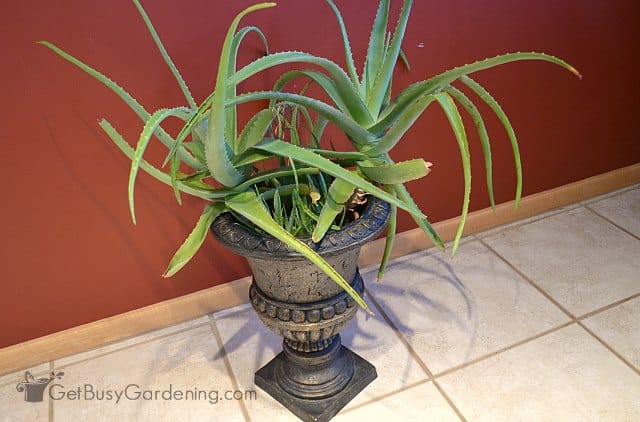
Aloe Vera Plant Care & Growing Instructions
The good news is that aloe vera plants are simple to grow, and they will thrive with minimal care. But, there are a few things you need to do to keep your plant healthy. Follow my tips below for the best success.

Water
The biggest mistake people make when it comes to aloe vera plant care is overwatering. In fact, it’s their #1 killer.
Too much moisture will cause root and stem rot, eventually killing the whole plant from the bottom up. To prevent that from happening, allow the soil to dry out completely between drinks.
Press your finger at least 2 inches deep to make sure it’s completely dry before watering again. If you struggle with this, I highly recommend getting a moisture gauge to help you get it right.
Learn everything you need to know about how to properly water your aloe vera plant here.
Light
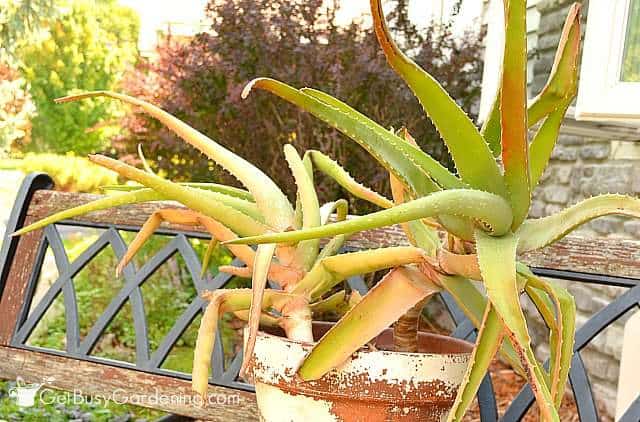
Though they will tolerate partial shade outdoors, aloe vera grows best in a full sun location. If it gets enough sunlight, the leaves can turn a lovely shade of pink, and tall, yellow flower spikes will form.
On the other hand, if they don’t get enough, the plant will become tall and leggy over time. This can be a challenge indoors, so put it in a sunny south-facing window. If your home is too dark, then you should definitely get a grow light.
Related Post: How To Make DIY Aloe Vera Gel At Home
Soil
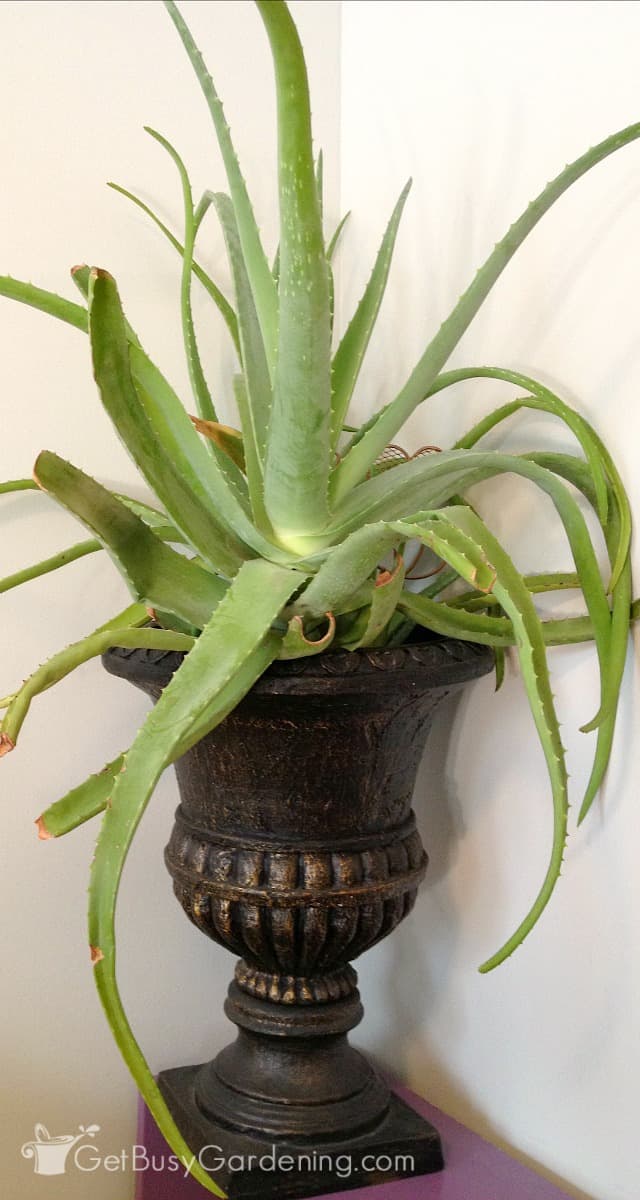
The best soil for aloe vera is a loose medium that drains very quickly. Use a sandy potting soil, or you could try a gritty mix if you tend to overwater.
I like to make my own, using a mix of perlite or pumice, coarse sand, and regular potting soil, which tends to be cheaper than buying the commercial stuff.
Related Post: How To Make Your Own Succulent Soil (With Recipe)
Repotting
The good news is that you won’t need to repot your plant very often, they like to be root-bound. When the time comes, use a container with drainage holes in the bottom, and only go up one or two sizes.
Planters made out of unsealed terracotta or clay are the best for growing aloe vera, and will wick water out of the soil, helping it dry out faster. Get my step by step instructions for how to repot your aloe vera plant here.
Fertilizer
Aloe vera plants don’t really need to be fertilized. But it will help encourage faster growth and blooming. I recommend using organic products rather than chemicals, especially if you plan to harvest the gel.
Apply a general purpose liquid monthly, or top-dress with slow-release granules once or twice during spring and summer.
Aloes go into a state of dormancy in the winter, and will hardly grow at all. So, don’t feed your plant during the fall and winter months to let them rest.
Pest Control Tips
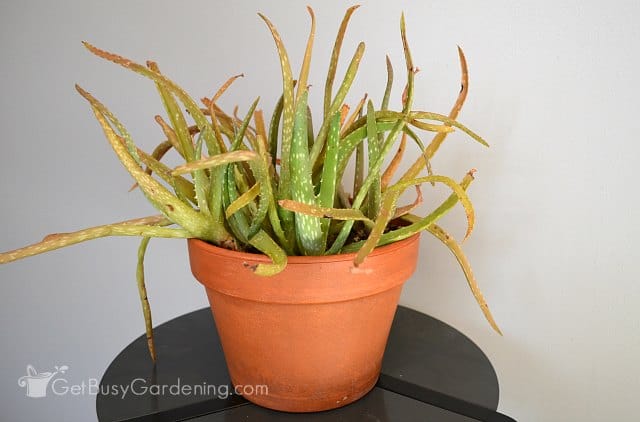
Healthy aloe vera plants rarely have issues with insect pests, but sometimes mealybugs or scale can become a problem.
For small infestations, use a cotton swab soaked in rubbing alcohol to remove any visible bugs. For larger outbreaks, treat your plant with neem oil or an insecticidal soap.
But aloes can be sensitive to certain sprays. So, be sure to test anything you use on a small part of a leaf before treating the whole plant.
Propagating Your Aloe Vera
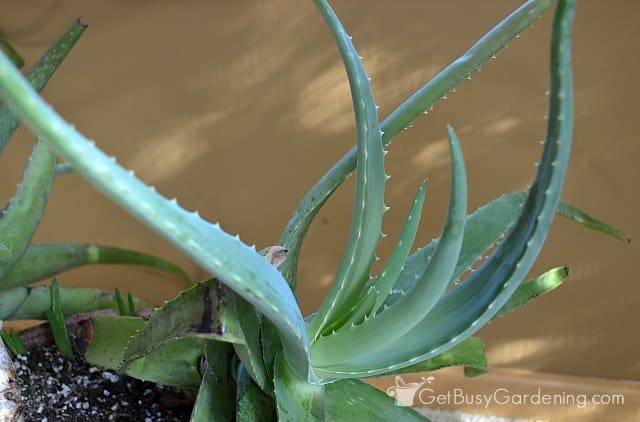
It’s easiest to propagate aloe vera plants by division. But if your plant has gotten very long and leggy, and you’re feeling brave, you could try rooting the stem cutting.
This technique can be much more difficult, but it’s fun to try. Simply let the wound cure (dry out) for several days so it calluses over. Then dust it with rooting hormone, and stick it in a dry, sandy medium.
Get my full step-by-step instructions for how to propagate aloe vera by division here.
Troubleshooting Aloe Vera Care Common Problems
Though aloe vera is usually pretty easy to care for, at some point you might start having issues with it. Below are a few of the most common problems, and what to do about them.
Plant Is Tall & Leggy
When an aloe vera grows tall and leggy, that means it’s not getting enough light. They do best with at least 6 hours of full sun per day. If yours is indoors, move it to a south-facing window, or add a grow light.
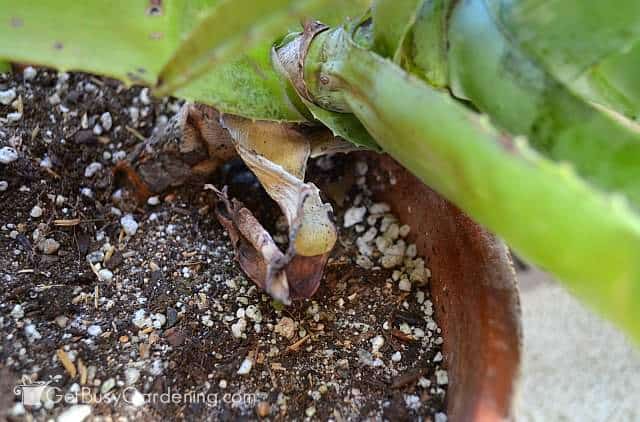
Mushy Stem
If the stem is completely mushy, that means it was overwatered at some point, and now it’s rotting at the base. Unfortunately there’s not much you can do to fix it.
But you can try saving your plant by cutting it off just above the mushy stem section and rooting it. Make sure you cut off all of the rot though, or it will continue to spread.
Brown Leaves Or Tips
If the brown leaves are drying out and shriveling up, that usually means your aloe vera is not getting enough water. In that case, you can just prune off the dead leaves and water it a little more often.
But if the leaves are mushy and brown, then it’s probably from too much moisture or humidity. So check the soil to make sure it’s not wet, then slow down on watering.
FAQs
Aloe veras can grow pretty fast outdoors in the right climate, but are much slower indoors. If you want yours to grow faster, try putting it outside during the summer, and give it some organic fertilizer.
Leaving the brown tips on your aloe vera won’t hurt the plant. But you can prune them off at any time if you don’t like the way they look.
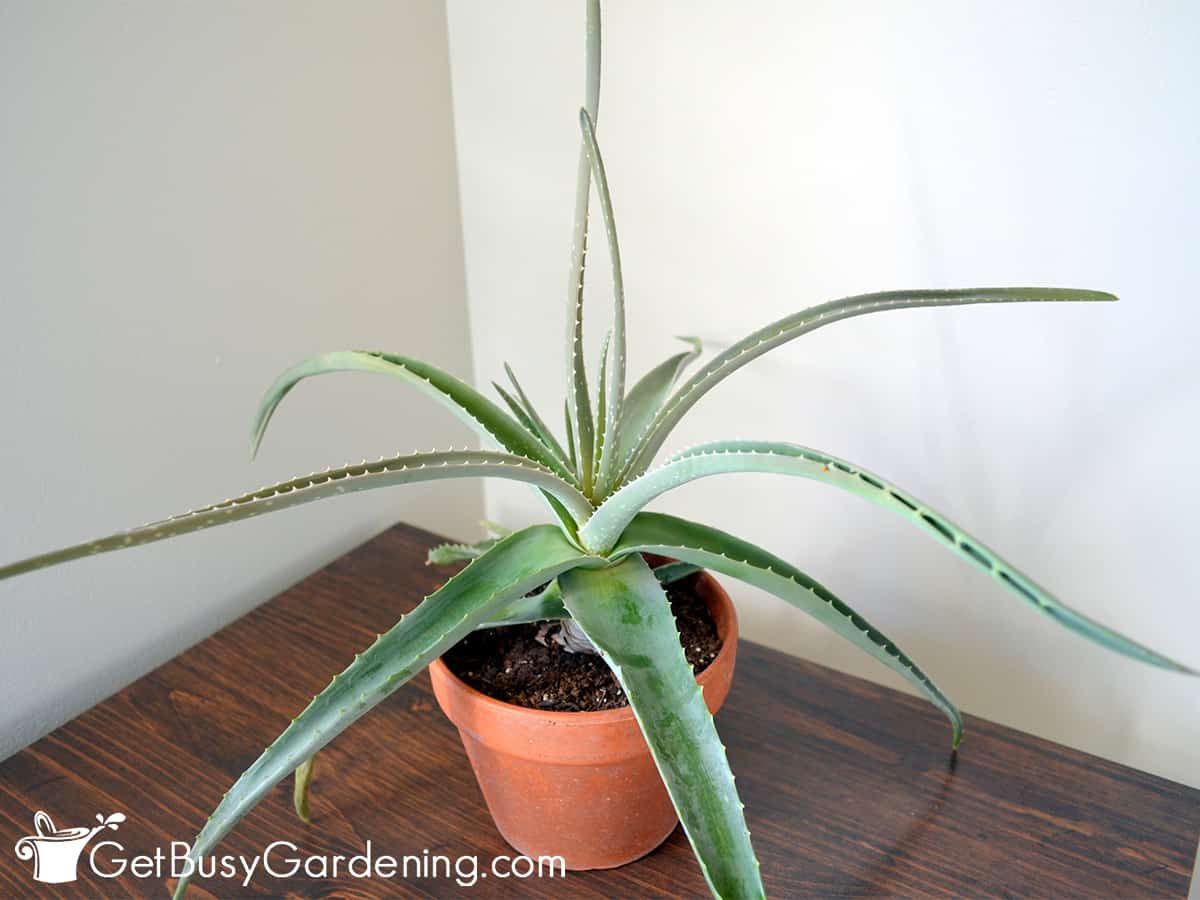
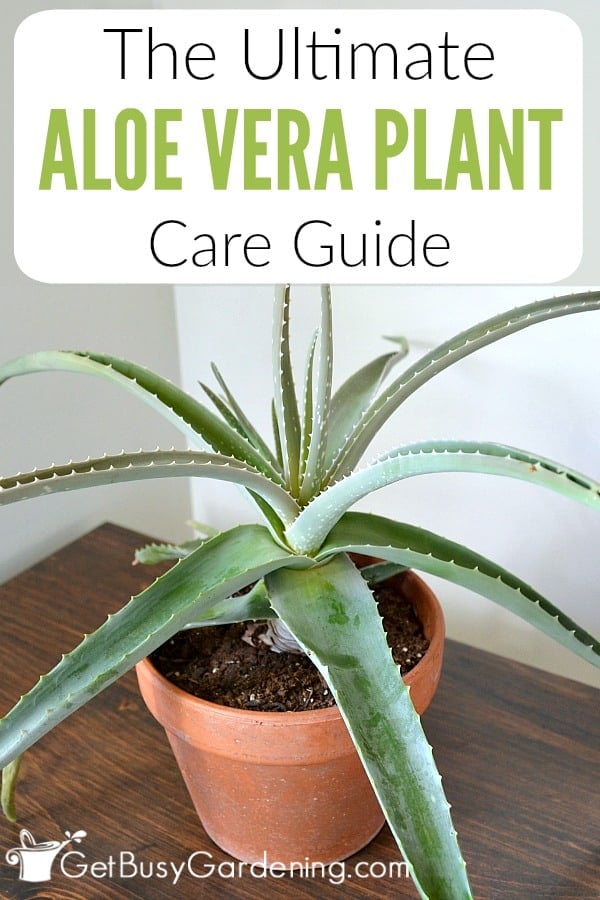
A healthy aloe vera plant has thick, firm leaves that stand up tall and form tight rosettes. They should also be blueish-green in color (though it’s normal for the leaves to turn yellowish, pink, or orange in the full sun).
Caring for aloe vera is very low-maintenance because these tough plants thrive on neglect. Once you get the hang of giving it exactly what it needs, your plant will thrive for decades to come.

If you want to learn all there is to know about maintaining healthy indoor plants, then you need my Houseplant Care eBook. It will show you everything you need to know about how to keep every plant in your home thriving. Download your copy now!
Share your aloe vera plant care and growing tips in the comments section below.

Steven Barker says
Is there a way to clean my aloe plant leaves that would make the plant very healthy and happy?
Amy Andrychowicz says
You can simply wipe your aloe leaves with a damp cloth to keep them clean, easy peasy.
Gloria Coombes says
I have several large Aloe plants! The first one that I got , I overwatered, I took it out of the pot to repot and I see that the stem is turning black! I have just cut off all of the black part and I have several inches of white stem,but no roots! The plant 🪴 is healthy, no browning of leaves! Do I need to use root starter and then wait for roots to grow or can I just put the cut off stem into my very good soil mix ? HELP
Amy Andrychowicz says
Oh no, sorry to hear that your aloe plant is rotting! Yes, I definitely recommend using rooting hormone to give it a better chance of developing healthy roots. Also, make sure to allow the stem to cure (dry out) for several days before you try rooting it, or it will likely just continue to rot. Good luck!
Maxine Crawford says
Guess I’ve watered m aloe Vera plant too much. It has brown at bottom of leaves. I’m going to try to cut rot off and plant them back after end has dried out. Wish me luck
Amy Andrychowicz says
Sorry to hear your aloe vera is rotting! What a bummer. Good luck, I sure hope it will recover for you.
Jolin Vargas says
My aloe plant is giant! my grandma grew it for me from a small plant that came from Home Depot. She was watering it a lot so I’m surprised it grew so fast it’s so big and still growing! How big can they get? I wish I could post a picture. Thanks
Amy Andrychowicz says
True aloe vera plants can grow to be about 24″ tall and wide. But other species of aloe can get larger. You could share a photo of it on my Facebook page if you’d like.
Jane says
My Mom has several beautiful large aloe Vera plants. The base, where it Meets the ground is firm but isn’t very secure in the ground. The plant is tall and full so it flops over. I am scared it will break away at the soil surface. Is it ok the put more soil in the pot? What if the bottom leaves are covered with soil?
Amy Andrychowicz says
Rather than cover up the bottom leaves of your aloe vera, I would prune them off, and allow the wounds to callus over completely before filling the pot in with more soil.
Melissa says
I’ve had my aloe for about a year and a half. It’s done very well for me until recently. My two year old decided she wanted to try and kill it. I’ve had to cut off many of the bottom leaves over the past few months and the plant is doing well, however the stem is very long and looks funny. Is there a way I can fix this issue? Either cutting the stem and roots off and allowing it to re root or somehow causing new leaves to grow on the stem? Thank you!
Amy Andrychowicz says
Glad to hear you were able to save your aloe vera from certain death! Gotta love it when those babies try to help. 🙂 The leaves won’t grow back on the base of the aloe stem, so there’s nothing you can do there. However, if you’re brave, you can cut off the entire top of the plant, and root the cutting. I don’t have a post specifically about that, but here’s a general post about how to propagate succulents from cuttings. If you decide to try that, make sure to save the base part that is still in the pot, as it will regrow too. Have fun! 🙂
Gerri says
I live on the island of Maui. I have an aloe plant that seems to be growing well. The issue is that the older leaves are spotted and dirty looking. They are not mushy at all. The new leaves come out fine but turn over time. Any ideas?
Amy Andrychowicz says
It could be that it’s too humid/rainy for it, and mold may be growing on the leaves. Make sure your aloe vera isn’t being overwatered (the soil should dry completely between waterings), and that it’s in a full sun location where it gets plenty of airflow. That will help to dry out the leaves faster, which will prevent future mildew or rot problems.
Christine says
How can I debug an aloe plant before bringing it in for the winter?
Amy Andrychowicz says
Follow these step by step instructions… How To Debug Plants Before Bringing Them Indoors. I use this method on my aloe plants every year, and have never had any problems.
ANGELA E RAMEY says
I found a Fire Coral Aloe. I wish I could put a photo on here for you. It is beautiful. I have propagate 3 babies successfully. It has bloomed 3 times. It stays inside all winter and spring. I haven’t even put it outside yet. Still gets cold at night here in Colorado. If you find one get it. Super easy to grow and so pretty.
Amy Andrychowicz says
Yes, that’s a beautiful one. Thanks for sharing, and enjoy your new aloe plant! 🙂
Connie says
Where in Colorado do you live
Taran says
How do I move aloe vera to other pots if it is spreading and getting small for one pot?
Amy Andrychowicz says
If you want to repot your aloe vera, choose a container that’s one size larger than the one it’s growing in and use a porous sandy soil mix. Otherwise, if you want to divide it, you can find the detailed instructions for that here… How To Propagate Aloe Vera By Division
Mary says
I have an aloe vera plant that is very healthy and beautiful, I got it about a year ago. It grows so slowly though, it is like watching paint dry. It also has not produced even one pup. What can I do to make it grow faster and have several healthy pups?
Amy Andrychowicz says
First of all, it’s normal for them to be very slow growing during the winter months. They go into a state of dormancy in the winter, and don’t grow much at all during that time. However, when an aloe vera grows very slowly during the summer, then it’s probably not getting enough light. Indoors, place your aloe vera in a south facing window, or you can add a grow light. If it’s outdoors, it should be in full sun. You may also want to think about fertilizing it during the summer, and also make sure it’s getting enough water during that time. That will also help it grow faster, and start forming pups.
Leslie says
Aloes may have a short period of dormancy during the coldest part of winter but they are actually classified as summer dormant. As we’ve moved deeper into November all of my aloes are visibly growing, lots of new pups. Mine are all indoors & I live in northern West Virginia. They need more water (not too much) in the summer due to the temperatures but they grow much slower.
ANGELA E RAMEY says
For mine I used a liquid bat guano/fish emulsion fertilizer. I fertilize 1x a year with it. I get at least 1 pup a year. And it blooms every year. I bought the fertilizer off of Amazon.
Eydie says
I was told that an aloe Vera will not bloom if there are “babies” in the pot. So I take all the babies out and pot them. Guess what… THEY BLOOMED!!! It grew a very long stalk and the stalk grew tiny purple flowers that face down and they lasted about 3 weeks. My large aloe is over a miter high, and was given to me by a friend when I was doing chemo in 2010. Over the last year it has been very badly neglected as my son had a massive brain tumour removed last April, today I am trying to fix it all…lol. You are right, they are very forgiving.
Amy Andrychowicz says
Awesome! My aloe vera has never flowered, but I have seen many of them blooming in their native climate. Exciting that yours bloomed for you, how fun!
Meeann says
Hi! I have an aloe plant that’s about 2.5-3 years old. It seems really healthy, the leaves are green and solid, the stem is firm, and I get lots of new growth out of the top. But the leaves are pretty long and drop over. They kind of look like the shape of an umbrella. I read on other sites that the leaves should be upright. Is it not getting enough sunlight or I just have a specific type of aloe vera that does this?
Amy Andrychowicz says
The fuller the leaves are, the more upright they will be. If your aloe vera leaves are drooping, and feel thin, then you’re probably not watering it enough. When they get adequate water, the leaves are plump and full of gel. Or, it certainly could be a different type of aloe plant, and not an aloe vera. That’s certainly possible. If it doesn’t look like the photos above, then it could be a different variety.
Grace Whittaker says
How can you tell the difference between aloe vera to be used for medical purposes and the other aloes not good for medication. or can you use any aloe for medical purposes?
Amy Andrychowicz says
The only type of aloe you can use for medicinal purposes is aloe vera. All of the photos in this post are of aloe vera. Aloe veras have thicker and smoother leaves than many other varieties, which tend to have more prominent spikes, and thinner, rougher skin. There are tons of different types of aloes though. So, to be sure you’re getting the correct one, it’s best to buy a plant that is labeled as such from a reputable garden center (rather than a big box store, they are notorious for mislabeling plants), and verify it with the horticulturist on duty (if they have one).
yeptube says
If you’re keen to give aloe plants to friends, you can try starting your own plants by cutting off a few leaves. Trim to about 3 inches from the leaf tip; then put the cut ends down in a container of potting mix. While not every one will take, some will sprout tiny new leaves at the base. Wait until this new plant grows a few inches before repotting again.
Amy Andrychowicz says
I don’t think you can root aloe vera leaf cuttings, but it will work with other varieties of aloe plants. Are you sure those are aloe vera plants, and not some other species of aloe? I have never tried it myself though, so I will have to experiment.
Julia Adkins says
My daughter bought me an aloe plant , looks kinda like a hand. Thought it was glass, it was hard, but yet I did feel it move a little. Can I save it,
Amy Andrychowicz says
If your aloe plant feels firm when you squeeze the leaves, that means it’s healthy and well hydrated. The leaves hold water, so they firm up when they are hydrated, and become softer/thinner as they start to dry out. As long as the leaves are green and firm, and not mushy, then I think it’s fine. I would slow down a bit on watering though, and allow it to dry out more between waterings. One other thing to consider is that you may have a different type of aloe, and not an aloe vera. If it looks different than the plant in my pictures, then you probably have a different type of plant.