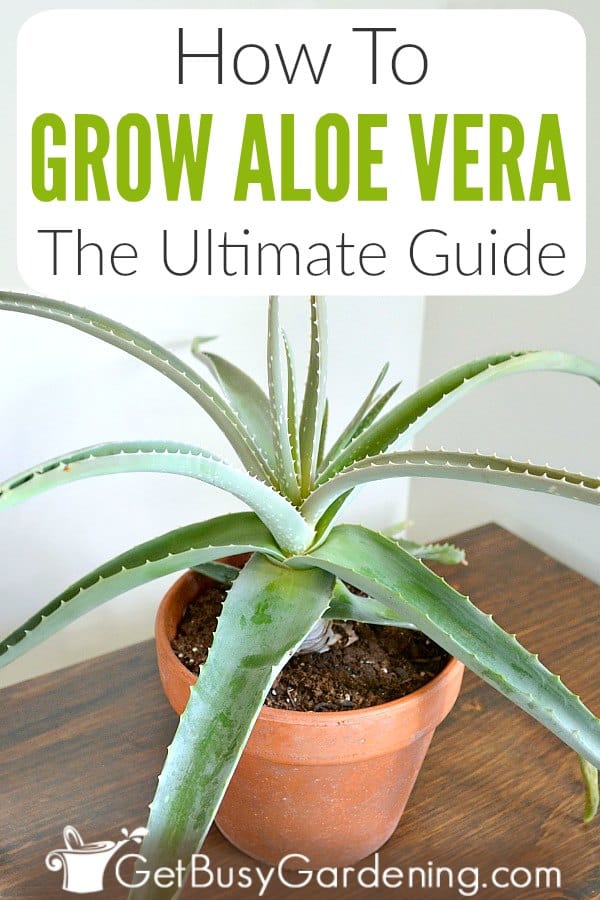
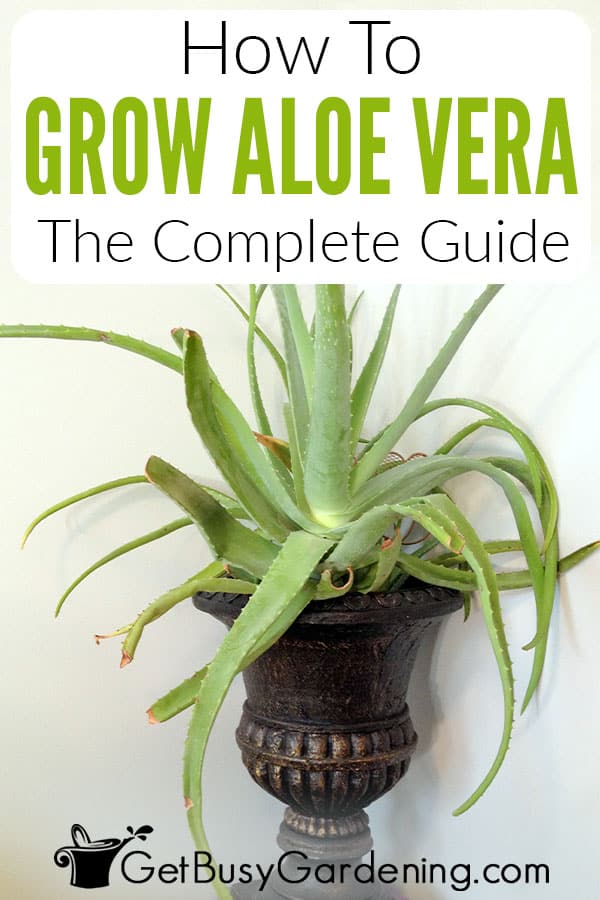
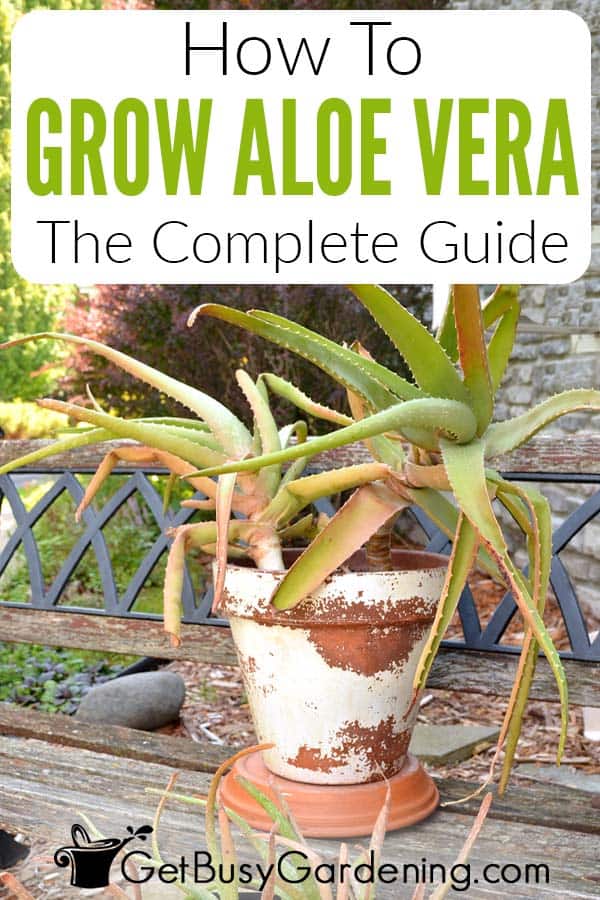
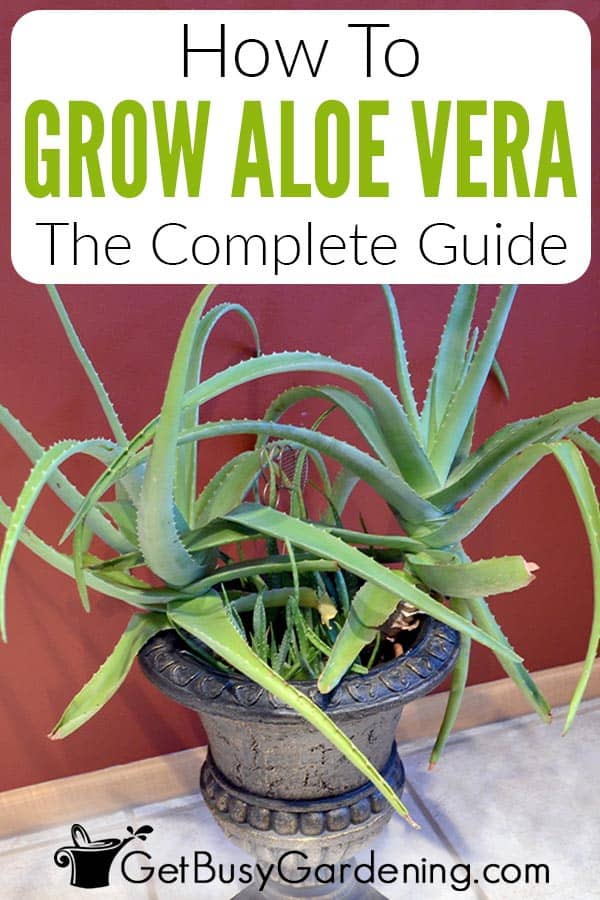
Aloe vera plants are easier to care for than most people think, and they can grow very well both indoors and outside.
The key is to neglect your plant. Yes, that’s right, just ignore it. Well, you can’t ignore it forever, but the biggest mistake people make is giving it too much attention. This usually results in what I call “killing it with kindness”.
In this detailed guide, I will show you all you need to know: from water, light, and soil, to pest control, fertilizer, and much more.
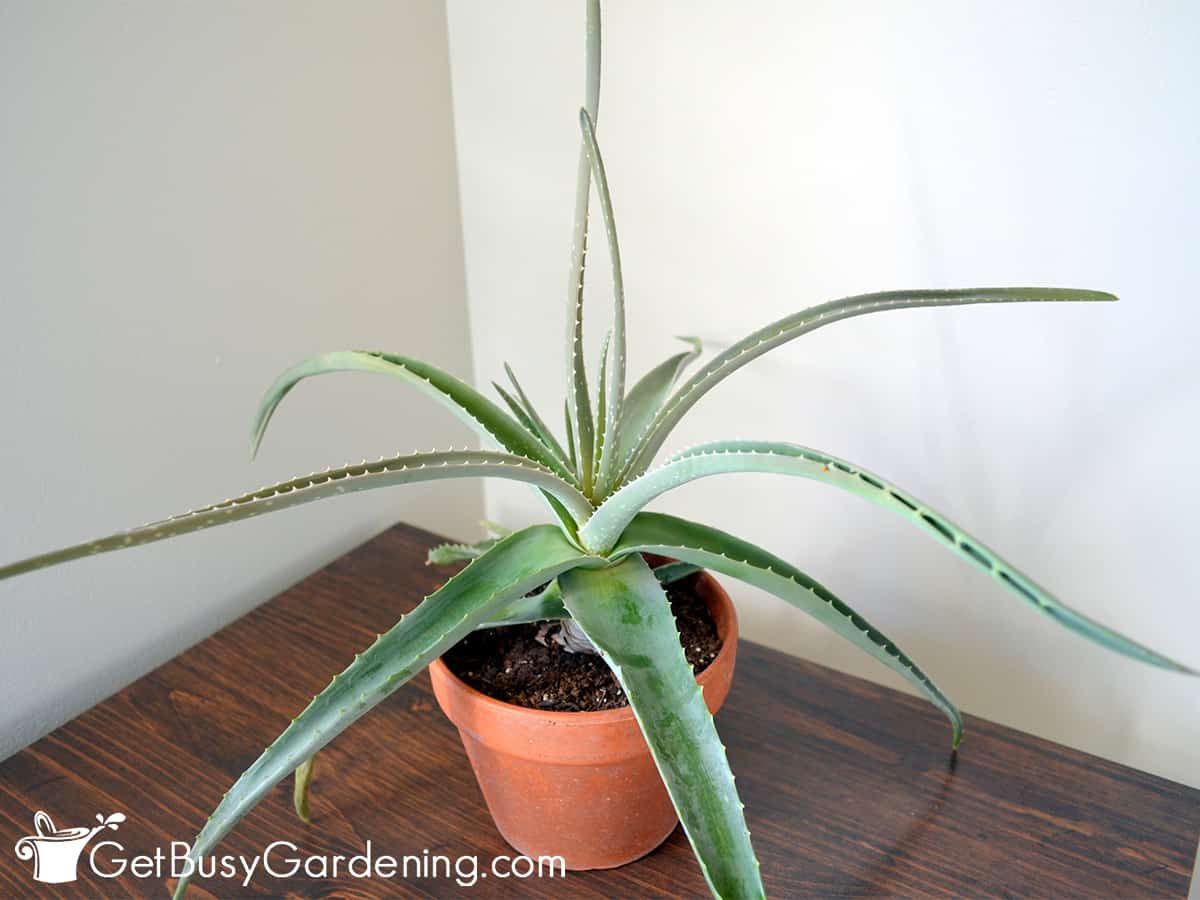

Quick Aloe Vera Care Overview
| Scientific name: | Aloe vera |
| Classification: | Succulent plant |
| Common names: | Medicinal Aloe |
| Hardiness: | Zones 9-11 |
| Temperature: | 60-85°F |
| Flowers: | Yellow, can bloom year round |
| Light: | Full sun to partial shade |
| Water: | Allow soil to dry out, do not overwater |
| Humidity: | Little to none |
| Fertilizer: | General purpose plant food in spring and summer |
| Soil: | Fast-draining, sandy or gritty soil |
| Common pests: | Mealybugs, scale |
Information About Aloe Vera Plants
Aloe vera, or medicinal aloe, is best known for the healing qualities of the gel. It is very common, and just one of hundreds of different species in the Aloe genus of plants.
This popular succulent is a perennial that’s native to the Arabian Peninsula, but these days it is grown all over the world. If you live in a warm enough climate you can plant it in your garden, otherwise it makes a great houseplant.
Whether you want to grow it for the medicinal benefits, or you simply love the look of the spiky leaves, it’s definitely one that you’ll be able to enjoy for many years to come. My aloe vera plant is over 20 years old, and it’s still growing strong.
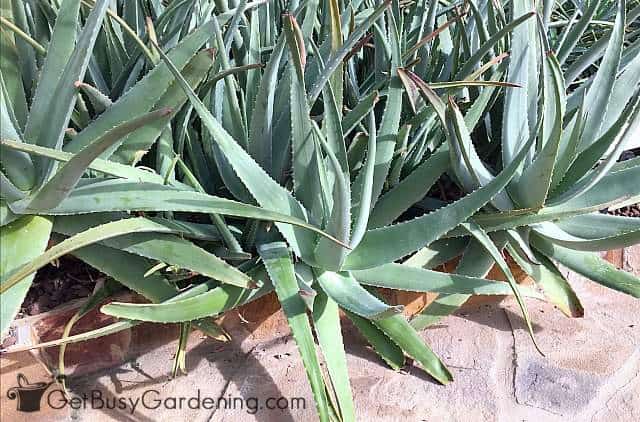
Aloe Vera Plant Benefits
Most people are already very familiar with the medicinal and healing qualities of aloe vera plants. The gel is used in everything from skin and hair care items, to drinks, supplements, and food products.
You can harvest the leaves and gel from your plant and apply it to relieve minor burns and cuts. Or use it to make your own soaps, lotions, and other skin care products if you want.
Another great benefit that many people don’t know about is that growing aloe vera indoors helps to purify the air in your home.
Related Post: How To Store Aloe Vera (Leaves Or Gel)
Where To Grow Aloe Vera
Whether you grow your aloe vera indoors or outside depends on where you live. But either way, choosing the right location is important for them to thrive.
Hardiness
Aloe vera plants are hardy down to zone 9a, and grow best in arid climates. Though they can handle short bursts of freezing temps, they will eventually die if it stays cold for too long.
If you live in a cooler region, or someplace tropical where it rains a lot, then you must move yours indoors during the winter or wet months.
Location
The best location to grow an aloe vera plant is somewhere sunny and dry. Outdoors, plant it in a spot where the soil is very sandy and well-draining. Indoors place your potted plant in a bright, south-facing window.
Though you could keep it inside year-round, you can put it outside during the hot and sunny months. Just make sure the pot has drainage holes, and bring it back indoors before it drops below 60°F in the fall.
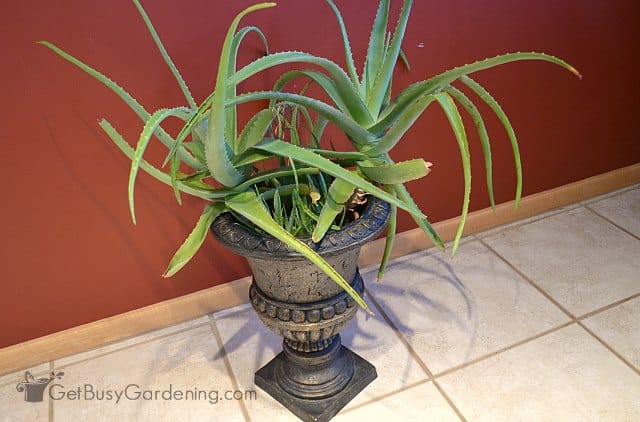
Aloe Vera Plant Care & Growing Instructions
The good news is that aloe vera plants are simple to grow, and they will thrive with minimal care. But, there are a few things you need to do to keep your plant healthy. Follow my tips below for the best success.

Water
The biggest mistake people make when it comes to aloe vera plant care is overwatering. In fact, it’s their #1 killer.
Too much moisture will cause root and stem rot, eventually killing the whole plant from the bottom up. To prevent that from happening, allow the soil to dry out completely between drinks.
Press your finger at least 2 inches deep to make sure it’s completely dry before watering again. If you struggle with this, I highly recommend getting a moisture gauge to help you get it right.
Learn everything you need to know about how to properly water your aloe vera plant here.
Light
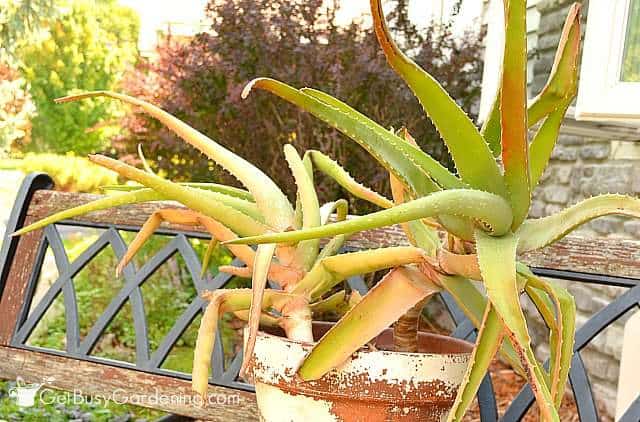
Though they will tolerate partial shade outdoors, aloe vera grows best in a full sun location. If it gets enough sunlight, the leaves can turn a lovely shade of pink, and tall, yellow flower spikes will form.
On the other hand, if they don’t get enough, the plant will become tall and leggy over time. This can be a challenge indoors, so put it in a sunny south-facing window. If your home is too dark, then you should definitely get a grow light.
Related Post: How To Make DIY Aloe Vera Gel At Home
Soil
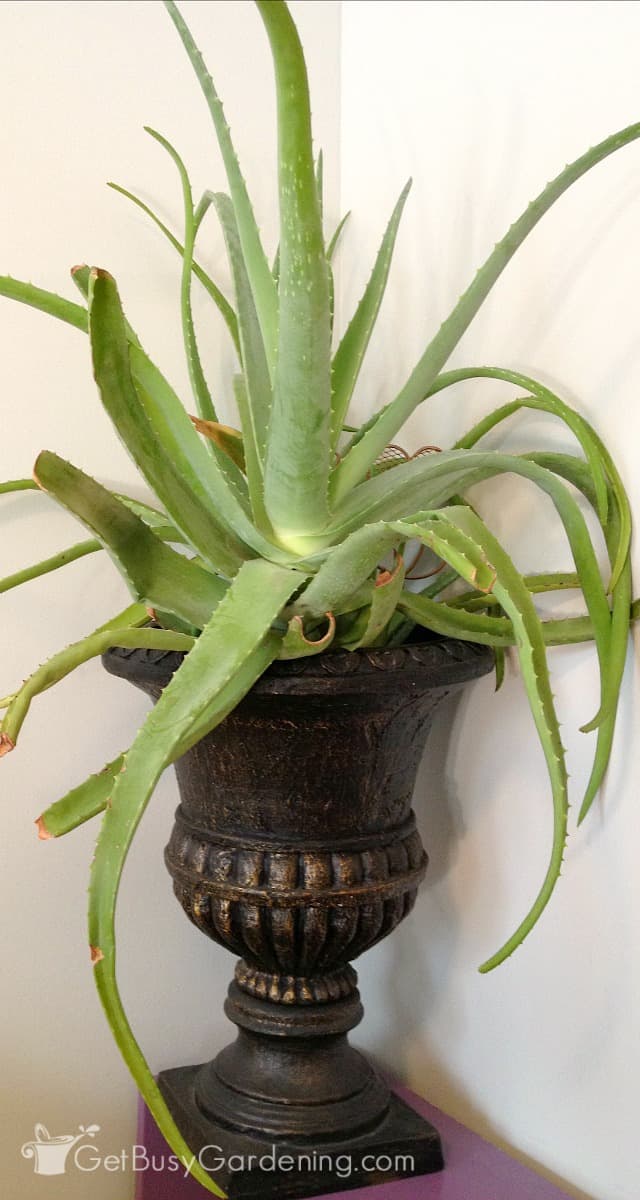
The best soil for aloe vera is a loose medium that drains very quickly. Use a sandy potting soil, or you could try a gritty mix if you tend to overwater.
I like to make my own, using a mix of perlite or pumice, coarse sand, and regular potting soil, which tends to be cheaper than buying the commercial stuff.
Related Post: How To Make Your Own Succulent Soil (With Recipe)
Repotting
The good news is that you won’t need to repot your plant very often, they like to be root-bound. When the time comes, use a container with drainage holes in the bottom, and only go up one or two sizes.
Planters made out of unsealed terracotta or clay are the best for growing aloe vera, and will wick water out of the soil, helping it dry out faster. Get my step by step instructions for how to repot your aloe vera plant here.
Fertilizer
Aloe vera plants don’t really need to be fertilized. But it will help encourage faster growth and blooming. I recommend using organic products rather than chemicals, especially if you plan to harvest the gel.
Apply a general purpose liquid monthly, or top-dress with slow-release granules once or twice during spring and summer.
Aloes go into a state of dormancy in the winter, and will hardly grow at all. So, don’t feed your plant during the fall and winter months to let them rest.
Pest Control Tips
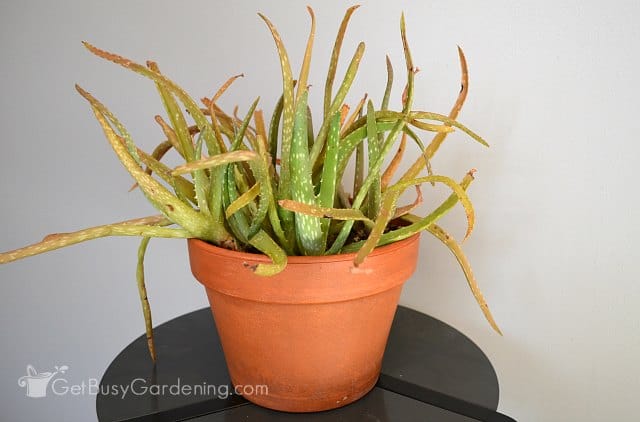
Healthy aloe vera plants rarely have issues with insect pests, but sometimes mealybugs or scale can become a problem.
For small infestations, use a cotton swab soaked in rubbing alcohol to remove any visible bugs. For larger outbreaks, treat your plant with neem oil or an insecticidal soap.
But aloes can be sensitive to certain sprays. So, be sure to test anything you use on a small part of a leaf before treating the whole plant.
Propagating Your Aloe Vera
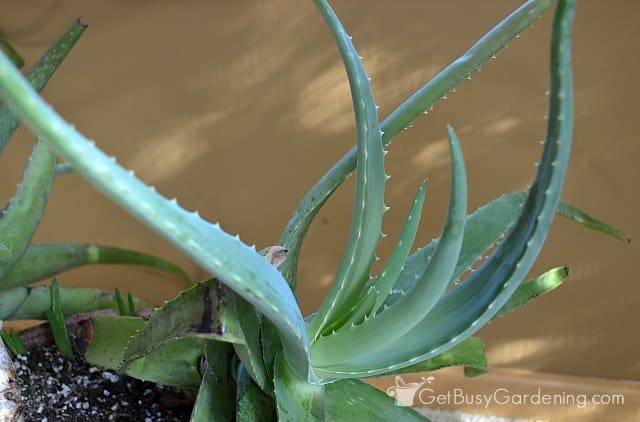
It’s easiest to propagate aloe vera plants by division. But if your plant has gotten very long and leggy, and you’re feeling brave, you could try rooting the stem cutting.
This technique can be much more difficult, but it’s fun to try. Simply let the wound cure (dry out) for several days so it calluses over. Then dust it with rooting hormone, and stick it in a dry, sandy medium.
Get my full step-by-step instructions for how to propagate aloe vera by division here.
Troubleshooting Aloe Vera Care Common Problems
Though aloe vera is usually pretty easy to care for, at some point you might start having issues with it. Below are a few of the most common problems, and what to do about them.
Plant Is Tall & Leggy
When an aloe vera grows tall and leggy, that means it’s not getting enough light. They do best with at least 6 hours of full sun per day. If yours is indoors, move it to a south-facing window, or add a grow light.
Mushy Stem
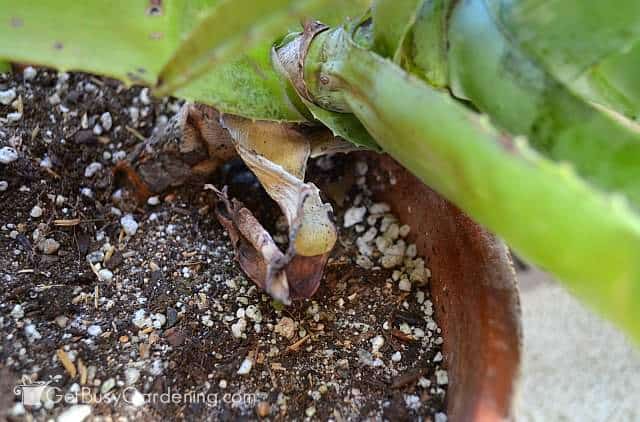
If the stem is completely mushy, that means it was overwatered at some point, and now it’s rotting at the base. Unfortunately there’s not much you can do to fix it.
But you can try saving your plant by cutting it off just above the mushy stem section and rooting it. Make sure you cut off all of the rot though, or it will continue to spread.
Brown Leaves Or Tips
If the brown leaves are drying out and shriveling up, that usually means your aloe vera is not getting enough water. In that case, you can just prune off the dead leaves and water it a little more often.
But if the leaves are mushy and brown, then it’s probably from too much moisture or humidity. So check the soil to make sure it’s not wet, then slow down on watering.
FAQs
Aloe veras can grow pretty fast outdoors in the right climate, but are much slower indoors. If you want yours to grow faster, try putting it outside during the summer, and give it some organic fertilizer.
Leaving the brown tips on your aloe vera won’t hurt the plant. But you can prune them off at any time if you don’t like the way they look.
A healthy aloe vera plant has thick, firm leaves that stand up tall and form tight rosettes. They should also be blueish-green in color (though it’s normal for the leaves to turn yellowish, pink, or orange in the full sun).
Caring for aloe vera is very low-maintenance because these tough plants thrive on neglect. Once you get the hang of giving it exactly what it needs, your plant will thrive for decades to come.

If you want to learn all there is to know about maintaining healthy indoor plants, then you need my Houseplant Care eBook. It will show you everything you need to know about how to keep every plant in your home thriving. Download your copy now!
Share your aloe vera plant care and growing tips in the comments section below.

Emms says
I inherited an Aloe Vera from a coworker and it has brown dried leaves at the base, is pale green, some ‘healthy leaves’ are browning and there is almost a mold like substance on the leaves. Please help!!! I want to save it.
Amy Andrychowicz says
Brown/dying aloe leaves are a sign of improper watering. So, the plant has either been over or under watered. Read the section above called “How Often To Water Aloe Vera” for details about that. As for the mold-like stuff on the leaves, that could be mealybugs. Here’s an article to learn all about those… How To Get Rid Of Mealybugs On Your Houseplants. Good luck!
Taylor says
What are the pea like things growing with my aloe plant?
Amy Andrychowicz says
I’m guessing they are either flower buds or seed pods. Has your aloe flowered before?
Sabari says
I plant an aloe Vera ..but leaf ‘s gel is like full water…
Amy Andrychowicz says
If your aloe vera leaves are full of water, then it usually means the plant has been overwatered. Be sure to allow the soil to dry out completely before watering it again.
Lisa Gehrig says
I have a question. My aloe is about 20 years old and about 2′ tall. It is potted indoors. Sometimes I harvest leaves from the bottom of the plant. The main stem/neck is getting long and the whole plant is starting to tip. Should I quit harvesting the lower leaves or repot it deeper?
Amy Andrychowicz says
Yes, that is very common for aloes. You could either plant it deeper, or you can try propagating it (if you’re brave enough!). 😉 Just cut the whole top off, leaving the stem long enough to root it. New leaves will grow out of the original plant, and then you can root the cutting. So you’ll have two plants.
Rhoni Ann says
I have the same issue, as my aloe tips over when it is moved, because the roots are very shallow. So, how deep do you plant an aloe vera?
Amy Andrychowicz says
You can plant your aloe vera up to the bottom of the first set of leaves. Just don’t bury any of the leaves, and it’ll be fine. It will grow new roots along the buried part of the stem, making it even stronger.
Maria says
I have an aloe plant growing in a pot outside, but it looks out of control. There are a ton of baby plants in it and it looks crowded. Should I cut these or pull them out? What do I do? I’ve never had an aloe plant before..thanks!
Amy Andrychowicz says
Aloes can grow just fine being crowded, so you don’t have to remove the baby pups if you don’t want to. If the plant it completely pot-bound, then you could pot it up into a larger container. Otherwise, if you would rather remove the pups, here’s a tutorial for how to remove and propagate them… How To Propagate Aloe Vera By Division
Marie Tremblay says
Can you tell me what to use to clean off the leaves of an aloe vera plant?
Amy Andrychowicz says
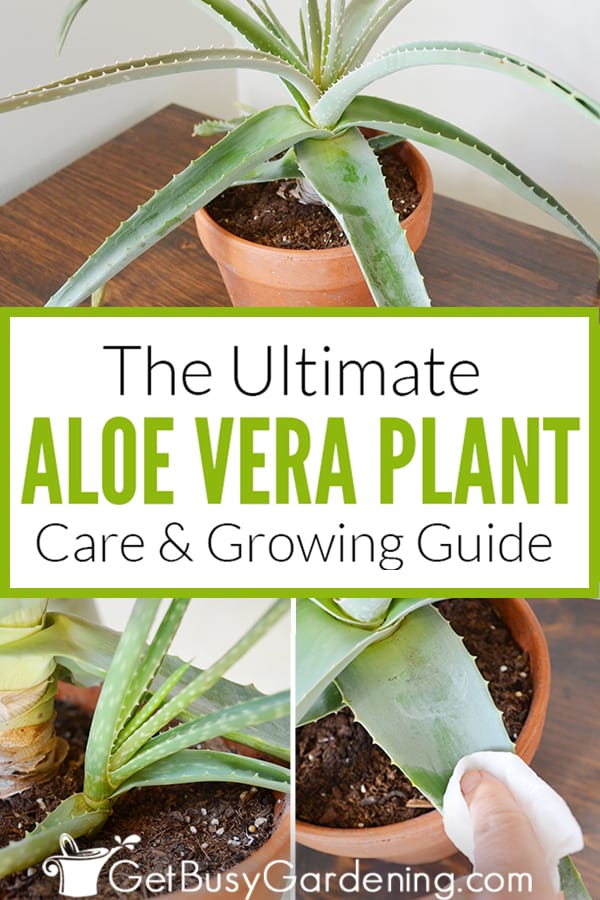
You can use a damp cloth to wipe the leaves of your aloe plant. I just moisten the cloth with water.
Adrerani says
I noticed in the last pic of your aloe veras where you are wiping off the dust. It looks very sad and starved. The leaves are lacking in water I noticed this problem with my own aloe vera after recently reviving it. You need to water it more consisetntly or figure something else out it doesnt look healthy at all. The leaves look very droopy and not from being full and heavy.
Your care tips are excellent though they’ve helped quite a bit.
Amy Andrychowicz says
Oh no! That must just be bad lighting because that is an extremely healthy and happy aloe plant. 🙂
Michaela says
Can I just use regular tea leaves and not the bags? I didn’t know you can do this on an Aloe Vera. Is it true you can use carrot skins? Read that on some other website.
Amy Andrychowicz says
Are you asking about the compost tea? If so, that’s not made with leaves like the tea we drink, it’s made from compost. So yes, you would need to buy the tea bags with the compost in them for that. I’m not sure what your question is regarding the carrot skins though, sorry.
Don says
I have one growing indoors in a south window in Vancouver BC. Haven’t done anything special with it. No pesticides etc. Mostly just gently squeezed the leaves (about 3ft long, 4 inches wide near the stock and 1.5 inches thick) to tell me when it needs water. If they become a little soft then it gets water. When the leaves are firm it gets nothing. It has had many babies which were extracted usually in the spring when I’d repot it. It has flowered about 5-6 times over the past 15 years.
I treat the jade plant similarly, squeeze the leaves etc. It has flowered about every third year on average.
As per your information, sun light and minimal water.
They like to be treated with minimal attention.
They seem to like compost tea, and vermiculture (worms) tea.
Amy Andrychowicz says
Awesome, sounds like you’ve go the knack for growing aloe vera! Thanks for sharing your aloe vera care tips with us!
Keith Gunter says
Can you tell me please is it natural for a white bulb like pant to grow in between leaves of my aloevero plant.
Amy Andrychowicz says
Did a piece of another plant somehow get dropped into the pot with your aloe vera? Or do you mean it’s growing from the actual leaves? Could it be flowering?
Milli says
I just bought an aloe vera plant from a supermarket. I cut a few of the leaves from the base for the gel. Some leaves I couldn’t cut close enough to stem is that okay? These leaves will not grow back right? What’s the proper way of cutting the leaves?
Amy Andrychowicz says
Yes, the leaves you cut from your aloe vera will not grow back. They will probably just dry up eventually. It sounds like you harvested them correctly, and the way you did it won’t harm the plant.
Pross says
My aloe vera is mushy to touch because of too much rain in just a week. Can I still revive it? Thank you.
Amy Andrychowicz says
Oh no, sorry to hear that your aloe vera is mushy! There’s not much you can do, time will tell if it will recover or not. I would definitely let it dry out completely, so move it to a protected location where it won’t get anymore rain right away. After a few weeks, you will know for sure if the plant is going to survive or not. If it’s a lost cause, you can try cutting back the rotted aloe vera, and it might still grow new babies around the base.
tania pannell says
hi,im due to go away for 3 weeks and have no one to pop in and water my 40 odd various sized plants,they are in my lounge by the window(some on sill),can i just water before we go and hope they last til we get home?i water 12-15 days during spring /summer or if they look droopy lol,can i just repot with old soil at the bottom and new on top,do i need stones as some sites suggest for drainage,do i leave them to dry when repotting?got lots of pups to sort now as well,playing it by ear,would send pic but cant see how to lol 🙂
Amy Andrychowicz says
Your aloe veras will be just fine for three weeks without water. so yes, just water them before you go, and they’ll be happy. As for repotting, yes, you can use the same soil to repot a plant, and fill in the gaps with fresh soil. There’s no reason to add stones into the pot. Some sites recommend using stones in the bottom for drainage if the pot doesn’t have drainage holes, but this is a myth. Always, always use a pot with drainage holes for aloes, and be sure to use fast draining soil for succulents. Stones in the bottom won’t do a thing to prevent overwatering.
Bonita says
I’m so glad I found this site!! I’ve been surfing the web this morning trying to find an answer to my aloe issue and really haven’t found one, so I’ll try here. My aloe vera is in a kitchen window, so gets plenty of light. It’s leaves are thick and juicy, and new leaves are growing, but the leaves won’t stand up. Wish I could attach a picture so you could see what I mean. I think it’s healthy, but I have to put supports in and attach the leaves so it doesn’t take up so much room on my counter. It’s just that I’ve seen a lot of aloe vera plants and none look like mine does. Any thoughts on this????
Amy Andrychowicz says
It sounds like you may have a different type of aloe plant, and not an aloe vera. There are tons of different types of aloe plants, and many times they are mislabeled at the store. But, if you’re sure you have an aloe vera, and the leaves are flopping as you describe, then I would check the trunk and make sure it’s not mushy or rotting.
Billie Jean Walker says
Hello, thank you for your advice! But I actaully still have a question, people say I have a greeb thumb cause ive rerooted plants that they say that cant be but we know that u can grow anything as long as you put love and time into it. Anyway I apperciate your time so ill get to my ?. When your aloe leaves are long and thick and or get moved from one spot to another and they start bending to the point they get a crease where the bend is or towards the bottom it looks like its dying from the crease up ive tried having it leaned up against a support or etc. And eventually I just have to cut it off from that crease which is sad cause theyre so beautiful and full! All I think its cause its krimped like its pinched off and not getting enough of what it needs even though it looks healthy!! I need to know what to do, do I leave it alone prop up better not move it at all Im lost about this situation Please help!! Thank you again for your time
Amy Andrychowicz says
I haven’t had that problem much with my aloe vera. It can happen if the plant is moved a lot, or if you have it in a high traffic location where people are bumping into it or brushing up against it a lot. If the creasing leaves has become a big problem with your plant, I would see if you could move to a new spot where it won’t get bumped or touched. Otherwise, yes, once aloe leaves crease like that, there’s not really anything you can do to fix them.
Heidi says
Hi Amy, Great article however I’m still not sure what I’m doing wrong with my aloe. I have had it foe a few years, it’s in a small pot on my kitchen windowsill. It has turned all yellow however it is not mushy and some leaves have also dried up. At one point I felt I was watering to much so I stopped, then I thoght maybe I was watering it to little so I watered it more (still not a lot of water just more frequently). Nothing seems to help. What are your feelings?
Amy Andrychowicz says
When the leaves dry up and turn brown and crispy, it means your aloe isn’t getting enough water. You can start watering it a bit more often, but still be sure to allow the soil to dry out between waterings.