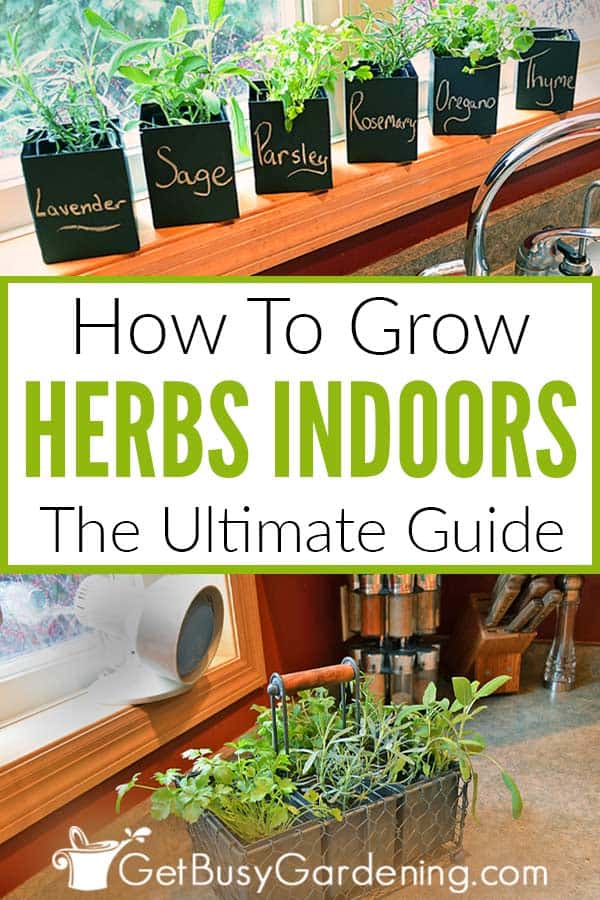
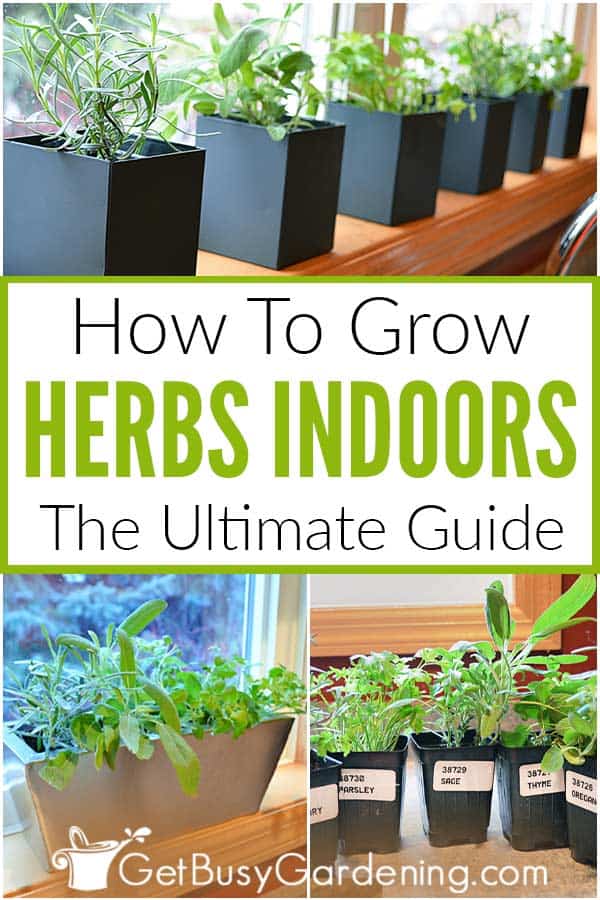
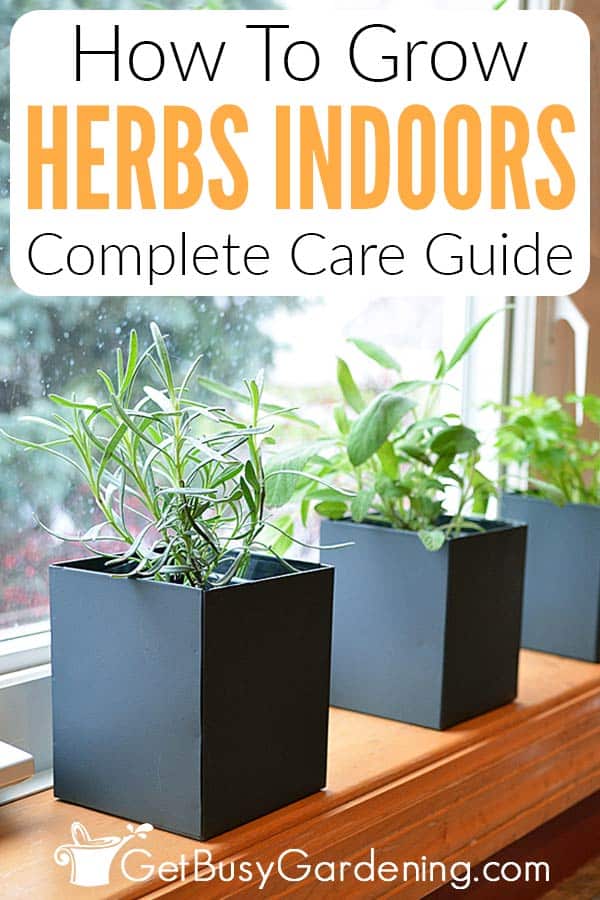
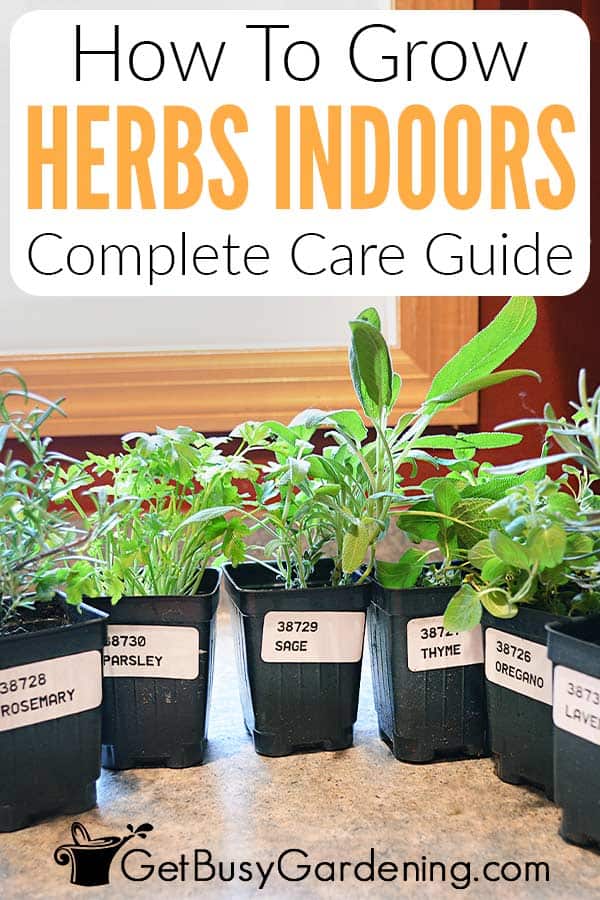
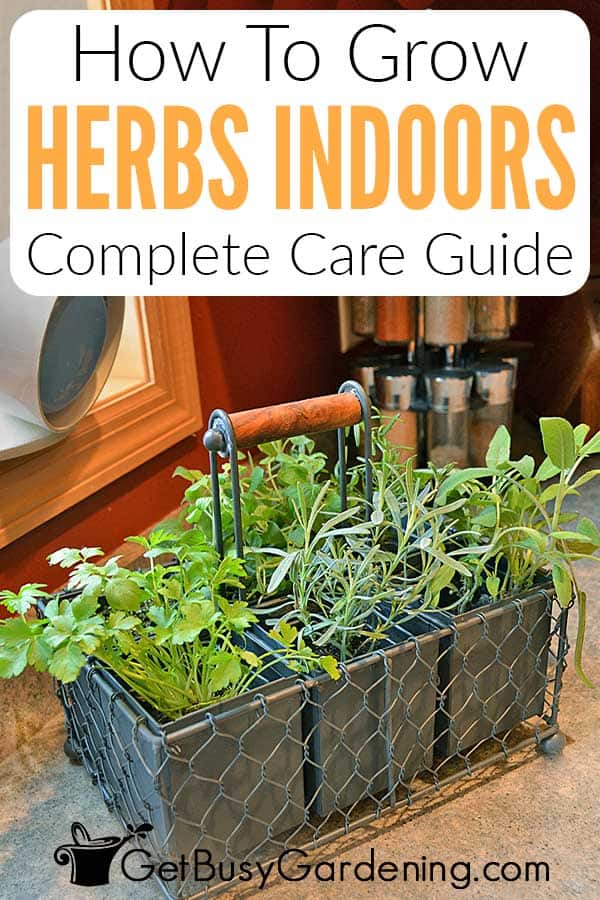
Growing herbs indoors is awesome! But it can also be a bit difficult, especially for beginners. I want you to be successful! So, in this post, I will tell you everything you need to know about indoor herb gardening.
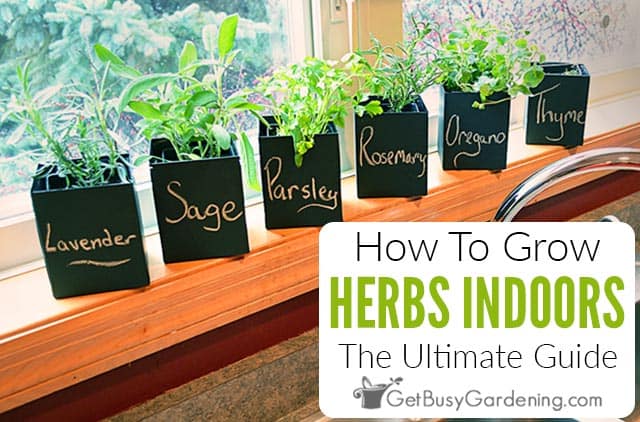

Growing herbs indoors on a sunny windowsill has become quite popular these days, especially for those of us who live in a climate where the winters are long and cold.
The thought of being able to snip off sprigs of fresh herbs all year round every time you need them for cooking sounds dreamy, right? Yes! So why not give it a try?
Below I am going to show you all that you need to be successful. From choosing the best herbs to grow indoors, to watering, fertilizing, pruning, sunlight, soil, repotting, fixing common problems, and much more!
Growing Herbs Indoors
It’s fun to grow herbs indoors, but caring for them can be a bit of a struggle. Two of the most important things to consider before getting started are choosing the right varieties, and also the best location.
Choosing Herbs For Growing Indoors
There are tons of different kinds of herbs that grow well inside, and many can live as houseplants for several years. Keep in mind that some are annual plants, and therefore will only live for about a year.
So, when choosing which ones to keep inside, look for perennial herbs if you want them to live the longest.
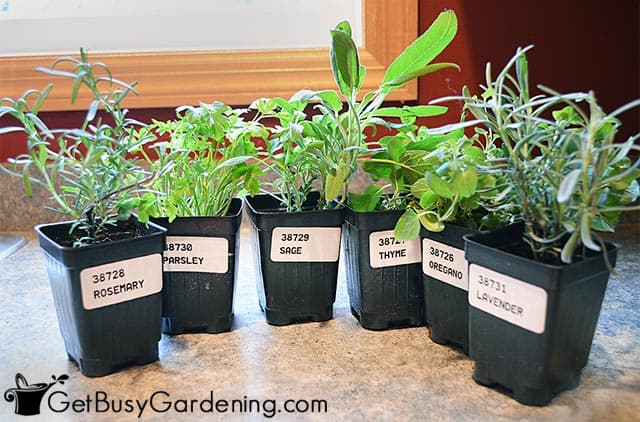
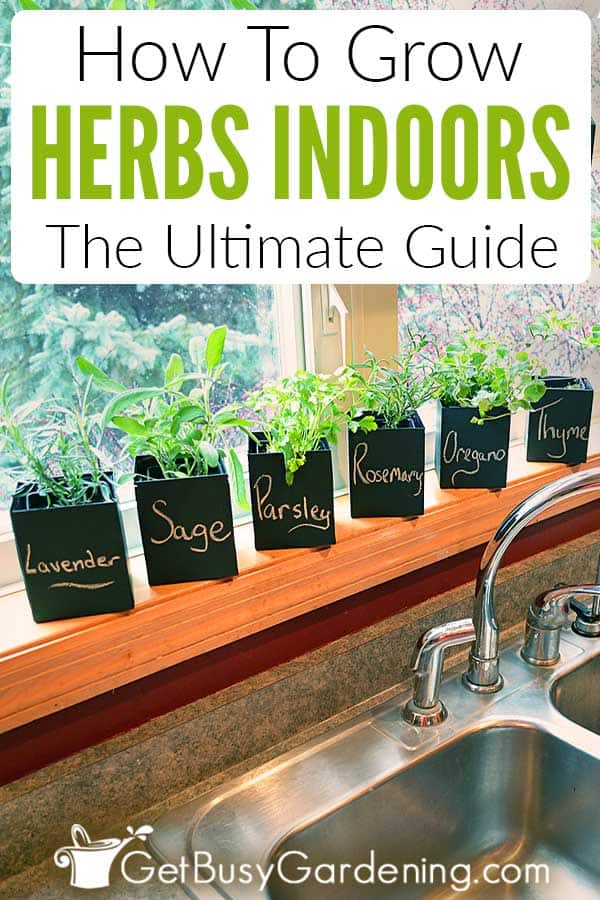
Below is a quick list of a few popular types, you can get my full list of the best ones for inside here.
- Rosemary
- Parsley (biennial)
- Sage
- Thyme
- Cilantro (annual)
- Oregano
- Lavender
- Chives
- Mint
- Basil (annual)
Where To Grow Herbs Inside
Most herbs will grow best indoors in a cool room that gets indirect, bright light. Though they will prefer getting some direct sunlight during the winter months.
It’s super important to keep them away from cold drafty windows and doors, or heat sources like the stove or oven.
Extreme hot or cold temperatures can severely damage the leaves, which could end up being fatal. So keep that in mind when deciding where to place them.
How To Grow An Indoor Herb Garden
Despite the fact that keeping herbs indoors is popular, they can be challenging to maintain. Many of them come from hot, dry climates, while others prefer cooler temperatures.
So keeping them happy inside can be a bit of a balancing act. Don’t worry, once you get the hang of it, you’ll find it’s actually fairly simple.
You can read my full care guide here. But for the best results, follow these tips for growing herbs indoors.
Water
The biggest mistake people make when growing an indoor herb garden is overwatering. They will not tolerate soggy soil for very long.
Consistently wet soil will just end up rotting your indoor herb garden (it’s especially easy to overwater when they’re sitting next to the kitchen sink!).
Try to keep the soil consistently moist, but not wet – especially during the winter months. It’s ok to let it dry a bit between watering, but never let it dry out completely.
Always check the soil by sticking your finger one inch deep. If it feels wet, then wait to water. Ideally, you should allow the soil to dry slightly. Then pour water over the top until it starts running out of the drainage holes.
If you struggle with giving them the perfect amount of water, then I recommend getting yourself an inexpensive soil moisture meter to make it easy.
Light
Thankfully they don’t need a ton of light to thrive in the house. It’s best to grow them near a south facing window where they will get bright, indirect sunlight.
Or you can place your indoor herb garden directly on an east of west facing windowsill.
When they don’t get enough light, they will quickly begin to get tall and leggy, or reach for the nearest window (especially if your kitchen is north-facing like mine is).
If that happens, then either move them to a brighter location, or add a grow light. This small light is perfect, and doesn’t take up too much space, or look like an eye sore in my kitchen. I simply put it in a drawer when company comes over.
Related Post: 15 Herbs To Grow In Your Shade Garden
Repotting
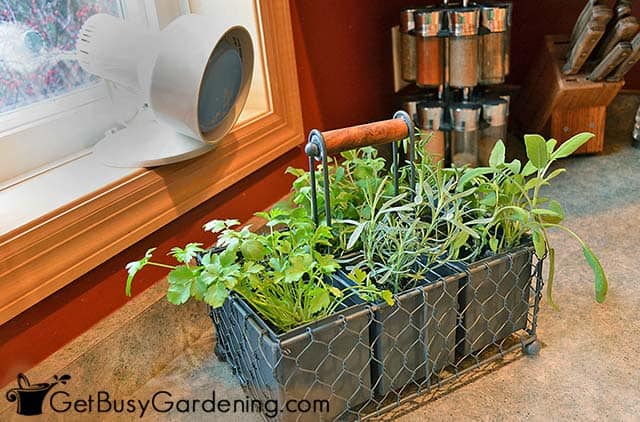
The best time to repot herbs growing indoors is in the spring or early summer. But don’t repot them unless they need it. They would rather be pot-bound than being planted in a container that’s too large for them.
So be sure to choose a container that is only one size larger than the one they’re currently planted in. I also recommend using a pot that has drainage holes in the bottom, especially if you tend to overwater.
If your indoor herb garden is planted in one large container, you can repot the whole thing together, or split up each individual plant if you prefer.
But if you do divide them, then be sure to use pots that are only slightly larger than the rootball of each individual plant.
Soil
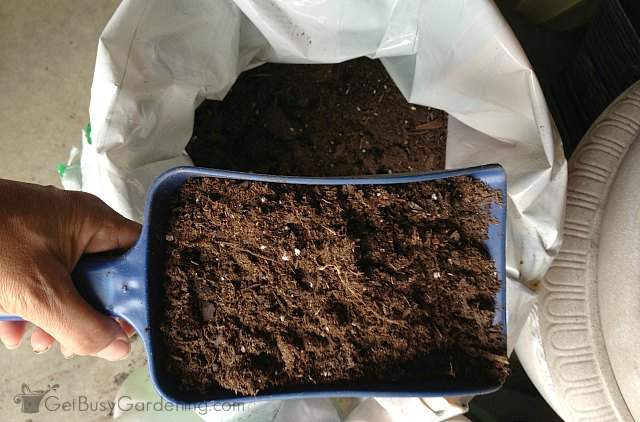
Generally speaking, they do best in a fast-draining, alkaline soil. So be sure to use a good quality potting soil for them.
However, if you tend to overwater, then you may want to consider purchasing a fast-draining mix. Otherwise, you could add perlite or pumice, and/or coarse sand to your potting mix to improve drainage.
If the soil you choose is peat-based, then you may want to add a little garden lime to decrease the acidity of the peat moss, and neutralize the soil pH.
Fertilizer
Since they aren’t heavy feeders, your indoor herb garden won’t need a lot of fertilizer. But, just like any other potted plant, they will benefit from being fed.
Start feeding them in early spring with a half dose of liquid fertilizer. Compost tea is an excellent natural fertilizer, which you can get in concentrate, or buy tea bags and brew your own.
Or, if you prefer, you can add slow-release granules to the soil in early spring, and then again once or twice during the summer.
Stop feeding them in the fall, and don’t give them any fertilizer at all during the winter. Fertilizing during the winter can cause them to grow weak and spindly. Learn all about fertilizing herbs here.
Pest & Disease Control
The good news is that herbs are natural bug repellents, and don’t normally have many issues with indoor plant pests. However, it’s very common to see tiny black gnats flying around them.
Those are called fungus gnats, and they live and breed in wet soil. So, if you have them, it’s a sure sign that you are overwatering.
The best way to get rid of these annoying little flies is to allow the top inch of soil to dry between waterings.
You can also add a bit mild liquid soap to your watering can to help kill them faster. Or try covering the soil with one inch of sand to prevent them from laying eggs.
Many types are also prone to leaf diseases like powdery mildew, which can become a huge problem indoors.
The best way to prevent disease issues is to water the soil rather than over the top of the leaves. And take care to keep the leaves dry at all times.
Pruning
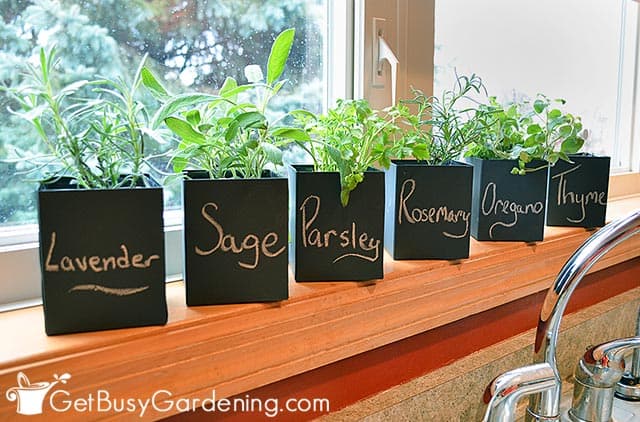
Regular pinching and pruning is an excellent way to keep your indoor herb garden looking and growing it’s best. Plus, it will ensure that you will get a consistent harvest!
Pruning will trigger fresh new leaves, and encourage branching, resulting in fuller plants. You can simply pinch out the tender new tips, or prune leaves and branches using a sharp pair of micro snips.
Harvesting
The best part about growing herbs indoors is having them on hand whenever you need to add flavor to your favorite dishes!
Harvesting is super easy too. Simply pinch a few leaves, or snip off full branches – whatever you need for cooking.
Just make sure you never harvest all of the stems or leaves at once. You always want to make sure to keep several on your plants so they can continue to grow.
Related Post: 9 Easy Ways To Preserve Fresh Garden Herbs
Troubleshooting Common Problems
The hardest part about growing herbs indoors is when they start having problems, and you have no idea what is wrong. The good news is that most issues are easily fixable. Here is a list to help you troubleshoot the cause.
Yellow Leaves
The main cause of yellow leaves on indoor herbs is overwatering, but it could also be lack or light or bugs.
Be sure to allow the soil to dry out more between waterings. It should never be wet or soggy. If it’s not that, then first check for insects, and then try giving it more light.
Plants Are Drooping
This could be caused by either over or under watering. Stick your finger one inch into the soil or use a moisture gauge to check it.
If it’s wet, then allow it to dry out a bit more, they don’t like soggy soil. If it feels bone dry, then give them more water.
White Spots On Leaves
If you find white spots on the leaves, it’s most likely powdery mildew or some other disease.
Prune off the infected leaves, give the plants more airflow, and always be sure to keep the leaves dry.
Indoor Herbs Growing Tall & Leggy
When indoor herbs get spindly and leggy, or are reaching for a window, that means they aren’t getting enough light.
Either move them to a sunnier location, or add a grow light to supplement.
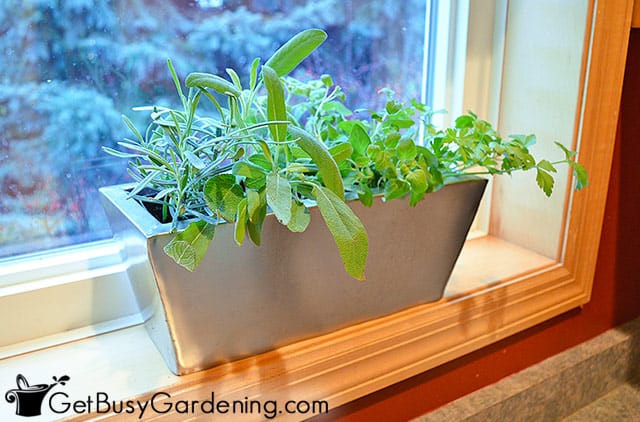
Indoor Herb Gardening FAQs
In this section, I will answer some of the most frequently asked questions about growing herbs indoors. If you can’t find an answer to your question here, then ask it in the comments below.
Can you grow herbs in just water?
Yes, there are certain types of herbs that grow well in just water. However, it’s not a good way to grow them for the long-term.
So, if you want to keep them alive and healthy for more than a few months, then it’s best to plant them in potting soil.
Do indoor herbs need sunlight?
Yes. If they don’t get enough sunlight, they will become weak and leggy. The ideal spot for growing herbs indoors is on an east or west facing window ledge, or near a sunny south-facing window.
Can you grow herbs indoors all year?
Many types of herbs can be grown indoors all year round, as long as they are perennial plants. However, some are annuals or biennials, and will only live for one or two years.
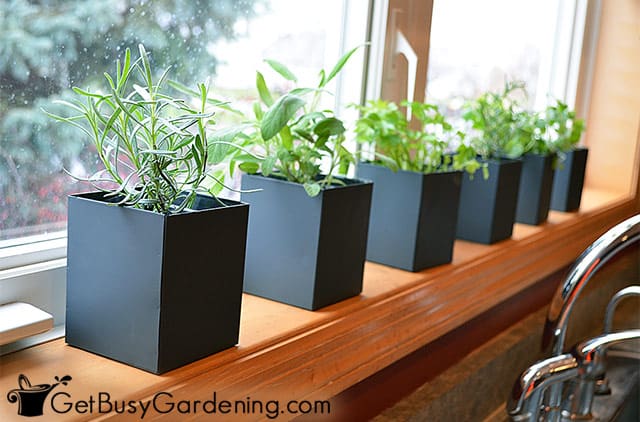
Indoor herb gardening is a fun hobby, and it’s wonderful to have a fresh supply on hand whenever you need them for cooking. Depending on which ones you choose to try, it can be a bit challenging to keep them thriving. But, once you get the hang of it, you’ll see just how easy growing herbs indoors can be.

If you want to learn all there is to know about maintaining healthy indoor plants, then you need my Houseplant Care eBook. It will show you everything you need to know about how to keep every plant in your home thriving. Download your copy now!
More Posts About Growing Herbs
Share your indoor herb garden tips in the comments section below.

Jen says
I live in Zone 5 and don’t have the space in my home for an indoor garden. I do however have a large She Shed. It is not air conditioned, but has windows for ventilation. I get so much light through the windows and wondered if I could use the shed to grow my garden. It does get quite humid if the windows are closed. Thanks.
Amy Andrychowicz says
As long as it doesn’t get too hot or freezing cold inside, then I would think you could grow herbs in there just fine.
Jen says
May I ask why only go up one pot size when repotting? Do the roots spread too far/energy concentrated on roots instead of leaves?
Amy Andrychowicz says
Yes, that can be one problem. But the main concern of using a pot that’s too big for your herb plants is overwatering.
Melissa says
I love the pots, where are they from?
Amy Andrychowicz says
I got them from Jackson & Perkins a few years ago. I’m not sure they still carry them though.
KATURAH SHROCK says
Do these indoor herb pots need to have holes in the bottom? And is there a certain size the pots should be?
Amy Andrychowicz says
Yes, I would definitely recommend you use a pot with drainage holes for your indoor herb plants. They hate being overwatered, so it’s best to have good drainage for them. As far as the size goes, the smaller the plant, the smaller the pot. If you’re looking at repotting herbs, then use a container that’s only one size bigger than the one your herbs are already growing in. You don’t want the pot to be too large.
Heidi says
I really needed these tips! Haven’t had luck with the basil I’m growing indoors. Thanks!
Amy Andrychowicz says
You’re welcome!
JaneEllen says
Our daughter/grand daughter have been growing some herbs in summer but I would love to keep some plants growing throughout the winter. Grand daughter grew some nice lavender, so would I love to.
Quite by accident I put 2 geranium plants and few succulents in our south facing window during the holidays, they are growing like crazy, doing so well. Usually kept them in west facing window but had other things on that surface for holidays when I decided to put them in our bathroom in south facing window. Might be too hot for them there in summer so will have to see what happens. Gets very hot in west facing window in summer.
Like to put some plants on front porch during summer as about mid afternoon gets shady/little cooler out there on east side of house.
Both my geraniums are at least 3 yrs. old, kept them alive and separated them in spring, replanted. The succulents have had for long time, brought them from KY.
Thought would be interesting to try to grow some herbs in that sunny window too, especially some lavender. We live west of Grand Junction, CO where several people have good sized lavender farms so guess climate is good for it, dry here, low humidity most of time.
Sure glad I clicked on your post so can learn more about growing herbs indoors.
Think will buy myself a grow light if it seems needed.
Amy Andrychowicz says
Sounds like you’re a natural green thumb! 🙂 I would definitely try growing some herbs in your sunny window, I bet they will do great for you!
Roseann Hampton says
Great tips! I have trouble with not enough light/windowsill space indoors so I bought a grow light. It does wonders for keeping the herbs growing in the cooler months!
Amy Andrychowicz says
Awesome! Thanks for sharing that the grow light works so great for you to keep your herbs growing indoors through the winter. That’s great to hear.