

Growing thyme is not as difficult as you might think, and their care is minimal. In this post, I’ll teach you everything you need to know to be successful.
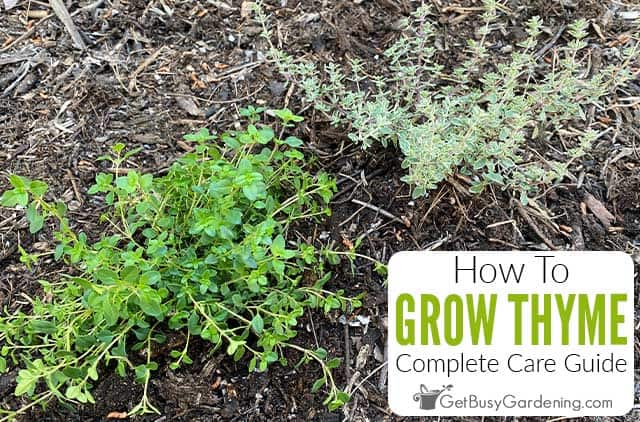

Hardy and low maintenance thyme makes a great addition to any garden. Not only are they edible, they’re beautiful too.
It’s easy enough for even the newest beginner to learn how to grow thyme successfully, once you understand how to care for it.
In this detailed thyme plant care guide, I’ve shared everything you’ll need to get started growing it at home.
Learn its sun, soil, water, and fertilizer requirements, plus get recommendations on where and when to plant, how to prune, and much more.
Thyme Plant Care Overview
| Scientific name: | Thymus |
| Classification: | Herb |
| Common names: | Thyme |
| Hardiness: | zones 3-11 |
| Temperature: | 65-85°F |
| Flowers: | Purple, pink, or white, bloom time depends on variety |
| Light: | Full sun to partial shade |
| Water: | Allow soil to dry between waterings, do not overwater |
| Humidity: | Average |
| Fertilizer: | General purpose plant food in spring and summer |
| Soil: | Fast-draining, fertile soil |
| Common pests: | Aphids, spider mites, rosemary beetles |
Information About Thyme
Thyme (Thymus) is a flowering evergreen perennial from the Lamiaceae, or mint, family that also includes rosemary and lavender.
It’s native to the Mediterranean, where it thrives in low-quality soil and dry conditions. It’s now grown in many areas around the world for its pungent flavor and aroma.
There are many kinds of thyme, but all feature small leaves full of the oils that are favored in cooking.
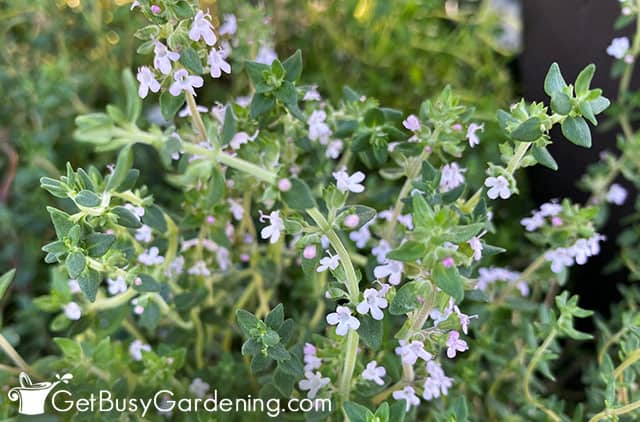
During the summer small white, pink, or lavender colored flowers can the plant, making them a lovely addition to any garden area.
Different Types Of Thyme Plants
There are well over 200 types of thyme plants. They can vary in leaf and flower color, flavor, hardiness, and growth habit.
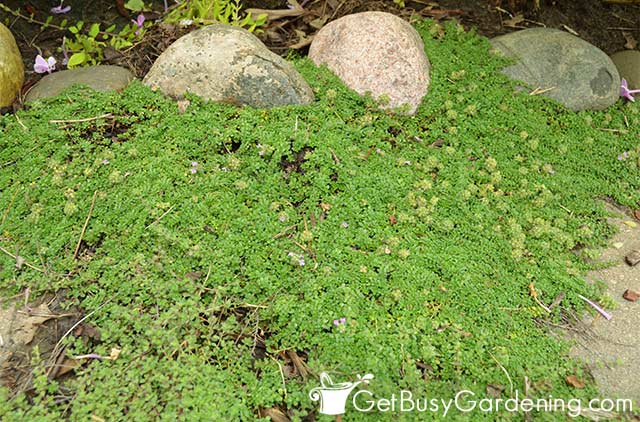
Some are more upright, while others are low-lying or creeping ground covers.
How you choose a variety depends on your climate and intended use. Here are some popular ones you can try.
- Common thyme (Thymus vulgaris) – Sometimes called garden or English thyme, this variety is the most commonly used for cooking. It grows up to 1’ tall, is hardy down to zone 4, and features white or purple flowers.
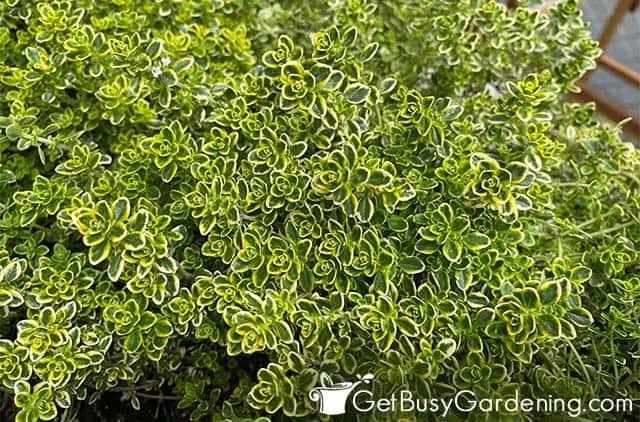
- Lemon thyme – The appearance, hardiness, and growth is very similar to common thyme, but it has a distinct lemon scent and flavor.
- German thyme – This variety is extremely cold hardy and frost resistant, and it has a robust flavor that’s also loved for cooking.
- Orange Balsam thyme – The grayish-green leaves on this upright variety have a citrusy scent to them, but are only hardy down to zone 5.
- Caraway Thyme – This type has narrow, pale green leaves, pink flowers, and spreading growth that’s hardy in zones 4-8.
Hardiness
Most thyme plants are extremely cold hardy, able to survive temperatures down to -30°F and still grow back in the spring. You can find varieties suited to zones 3-11.
It doesn’t do well in very wet climates however, and winter dampness is more likely to kill it than temperatures are.
How Does Thyme Grow?
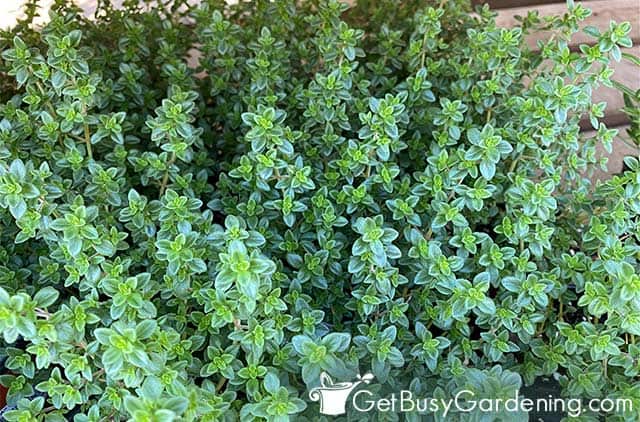
Thyme has small green leaves that grow along woody stems, which sprout from shallow, spreading roots.
Some varieties can grow more upright, while others have a tendency to spread, or ‘creep’ along the ground.
How To Grow Thyme
Before we get into how to care for it, we should talk about where and when to grow thyme. Choosing the best time of year and location are key to its long-lasting health.
Where To Grow Thyme
You have lots of choices when it comes to where to grow thyme. It can thrive in poor quality soils or even gravel.
Use it in the garden, containers, as an alternative to your lawn, as a filler between paving stones, or to line walkways.
To choose the perfect spot, it’s important to understand the habit and hardiness of the variety you have.
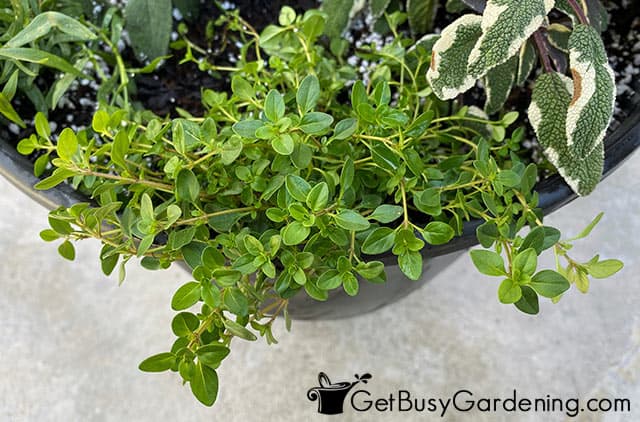
For example, creeping types are better as ground cover, or you can keep less frost-hardy ones in containers, and move them indoors for winter.
When To Plant Thyme
The ideal time to plant thyme is when the ground has warmed to around 70°F in the spring.
That’s usually about 2-3 weeks after the last frost date, and you can check it easily with a soil thermometer.
Thyme Plant Care & Growing Instructions
Now that you know when and where to plant it, it’s time to talk about how to provide the best care. Creating the ideal environment can make growing thyme hands-off.
Sunlight
Thyme can grow well in either full sun or partial shade, as long as it receives a minimum of 6 hours a day. It won’t flower as much and growth will be slower in shaded environments.
When given 10+ hours of direct sun it will be more flavorful due to an increase in the leaf oils.
Water
The most important thing to remember is not to overwater thyme, as this is their number one killer. It’s very drought tolerant, and thrives in dry environments.
If you live in a wet climate, you might want to keep it in a pot so you can move it to a protected area, especially in the winter.
Use a moisture meter to make sure you’re not overdoing it, or wait until it’s dry several inches deep before giving it a drink.
Temperature
The ideal temperature range for growing thyme is between 65-85°F.
Many varieties are very cold hardy and will survive down to -30°F. But it will stop growing, die back, and go dormant when freezing temperatures set in.
In very hot weather, the soil is more likely to dry out faster, and it may require more frequent water. But always check that it actually needs it first.
Fertilizer
Thyme can grow well in poor quality soil, and doesn’t require much in the way of added nutrients.
For in-ground plants, a side-dressing of compost or worm castings in the spring is all they’ll need.
Feed containerized plants 1-2 times a year with a balanced slow-release granule. Or use a liquid like compost tea or fish emulsion to keep them healthy.
Soil
The most important thing to remember about growing thyme is that it won’t tolerate wet feet for long. So the soil needs to be extremely well draining.
Soils mixed with perlite, coarse sand, or pumice are ideal. If you’re starting with a heavy, clay-based one, amend it well to improve drainage before planting.
Pruning
Consistent pruning from spring through fall promotes branching, encourages fuller growth, and helps prevent woodiness. Use sharp snips to cut off branches or sprigs.
It’s also a good idea to trim it back in the summer after flowering to promote new growth well before it goes dormant in the winter.
Pest Control
The pungent fragrance of thyme usually keeps it free from most pests. Its flowers are even attractive to beneficial insects like bees and butterflies.
But on occasion it may be affected by aphids, spider mites, or rosemary beetles.
Hand pick any large beetles, or use an insecticidal soap to treat bugs. I make my own by mixing 1 teaspoon of mild liquid soap with 1 liter of water.
Disease Control
Diseases are rare for well-kept thyme plants. They’re most susceptible to forms of rot or fungal issues caused by excess moisture.
Keep them pruned, and water only when necessary near the base of the plant to avoid any moisture or soil splashing up.
Treat fungal diseases early on with an organic fungicide spray for the best results.
Tips For Harvesting Thyme
Thyme can be harvested from spring through fall. In warmer climates it’s possible to pick it through the winter as well.
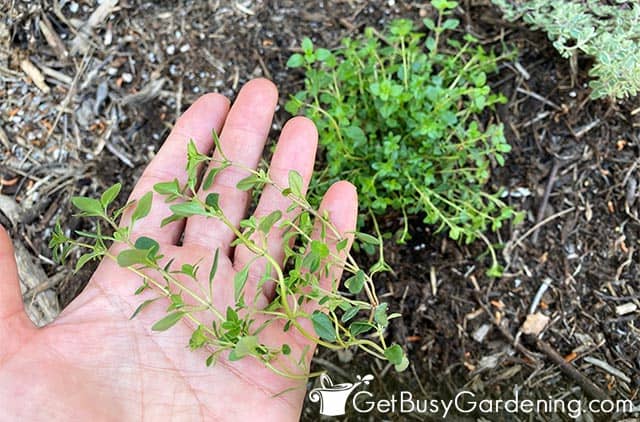
You can begin taking sprigs as soon as the plant is 6-8” tall. But never take more than ⅓ of its total size at a time, to allow it to replenish.
It’s best to harvest in the morning, after the dew has dried using precision shears or micro tip pruners.
Thyme Propagation Tips
Thyme is notoriously inconsistent and difficult to grow from seed. The most reliable ways of propagation are by cuttings or division.
Cuttings can be rooted in soil in the late spring or early summer, before the plant starts flowering.
Division is best tackled in late winter or early spring, when new growth has started to appear. Split mature plants every 2-3 years to reinvigorate them and prevent excess woody growth.
Troubleshooting Common Problems
Growing thyme is easy, even for beginners, but you may still run into an issue or two over the years. Use these tips to help restore yours back to health.
Yellow Leaves
Root rot caused by excess moisture is the most common cause of yellowing thyme leaves, but it could be a nitrogen deficiency or bugs.
Make sure the soil is well draining, and only water when it’s dry at least 1″ down. Otherwise perform a soil test to see what nutrients it might be missing.
Spider mites can cause yellowing in the form of specks on the leaves. Those are best treated with an insecticidal spray or neem oil.
Leaves Turning Brown
The most common reasons thyme leaves turn brown is due to improper watering or age.
Root rot or fungal diseases caused by wet soil will lead to wilting and browning, but severe dehydration can also dry them out.
However, with age, it’s perfectly normal for them to have woodier stems and turn brown. Divide them every few years and prune regularly to prevent this from happening.
Thyme Plant Dying
Thyme most often dies due to root rot from overwatering, but it can also be from age, lack of sunlight, or fertilizer overuse.
Use a moisture gauge to get it right, avoid using chemical fertilizers, and ensure you’re not feeding them more than once or twice a year.
If it receives less than 4 hours of direct sun per day, it may suffer from stress. Or, it could simply be dying from old age, their average lifespan is only about four years.
Plant Is Bolting / Going To Seed
It’s very normal for thyme to flower, or bolt, in the summer. It is a natural part of the life cycle, and it doesn’t change the flavor.
You can delay blooming by providing shade during the hottest part of the day.
But the flowers are very pretty, attractive to pollinators, and are even edible, so most gardeners just leave them be.
FAQs About Growing Thyme
Here I’ve answered some of the most commonly asked questions about growing thyme. If yours isn’t on the list, please add it to the comment section below.
Is it hard to grow thyme?
Thyme is not hard to grow once you understand how to care for it. It requires plenty of sun, warm temperatures, well-draining soil, and infrequent water to flourish.
How long does thyme take to grow?
Thyme can take 70 or more days to grow to maturity from young plants, though some varieties will be ready sooner, or others may take longer.
Will thyme grow back every year?
Thyme will grow back every year as long as the soil hasn’t been excessively moist all winter. It can survive very low temperatures, some varieties even down to zone 3.
Where does a thyme plant grow best?
Thyme plants will grow best with well-draining soil in the full sun. They need a minimum of 6 hours of direct exposure a day, and cannot tolerate wet or soggy feet for very long.
Does a thyme plant need sun or shade?
Thyme plants will flourish in full sun, but can grow well in partial shade with as little as 6 hours of sunlight a day. Shade will reduce the amount of leaves and flowers, and may shorten the overall lifespan.
Now that you know how low-maintenance it is, you can try growing thyme in your home garden. Even a beginner can enjoy their flavor and abundance with the care tips shared in this guide.

Create a gorgeous and highly productive food garden with your copy of my book Vertical Vegetables. It will show you all you need to know about growing any type of crop (including herbs!) vertically. Order your copy today!
Learn more about my Vertical Vegetables book here.
More About Herb Gardening
- How To Grow Dill
- How To Grow Stevia
- How To Grow Tarragon
- How To Grow Sage
- How To Grow Chamomile
- How To Grow Marjoram
Share your tips for growing thyme in the comments section below.

Leave a Reply