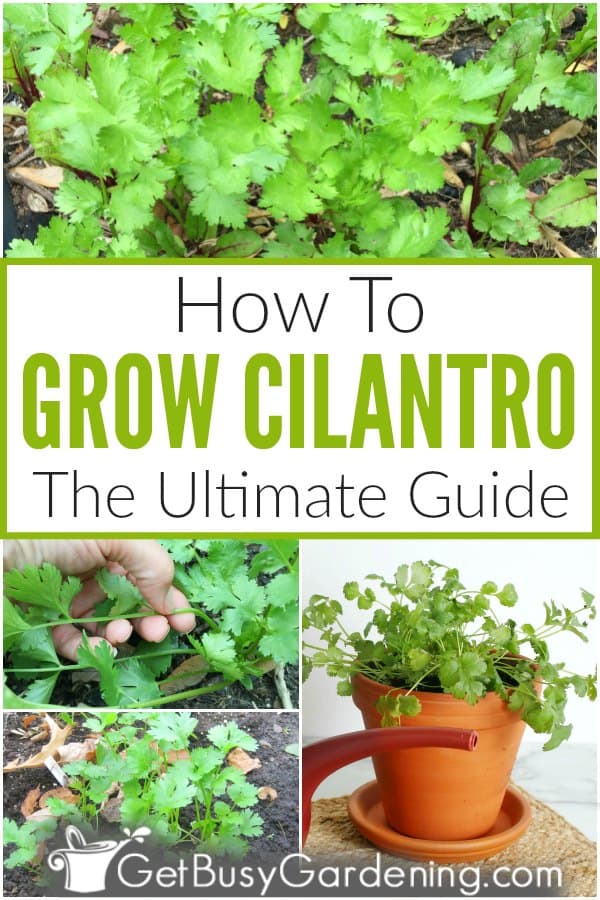
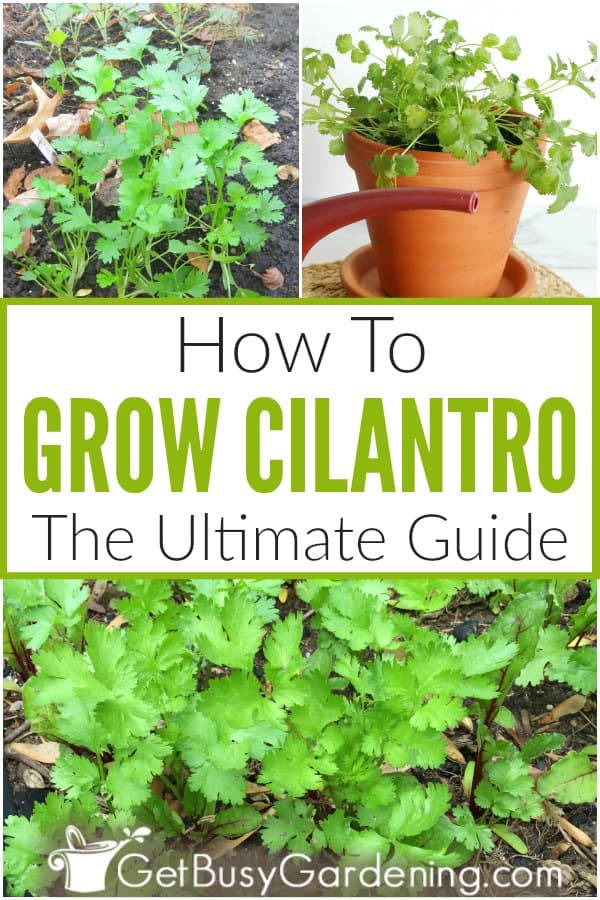
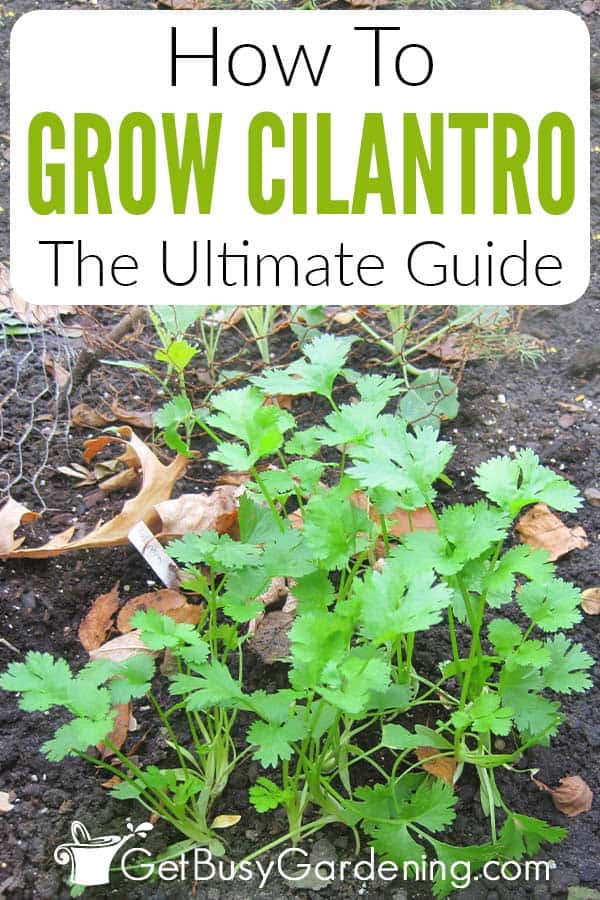
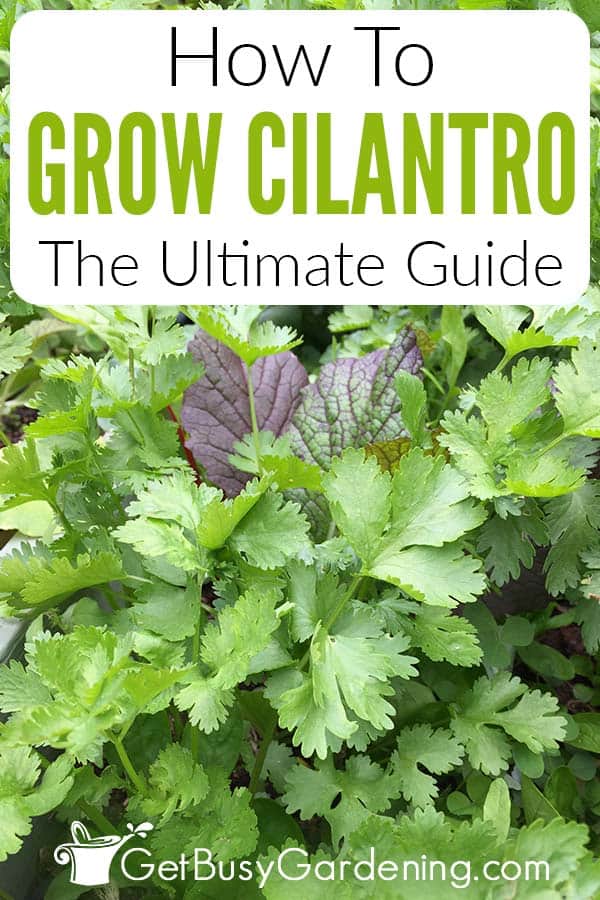
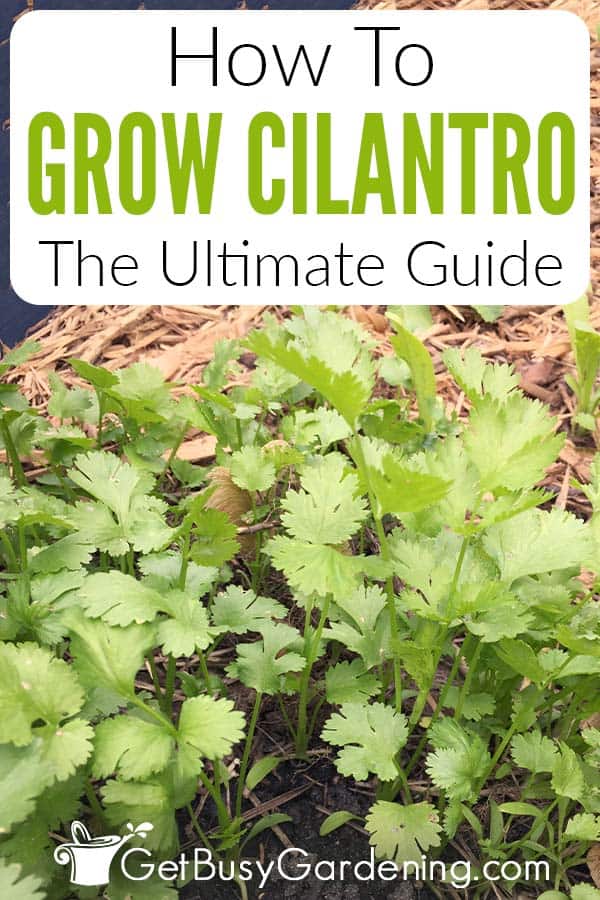
Growing cilantro is easier than you think, the secret for success is all about timing. In this post, you’ll learn everything there is to know about cilantro plant care. Including details about planting, sunlight, watering, soil, fertilizer, harvesting, and much more!
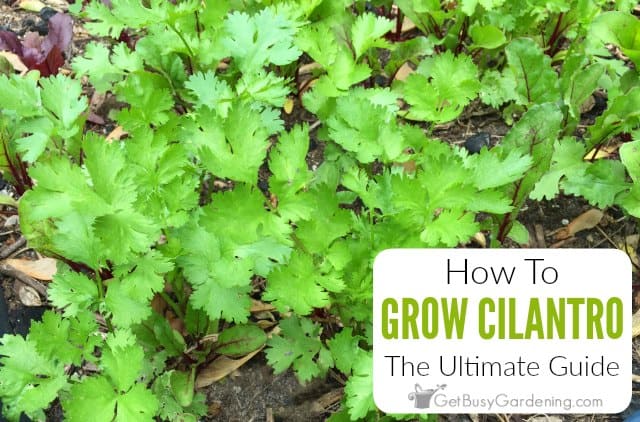

If you’ve ever tried growing cilantro in your garden before, then you may think it’s difficult. And it certainly can be for new gardeners!
But, guess what? When it comes to growing herbs, cilantro is by far one of the easiest. The key is knowing how and when to plant it for the greatest success!
The best part about growing your own is that you’ll have garden-fresh cilantro on hand whenever you need it for a recipe. It also freezes very well, so you can keep it on hand for months!
In this complete guide, you will learn everything necessary to grow cilantro, right in your backyard.
Cilantro Plant Care Overview
| Scientific name: | Coriandrum sativum |
| Classification: | Herb |
| Common names: | Cilantro, Coriander |
| Hardiness: | Annual |
| Temperature: | 50-80°F |
| Flowers: | White or pinkish blooms in early to mid-summer |
| Light: | Full sun to partial shade |
| Water: | Consistent, even waterings, do not overwater |
| Humidity: | Average |
| Fertilizer: | General purpose plant food in spring and summer |
| Soil: | Fast-draining, fertile soil |
| Common pests: | Aphids, army worms, cabbage loopers |
Information About Cilantro Plants
Also called coriander, cilantro (Coriandrum sativum) is a critical ingredient in numerous Mexican and Asian cuisines. It’s native to Greece, and is commonly grown throughout the Mediterranean region.
The cool part that many people don’t know is that you get a two-for-one when you grow it. The stems and leaves are an herb (cilantro), and the seeds are a spice (coriander).
The distinctive flavor adds a particular authenticity to fresh salsas, salads, and entrees. Fresh cilantro has a minimal shelf life, but the seasoning it provides is irreplaceable.
It is related to parsley, and has similar flat leaves, but a far more pungent scent and flavor. Some people even refer to it as Chinese parsley.
Hardiness Of Cilantro
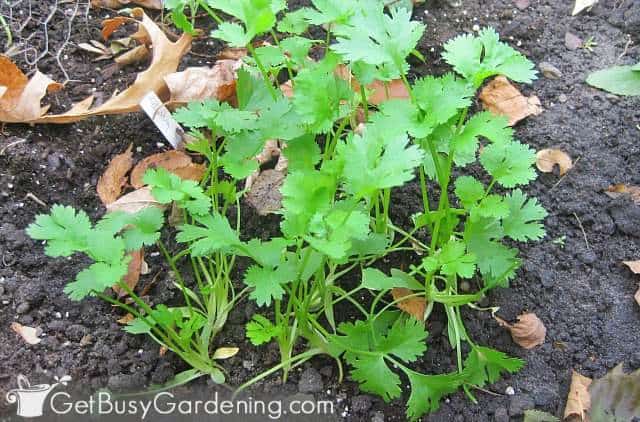
Cilantro is considered a short-season annual plant, which means that it completes its entire life cycle quickly. It is also very cold hardy.
This cool-season annual grows best in mild temperatures between 50F and 85F degrees. It will not tolerate the heat. Once the temperature gets hotter than 85F, it will flower (or bolt).
Different Types Of Cilantro To Grow
There are several different types and varieties of cilantro available. Here are a few that you may want to consider planting in your garden…
- Leisure – This variety is a high yielding type that is slower to bolt, and somewhat heat tolerant.
- Long-Standing – This type of cilantro is an improved version of the original, including a longer growing season and a more robust plant.
- Marino – Offers growers reliable high yields, and improved heat resistance.
- Santo – This variety is the industry standard, which is why it is the most common type grown today.
- Pot Cilantro 99057 – As the name suggests, this more compact plant is perfect for small spaces, or mixed containers. It is the first kind that has been bred and produced specifically for growing in pots.
- Sabor – Another slow-bolting variety that won’t go to seed as quickly as others. This is also a great one for containers, or for growing indoors.
Where To Grow Cilantro
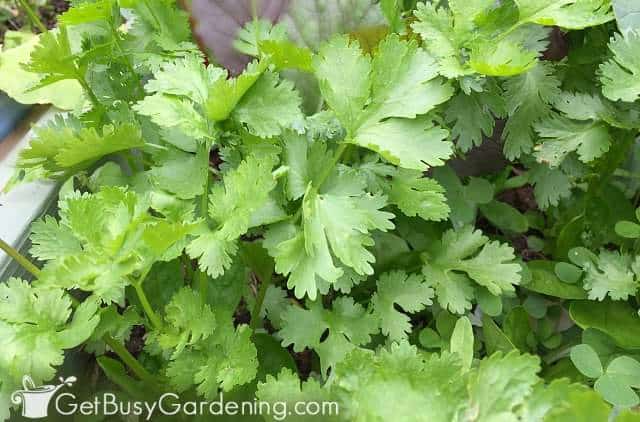
The first step toward successful cilantro plant care is choosing the right location. The good news is that you can plant it either indoors, or outside in the garden.
Growing Cilantro Outdoors
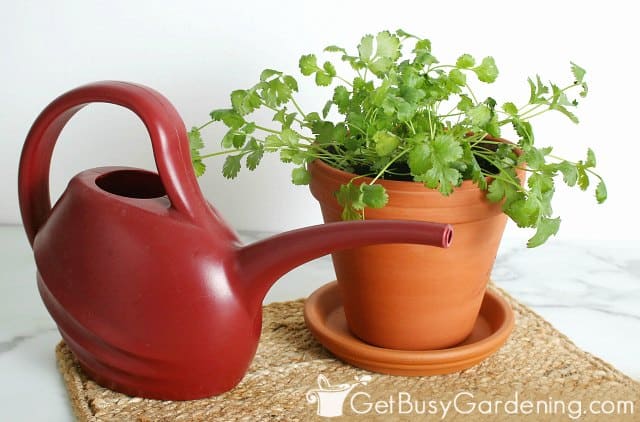
It’s easy to grow cilantro outside in your garden, and you can plant it either in a pot, or in the ground.
Choose a spot where the soil has good drainage, and where it will be protected from the hot afternoon sun.
They also make a wonderful container plant that you can place on a partial shade deck, porch or patio.
That way you can keep it close to your kitchen, so you can snip some fresh sprigs whenever you need them for cooking.
Cilantro Care Indoors
Growing cilantro indoors is a bit more difficult, but it is possible. If you want to give it a try, then find a spot where it will get 4-5 hours of sunlight every day.
A sunny window is a good choice, but protect it from the hot afternoon sun, especially during the summer. It also does very well under grow lights.
Be sure to choose pot with that has drainage holes, and use a good quality potting soil. Keep the soil consistently moist, but never wet.
How To Grow Cilantro (Coriander)
One of the most crucial things to successfully grow cilantro is knowing when and how to plant it. So before I jump into the detailed care instructions, here are some planting tips…
When To Plant Cilantro
It’s important to remember that this cold-hardy annual herb hates the heat, so you’ll want to plant it as early in the spring as possible.
Cilantro is also very fast growing, so you can plant it again in late summer for a fall harvest. Or sow the seeds in fall for an early spring harvest.
Many people in warmer climates have the best success growing it in their garden through the winter, when the temperatures are coolest.
Tips For Planting Cilantro
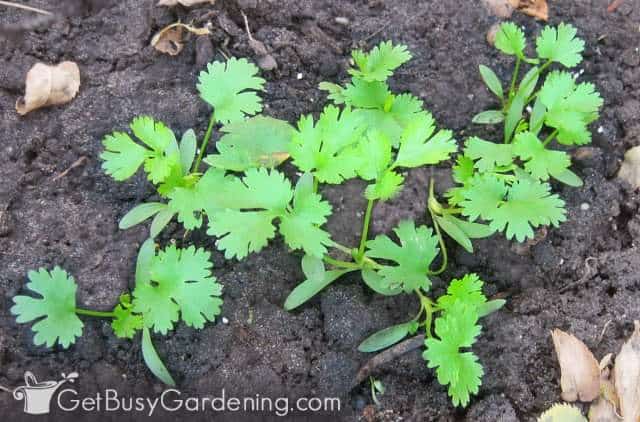
Direct seeding is the best method for planting cilantro. It hates being transplanted, and doing so can cause it to bolt prematurely. So don’t waste your money buying starts from the garden center.
The plants are small and don’t need a lot of space, so sow the seeds about 2″ apart. You can also scatter them, and then thin them once the seedlings are about 2″ tall.
Cilantro Plant Care & Growing Tips
Once it starts growing, cilantro requires minimal care. But there are definitely some important things to know in order for them to thrive! Follow these detailed care instructions for the best results…
Sunshine
The good news is that cilantro does not need to be in that coveted full sun location in your veggie garden! It does great in the partial shade, when it gets plenty of morning and/or evening sunshine.
It will be fine in the full sun in the cooler months. However, during the heat of the summer, be sure to protect it from the intense afternoon rays to prevent it from bolting too quickly.
Related Post: 15 Herbs To Grow In Your Shade Garden
Water
Proper watering is one of the biggest struggles that many gardeners have, but it’s one of the most important parts of successful cilantro plant care.
Since it is a such fast growing plant, it needs plenty of moisture. So be sure to water it regularly, but do not saturate the soil.
Never allow the soil to dry out completely either. It will bolt prematurely if given insufficient water. So it’s important to be consistent to avoid losing it too quickly.
If you have a hard time getting it right, then I recommend buying an inexpensive soil moisture gauge to make it super easy!
Soil
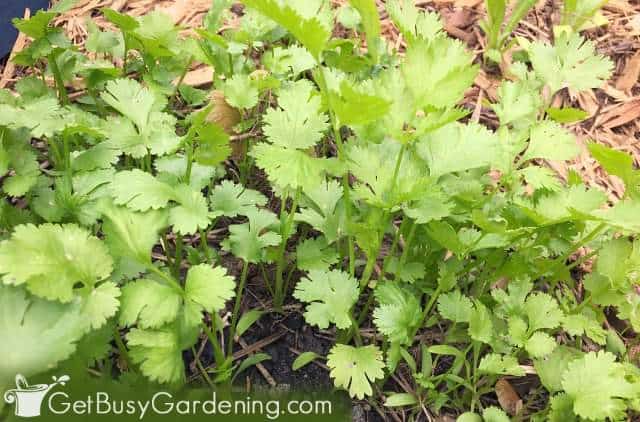
Cilantro will grow in a wide variety of soil types, but prefers a light and fast-draining mix. Fertile soil that is rich in organic material is ideal.
If your garden soil is poor quality, then you can amend it with compost or worm castings to add extra nutrients.
For slow-draining soil, mix in some perlite or coarse sand to increase the drainage. In pots, use a container mix outdoors, or a good quality potting soil indoors.
Fertilizing
Due to its short life cycle, cilantro doesn’t need to be fed very often. Give it a water-soluble fertilizer a few times throughout the growing season to maintain the health of the plant.
If you prefer a granular fertilizer, then you can mix it into the soil at planting time, and then once more after the plants are several inches tall.
Just be sure to choose a nitrogen-based fertilizer, because too much phosphorus can cause the plant to flower faster.
Flowers
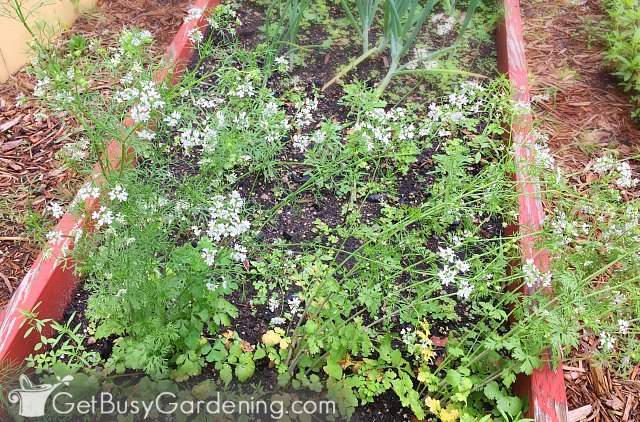
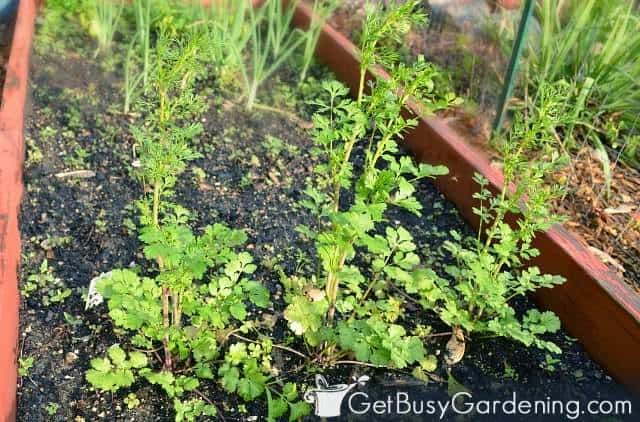
When cilantro plants bloom, it is called “bolting”. The tiny flowers are white to pinkish in color, and somewhat irregular in appearance.
It is challenging to prevent bolting, and impossible to stop it in the warmer days of summer. Flowering causes the foliage to lose its appealing flavor, and grow thin and feathery.
But bolting cilantro is not a bad thing. Once it flowers, you can allow it to develop seeds, which you can harvest to use as coriander, or save them to replant next year.
Disease Control
Cilantro is susceptible to bacterial leaf spot, which you can avoid by rotating where you plant it from year to year.
Symptoms include watery lesions on the foliage that turn brown or yellow, and then black. Once the symptoms appear, there is very little you can do to treat this disease.
Therefore, concentrate your efforts on prevention as opposed to treatment. Also, buy new certified seed next season, rather than saving them from an infected plant in your garden.
Pest Control
Pest insects aren’t a big part of cilantro plant care, but sometimes bugs like beet army worms, cabbage loopers, or green peach aphids can attack them.
Though these insect pests rarely cause problems, or seriously affect the yield, it’s a good idea to get rid of them if they appear.
If your plants become infested, you can wash the leaves with organic insecticidal soap. Or try mixing your own using one tsp mild liquid soap and one liter of water.
How To Harvest Cilantro & Coriander
One of the best things about growing cilantro is that you don’t have to wait very long to harvest it. Once your plants are around 6″ tall, you can begin harvesting.
Cilantro benefits from a continual harvest, which will encourage it to grow new leaves. You can remove up to half of the leaves each time you harvest.
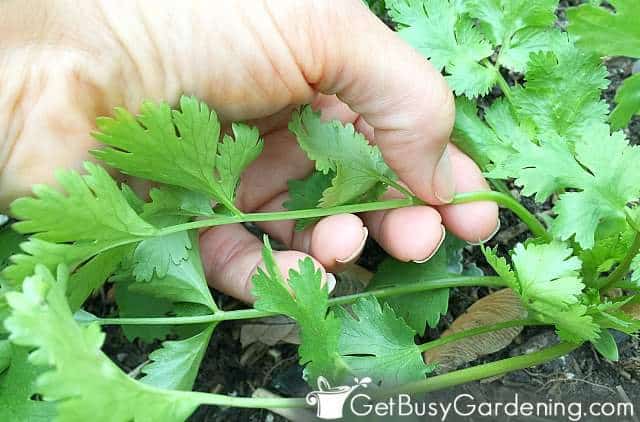
To remove the leaves, simply pinch or cut them off at the base of the stem. Be sure to use your fresh cilantro within one week, or freeze it for later.
You will be able to harvest it periodically until the plant blooms. If you want to harvest coriander too, then let the plant to bolt and go to seed.
Allow the seeds to dry on the plant, then harvest the coriander to fill your spice rack. Learn exactly how to harvest cilantro seeds here.
Troubleshooting Common Cilantro Care Problems
The most frustrating thing about cilantro plant care is when it starts having problems, and you don’t know what is wrong (or how to fix it!).
So below I will list some of the most common problems you may run into, as well as the possible cause(s), and tips for how to fix it.
Cilantro Growing Flowers / Bolting
Unfortunately, this is part of the natural lifecycle of the plant, and there is no way to stop it.
But you can slow it down by growing cilantro in a cool, shady spot, and keeping the soil evenly moist.
Yellow Leaves
When the leaves turn yellow it could be caused by lack of nitrogen in the soil, improper watering, lack of light, or the plant is getting ready to bolt.
Be sure you are watering properly, giving it 4-6 hours of sunlight, and check the nitrogen level in the soil.
Brown Leaves
Seedling leaves will naturally turn brown and fall off once the plant starts to grow true leaves.
But, if the mature leaves are turning brown, then it’s likely caused by improper watering, over-fertilizing, or bacterial leaf spot.
Cilantro Plant Wilting
When the whole plant wilts, it’s usually caused by under watering, but can be from overwatering too. Wilting could also happen when it’s too hot for them.
FAQs About Growing Cilantro
In this section, I will answer some of the most frequently asked questions about growing cilantro. If you can’t find an answer to your question anywhere, then ask it in the comments below.
Will cilantro grow back after cutting?
Yes, and frequent cuttings will encourage it to grow even more leaves. Just make sure you don’t cut off more than half the leaves at one time.
Can you use cilantro after if flowers?
After flowering, the leaves won’t be good anymore, and the flavor will change. The leaves will become thin and feathery, and eventually die off. But you can use the seeds after cilantro flowers to fill your spice rack, it’s called coriander.
Can cilantro be grown indoors?
Yes, but caring for cilantro indoors is more difficult than growing it in the garden. If you want to try growing it inside, keep it in a cool spot where it gets plenty of light, and make sure the pot has drainage holes.
How long does cilantro live?
Cilantro is a very short-lived herb that does not like the heat. So, it will only survive for a few months in the cool spring and fall, or in winter, depending on your climate. If the temperature is too hot, then it won’t live as long.
Growing cilantro gives you two products in one: as a fresh herb, and a spice (coriander). Plus it’s super easy to grow once you get the hang of it. Now that you know all about cilantro plant care, you can enjoy it year after year!
More About Herb Gardening
- 11 Easy Herbs To Grow In Your Garden
- 15 Perennial Herbs To Grow In Your Garden
- How To Grow Rosemary Plants
- How To Grow Dill At Home
- How To Grow Ginger Root Indoors Or Outside
- How To Grow Basil: The Ultimate Guide
Share your cilantro plant care tips in the comments section below!

Jennifer Fouts says
I transplanted mine yesterday, and it’s drooping 😔 It’s also indoors. The parsley looks fine, though. Don’t know if I should give it a little more water, or leave it be.
Amy Andrychowicz says
Cilantro hates to be transplanted so that’s why it’s drooping, and doing so can also trigger bolting. The best you can do is make sure the soil is evenly moist and then leave it alone and hope it recovers.
patty says
Thank you! Very informative. Can I use this years seeds to grow indoors this winter.
Amy Andrychowicz says
You’re welcome. Yes, you can plant your cilantro seeds right away, or save them for next year.