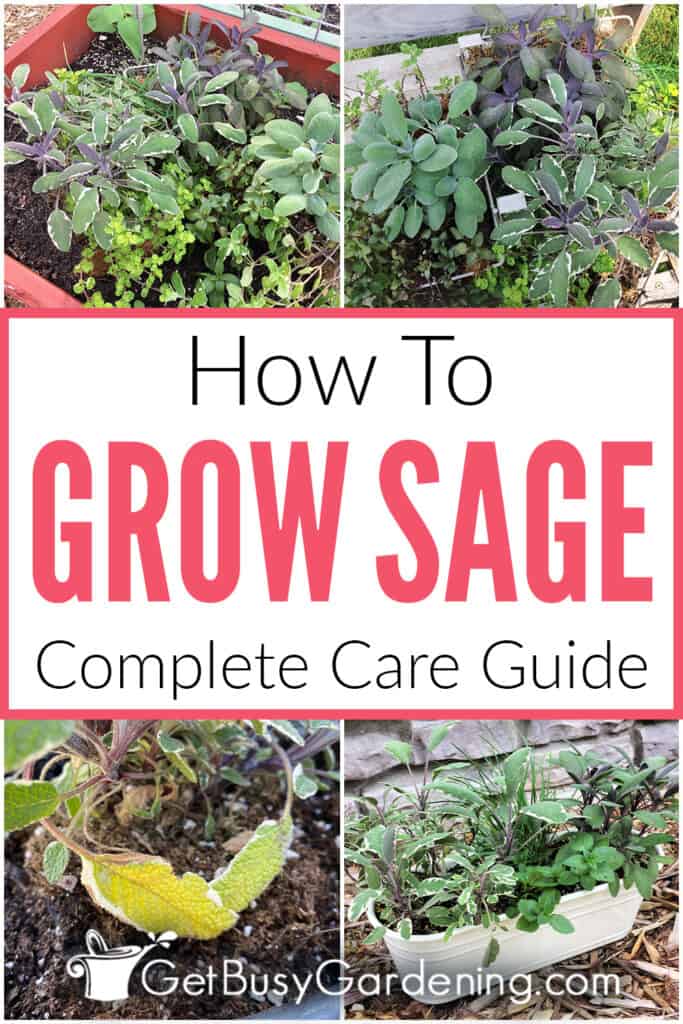

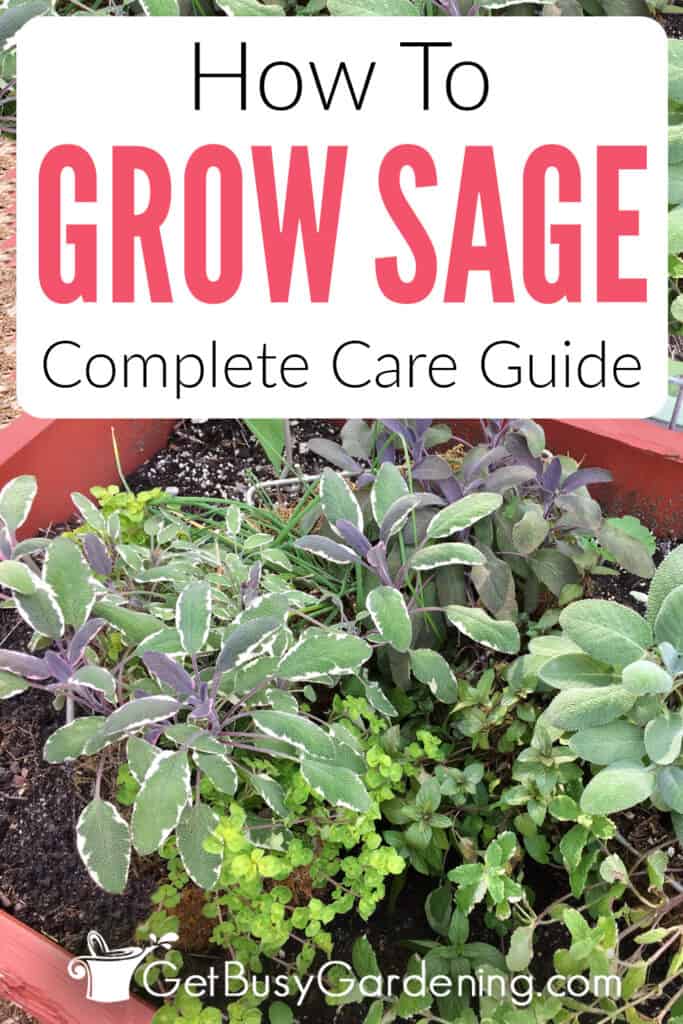
Growing sage at home is a great way to add evergreen foliage to your garden, and have fragrant herbs on hand for cooking.
But it can be a little fussy, so you’ll need to learn how to grow and care for it correctly for the best success.
This guide will teach you how to grow sage no matter what your skill level is. Below you’ll discover everything you need to know, including the right sun, water, soil, fertilizer, pruning, harvesting, and more.

Quick Sage Plant Care Overview
| Scientific name: | Salvia officinalis |
| Classification: | Herb |
| Common names: | Common Sage |
| Hardiness: | Zones 4-10 |
| Temperature: | 60-95°F (15.5-35°C) |
| Flowers: | Blue, purple, pink, white, spring-summer |
| Light: | Full sun to part shade |
| Water: | Keep soil evenly moist, do not overwater |
| Humidity: | Little to none |
| Fertilizer: | General purpose plant food spring-summer |
| Soil: | Fast-draining, sandy soil |
| Common pests: | Spider mites, aphids, leafhoppers, whiteflies |
Information About Sage
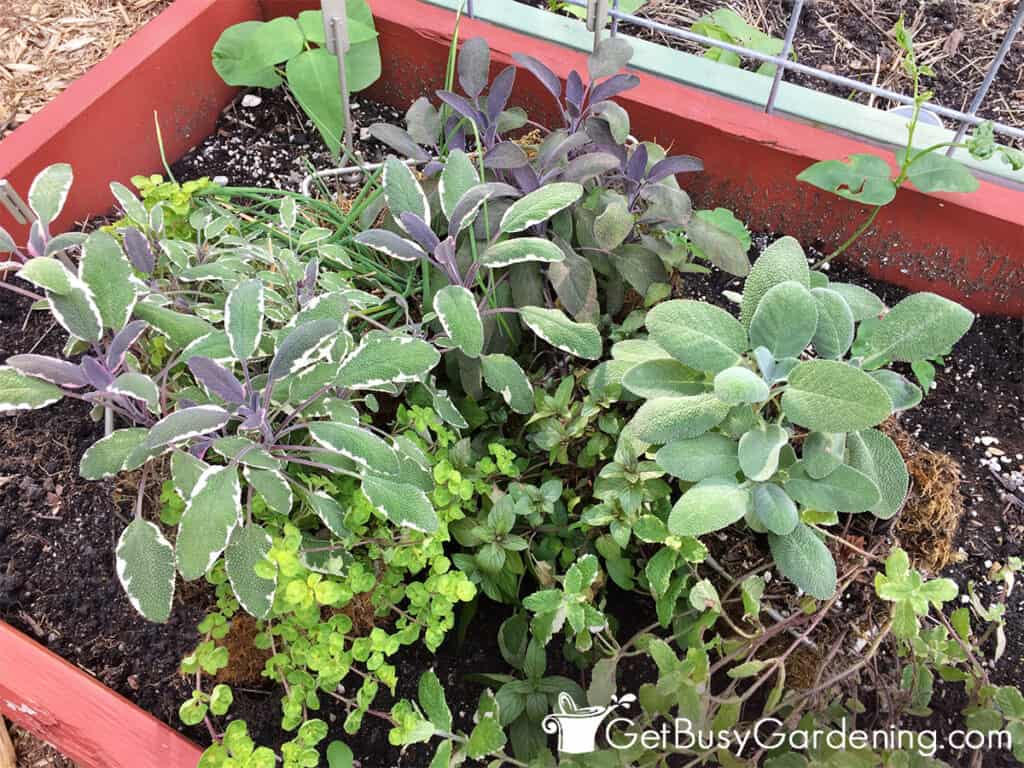
Sage (Saliva officinalis), also known as common sage, is a type of perennial herb. It’s from the Mediterranean and belongs to the Lamiaceae, or mint, family, which also includes lavender and oregano.
It’s a hardy plant with fragrant, oblong, velvety-textured leaves. It can get blue, purple, pink, or white flowers between late spring and summer, depending on the type.
Gardeners love to grow it for the beautiful and highly fragrant foliage and vibrant blooms, but many varieties also have culinary uses.
Different Types
There are hundreds of types of sage, but they all have similar care needs. The varieties differ in edibility, foliage and flower color, size, and temperature tolerance. Here are some of the more popular types:
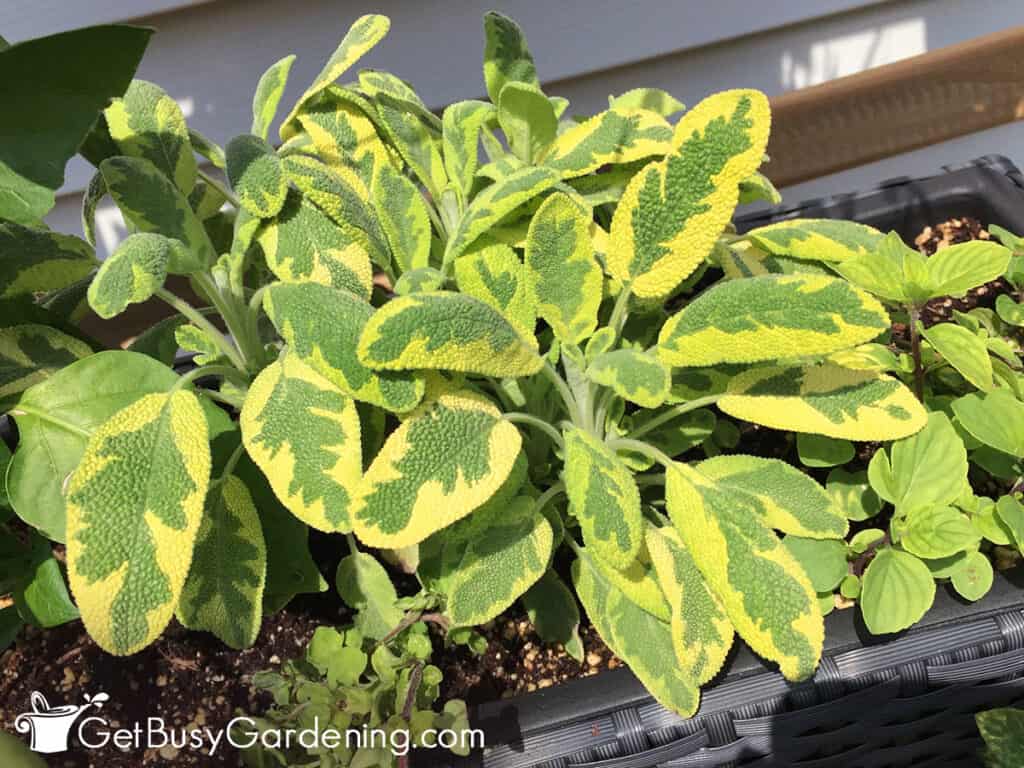
- ‘Bicolor Icterina’ – This type is known for its variegated yellow-green fragrant leaves and its purplish-blue flowers.
- ‘Curly’ – This blue-flowered, cold-hardy plant has distinctive curly edges along the oval leaves.
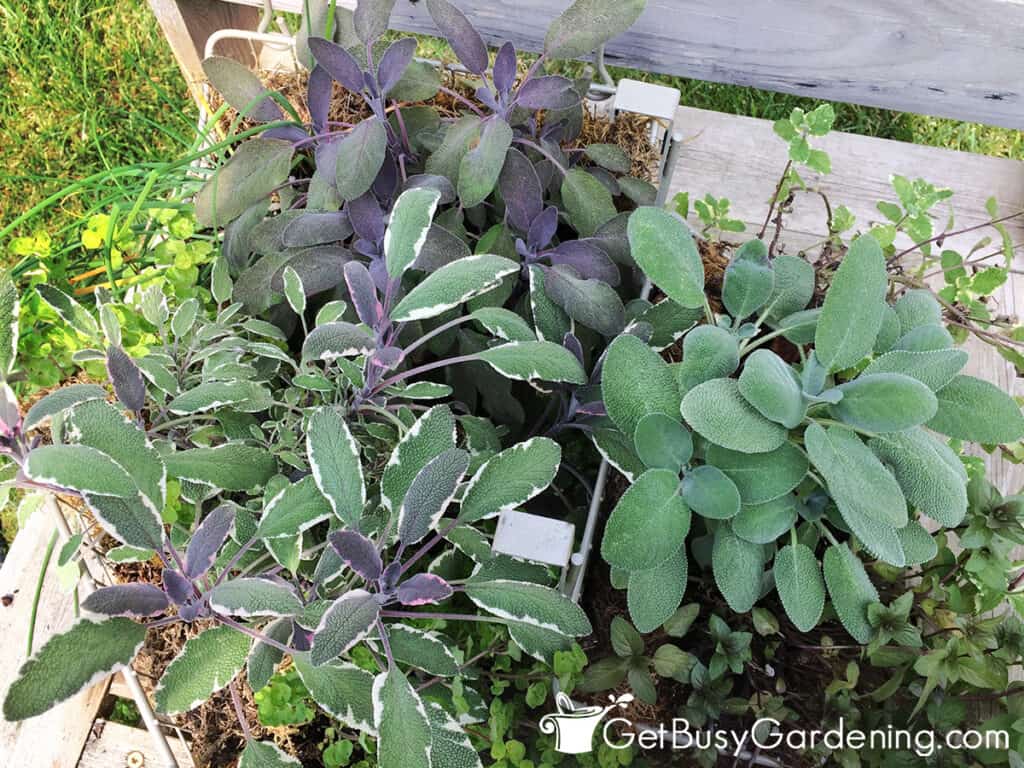
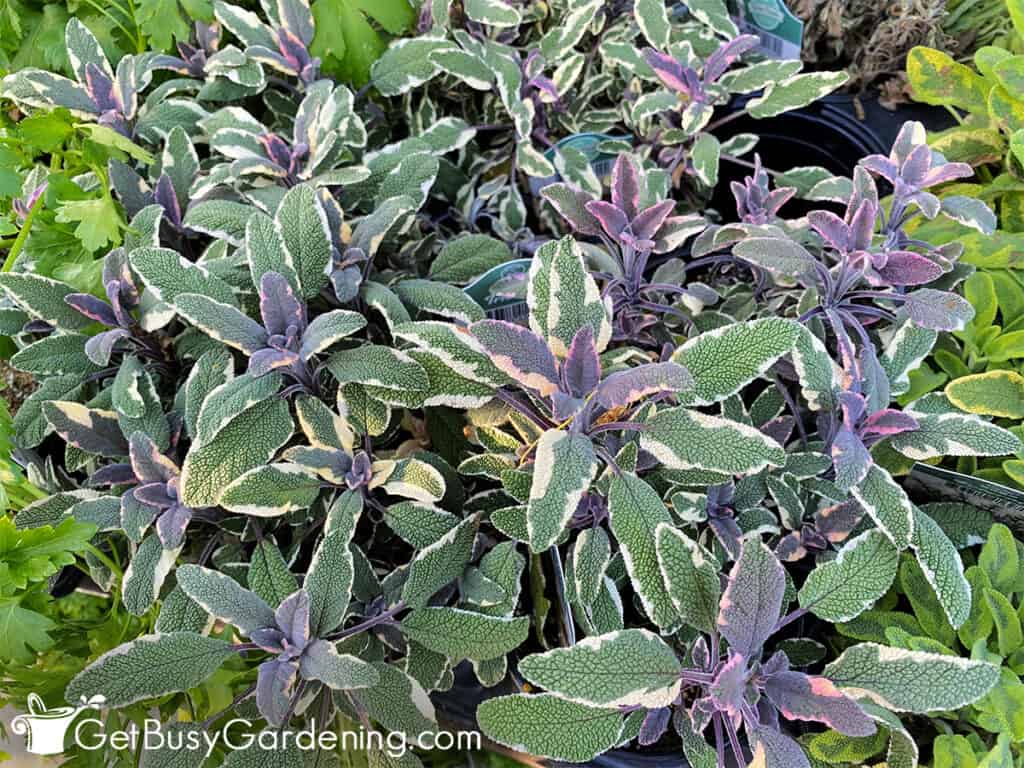
- ‘Purpurea’ – This one is also known as “purple sage” due to its uniquely colored foliage and stems.
- ‘Tricolor’ – The gorgeous foliage on this variety has pink-purple and green leaves mottled with pale yellow or white around the edges.
Hardiness
If you live in growing zones 4-10, you can find a hardy sage variety that will survive the winter and come back every year in your garden.
But it’s best to replant it annually if you live in a region that is either colder or has high heat and humidity in the summer.
How Does Sage Grow?
Sage is a mounding bush-style plant with branching stems. The stems start out soft and green and produce fragrant leaves until they become woody with age.
Flower spikes with clusters of colorful blooms will grow at the top of stems sometime between late spring and summer, depending on your climate.
How To Grow Sage
Before we discuss how to care for it, you should learn when and where to grow sage. Use these tips to choose the perfect spot in your garden.
Where To Grow Sage
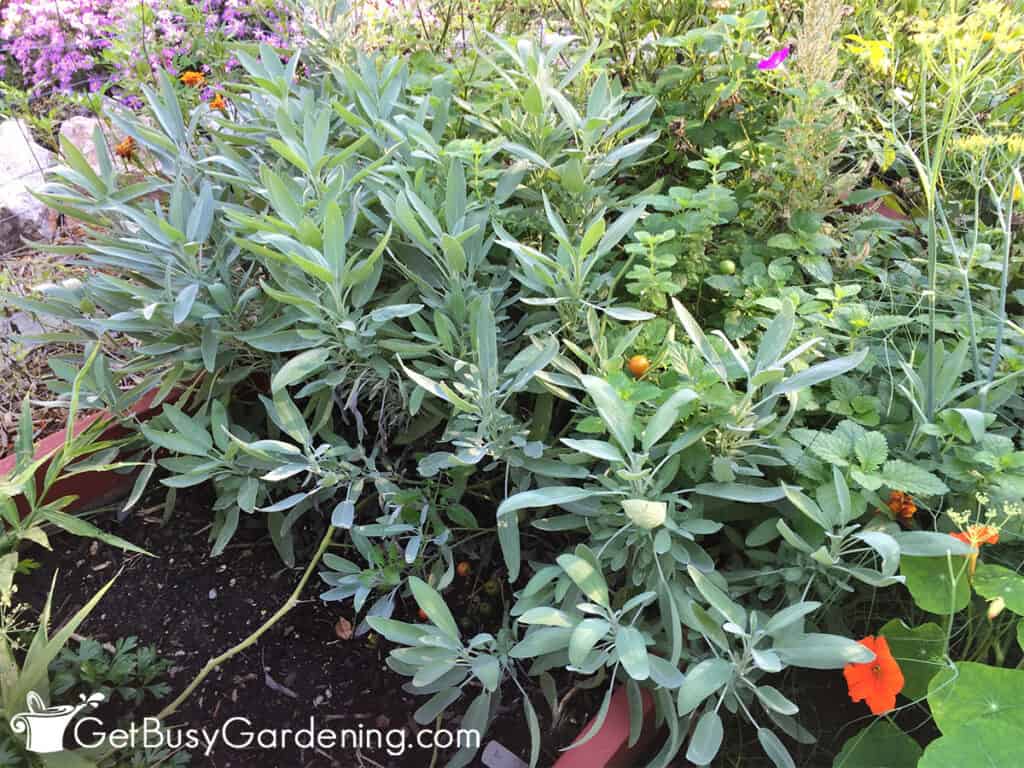
You can grow sage in the ground, raised beds, or pots, as long as it gets full sun and well-drained soil.
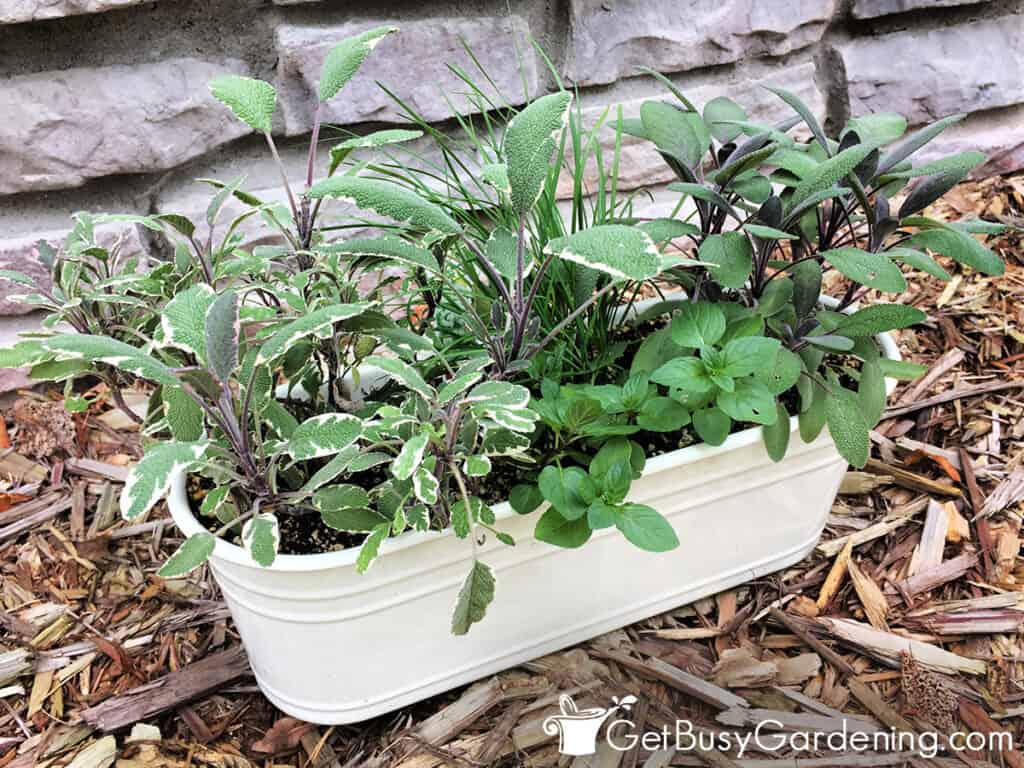
Keep your plant sheltered from strong winds, and give it enough space to allow airflow as it grows. Choose a container that’s at least 12” wide with drainage holes to prevent overwatering.
When To Plant
The best time to plant sage is 1-2 weeks before your last spring frost when the ground is workable and the soil is above 60°F (15.5°C).
In regions with mild winters, you can also plant in mid-fall, after the heat of summer has faded.
Sage Plant Care & Growing Instructions
Now that you know where and when to start, it’s time to learn how to grow sage. Use my tips below to help create the ideal environment for your plant to thrive.
Sunlight
Give your sage plant 6-8 hours of full sun daily for the best color and flavor. Some partial shade is fine, but expect slower growth.
However, if you live somewhere with hot summers, use a shade cloth in the afternoon, or grow it where it only receives morning sun to prevent wilting.
Water
Sage needs more water in the first year than it does once it’s established. Water it when the soil feels dry to the touch, but avoid soaking it, because too much can cause rot. A moisture gauge probe will help you get it just right.
Once established, it’s more drought tolerant and only needs a good drink when the top few inches dry out.
Temperature
The ideal temperature range for growing sage is between 60-95°F (15.5-35°C). Anything colder can slow or stall the growth.
Some varieties are hardy down to 5°F (-15°C) or lower with winter protection, but extreme or prolonged freezes can kill it.
They will start to suffer in higher heat, especially when combined with humidity. Protect your plants during a heat wave with shade cloth, and provide extra moisture in dry climates.
Fertilizer
Though they can do just fine without fertilizer, feeding your sage plant regularly is a good way to encourage healthy, sustained growth.
Use an organic liquid fertilizer, or a general one like compost tea or fish emulsion, once monthly from spring through summer. You could also top-dress with slow-release granules annually.
Soil
It’s essential to provide your Salvia officinalis with well-drained soil. Heavy clay will retain too much moisture and can lead to root rot.
Amend your garden soil with plenty of compost to boost nutrients. You can also add sand or perlite to help improve drainage. Use high-quality potting soil for containers, and mix it with a few handfuls of perlite.
Pruning
You should prune your sage plant to maintain airflow, prevent disease, and control the size each year. Use a sharp, sterile pair of pruning shears to cut the branches back in the early spring before new growth begins.
Give it another lighter trim after it’s done flowering to remove the spent blooms and trigger new growth.
Pest Control Tips
Because of its strong fragrance, sage is not often affected by pests. But it can occasionally be attacked by bugs like aphids, whiteflies, red spider mites, or leafhoppers.
A sharp blast of water will knock down the insect population, or you can apply a neem oil spray or insecticidal soap to treat persistent infestations.
Disease Control Tips
The most common diseases that affect Salvia officinalis are rust, stem rot, powdery mildew, and fungal leaf spots. High humidity, temperature swings, and overwatering are often the causes.
You can apply an organic fungicide, but you should also improve airflow by pruning. Water only at the base, and never to the point of making the soil soggy.
Tips For Harvesting Sage
In the first year you should only pick a few leaves or small stems at a time. Once your sage is established, you can harvest up to ⅓ of the plant without harming it.
Use sharp, sterile micro-snips or precision pruners to clip small stems, or you can pinch off individual leaves with your fingers.
Stop harvesting your sage 6-8 weeks before your first fall frost to allow your plant to recoup and store energy for the winter.
Troubleshooting Common Problems
Sage is low-maintenance once established, but no plant is entirely problem-free. If you encounter one of these common issues, use my tips to help get yours back into good health.
Leaves Turning Brown
Brown sage leaves indicate overwatering, drought, a fungal infection, extreme sun exposure, or pests.
Keep them shaded in the summer during high heat, and water regularly, but don’t puddle the soil. Check for pests and treat them as soon as you see them.
Plant Drooping
Environmental stress, such as temperature swings, poor soil, overwatering, or disease, are common causes of drooping sage plants.
Use a moisture gauge and well-draining soil to help prevent overwatering, and treat any signs of disease with an organic fungicide or pruning.
White Spots On Leaves
Powdery mildew is the most common reason for white spots on sage leaves. Use an organic fungicide, prune away heavily affected foliage, and increase airflow by trimming dense growth.
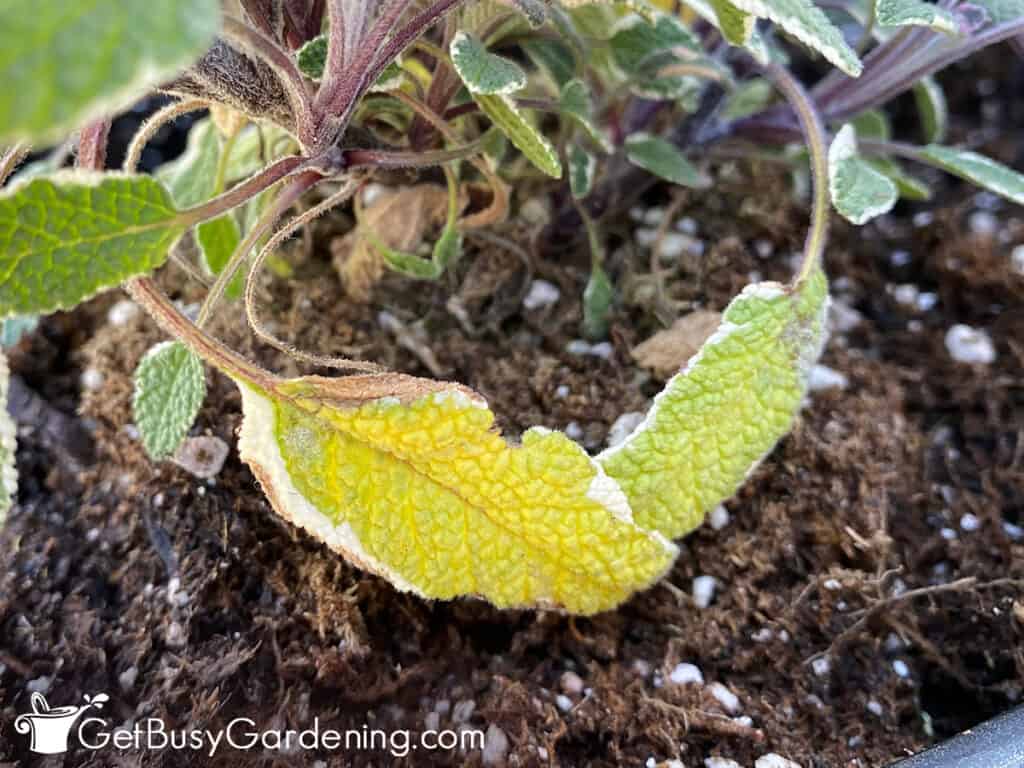
Leaves Turning Yellow
Yellowing leaves are a sign of nutrient deficiency or environmental stress, such as extreme temperatures, sudden moisture increases from heavy rainfall, or inconsistent watering.
Allow the soil to dry 1-2″ deep between waterings, it should be moist but not sodden. Apply organic fertilizer regularly, and reduce sun stress with a shade cloth.
FAQs
It doesn’t take long to grow sage, and you can start harvesting as soon as the plant has several leaves. But it takes about one year for them to reach their full maturity.
No, sage does not typically spread on its own. Though they can self-sow if you leave the seed pods on the plant after flowering.
Sage is very easy to grow once it’s established, as long as you give it the proper care. Start with fast-draining fertile soil, full sun, and proper watering.

If you’d like to learn how to make the most of your space and get as much homegrown food as possible, then my Vertical Vegetables book is perfect! It will teach you all you need to know, has tons of gorgeous photos, and includes 23 DIY projects you can build for your own garden. Order your copy today!
Learn more about my Vertical Vegetables book here.
More About Herb Gardening
- How To Grow Herbs
- How To Grow Ginger Root
- How To Grow Marjoram
- How To Grow Stevia
- How To Grow Tarragon
Share your tips for growing sage in the comments section below.

Gwenda Boffa says
Really informative articleMuch thanks again Really Great
Amy Andrychowicz says
Thank you! Glad you found it helpful. 🙂
Chris Mousseau says
For some reason we don’t use that much sage when cooking — even though I bought some last year and planted it. I let it overwinter in the ground and it came back bigger than ever this year, setting beautiful blue flowers mid summer. I’ll likely preserve some for the winter the same way as I preserve basil — chop it up and freeze it (with water) in ice cube trays. Then, when a stew or soup wants some I can just pull it from the freezer and pop into the pot.
Amy Andrychowicz says
Awesome!