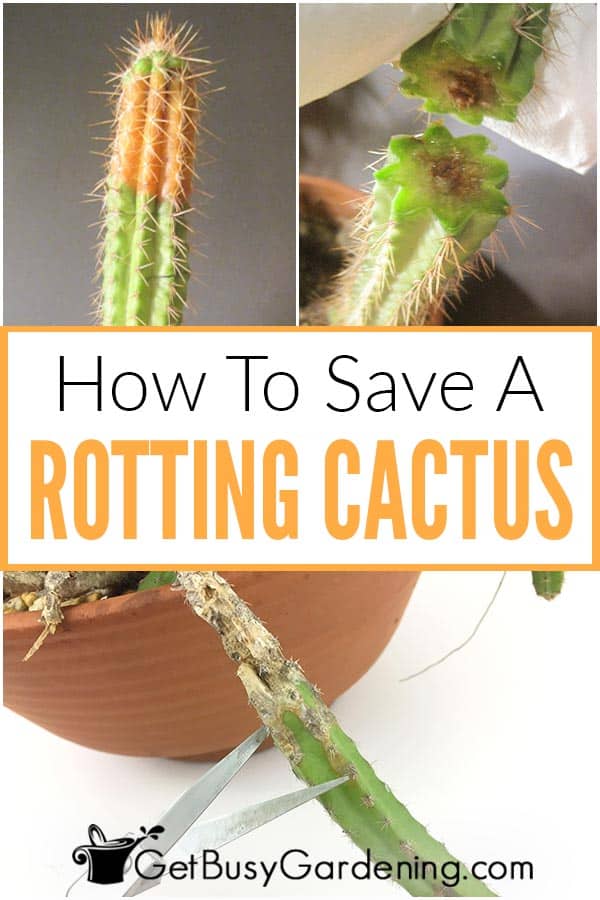
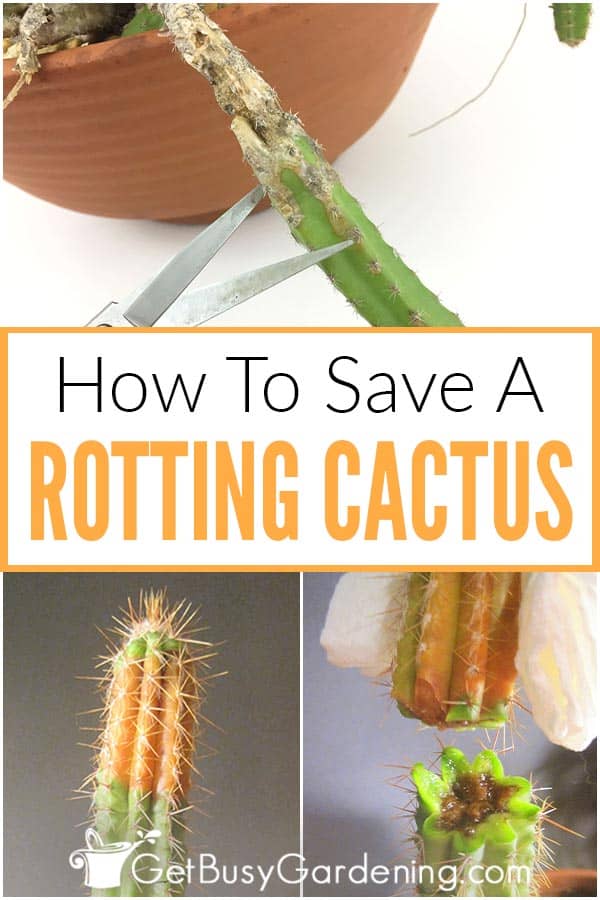
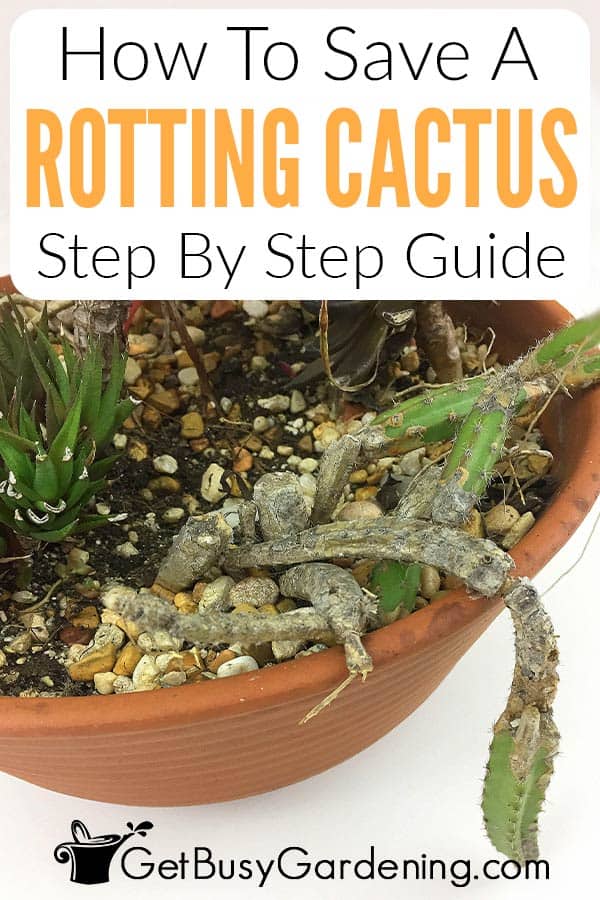
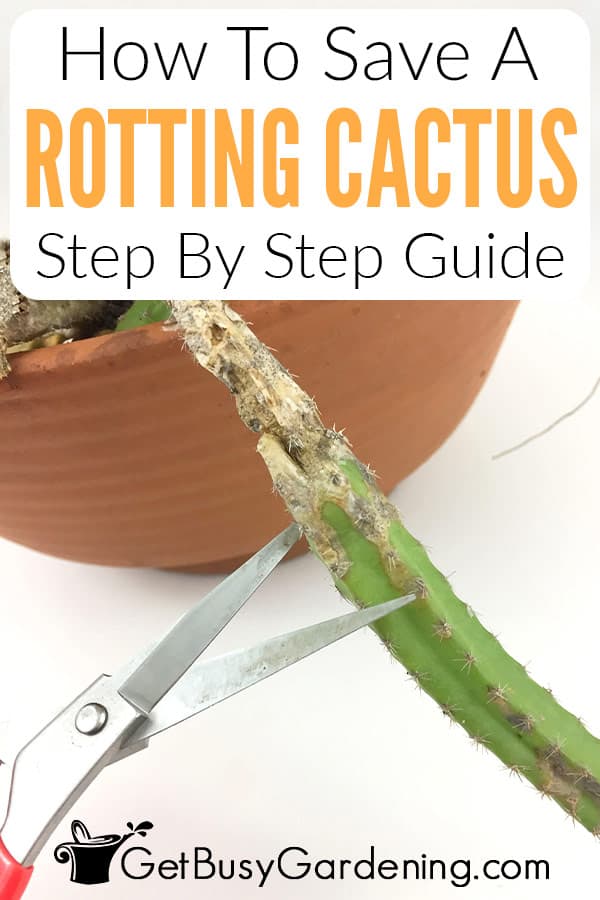
Cactus rot is a very common problem, and one of the main causes of their death. It can start anywhere on the plant – from the bottom, the top, or somewhere in between.
But just because your cactus is rotting doesn’t mean you can’t save it. No matter where it starts, there are steps you can take to remove it and stop it from spreading.
In this post, I’ll talk about the causes and symptoms, answer all of your questions, and give you step-by-step instructions for how to save your cactus from dying.
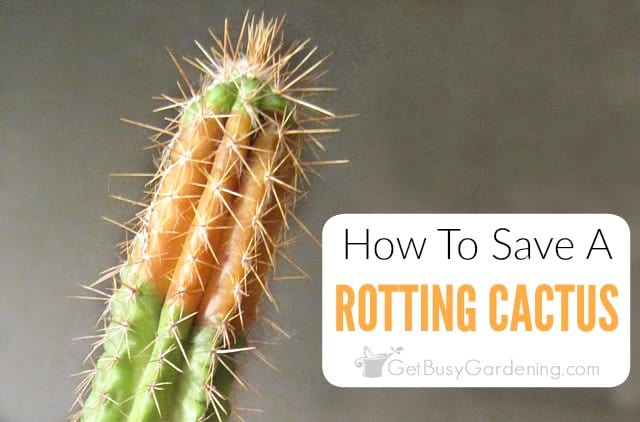

Why Is My Cactus Turning Brown?
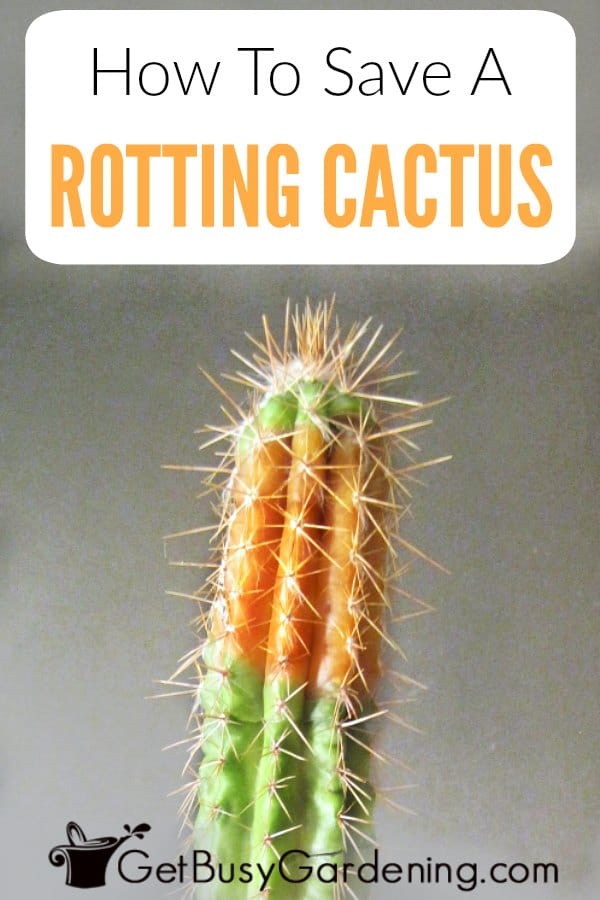
When a cactus turns brown and gets soft, mushy, or squishy, it’s likely caused by rot. It’s not always brown, it can also appear black or yellow in color.
Unfortunately, once it starts, it won’t stop. Without intervention, it will continue to spread all the way through the entire stem, eventually killing the plant.
Related Post: How To Care For Cactus Plants
Why Is My Cactus Rotting?
The main cause is usually excess moisture, which can either be from overwatering or from water pooling and sitting on top of the plant. But sometimes it could be caused by a fungus or disease.
- Cactus bottom rot is usually caused by overwatering. An overwatered cactus doesn’t always start rotting right away, and it can begin below the soil surface. So it might not be obvious that was the cause.
- Cactus tip or stem rot is common on damaged plants. It is usually caused by a fungus or a disease infecting the wound, or from watering getting into it, causing the plant to rot from the inside out.
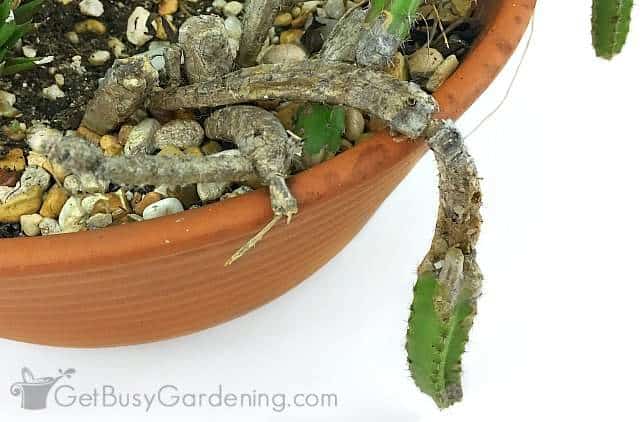
How To Save A Rotting Cactus
Once you notice rot you’ll need to act fast, because it will spread quickly and eventually kill your cactus. The steps for saving your plant depend on where it started.
So first I will show you the steps for how to save a cactus that is rotting top down. Then, in the section below that, I’ll talk about saving one that’s rotting from the bottom up.
Related Post: How To Water A CactusPlant
How To Save A Cactus Rotting Top Down
Cactus tip or stem rot can be very deceiving. You may notice small brown spots and think that there’s just a tiny bit.
Then, once you start removing the bad spots, many times you’ll realize that it’s much, much worse on the inside than it looked on the outside.
So first, take a moment to prepare yourself for what you may find once you start cutting. Ready? Ok, let’s do this one step at a time…
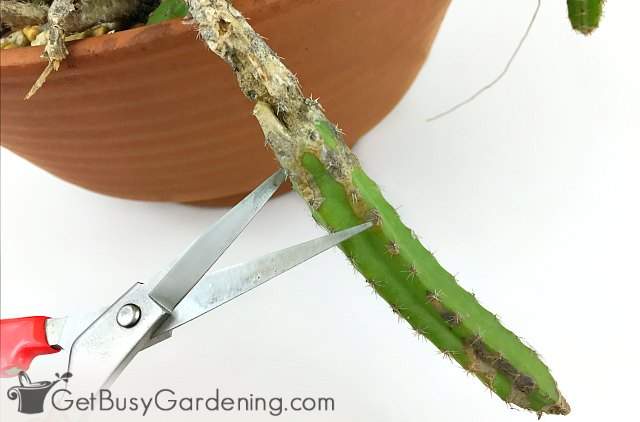
Step 1: Choose the right tool – You can use either a sharp knife or a pair of pruning shears to remove the rot. If your cactus is really thick, then I recommend using a sharp knife.
For small plants with thin stems, precision pruners or bonsai shears would work great. Just make sure they’re super sharp so they don’t crush the stem.
Step 2: Clean the blades (do NOT skip this step!) – Whatever tool you choose to use, it’s extremely important that you clean and sterilize it before making any cuts. This will help prevent infection or the spread of disease and fungus spores.
You can simply wash the blades with soap and warm water, or sterilize them with rubbing alcohol, and then dry them before you start. I also recommend that you clean them again between each cut.
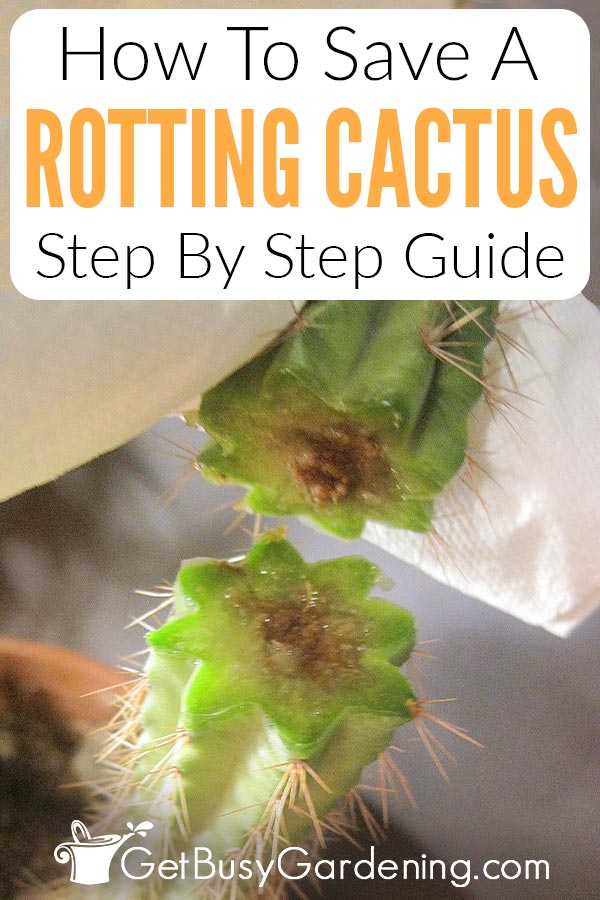
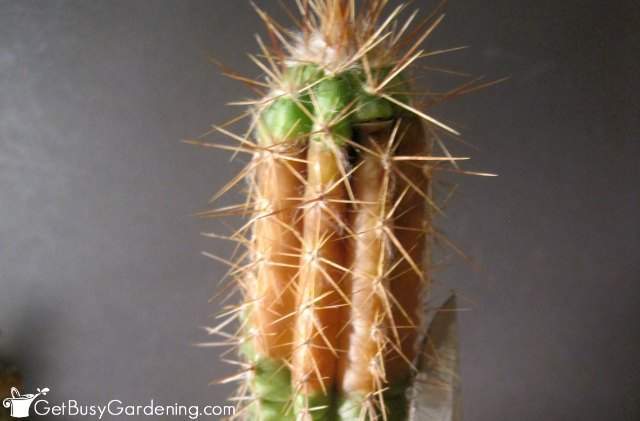
Step 3: Remove the rot in layers – It’s best to cut the rot off in layers so you’re sure that you got it all, without removing too much of the healthy tissue in the process.
In the photo below, you can see that the center of the healthy-looking portion of my cactus still has rot on the inside. So we have to keep going…
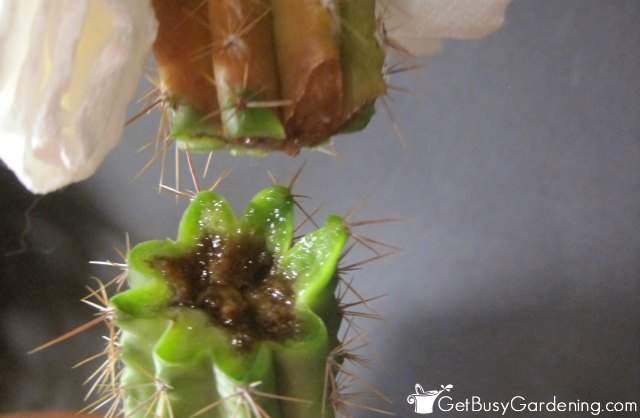
Step 4: Continue removing layers – As you work your way down, slowly cutting off small sections of the stem, the rot will get noticeably thinner and thinner.
But remember, even a tiny bit of it will likely continue to spread. So, be sure you remove all of the brown, soft, and mushy cactus material until no more signs of rot remain.
If yours is outdoors, make the last cut at a downward angle so water won’t settle into the wound (which will likely cause it to rot again). I would also move it to a dry area where it’s protected from rain until the wound has callused over, if possible.
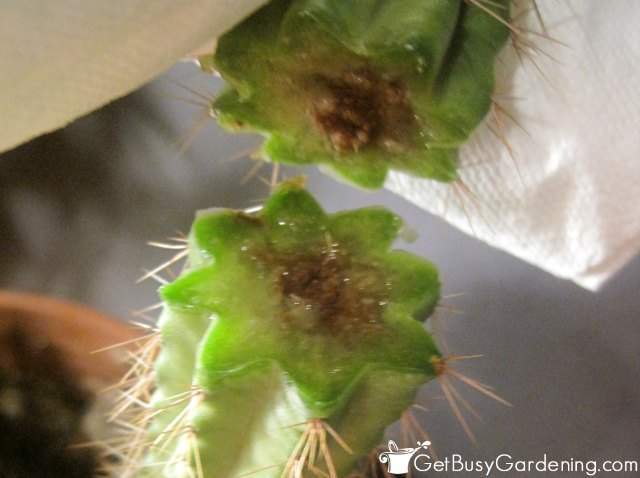
Unfortunately, the rot on this cactus was really severe before I noticed that the top was turning brown. So I had to cut off over half of the stem to get rid of all of it.
As difficult as it was for me to remove such a large section, I know my plant would have been dead in a matter of weeks if I hadn’t done anything to save it.
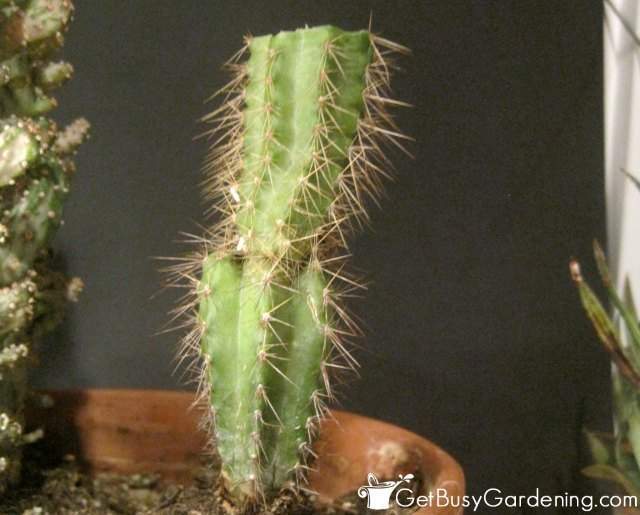
Monitor Your Plant Afterward
If you have to perform this type of surgery on one of your beloved cacti, keep an eye on it afterward to make sure it doesn’t continue to rot. If it starts again, follow the same steps above to remove the new rotting section.
After a couple of days, the wound should callus over, and your plant will eventually send out new growth near the cut.
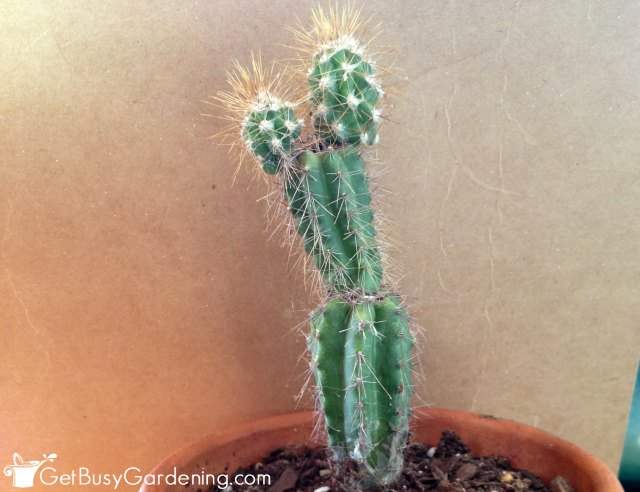
I was very sad that I had to basically cut my cactus in half to remove all of the rot. But heck, in the end I think it added more character to the plant, don’t you?
How To Save A Cactus Rotting Bottom Up
Unfortunately, if the bottom of the stem or the roots are rotten, then the only way to save your cactus is to try propagating a healthy cutting.
Take your cutting just above the rotting section. Then follow the steps above to remove additional layers as necessary to get rid of all of it.
Allow the cutting to dry for several days until the end has callused over. Then dip it in rooting hormone and stick it into a sandy soil mix.
Don’t water it until you see new growth on the cutting. Depending on the variety you have, it can take several weeks for roots to develop.
Related Post: How To Make Your Own Cactus Soil Mix (With Recipe)

If you want to learn all there is to know about maintaining healthy indoor plants, then you need my Houseplant Care eBook. It will show you everything you need to know about how to keep every plant in your home thriving. Download your copy now!
More Houseplant Care Posts
- How To Grow Indoor Plants: The Ultimate Guide
- Houseplants Don’t Like Drafts
- How To Rebloom Your Amaryllis Plants
- How To Fertilize Houseplants
- Why Do Spider Plant Tips Turn Brown & How To Fix It
- Why Do Cyclamen Leaves Turn Yellow & How To Fix It
Share your tips for saving a rotting cactus in the comments section below.

Katurah says
Hi! i came across this article that seems very useful. My son bought a baby cactus, I’m not sure the exact name but it’s from the barrel family and has soft fuzzy yellow spines. The plante is about an inch tall. Yesterday he said that it was changing colors. It was dark green on top and fat and light green on the bottom. This cactus was bought in Arizona and we live in Puerto Rico where humidity is high, and I am aware that it could be over watered. We give about 2 tbsp every month. So after I looked up about the different colors I decides that maybe it needed more sunlight so I put it on my balcony, not in direct sunlight so it wouldn’t burn, the poor little thing. Now The entire plant is dark green, the fat bottom is now thinner and the plant is a little mushy. Any suggestions? Do I need to replant it? Check the roots? I can’t really prune it since it is so small. Thank you!
Amy Andrychowicz says
Oh no, sorry to hear your son’s cactus is not doing well. Unfortunately, if the whole thing is soft and/or mushy, then you probably won’t be able to save it. Cactus plants don’t do well in humid environments, and just a little bit of overwatering can kill them pretty quickly. 🙁
Jack Hoyer says
Thanks, Amy. That’s very helpful. I’m not sure that the plant is free of rot. The stem below the cut has become somewhat brownish. If it’s fungus it’s probably my fault in that I didn’t follow your clear instructions about cleaning my cutting tool after each cut. The branches still look healthy. I’ll wait and see what happens and wait till the soil is bone dry before watering it. Thanks again!
Amy Andrychowicz says
Definitely keep an eye on the stem below the cut to make sure it doesn’t get mushy. If it starts to, then that means you didn’t get all of the rot, and will have to do more cutting. Good luck, I hope your cactus will recover!
Jack Hoyer says
Thank you, Amy for the very helpful information. I had to remove over half of my cactus plant that was rotting from the top. Fortunately there were a good number of healthy branches below the cut. Unfortunately my cutting tools weren’t as sharp as they should have been so my cut was a bit ragged. It’s been 3 days now. The growth below the cut seems healthy. I think the cut is drying out-or “callousing” over. It’s been about 3 weeks since I watered the plant. How long should I wait before watering next? Thanks again, Jack H.
Amy Andrychowicz says
Oh bummer, sorry to hear your cactus had tip rot, and that you had to remove so much of it! I’m glad you were able to catch it in time to save your plant though, whew! Don’t worry about the jagged cut. As long as the wound calluses over without anymore signs of rot, then it will just be an aesthetic thing. Wait until the soil is bone dry before watering your cactus again. Stick your finger as deep into the soil as you can, and if it feels damp at all, then wait to water it again. Also, make sure the pot has plenty of drainage holes, and never leave it sitting in water. Good luck!
Iris says
I saw someone say to use powder cinnamon that it helps disinfect thoughts on this ? I used it and I’m waiting for two days for it to dry so I can repot it. Tips on using good soil ?
Amy Andrychowicz says
I have never tried using cinnamon on a rotting cactus, so I can’t speak to that. The best type of soil for cactus plants is a sandy, porous mix. I have a good soil mix recipe that you can try here… How To Make Your Own Succulent Soil (search for “DIY cactus soil mix”)
Erik Steinmeyer says
Hello, I recently experienced bottom up rot on my 5ft euphorbia ammack. I cut it off above the rot and the inside looked fine. It’s been laying on the floor out of any direct sun for about a week now. I just noticed the bottom inch or so of flesh getting dark again around cut, what does this mean? Should I cut that part now too? What am I doing wrong?
Amy Andrychowicz says
Bummer, sorry to hear your euphorbia started rotting. If the dark area on the cut end looks like rot, then I would cut it off. However, if it looks like it’s just dried out, then it may be callused over, and ready for rooting. Unfortunately once it starts, rot spreads very quickly. It sounds like you’re doing everything right to try to save your plant. Good luck!
linda d carter says
WHEN I FOLLOWED THE CUTTING LOOK LIKE MILK CAME OUT CANT REMEMBER THE NAME OF CACTUS IT IS DO YOU THINK IT WILL BE OK LINDA
Amy Andrychowicz says
Yes, that is normal for some types of cactus plants. It’s sap, and it should stop flowing and dry up fairly quickly.
Halima says
I kept my cactus outdoors last winter and seems it was overwatered by rain. In spring it became very pale (between white and yellow) and the tops were rotting. Even the new growing daughters around it were pale as well. I immediately removed it from its soil and put it in new dry soil and didn’t water it for nearly three weeks, removing the rotten tops. And now it is alive again, returned green and had grown new parts. Wonderful.
Amy Andrychowicz says
Awesome!! So glad to hear you were able to save your rotting cactus and it’s babies! I stopped putting my cactus plants outdoors because I couldn’t control how much rain they were getting, and had a lot of problems with rot.
Oraugas says
The forked cactus after the cutting is so cute! Always a silver lining.
Amy Andrychowicz says
Yes, that’s what I was thinking too! I almost feel like I should have pruned this cactus before to add character. LOL! 🙂
Ashley tufte says
I noticed the top of my cactus turning black today! Is this tip rot? Can I post a picture? I have had it for probably 10 plus years and would hate to lose the plant! Help!
Amy Andrychowicz says
Yep, it sounds like it could be cactus tip rot to me. You can post a photo on my Facebook page if you want, and I can take a look.
Lin says
My cactus has some hard grey tips that have a grey powdery coating. I assume these have to come off so do I just follow these directions? Is there something I should feed it or externally treat it with?
Amy Andrychowicz says
Hummm… I’m not sure what the hard grey tips could be. When you say they have a powdery coating, it makes me think about mealybugs. Take a close look and make sure your cactus doesn’t have any bugs.
Amy Andrychowicz says
@nk – that is so true. I hear people say all the time that you can't kill a cactus plant. Ha ha! They’re actually pretty easy to kill… too much water/moisture is the sure way to do it.
nk says
Ack, that looks nasty. Cacti look so hardy, but the more I learn, the more they seem like really delicate plants unless you live in exactly the right climate.
Amy Andrychowicz says
@PlantPostings – thanks. The first time this happened, I off the rot thinking it was going to die anyway so I might as well try to save it. There wasn't a lot of info online about tip rot then. So, I guess it was trial and error, and it worked! I hope it works again this time too.
PlantPostings says
Glad you know what to do. I don't know much about Cacti, so mine probably would have died. Hope the trimming keeps it going.
Amy Andrychowicz says
@bakingbarb – Glad I could help! Hopefully you won't have to worry about any problems with cactus rot again, I hate when it happens! I just checked my plant today and it looks like it's callused over nicely. Yeah!
Yvonne says
Icut off the brown spots on my cactus and then put rubbing alcohol on the exposed areas and those spots turnes the green flesh a brown color. I thought i had read this somewhere that this is how to fix the disease.
Has anyone heard of this?
Amy Andrychowicz says
Humm… I have never heard of using rubbing alcohol to cure plant diseases like rot. If it’s turning the healthy green flesh brown, then I would stop using it immediately. I would prune off the damaged flesh, and then allow the plant to heal on it’s own. If all of the rot is gone, it should callus over and start growing again in time.
Danielle says
She’s not saying it’s curing the disease, she said use the alchohol to disinfect the tools you’re using to cut the cactus. It makes sense because
the bacteria that probably caused the rotting could spread to healthy areas while cutting the rot off.
Amy Andrychowicz says
Yes, you should definitely disinfect your tools before making any cuts, as I described in step 2. 🙂 If you use rubbing alcohol to do that, then allow it to dry completely before you start cutting off the cactus rot.
bakingbarb says
Oh I've had this happen before but had no idea the plant could be saved. Good to know it can be!