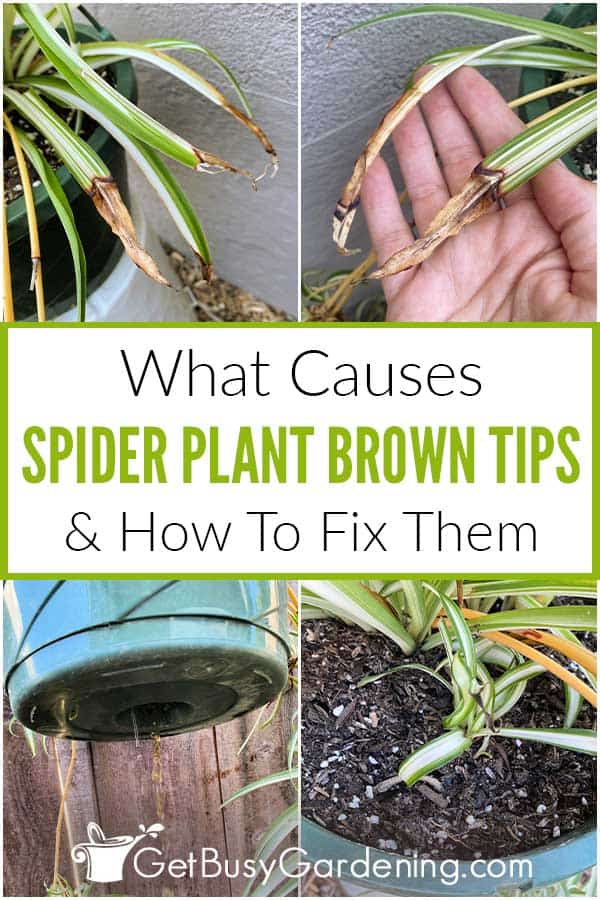
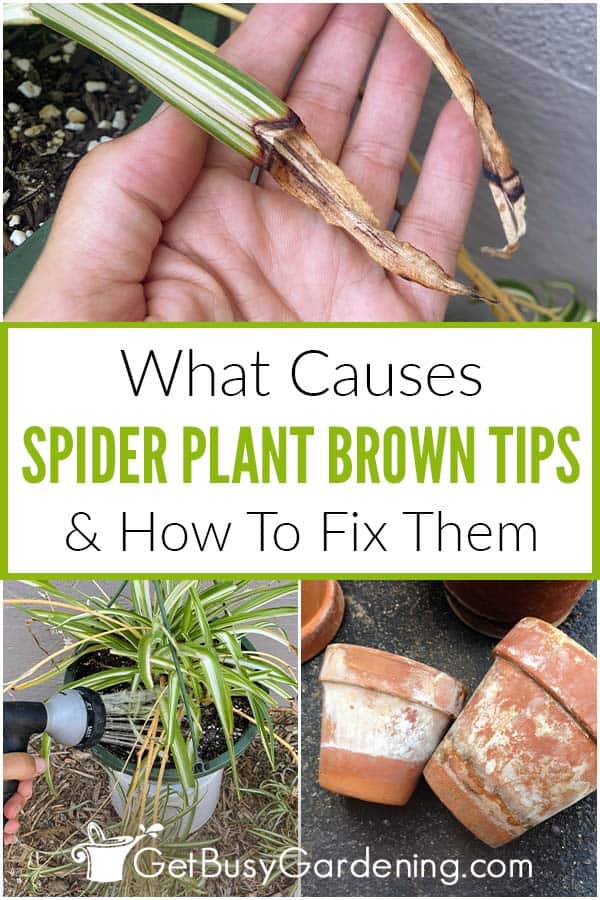
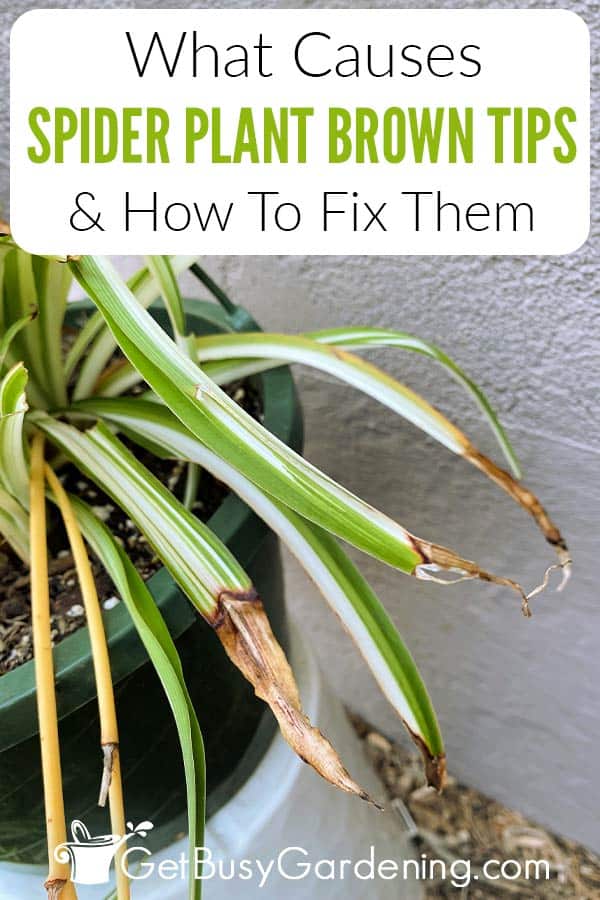
Brown tips on spider plants is a very common problem. But the good news is that it’s fixable.
In this post, I’ll tell you all the causes and also the solutions so you can get rid of them for good.
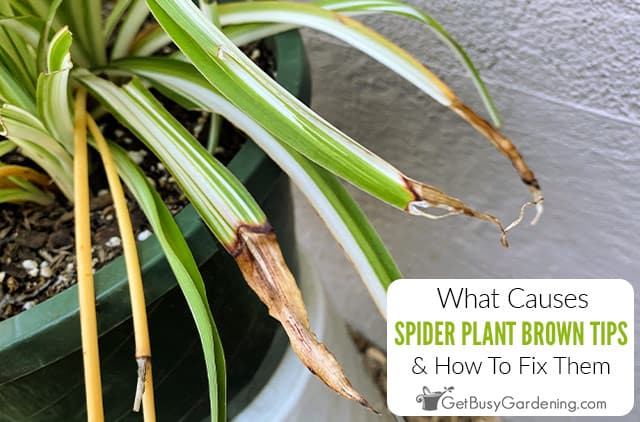

The most common issue people have with spider plants (Chlorophytum comosum, aka airplane plant) is brown tips and how to deal with them.
This problem can be caused by a wide range of things, which makes it frustrating for beginners to figure out.
This guide will help you diagnose what might be causing brown tips on your spider plant, and what you can do to fix it.
Problem: Spider Plant Brown Tips
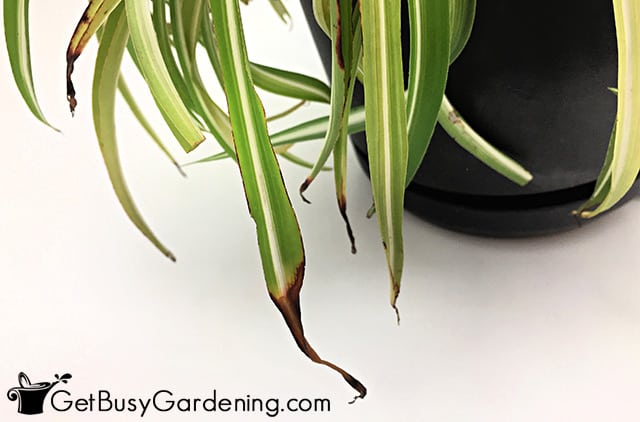
Brown tips are a symptom that something is wrong with your spider plant. Sometimes several things at once can contribute to it.
Variegated varieties are the most susceptible, and will display browning more quickly than plain green ones. But it’s something that can affect any type.
Thankfully when you determine the cause(s), it can also often be stopped.
Related Post: How To Grow & Care For Spider Plants (Chlorophytum comosum)
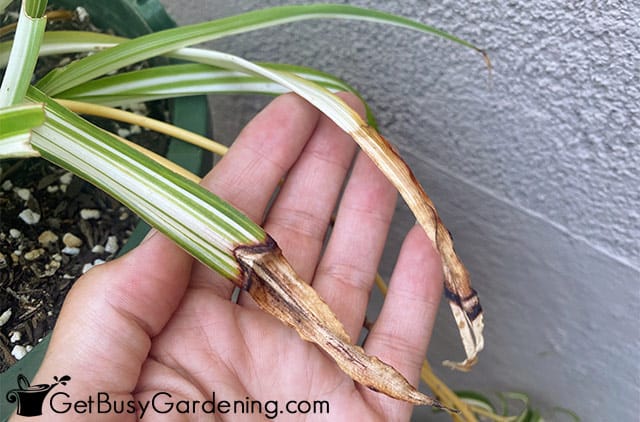
Why Does My Spider Plant Have Brown Tips?
Brown leaf tips are something many spider plant owners will encounter at some point.
Below you’ll find the most common causes. They can occur singularly, or several can compound the issue at the same time.
1. Poor Quality Soil
Using a poor quality soil mix or one that doesn’t have adequate drainage is very problematic.
They hold too much moisture, and tend to cause a faster buildup of the salts, heavy metals, and chemicals.
Heavy soils also make it difficult to flush these toxins out, which can exacerbate the problem. Learn about the best type of soil to use for your spider plant.
2. Inconsistent Watering
Over or under watering, or going from one extreme to the other, can also cause brown tips on spider plants.
Too much will drown them, and too little causes the leaves to dry out, both of which will stress the plant.
3. Salt Toxicity
A buildup of salt can create a myriad of problems for spider plants, including brown tips.
It can damage the roots and plant tissues, and make it difficult for them to absorb moisture. Salts also causes dehydration, no matter how consistently you water.
This type of build up comes from softener salts, or applying too much chemical fertilizer.
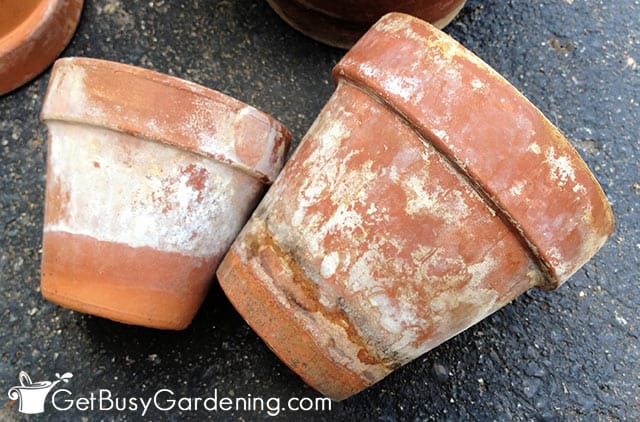
If you see white crusty residue beginning to form on the pot edges, the soil surface, or around the drainage holes, this is likely an issue.
Related Post: How To Propagate Spider Plants
4. Chemical Buildup
Tap and well water, as well as synthetic fertilizers, contain a variety of substances that can be harmful to plants.
Things like minerals, heavy metals, chlorine, and fluoride will build up over time, and tend to create a brown or orangish slime around the pot or on the soil.
Chlorophytum comosum plants are sensitive to these chemicals, and when they accumulate, it can cause damage like brown tips.
5. Lack Of Humidity
Spider plants are tolerant of low humidity, but very dry air can cause dehydration and browning leaf tips.
This is most commonly an issue indoors in the winter when the heaters are running and the air is very dry.
6. Root-bound
Another factor that can cause dehydration and browning tips is when an airplane plant becomes severely root-bound.
They like to be snug in a pot, but when the roots become too compacted there simply isn’t enough soil to provide the needed moisture and nutrients.
How To Fix Brown Tips On Spider Plants
After evaluating what might be causing the brown tips on your spider plant, the next step is to fix it. Here are my best tips to solve any of the issues you’re dealing with.
1. Use A Good-Draining Soil Mix
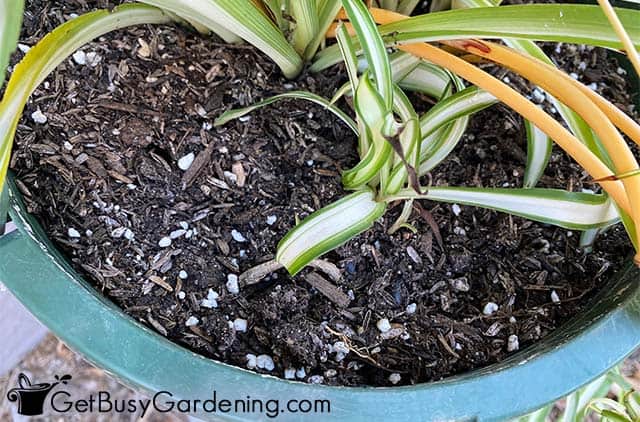
One of the most proactive steps you can take to prevent brown tips on your spider plant is to make sure it’s in a good quality soil mixture.
Choose one that drains quickly and is free of additives like synthetic fertilizer or moisture retentive chemicals.
You can also make your own by combining 2 parts coco coir or peat moss with 1 part perlite or pumice, and adding in a handful of worm castings.
2. Ensure Proper Watering
Watering your spider plant properly is also very important for preventing brown tips.
Never saturate them to the point of making them soggy or wet, but avoid prolonged dry periods.
Instead, let them dry 2” down before adding more. You can use your finger or a moisture gauge to help you know when it’s time.
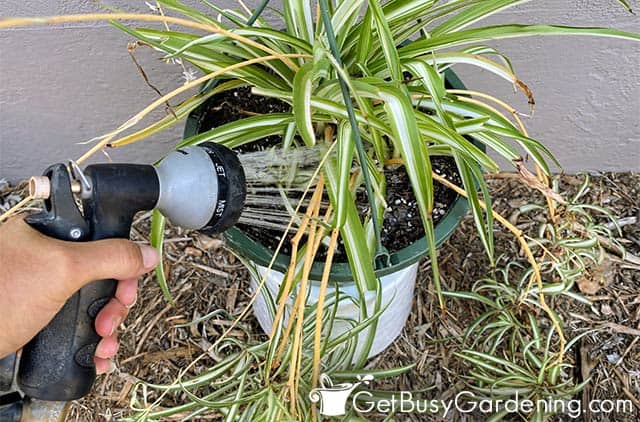
Slowly and deeply is the key, then let all the excess drain from the bottom. It’s very important to use a pot with drainage holes so you don’t leave them soaking.
3. Use Distilled Or Rainwater
The type of water you use can also be key. Rain and distilled are the best options, and don’t contain the salts, metals, or chemicals found in tap or well. So I recommend that you get a rain barrel.
You can even use snow in the winter, it’s the same as rain. Be sure to let it melt and warm to room temperature first though.
Leaving tap water out for 24 hours allows the chlorine to evaporate. But fluoride and certain other chemical compounds won’t evaporate, and so they can still cause issues.
Related Post: How Do Rain Barrels Work?
4. Be Careful With Fertilizer
When it comes to fertilizer, the easiest way to avoid the chemical and salt build up is to use a natural, organic option instead of synthetic brands.
An all-purpose, balanced granular fertilizer, or liquids, like compost tea and fish emulsion, are great options.
But even with natural products, it’s better to use less than go overboard.
For best results, apply granules no more than once per season, and dilute liquid options monthly.
Feed them during the spring and summer only, and stop completely during the fall and winter.
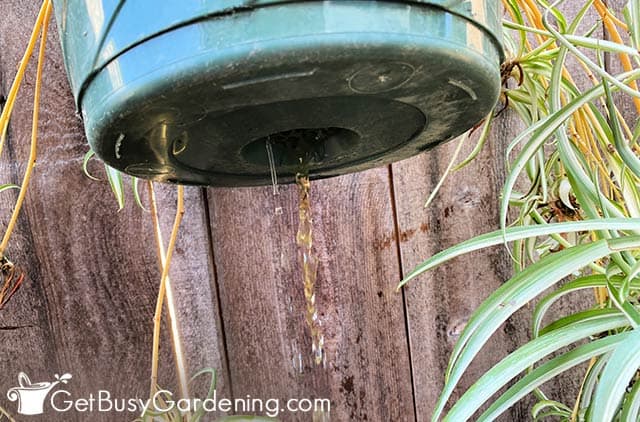
5. Flush The Soil
If you see brown-orange slime or white crust forming, the best thing to do is flush the soil. But only do this with pots that have drainage holes in the bottom.
Start by placing it in a large bucket or sink. Then pour rainwater or distilled through the pot slowly, but steadily. Use at least 4 times the volume of the pot.
When you’re done, let it sit until all of the excess drains away, and never leave the pot soaking.
Related Post: Collecting and Sowing Spider Plant Seeds
6. Increase The Humidity
If you’re battling dry winter air, increasing the humidity can help to avoid brown tips on your spider plant.
A pebble tray of water, light daily misting, or a small humidifier nearby are all great choices.
You can also get a humidity monitor that you can then use to track the levels in the air indoors.
7. Repot It
When you see roots coming out of the drainage holes or over the top of the soil, or the container is distorted, then it’s time for a new one.
Go up no more than 1-2 pot sizes, and choose a container with holes in the bottom.
Repot in the spring or summer, and make sure you use a quality, well-draining medium.
Can I Cut The Brown Tips Off My Spider Plant?
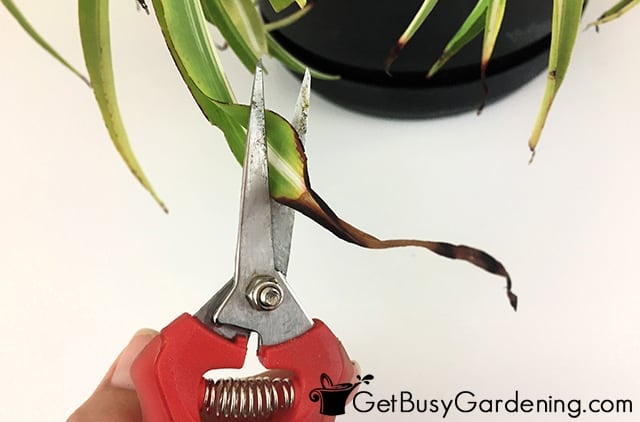
Once you’ve solved the issue causing them, it’s fine to go ahead and cut the brown tips off your spider plant. You can do this anytime of the year.
Technically you could cut them any way you like without harm. But it will look best if you trim them at the same angle as the natural leaf tip.
Make sure you always use sharp, clean precision pruners or micro snips to prevent tearing. Then simply cut along the brown margin to remove it.
Brown tips on a spider plant are a common issue that many gardeners face. With this guide on diagnosing and fixing them, you’ll know how to stop it from happening in the future.

If you want to learn all there is to know about maintaining healthy indoor plants, then you need my Houseplant Care eBook. It will show you everything you need to know about how to keep every plant in your home thriving. Download your copy now!
More About Houseplant Problems
- Houseplants Don’t Like Drafts
- Why Does My Wandering Jew Have Brown Leaves & How To Fix It
- Rotting Cactus – Effective Ways To Save A Dying Cactus Plant
- Why Do Cyclamen Leaves Turn Yellow & How To Fix It
Share your fixes for a spider plant with brown tips in the comments below.

Lou Ann says
I use Spring Water, and my plant has never looked better
Amy Andrychowicz says
Awesome!
Rhonda M Lindsey says
Is that the store bought that says its spring water or do you have an actual spring around you that you get it from? Thank you
Amy Andrychowicz says
You could use either one. If you don’t have a natural spring near your home, you can either buy spring water or you could even filter your tap water if that works best for you.
Bonnie says
I use Brita water to water my house plants my spider has brown tips.
Amy Andrychowicz says
The type of water you use is only one factor. Check the list I created in this article for all of the things that could be causing brown tips on your spider plants. Humidity, chemical fertilizers, poor quality soil, and a few other things (or a combo of a several of them) are also possible causes.
Eunice Rowe says
I noticed my spider plant was neither going or coming and yet it had pups allover it,but they too were having brown edges,I finally decided to uproot it to see what was wrong.The plant was root bound to the point the root was protruding from the bottom of the pot ,and that is why is was so puny with all the tlc it was given.
Michael says
Thank you very helpful 😊
Amy Andrychowicz says
You’re welcome!
Helen says
I love ur teachings
Amy Andrychowicz says
Thank you! 🙂