
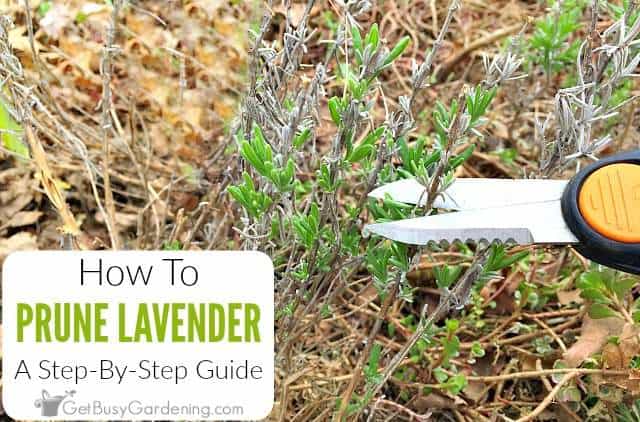
Pruning lavender is not hard, but it’s important to know what you’re doing before you start in order to avoid over pruning. In this post, I will tell you when to cut back lavender plants, give you tons of tips, and show you exactly how to trim lavender step-by-step.

Before we get started, I want to mention that there are a few different kinds of lavender plants.
English lavender is the most common (and the hardiest), and it’s the variety that I grow. But don’t worry, the basics of pruning are the same for all types of lavender, both in the garden or in pots.
So, you can follow these steps whether you’re pruning English lavender like mine, or if you have Spanish or French lavender.
The only difference is that English lavender can handle a harder pruning in the summer than French or Spanish lavender can.
Why Should Lavender Be Cut Back?
If you’re new to growing lavender plants, you might not know that pruning is a very important part of lavender maintenance.
Pruning lavender regularly keeps them looking nice, encourages flowering, and prevents them from getting too woody or growing scraggly and sparse.
But before you grab your pruners, it’s important to understand exactly how to prune lavender plants, because over pruning can end up killing your plant.
Don’t worry, cutting back lavender plants is not as scary as it sounds, and you’ll get the hang of it in no time!
What Happens If You Don’t Prune Lavender?
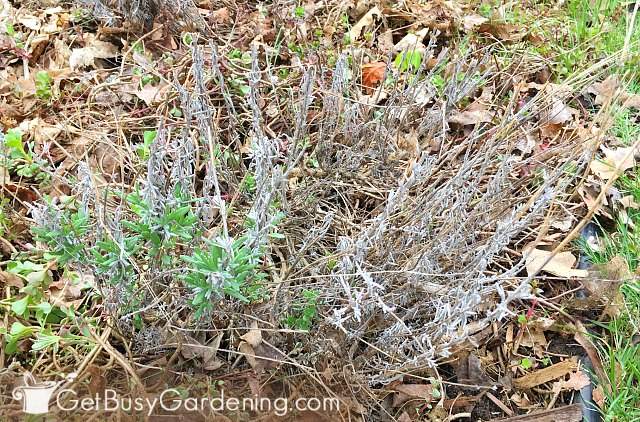
If you do not prune lavender, the plant can become overgrown, scraggly, and it might not bloom as profusely.
So, if you want to make sure that this doesn’t happen to your plant, you should get into the habit of trimming it regularly.
When To Prune Lavender Plants
Ideally, you should prune lavender twice a year – once in the spring just as the fresh growth starts coming in, and once in the summer right after it’s done blooming.
Summer pruning, which helps to keep the plant looking nice and encourages more flowers, is optional.
But spring pruning is very important to get rid of the ugly winter damage and encourage fresh lavender growth.
So, if you only have time to prune lavender once per year, do it in the spring.
It’s best to wait until you see leaves growing before cutting back lavender plants in the spring. That way, you will know exactly where to make your cuts.
This usually means waiting until late spring or early summer to prune lavender.
I know it can be hard to wait so long before pruning lavender after winter, especially when the plant looks so ugly. But try to resist the urge to prune too early.
Related Post: How To Harvest Lavender Fresh From The Garden
Tools For Pruning Lavender Plants
For pruning lavender in spring, you’ll want to use precision pruning snips or small pruning shears so that you have full control and know exactly where you’re making the cuts.
You don’t have to be as precise with your cuts for summer pruning, so you can go ahead and use hedge pruning shears or even a electric hedge trimmer to make quick work of trimming lavender bushes in the summer.
It’s also important to use clean, sharp pruning tools whenever you trim plants, so be sure to clean and sharpen your pruners before starting.
Lavender Pruning Techniques
The reason you want to wait until you see new leaves on the plant before trimming lavender in spring is because that way you will know exactly where to make your cuts.
If you prune lavender too early, you could be cutting off the new growth before it starts, or worse – you might end up over pruning the plant.
Spring pruning is much more precise of a job than pruning lavender in summer. When trimming back lavender in the summer, you can focus on shaping the plant, rather than worrying about exactly where to make each cut.
One important thing to keep in mind whenever you’re pruning lavender is to never cut the woody stems below the leaves.
Always be sure to leave some fresh green leaves on all of the stems. Stems that are pruned down too far will never grow back.
Related Post: How To Dry Lavender From Your Garden
How To Prune Lavender In Spring
Before you start cutting back lavender plants, take a close look at your plant to make sure there is plenty of new growth. If not, then give it a little more time to grow.
If you see lots of fresh growth on the plant, then it’s safe to start pruning.
Here are the steps for trimming lavender plants in spring…
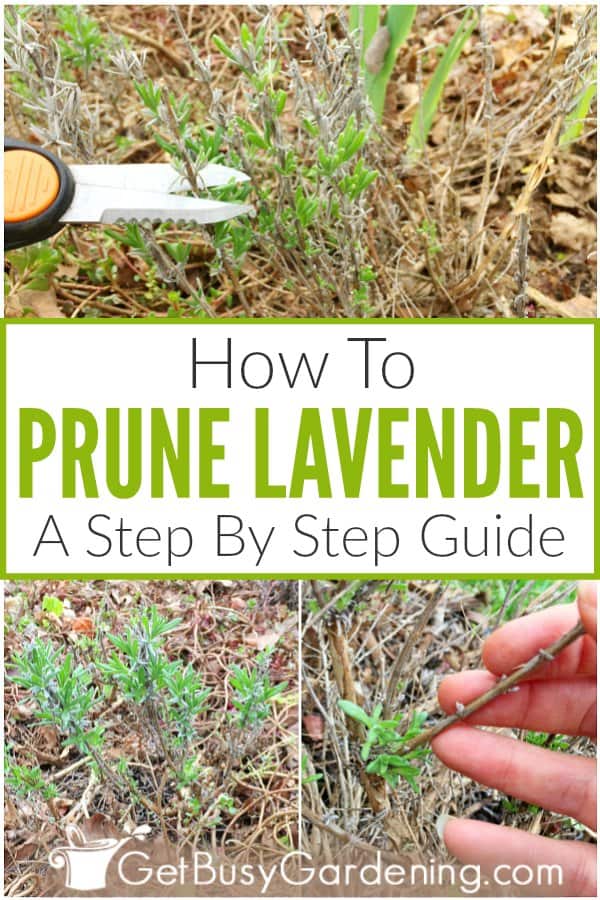
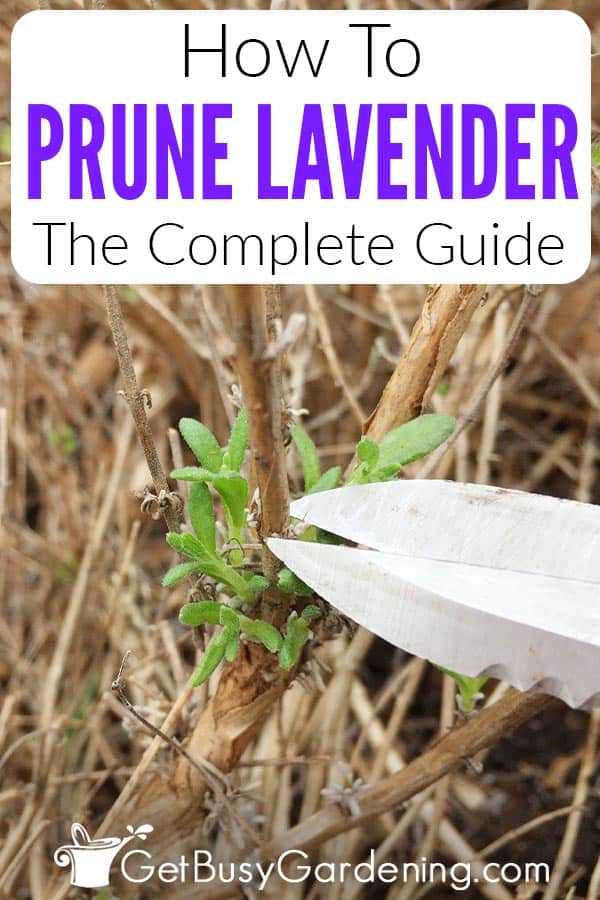
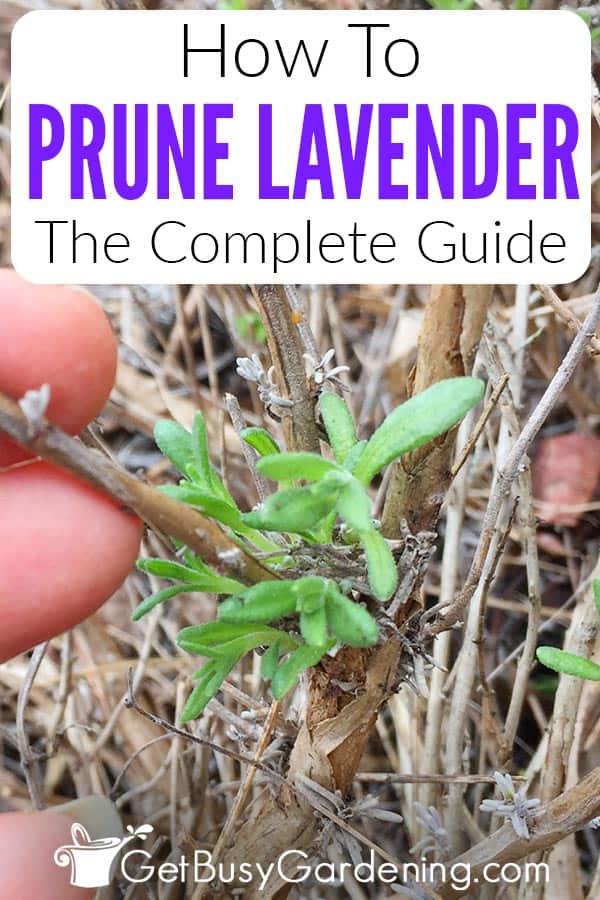
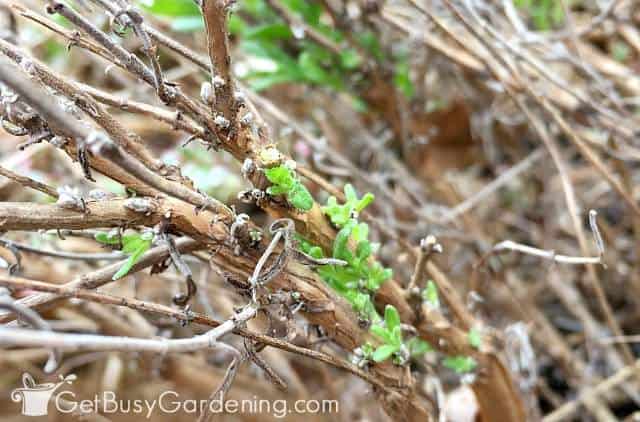
Step 1: Find the fresh new leaves on the stem – To figure out where to make the cut on each branch, find the spot where the new leaves are growing.
Many times this will be towards the bottom of the stem, so carefully move any debris or other branches out of the way until you find it. The new leaf buds are very fragile and can easily break off when mishandled.
If there’s a bunch of scraggly new leaves at the top of the stem, find the spot where the thick fresh growth starts to get rid of all the scraggly bits on top. This will give you a fuller plant, and keep your lavender from getting too woody.
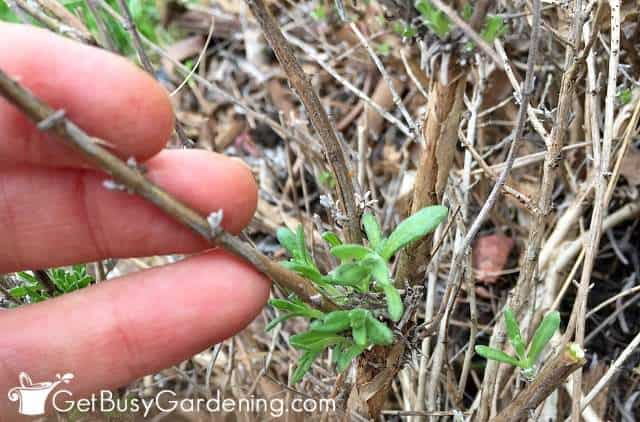
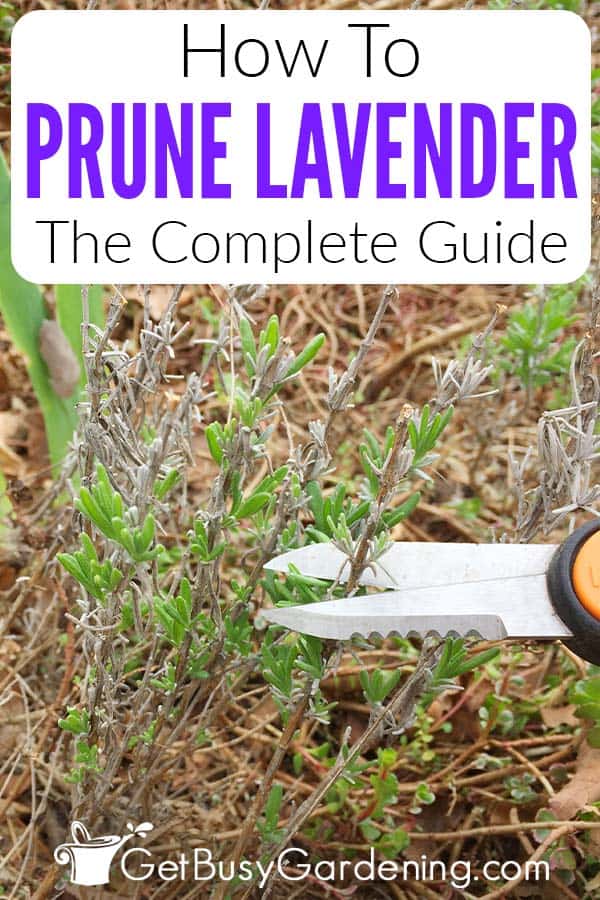
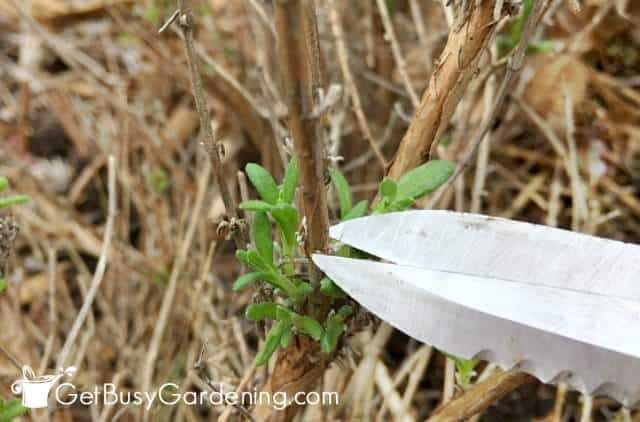
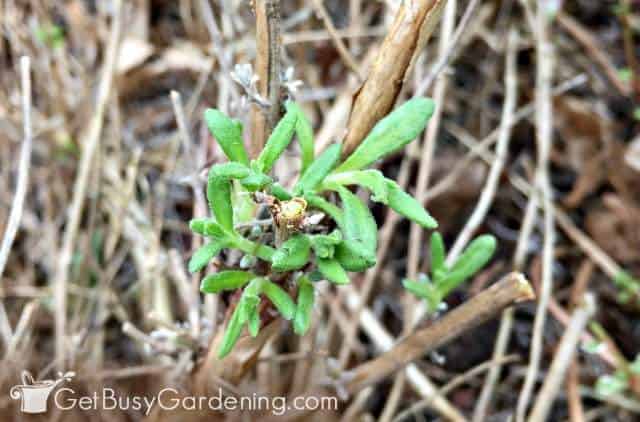
Step 2: Prune lavender right above the new growth – Cut the old stem back to just above the top of the new growth. Be careful when you’re cutting so that you don’t accidentally cut or break off any of the new leaves.
Try to make the cut as close to the new leaf buds as you can. If you leave the dead stems too long, you might see them sticking out all summer, which doesn’t look very nice.
Just remember to always prune lavender above the leaves. Never cut lavender back to wood below all of the growth, because lavender will not grow back from old wood.
Step 3: Cut off any dead branches – You can cut any dead branches all the way down to get rid of them.
However, I would strongly urge you to wait before you cut off any branches that look dead, especially if you’re new to pruning lavender.
Lavender can be very slow to get started in the spring. So you might find that those branches that look dead in early spring may end up growing in the summer.
So, to avoid over pruning lavender, I recommend leaving the branches that you’re not sure about on the plant until it’s time for summer pruning.
If there’s still no growth on them by then, it’s safe to say they are dead, and you can remove them. Dead growth can safely be pruned from the plant at any time during the year.
Related Post: How To Grow Lavender From Seed & When To Plant
Tips For Pruning Lavender In Summer
As I mentioned above, trimming back lavender in summer is totally optional. Summer pruning is good for shaping lavender plants, keeping them full and compact, and it helps to delay woody growth.
Plus, cutting back lavender plants in the summer after they’re done blooming will likely give you more flowers.
After the plant is done blooming in the summer, cut back 1/3 to 1/2 of the new growth, being careful not to cut any branches down to the leafless wood.
If you’re too nervous to cut it back that far, then you can try deadheading lavender instead. To deadhead lavender, simply remove all of the dead flower spikes, cutting them down to the tops of the main branches.
If you want to grow more plants, be sure to keep some of your lavender cuttings from your summer pruning. Growing lavender from cuttings is fun and easy!
If you’re interested in trying that, here’s my tutorial for how to grow lavender from cuttings.
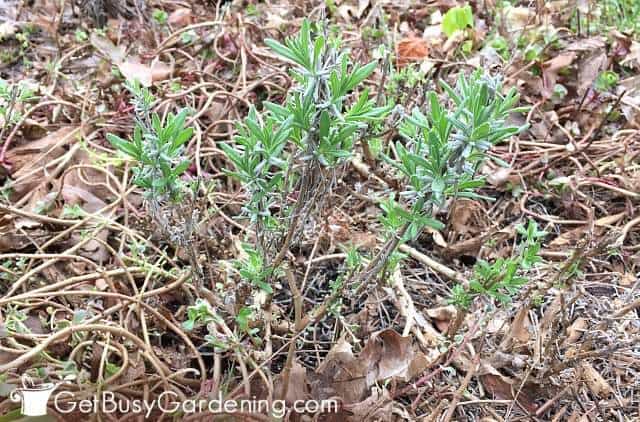
It’s important to get into the habit of cutting back lavender plants on a regular basis. If you never prune lavender, the plant will grow to be woody and scraggly looking, which is not very pretty.
Pruning lavender not only gets rid of the ugly dead growth, but it also helps to trigger bushy growth, and gives you tons of flowers too.
Now that you know exactly how and when to prune lavender, your plants will live a long and healthy life. And you will get to enjoy all those yummy smelling lavender flowers year after year.
Next up, learn exactly how to grow lavender in our detailed lavender plant care guide!
Recommended Reading
- The Pruning Answers Book
- Pruning Made Easy
- How To Prune Trees And Shrubs
- The Well Tended Perennial Garden
More Posts About Pruning Plants
- How To Prune Basil The Right Way
- Pruning Rosemary To Promote Growth & Larger Yields
- How To Prune Tomatoes For Maximum Production
- How To Prune Roses: A Step-By-Step Guide
- How To Deadhead Petunias By Pinching & Pruning
How do you prune lavender? Share your tips for pruning lavender in the comments section below.

Laura in Reno says
Hi Amy, I appreciate your article. It’s eye opening. I live in Reno, NV at 5k elevation. I’m in zone 6b. My neighbor has a large overgrown woody neglected English Lavender Plant that borders one side of our properties. She told me she doesn’t take care of that plant and I’m allowed to do what I want with it.
So what can I do if that bush is already overgrown and woody? Can I burry the stems deeper by adding soil to cover the woody stems in the hopes it will root?
There is fresh new growth on the perimeter of the ugly unwieldy section. It is August 25th and we had our first frost yesterday and got snow. Most people think August is end of summer but here in Reno it feels like the end of Fall. We had 95° temps about a week ago and I’m told it’ll be 90° next week. SMH. Who knows with this crazy weather here!!!
Also, do you happen to know if English lavender is also culinary lavender? I’d like to pick it if it is, for use in my lavender bud cookies.
Amy Andrychowicz says
Unfortunately it won’t work to bury the hardwood branches, that will only cause them to rot. The best you can do is start pruning it properly, remove any dead wood, and hope that it will start to fill in more next year. You could also try propagating your lavender cuttings next spring to start new plants to fill in the area to eventually replace the existing overgrown shrub. And yes, English lavender is the best kind to use for recipes – it’s the most fragrant and flavorful. Here are a few articles that you may find helpful…
– How To Harvest Lavender Leaves & Flowers
– How To Dry Lavender From Your Garden
Sue Watts says
I live up north of you in Duluth, zone 3. It’s October 1 and my lavender just bloomed. Anything special I should do to winter it over?
Amy Andrychowicz says
The hardiest type of lavender is English, and it’s really only rated to survive down to zone 5. Having said that, it has survived for many years in my z4b garden, but I’m afraid zone 3 will probably be too cold for it. You certainly could try covering it with burlap or other winter plant cover, but even with that it might not make it through the winter. Good luck!
Karla says
I found this article really helpful – thanks so much!
Amy Andrychowicz says
You’re welcome!
Emma Golebiewski says
Hi,
I just planted English lavender plants and they are all turning brown and woody already. I am not sure if I should prune back first year or next year. They are starting to droop and the whole plant is turning brown. Not sure how much to water or when to prune. Thanks for any advice ! I live in CT.
Amy Andrychowicz says
I don’t recommend pruning your lavender so soon after planting it. I find that it’s best to wait at least a year so you can get familiar with their growth pattern, and once they are well established. It sounds to me like yours are suffering from transplant shock, and may also be either over or under watered. So you should definitely figure out the problem before you worry about pruning them. Here’s a detailed guide so you can troubleshoot what is wrong, and work to get your plant healthy again… How To Care For Lavender Plants.
Andrea says
Hello,
I planted some Spanish lavender last summer. I dead headed them, and I thought I had read that I should do a fall pruning. I’m thinking that may have been wrong. I cut the plant back quite a bit but tried to still make it mounded. I believe I cut about the woods stems. We live in Kentucky. I think I did the pruning in November. Should I be worried they won’t grow back? They’re not looking very lively so far.
Amy Andrychowicz says
It’s usually fine to prune Spanish lavender in the fall in warmer climates. However, if you cut the woody part of the stems down below the last set of leaves, then I’m afraid those branches won’t grow back. Also, since you mentioned you live in Kentucky, I’m not sure that Spanish lavender would survive the winter in your zone anyway – they usually prefer warmer climates of zones 9+, but some hybrids are hardier. Lavender is slow to grow in the spring, so give it time. The best you can do is wait until early summer to see if there’s any new growth. If yours didn’t survive, I recommend getting the hardier English lavender (better for cold climates) next time. Good luck!