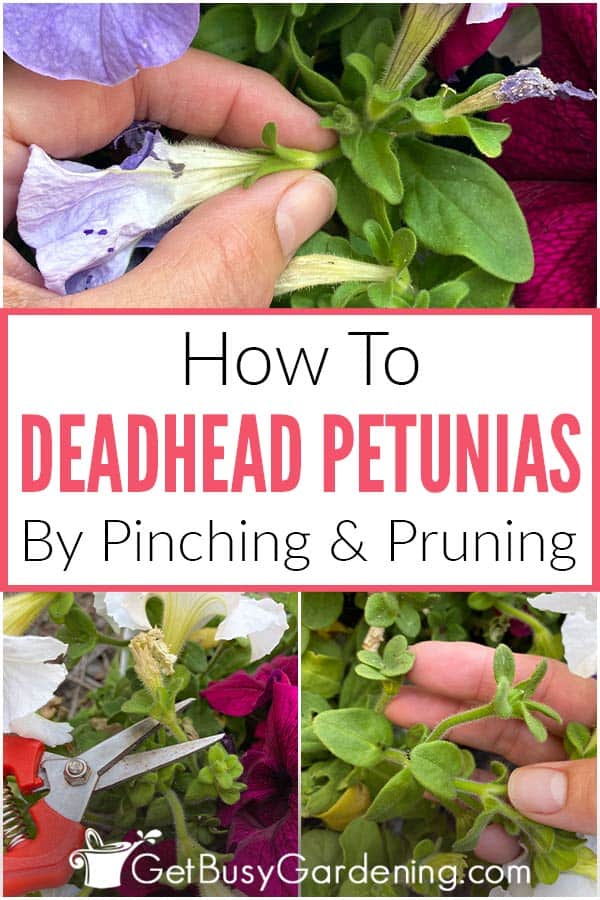
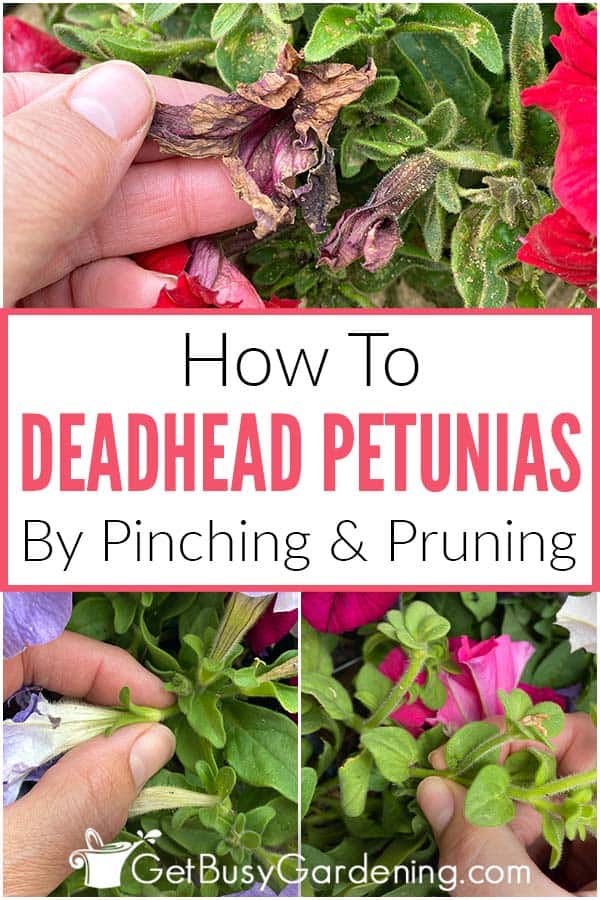
Deadheading petunias is important in order to keep them bushy and looking their best. In this post, I’ll tell you why and when to do it. Then I will show you exactly how to deadhead petunias by both pinching and pruning, step by step.
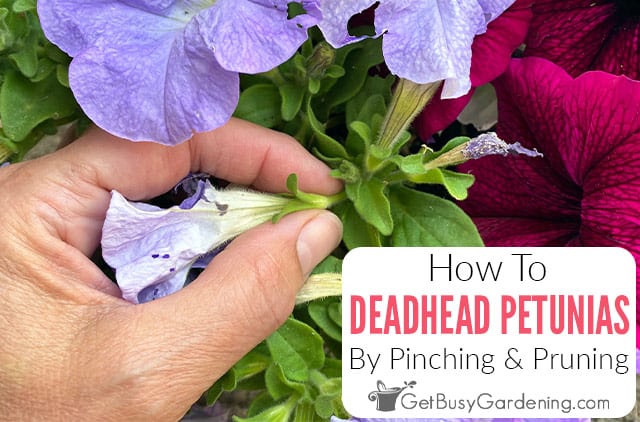

Petunias are a gorgeous addition to any garden, and a staple for me every year. But, they have a tendency to look leggy and overgrown by the middle of summer, which is not ideal.
That’s why it’s so important to deadhead your petunias regularly. Getting into the habit will keep them full and covered in flowers all summer long.
If you’re new to pruning plants don’t worry, I’m going to make this super easy for you! Below I will show you exactly how to deadhead petunias using a couple of simple techniques – and you don’t need any fancy tools to do it.
Why Should You Deadhead Petunias?
You should deadhead petunias because it encourages them to bloom more vigorously. After the blossoms become brown and dried up, the plant uses its energy to produce seeds.
When you remove the dead blooms and seed pods, the plant will be able to use that energy to produce more flowers instead.
Regular pinching and pruning also prevents them from becoming leggy, and keeps them full and bushy all summer long.
When To Deadhead Petunias
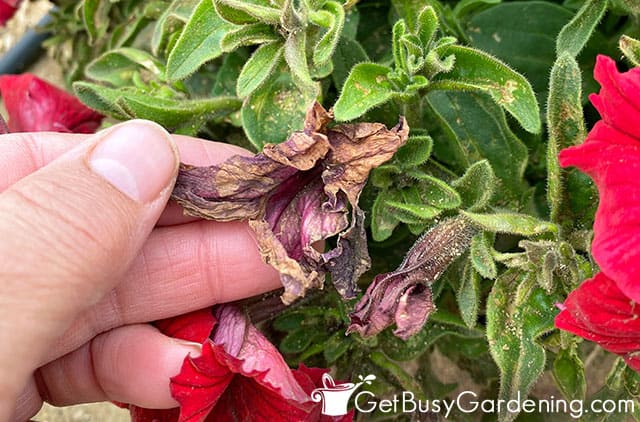
You will know when to deadhead petunias once you see the blooms wilting and turning brown. When the first flowers start to wilt, it is time to begin the process.
Check on them regularly, and remove the spent flowers as they die back. I like to do this about once per week or so. But you can do it as often as you need to in order to keep your plant looking its best.
How To Deadhead Petunias With Pinching
Deadheading petunias by pinching them simply means to use your fingers to remove parts of the stem. It’s nice because you don’t need any tools, all you need are your hands.
There are two different ways to do it: either by removing the spent flowers, or by pinching off the leggy growth. You’ll likely find that you’ll need to use a combination of both techniques.
Pinching Out The Dead Flowers
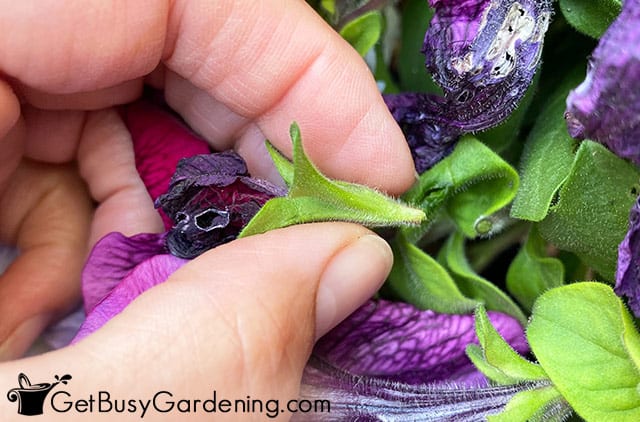
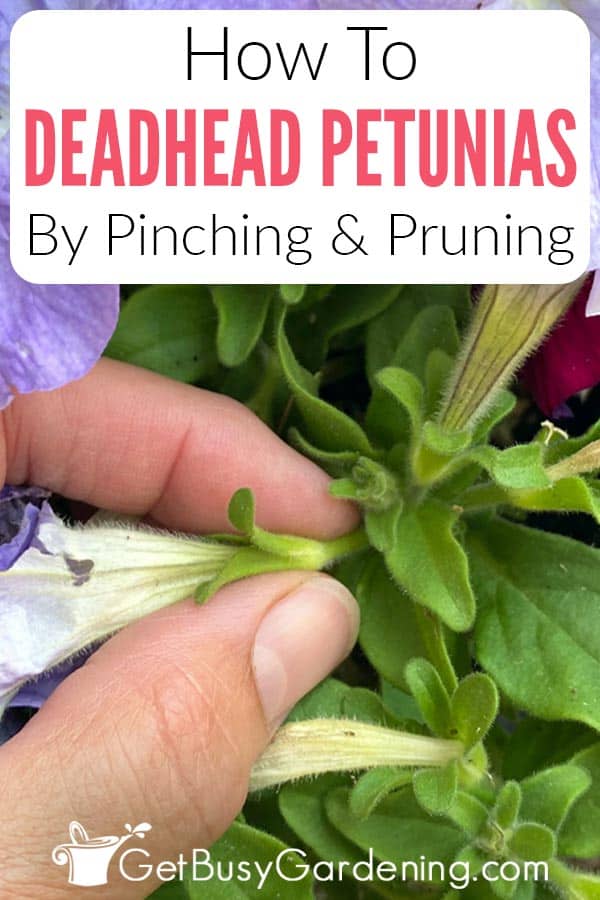
First, let’s look at how to pinch out the dead flowers. This involves simply grabbing the spent blooms and developing seed pods with your fingers, and plucking them off.
Step 1: Locate the spent flowers – The spent (aka: dead or dying) flowers are usually above the new ones. They will be wilted, and sometimes dry and brown, so it’s easy to find the ones that need to be removed.
Step 2: Pinch them out – Grasp the tip of the stem just below the blossom between your thumb and forefinger, and pinch to remove it.
The flower should come off easily, but you may need to dig your fingernail into the stem to sever it.
Be careful not to pull on them though, or you could accidentally break the entire branch off. They can be a bit delicate.
Step 3: Repeat with other spent blooms – Pinch off the remaining spent blooms on the same branch, and then move on to another one. Repeat this process until you’ve deadheaded all of the wilted flowers from your petunia.
Pinching The Leggy Growth
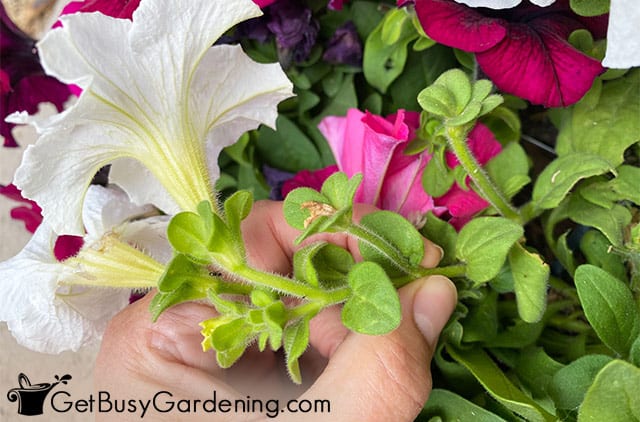
In addition to removing the spent flowers, it is also important to remove any leggy branches on a regular basis.
Petunias will naturally get leggy over time, especially when you don’t deadhead them very often. Pinching will encourage them to brach out, and also promotes a healthier plant.
Step 1: Locate the leggy stems – Leggy stems are the ones that are very long or look bare. Locate any unsightly looking branches, those that have a lot of dead foliage on them, or ones that are hanging toward the ground.
Step 2: Pinch the stem – Use your thumb and forefinger to pluck off the new tips just above the bud. Continue pinching out the tips until you’ve gotten all of the longest ones.
It is very important to sever them, and take care not to pull, so you don’t accidentally break off the whole thing.
Step 3: Repeat with more leggy stems – Move on to the next leggy branch, and repeat the steps above. Continue this process weekly throughout the summer to keep your plant bushy and full of flowers.
How To Deadhead Petunias With Pruning
Pinching is very quick and easy. But since they are very sticky, many gardeners prefer to use a tool instead of their fingers.
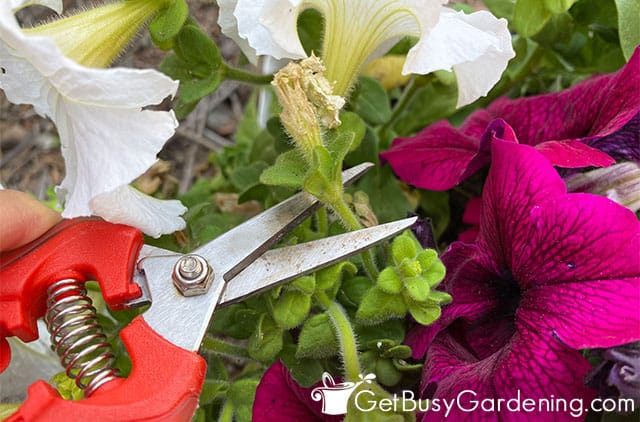
If this is you, then here are the steps for how to deadhead petunias using a sharp pair of pruners.
Step 1: Choose the right tool – Since petunia stems are small and delicate, I recommend using either precision pruners, a pair of micro-tip snips, or bonsai shears for the job.
Otherwise, if the tool you use is too bulky, you could end up damaging them, or cutting off more than you meant to.
Step 2: Sterilize your shears – Before using pruning shears or scissors, you should always sterilize them first.
Dip the blades into rubbing alcohol and allow them to soak for five minutes, then air dry. Or you can wash them with soap and water.
Step 3: Locate the spent blooms – Examine the plant, and find the stems that contain several spent flowers. Look for the ones that are dry and wilted.
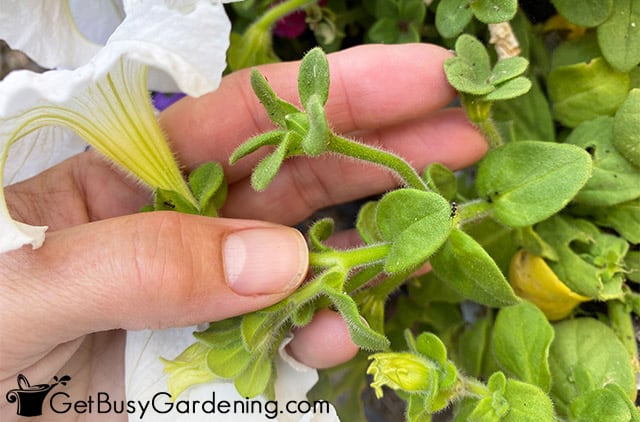
Step 4: Cut the stems – Cut back the stem just below the spent blooms. Or you can remove up to half of the branch if it’s really leggy.
Step 5: Don’t cut too much – Removing too many branches at once can limit the number of flowers, and result in a less attractive plant. So only trim one stem per week on small plants.
Larger ones with dozens of branches can withstand heavier pruning. You can cut back up to ten at a time on the larger plants.
Step 6: Repeat regularly – If weekly maintenance isn’t an option for you, plan on deadheading most of your petunia plant about halfway through summer.
Toward the end of July or early August remove all the spent blooms, and cut back any leggy stems.
Petunias That Don’t Need Deadheading
Not all types of petunias need to be deadheaded. There are new hybrids these days that are self-cleaning and don’t need any (or at least not as much) maintenance.
Ask your local garden center if they carry any self-cleaning petunia varieties, or look at the details on the plant tag.
Deadheading petunias is a fantastic way to keep them blooming and vigorous throughout the entire gardening season. If you’re tired of your petunias looking overgrown and scraggly by the middle of summer, then pinch away!
More About Pruning Plants
- How To Prune Roses: A Step-By-Step Guide
- Pruning Russian Sage: Step-By-Step Instructions
- How To Prune Tomatoes For Maximum Production
- How To Prune A Wandering Jew Plant (Tradescantia)
Tell us your best tips for deadheading petunias in the comments section below.

John says
Great tips. It really helps me to have a gentle reminder like this, otherwise I do tend to forget about regular deadheading. The petunias on my second floor looked great at the start of summer and now need a little refreshing.
Amy Andrychowicz says
Awesome, so glad to hear that you found this guide helpful! 🙂
Vanessa D. says
As much as I love the scent of petunias, the stickiness is one of the reasons I rarely grow them by choice. I just hate the feel of it when dead heading.
Amy Andrychowicz says
I totally agree! They’re coming out with some non-sticky petunia varieties as early as next year. Keep your eyes open for those! 🙂
Jane Burk says
The bit about pruning wasn’t very helpful to me. I want to know how far down to cut and if I am to cut off branches with buds. Also, is the tiny looking green thing the seed pod? Do I cut them all off? Thanking you for a good article!
Amy Andrychowicz says
You can trim back the leggy stems to about 1/2 their length, and cut them right above a leaf node. If you cut the stems with flower buds on them, it will take a few weeks for them to start blooming again, but they will be fuller. Yes, the small green things that form after the flowers drop off are seed pods. Cutting them off will encourage more flowers, since the plant won’t have to focus its energy on seed production.