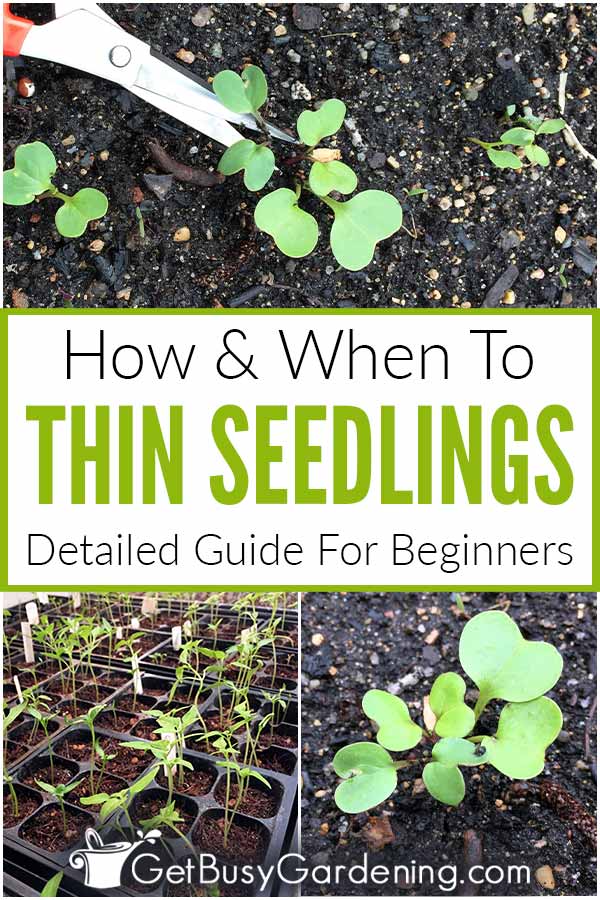
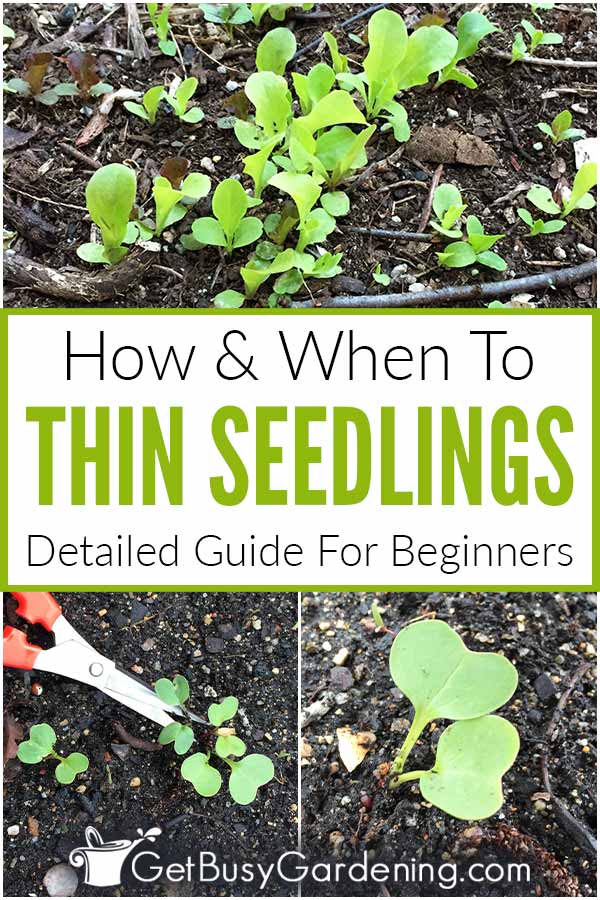
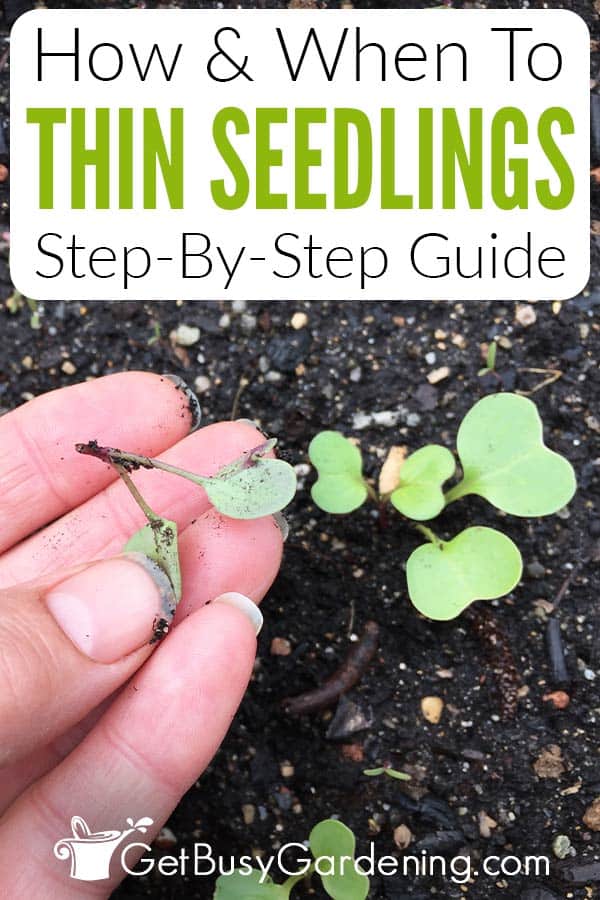
Thinning seedlings is important in order to grow strong and healthy plants. If you don’t know when or how to thin seedlings (or why the heck you need to do it in the first place), then this post is for you!
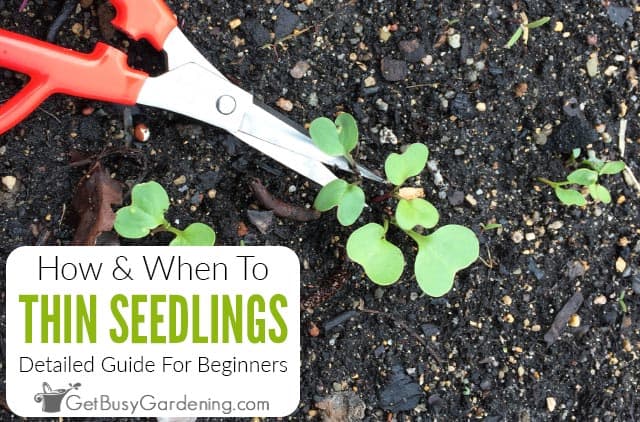

I know first hand that thinning seedlings can be a really touchy subject, especially for new gardeners. What, thin my seedlings?!? Eek!
But overcrowded plants will suffer from all kinds of problems down the road if they aren’t spaced out properly.
In a perfect world, every single seed we plant would grow, and it would be easy to space them all correctly from the start.
But, here in the real world, it is not that simple. We know that some of them won’t germinate, so we plant more than what we need to make up for it.
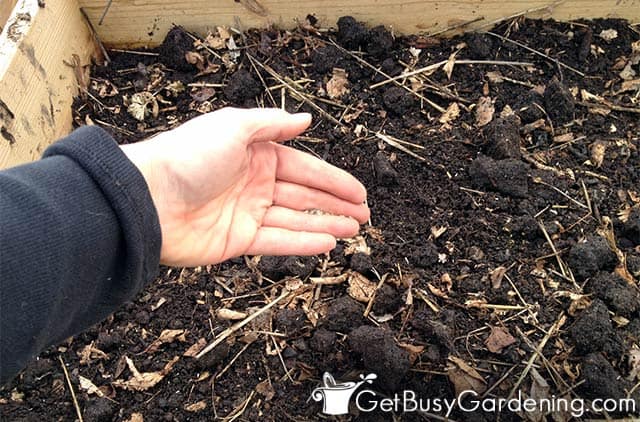
Plus, it’s pretty much impossible to plant tiny little seeds one by one. So we sprinkle them over the top of the dirt instead. Then we end up with overcrowded starts!
That’s why learning how to thin them out is a very important part of successful seedling care.
Don’t worry, it’s not difficult. In this detailed guide, I will walk you through everything, step by step.
What Does It Mean To Thin Seedlings?
In gardening, thinning seedlings simply means removing some of the ones that were planted too close together, so that only the best and strongest ones are left to thrive.
It is a common practice that’s used to ensure the proper spacing of plants in the garden, especially for those that were sown too close together.
Why Thin Seedlings?
Thinning crowded seedlings ensures that your plants have plenty of room to grow. If they’re too close together, they will eventually end up competing with each other.
This means that, as they mature, their growth will be stunted. Indoors, overcrowded starts won’t get enough air circulation, which can cause mold in your seed trays.
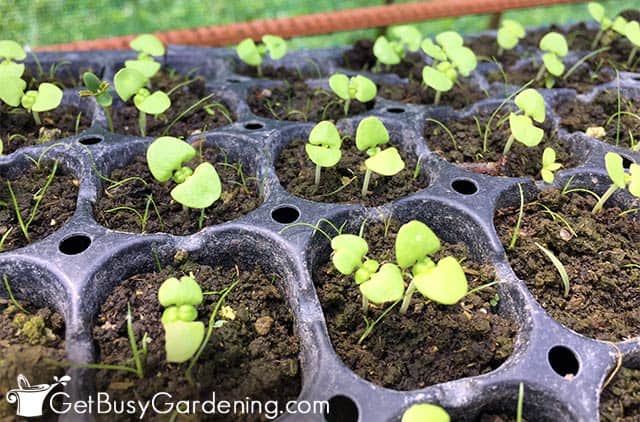
I know it’s difficult, but it is necessary when plants are too close together in the garden, or if there’s more than one per tray cell, pellet, or pot indoors.
Do You Have To Thin Seedlings? Can’t I Just Separate Them?
Yes, you certainly can try to separate some types of seedlings instead of thinning them out. I have had luck doing this with larger ones.
But I don’t do it much anymore. It’s too risky, and it’s a total waste of time to plant the damaged ones that won’t amount to much.
Plus, the task of carefully separating each of the tiny starts is way more tedious than just cutting them out.
If you really, really hate the thought of killing perfectly good seedlings, then the best way to avoid it in the future is to take extra time to space out the seeds properly when you plant them.
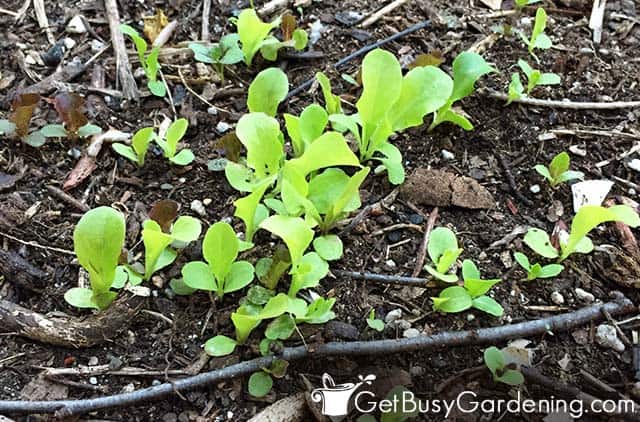
When To Thin Seedlings Indoors & Out
To give your plants a healthy start to life, they need plenty of space right from the beginning. So the sooner you thin your seedlings, the better.
The longer you wait, the more you risk stunting their development (and, when you have a super short gardening season like we do here in MN, they need all the time they can get to mature).
If you decide to give it more time, then plan to do it once they get a few sets of true leaves. But not more than 3-4 sets.
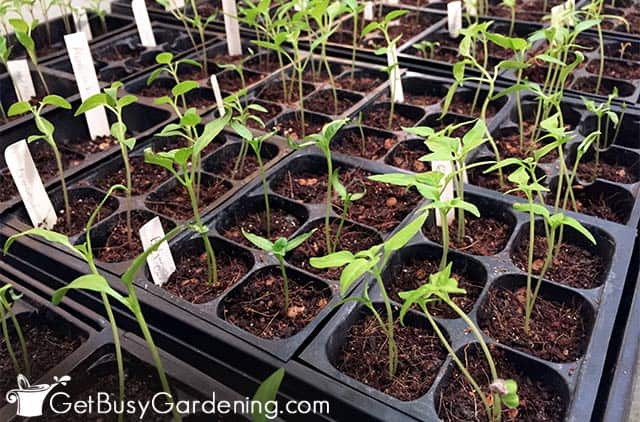
How To Thin Seedlings Step-By-Step
Sometimes it can be tough to visualize how to thin seedlings correctly. So, I thought I’d break it down into simple steps for you to follow.
I included lots of pictures because I’m a visual learner, and some of you probably are too. Here are the simple step by step instructions…
Step 1. Decide which ones to cut out – Choose the strongest seedling in the bunch to keep, and then thin out the rest.
To pick the strongest, look for the one that is the most compact, and has the thickest stem. If they’re all the same size, then just pick the one that looks the best.
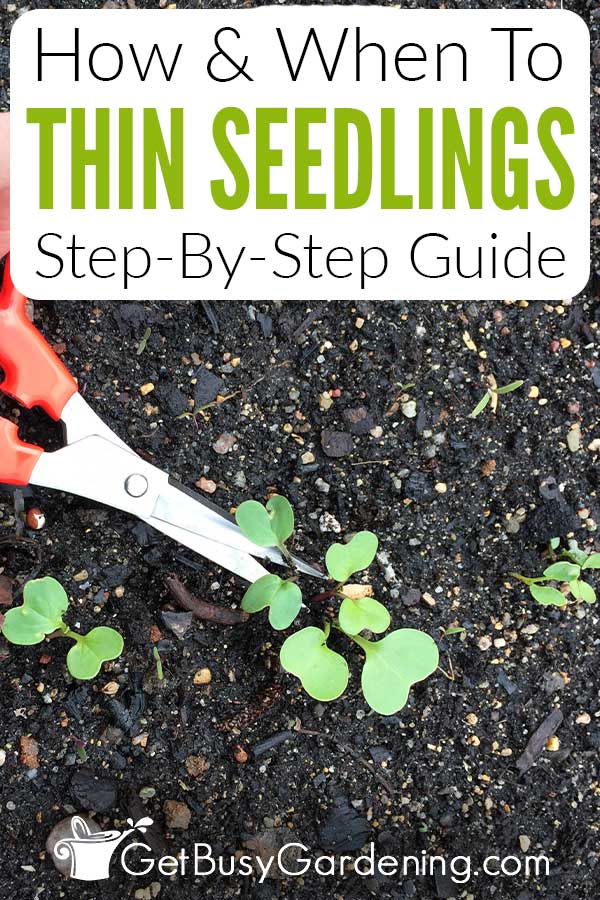
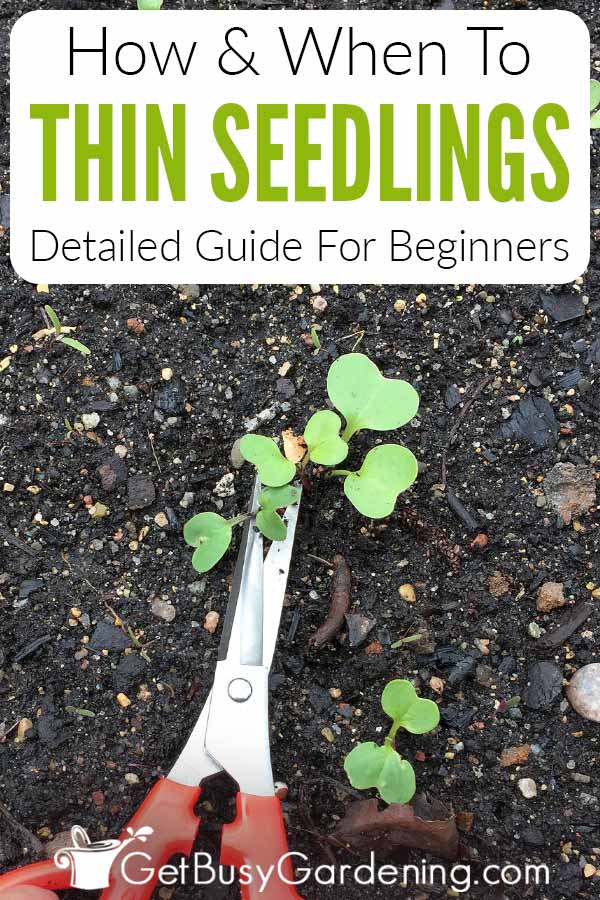
Step 2. Use the right tool – Regular pruning shears are way too big and clumsy to use for this delicate job, and it’s easy to accidentally damage the other seedlings in the process.
So I recommend using a small micro-tip snip or bonsai shears for precision cuts. Also, be sure to disinfect the blades first. To do that, simply dip them into rubbing alcohol, or wash them with soapy water.
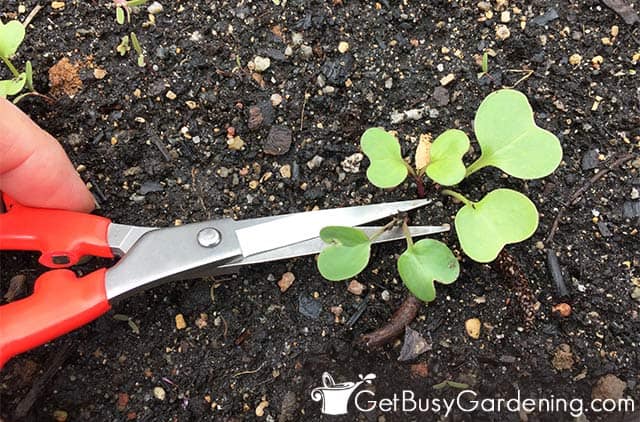
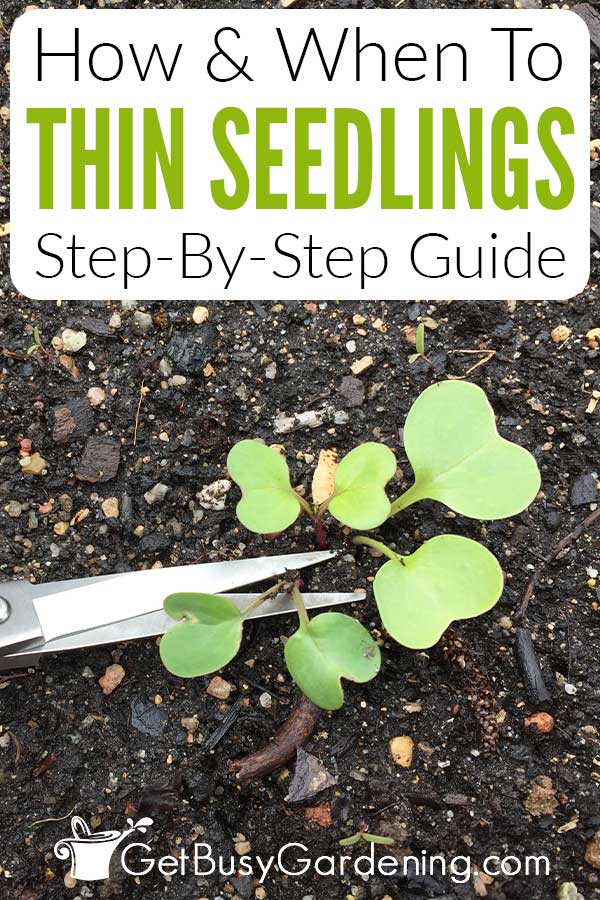
Step 3. Cut the weak seedlings off at the base – It’s very important that you cut the stems off at the base, rather than pinching them out.
And never try to pull the seedlings out of the soil while thinning. Doing that can damage the delicate roots of the others, which could end up killing them too.
This is especially important for root crops. One of the main causes of deformities is damage to the roots when plants are young.
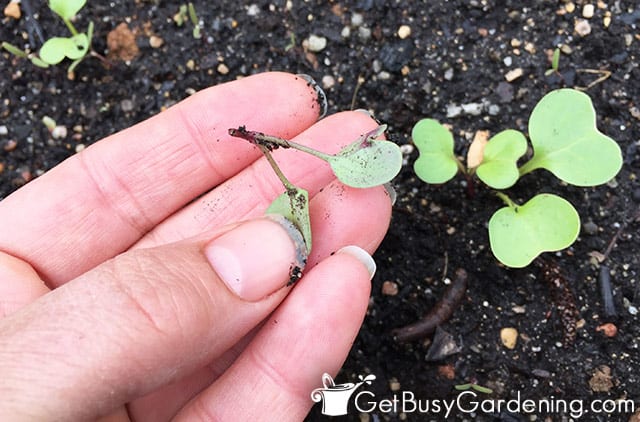
Step 4. Fertilize the remaining seedlings – Once you’re done thinning the seedlings to the proper spacing, give the remaining ones a shot of fertilizer for an extra boost.
Use a starter fertilizer, or try compost tea (which you can get in liquid form or buy tea bags to brew your own). Seedlings also love liquid kelp or fish emulsion.
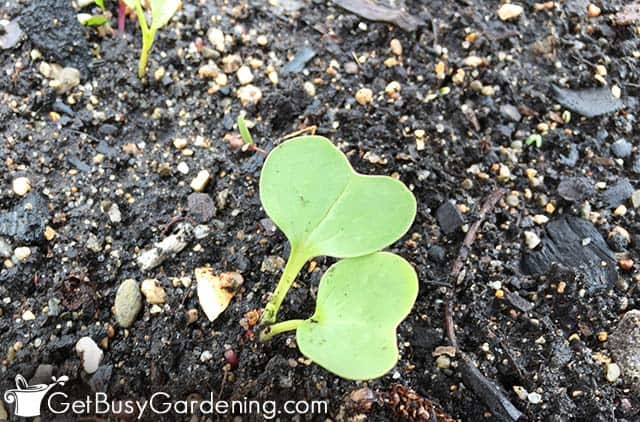
How To Pick The Strongest Seedling
To pick the strongest seedling, find the healthiest, and most compact one in the group. That’s the one you want to keep. Then thin out the others.
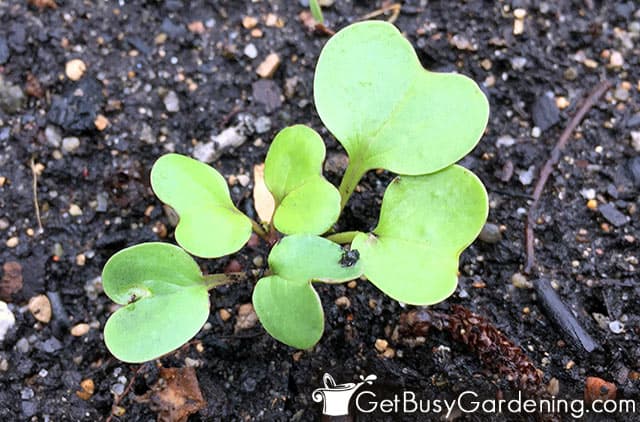
If they all look equally healthy, then cut out the smallest or weakest looking ones. Just keep in mind that the tallest ones aren’t always the healthiest.
They grow tall and leggy when they don’t get enough light. So remove the ones that have become weak or scraggly looking.
If the seedlings are all the same size, then you can just randomly thin them out. Or give it a bit more time to see if one of them gets larger than the others. But really, in this case, you can’t make the wrong choice, so cut away.
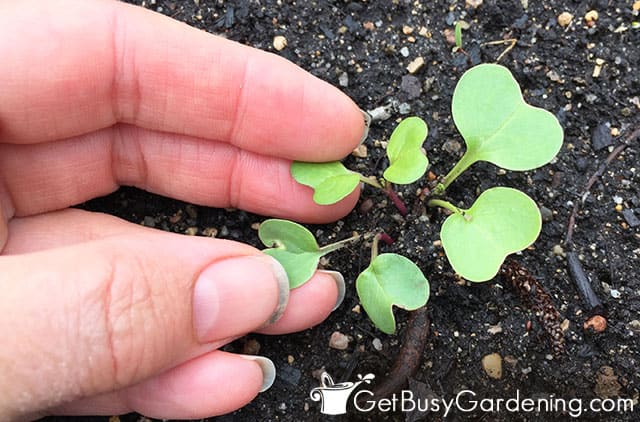
How Much Thinning Do I Need To Do?
If your seedlings are indoors, then you should thin them out until there is only one left in each cell, pellet, or pot.
Not only will this give them plenty of room to grow, but it also makes it much easier when it comes time for transplanting them into the garden.
Seedlings that were sown directly in the ground, rather than started indoors, should be thinned to the spacing requirements on the seed packet.
FAQs
In this section, I will answer some of the most commonly asked questions that I get about thinning seedlings. If you still have a question after reading through these, then ask it in the comments below.
Can you replant thinned seedlings?
No, unfortunately you cannot replant thinned out seedlings. After cutting them off at the base, they will eventually die. However, you can use the edible ones as microgreens, they are delicious in salads!
How big should seedlings be before thinning?
It’s usually best to wait until seedlings have their first set of true leaves before thinning them.
That way, you’ll know which ones have successfully unfurled. But don’t wait too long, or overcrowding could begin to stunt their growth.
How do you thin seedlings without killing them?
Unfortunately, there’s no way to properly thin seedlings without killing them. If you try to separate them, rather than pruning out the weakest ones, you risk killing them all.
If you can’t stomach the thought of killing them in this way, then make sure you properly space the seeds next time you plant them.
Thinning seedlings is a necessary evil when they become overcrowded. But proper spacing is crucial for growing healthy plants. So, even though it can be really hard, it’s very important to learn how to thin out your seedlings.

If you’re a new gardener and want to learn how to grow any plant you want from seed, check out my online Seed Starting Course! It’s a wonderful, comprehensive and completely self-paced online course that will teach you everything you need to know about successfully growing garden seeds. Enroll and get started today!
Otherwise, if you just need a quick refresher for planting them indoors, then my Starting Seeds Indoors eBook is exactly what you need.
More Posts About Seedlings
Share your tips about how to thin seedlings in the comments section below.

William G Harrison says
I have seeded Nicotiana weeks ago and they are finally emerging. When I planted them the seeds were so small that I ended up sowing to many. Now that they are here what’s the best way to thin ? They are so small. Should I wait until I can see them apart easier? i’m not new to thinning seedlings, but this is ridiculous. LOL. Any ideas?
Thank you
Amy Andrychowicz says
Haha, oh I’ve been there for sure! The best thing to do is wait until the seedlings get a little taller before thinning them. Then use a pair of precision snips to carefully cut them off at the base so you don’t disturb or damage the ones you want to keep.
Cynthia McCann says
I’m quite new to all of this – I wish it had occurred to me to some research beforehand but I didn’t (when I did, I found you, thankfully).
I’m afraid I may lose far more of my pansy seedlings than I thought I would; I made several of the mistakes that you caution against.
I tried not to “waste” them and so it will be interesting to see what happens.
Do you recommend taking cuttings and using root tone to facilitate growth?
Amy Andrychowicz says
Unfortunately you can’t root the seedlings after cutting them. The best you can do is thin your seedlings out now, and then plant less seeds next time so they aren’t so overcrowded.
Connie Flunker says
How many sweet basil seedlings can I leave in a one gallon pot after thinning?
Amy Andrychowicz says
Though you can leave 3-4 of the thinned out seedlings in there until you know for sure they’re going to survive, it’s best to only have one mature plant per pot.
Tomatomaster says
Just clarifying planting and thinning of seedlings. When I buy seedlings from the store, they usually come in sets of 4 seedlings planted and sprouted together in a small pod. Is it best to take that entire pod and plant it, then take scissors and cut (thin) 3 of those 4 seedlings just at or below soil level? Now one seedling is left to grow. There is now a network of dead roots intermingled with the one remaining life seedling with roots. I’m assuming this is the way to do it. An alternate way would be to separate each seedling and root system before planting, but this ends up damaging the fragile root system.
Once the seedling is cut at soil level, is it possible that it will re-grow from its root system, or have I successfully killed it by cutting the stem at soil level?
Any downside to the dead root systems that remain mingled with the live roots? Do these dead roots cause problems for the remaining live seedling with its live root?
Thank you!
Amy Andrychowicz says
Yes, that is the best way to do it. Once you cut the seedlings down to the base, they will not grow back. The roots on the thinned out seedlings will eventually die and decompose, and you can think of it as fertilizer for the remaining one, so no worries there. You certainly could try to separate them before planting if you want to take a risk. Some seedlings can survive just fine, while others won’t be able to handle the shock caused by the damage to their root system. But the safest bet is to plant them and then thin them out once they recover from the transplant shock.
tomatomaster says
Thank you!
Amy Andrychowicz says
You’re welcome!