Dealing with bugs in your garden can be incredibly frustrating, but it doesn’t have to be.
In this post, I’ll show you how to control, reduce, and prevent garden pests efficiently and effectively without losing your plants, or your mind, in the process.

Bugs Are A Part Of Gardening
First off, for better or worse, bugs are a normal part of gardening. I remember when I first started, I absolutely hated ALL of the bugs!
I’m embarrassed to admit it now, but back then I thought controlling garden pests meant getting rid of every bug I saw before they had a chance to destroy my plants.
But guess what? Not all bugs are bad. In fact, most of them are either completely harmless or beneficial to your garden.
And even better, some of them are natural predators that will actually help you keep the pests under control.
Once I learned how important bugs are for maintaining a healthy garden, I started to love them (well, most of them anyway).
Not All Bugs Are Pests
Before you do anything about the bugs you find in your garden, make sure you know exactly what you’re dealing with.
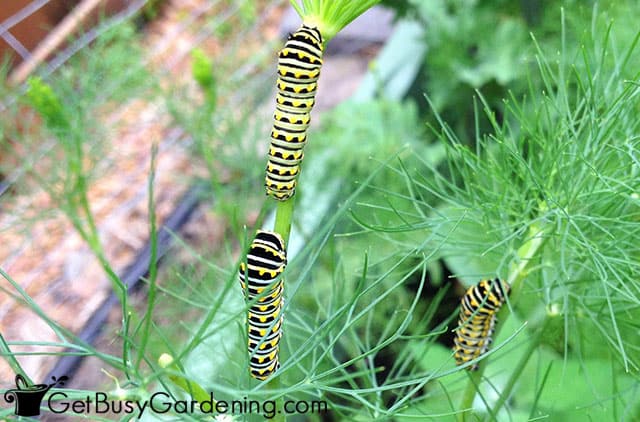
Just because you find a caterpillar eating a leaf doesn’t mean it’s a pest. It could be the larvae of a beloved pollinator snacking on its favorite host plant.
I almost learned that the hard way several years ago when I found caterpillars devouring my dill plants and was ready to kill them all!
Thank goodness I took the time to look them up… because it turns out they were black swallowtail butterfly larvae. (And I almost made a HUGE mistake!)
So never assume a bug is a pest simply because it’s on your plant or eating a few leaves. Always identify it before you decide whether or not you need to get rid of it.
If you can’t find a positive ID online, bring a photo to your local garden center or extension office and ask them to help you identify it.
Common Garden Pests & The Damage They Cause
There are lots of different bugs that can damage your plants, and the ones you’ll deal with depend on where you live and what you’re growing.
Here are some of the most common types of garden pests and the damage they can cause:
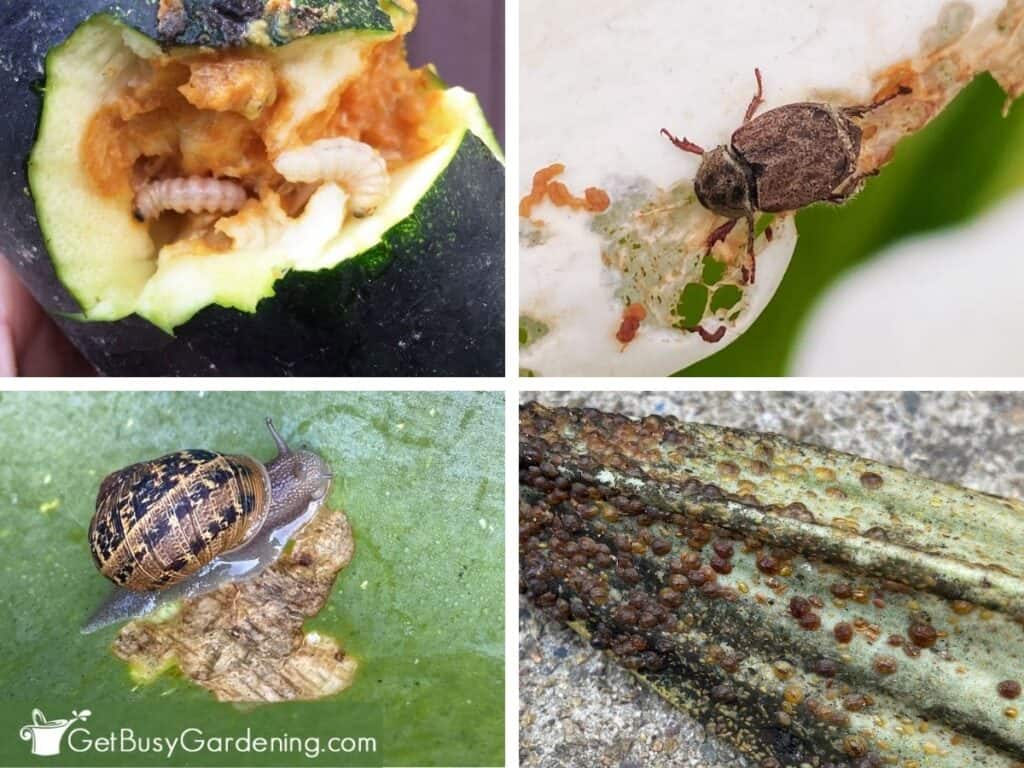
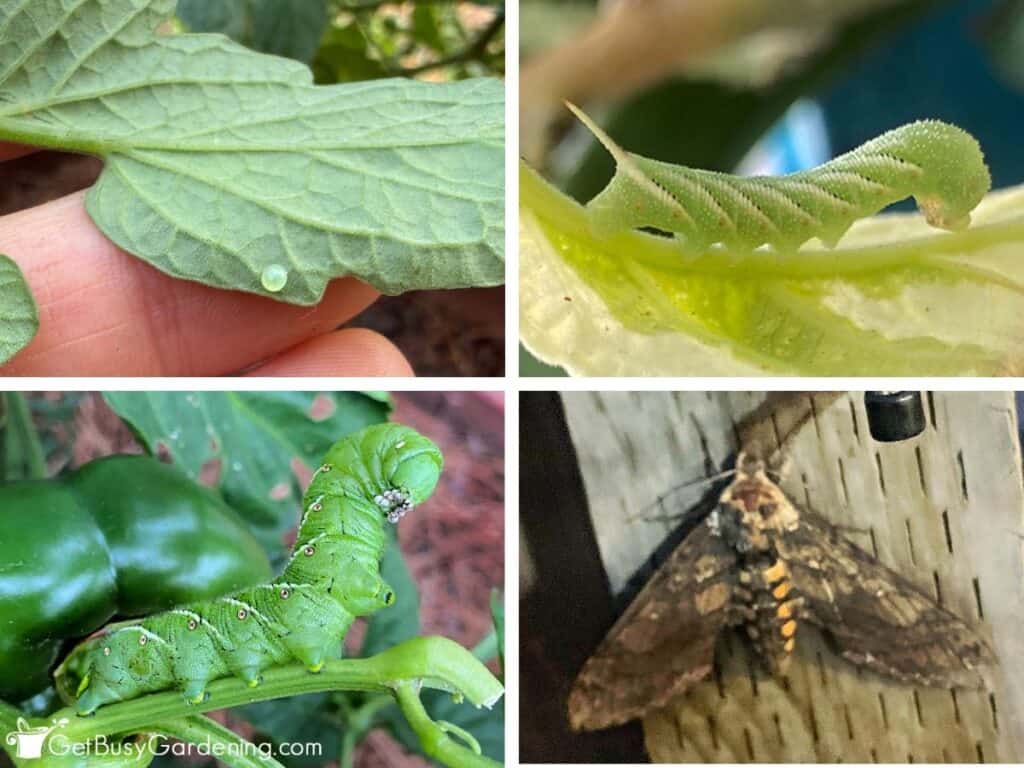
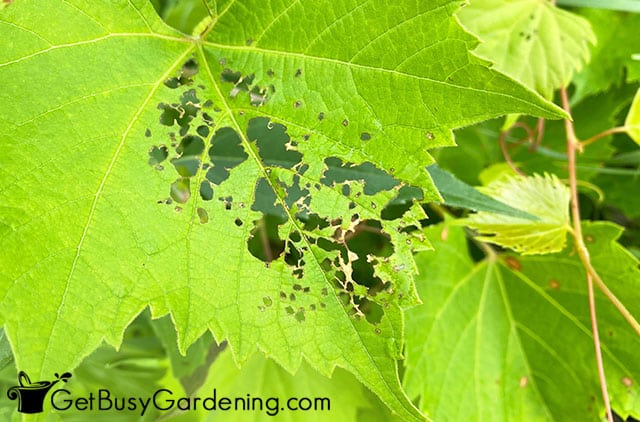
- Caterpillars can chew holes in leaves, strip plants of their foliage, eat the stems down to nubs, and even damage the fruit. Common examples include cabbage worms, cutworms, and hornworms.
- Borers look like white worms and burrow into stems, vines, fruits, or other plant tissue, making them hard to spot. Wilting, holes in the stems, or frass around the damaged area can be clues that something is feeding inside. Common examples are squash borers and iris borers.
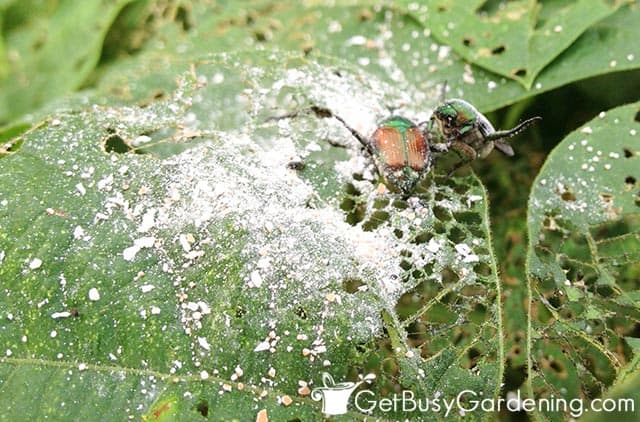
- Beetles tend to skeletonize the foliage, but they can also feed on flowers and damage fruits and vegetables. Japanese beetles, cucumber beetles, flea beetles, and asparagus beetles are a few common examples.
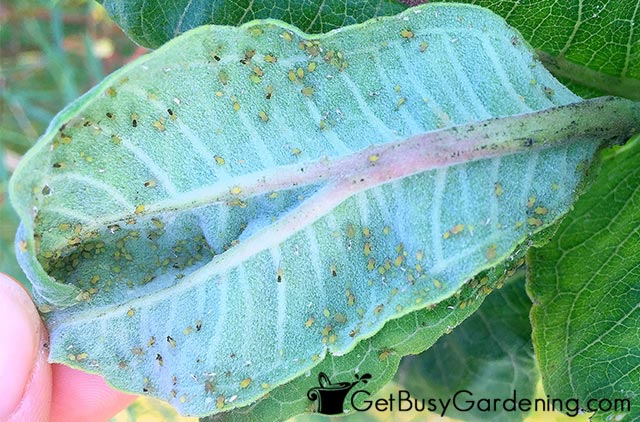
- Sap-sucking pests feed on the leaves and stems and can cause yellowing, curling, stippling, distorted new growth, wilting, or sticky residue. Common examples include aphids, whiteflies, scale, mealybugs, spider mites, and squash bugs.
- Slugs and snails chew irregular holes in leaves and can quickly shred them or make them look like swiss cheese. They usually feed at night or during cool, damp weather and leave behind slime trails.
How To Control Garden Pests
Once you’ve confirmed that a bug in your garden is indeed a pest, the next thing to do is figure out the best way to control it.
Grabbing a spray bottle should never be your first step. Pesticides, even organic ones, can do more harm than good, so they should always be your last resort.
Here are some simple steps you should go through every time you need to deal with a pest in your garden…
Step 1: Know Your Enemy
The more you know about the pest, the easier it will be to control.
So take some time to learn the type of damage it causes, which plants it feeds on, where it lays its eggs, and what it looks like during the different stages of its life cycle.
You should also find out what time of the year it’s most active and where it spends the winter.
That way you’ll know when it will start showing up in your garden, what to look for so you can spot it right away, and the most effective way to keep it from taking over.
Step 2: Start With The Simplest Control Method
There are several ways to control garden pests naturally without using any type of pesticide.
Depending on the bug, you may be able to control it by:
- Picking them off by hand
- Squishing or removing their eggs
- Knocking the pests off the plant with water
- Removing heavily infested leaves or stems
- Protecting plants with row covers or other barriers
- Using traps when they’re appropriate
The method that works best will depend on the bug you’re dealing with. Start with the simplest option, and only move on to stronger treatments if you need to.
Step 3: Let Nature Help You
One of the easiest ways to control pests in your garden is to let Mother Nature help by giving natural predators a chance to take care of the problem for you.
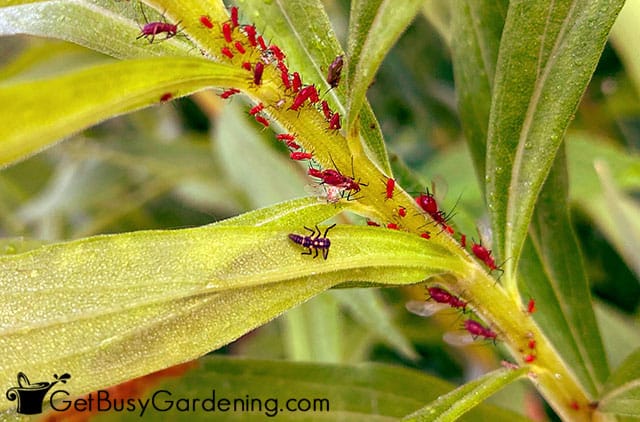
Predatory bugs like ladybugs, lacewings, spiders, and wasps eat many of the pests that damage your plants. Birds, frogs, and other critters will help you out too.
A few years ago I had a terrible aphid outbreak in my front garden. I was about to start treating it when I spotted some ladybug larvae and realized the good guys were already working on the problem for me.
So I left it alone and, sure enough, the aphids started to clear up a few days later.
When you find pests on a plant, sometimes the best thing to do is leave it alone and give the natural predators a chance to move in.
And with a healthy population of good bugs and other helpful critters in your garden, nature will eventually take its course.
Related Post: Working With Nature Instead of Fighting Against It
Step 4: Use Pest Control Products Carefully
If you are at your wits’ end and using a pesticide is your last option, look for a natural or organic product that works for the specific pest you’re dealing with.
It’s important to use all pesticides, even organic ones, with extreme caution. Otherwise you could kill the good bugs right along with the pests and cause much more harm than good.
So never do any type of broadcast spraying or applications in your garden. Target the pest specifically, use only as much as you need, and always follow the instructions on the label.
You can find the specific products and recipes I use in my guide to natural garden pest control remedies.
How To Prevent Garden Pests
Getting rid of the bugs that are damaging your plants right now is important. And once you get them under control, you want to do whatever you can to keep them from coming back, right?
That’s why prevention should always be the central focus of your long-term pest-control strategy.
Because preventing them from ever having the chance to take over is So Much Easier than fighting a full-blown infestation.
There are several things you can do to keep a few pests from turning into a serious problem, so let’s dive into those next.
Related Post: The Power of Prevention In Your Garden
Keep Your Plants Strong & Healthy
Weak, stressed plants are pest magnets. So when your plants are sick or struggling just to survive, it’s basically like you’re laying out the welcome mat for pests to move right in.
But when plants have what they need to thrive, they can naturally resist many problems on their own and even handle a few bugs munching on them.
So one of the best ways to prevent serious pest problems is to keep your plants happy and healthy.
That means giving them the right amount of sun, water, nutrients, and proper care they need to thrive.
Catch Pest Problems Early
The sooner you spot pests in your garden, the easier they’ll be to control. Catching them before their population explodes can save you a whole lot of work later on.
So whenever you’re out in your garden, take a few minutes to look over your plants and watch for common warning signs.
Check for things like:
- Holes or chewing damage
- Yellow, curled, distorted, or dropped leaves
- Wilting stems or vines
- Eggs on the leaves or stems
- Clusters of bugs or sticky residue
- Damage to flowers, fruits, or vegetables
If something looks off, take a closer look, especially underneath the leaves and along the stems where many bugs and their eggs like to hide.
Break The Pest’s Life Cycle
If you deal with the same pesky bugs year after year, killing only the adults is not going to solve the problem. You need to interrupt their life cycle.
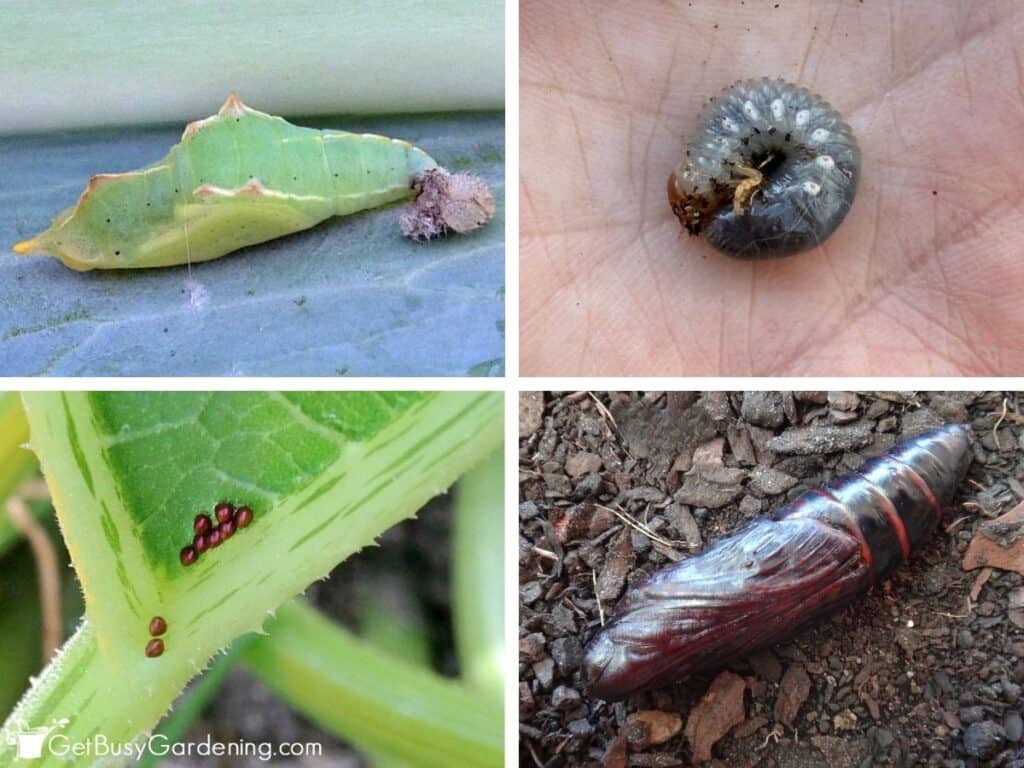
Many pests lay eggs, pupate, or spend the winter somewhere in or around your garden, patiently waiting until conditions are right so they can emerge and attack your plants again.
So it’s important to become familiar with their full life cycle and what they look like at each stage.
Once you know that, you can look for ways to break the cycle before the next generation has a chance to damage your plants.
Depending on the pest, that might mean:
- Removing eggs before they hatch
- Protecting plants so adults can’t lay their eggs
- Cleaning up infested plant material
- Preventing pests from overwintering in your garden.
You don’t need to memorize the life cycle of every bug, but learning how pests reproduce and survive from one season to the next can help you break the cycle of recurring infestations.
A Healthy Garden Helps Keep Pests Under Control
Having a completely pest-free garden is an unrealistic goal. You’ll never be able to eliminate every single bad bug, and you shouldn’t try.
The key is growing a healthy, balanced garden where your plants can thrive despite having a few bugs munching on them.
And that’s exactly what I teach you inside the Garden Growth Course.
You’ll learn my simple, step-by-step system for keeping your plants strong, preventing problems before they start, and getting better, more consistent results year after year.
Join the Garden Growth Course today and start growing a thriving garden that practically takes care of itself.
More About Garden Pest Control
- How To Make A Homemade DIY Fruit Fly Trap
- How To Release Ladybugs Into Your Garden
- 85+ Deer Resistant Plants For Your Garden
- How To Use Japanese Beetle Traps
- Grapevine Beetle Information & Organic Control Tips
- How To Protect Grapes From Birds & Insects
- Facts About Ants In A Garden & Organic Control Tips
Share your tips for controlling garden pests in the comments section below!

Sharon says
How about grasshoppers? We have so many it’s called grasshopper hill. It is a yearly problem not to be ever gotten rid of. Help?
Amy Andrychowicz says
Ugh, that sounds very frustrating! With an infestation that bad, you’re definitely going to have to take a multi-level approach and use several methods (and have lots of patience). I would definitely try using physical barriers like row covers when the grasshoppers are really bad. That should help to protect the plants they like the best. Other methods like regular hand picking, introducing predatory insects (like lacewings, beneficial nematodes, ladybugs, etc), attracting frogs and birds to your beds, and spraying natural repellents will also help, though some will take time to work. The key to any bug infestation is to stay consistent, be persistent, and always maintain a healthy and chemical-free garden where natural predators can thrive, and mother nature can help you out. Good luck!
Jenny says
I know a great natural pesticide recipe that doesn't kill bugs so much as just ward them off, they don't like the smell or something.
Chop marigold leaves and mix in a bucket with a few garlic bulbs (chopped) and some crushed chillies. Add a sprinkle of baking powder and wood ash, and a small chunk of soap, mix it up, cover with water and then add a lid and leave for 4 days.
Amy Andrychowicz says
Great, thanks for sharing your garden pest repellant recipe. I will have to give it a try!
Billie Jo says
Your cauliflower leaves look my cabbage leaves! Same culprit, I'd guess?
Amy Andrychowicz says
Yes, most likely. That damage is caused by cabbage worms, a very common garden pest on all types of brassica plants. Look under the leaves, that’s where the buggers like to hide. They are green caterpillars. Easy to pick off and drop into a bucket of water, or squish them. Here’s more details… How To Get Rid Of Cabbage Worms Organically.