Iris borers can be a major garden pest, and difficult to diagnose until it’s too late. In this post, I’ll tell you all about this dreaded bug. Including what they look like, where they come from, their lifecycle, damage to plants, and most importantly, how to get rid of iris borers, and prevent them from ever coming back.

Unfortunately most plants have at least one type of pest that loves to feed on them. Controlling garden pests is a part of nature, and irises are no different.
The iris borer is one of the most frustrating and destructive pests there is for flower growers. There’s nothing more disheartening than to discover these nasty worms in iris bulbs.
Fortunately it’s a problem that is fairly easy to solve, as long as you are diligent. Plus, there are a few different treatment methods you can use.
In this detailed guide, I’ll show you all you need to know about getting rid of iris borers. Follow the control tips if you already have an iris borer problem, and then find out how to keep them from ever coming back!
Why Are My Iris Dying?
This is a common question I get asked a lot. Unfortunately, many times the reason why irises start dying is because of an all-too-common pest that we can’t easily see – the iris borer.
So, if your plants are dying, and you have no idea why, then keep reading to find out if this could be your problem too.
What Are Iris Borers?
The iris borer is the larvae of a moth called Macronoctua onusta, which are most often referred to as the “iris borer moth”.
Macronoctua onusta is commonly found around North America. The larvae are a very destructive pest, though they are harmless in their adult form.
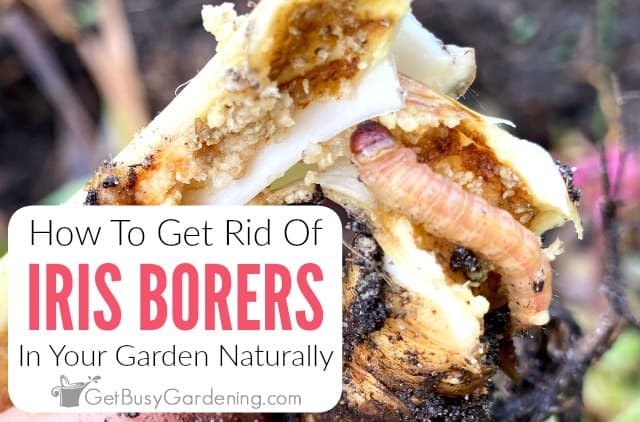
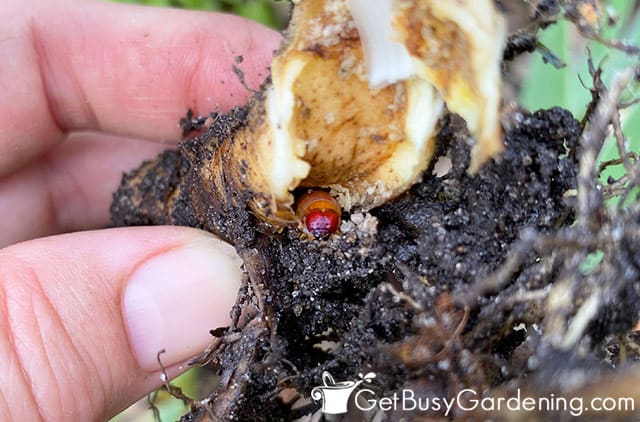
They get their name because the larvae bores into iris bulbs, and eats them from the inside out. This feeding habit makes them impossible to see, and difficult to get rid of.
Related Post: How To Get Rid Of Squash Vine Borers Organically
What Do They Look Like?
In their adult form, iris borers look like any other moth you would see fluttering around at night. They are about 2″ long, with brown wings.
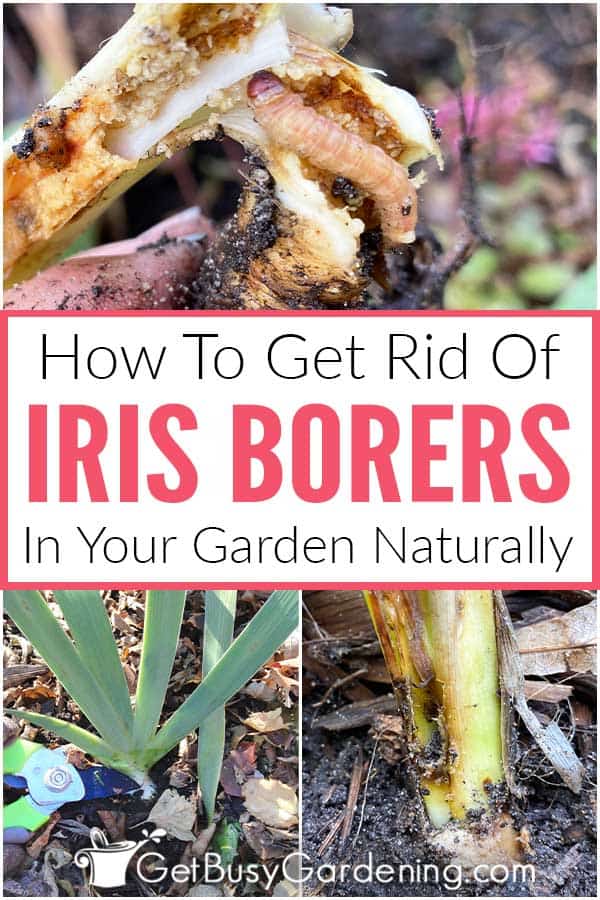
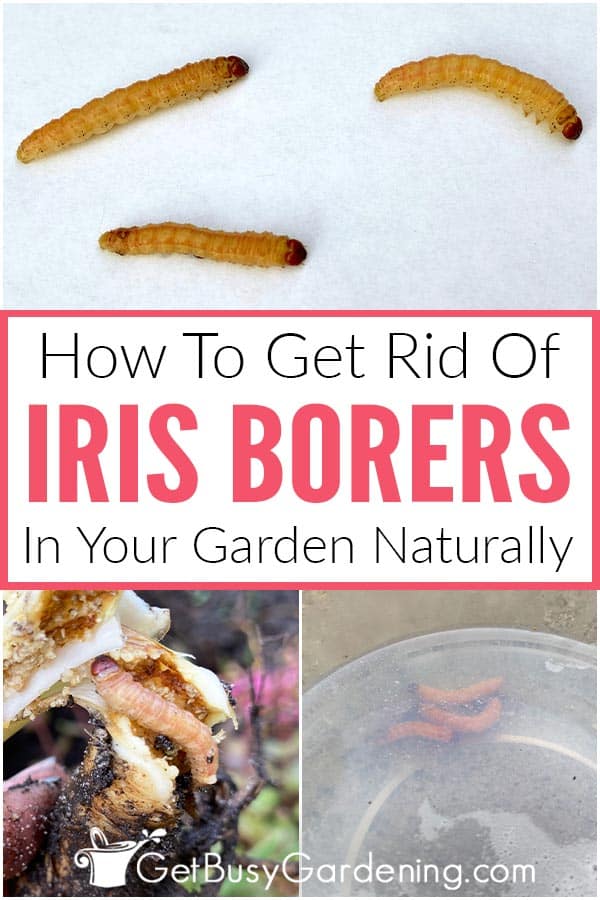
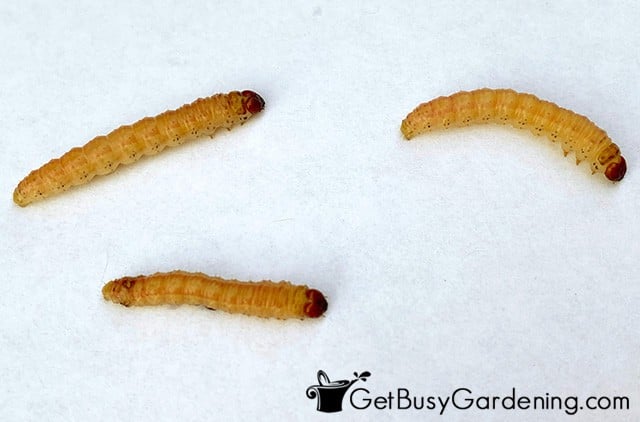
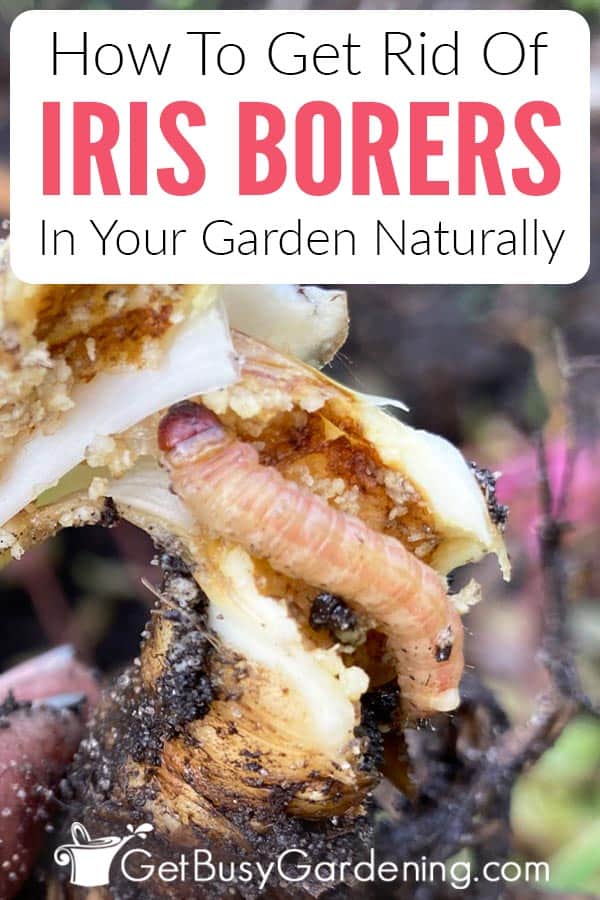
Iris borer larvae on the other hand are easy to identify, they look like pink caterpillars. They’re tan to light pinkish in color, with a dark red head, and tiny dots all along both sides of their body.
When you disturb them, they sometimes excrete a yellow-colored substance from their mouth. Of course, the most telling characteristic of all is the fact that they are found inside of an iris bulb.
Iris Borer Life Cycle
There are four phases to the iris borer life cycle: eggs, larvae, pupa, and adult. Female moths lay their eggs on the leaves in the late summer and early fall, which is where they overwinter.
The eggs hatch in early spring, and the borers emerge. These tiny larvae burrow into the bulb shortly after hatching, where they feed until they are large enough to pupate.
Once large enough (sometime in mid-late summer), the larvae move into the soil to pupate for a few weeks. Adults emerge sometime in the late summer or early fall, and begin laying their eggs.
Where Do They Come From?
Since the moths can fly, they can come from anywhere. The moths are naturally attracted to irises, since that is their main host plant.
So unfortunately, if Macronoctua onusta moths are present in your area of the world, then it’s a pretty sure bet that they will eventually find your irises.
Related Post: How To Get Rid Of Cabbage Worms Organically
What Do Iris Borers Eat?
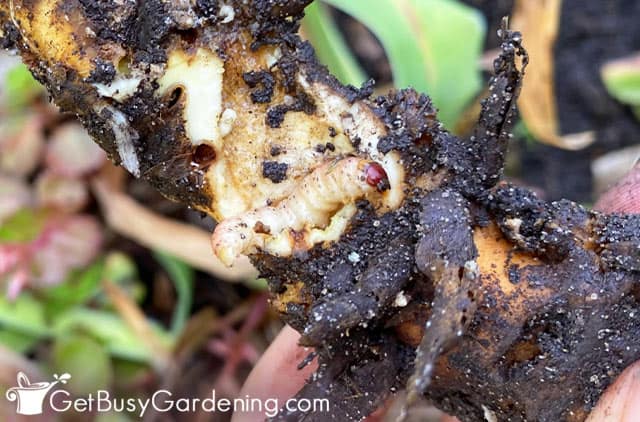
Iris borers burrow into the bulbs, and feast on them from the inside out. They can eat any type of iris species, but bearded varieties seem to be their favorite.
Though they don’t eat the foliage, that is usually their main entry point into the bulb. So, you will likely see a hole somewhere at the base of leaves.
Iris Borer Damage To Plants
Unfortunately, these sneaky little devils do their damage underground. So, you won’t notice it right away.
The first sign you will probably see is that the leaves are turning brown, and the plant looks like it’s dying. But even then, it takes a keen eye to spot the signs of an iris borer infestation.
Signs Of The Iris Borer
If you have an iris plant that is turning brown, then get down on your hands and knees to take a closer look. Here are a few sure signs of an iris borer infestation…
- Tan colored streaks on the foliage in early summer
- Leaves that turn brown in the late summer
- Holes in the leaves towards the base of the plant
- Mushy stuff that looks like sawdust around the bottom of the plant, or the tops of the iris bulbs
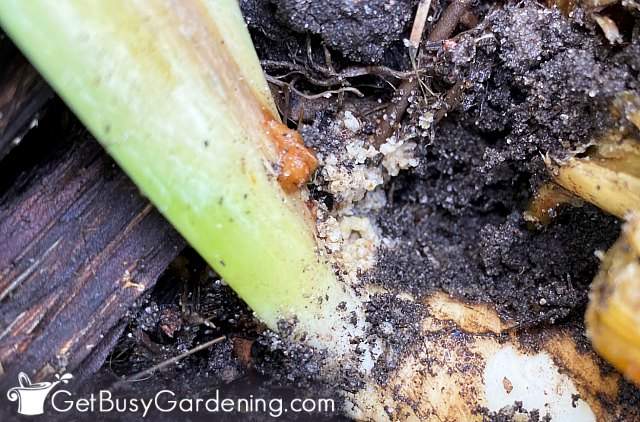
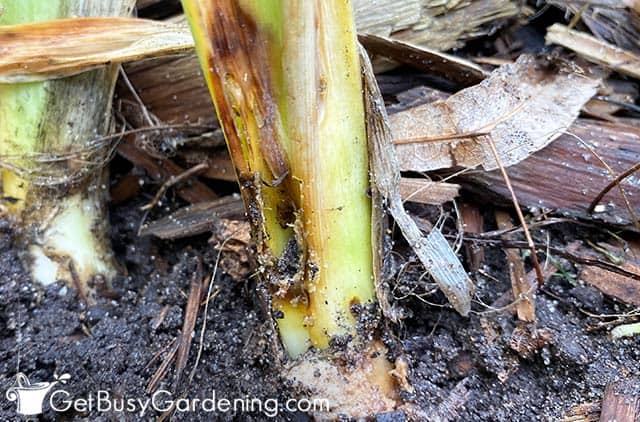
- Stem of the plant is mushy, and seems to be rotting
- Soft or mushy bulb that appears to be rotting
- Pinkish or tan colored worms inside of iris bulbs
Organic Control Methods
Once the iris borer has entered a bulb, pesticides will have no effect on them. But there are a couple of things you can try to kill them before they bore into the bulb.
Beneficial nematodes
These predatory parasites can attack and kill the iris borer larvae. There are lots of different species of beneficial nematodes, so look for one that preys on caterpillars.
To be effective, you must apply them in early fall, before the iris borer eggs hatch. Learn how to use beneficial nematodes here.
Spinosad Spray
If you’re looking for an all natural iris borer insecticide, then try using spinosad spray. Made from natural soil bacterium, spinosad can kill the larvae before they enter the bulb.
However, there’s a very short window of time that it will work. It must be sprayed when the eggs are hatching, before the larvae bores into the bulb. So it can be difficult to get the timing right.
How To Get Rid Of Iris Borers
Unfortunately, the only way to get rid of iris borers that have entered the bulb is to manually remove them. There are two ways to do that…
Dig Them Out By Hand
This is the most disgusting method you can use to get rid of iris borers, but oddly the most satisfying. Dig up the infested bulb, and find the spot where the borer entered.
Then carefully cut the hole larger, until you see the worm. You can either pluck it out of the bulb, or stick a sharp object in there to squish it.
I pull them out, and then drop them into a container of soapy water. They can’t swim, and will eventually drown, but it takes a long time in water alone. The liquid soap will kill them faster.
You can replant the bulbs if the damage isn’t too bad. But, if they are badly damaged or rotting, then it’s best to just discard them.
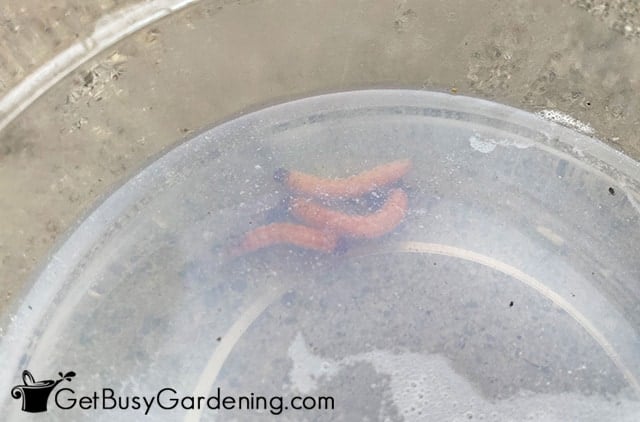
Soak Iris Bulbs In Soapy Water
If you don’t like the idea of digging the nasty worms out of your iris bulbs, then you can take more of a passive-aggressive approach.
Dig up the bulbs, and place them in a bucket of soapy water (this soap kills them faster). Some people like to use bleach for this method, but there’s really no need to use such a harsh chemical.
Once they’re submerged in water, the borers will exit the bulbs, and then drown. Soaking them overnight should do the trick, but you could leave them for a day or two, just to be sure.
How To Prevent Iris Borers From Coming Back
Getting rid of iris borers can be a very manual, gross, and frustrating process. So, it’s best to try to avoid them all together, right?
Preventing an infestation is actually very easy. In fact, my irises have been borer free for over 10 years!
Grow Resistant Varieties
Though the iris borer can feed on any type, Siberian varieties are more resistant to them. Once I learned this trick, I planted a bunch of Siberian irises in my yard.
They are just as gorgeous in the garden, and I’ve never had any issues with the borers attacking them. Woohoo!
Cut Back Your Irises In The Fall
This is my preferred method for preventing iris borer infestations in my garden, and it’s simple. As I said before, the moths lay their eggs on the leaves in late summer, where they overwinter until spring.
So, the best way to avoid iris borers is to cut down your plants in the fall. If you don’t have time to cut them back in the fall, then do it as soon as you can in late winter or very early spring. Here are the steps…
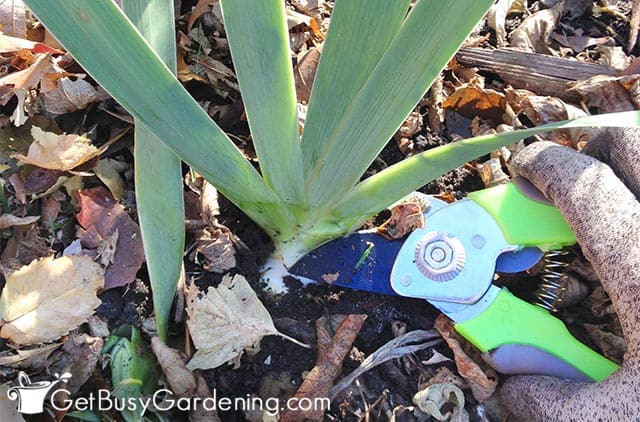
Step 1: Cut down the leaves – Using a sharp pair of pruners, cut the leaves all the way down to the tops of the bulbs. Take care to cut them back as far down as you can.
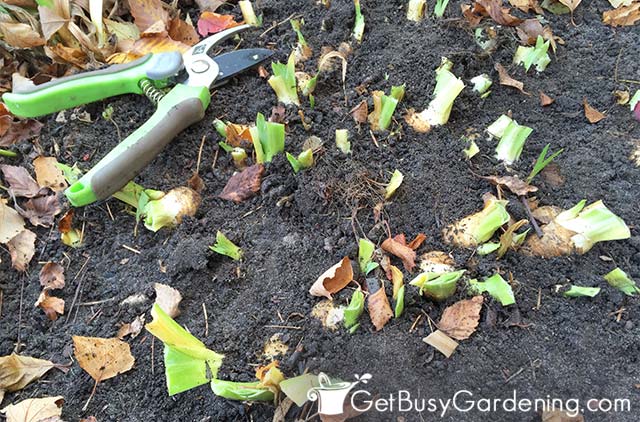
Step 2: Remove all the cuttings – Remove all of the leaves and debris that you can, so none of it is left in your garden. If you leave any of the cuttings in your garden, the eggs could still overwinter on them, and you don’t want that.
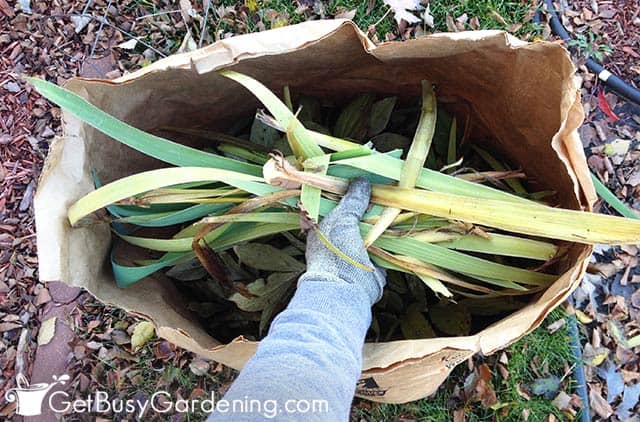
Step 3: Toss out or destroy the leaves – After you cut back all of your plants, throw the waste into the garbage, or burn it. Do not put iris foliage into your compost bin, because the borer eggs could just overwinter in there.
FAQs
In this section, I’ll answer some of the most frequently asked questions about the iris borer. If you can’t find your answer here, then ask it in the comments below.
Will neem oil kill iris borers?
Yes, technically neem oil would work to kill iris borers. However, since the borers feed on the inside of the bulbs, rather than on the leaves, it’s not a very effective treatment method.
If you do want to try it, be sure to treat the base of the leaves several times before the borer is able to enter the bulb.
Getting rid of iris borers is not difficult, though it may be a bit cringe-worthy. That’s why it’s best to prevent an infestation in the first place. Now that you know the easiest way to control iris borers, you can feel confident that your flowers will be much safer.
More Posts About Garden Pest Control
- Natural Pest Control Remedies For Your Garden
- How To Get Rid Of Slugs In The Garden Naturally
- Grapevine Beetle Information & Organic Control Tips
- How To Get Rid Of Hornworms
Share you iris borer control tips in the comments below!

Judy Bequeaith says
Started inspecting my beds today and found 2 borers. Cut them out and drying the rhizomes for re-planting . Lots of rain recently.
Have many more to dig/inspect tomorrow. Thank you for the excellent information and helpful comments.
Susan J says
If borer eggs fall a foot or so away from the plant, can the larva still find the plant? Thanks! Just wondering how much mulch to remove
Amy Andrychowicz says
While it’s certainly possible that the iris borer eggs could hatch in the mulch and the larvae could find the plant, it’s more likely that they wouldn’t survive. As long as you cut back the foliage every fall and discard it, I personally wouldn’t take the time to remove any of the mulch.
Colleen says
I had iris borers last summer — I couldn’t figure out what was wrong with my plants until I did some research. Last fall I cut off all the leaves to soil level and this year they don’t seem to be around. I’ll keep doing the same, and hopefully they’ll stay away. Informative article, thank you.
Amy Andrychowicz says
Yay, I’m so happy to hear you were able to prevent iris borers from infesting your plants this year! Yes, cutting back the leaves in the fall is key to keeping them away, since the adult lays her eggs on the foliage in later summer, where they overwinter and the borers hatch in the spring. So make sure to toss the leaves in the garbage or destroy them, don’t put them in your compost bin.
Marcie R says
Amy, I just removed all my bearded iris’ just because, when trying to make room for another plant, I discovered the iris borer. I tossed the ones that were affected by the borer and soaked the other ones over night. I will give some away, .but have some questions. 1) Will any borers that fell out during removal survive in the soil? If so, should I wait to replant? I don’t want them returning when I replant them. 2) After soaking and before planting or giving away, how long will they survive out of soil? Or do I need to put in soil?
Amy Andrychowicz says
Sorry to hear you’ve found iris borers, bummer! Here are the answer to your questions: 1) The iris borers that are in the soil will no longer feed on the bulbs, they drop into the ground to pupate. 2) It’s best to replant your bulbs within a few weeks, a month as the longest without taking the proper steps to store them for longer term. You can plant them in pots and leave them there until you’re ready to put them into the ground again if you’d like. Good luck!
Mel Berss says
I enjoy reading and cruising your website. Now I have a problem I can’t seem to find the answer to, so I’m hoping you can help. I have a blue water iris in a pot in a small pond, that seems to be infected with borers. I know I should have treated it w/insecticide earlier when the leaves were much shorter but I did not see the evidence until recently. In fact, it has buds and is about to bloom. So, what do you suggest? Should I take it out of the water, cut it way back (sacrificing the blooms) and treat with insecticide (my idea) or what other alternatives do you suggest? Thank you so much for your reply.
Amy Andrychowicz says
Oh no, sorry to hear that your water iris is infested with borers, those darn pesky things! You could try digging the borers out of the bulbs, then you wouldn’t have to sacrifice the flowers. This might be easier with a water iris, since you don’t have to dig the bulbs out of the soil. Or maybe try soaking them in a bucket of soapy water, the soap should kill the borers. Good luck!
Wendy says
Very helpful. Thanks. I am digging out iris from bed to thin and replant back into same bed. When digging them up last nite, I saw one borer in ground after I removed clump of iris. I will soak plants as you suggested but do I need to do anything to soil before replanting in same bed
Amy Andrychowicz says
You can till or turn the soil to expose the iris borers and/or pupa, which will either kill them or make them easy picking for the birds to eat. Hand pick and destroy any that you see. The best way to prevent them next year is to cut the foliage all the way down to the ground in the fall, which is where they overwinter. That way, you get rid of any eggs that are on there.
Richard Boettcher says
Very informative presentation I also have a borer invasion. I have dug up all the irises and inspected each one, found numerous borers both large and a few small ones. I dug them out and .cut back the leaves and checked all for holes or soft spots. Can i use a sulfur powder spray on them now before replanting as I need some time before doing so. If soaked ,and dried won’t the rot before planting?
Amy Andrychowicz says
Bummer, sorry to hear about your iris borer infestation. You only need to soak the bulbs overnight in order to kill all of the borers, so they won’t rot in the water. If you want to dust them with sulfur, then do it before replanting them. If any of the bulbs are heavily damaged, then they may still rot regardless of what you do. Good luck!
Rachl says
Are there any plants that naturally repel iris borers?
Amy Andrychowicz says
Not that I know of.
Carrol says
I have just removed and destroyed nearly half my iris bed, due to the infestation of the worm. Is it wise to replant them in the same bed? If so, how long do I wait to replant the treated iris?
Amy Andrychowicz says
Oh no, sorry that your irises have been infested with the borer, that’s never fun! You can plant your treated irises right back into the same bed. It really doesn’t matter, since the adult moth can fly, and will find them even if you put the someplace else. As I mentioned in the article, the best thing to do is to prevent future infestations by cutting back the foliage in the fall or very early spring to remove the iris borer eggs. Good luck!
Eva says
I’ve always cut iris leaves down to the ground every fall. But the darn borers have infested all of them anyways. How? And how can I avoid it in future?
Amy Andrychowicz says
Bummer that the borers still found your irises! Make sure that you cut all of the foliage off the plants, and don’t leave any of it anywhere in your garden or compost bin. Iris borer eggs can still overwinter on the foliage even after it’s been removed from the plant. Also, you could try washing the remaining nubs with soapy water after pruning (use a mild liquid soap, and test it on a few leaves first). That will destroy the eggs. One other thing to try, check your irises in later winter/early spring, and remove any foliage that may have grown in the fall after you cut them back. Good luck!
Judith Elliott says
I had a large bed of just iris for several years, some very old (my grandmothers),some newer (my mothers), some mine mostly Brecks. In late spring 2018 I noted poor growth, then leaves dying and horrific odor. Every plant was affected by those nasty things. I lost about 50 % of my plants (rhizomes) completely rotten. The rest I cut off leaves , took a sharp knife and scraped away all soft material from remaining rhizomes, then soaked then 2-3 hours in Clorox and water 1: 10, laid them in sun for. 2 days then replanted in new bed. I still haven’t replanted old bed. I sprayed plants with Neem oil when leaves grew this spring and I now have the most beautiful iris ever. No names until they bloomed, I just named them Stinky, Rotten, Smelly, Mush, Saved, Grace, Redeemed, Bored, Dead and gone.
Amy Andrychowicz says
Yikes, sorry to hear about the huge iris borer infestation you had. I can relate, because the exact same thing happened to me. It’s super frustrating! Glad you were able to save your irises, and love their new names! LOL!
Cydney Troyer says
Ok, borers – I’ve seen the worm and have the yellowish/tan mush. So I will dig up and soak the plants but do I need to treat the soil with anything to eradicate anything I miss?
Amy Andrychowicz says
Oh no, sorry to hear your irises are infested with borers! The best way to prevent them from re-infesting your bulbs next year is to cut down and destroy all of the foliage in the fall. Iris borer moths lay their eggs on the plants in late summer, and the eggs overwinter on the leaves. That’s why it’s important to destroy the foliage in the fall, which will also kill the eggs.
Sue says
Somewhere I read to add a little bleach to the water. Won’t that harm the bulbs, and if not, what is the dilution ratio??
nsjbs says
My Gardner friend always soaked the rhizomes in water with a little bleach so l do also esp when separating them. Always use a sharp knife to separate the rhizomes & if they break apart trim the ends to leave a smooth cut, no nooks & crannies
Danette Muscarella says
I read that the dilution ratio is 1 part bleach to 9 parts water.
TJ says
I have several beds with Iris. One bed had prob half the Iris plants with the leaves turning brown. I thought it was time to thin them, so I dug them up. As I was trimming the bulbs, I ran across the first worm. Many of the bulbs were turning sort of mushy. After examining the bulbs more closely, I started seeing the pattern of the brown streaks on the stems, The small bore holes etc. I went ahead and trimmed the rest of the bulbs being very careful to closely examine every bulb for any signs of the invader. I lost probably half of the bulbs from that one bed. I do not see any infestation in any of my other Iris beds.
I always have made it my practice to cut the leaves and stems in the fall and take the clippings to the local brush dump. Most of my Iris are probably 20 or so years old. This is the first time I have ever had this issue. I am going to thoroughly wash my remaining bulbs and replant them after I treat the soil with an insecticide. If anyone has any other suggestions or ideas, please let me know.
Amy Andrychowicz says
You can also try soaking the bulbs in water. The remaining iris borers will leave the bulbs and drown. Other than that, you’re doing all the right things to get rid of the infestation.
TJ says
Actually, I did go ahead and soak them just to be sure. I wasn’t sure how long to do it, but I kept them in water for about 2 hours. I emptied the water out and laid them out to dry. I didn’t find any more borers, and the bulbs seem to be ok. We’ve has a lot of rain, and I’m just waiting on the ground to dry a bit so I can replant them.
Theresa says
I am dealing with the iris borer right now , if I wait until fall to cut them back I fear I won’t have any bulbs left .Is there anything I can do now at the beginning of July.
Amy Andrychowicz says
Once the borers are in the bulbs, it’s very difficult to treat them. If you don’t have a large amount of plants, you could try digging up the bulbs and soaking them in water for a day or two to kill the borers (the borers will leave the bulbs and drown), then replant them. But that’s not very practical if you have tons of irises. However, if that’s the case, then your irises should survive, even if you lose a few of the bulbs to the borers. Once you get into the habit of removing the foliage every fall, the borers won’t be as severe (and they may even go away for good!). Good luck!