Caring for indoor plants and keeping them alive during the long, cold, dark, and dry winter months can be very challenging.
That’s because most of your houseplants go into a state of dormancy or hibernation during the winter. So they don’t need as much water, fertilizer, pruning, or repotting as they do in the warmer months.
Because of this, you need to change your care routine to make sure they don’t start dying on you. In this post I’ll show you how to have the best success growing your houseplants in winter.

Caring For Houseplants In Winter
The biggest challenges people face with keeping their houseplants healthy through the winter are maintaining the correct amount of water, humidity, light, and temperatures, and dealing with bugs.
It’s also very important to understand that fertilizing, pruning, and repotting at the wrong times can put a lot of stress on a plant, or result in weak and spindly growth.
So below I will discuss the proper winter care for your indoor plants in detail, and tell you exactly how to adapt your routine to accommodate their changing needs.
Related Post: How To Overwinter Plants: The Complete Guide
Water
Since they are in a resting state, most houseplants don’t need as much moisture during the winter months. Because of this, overwatering is the #1 problem that people tend to have.
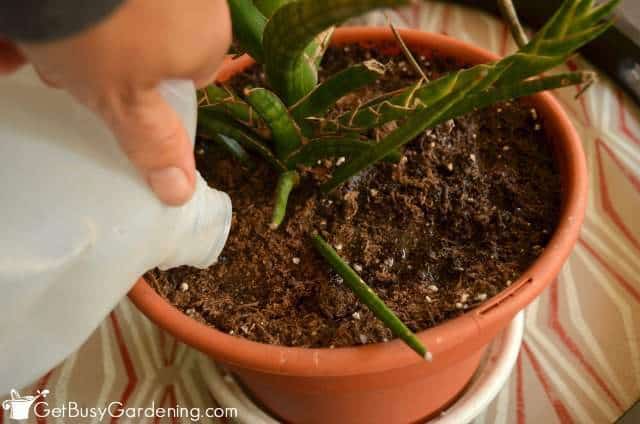
So it’s very important to slow down on watering your indoor plants. Rather than doing it on a set schedule, you should always check to make sure they need it before giving them more.
Stick your finger one inch into the soil. If it feels moist, don’t water it. To make it even easier to get the balance right, I recommend getting an inexpensive moisture gauge probe to help you.
Related Post: How To Melt Snow For Watering Houseplants
Humidity
Heating your house sucks the humidity right out of the air and makes it extremely dry, which is not very good for tropical plants. Low humidity can also dry out the soil faster, so you should check it more often.
You can get an indoor humidity monitor to keep track of how dry it is in your home. Here are a few easy ways to increase the humidity around your most sensitive babies.
- Add moisture to the air – Run a humidifier nearby or put your houseplants in a sunny kitchen or a bathroom. They will love the extra moisture in the air.
- Group plants together – Grouping plants together can help to raise the humidity level around them. You can simply move them closer together, or take it one step further and put smaller plants into the same pot.
- Add a pebble tray – Putting a pebble tray filled with water under the pot is another great method to try. But be careful to never allow the pot to soak in the water, and refresh it regularly so it doesn’t become stagnant.
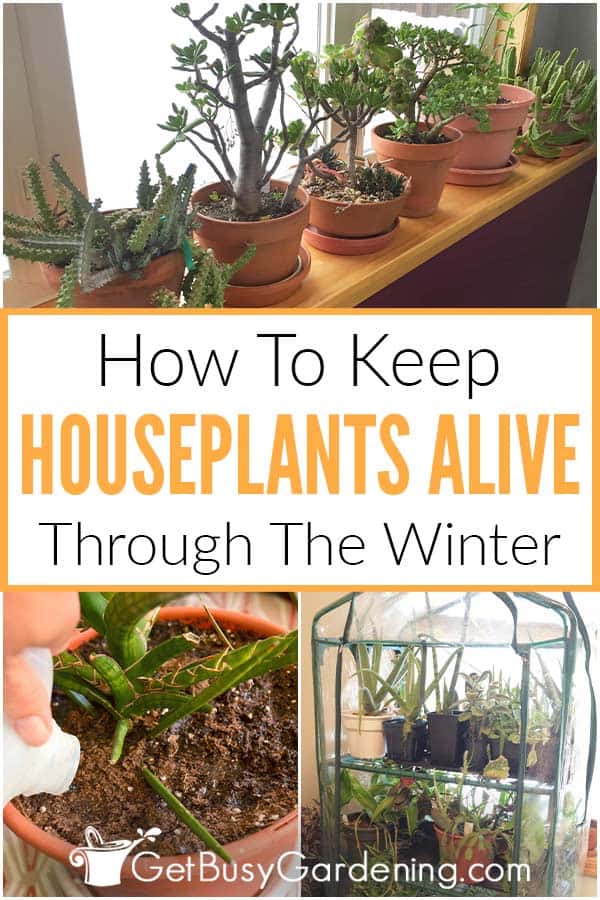
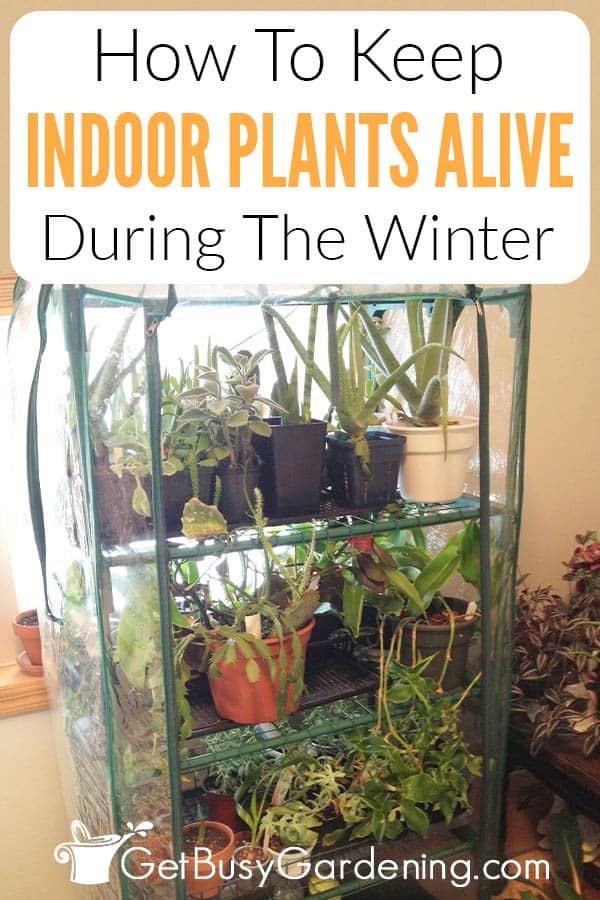
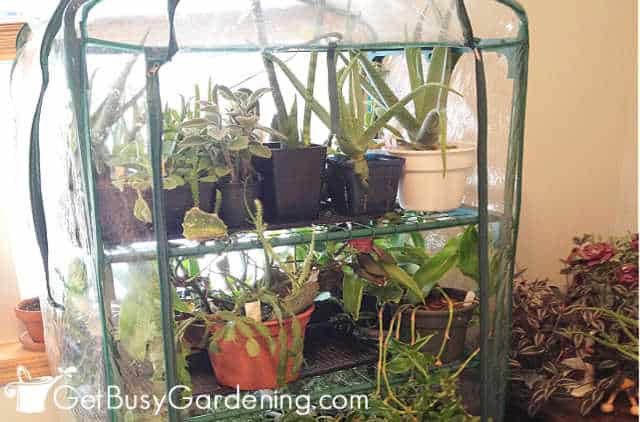
- Use a mini indoor greenhouse – I like to grow my fussiest plants together in my mini indoor greenhouse through the winter. That way I can be sure it’s never too dry for them, and I can easily hang lights in there too.
Keeping Indoor Plants Warm In Winter
The ideal indoor temperature for houseplants is 60-75°F, so you should grow them in a warm room.
Another way to keep them warm in winter is to run a space heater in the room. Just be sure to place the heater several feet away from your plants to prevent damage.
Also, houseplants don’t like drafts of any kind, especially very cold or hot blasts of air. So keep them away from doors or drafty windows, and heat sources like a fireplace or vent at all times.
Light
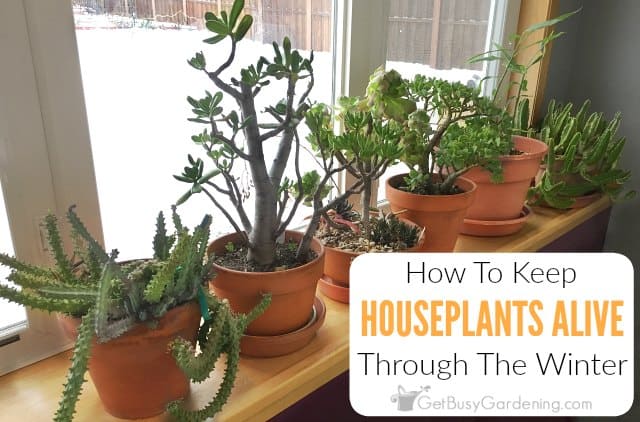
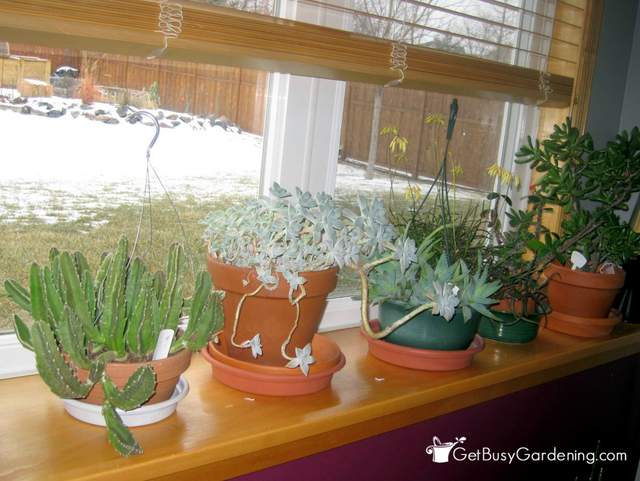
Since most indoor plants grow slower in the winter, they’re usually more tolerant of the naturally lower light levels. However, some will quickly become leggy if they don’t get enough.
If any of yours start to reach for the nearest window, or develop weak and spindly growth, that means it’s not getting enough light.
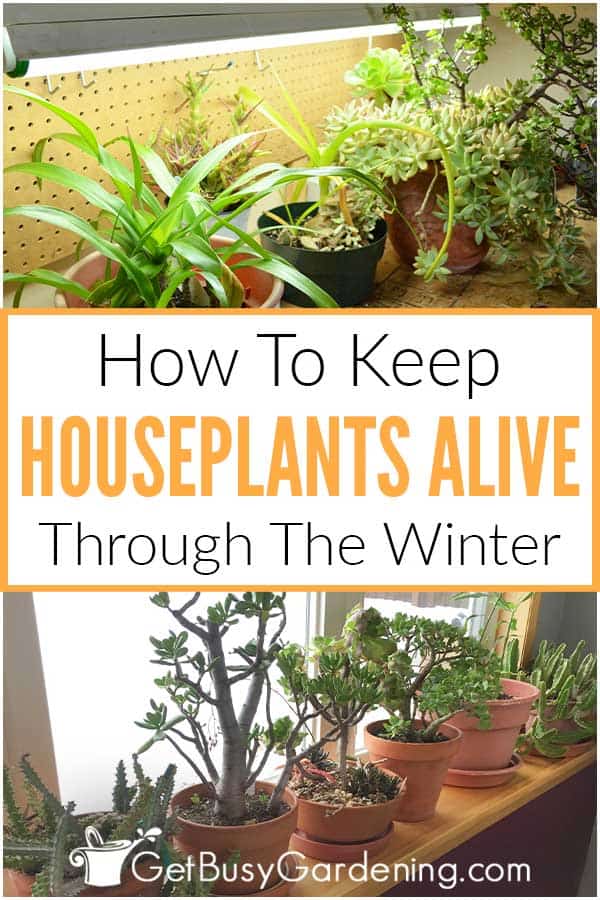
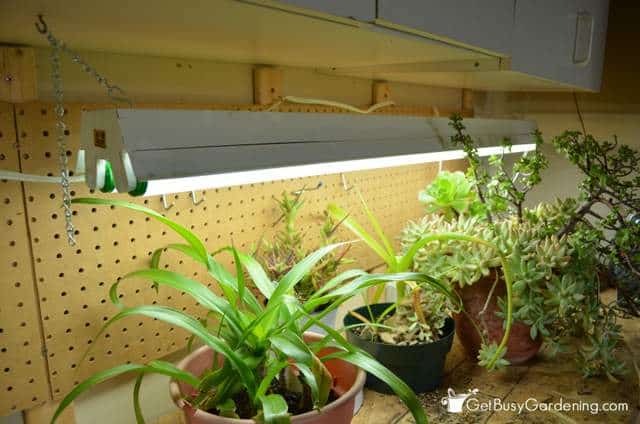
In that case, you’ll either need to move it closer to a sunny window or add a grow light. I like to plug my lights into an outlet timer to give my plants the perfect amount every day.
Related Post: The Best Indoor Houseplant Supplies, Tools & Equipment
Fertilizing Indoor Plants During Winter
Since most houseplants go dormant during the winter, you should not fertilize them. Feeding them can cause thin and scraggly growth, which is prone to bug attacks and sunburn.
It’s best to stop fertilizing them early in the fall, and then start again with a weak dose of a general purpose liquid in the spring.
Related Post: The Ultimate Guide For Growing Indoor Plants
Repotting
Don’t repot indoor plants during the winter unless it’s absolutely necessary. It puts a lot of stress on them and it can trigger new growth, which tends to be weak and leggy.
However, if the soil dries out almost as soon as you water it, or a plant is suffering because it is severely pot-bound, then you can repot it. Learn more about when and how to repot your houseplants here.
Controlling Bugs
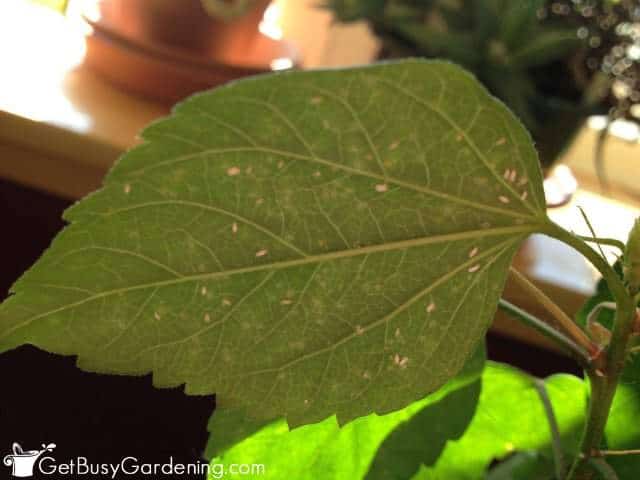
Winter is the prime breeding season for houseplant pests, and it’s the most common time for heavy infestations.
It’s very important to regularly inspect your plants for signs of bugs. The earlier you find them, the easier they are to control.
A good habit to get into is to check the leaves every time you water. If you find any bugs, start treating them immediately.
An insecticidal soap is the best for washing the leaves and killing bugs on contact (I make my own using 1 tsp of mild liquid soap to 1 liter of water).
I also recommend investing in some organic neem oil, which works to not only kill them, but it has a residual effect to prevent them from coming back. Learn how to get rid of houseplant pests here.
Pruning
Another thing to avoid during the winter is pruning your houseplants. You can remove dead leaves, stems, or branches at any time as you need to.
But pinching or trimming will stimulate new growth, which usually ends up being thin and unhealthy, and further stresses the plant.
FAQs
Most common indoor plants go into a dormant or semi-dormant state during the winter. However, there are a few types that grow and flower best during the colder months.
As a general rule, you should not fertilizer your indoor plants during the winter. Doing so can cause weak, spindly, or leggy growth that is prone to sunburn and bug infestations.
Yes. Most indoor houseplants need less water in the winter than they do during the warmer months when they’re actively growing.
You should not repot your houseplants in the winter unless it’s absolutely necessary. It’s best to wait until spring, otherwise it can trigger weak and scraggly growth and stress the plant.

If you want to learn all there is to know about maintaining healthy indoor plants, then you need my Houseplant Care eBook. It will show you everything you need to know about how to keep every plant in your home thriving. Download your copy now!
More Indoor Plant Care Posts
Share your tips for how to grow indoor plants in winter in the comments section below.

Nicole says
I’ve tried neem oil and not faithfully followed through with dish soap/water spray bottle to try and get rid of what I’ve always called soil bugs. They seem to just hatch and live in the potted plant soil and when they are able to fly cloud out of the pot when watering to spread to other plants, but they are not in all the pots like they prefer specific soil type or conditions. They have mostly looked like little black gnats and they have been super bad this year in Alaska. They don’t really appear to actually affect the plants themselves just the soil. What are they and what’s the best way to ANNIHILATE them!? Help they are driving me insane?!
Amy Andrychowicz says
Those pesky things are called fungus gnats, and here’s how to get rid of them.
Jessie says
The only thing you can do is repot all ur plants, I had the same problem so first I put them in my garage but that didn’t work because I figured out that they will stay alive until there is a plant to feed on.
Solution –
Repot all ur plants even if they don’t have the soil bugs in them just to make sure they all are gone.
??thank you and ur welcome!??
Amy Andrychowicz says
Actually, they only live in the top inch or so of soil. So, you don’t need to repot all of your plants. Just remove the top 1- 1 1/2 inches, and replace with fresh, dry soil. Much less stressful for your plants, and easier for us!
Nicole says
What are some tips on keeping your indoor/outdoor kitties from choosing to potty in dirt instead of their clean cat box during winter time?
Amy Andrychowicz says
I’ve got you covered, here’s a post that is all about that… How To Keep Cats Out Of Houseplants.
Fiona says
Really helpful, thank you for posting all of this!
Looks like you have some lovely plants – kitchen window is great place for them.
Thank you!
Amy Andrychowicz says
You’re welcome!
FranksGreenGirl says
My green thumb does not seem to work on my in-door plants lately. I don’t know if I’m not fertilizing enough watering too little or too much… I’m down to one plant now and have 3 large beautiful pots of dirt with twigs sticking out. Can’t think of the names right now but just wanted to say thanks for the article and if you have any ideas for great houseplants and tips for their survival in our extra long MN winters I will take them.
Amy Andrychowicz says
You’re welcome! Sorry to hear your houseplants aren’t growing well. You definitely shouldn’t be fertilizing them through the winter. Most houseplants go into a dormant state during the long winter months, and feeding them could definitely end up killing them. Also, most of the time overwatering is a big problem for indoor plants during the winter. Since they aren’t actively growing, then you don’t need to water them as much as you do during the summer. Good luck, hope this helps!
Emily says
I have a terrible black thumb, but my daughter keeps trying to have house plants, can’t wait to share these winter care tips with her.
Amy Andrychowicz says
Awesome, glad you like it! Thanks for sharing. 🙂
Julie says
These are great tips, and a timely reminder for me to check on the pelargoniums I am overwintering in my sons attic bedroom!
Amy Andrychowicz says
Awesome, glad you found the info helpful! 🙂
Janet Vinyard says
Hi Amy, Thanks for all the great tips! My aloe plant is enjoying a sunny kitchen window this winter! Blessings, Janet
Amy Andrychowicz says
You’re welcome! Sounds like the perfect spot for your aloe. 🙂
Kim~madeinaday says
Great tips! I agree the heaters are terrible for indoor plants.
Amy Andrychowicz says
Thank you!
Sonya says
Do have any tips on buying a grow light preferably under $50. I love my succulents and cacti but I’m afraid my new house does not have the same light as my old home.
Amy Andrychowicz says
I have a few smaller grow lights for my houseplants that need extra light during the winter… here are the ones I have
I have larger grow lights too, which would also work great for houseplants. I bought some inexpensive shop light fixtures (like these) and then put grow light bulbs in them. They work great!
Sonya says
Thank you
Amy Andrychowicz says
You’re welcome! 🙂
Ellie LaJuett says
Can neem be used on all plants? I am looking forward to doing a succulent garden this year. I will be looking forward to your tips and ideas!
Amy Andrychowicz says
I always test it before using it on a new plant. Some succulents are more sensitive and could be harmed if you spray anything on them. Test it by spraying it on one or two leaves and check on it after one week. If there’s no sign of damage, then you can feel safe to spray the whole plant. Be careful not to spray when the sun is out though, do it on a cloudy day if you can. Here’s more info about how to use neem oil on plants
PlantPostings says
Good post, Amy! I used to have houseplants, but gave up when my cats started eating them and using them as a litter box! I'm planning to start a terrarium one of these days, though.
Amy Andrychowicz says
Thanks Beth! I have one cat the likes to snack on them, but I can tolerate it. When mine were kittens, they used to hop up in the large pots and start digging in the dirt. I put a stop to that by covering the soil with tin foil. That broke them of it. 🙂 Oooo, have fun starting a terrarium! That will help to make it easier to grow indoor plants in winter for sure!
Debra @ Gardens Inspired says
Thank you for the tips, Amy. I do attempt to nurture some plants during Michigan's winter season and find they have a more difficult time thriving then. Although alive, I know they welcome Spring as much as I do!
Amy Andrychowicz says
You're welcome! I can relate to some of your houseplants limping along until spring, winters can be so darn long! By April, I can't wait to get my indoor plants back outside!
Sasha Dreamer says
I had quite a pleasant surprise this fall/winter. With the change in temperature and light, my orchids decided to bloom! I've been sure to keep their humidity up but have been absolutely blown away by their decision to rebloom. I also brought some plants inside and am hoping that with their direct southern location they'll get enough sun to survive winter.
Amy Andrychowicz says
That’s fantastic!! I guess it was happy with all the attention you've been giving it. Most of my houseplants grow great in the south facing windows. Some will start to grow leggy, but that's an easy fix by putting those houseplants under lights. Hope your plants will grow great all winter long!