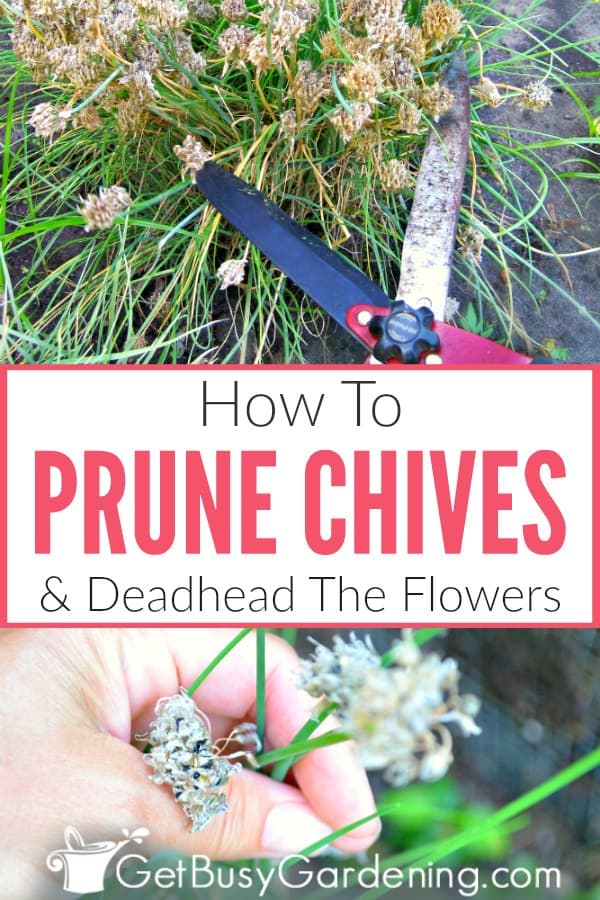
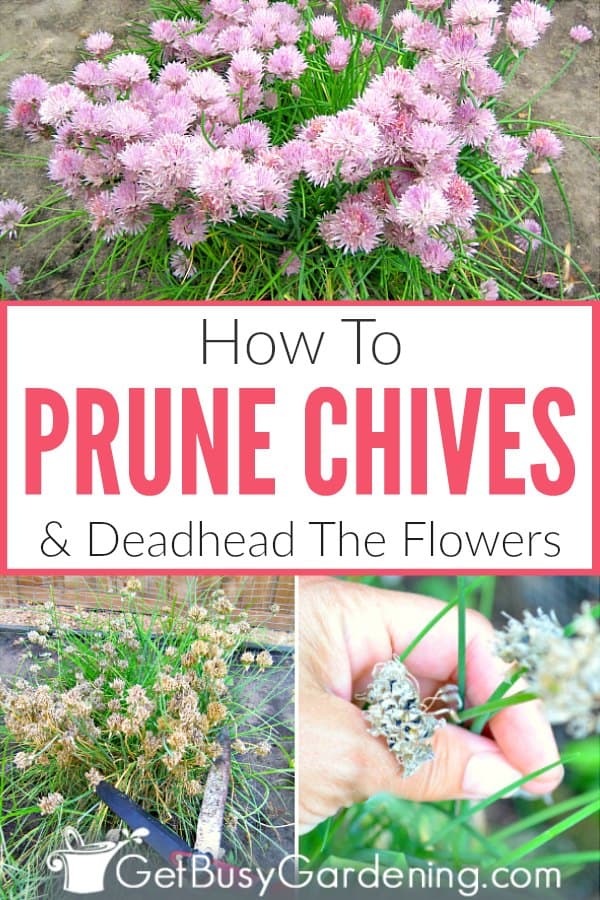
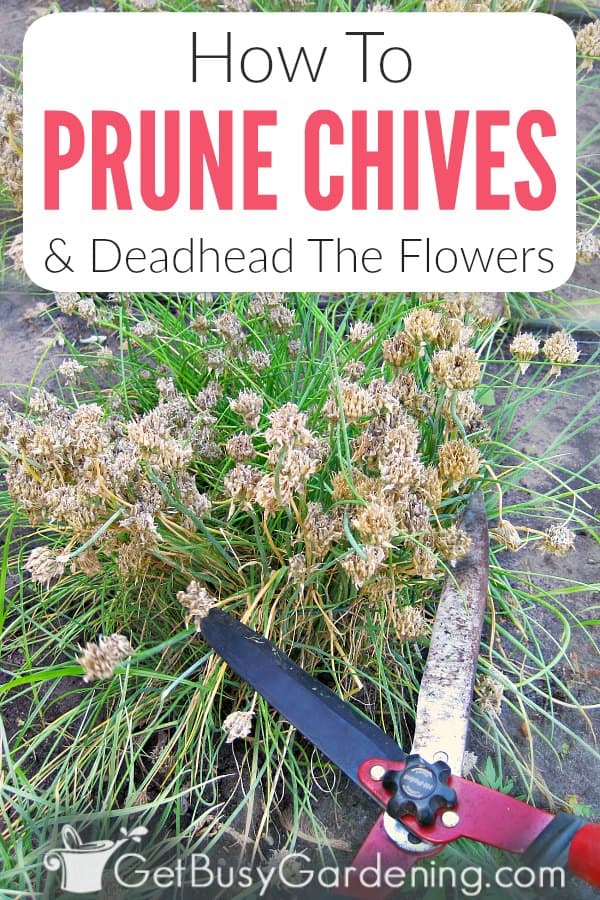
Pruning chives and deadheading the flowers are both very easy. In this post, I’ll tell you when to cut back chive plants and deadhead the flowers, discuss different tools and techniques to use, and then show you exactly how to trim chives, step-by-step.
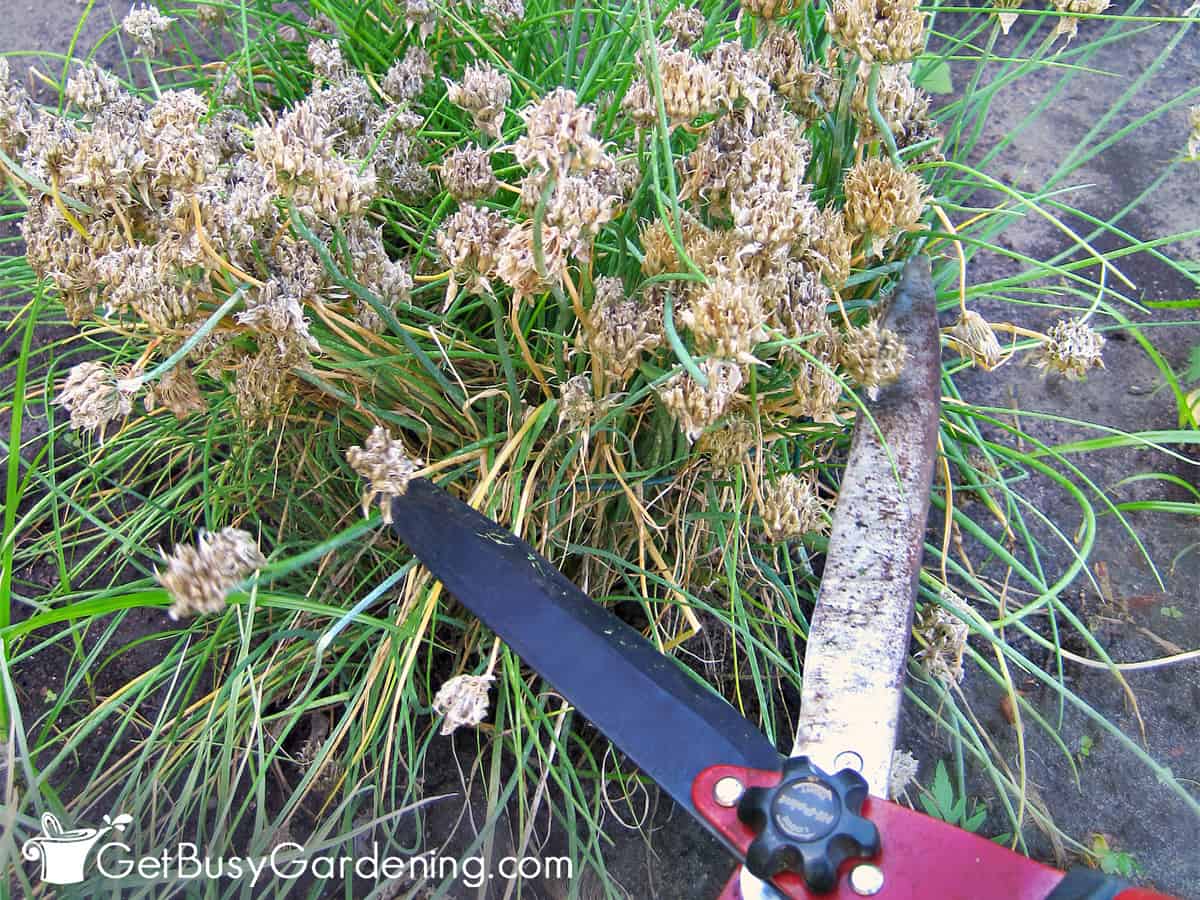

Chives are common herbs that get beautiful little purple flowers in early summer. Just like most plants, chives will benefit from regular pruning to keep them looking nice, and growing their best.
It’s also important to deadhead chives after they bloom, or they will spread all over your garden. The good news is that both are very easy.
Why Should You Trim Chives?
Pruning isn’t required in order to successfully grow tons of fresh chives. But, it is very beneficial to the plant.
So it’s a good idea to get into the habit of trimming chives regularly. Here are a few reason why it’s important to prune chives…
- Promotes new growth – Trimming back chives will help to promote new growth on the plant. And the tender new growth is the stuff that tastes the best.
- Keeps the plant looking nice – If you don’t prune chives, the plant can become overgrown, woody, and flop to the ground. Also, cutting chives back in the fall will keep your garden looking tidy.
- Prevents chives from spreading – Chives are aggressive reseeders. If you don’t remove the flowers before they set seed, you will find tiny chive plants all around your garden.
Related Post: How To Collect Chive Seeds From Your Garden
Techniques For Trimming Chives
Depending on what you’re trying to accomplish by pruning chives, there are three methods you can use. You could deadhead the flowers, cut back chives after flowering, or cut the plant all the way back to the ground.
Method 1: Deadheading Chives
The term deadheading simply means removing the flowers after they are done blooming. Deadheading chives keeps the plant looking nice, and prevents them from spreading.
Method 2: Prune Chives After Blooming
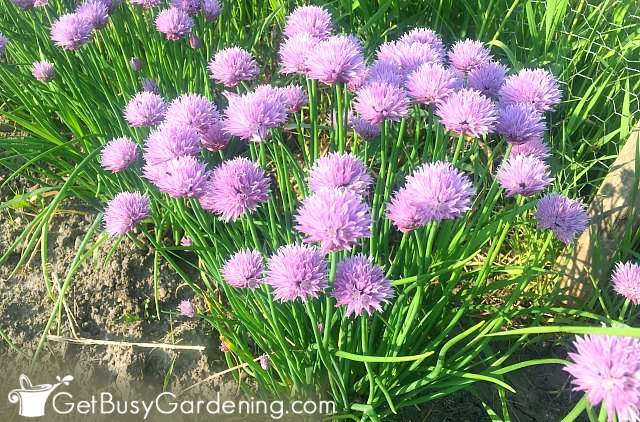
Cutting back chives after flowering will rejuvenate the plant, and encourage fresh new growth. Once the flowers start to fade, prune chives down half way to remove all the spent flowers.
Method 3: Cut Chives Back To The Ground
You can cut chives back to the ground at any time, and they will grow back. Use this method either in late fall once the plant goes dormant, or to revitalize overgrown chives anytime.
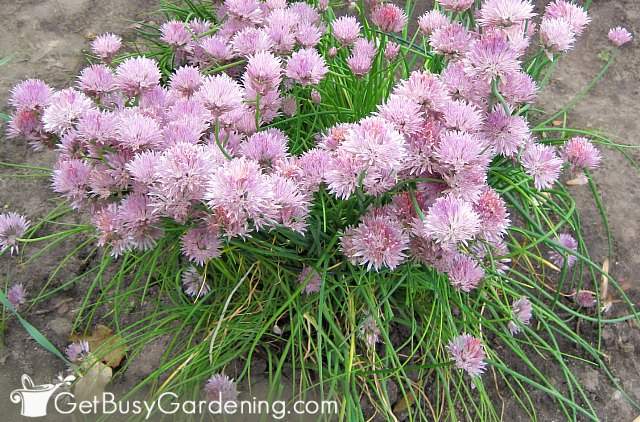
When To Prune Chives
When it comes to both pruning and deadheading chives, it’s important to get the timing right. But don’t worry, chives are very forgiving. So, you don’t have to worry too much about it. Here’s how to know when to trim chives…
- When to cut back chives – Chives are extremely cold hardy, and will start growing in late winter or early spring. So, it’s best to cut them down to the ground in late fall. You can also cut them back again after they’re done blooming to promote growth.
- When to deadhead chives – You can start deadheading chives as soon as the flowers begin to fade in early summer. Once the flowers turn brown, the seeds will be viable. So, don’t wait too long to deadhead them, or the seeds will start to scatter.
Related Post: Freezing Fresh Chives The Right Way
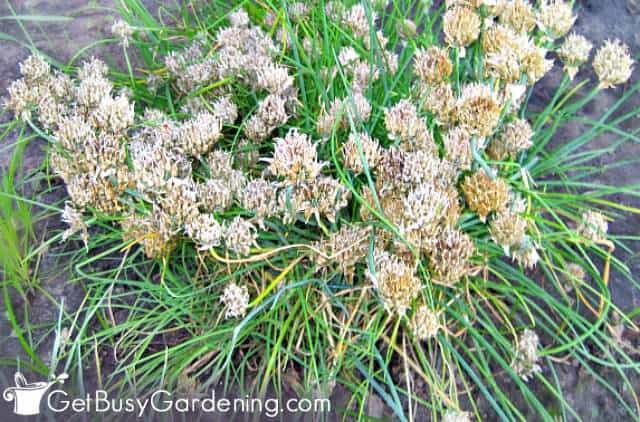
Tools For Pruning Chives
The good news is that it’s super easy to prune chives, so you don’t need to worry about being precise. When cutting chives back to the ground, it’s easiest to use hedge shears or an electric hedge trimmer.
If only you want to remove the flower stalks, then you can use precision pruners or a sharp pair of pruning shears.
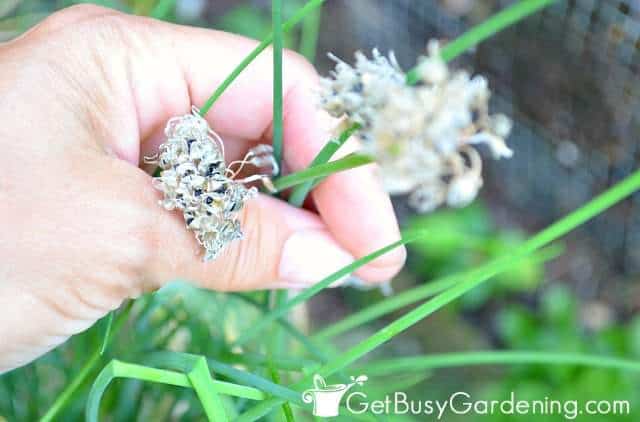
Otherwise, if you just want to deadhead chive flowers, then you can easily pop them off with your hands – no tools required.
Before you start cutting, be sure your tools are sharpened and cleaned. Chives have very thin foliage and flower stalks, and dull tools may not cut through them very easily.
Keeping your pruning tools clean will prevent the spread of diseases.
How To Prune Chives
Like I mentioned above, you don’t have to be precise when pruning chives. The plants are very forgiving, and you can’t kill it by over pruning. In fact, they grow best when they get a regular hard pruning.
The easiest way to trim chives is to give the whole plant a haircut. You can prune chives for shape if you prefer to keep things tidy. Otherwise, just go for it.
To make fast work of pruning chives, use hedge trimming shears to give them a quick trim. When I’m cutting mine down to the ground, I use my electric hedge trimmer to get it done even faster.
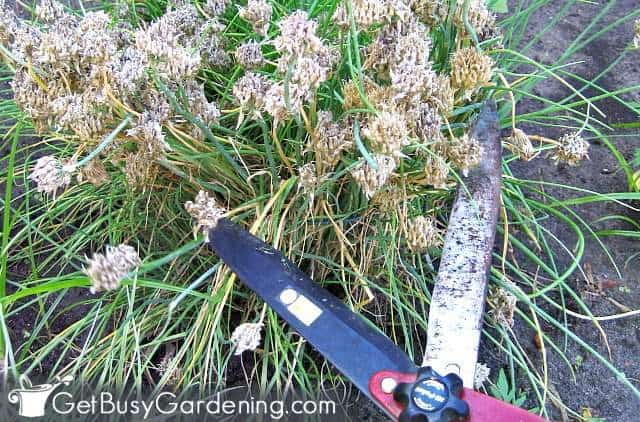
How To Deadhead Chives
You don’t have to worry about being precise about cutting off the flowers either. There are really only two ways to deadhead chives.
You could cut back the flower stalks, or you can just remove the blooms. Here’s how to deadhead chives…
- Option 1: Cutting back chive flower stems – The flower stalks will turn brown and woody after the plant is done blooming. Trimming chives keeps the plant looking nice, and removes the woody stems to you don’t accidentally harvest them – yuck! To remove them, simply cut each stem all the way down to the base of the plant.
- Option 2: Deadheading chive flowers – It’s perfectly fine to just remove the flowers, and leave the stems. It’s not going to harm the plant in any way. To deadhead chives, simply pop the flowers off using your hands. Or use precision pruning snips to cut them off.
Whichever deadheading method you choose to use, be sure to throw the flowers into the garbage and not the compost bin. Otherwise you could have chives growing everywhere.
Related Post: How To Harvest Chives & When To Pick Them
Pruning chives is easy, and doesn’t take much time. Whether cutting back the plant, trimming them for shape, or simply deadheading chives, choose the method that works best for you. Once you get the hang of it, you’ll be able to grow the best looking chives in town!
Recommended Reading
More Posts About Pruning Plants
- Pruning Lavender: A Step-By-Step Guide
- How To Prune Basil The Right Way
- Pruning Rosemary To Promote Growth & Larger Yields
- Pruning Russian Sage: Step-By-Step Instructions
- How To Prune Roses: A Step-By-Step Guide
Share your tips for pruning chives or deadheading the flowers in the comments section below.

Sally says
Why did my chives go flat instead of round and hollow?
Amy Andrychowicz says
The type with flat leaves are actually garlic chives.
Wendy says
They are garlic chives!
Bob says
Where should I cut chives that are broken?
Thanks,
Bob
Amy Andrychowicz says
You can cut them just below the spot where they are broken, or all the way down to the ground if you prefer. Chives are very hardy and will grow back even after a hard pruning. 🙂
Dawn says
Hi, I have an established chive plant in my herb garden that is about 2-3 years old. I really have never done anything with it except to cut off what I needed to use while the chives were edible.
I want to cut a chunk of it off to place in a pot to bring into my new sunroom so I may enjoy fresh chives all winter. Can I do that safely without killing the mother plant? Can you give me any advice about how I should do that? Any help will be appreciated.
Thank you!
Amy Andrychowicz says
Yes, chives do very well in pots. You can simply divide the rootball with a spade shovel to take the amount you want to pot up.
Pensy says
I tried deadheading my chive plant a few years ago but the ends turned brownish after I removed the flowers and the chives looked kind of witty. Is that normal? I just used my hands to pluck the flowers off. Is there something else I should be doing?
Amy Andrychowicz says
The stems that chive flowers grow on will eventually turn brown and die back, that’s normal. You can cut the flower stems down to the base of the plant. Or prune the whole thing as I describe above, if that’s easier for you.
Cindy E. says
Cindy E. would like you to also know that you can pick the chive flowers when they are blooming because they are edible. Same for garlic chives. Just pick the flower stalk and pull the little flowers right out of the head and sprinkle on salads or put on stir fries etc. They have the same flavor as the chive but a little more mild and they look really pretty.
jeanne says
Can I get my chives to bloom again this season?
Amy Andrychowicz says
Chives only bloom once per year, and there’s nothing you can do to get them to bloom again.
Julie Rositer says
Can you cut the purple flower blooms off the top of the chives and give them to a friend to plant their own chives ?? If not what other options are there ?? Thanks
Amy Andrychowicz says
Yes, but wait until the chive flowers have turned brown before you cut them off if you want to share the seeds. If you cut them off too early, they won’t be viable. Here’s instructions for how to collect chive seeds.
Keith pimblett says
Hi, can you do anything else with the chive flowers as well as putting them in salads ?
Many thanks, kp
Amy Andrychowicz says
Yes, it’s very popular to use chive flowers to infuse vinegars, oils, and butters. You can also use them in any recipe that calls for chives, but the flavor is milder, so keep that in mind.
Amanda says
Thank you so much for all this awesome information. Was not sure whether to cut the chive flowers off before they wilt but now I know. Again thank yoi!!’
Amy Andrychowicz says
You’re welcome!
Judy owensby says
Just wondering why my chive flowers are white yet you say the flowers are purple, does it make a different? I absolutely love chives/garlic plants. Thank you
Amy Andrychowicz says
You probably have a different type of chives growing than I do. The flowers on my garlic chives are white, so maybe you have garlic chives instead of regular ones. You can tell they are garlic chives because they smell like garlic.
No, there’s no difference. You can follow all of these same steps for pruning and deadheading garlic chives too.
Patti Burwen says
When deadheading the chives, do they need to be pulled by the root?
Amy Andrychowicz says
No, you can just cut or pick the flowers off of your chive plants.
Mijanou says
Should I cut the flowers off my chive plant or should I let them bloom? My plant is getting large and taking up more space than I would like, can I transplant it? Or will that kill it?
Amy Andrychowicz says
I like to leave the blooms on my chive plants until the flowers fade. The bees love them, and the fresh flowers are delicious in salads! Yes, you can divide your chive plant if you want more plants, or you can simply transplant the whole thing to another spot. They are very tough plants, so they transplant well.
Dee says
I am deadheading my chives today. Will composting the heads destroy the seeds so they don’t reseed when I spread the mulch next year?
Amy Andrychowicz says
If you know for sure that your compost gets hot enough, then it should destroy the seeds. I don’t put them in my compost bin because mine doesn’t get hot enough to kill them, and I know I’ll end up with chives growing all over the place.
David says
I’ve read that chive flowers are edible…? My year old (or two?) has just produced it’s first flower, I believe. It hasn’t opened – just swollen a bit at the tip. I was wondering, what do i do when my chives flower? Anything I should do now/upcoming?
Amy Andrychowicz says
Yes, chive flowers are edible. They are delicious tossed into salads, and you can use them in other recipes too. I’ve been meaning to try using them to infuse olive oil. Maybe this year! 🙂 No, you don’t need to do anything special when your chives start flowering. Just sit back and enjoy the beautiful flowers.
gail otoole says
yes chive flowers are edible and they look lovely on your salads
Clambake7 says
Thanks much for your tips on deadheading chives and for the accompanying pictures. The timing of this information is perfect for me. I planted chives last spring and they now look like your first picture with the pretty purple flowers. I was wondering what to do next, and now I know.
Amy Andrychowicz says
You are so welcome! Glad I could help. I love my chives when they are blooming too, they’re so beautiful!
Amy Andrychowicz says
Yes, that sounds amazing! I will definitely be trying out some fun recipes using my chives sometime soon!
Anonymous says
you can also make a wonderful chive vinegar with the flowers before they fade!