Overwintering hibiscus plants indoors is easier than you might think, and there are 3 easy ways to do it.
In this guide, I’ll show you how to keep a hibiscus over the winter, and share the three most effective methods to do it so that you can enjoy them all year long.
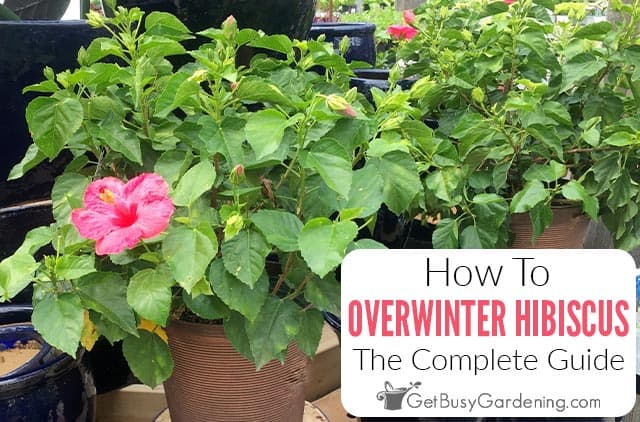

Tropical hibiscus is one of my favorite plants to overwinter inside. It’s really simple to do, and well worth the effort to save them.
It’s a huge money saver too, since they are expensive to buy every year. So, for me it’s a no-brainer to bring them in the house in fall, and move them back outside every spring.
Another reason I bring them indoors is because they’ll bloom all winter long in a sunny window. The bright, cheery flowers are a welcome sight when it’s freezing cold outside.
If you have a tropical hibiscus in your summer containers, and you’re wondering what to do with it in winter to keep it alive, then this article is for you.
Is Hibiscus Annual Or Perennial?
Though they’re sold at the garden center as annuals, tropical hibiscus are actually tender perennials that can easily be overwintered indoors.
The hardiness of the one you have depends on both the species and the climate you live in. There are a few hardier varieties that can survive outdoors down to zone 4.
But the ones sold in the tropical section won’t survive outside in cold climates. They’re only hardy in zones 10 and above.
Methods Of Overwintering Hibiscus
There are three ways to overwinter hibiscus. Choose your favorite method or the one that makes the most sense to you.
- Hibiscus can be brought inside and enjoyed as a houseplant
- They can be allowed to go dormant and stored for winter
- Cuttings can be rooted in water and replanted in spring
How To Overwinter Tropical Hibiscus
In this section, I’ll describe the three methods of overwintering hibiscus in detail. If you’ve never tried it, then I suggest choosing the technique that sounds most appealing to you, or experiment with a few of them.
Related Post: How To Overwinter Plants: The Complete Guide
1. Keeping Hibiscus As A Houseplant Through Winter
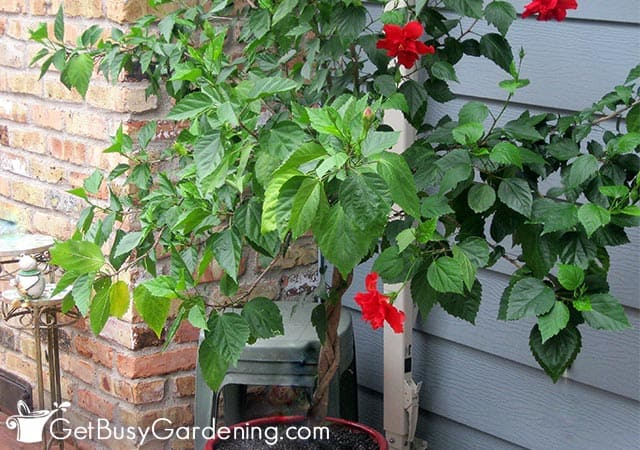
If your hibiscus is in a pot, then it’s easy to bring it indoors and keep it alive as a houseplant over the winter.
They aren’t too fussy, and don’t require much more care than your other houseplants. Just make sure to bring them in before the temperature drops below 60°F outside.
Depending on its size and the amount of space you have, you might want to cut it back first. You can prune the branches by as much as half without harming it.
Once inside, place it a warm spot near a sunny window. It’s common for them to go into a bit of shock after moving them in.
Some of the leaves and flower buds may turn yellow and drop off. This is normal, it’s just adjusting to the sudden change in environments. It should pop back in a few weeks.
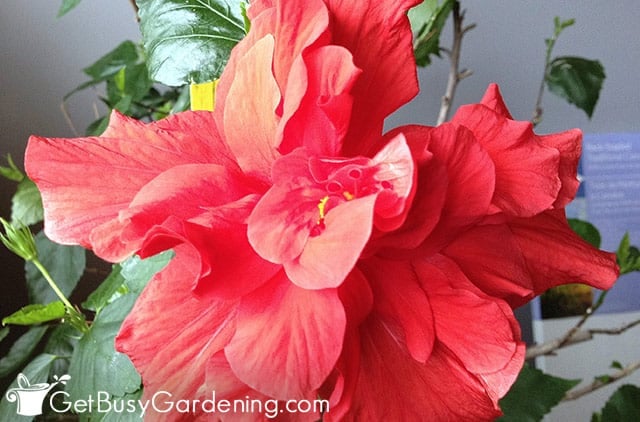
2. Overwintering A Dormant Hibiscus
Some people find it much easier to overwinter a dormant hibiscus, since you don’t have to worry about caring for a live plant.
If you want to try this, you can either wait until it naturally goes into hibernation on its own, or you can force it. Cool temperatures and drought are the main triggers.
To force dormancy, reduce the amount you water in the fall, and leave it outside until it gets down to 50°F. It will probably start dropping leaves and flowers, which is completely normal.
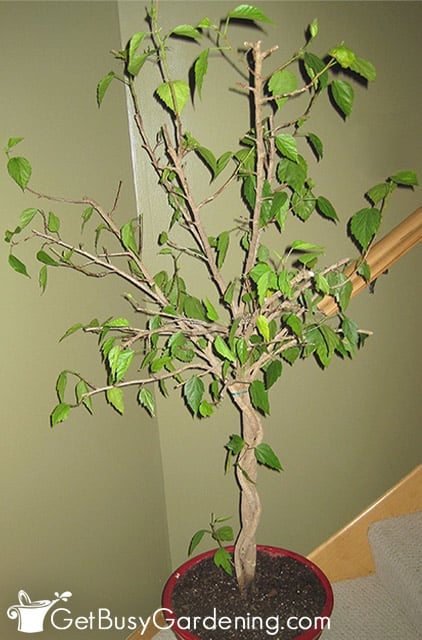
Once it gets too cold out, move it to a dark location inside the house. As it goes completely dormant, the rest of the leaves will eventually drop off.
Keep your dormant hibiscus in a dark and cool room through the winter, like your basement or a closet, and check on it once a month.
Water it very sparingly, and give it just enough to keep the soil from becoming bone dry.
3. Wintering The Cuttings Indoors
If you don’t have the space for keeping or storing a hibiscus, you can try overwintering some cuttings instead.
Take your cuttings before it gets below 60°F outside for the best results. They should be about 4” long and include several leaves.
Remove the bottom leaves and place the stems into a container of water. Over time, they should develop roots. Once they do, you can either leave them in the water, or pot them up in fresh soil.
If you want to keep them in water, refresh it if it gets scummy or as it evaporates. The water should always be above the roots so that they don’t dry out.
Bringing Hibiscus Indoors For Winter
Whichever method you decide to use for overwintering hibiscus, it’s important to bring them indoors at the right time. Here’s how to do it so they’ll have no problem surviving until spring.
When To Bring Hibiscus Inside
If you plan to keep live plants or cuttings, then bring them inside before the temperature drops below 60°F. This usually happens several weeks before your average first frost date in the fall.
Otherwise, if you want to force dormancy, then leave it outside until it gets down to 50°F. Always make sure to bring them in before the first frost or they may not survive.
How To Bring Hibiscus In For Winter
Before bringing a live hibiscus in for winter, you should clean it first to get rid of any bugs. Follow these instructions for debugging potted plants.
You can use that same method for the cuttings, or do it inside. I soak mine in the sink filled with water and a little bit of mild liquid soap for 10 minutes, then rinse them well.
Once you’re done cleaning it, choose a location for it before bringing it in so you don’t have to move it again. Moving it around too much can cause further stress, which means it may drop more of its leaves.
Hibiscus Winter Care Tips
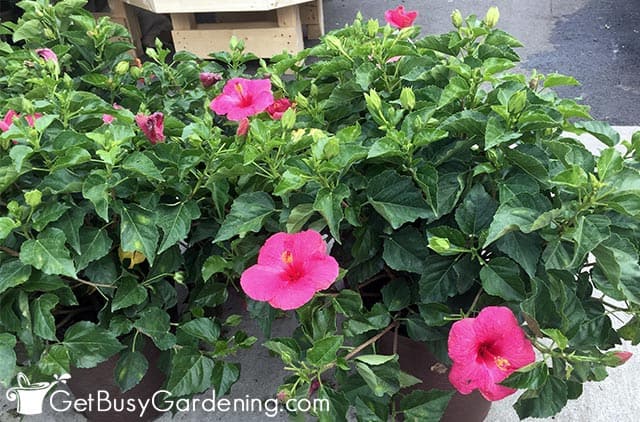
Though it’s pretty easy to overwinter a live hibiscus, they will require some care to keep them thriving. They need adequate light and water, and you might also have to do some bug control.
Light Requirements
When you winter a potted hibiscus indoors, give it as much sunshine as you can, such as in front of a south-facing window. Ideally it should receive at least 6 hours of natural sunlight a day.
If you don’t have a sunny window, then you can use artificial lights instead. In that case, set them on a timer for about 16 hours a day.
When they get enough light, they will stay more compact, and might even bloom for you. Otherwise, they can start to get tall or leggy.
Watering In Winter
It’s best to keep the soil evenly moist through the winter, and never allow it to dry out completely. If they get too dry, they will start to droop and might even drop some leaves.
Take great care not to overwater though, as that can cause root rot and yellowing leaves. If you struggle to get it just right, use a soil moisture gauge.
They like humidity too, so you could also mist the leaves with lukewarm water once in a while, or run a humidifier nearby.
Controlling Bugs
One of the biggest challenges of overwintering hibiscus indoors is bugs. Mine are prone to being attacked by whiteflies, but other pests can also be a problem.
So it’s a good idea to check yours regularly for signs of pests. If you find any, begin treatment immediately to avoid infesting your other houseplants.
If yours becomes infested with flying insects, hang a yellow sticky trap from one of the branches to capture the adults.
For bugs on the leaves, mix 1 teaspoon of mild liquid soap per 1 liter of water, or use organic insecticidal soap to wash and spray the leaves. Neem oil is also very effective to control bugs.
Get all the details about how to grow them in my complete care guide.
Bringing Hibiscus Out Of Dormancy
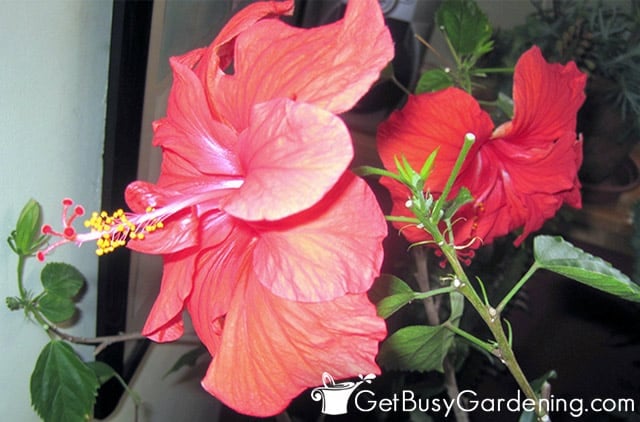
If you chose to let your hibiscus go dormant during the winter, follow these tips to wake it up and get it ready to bring back outside in the spring.
You can learn even more by reading my guide to bringing a plant out of dormancy.
When To Start Waking It Up
You can start to wake up your dormant hibiscus sometime in late winter. It’s best to begin breaking hibernation a month or two before your last frost date.
That way you’ll give it enough time to wake up slowly, and it will have plenty of time to get ready for life back outside. Here in MN, I start this process around February or March.
If you try to wake it up too fast, you could end up killing your plant, so it’s important to take your time. Keep in mind that it can take several weeks for them to show signs of life.
How To Break Dormancy
Start by moving your sleeping hibiscus out of the dark and placing it in a bright room. Don’t put it in direct sunlight though, filtered light is ideal.
Give it enough water to moisten the soil, but don’t overdo it. Over the next few weeks, keep the soil evenly moist and leave it where it is until you see the first new leaf buds.
Once that happens, give it a light dose (1/4 strength) of liquid fertilizer or compost tea. Adding slow-release granules will also help encourage healthy new growth.
Moving Hibiscus Back Outside After Winter
Moving a hibiscus outside after overwintering it indoors can be a bit tricky. You can’t just put it back in the same spot, it needs to get used to being outdoors again. Follow these tips for the best success.
When To Put Hibiscus Back Outside
It’s safe to put your hibiscus back outside in the spring when the overnight temperature stays above 60°F. I recommend waiting until after your last frost date to be safe.
If a late frost is in the forecast, then make sure to move it either back inside the house, or put it into the garage to protect it.
How To Move It Outside
Be careful when you bring your hibiscus outside. They need to be slowly acclimated to living back outdoors again.
Place it in a shady location at first, otherwise the direct sun can burn their tender winter leaves. Move them closer to a sunny spot each day for 10 days.
If you see any brown leaves or other signs of sunburn, move them back into the shade. After about two weeks they should be ready to sit in their final spot with plenty of direct sunlight.
Overwintering Hibiscus FAQs
Here are some questions people often ask about overwintering hibiscus. If you don’t see an answer to yours here, please ask it in the comments below.
Can I overwinter hibiscus in the garage?
You can overwinter hibiscus in the garage as long as the temperature doesn’t dip below 50°F. If it’s not dormant, make sure to either place it near a window or use a grow light.
Can I overwinter a hibiscus in the basement?
Yes, you can overwinter a hibiscus in the basement, it’s the perfect place to store a dormant plant. You can even keep a live plant in your basement, as long as there’s a sunny window or you use a grow light.
How do you overwinter a potted hibiscus?
You can overwinter a potted hibiscus as either a live plant or in its dormant state. If you want to keep it alive, then put it near a sunny window or add a grow light. Otherwise, slow down on watering and let it go dormant, then place it in a cool, dark room through the winter.
Does hibiscus lose its leaves in winter?
Yes, a hibiscus will lose some of its leaves in the winter. If it goes dormant it will lose almost all of them.
Can I leave my hibiscus plant outside over winter?
You can leave your hibiscus outside over winter if it is hardy in your climate. Otherwise you must bring it inside in order for it to survive.
Do hibiscus bloom in winter?
Your hibiscus can bloom in winter if you care for it correctly. Give it at least 6 hours of natural sunlight, or 12-16 hours of artificial light every day.
Overwintering hibiscus is easy enough for even beginners, and it’s fun too. It can save you time and money next spring, and you may even get to enjoy their showy blossoms all winter long.

If you want to learn all there is to know about maintaining healthy indoor plants, then you need my Houseplant Care eBook. It will show you everything you need to know about how to keep every plant in your home thriving. Download your copy now!
More About Overwintering Plants
- How To Overwinter Pepper Plants Indoors
- Overwintering Begonias: Storing The Tubers Or Keeping Live Plants
- How To Overwinter Brugmansia (Angel’s Trumpet)
- How To Overwinter Plumeria (Frangipani) Plants Indoors
Have you ever tried overwintering hibiscus? Share your tips in the comments section below.

Myrta says
Thanks for very helpful information. I did not see any mention of fertilizing. Should I stop entirely or feed my hibiscus just like I did during the summer? I am keeping t in it’s original pot in a south facing window. I live in Indiana Zone 5 & 6l
Amy Andrychowicz says
Great question! Yes, no matter how you plan to overwinter it, you should stop fertilizing your hibiscus in the late summer. Feeding it through the winter will trigger weak and leggy growth, which you definitely don’t want. You can start again in late winter/early spring with a weak dose of liquid fertilizer, gradually working back up to the full does by summer.
Debra Goff says
I’m in zone 9 and need to know if I can winter my hybiscus outside with a freeze cloth? Thanks.
Amy Andrychowicz says
It depends on the variety of hibiscus that you have, some are only hardy in zones 10+, but others are hardy in colder climates. You certainly could try covering it on the coldest nights to see if it will survive the winter. Otherwise, if it’s in a pot you can move into an unheated garage or other shelter to give it even more protection from the cold.
Terry says
Millie, last year I wintered over 4 hibiscus in pots outdoors with moderate success. I say this as the plants re-grew but were pitiously growth challenged and did not produce flowers. I added 2 hibiscus trees with intent to winter them over inside a new room addition we were working on where we now house a hot tub. The high humidity and constant controlled temp is just like a plant nursery for them. Still a beginning gardener, I want to treat them well and not over feed or water your thoughts?
Terry says
So sorry we are in North Al we’re such a thing is actually possible- on occasion!
Amy Andrychowicz says
I would recommend keeping your hibiscus alive as houseplants over winter instead of leaving them outside. Your greenhouse/hot tub room sounds perfect for them, and they’ll likely bloom all winter for you too!
Millie says
My hibiscus looks like it started to go dormant. I’m in MA and it has gotten into the mid 40s a couple times this month. I brought it in the house today but I don’t have a cool place to store it. My basement gets pretty warm from the furnace. Will it harm the plant if I try to let it grow in a sunny spot inside even though it has started to go dormant?
Millie says
Follow up: I just checked the low temps this month and it looks like we had one night below 32 and several nights in the 40s and 50s, so I guess it is dormant.
Amy Andrychowicz says
If it’s a tuberous begonia, then you probably won’t be able to stop the dormancy once it starts. I would find a pantry, cupboard, or closet to keep it in over the winter, wherever its coolest (it doesn’t have to be super cold). Could be a basement bathroom or a closet in the coolest corner of your house.
Bradley Stiff says
I have a hibby, that I’ve had for over ten years.
I have taken and cross pollinated it with blooms from the lowes nearby.
I have formed the seed pod , germinated the seeds.
The ” gran- plant” is four years, and never bloomed.
I havent a clue .
Next question is
The main plant only makes one or two blooms total each year. This plant made blooms the size of my kids head now, nada.
Am I doin / not doin something?
Any knowledge or tips you share are greatly needed and appreciated.
I’m
Amy Andrychowicz says
I would try repotting it in the spring, especially if it’s been in the same container for more than a few years, they can become pot-bound pretty quickly. Pruning in the spring and early summer will also help to promote fuller growth and blooming, as will feeding it with a fertilizer for flowering plants. But wait until spring to do that too, let them rest during the winter.
Cynthia says
Dear Amy,
Thank you so much for sharing your knowledge!
I purchased two potted hibiscus plants from a nursery in July. This is my first time having them and the blossoms were beautiful. They were in full sun on a south-facing deck. After a month, one began losing all its buds and leaves. On advice from the nursery, I added a blooming fertilizer to the plant water and it eventually recovered somewhat, although blooms were not as healthy-looking and it still had some buds drop off or die on the branch. When night temperatures here were predicted to go below 50, I moved both plants indoors near a south-facing window where they get several hours of sun each day. One plant has lost all its leaves and turned brown. The other lost most of its leaves but stem and branches are bright green. Is the brown one dead or just dormant? Should I move it to the basement for the winter?
Thank you in advance for any advice you can provide!
Amy Andrychowicz says
Hibiscus plants definitely don’t like the environment shift from being outside to indoors, and losing leaves is a very common response. They should recover in a few weeks and start putting on new growth, though it will be much more sparse than it is outdoors in the summer. It’s going to be hard to know if the brown one is dead or dormant until it starts budding again. You could try moving it to the basement and waiting until spring to see if it recovers. But if it’s brown all over, then I’m not feeling very optimistic.
Sue says
I live in central North Carolina not far from the mountains. I have a beautiful hibiscus I landed last spring. It has gotten very large with tons of blooms on it even after hurricane Ian came through. I cannot bring this into the house. This is my first Kant of this kind and I love it but I need to know how to keep it planted outside. It’s not unmanageable Andy neighbors even the mailman love it. I just can’t bring it in. Please advise. Thank you.
Amy Andrychowicz says
Some types of hibiscus plants are hardier than others. So whether it will survive the winter outdoors for you or not totally depends on the hardiness of the variety of hibiscus you have, and your growing zone. If it gets below freezing where you live, then a tropical hibiscus probably won’t survive outdoors no matter what you do. But you certainly could try covering it with frost cloth or burlap to give it a little extra winter protection, and see if that does the trick. Otherwise, if you could move it into a garage or shed, and let it go dormant, it might be warm enough in there for it to survive. Good luck.
Gina M says
Do I need to cut back my hibiscus if I am letting it go dormant in my garage?
Amy Andrychowicz says
No, you don’t need to cut back your hibiscus before overwintering it. The only reason to do that is if it’s too large for your space. Otherwise, wait until it has broken dormancy and put on several leaves in the spring.
Waheedah shabazz says
Hi Amy,
I appreciate you sharing your professionalism, your passion for gardening, and for giving us all this knowledge. For years I have been an advant gardener, but this year I tried growing an hibiscus tree…. I love it the red blooms are large although brief for one day, but the blooms are constant. Now that you have given me information about overwintering I will bring it inside. Also I read your article on coleus. I have the same plant I had last year. I took leave cuttings and put in water, in the spring I put it outside and my coleus is huge. You are right. Mine is green with burgundy stripes.
Again thank you so much.
Amy Andrychowicz says
Awesome, so happy to help! Good luck overwintering your hibiscus, hopefully it will flower all winter long for you!
Sue says
My son kept my hibiscus in his basement while I was in FL for 3 months. I am sure he never watered it. I have put it outside and the leaves on it are brown. There is no green whatsoever but the branches are pliable I am assuming that it is dead?
Thank you!
Amy Andrychowicz says
I would give it more time to see if it wakes up before trashing it. It can take some time for a completely dormant hibiscus plant to wake up and start putting on new growth. Give it a good drink of water, and allow the excess to drain completely from the pot. Then place it in a shady, protected spot outside to help trigger it out of dormancy. Here’s an article that might be helpful… How To Bring A Plant Out Of Dormancy. Good luck, I have my fingers crossed for you.
Yolie says
I brought my hibiscus in during the winter and kept it in the basement. The leaves are all gone but the bark is still green beneath after lightly scratching the first layer. I read this was a good sign. It’s almost Spring in Michigan so I want to start reviving it by bringing it upstairs. Is it a good idea to change the soil before bringing upstairs or taking outside? I also purchased some Neem oil. Should I treat it before taking it outdoors? Last summer it had a terrible infestation of small brown ants.
Amy Andrychowicz says
Follow these steps to wake your hibiscus up slowly before putting it back outside. Definitely do not repot it or start treating with neem oil until after it’s fully recovered and is putting on lots of new growth. Ants don’t harm plants, but they can be a sign of other common bugs like mealybugs or aphids, so that is what you should keep an eye out for.
LUCILLE ARNOLD says
BROUGHT IN HISBISCUS TREES FOR THE WINTER, THEY WERE DOING FINE AND ALL OF A SUDDEN STOPPED FLOWERING AND NOW I HAVE A BUNCH OF LITTLE WHITE FLIES ON THEM. TRIED ATER-SOAP SOLUTION ON THEM,THEN RINSED AND DRIED EACH LEAF. SEEMED TO WORK FOR A DAY OR TWO NOW LITTLE CRITERS ARE BACK. WHAT SHOULD I DO, SHOULD I CUT ALL THE BRANCHES BACK…IF I DO THAT WILL IT REGROW FOR THIS SUMMER
Amy Andrychowicz says
Oh no, sorry to hear your hibiscus is infested with bugs. Those are called whiteflies, and are very common for hibiscus overwintered indoors! Here’s detailed information about how to get rid of them.
Anica Presley says
Hello, I found this article very helpful, and especially the de-bugging article linked here, so thank you for sharing your knowledge!
My circumstance:
the weather forecast has already dipped into the mid 40’s but mostly remained in the 60s and 70s during the day. I’m in Detroit, marginal zone 6, and in a bit of a microclimate due to constant sun heating up the bricks on the west wall of my home, about 6 ft from where my hibiscus tree is located. I want to bring it upstairs to my room with a west facing window, but I’m wondering if I just need to go ahead and store it in the basement if it’s already been triggered to go into hibernation, but just hasn’t started dropping its leaves yet. Just don’t want to go through the effort and mess of transporting a large clay pot if it’s going to drop its leaves anyways.
My Question: My hibiscus has not yet dropped or yellowed its leaves, but has it already started going into hibernation due to temps below 50?
Follow up, when I was de-bugging the plant I noticed lots of small light yellow-ish specs that formed in the first 2″ of soil. Do you know what it is? covered most of the soil and clung to the side of the pot, in more of a layer just below the soil but rose to the surface when i started the debugging process.
Amy Andrychowicz says
It’s hard to know for sure if the cold weather has triggered your hibiscus to start going dormant. Time is the only way you’ll know for sure. If the leaves still look great, then it’s probably ok to move it to your upstairs room and keep it growing all winter. Just keep in mind that it’s very common for them to drop some leaves after you bring them indoors, even if they aren’t going dormant. But it should recover fairly quickly once it gets used to being inside. The yellow stuff you describe in the soil sounds like fungus/mushroom spores to me. I have had that happen several times. You can scrape it off the best you can, and once the soil dries out it will go away.
Beverly A Christie says
I just brought my Hibiscus in for the winter. There are many blooming buds on it. Should I spray the flowers with water to help to keep them moist or just the soil.
Amy Andrychowicz says
While indoor hibiscus plants like the added humidity of occasional misting on their leaves during the dry winter months, don’t spray the flowers or it can ruin them. However, if you keep the soil evenly moist, then misting isn’t usually required.
Tim says
I have brought my hibiscus indoors, and it has been indoors for 2 years now. But, it has not bloomed in about a year. Does the plant need to spend some out doors time to bloom? When I did place it outside this past summer, the sun scorched the leaves. I live in NC.
Amy Andrychowicz says
They don’t necessarily need to be put outdoors in order to bloom, but it is much easier. If you want to keep it inside, give your hibiscus as much sun as you possibly can, and use a grow light too. It’s common for the leaves to burn when you move them right into the direct sun after being indoors over winter, because they’re not used to it. They need to be hardened off to get used to living back outside. If you want to try it again, place your hibiscus in a shady spot outside for a few weeks. Then slowly start moving it into the sun over the course of another couple of weeks. If you see any burning leaves, move it back to the shade for a few more days. Once it’s used to being outside again, it will thrive in the full sun. Also, you may want to consider giving it some fertilizer in the spring to encourage blooming.
patricia says
Thanks for sharing. Always a pleasure to read.
Amy Andrychowicz says
You’re welcome!