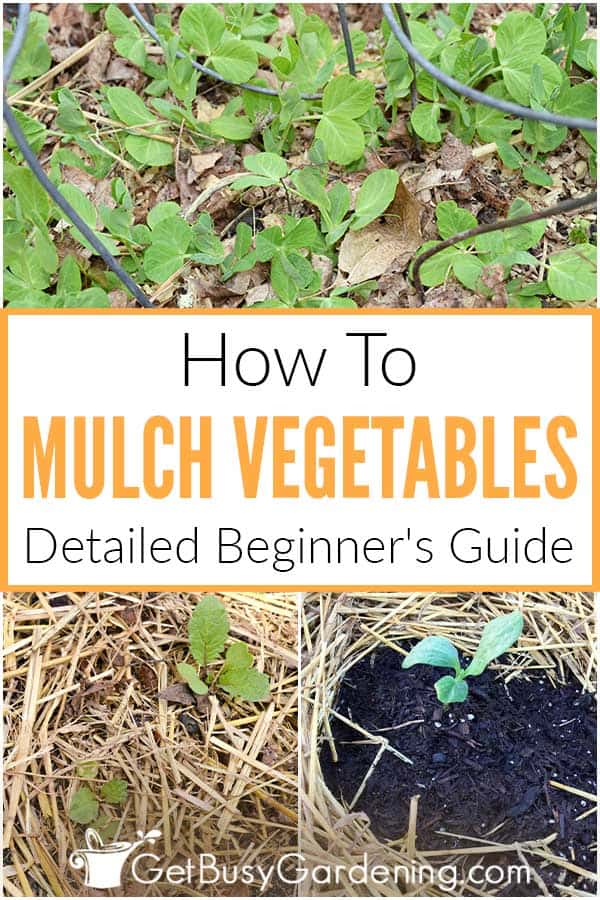
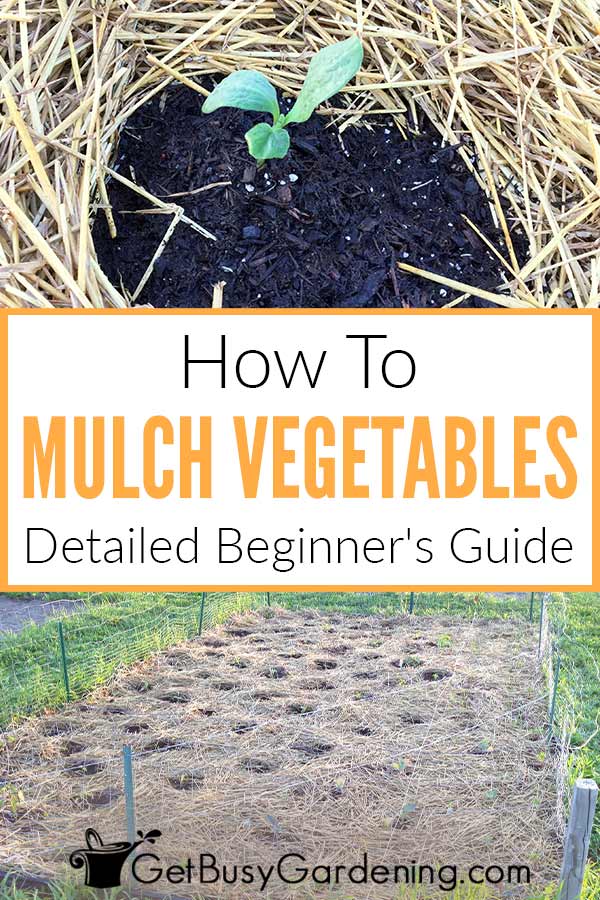
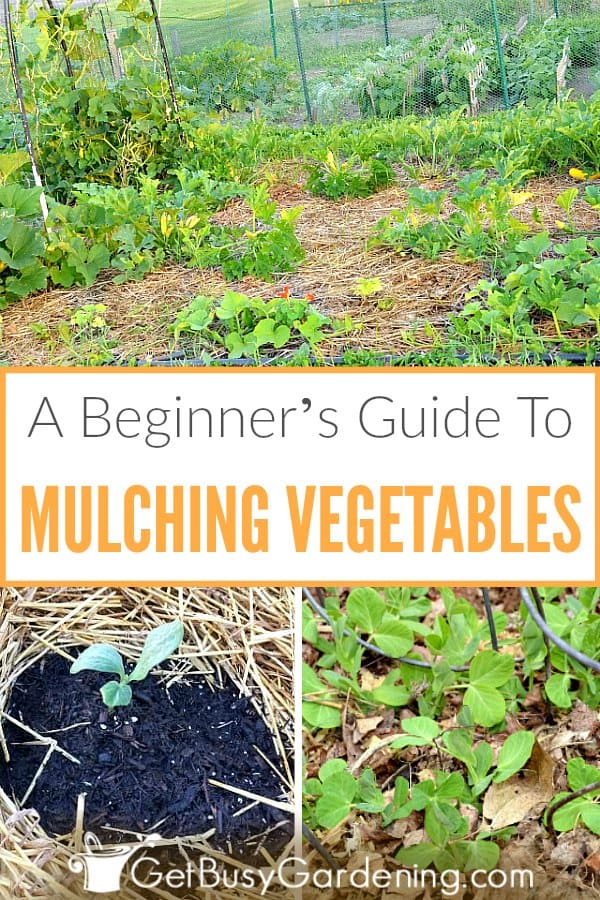
Mulching is the easiest and best way to maintain a healthy vegetable garden. Trust me, I found this out the hard way.
Before I learned this trick, maintaining my beds was a huge chore. One summer the weeds were so bad that I couldn’t even find my tomato plants!
I want to save you the pain I went through. So in this post I’ll tell you all you need to know. Including the benefits, what kinds to use, when to apply it, and lots of great tips for how to do it the right way.

Benefits Of Mulching Your Vegetable Garden
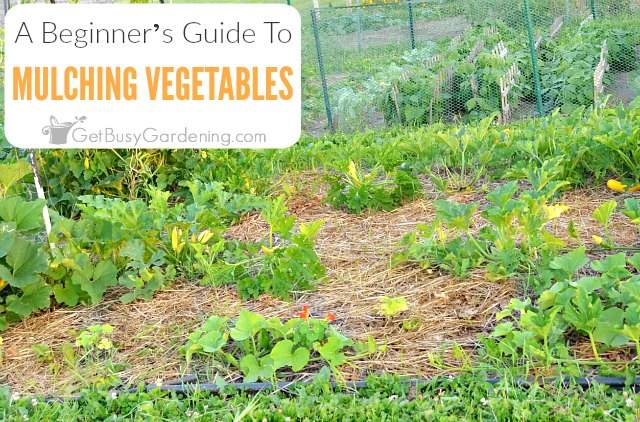
Not only does it add a nice, finished look to your beds, mulching your vegetable garden has many benefits too. All of these add up to a healthier, more attractive plot, and less maintenance for you.
- Controls weeds – A thick layer of mulch blocks out the sun and smothers weed seeds, which prevents them from germinating.
- Retains moisture – It also prevents water evaporation and keeps the soil moist longer, which means less watering for you.
- Regulates soil temperature – Mulch shades the ground, which keeps the soil and plant roots cooler, so your veggies are less susceptible to drought conditions in the heat of the summer.
- Prevents disease – Plus it prevents soil from splashing on the leaves, which helps to lessen the risk of soil borne diseases infecting your plants.
- Feeds the soil – The organic matter adds nutrients to the ground as it breaks down, and it attracts earthworms, both of which improve the quality and structure of the soil.
Related Post: No Dig Gardening 101: How To Start A No Till Garden
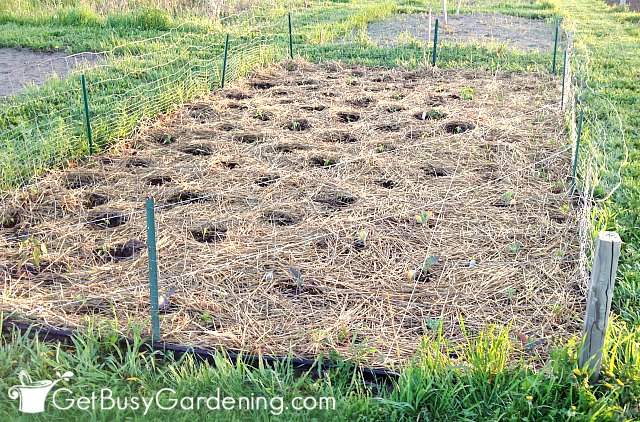
Best Types To Use
Always use a natural, organic material that is lightweight and will break down quickly. You can find out more in my list of the best types of mulch for your vegetable garden here. But below are a few examples:
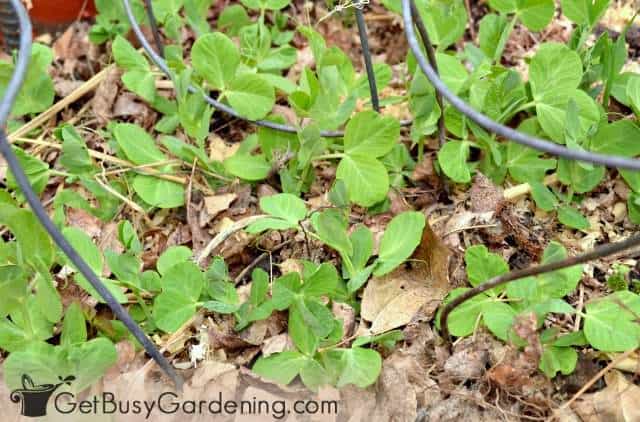
When To Mulch To Your Vegetable Garden
The best time to mulch your beds is in the spring either before or right after you plant your veggies.
I also like to add a fresh layer in the fall as I’m preparing my veggie beds for winter. This helps to prevent early spring weeds.
Don’t worry though, you can apply it at any time. Just be sure that you remove any large, established weeds beforehand, or they will probably find their way through.
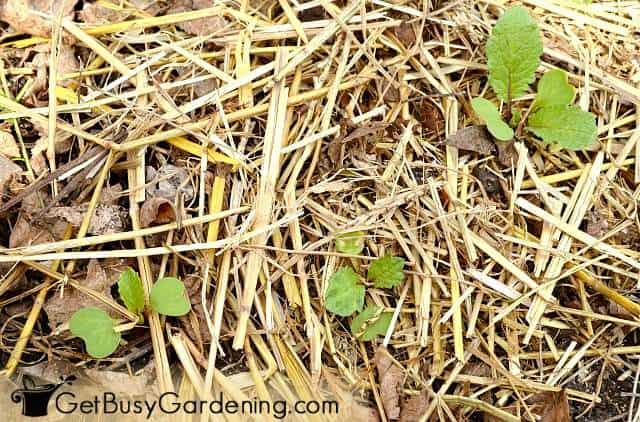
Tips For Mulching Your Vegetable Garden
The steps are the same no matter if you have a traditional plot or raised beds. You can get my full step by step instructions for how to apply mulch to your garden here, but below are a few quick tips.
- For best results, apply a 3-4” deep layer. Anything less than 2″ won’t prevent weeds from growing, and going much deeper than 4″ could keep water from evenly wetting all areas of the soil.
- Avoid piling it around the base of your plants, as that can cause the stems to rot or hinder their growth (especially seedlings). Keep it a few inches away.
- Since they tend to break down fairly quickly, you may need to top-dress your veggie beds with more mulch in the late summer or early fall.
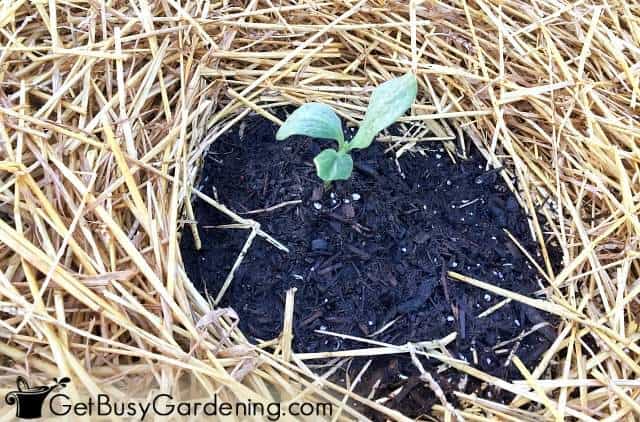
Mulching your vegetable garden is the best way to save time and energy. Once you get the hang of it, your soil will be healthier, and you will spend less time weeding and watering.
If you’d like to learn how to make the most of your space and get as much homegrown food as possible, then my Vertical Vegetables book is perfect! It will teach you all you need to know, has tons of gorgeous photos, and includes 23 DIY projects you can build for your own garden. Order your copy today!
Learn more about my Vertical Vegetables book here.
Share your tips for mulching a vegetable garden in the comments section below.

Leslie Stuart says
I have used a variety of options to control weeds. Previously used “salt hay” which is awesome, but I can no longer find it anywhere. Then I had been using landscape fabric which works for weeds but is more time consuming when planting. This year, using straw, but it has seeds so I have to pull up sprouts -even if it says it’s sterilized. My first choice would be salt hay because it has no seeds, but I will continue to use straw, it’s a very pleasant surface in the garden.
John says
Hi, I have an area I want to plant vegetables in come next spring (it’s oct. now ) there are a ton of weeds I tilled 3 times and the seem to be growing back again . Since it’s starting to get cool now (I live in New York City ) can I place cardboard down then add organic mulch on top of the cardboard to make sure it kills most of the weeds by spring ? Also do I need to remove the mulch before I plant the vegetables seeds into the ground so not to kill the vegetable seeds . Thanks!
Amy Andrychowicz says
Yes, fall is a great time to use either the no-dig garden method or try making a lasagna garden with specific layers. The cardboard will kill the weeds and grass, and everything will break down nicely by spring for planting your veggies. There’s no need to remove the mulch before planting your vegetables, you can just brush it back in the spot where you want to plant something.
jon says
what about using hardwood shredded (and aged) mulch as is sold at plant nurseries and Home Depot? WIll that pose any problems for vegetable plant growth?
Amy Andrychowicz says
Hardwood mulches are too heavy for a vegetable garden. The larger wood chunks don’t break down as quickly as the lighter mulches I mention in the article. So when you replant the beds ever year, there will be large chunks of wood in your soil which isn’t ideal for veggies, especially root crops.
Gail Bohlman says
I put chopped straw down on my raised vegetable bed this year. 2 issues that were a problem – the wind (have lots in AZ) blew it all over the paver path, artificial turf & rock mulch in the surrounding yard – even into the AC unit. Then the birds delighted in making nests pushing the straw and dirt out of the bed. We tried to enclose in bird netting, which helped the wind issue but the determined birds found their way in. Suggestions as an alternative?
Amy Andrychowicz says
You need to keep the mulch wet after laying it down over your veggie garden, or yes, it can blow around. Also, it should be a thick layer of mulch which, once wetted down, will be heavier than a very thin layer (and also more effective at keeping the weeds from growing). Here’s a list of options for different type of vegetable garden mulches that will give you more ideas.
Turquoise says
What about following years? Do you rake out all of the mulch to plant your new seeds and seedlings? Or just push it aside for each seed and drop the seeds in?
Amy Andrychowicz says
I turn the mulch into my veggie garden soil every fall and apply a fresh new layer.
Doc says
You said cardboard or newspaper can be used as mulch in vegetable garden. Can you explain how to do it.
Appreciate,
Doc
Amy Andrychowicz says
You can simply lay large pieces of cardboard or sheets of newspaper (several sheets thick) over the top of the soil and then wet it down to make it stick. Alternatively you could shred the newspaper before spreading it over the top of the soil. But for both of those mulch options, it’s best to weight them down because if they dry out they can end up blowing away in the wind.
Heylids says
Is a mix of white birch and maple mulch good for your veggie garden? Can it be added in August/September and will it breakdown by spring?
Thank you very much
Amy Andrychowicz says
If the wood mulch is made of large pieces, then I don’t recommend it for your veggie beds. While it certainly could work, it can take several years for the large chunks to break down. Heavier mulches like that are more suitable for perennial beds and permanent landscaping areas, rather than a vegetable garden.
Elizabeth says
I love using mulch in my beds, but I use it sparingly. I am hesitant to apply a thick layer because I worry that my seedlings won’t be able to pop through. How can I mulch heavy enough to prevent weeds while still allowing head room for my seeds?
Amy Andrychowicz says
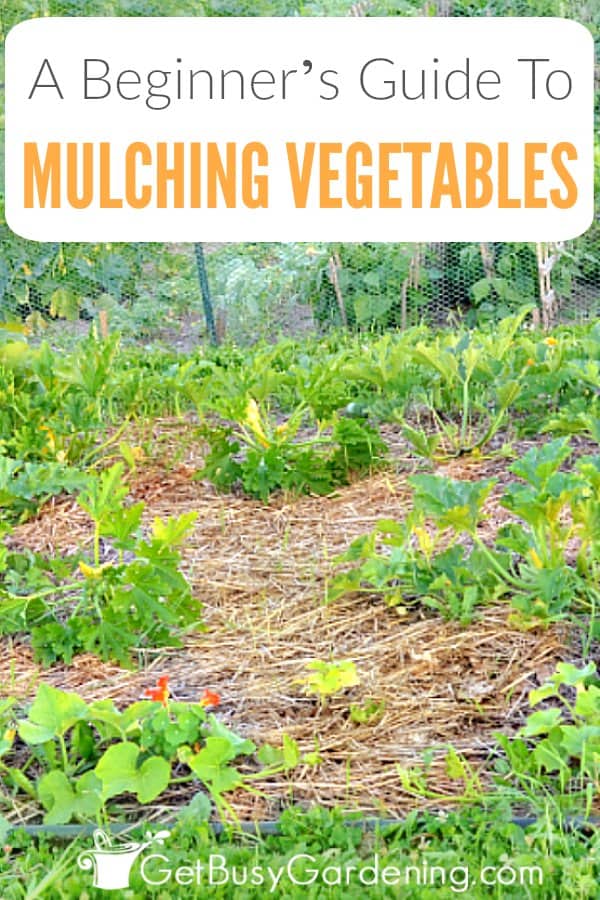
I lay the thick layer of mulch down before planting my veggie seedlings. Then I brush it aside in the spots where I want to put them, just enough to get them planted (you can see my holes in the mulch in a few of the photos above). If you’re spreading it after planting, then just spread it around the plants, leaving a couple of inches of space around the base so it’s not right up against the stem.
Kelly Markow says
Do we worry about unwanted bugs with mulching?
Amy Andrychowicz says
Usually bug infestations aren’t caused by mulching. But since it does hold moisture longer, slugs can become a larger problem.
Jocelyn says
Yes-i used straw and was inundated with slugs 🙁
Amy Andrychowicz says
That can happen with any type of mulch. It’s because the mulch makes the soil stay moist, which unfortunately can also create a breeding ground for slugs. Not always, but sometimes it can happen. Here are some ways to get rid of them.
Kelly Markow says
Is peat moss more acidic than pine needles?
Amy Andrychowicz says
Both of them are mildly acidic, and really don’t add much acidity to the soil.
Patricia Paterak says
Can you use peatmoss as a mulch in a vegetable garden?
Amy Andrychowicz says
Peat moss is acidic, and most vegetables like alkaline soil. While you certainly could use it to mulch your beds, you should test the pH of the soil regularly to make sure it’s not getting too acidic.
Jennife says
New to this mulch things on a vegetable garden… so my question is…when you water with a hose or it rains… can all that water get down into the soil and not get trapped in the mulch ( and then evaporate)?? Or when watering am I supposed to try to water each plant individually where there is no mulch…hopefully not a really silly question!
Amy Andrychowicz says
There are never any silly questions! 🙂 The beauty of using mulch on your veggie beds is that the water soaks in easily, and the mulch holds it in the soil longer. So, you won’t have to water as often as you would without it. The best practice is to water only the plants, rather than over the top of the entire bed. Not only is it better for the plants, it will help prevent disease and weeds. Here’s a detailed post that will help you out… How To Water A Vegetable Garden, The Right Way!
Smith Anna says
I put black mulch around my vegetables. When I till the soil won’t everything biodegrade?
Amy Andrychowicz says
Yes, the mulch will decompose over time, which is great because it helps to feed the soil. The reason it’s best to use a lightweight mulch in your veggie garden is because they break down much faster. Heavier wood mulches take much longer to break down, and leave large chunks of wood in the soil, which isn’t ideal for vegetable beds.
Lissette says
I usually grow zucchini, eggplant, squash, and tomatoes in my vegetable garden. Can I mulch my garden with oak leaves?
Amy Andrychowicz says
Yes, oak leaves would make a wonderful veggie garden mulch!