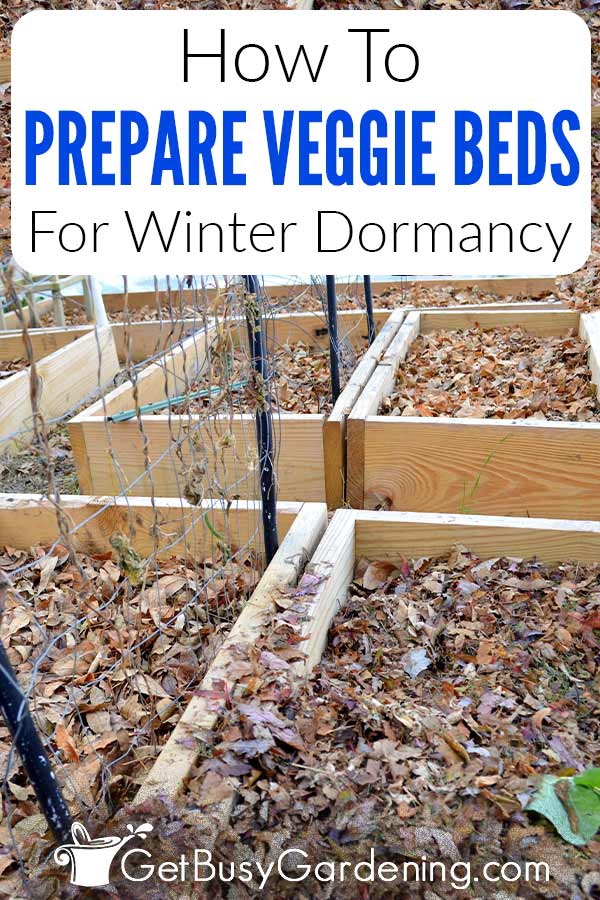
Preparing your vegetable garden for winter is important, and doing it right can make a big difference in both the production and health of your plot next summer.
This includes cleaning out your beds, testing and amending the soil before cultivating it, and then adding a thick layer of mulch over the top.
In this post I will give you all the details you need, including my 5 simple steps for properly winterizing your veggie garden.

5 Steps For Preparing Your Vegetable Garden For Winter
There are only 5 basic steps you should take to winterize your veggie garden. First clean it out, then test, amend, and cultivate the soil, and finally add a layer of mulch to top it off. Here are the detailed instructions.
1. Clean Out Your Veggie Garden
The first step in preparing your vegetable garden for winter is cleaning it out. Remove all of the dead plants, and pull out any stakes and temporary trellises.
Plant material makes a great addition to your compost bin. However, don’t put diseased plants or any that were infested with bugs in there.
Home composting systems may not kill pest and disease organisms, and they can overwinter in your bin. It’s best to destroy these plants or throw them into a commercial yard waste bin instead.
Related Post: Growing Vegetables: The Ultimate Veggie Garden Guide
2. Test Your Soil
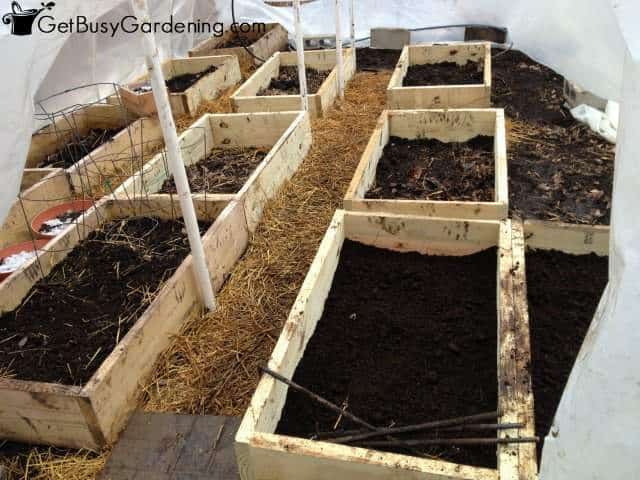
The best time to test the soil in your vegetable garden is before winter so you can prepare it for next year.
That way you can tell which nutrients were stripped out during the growing season, and you’ll know what you need to add to it in the next step.
Don’t be intimidated, it’s super easy to do it yourself using an inexpensive home soil test kit. If you don’t want to DIY it, talk to someone at your local garden center to see where you can have it done.
Related Post: How To Prepare A Garden Bed For Planting Vegetables
3. Amend Your Beds
Adding organic material and amendments as a part of preparing your vegetable garden for winter means that they will have much longer to break down.
Compost is wonderful for amending any type of soil. Take it straight from your own heap or purchase some. Otherwise you could use well-composted manure or organic worm castings instead.
This is also a great time to add slow-release fertilizer to your beds. I recommend using an organic one that will help to build the soil, rather than synthetic chemicals which can cause damage. Two of my favorite brands are Healthy Grow and Sustane.
Related Post: Guide To The Best Fertilizers For Vegetable Gardens
4. Cultivate The Soil
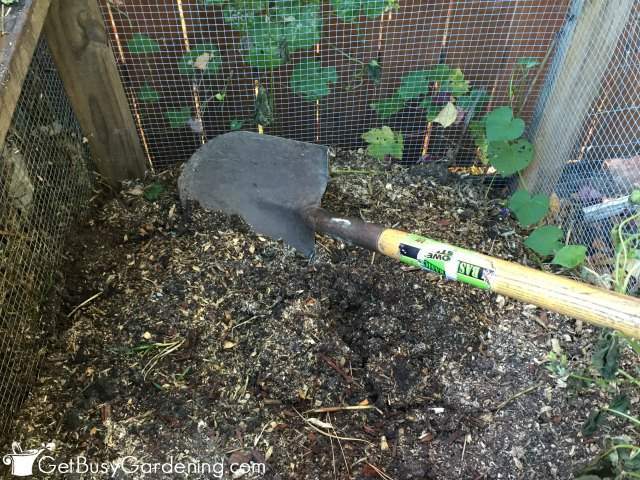
You don’t need to till your vegetable garden, but I definitely recommend cultivating or turning the soil before winter.
Not only will it mix in the amendments you added in step 3, but it will break up hard clay or heavily compacted soils.
It will also aerate the soil, which helps the organic matter break down faster, and can destroy pests and disease spores that want to overwinter in your beds.
You can either use a tiller, or turn it by hand with a garden fork or shovel (I love my garden claw tool for this!).
Related Post: No Dig Gardening 101: How To Start A No Till Garden

5. Add Winter Mulch
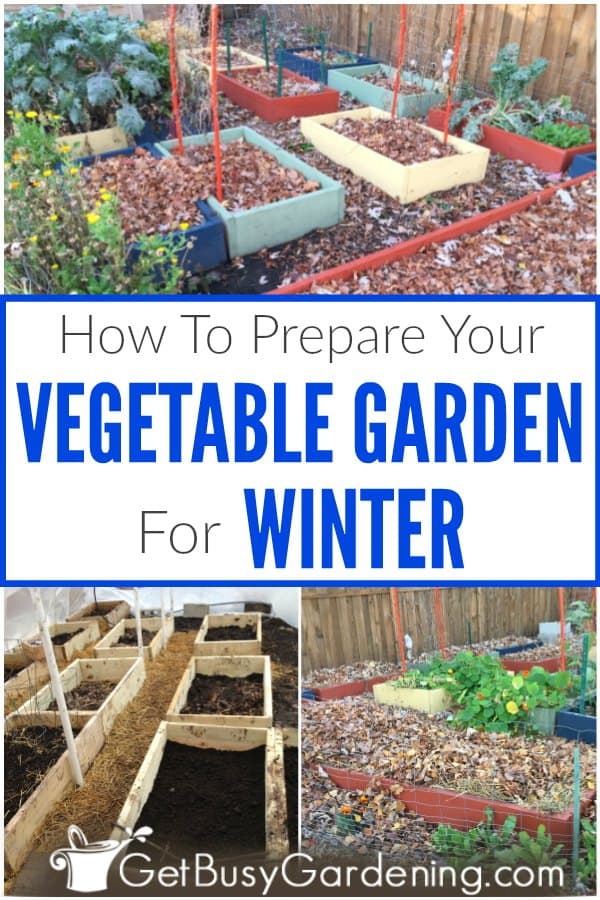
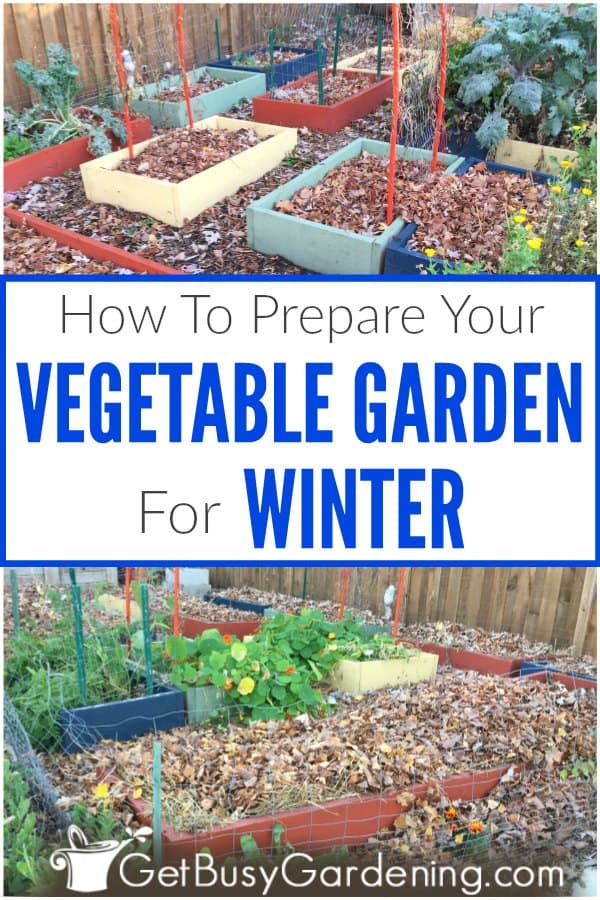
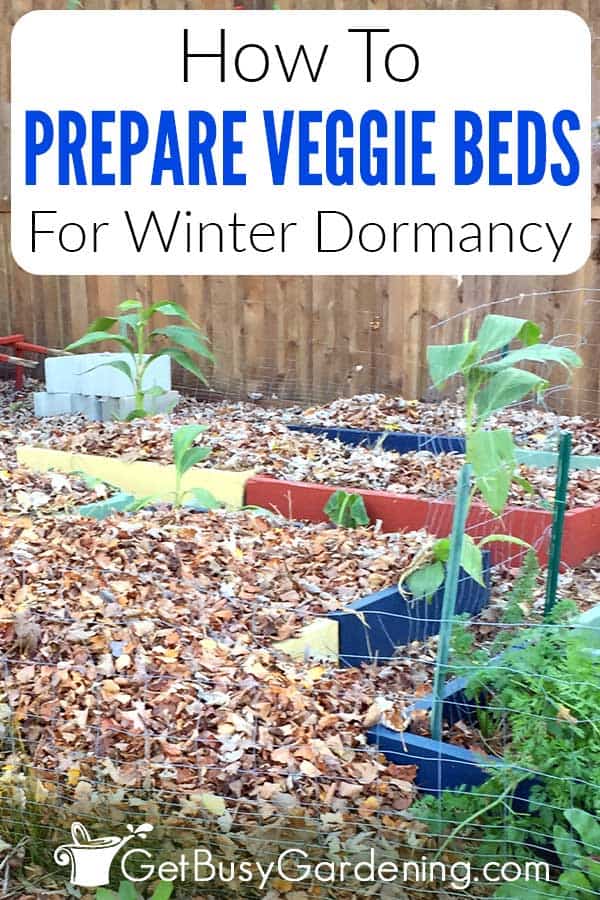
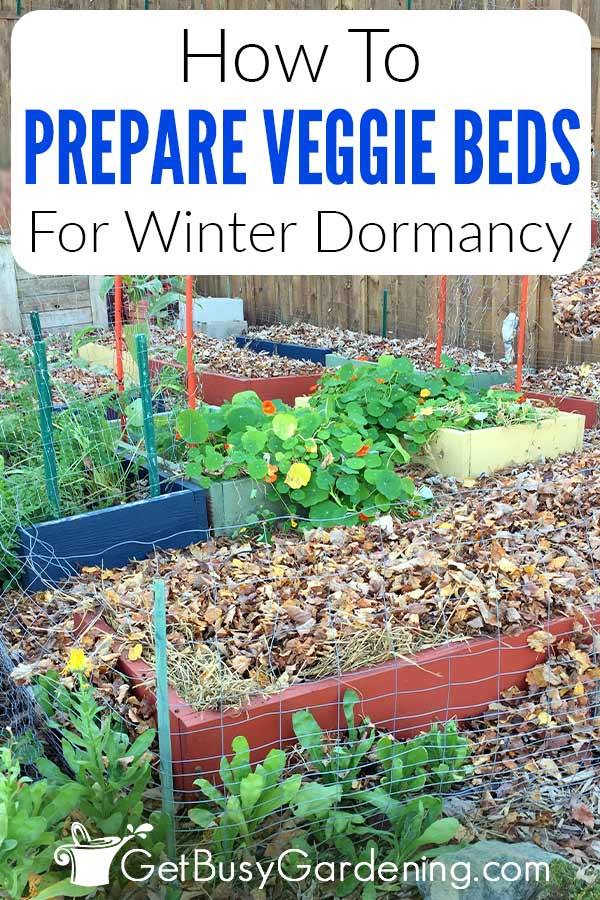
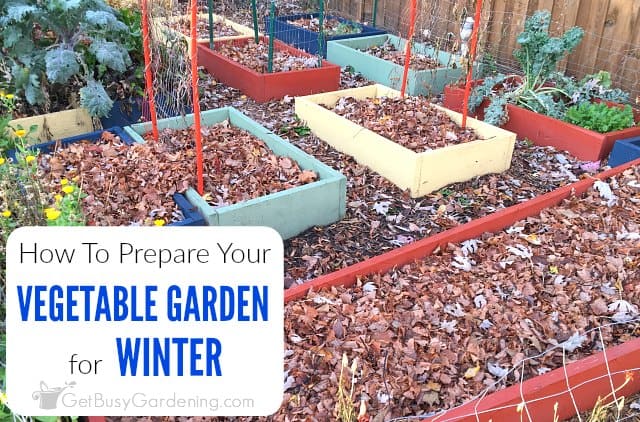
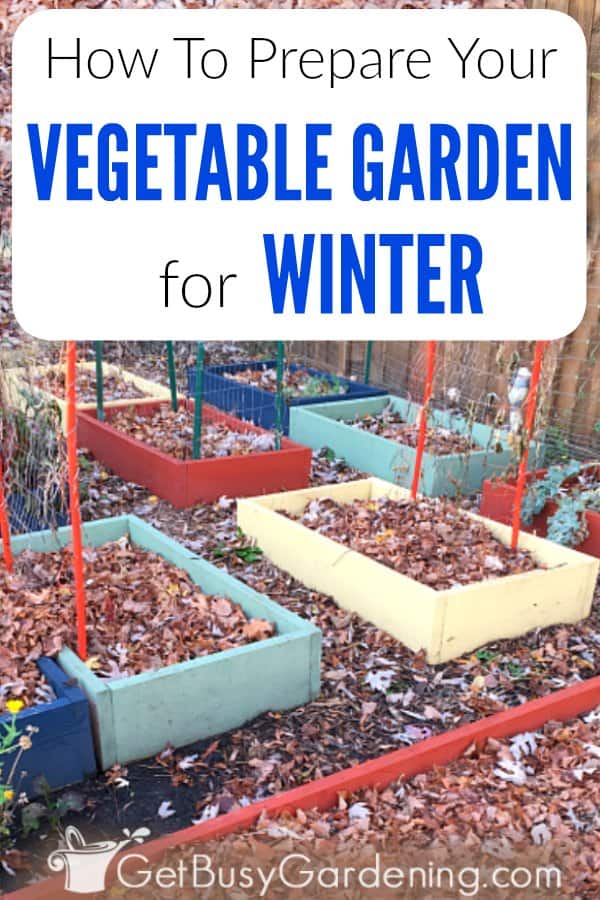
The last step to take in preparing your vegetable garden for winter is to add a layer of mulch over the top.
This will protect the soil, hold in the moisture, and prevent weeds from growing. Covering your bed with a thick layer of leaves is a super easy way to add winter mulch.
But you could also use straw, pine needles, grass clippings, or other organic materials from around your yard. Learn more about mulching your vegetable garden here.
More Seasonal Gardening Tips
- 7 Easy Tips For Winter Composting Success
- How To Winterize Your Garden In The Fall
- 5 Tips to Simplify Fall Garden Cleanup
- 5 Essential Fall Garden Tasks You Should Never Skip
- How To Protect Plants From Frost Damage
- How To Winterize A Pond Step-By-Step
Share your tips for preparing your vegetable garden for winter in the comments section below.

Jess says
What can I add to the soil in the fall so that it’s not so compacted next spring. Also I live in zone 3/4 so we get a LOT of snow and cold weather over the winter, is there anything else that should be done in the colder zones?
Amy Andrychowicz says
Peat moss, compost, sand, and/or perlite are all great amendments that will help the soil drain faster, so it won’t be so compact in the spring. I’m in MN (z4), and we get tons of cold and snow too. The steps in the article are all that I do to prepare my veggie garden for winter.
Capt. Brigg Franklin says
What do I do with the strawberry plants I have growing in one of my raised garden beds. I don’t want to kill them.
Amy Andrychowicz says
Strawberry plants are perennials, so they should survive the winter just fine.
Kelley says
Is it bad to till your garden plants into the soil at the end of the season?
Amy Andrychowicz says
It depends on the type of plants you’re talking about. If you have a cover crop that you planted as a green mulch, then you can till that right into the soil. Otherwise, you definitely should not till the vegetable plants into the soil, especially if they had any issues with disease or pests. Diseases and pests can overwinter on the dead plant material, and cause major issues in your garden next year. I recommend removing all of the vegetable plants before you till your garden in the fall.
Vanessa says
I agree with you Amy. Results entail work and patience, I'd be proud of my garden soon! I'm sharing this. Best of luck to me and to you! Thanks.
Amy Andrychowicz says
Hi Vanessa, thanks for your nice comment! It takes some work to amend the soil while preparing your garden for winter, but it sure is worth it!! Good luck if you end up trying it out. You'll definitely see a difference.
Vanessa says
Hi Amy. I like the way you think about your garden. Perhaps I'll try the same with my little parsley and other herbs garden. I've never tried anything yet to enhance my garden. You're awesome, thanks for this post.
Julie says
Hi Amy, I'm so glad to find your blog. Have you tried a heavy mulch layer in your veggie garden to prevent the weeds? I garden organically and have two veggies gardens–a potager close to the house, and the large kitchen garden back by the river. I used a really thick layer of mulch in the big garden, with newspaper underneath to smother weeds, and I barely pulled any weeds this season.
Amy Andrychowicz says
Yes, mulching the vegetable garden works wonders for keeping the weeds down! Thanks for sharing your experience!