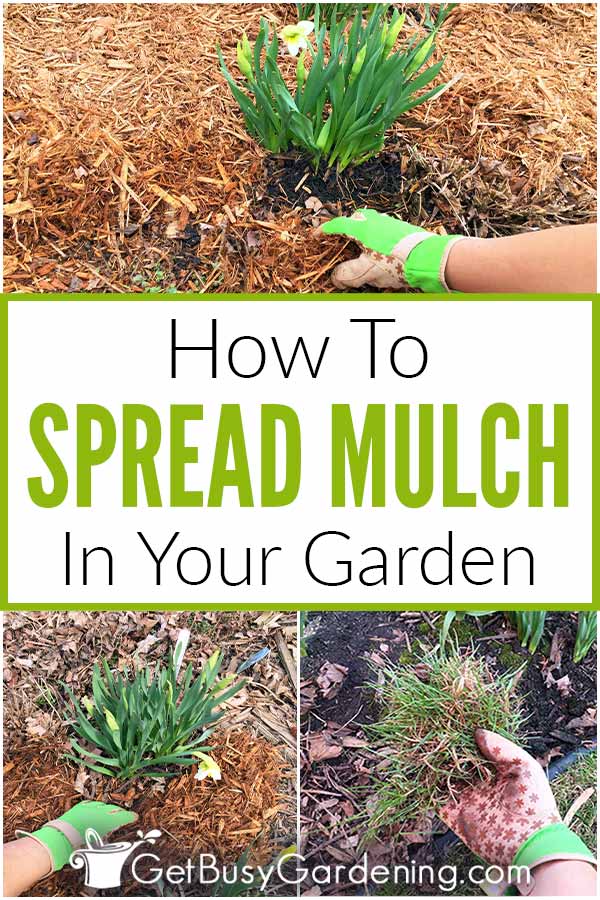
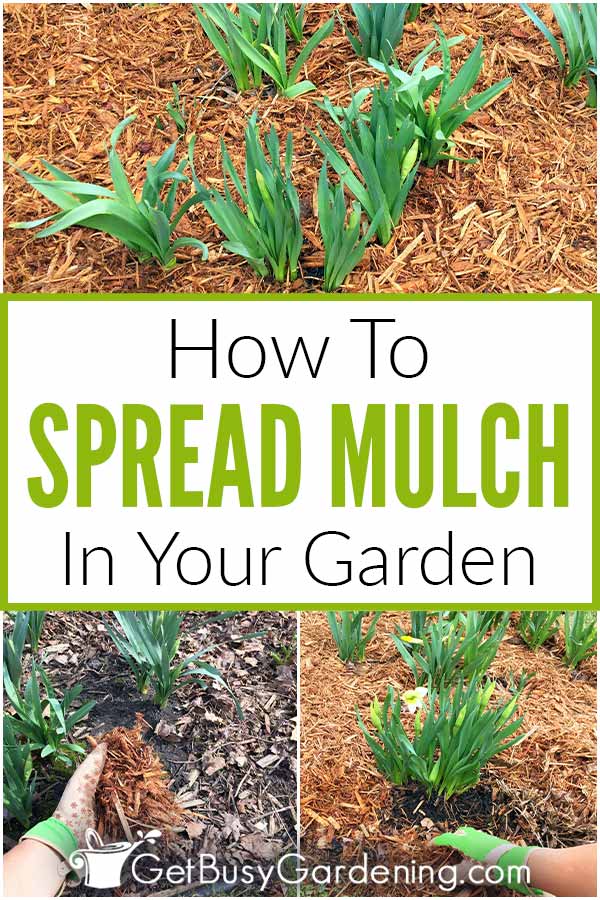
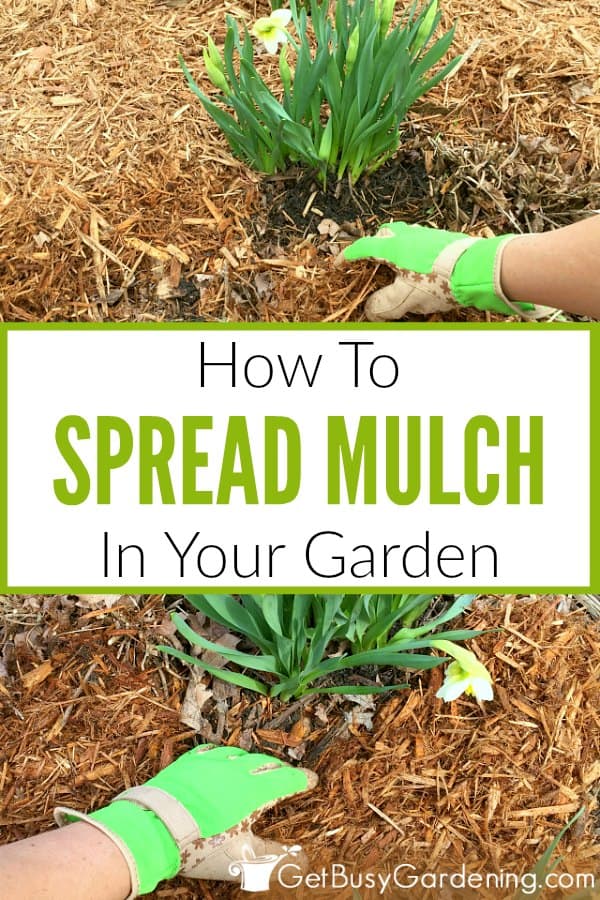
Spreading mulch in your garden is a simple task that comes with a lot of benefits. But understanding when, how, and what kind to lay down can sometime feel complicated.
In this guide you’ll find all the information you need to choose the right mulch material for each of your garden beds, plus how and when to spread it correctly.

Benefits of Mulching Your Garden
The main benefits of mulching your garden are weed and moisture control. Adding a thick layer over the top of the soil smothers existing weeds and keeps their seeds from germinating.
It also helps the soil stay cool, and slows evaporation so it can retain moisture better during the hot summer months.
Mulching benefits your plants as well because it adds nutrients to the soil as it breaks down. This helps to build a rich, fertile growing medium that they love.
What Kind of Mulch to Use
There are lots of different kinds of mulch you can use in your garden. The exact type you choose depends on your preference, and the type of bed you’re going to lay it in.
Organic materials, such as leaves, straw, or grass clippings, are readily available in some yards, and great for veggie or annual beds.
Hardwood mulches or wood chips, like cedar, pine, and bark, last longer and have a more finished look. They’re most commonly used in landscaping or perennial beds.
How Often to Replace Mulch
How often you’ll need to replace mulch depends on the type you use. Lightweight organic materials break down much faster than hardwood does.
They will need to be replaced at least once per year, and sometimes more often if they decompose quickly.
Wood mulches need to be spread every 2-3 years. They do tend to fade though, so if it’s not time to replace it, you can just fluff it up using a rake or your hands to refresh the look.
When to Spread Mulch
Spring and fall are both great times to lay mulch in your garden beds. I personally prefer doing it in the spring so that it looks fresh all summer long.
The best time for spring mulching is after the ground has thawed, but while it’s still moist. I also recommend waiting until the plants have started growing. Otherwise, you could accidentally bury something that hasn’t popped up yet.
If you don’t get to it in the spring, don’t worry. You can do it anytime, summer through the fall.
How Deep to Lay Mulch
You should spread any type of mulch 2-4 inches deep. Anything less than 2 inches, and you won’t get the benefit of weed protection.
On the flip side, laying it more than 5 inches deep can prevent water from getting to the soil, and bury the base of plants.
How to Properly Lay Mulch
Believe it or not, there is a right way and a wrong way to spread mulch in your garden. Doing it the wrong way is one of the biggest mistakes that newbies make.
If you have an area where there’s only soil (with no plants), then you don’t need to worry about right or wrong. Just disperse it in a nice, even layer.
But, if you’re putting it around a tree or garden plants, then proper mulching is very important.
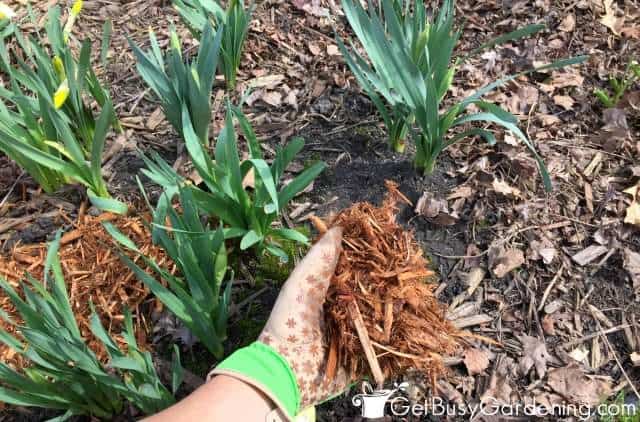
The most common mistake people make is to pile it around the base of plants and trees. This is very bad for them.
Partially buried plants stems and tree trunks can end up having major issues with pests, disease, and rotting.
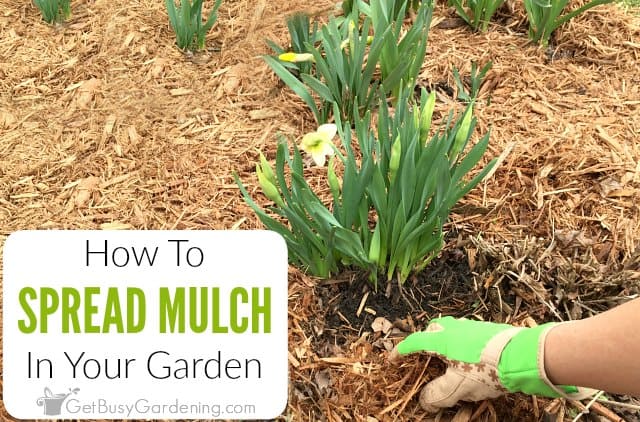
It’s important to keep the mulch away from the base of the plants, so that there is plenty of air circulation around the stem.
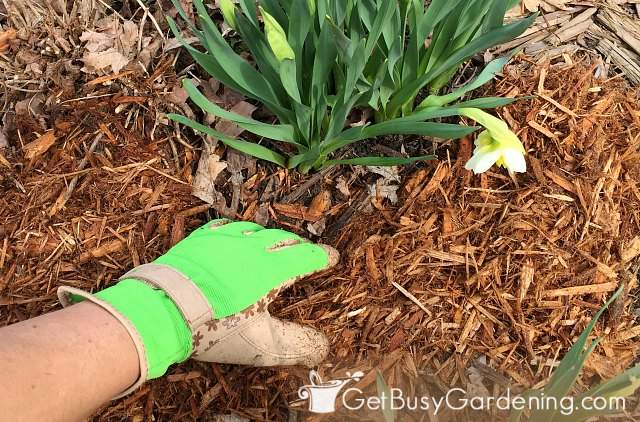
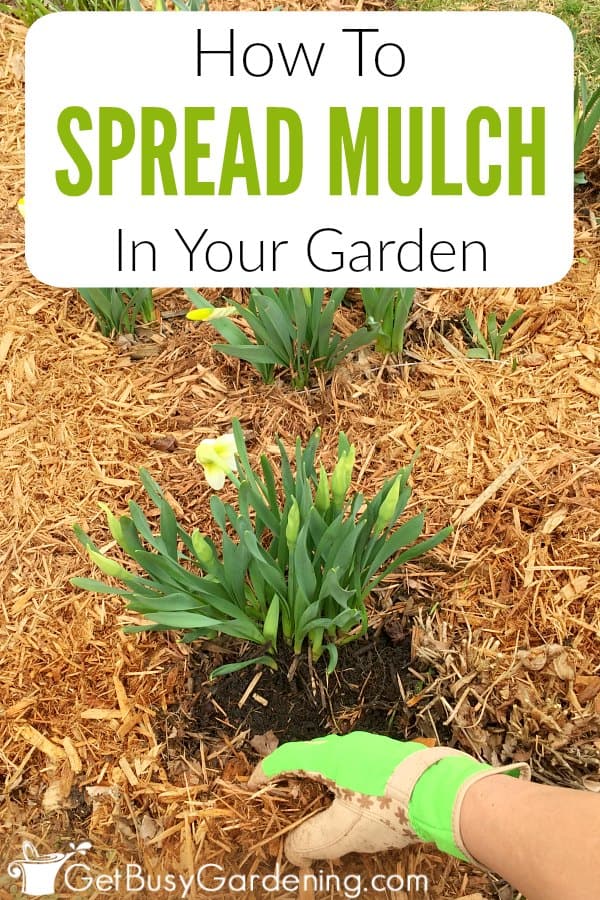
Make sure that none of it is touching the stem. It’s easiest to do that if you use your hands to spread it out.
How to Spread Mulch in 4 Easy Steps
It’s best to spread mulch when the soil is damp rather than dry, and it’s also easier to pull the weeds. So, if your garden is dry, water it well the night before.
Supplies Needed
- Mulch
- Garden fork (optional)
- Scoop shovel (optional)
- Wheelbarrow (optional)
- Bow rake (optional)
- Weeding tool (optional)
- Gloves (optional)
Instructions
- Remove established weeds
- Edge the garden beds
- Spread the mulch
- Water well afterward
Step 1: Remove established weeds – Don’t worry, you don’t need to remove every single tiny weed you see.
You just need to worry about removing the large ones, the smaller seedlings will be smothered.
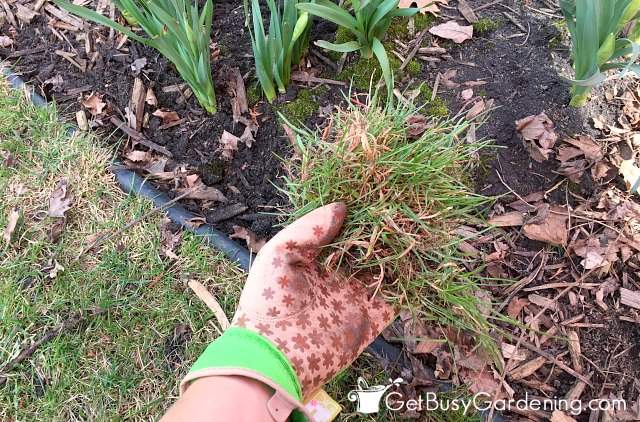
Step 2: Edge the garden beds – In addition to removing weeds, it’s a good idea to edge your beds to remove any grass that’s creeping in before laying the mulch.
That will give your beds a nice clean look, and keep the grass from taking over later on. A weeding tool will make this job a snap!
Step 3: Spread the mulch – If there’s old mulch in the garden, you don’t need to remove it before adding more. Just put the fresh layer right over the top.
Use your hands to lay it around the base of the plants, making sure that none of it is piled around the stem. You can use a bow rake to spread it in larger areas and in between the plants.
Step 4: Water well afterward – This step is optional, but if the mulch is totally dry, then it’s a good idea to wet it down after you’re done spreading it.
This will weigh it down and help to keep it from blowing away in the wind. It will also ensure that the mulch comes in contact with the soil, so it can smother all those weeds.
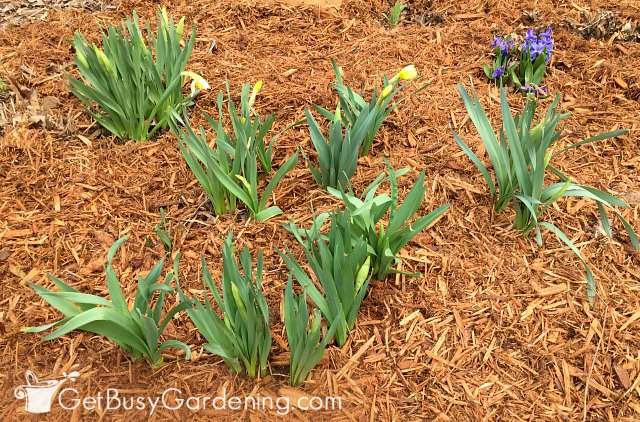
That’s it, easy peasy. Now that you know when and how to spread mulch in your garden, you’ll be able to enjoy all of the benefits. Just be sure to freshen it regularly.
More Garden Care Posts
- Beginner’s Guide to Mulching Your Vegetable Garden
- How To Test Your Soil At Home Using A Soil Test Kit
- Choosing The Best Mulch For Vegetable Gardens
- When To Rake Your Lawn In The Spring
- How To Cut Grass Like A Pro Using Lawn Mowing Patterns & Techniques
Share your tips for spreading mulch in the comments section below.

Jay Faraci Glynn says
What do you suggest for a weed barrier under the mulch?
Amy Andrychowicz says
I personally don’t like using weed barrier, and don’t recommend it. As long as the mulch is deep enough, it will smother the weeds. Weed barrier can become a major pain over time, and can hinder growth as plants mature. Also, weeds will grow right over the top of it, and the roots can become embedded in the weed barrier, which makes them more difficult to pull.
Sharon Rathbun says
You have answered so many of my Vegetable garden mulching questions! I am new at vegetable gardening and have been overwhelmed with weeds and confused about mulching. Thank you very much!
Amy Andrychowicz says
You’re welcome, I’m so happy I was able to answer your questions, yay! I’m not sure if you saw my posts that are specifically about mulching veggies, but those should help you even more…
Beginner’s Guide to Mulching A Vegetable Garden
Choosing The Best Mulch For Vegetable Gardens
Amelia says
Beginners’ question – I mulched the veggie garden this year with a combination of coir and compost. I don’t think the coir will break down, so next year, do I just scrape it to the side, plant my veggies and put it back? Or should I work the coir into the soil this fall (My soil is pretty dense anyway)?
Amy Andrychowicz says
You could do it either way. If you work your mulch into the soil in the fall, that will definitely help amend your soil, and improve it over time.
Sandra Newsom says
I just moved into my new home and went to change the color of the mulch, it currently red and I want it black, what should I do?
Amy Andrychowicz says
You can just spread the black mulch right over the top of the red mulch.